 Exploring direct enzymatic hydrolysis of legumes: a promising approach for producing bioactive peptides
ABSTRACT:
Bioactive peptides (BPs), short chains of amino acids with several health benefits, are derived from the enzymatic hydrolysis of food matrix proteins. Beginning with organic solvent protein extraction, studies of bioactive peptides published are primarily based on different complex steps. This study utilized direct enzymatic hydrolysis to obtain BPs from black beans, lentils, and peas. A Central Composite Rotational Design (CCRD) was employed to evaluate the effects of temperature (50 - 70 ºC), pH (7.5 - 8.5), and Alcalase® concentration (2 - 6% v/m) on the degree of hydrolysis (DH). The hydrolysates that showed the highest DH for each legume were scaled up 25-fold in a mini reactor and were subjected to ultra- and nanofiltrations for antioxidant activity evaluation using FRAP and DPPH procedures. Higher temperatures, Alcalase® concentrations, and alkaline pH levels increased DH for direct enzymatic hydrolysis of crude legume flours. Alcalase® concentration had the most significant impact. The highest antioxidant activity in the FRAP assay was observed at 5 kDa for peas. Beans exhibited a lower degree of hydrolysis (DH) compared to lentils and peas but demonstrated superior antioxidant activity in DPPH assays. The proposed method is advantageous for sustainable bioactive peptide production from legumes.
Keywords:
Alcalase®; antioxidant activity; black beans; central composite rotational design; degree of hydrolysis; lentils; nanofiltration; peas; ultrafiltration
RESUMO:
Peptídeos bioativos (PBs), cadeias curtas de aminoácidos com vários benefícios à saúde, são derivados da hidrólise enzimática de proteínas da matriz alimentar. Começando com a extração de proteínas utilizando solventes orgânicos, os estudos de peptídeos bioativos publicados até agora são baseados principalmente em diferentes etapas complexas. Este estudo teve como objetivo utilizar a hidrólise enzimática direta para obter PBs de feijão preto, lentilha e ervilha. Um Delineamento Composto Central Rotacional (DCCR) foi empregado para avaliar os efeitos da temperatura (50 - 70 ºC), pH (7,5 - 8,5) e concentração de Alcalase® (2 - 6% v/m) no grau de hidrólise (GH). Os hidrolisados que apresentaram o maior GH para cada leguminosa foram ampliados 25 vezes em um mini reator e foram submetidos a ultra e nanofiltrações para avaliação da atividade antioxidante usando procedimentos FRAP e DPPH. Temperaturas mais altas, concentrações de Alcalase® e níveis de pH alcalino aumentaram a GH da hidrólise enzimática direta de farinhas de leguminosas brutas. A concentração de Alcalase® teve o impacto mais significativo. A maior atividade antioxidante no ensaio FRAP foi observada em 5 kDa para ervilhas. Os feijões tiveram menor GH do que lentilhas e ervilhas, mas mostraram melhores atividades antioxidantes em ensaios DPPH. O método proposto é vantajoso para a produção sustentável de peptídeos bioativos a partir de leguminosas.
Palavras-chave:
Alcalase®; atividade antioxidante; delineamento composto central rotacional; ervilhas; feijão preto; grau de hidrólise; lentilhas; nanofiltração; ultrafiltração.
INTRODUCTION
Bioactive peptides (BPs) are short chains of amino acids released from food proteins through enzymatic hydrolysis, fermentation, or food processing (HU et al., 2024; SINGH & GAUR, 2024). These compounds have several health benefits, which include antioxidant activity (ROSA et al., 2023), pressure-lowering (ALTHNAIBAT et al., 2024), immunity-improving (PANKAEW et al., 2023), anti-inflammatory (BALDE et al., 2023), cholesterol-lowering (FONSECA HERNANDEZ et al., 2024), lipid-lowering (LEONG & CHANG, 2024), anti-osteoporosis (ZHANG et al., 2024) and anticoagulation effects (HUANG et al., 2021). Furthermore, they present several benefits over synthetic peptides, such as better toxicological safety, easier metabolization in the human organism, and lower chances of side effects (TU et al., 2018; ZAMBROWICZ et al., 2013).
The worldwide BPs market is forecasted to grow substantially, with estimates showing an increase from US$ 2,508.3 million in 2023 to US$ 4,191.8 million by 2033 (FUTURE MARKET INSIGHTS INC., 2023). The increasing demand for natural and healthy products, ongoing research on the health benefits of BPs, innovation in the food and beverage industry, population ageing, and expansion of their applications in various sectors such as cosmetics and pharmaceuticals are driving the growth of the bioactive peptides market (CASTRO et al., 2023; CHAUHAN et al., 2024; FAN et al., 2022; GUO et al., 2023; GUPTA et al., 2023; OLIVEIRA et al., 2024; WEI et al., 2024).
To derive BPs, they must be liberated from the source protein, where they are typically encrypted and exist in an inactive state (CRUZ-CASAS et al., 2021). Numerous peptides can be acquired through various methods (COLOMBO et al., 2024; GÖRGÜÇ et al., 2020), prioritizing production processes that are environmentally benign or can mitigate waste emissions (LEMES et al., 2016). For instance, basic buffers are recommended to enhance protein solubility and defeat the development of protein aggregates. However, it frequently requires a centrifugation step followed by filtration to eliminate insoluble particles, thus prolonging both time and cost (BUKET et al., 2017). BPs may also be generated through fermentation, typically conducted by various types of microorganisms, including both submerged and solid-state fermentation methods. The primary drawback of fermentation as a processing technique lies in the possible production of additional compounds, such as exopolysaccharides or bacteriocins (RIVERO-PINO et al., 2023). New extraction techniques included pressurized liquid extraction and deep eutectic solvents. Despite advantages such as low cost, high yield, and strong bioactivity, pressurized liquid extraction involves high equipment and solvent costs and requires elevated temperature and pressure conditions. At the same time, deep eutectic solvents present few applications (COLOMBO et al., 2024).
The production of BPs through enzymatic hydrolysis stands out for not requiring a phase change, not producing toxic by-products, being easily controlled, and, primarily, for allowing milder processing conditions (temperature, pH), avoiding damage to the peptides and preserving their biological properties (MORA & TOLDRÁ, 2023). Additionally, enzymatic hydrolysis can be performed on protein-rich, low-cost raw materials using enzymes specific to operational needs and the selected raw material (GÖRGÜÇ et al., 2020). Seeds from the Fabaceae family (legumes) are examples of raw materials that tend to have high protein content (16 - 43%), being a good source for obtaining BPs (MANI-LÓPEZ et al., 2021). Besides that, legume-based BPs are considered natural antioxidants, which enable the development of functional foods and nutraceuticals (MATEMU et al., 2021).
The parameters and conditions applied during enzymatic hydrolysis are responsible for determining the structure or size of the peptide and, consequently, its bioactive and techno-functional properties (GÖRGÜÇ et al., 2020; MORA & TOLDRÁ, 2023). In this way, optimizing hydrolysis conditions is essential to achieve higher hydrolysis and the production of peptides with biological activity (SONKLIN et al., 2018).
For the obtention of legume-based BPs, most studies extract proteins from the legume flour before enzymatic hydrolysis (FELIX et al., 2019; MOKNI GHRIBI et al., 2015; PHONGTHAI et al., 2016). However, the direct hydrolysis of BFPs from crude legume flour eliminates the need for several steps related to protein extraction (defatting, sieving, extraction, filtration, precipitation, recovering, neutralization, etc.). It could open a new door to optimize the release of bioactive peptides. In any scenario, an unexplored research avenue involves plant proteins pre-treating (or omitting pre-treatment) to augment the release of BPs, ultimately resulting in increased BPs concentration or decreased reaction time (RIVERO-PINO et al., 2023). In this study, enzymatic hydrolysis of crude legume flours (black bean, lentil, and pea) was performed to study the conditions that favor the increase of the degree of hydrolysis (DH), such as temperature, pH, and enzyme-substrate ratios, using a Central Composite Rotational Design (CCRD). Furthermore, the hydrolysate obtained with the highest DH for each legume flour was fractionated by membranes and evaluated concerning its antioxidant activity.
MATERIALS AND METHODS
Materials
Black beans, lentils, and peas were purchased in the local market (Brazil). Alcalase® 2.4 L was purchased from Novozymes (Bagsværd, Denmark). DPPH (2,2-diphenyl-1-picrylhydrazyl), Trolox (6-hydroxy-2,5,7,8- tetramethylchromane-2-carboxylic acid), TPTZ (2,4,6-tripyridyl- S-triazine), the Folin & Ciocalteau phenol reagent were all purchased from Sigma Aldrich (St.Louis, MO, US).
Protein quantification
The protein content of black beans, lentils, and peas was determined according to the official analysis methods of the Association of Official Analytical Chemists (Method 2001.11) (AOAC, 2005).
Enzymatic hydrolysis of legume flour
First, the black beans, lentils, or pea grains were manually cleaned to remove impurities. After this step, the grains were milled in a knife mill until reaching a particle size of < 60 mesh. The protein hydrolysates of each legume studied were obtained according to BETANCUR-ANCONA et al. (2015) and GARCIA-MORA et al. (2014) with adaptations. The legume flour (separately) was resuspended in Britton-Robinson buffer at a proportion of 6.0% (m/v), and tubes were kept in an Eppendorf ThermoMixer® C shaking at 2000 rpm. After reaching the desired temperature, Alcalase® 2.4L was added to the suspension in an adequate proportion, according to the experimental design, shaking at 2000 rpm for 5 h. After the reaction, the mixture was inactivated by heating at 85 ºC for 10 min and centrifuged at 17,000 g for 15 min to separate the solid from the supernatant. The supernatants were utilized for the determination of the degree of hydrolysis.
A Central Composite Rotational Design (CCRD) with eight factorial points, six axial points, and three replicates at the central point, in a total of 17 randomized assays, was employed to evaluate the effects of temperature (50-70 ºC), pH (7.5-8.5), and enzyme concentration (2-6% v/m) in the degree of hydrolysis (DH). The experimental design matrix and the coded and real values of the independent variables are shown in table 1.
Central composite rotational design (CCRD) with coded (in parentheses) and real values of independent variables (T: temperature; pH, and % E:S: enzyme concentration) and response functions (DH: degree of hydrolysis for black bean, lentil, and pea).
Degree of hydrolysis (DH)
The DH was evaluated according to the methodology described by DE CASTRO & SATO (2014) with adaptations. A 1 mL aliquot of the hydrolysates was added to an equal volume of 0.44 M trichloroacetic acid (TCA). The mixture was incubated for 30 min at room temperature and then centrifuged at 17,000 g for 15 min. The soluble protein concentration was determined using the Lowry methodology at 750 nm (Shimadzu UV-1800, Quioto, Japan) (LOWRY et al., 1951). The DH value, expressed as a percentage, was calculated as the ratio between the total soluble protein content in 0.22 M and the total protein content, as shown in Equation 1. The total soluble protein was calculated by the Lowry method, performing an alkaline extraction of proteins at pH 11 for beans (BETANCUR-ANCONA et al., 2015), pH 9 for lentils (JARPA-PARRA et al., 2014; LEE et al., 2007), and pH 9 for peas (DING et al., 2020)
(1)
The results of the degree of hydrolysis were analyzed by the Response Surface Methodology (RSM) using the Statistica software 7.0 for Windows (StatSoft Inc.; Tulsa, USA), according to RODRIGUES & IEMMA (2009). Mathematical models and contour curves were obtained after analysis of variance (ANOVA; P < 0.05).
Enzymatic hydrolysis in a mini-reactor and ultrafiltration
The conditions that promoted the highest degrees of hydrolysis (DH) for each legume were repeated on a larger scale using an automated synthesis reactor (EasyMax 102, Mettler Toledo, SP, Brazil), with a 25-fold increase in scale. The reaction occurred inside a cylindric glass reactor, with the same conditions set for the tests described in item 2.2 (2000 rpm; 5h), having the following reaction parameters fixed for each legume: black bean: 76 ºC, pH 8, 4% E/S; lentil and pea: 70 ºC, pH 8.5, 6% E/S. The DH was verified after the reaction. The protein hydrolysates were centrifuged at 17,000 g for 15 min. The supernatants were filtered using different ultrafiltration membranes (10 kDa, 5 kDa, 1 kDa) and nanofiltration (500 Da) (Nadir®, Wiesbaden, Germany), frozen (-40 ºC), lyophilized, and stored in a freezer (-20 ºC) for the subsequent antioxidant analysis.
In vitro antioxidant activity
Ferric Reducing Antioxidant Power (FRAP)
The FRAP assay was performed as DE OLIVEIRA FILHO et al. (2021) described, with adaptations. The FRAP reagent was prepared by mixing 0.3 M acetate buffer (pH 3.6), 0.01 M TPTZ dissolved in 0.01 M HCl, and 0.02 M FeCl3 in a proportion of 10/1/1 (v/v/v). For the reaction, 150 μL of FRAP reagent was mixed with 5 μL of resuspended hydrolysates (7.5 mg/mL) in a 96-well microplate. After 6 min of reaction at room temperature, absorbance was measured at 595 nm using a UV-visible spectrophotometer (SpectraMax® M2, Molecular Devices, California, USA). Ferrous sulfate was used for the standard calibration curve, and results were expressed as µmol Fe (II)/g of hydrolysate.
DPPH Scavenging Activity
The evaluation of the DPPH scavenging capacity of the hydrolysates was performed according to DE OLIVEIRA FILHO et al., (2021). First, 100 µL of the hydrolysate sample, diluted at different concentrations (from 10 mg/mL), was mixed with 100 µL of 0.2 mM DPPH solution in a 96-well plate. The mixture was shaken and placed in the dark for 45 min at room temperature. The absorbance was measured at 517 nm using a UV-visible spectrophotometer (SpectraMax® M2, Molecular Devices, California, USA). The radical-scavenging activity was calculated with equation 2. The absorbance of the control was measured by replacing the peptide sample with the same volume of water. Different concentrations of peptide samples were analyzed in triplicate to determine IC50, which is the sample concentration required to inhibit 50% of the initial concentration of the DPPH solution.
(2)
RESULTS
In this study, we aimed to i) utilize direct enzymatic hydrolysis as a tool for obtaining bioactive peptides from different legumes and ii) employ ultrafiltration as a novel non-thermal treatment method for the value-added processing of food, with a view to a more extensive future. The modifications by enzymes are highly economical and time-convenient for food processing industries (MOOKERJEE & TANAKA, 2023). The hydrolysis of proteins found in legumes, such as black beans, lentils, and peas, is promising in producing bioactive peptides with antioxidant properties. During this process, specific enzymes cleave proteins into smaller peptides (MATEMU et al., 2021). These resulting peptides can neutralize free radicals, protecting cells against oxidative damage and potentially preventing oxidative stress-related diseases, such as cardiovascular diseases and cancer and can also improve or contribute to gastrointestinal health (AWIKA & DUODU, 2017; JUÁREZ-CHAIREZ et al., 2022). Bioactive peptides derived from legumes can be used in functional food products or nutritional supplements, providing additional health benefits (DE LEO et al., 2009).
Effect of process parameters on the degree of protein hydrolysis
The effect of temperature, pH, and enzyme concentration on protein hydrolysis varies depending on the specific enzyme and substrate involved. Generally, enzymes have an optimal temperature and pH range at which they exhibit maximum activity, and that impacts the rates of reactions, the conformation of enzymes and substrates, and charge distribution. Therefore, defining these parameters is crucial to maximize the efficiency and the degree of protein hydrolysis for various applications, such as producing bioactive peptides (NARTEA et al., 2023).
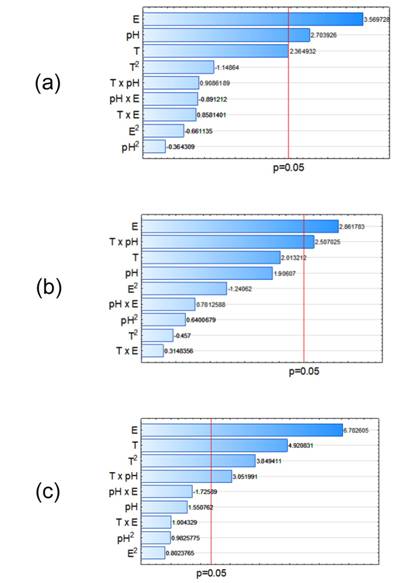
Mathematical models (Table 2) for DH of beans, lentils, and peas as a function of T, pH, and %E/S were found and showed interaction effects (Figure 1 and Table 2). In general, it is possible to observe that for the conditions studied, there is a higher degree of hydrolysis at higher temperatures and enzyme concentrations, as well as in assays using more alkaline pH levels. Conversely, it is verified that the combination of low temperature, low pH, and low enzyme concentration was highly unfavorable for the efficient hydrolysis of all the legume flours tested (Figure 2). Higher temperatures, up to a certain point, promote an increase in the enzymatic reaction rate and stimulate the flexibility and opening of protein structures, facilitating the exposure of groups for enzyme action; consequently, promoting their hydrolysis (HAO et al., 2024). The impacts related to %E/S were also the highest (Figure 1, Figure 2 and Table 2). Hence, an increment in %E/S is the most significant contributor to the increase in DH. Higher enzyme concentrations generally facilitate protein hydrolysis, as a higher enzyme concentration means more molecules are available to react with the proteins. As a result, the reaction rate increases, increasing efficiency in breaking down the proteins into smaller peptides (HAO et al., 2024). Finally, it’s important to highlight that Alcalase® is a proteolytic enzyme that effectively operates in alkaline environments, typically in the pH range of 6.5 to 10 (NOVOZYMES, 2024). It is an endopeptidase that cleaves peptide bonds within the protein molecule, obtaining bioactive peptides. Due to its activity in alkaline pH, Alcalase® is commonly employed in industrial processes such as producing hydrolyzed proteins and amino acids (MOOKERJEE & TANAKA, 2023).
Pareto chart of standardized effects (P = 0.05) for DH of beans (A), lentils (B), and peas (C).
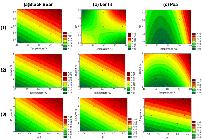
Contour curves for DH for (A) black bean, (B) lentil, and (C) pea flour, as a function of (1) pH and T (ºC), (2) enzyme concentration (%) and T(ºC), and (3) enzyme concentration (%) and pH, being the third variable fixed at level 0.
Regarding the results, specifically for black bean flour hydrolysates, the higher DH values (> 21%) occurred at temperatures between 70 - 76 ºC, pH 8, and %E/S between 4 - 7.36% (Table 1). The higher DH value (> 37%) occurred at 70 ºC, pH 8.5, and 6% E/S for lentil flour hydrolysates. For pea flour hydrolysates, the higher DH value (> 38%) occurred at temperatures between 70 - 76.8 ºC, pH between 8 - 8.5, and %E/S between 4 - 6%. The maximum DH obtained for beans is considerably lower than for lentils and peas. Although this study applied the same enzyme and operational conditions, the protein sources are different and influence the DH (KARAMI & AKBARI-ADERGANI, 2019). Despite significant efforts to understand the chemistry of legume proteins, there is still a lack of in-depth biochemical data on them. While it is established that albumin, legumin, and vicilin are the major protein classes in legumes, the variations in protein profiles among different pulses remain poorly understood. For instance, it was noted that the albumin content of peas is higher than that of lentils, which, in turn, presents the highest level of vicilin (SADEGHI et al., 2023). It is worth highlighting that these differences may contribute to the bioactivity profile of legume peptides.
Regarding the protein content in dry matter, generally, black beans are composed of 20 - 25% (KUDRE et al., 2013; MEENU et al., 2023), lentils by 20 - 23% (LIBERAL et al., 2024), and peas around 20 - 30% (DABA & MORRIS, 2022). The protein content measured in this study was 19.9 ± 0.2% for bean flour, 19.4 ± 0.2% for lentil flour, and 21.2 ± 0.2% for pea flour, whose contents are plausible according to the literature data. Some factors can make hydrolysis difficult, such as lowering the activity or stability of the enzyme or mass transfer. In Brazil, hard-to-cook black beans are predominant. In foods that are difficult to cook, the middle lamella of the cotyledon cells fails to soften or dissolve in an aqueous medium, making enzyme access difficult (AGUILERA & RIVERA, 1992; PAULA et al., 2022).
Alcalase® consists mainly of subtilisin A, produced by Bacillus licheniformis (MERCK MILLIPORE, 2024). Subtilisins are serine proteases, like digestive enzymes. Thus, protease inhibitors or subtilisin inhibitors can hinder the action of the Alcalase®. There are studies involving the capacity of inhibition of serine proteases by these inhibitors, which can be proteins or small molecules, and some legumes have these substances (BROMME & DEMUTH, 1994; SVENDSEN et al., 1984). SVENDSEN et al. (1984) purified and studied an inhibitor of serine protease from broad bean (Vicia faba), and in their study, chymotrypsin and trypsin were not inhibited. Still, a weak temporary inhibition of pancreatic elastase was observed.
VIOQUE et al. (2001) reported that extensive hydrolysis of rapeseed protein with Alcalase® and Flavourzyme® generated a thermostable hydrolysate which can inhibit Alcalase®. The isolated inhibitors decreased with treatment time at 70 ºC; however, after 45 min, more than 50% of the original inhibitory activity remained. MÁRQUEZ & FERNÁNDEZ (2002) reported the presence of subtilisin inhibitors in chickpea flour. Thus, enzymatic hydrolysis could generate legume hydrolysates containing subtilisin inhibitors, affecting DH. Comparing the VIOQUE et al. (2001) findings with this study, the enzymatic hydrolysis in this study occurred at temperatures ranging from 43 ºC to 77 ºC, which cannot be sufficient to neutralize the action of these inhibitors completely.
Enzymatic hydrolysis in a mini reactor
The highest DH results were chosen from the CCRD planning to repeat the experiments, with a 25-fold increase in scale [Assay 10 for beans (76 ºC, pH 8, 4% E/S), and Assay 8 for lentils and peas (70 ºC, pH 8.5, 6% E/S)]. Concerning the DH of bean flour, Assay 14 was not chosen due to the higher amount of enzyme required compared to Assay 10, and statistically, both showed the same result, according to the Student’s t-test (results not showed), using a confidence interval of 5%. It was also desired to study whether a more homogeneous mixture of components during the assay, promoted by more efficient agitation, would allow for a better result in the degree of hydrolysis, even using a smaller amount of enzyme.
The DH for beans, lentils, and peas reached in the mini reactor was 37.9%, 58.5%, and 46.2%, respectively, representing about 79%, 56%, and 21%, respectively, in DH increments, possibly due to an increase in surface area for mass exchange. Effective mass transfer is crucial for enzymatic hydrolysis (DU et al., 2017). The hydrolysis assay was initially carried out in 2 mL reaction tubes using an Eppendorf ThermoMixer®C, a cost-effective method with minimal reagent usage. However, due to the shape of the tubes, which tend to accumulate particles at the bottom, the homogeneous distribution of particles of legume flour inside the flask may be impaired despite the rotation. This was particularly challenging as these flours contain insoluble compounds, which can settle at the bottom of the flask. Conversely, the automated synthesis reactors (EasyMax 102, Mettler Toledo, SP, Brazil) have a cylindrical shape and a mechanical turbine agitator, which can handle a wide range of material viscosities, promoting a more homogeneous distribution of flour particles; and consequently, better access between enzyme and substrate, without deposition of flour in the bottom of the flask.
In vitro Antioxidant analysis
The highest value for antioxidant activity in the FRAP assay (Table 3) was achieved at 5 kDa for peas. For DPPH scavenging activity, the sample’s radical scavenging ability is inversely proportional to the IC50 value. For both black beans and lentils, the increase in the molecular size of the compounds demands less protein hydrolysate to achieve 50% radical scavenging in the analyzed filtrate. The opposite pattern was observed for peas and compounds with molecular sizes larger than 1 kDa (Table 3). In this case, less hydrolysate is needed for smaller peptides to achieve 50% free radical inhibition. Although beans achieved DH lower than lentils and peas, they showed the best antioxidant activities on DPPH assays. Enzymatic hydrolysis can improve biological activities. However, control in DH is essential, as excess hydrolysis can reduce the bioactivity of peptides (DI FILIPPO et al., 2024). DPPH displays the overall antioxidant capacity of a sample because it is not specific to any individual antioxidant component (DAVIES-HOES et al., 2017). KAMRAN et al. (2023) studied the antioxidant activity of lupine hydrolysate from precipitated protein, using Flavourzyme, Pancreatin, and Pepsin in different molecular weight cut-off (MWCO) and DH, and the < 2 kDa fractions displayed lower IC50 (higher scavenging activities) values for all the enzymes. In the study performed by DI FILLIPPO et al. (2024), hydrolysis kinetics were investigated, and the antioxidant capacity measured by DPPH was enhanced for Alcalase® and Protamex until DH of 22.6% and 18.8%, respectively; after this point, the antioxidant capacity decreased, indicating that the reduction in molecular weight cut-off (MWCO) is beneficial only up to a certain extent. PHONGTHAI et al. (2018) reported better antioxidant capacity for MWCO < 3kDa in the hydrolysates from rice bran using pepsin-trypsin digestion. In the present study, better scavenging activities were found at higher MWCO for beans and lentils, which means that antioxidant activities can be attributed not only to peptides and small bioactive molecules. The synergism between proteins and peptides and other bioactive compounds in the food matrix, such as phenolic compounds, can also influence antioxidant capacity (WANG et al., 2023). Therefore, the hydrolysis of these bonds can also reduce the antioxidant capacity. In the MWCO < 10 kDa and < 5 kDa, the hydrolysates from beans were able to neutralize 50% of the free radicals of the DPPH assay in a concentration below 1 mg/mL, which can be considered a good in vitro antioxidant activity in comparison with the literature data (KAMRAN et al., 2023). The antioxidant results presented by the pea suggested that the antioxidant activities are related to the compounds’ molecular weights, source, and structure. Many studies about food-derived peptides are focused on establishing a relationship between structure (particle size, amino acid composition and sequence, and hydrophobicity) and biological activity. However, these interactions co-occur, making obtaining these answers complex (ASHAOLU et al., 2023; CZELEJ et al., 2022).
Peptides from beans have the potential to prevent and treat hypertension (BETANCUR-ANCONA et al., 2015), they present antimicrobial activity (CHAN & NG, 2013), and it was observed a potential as dipeptidyl peptidase (DPP)-4 inhibitors (SITANGGANG et al., 2023), while peptides from lentils have angiotensin I-converting enzyme (ACE) inhibitory activity (GARCIA-MORA et al., 2014) and antidiabetic activities (REZVANKHAH et al., 2023). Peptides from peas can be considered promising candidates for use as natural antioxidants in controlling lipid oxidation (BABINI et al., 2017) and exhibited an immune-modulating effect by reducing the pro-inflammatory cytokine IL-1β induced IL-8 response in Caco-2 cells (ASLEDOTTIR et al., 2023). Bioactive peptides from black bean proteins, hydrolyzed by Alcalase® or gastrointestinal digestion, can also potentially prevent adipogenesis, influencing lipid metabolism (VALDESPINO et al., 2019).
In this framework, we must consider that extracting vegetable proteins is difficult due to the rigid and thick cell walls, protein heterogeneity, and the frequent co-extraction of other components like dietary fiber and polyphenols. The isolation and purification studies of bioactive peptides published so far are primarily based on different complex steps, which begin with protein extraction. To contextualize the various shortcomings, the following are mentioned for instance: i) basic buffers enhance protein solubility and prevent aggregates, but centrifugation and filtration are often needed, increasing time and cost; ii) adding chaotropic agents and surfactants aid extraction but lacks specificity, increasing co-extraction issues; and iii) organic solvents like ethanol and acetone help purify proteins and address co-extraction problems (COLOMBO et al., 2024). For example, POWNALL et al. (2010) studied the DPPH scavenging activity of pea hydrolysates using the traditional hydrolysis method, i.e., with the prior extraction and precipitation of proteins using organic solvents before hydrolysis. These authors reported that pea peptides smaller than 3 kDa at a 1 mg/mL concentration achieved nearly 20% radical scavenging. In the present study, at the fraction < 5kDa, 1 mg/mL of pea peptides inhibited 25.9% of the free radicals in the DPPH assay, with an environmentally friendly approach, as no organic solvents were used. Moreover, bioactive peptides are produced using animal-derived enzymes, including pepsin and trypsin, or plant-derived enzymes like bromelain and papain; nonetheless, microbes offer cost-effective and safe-to-use proteases like Alcalase®, being more advantageous (LEE & HUR, 2017). Therefore, it is possible to conclude that the suggested procedure in the present study (i.e., direct enzymatic hydrolysis employing Alcalase®, with posterior ultrafiltration and nanofiltration) offers many advantages for a more profitable and sustainable production of bioactive peptides directly from legumes. These features encourage value-added utilization of hydrolyzed vegetable proteins to formulate health-promoting ingredients, functional foods, and nutraceuticals, easily suiting a ‘clean label’.
CONCLUSION
For the direct enzymatic hydrolysis of crude legume flours (black bean, lentil, and pea), it was observed that higher temperatures, increased enzyme concentrations, and more alkaline pH levels resulted in a greater degree of hydrolysis under the conditions studied. Higher temperatures, up to a certain point, enhanced the enzymatic reaction rate and consequently increased hydrolysis. However, increasing the enzyme concentration had the most significant impact on the degree of hydrolysis. Notably, the maximum degree of hydrolysis for beans was significantly lower than for lentils and peas. Nonetheless, when the process was scaled up 25-fold in a mini reactor, the increase in the degree of hydrolysis for beans was more significant than that for lentils and peas. The highest antioxidant activity in the FRAP assay was observed at 5 kDa for pea, indicating that antioxidant activities are related to the compounds’ molecular weights, source, and structure. Despite beans having a lower degree of hydrolysis compared to lentils and peas, they exhibited the best antioxidant activities in the DPPH scavenging assay, highlighting the importance of controlling the degree of hydrolysis, as excessive hydrolysis can reduce peptide bioactivity. This study found that higher molecular weight cut-offs led to better scavenging activities for beans and lentils, suggesting that antioxidant activities are due to the synergism between proteins, peptides, and other bioactive compounds in the food matrix. The study concluded that the proposed procedure - direct enzymatic hydrolysis using Alcalase®, followed by ultrafiltration and nanofiltration - provides several advantages for the profitable and sustainable production of bioactive peptides directly from legumes, helping towards commercial application of such technologies.
ACKNOWLEDGEMENTS
The authors acknowledge the support of Programa Institucional de Bolsas de Iniciação Científica (PIBIC), Conselho Nacional de Desenvolvimento Científico e Tecnológico (CNPq) (Grant No. 142428/2020-5), Coordenação de Aperfeiçoamento de Pessoal de Nível Superior - Brazil (CAPES), Finance Code 001, and Fundação Carlos Chagas Filho de Amparo à Pesquisa do Estado do Rio de Janeiro (FAPERJ) (Grant No. E-26/205.724/2022) for funding and scholarships.
REFERENCES
-
AGUILERA, J.; RIVERA, R. Hard-to-cook defect in black beans: hardening rates, water imbibition and multiple mechanism hypothesis. Food Research International, v.25, n.2, p.101-108, 1992. Available from: <Available from: https://doi.org/10.1016/0963-9969(92)90150-4 >. Accessed: Jan. 15, 2025. doi: 10.1016/0963-9969(92)90150-4.
» https://doi.org/10.1016/0963-9969(92)90150-4.» https://doi.org/10.1016/0963-9969(92)90150-4 -
ALTHNAIBAT, R. M. et al. Bioactive peptides in hydrolysates of bovine and camel milk proteins: A review of studies on peptides that reduce blood pressure, improve glucose homeostasis, and inhibit pathogen adhesion. Food Research International, v.175, p.1-11, 2024. Available from: <Available from: https://doi.org/10.1016/j.foodres.2023.113748 >. Accessed: Nov. 12, 2024. doi: 10.1016/j.foodres.2023.113748.
» https://doi.org/10.1016/j.foodres.2023.113748» https://doi.org/10.1016/j.foodres.2023.113748 - AOAC. Official methods of analysis of AOAC International. 18. ed. Gaithersburg: AOAC International, 2005.
-
ASHAOLU, T. J. et al. Stability and bioactivity of peptides in food matrices based on processing conditions. Food Research International, v.168, p.1-12, 2023. Available from: <Available from: https://doi.org/10.1016/j.foodres.2023.112786 >. Accessed: Jun. 10, 2024. doi: 10.1016/j.foodres.2023.112786.
» https://doi.org/10.1016/j.foodres.2023.112786.» https://doi.org/10.1016/j.foodres.2023.112786 -
ASLEDOTTIR, T. et al. Bioactive peptides identified in pea and faba bean after in vitro digestion with human gastrointestinal enzymes. Journal of Functional Foods, v.102, p.1-10, 2023. Available from: <Available from: https://doi.org/10.1016/j.jff.2023.105445 >. Accessed: Mar. 12, 2024. doi: 10.1016/j.jff.2023.105445.
» https://doi.org/10.1016/j.jff.2023.105445.» https://doi.org/10.1016/j.jff.2023.105445 -
AWIKA, J. M.; DUODU, K. G. Bioactive polyphenols and peptides in cowpea (Vigna unguiculata) and their health promoting properties: A review. Journal of Functional Foods, v.38, p.686-697, 2017. Available from: <Available from: https://doi.org/10.1016/j.jff.2016.12.002 >. Accessed: Jan. 10, 2024. doi: 10.1016/j.jff.2016.12.002.
» https://doi.org/10.1016/j.jff.2016.12.002.» https://doi.org/10.1016/j.jff.2016.12.002 -
BABINI, E. et al. LC-ESI-QTOF-MS identification of novel antioxidant peptides obtained by enzymatic and microbial hydrolysis of vegetable proteins. Food Chemistry, v.228, p.186-196, 2017. 2017. Available from: <Available from: https://doi.org/10.1016/j.foodchem.2017.01.143 >. Accessed: Dec. 12, 2024. doi: 10.1016/j.foodchem.2017.01.143.
» https://doi.org/10.1016/j.foodchem.2017.01.143.» https://doi.org/10.1016/j.foodchem.2017.01.143 -
BALDE, A. et al. Development and in vitro effects of thiolated chitosan nanoparticles for the sustained delivery of inflammation suppressing bioactive peptide. Journal of Drug Delivery Science and Technology, v.88, p.1-11, 2023. Available from: <Available from: https://doi.org/10.1016/j.jddst.2023.104971 >. Accessed: Jan. 2024. doi: 10.1016/j.jddst.2023.104971.
» https://doi.org/10.1016/j.jddst.2023.104971.» https://doi.org/10.1016/j.jddst.2023.104971 -
BETANCUR-ANCONA, D. et al. ACE-I inhibitory activity from Phaseolus lunatus and Phaseolus vulgaris peptide fractions obtained by ultrafiltration. Journal of Medicinal Food, v.18, n.11, p.1247-1254, 2015. Available from: <Available from: https://doi.org/10.1089/jmf.2015.0007 >. Accessed: Jun. 10, 2024. doi: 10.1089/jmf.2015.0007.
» https://doi.org/10.1089/jmf.2015.0007.» https://doi.org/10.1089/jmf.2015.0007 -
BROMME, D.; DEMUTH, H-U. [48] N,O-Diacyl hydroxamates as selective and irreversible inhibitors of cysteine proteinases. Methods in Enzymology, v.244, p.671-685, 1994. Available from: <Available from: https://doi.org/10.1016/0076-6879(94)44050-6 >. Accessed: Jan. 10, 2024. doi: 0.1016/0076-6879(94)44050-6.
» https://doi.org/0.1016/0076-6879(94)44050-6.» https://doi.org/10.1016/0076-6879(94)44050-6 -
BUKET, K. E.; YILMAZ, E. Extraction and characterization of lemon, orange and grapefruit seeds press cake proteins. Quality Assurance and Safety of Crops and Foods, v.9, n.3, p.357-367, 2017. Available from: <Available from: https://doi.org/10.3920/QAS2016.0984 >. Accessed: Dec. 12, 2024. doi: 10.3920/QAS2016.0984.
» https://doi.org/10.3920/QAS2016.0984.» https://doi.org/10.3920/QAS2016.0984 -
CASTRO, V. et al. Microalgae and cyanobacteria as sources of bioactive compounds for cosmetic applications: A systematic review. Algal Research, v.76, p.1-39, 2023. Available from: <Available from: https://doi.org/10.1016/j.algal.2023.103287 >. Accessed: Nov. 11, 2024. doi: 10.1016/j.algal.2023.103287.
» https://doi.org/10.1016/j.algal.2023.103287.» https://doi.org/10.1016/j.algal.2023.103287 -
CHAN, Y. S.; NG, T. B. Northeast red beans produce a thermostable and pH-stable defensin-like peptide with potent antifungal activity. Cell Biochemistry and Biophysics, v.66, n.3, p.637-648, 2013. Available from: <Available from: https://doi.org/10.1007/s12013-012-9508-1 >. Accessed: Aug. 09, 2024. doi: 10.1007/s12013-012-9508-1.
» https://doi.org/10.1007/s12013-012-9508-1.» https://doi.org/10.1007/s12013-012-9508-1 -
CHAUHAN, S. et al. Desert legumes as sustainable sources of proteins and bioactive peptides: Technological insights into functional food development from underutilized plants. Food and Humanity, v.2, p.1-17, 2024. Available from: <Available from: https://doi.org/10.1016/j.foohum.2024.100295 >. Accessed: Dec. 20, 2024. doi: 10.1016/j.foohum.2024.100295.
» https://doi.org/10.1016/j.foohum.2024.100295.» https://doi.org/10.1016/j.foohum.2024.100295 -
COLOMBO, R. et al. Recent advances in the valorization of seed waste as source of bioactive peptides with multifunctional properties. Trends in Food Science and Technology, v.144, p.1-14, 2024. Available from: <Available from: https://doi.org/10.1016/j.tifs.2023.104322 >. Accessed: Dec. 20, 2024. doi: 10.1016/j.tifs.2023.104322.
» https://doi.org/10.1016/j.tifs.2023.104322.» https://doi.org/10.1016/j.tifs.2023.104322 -
CRUZ-CASAS, D. E. et al. Enzymatic hydrolysis and microbial fermentation: The most favorable biotechnological methods for the release of bioactive peptides. Food Chemistry: Molecular Sciences, v.3, p.1-12, 2021. Available from: <Available from: https://doi.org/10.1016/j.fochms.2021.100047 >. Accessed: Nov. 14, 2024. doi: 10.1016/j.fochms.2021.100047.
» https://doi.org/10.1016/j.fochms.2021.100047.» https://doi.org/10.1016/j.fochms.2021.100047 -
CZELEJ, M. et al. Protein hydrolysates derived from animals and plants - A Review of production methods and antioxidant activity. Foods, v.11, n.13, p.1-28, 2022. Available from: <Available from: https://doi.org/10.3390/foods11131953 >. Accessed: Nov. 14, 2024. doi: 10.3390/foods11131953.
» https://doi.org/10.3390/foods11131953.» https://doi.org/10.3390/foods11131953 -
DABA, S. D.; MORRIS, C. F. Pea proteins: Variation, composition, genetics, and functional properties. Cereal Chemistry, v.99, n.1, p.8-20, 2022. Available from: <Available from: https://doi.org/10.1002/cche.10439 >. Accessed: Nov. 2024. doi: 10.1002/cche.10439.
» https://doi.org/10.1002/cche.10439.» https://doi.org/10.1002/cche.10439 -
DAVIES-HOES, L. D. et al. Effect of pea flours with different particle sizes on antioxidant activity in pan breads. Cereal Chemistry, v.94, n.5, p.866-872, 2017. Available from: <Available from: https://doi.org/10.1094/CCHEM-05-16-0140-R >. Accessed: Sept. 08, 2024. doi: 10.1094/CCHEM-05-16-0140-R.
» https://doi.org/10.1094/CCHEM-05-16-0140-R.» https://doi.org/10.1094/CCHEM-05-16-0140-R -
DE CASTRO, R. J. S.; SATO, H. H. Antioxidant activities and functional properties of soy protein isolate hydrolysates obtained using microbial proteases. International Journal of Food Science and Technology, v.49, n.2, p.317-328, 2014. Available from: <Available from: https://doi.org/10.1111/ijfs.12285 >. Accessed: Sept. 08, 2024. doi: 10.1111/ijfs.12285.
» https://doi.org/10.1111/ijfs.12285.» https://doi.org/10.1111/ijfs.12285 -
DE LEO, F. et al. Angiotensin converting enzyme (ACE) inhibitory peptides: production and implementation of functional food. Current Pharmaceutical Design, v.15, n.31, p.3622-3643, 2009. Available from: <Available from: https://doi.org/10.2174/138161209789271834 >. Accessed: Oct. 15, 2024. doi: 10.2174/138161209789271834.
» https://doi.org/10.2174/138161209789271834.» https://doi.org/10.2174/138161209789271834 -
DE OLIVEIRA FILHO, J. G. et al. Bioactive properties of protein hydrolysate of cottonseed byproduct: antioxidant, antimicrobial, and angiotensin-converting enzyme (ACE) inhibitory activities. Waste and Biomass Valorization, v.12, n.3, p.1395-1404, 2021. Available from: <Available from: https://doi.org/10.1096/fasebj.2020.34.s1.07067 >. Accessed: May, 21, 2024. doi: 10.1096/fasebj.2020.34.s1.07067.
» https://doi.org/10.1096/fasebj.2020.34.s1.07067.» https://doi.org/10.1096/fasebj.2020.34.s1.07067 -
DI FILIPPO, G. et al. Effect of enzymatic hydrolysis with Alcalase or Protamex on technological and antioxidant properties of whey protein hydrolysates. Food Research International, v.188, p.1-9, 2024. Available from: <Available from: https://doi.org/10.1016/j.foodres.2024.114499 >. Accessed: Sept. 17, 2024. doi: 10.1016/j.foodres.2024.114499.
» https://doi.org/10.1016/j.foodres.2024.114499.» https://doi.org/10.1016/j.foodres.2024.114499 -
DING, J. et al. Optimization of pea protein hydrolysate preparation and purification of antioxidant peptides based on an in silico analytical approach. LWT, v.123, p.1-9, 2020. Available from: <Available from: https://doi.org/10.1016/j.lwt.2020.109126 >. Accessed: Sept. 30, 2024. doi: 10.1016/j.lwt.2020.109126.
» https://doi.org/10.1016/j.lwt.2020.109126» https://doi.org/10.1016/j.lwt.2020.109126 -
DU, J. et al. Identifying and overcoming the effect of mass transfer limitation on decreased yield in enzymatic hydrolysis of lignocellulose at high solid concentrations. Bioresource Technology, v.229, p.88-95, 2017. Available from: <Available from: https://doi.org/10.1016/j.biortech.2017.01.011 >. Accessed: Oct. 2024. doi: 10.1016/j.biortech.2017.01.011.
» https://doi.org/10.1016/j.biortech.2017.01.011.» https://doi.org/10.1016/j.biortech.2017.01.011 -
FAN, H. et al. Review on plant-derived bioactive peptides: biological activities, mechanism of action and utilizations in food development. Journal of Future Foods, v.2, n.2, p.143-159, 2022. Available from: <Available from: https://doi.org/10.1016/j.jfutfo.2022.03.003 >. Accessed: Sept. 14, 2024. doi: 10.1016/j.jfutfo.2022.03.003.
» https://doi.org/10.1016/j.jfutfo.2022.03.003.» https://doi.org/10.1016/j.jfutfo.2022.03.003 -
FELIX, M. et al. Characterization of the bioactive properties and microstructure of chickpea protein-based oil in water emulsions. Food Research International, v.121, p.577-585, 2019. Available from: <Available from: https://doi.org/10.1016/j.foodres.2018.12.022 >. Accessed: Dec. 23, 2024. doi: 10.1016/j.foodres.2018.12.022.
» https://doi.org/10.1016/j.foodres.2018.12.022.» https://doi.org/10.1016/j.foodres.2018.12.022 -
FONSECA-HERNANDEZ, D. et al. Legume-derived bioactive peptides: role in cardiovascular disease prevention and control. Current Opinion in Food Science, v.56, p.1-10, 2024. Available from: <Available from: https://doi.org/10.1016/j.cofs.2024.101132 >. Accessed: Jan. 14, 2025. doi: 10.1016/j.cofs.2024.101132.
» https://doi.org/10.1016/j.cofs.2024.101132.» https://doi.org/10.1016/j.cofs.2024.101132 -
FUTURE MARKET INSIGHTS INC. Bio-active Peptide Market: Bio-active Peptide Market Analysis by Type, Source, Application and Form Through 2035. 2023. Delaware: United States. Available from: <Available from: https://www.futuremarketinsights.com/reports/bio-active-peptide-market#:~:text=USD%202%2C508.3%20million%20world%20bio,USD%202%2C758.6%20million%20in%202025 >. Accessed: Jan. 14, 2025.
» https://www.futuremarketinsights.com/reports/bio-active-peptide-market#:~:text=USD%202%2C508.3%20million%20world%20bio,USD%202%2C758.6%20million%20in%202025 -
GARCIA-MORA, P. et al. Savinase, the most suitable enzyme for releasing peptides from lentil (Lens culinaris var. Castellana) protein concentrates with multifunctional properties. Journal of Agricultural and Food Chemistry, v.62, n.18, p.4166-4174, 2014. Available from: <Available from: https://doi.org/10.1021/jf500849u >. Accessed: Oct. 24, 2024. doi: 10.1021/jf500849u.
» https://doi.org/10.1021/jf500849u.» https://doi.org/10.1021/jf500849u -
GÖRGÜÇ, A. et al. Bioactive peptides derived from plant origin by-products: Biological activities and techno-functional utilizations in food developments - A review. Food Research International, v.13, p.1-17, 2020. Available from: <Available from: https://doi.org/10.1016/j.foodres.2020.109504 >. Accessed: Oct. 23, 2024. doi: 10.1016/j.foodres.2020.109504.
» https://doi.org/10.1016/j.foodres.2020.109504.» https://doi.org/10.1016/j.foodres.2020.109504 -
GUO, Q. et al. Bioactive peptides derived from fermented foods: Preparation and biological activities. Journal of Functional Foods, v.101, p.1-21, 2023. Available from: <Available from: https://doi.org/10.1016/j.jff.2023.105422 >. Accessed: Jan. 06, 2024. doi: 10.1016/j.jff.2023.105422.
» https://doi.org/10.1016/j.jff.2023.105422.» https://doi.org/10.1016/j.jff.2023.105422 -
GUPTA, A. et al. Trends in functional beverages: Functional ingredients, processing technologies, stability, health benefits, and consumer perspective. Food Research International, v.170, p.1-13, 2023. Available from: <Available from: https://doi.org/10.1016/j.foodres.2023.113046 >. Accessed: Sept. 12, 2024. doi: 10.1016/j.foodres.2023.113046.
» https://doi.org/10.1016/j.foodres.2023.113046.» https://doi.org/10.1016/j.foodres.2023.113046 -
HAO, L. et al. Enzymatic hydrolysis optimization of yak whey protein concentrates and bioactivity evaluation of the ultrafiltered peptide fractions. Molecules, v.29, n.6, p.1-16, 2024. Available from: <Available from: https://doi.org/10.3390/molecules29061403 >. Accessed: Jan. 05, 2025. doi: 10.3390/molecules29061403.
» https://doi.org/10.3390/molecules29061403.» https://doi.org/10.3390/molecules29061403 -
HU, Y. YAO et al. Bioactive peptides in dry-cured ham: A comprehensive review of preparation methods, metabolic stability, safety, health benefits, and regulatory frameworks. Food Research International, v.186, 2024. Available from: <Available from: https://doi.org/10.1016/j.foodres.2024.114367 >. Accessed: Jan. 07, 2025. doi: 10.1016/j.foodres.2024.114367.
» https://doi.org/10.1016/j.foodres.2024.114367.» https://doi.org/10.1016/j.foodres.2024.114367 -
HUANG, Q. et al. Affinity ultrafiltration and UPLC-HR-Orbitrap-MS based screening of thrombin-targeted small molecules with anticoagulation activity from Poecilobdella manillensis Journal of Chromatography B: Analytical Technologies in the Biomedical and Life Sciences, v.1178, p.1-9, 2021. Available from: <Available from: https://doi.org/10.1016/j.jchromb.2021.122822 >. Accessed: May, 05, 2024. doi: 10.1016/j.jchromb.2021.122822.
» https://doi.org/10.1016/j.jchromb.2021.122822.» https://doi.org/10.1016/j.jchromb.2021.122822 -
JARPA-PARRA, M. et al. Optimization of lentil protein extraction and the influence of process pH on protein structure and functionality. LWT - Food Science and Technology, v.57, n.2, p.461-469, 2014. Available from: <Available from: https://doi.org/10.1016/j.lwt.2014.02.035 >. Accessed: May, 06, 2024. doi: 10.1016/j.lwt.2014.02.035.
» https://doi.org/10.1016/j.lwt.2014.02.035.» https://doi.org/10.1016/j.lwt.2014.02.035 -
JUÁREZ-CHAIREZ, M. F. et al. Biological functions of peptides from legumes in gastrointestinal health: A review legume peptide with gastrointestinal protection. Journal of Food Biochemistry, v.46, n.10, p.1-18, 2022. Available from: <Available from: https://doi.org/10.1111/jfbc.14308 >. Accessed: May, 06, 2024. doi: 10.1111/jfbc.14308.
» https://doi.org/10.1111/jfbc.14308.» https://doi.org/10.1111/jfbc.14308 -
KAMRAN, F. et al. Antioxidant activities of lupin (Lupinus angustifolius) protein hydrolysates and their potential for nutraceutical and functional foods. Food Chemistry Advances, v.2, p.1-9, 2023. Available from: <Available from: https://doi.org/10.1016/j.focha.2023.100297 >. Accessed: Jan. 07, 2024. doi: 10.1016/j.focha.2023.100297.
» https://doi.org/10.1016/j.focha.2023.100297.» https://doi.org/10.1016/j.focha.2023.100297 -
KARAMI, Z.; AKBARI-ADERGANI, B. Bioactive food derived peptides: a review on correlation between structure of bioactive peptides and their functional properties. Journal of Food Science and Technology, v.56, n.2, p.535-547, 2019. Available from: <Available from: https://doi.org/10.1007/s13197-018-3549-4 >. Accessed: Sept. 30, 2024. doi: 10.1007/s13197-018-3549-4.
» https://doi.org/10.1007/s13197-018-3549-4.» https://doi.org/10.1007/s13197-018-3549-4 -
KUDRE, T. G. et al. Comparative study on chemical compositions and properties of protein isolates from mung bean, black bean and bambara groundnut. Journal of the Science of Food and Agriculture, v.93, n.10, p.2429-2436, 2013. Available from: <Available from: https://doi.org/10.1002/jsfa.6052 >. Accessed: Sept. 29, 2024. doi: 10.1002/jsfa.6052.
» https://doi.org/10.1002/jsfa.6052.» https://doi.org/10.1002/jsfa.6052 -
LEE, H. C. et al. Chemical and functional quality of protein isolated from alkaline extraction of Australian lentil cultivars: Matilda and Digger. Food Chemistry, v.102, n.4, p.1199-1207, 2007. Available from: <Available from: https://doi.org/10.1016/j.foodchem.2006.07.008 >. Accessed: May, 10, 2024. doi: 10.1016/j.foodchem.2006.07.008.
» https://doi.org/10.1016/j.foodchem.2006.07.008.» https://doi.org/10.1016/j.foodchem.2006.07.008 -
LEE, S. Y.; HUR, S. J. Antihypertensive peptides from animal products, marine organisms, and plants. Food Chemistry, v.228, p.506-517, 2017. Available from: <Available from: https://doi.org/10.1016/j.foodchem.2017.02.039 >. Accessed: Oct. 28, 2024. doi: 10.1016/j.foodchem.2017.02.039.
» https://doi.org/10.1016/j.foodchem.2017.02.039.» https://doi.org/10.1016/j.foodchem.2017.02.039 -
LEMES, A. C. et al. A review of the latest advances in encrypted bioactive peptides from protein-richwaste. International Journal of Molecular Sciences, v.17, n.6, p.1-24, 2016. Available from: <Available from: https://doi.org/10.3390/ijms17060950 >. Accessed: Oct. 27, 2024. doi: 10.3390/ijms17060950.
» https://doi.org/10.3390/ijms17060950.» https://doi.org/10.3390/ijms17060950 -
LEONG, Y. K.; CHANG, J. S. Proteins and bioactive peptides from algae: Insights into antioxidant, anti-hypertensive, anti-diabetic and anti-cancer activities. Trends in Food Science and Technology, v.145, p.1-10, 2024. Available from: <Available from: https://doi.org/10.1016/j.tifs.2024.104352 >. Accessed: Oct. 27, 2024. doi: 10.1016/j.tifs.2024.104352.
» https://doi.org/10.1016/j.tifs.2024.104352.» https://doi.org/10.1016/j.tifs.2024.104352 -
LIBERAL, Â. et al. Nutritional, chemical, and antioxidant screening of selected varieties of lentils (Lens culinaris spp.) from organic and conventional agriculture. Journal of the Science of Food and Agriculture, v.104, n.1, p.104-115, 2024. Available from: <Available from: https://doi.org/10.1002/jsfa.12896 >. Accessed: Jan. 11, 2024. doi: 10.1002/jsfa.12896.
» https://doi.org/10.1002/jsfa.12896.» https://doi.org/10.1002/jsfa.12896 -
LOWRY, O. H. et al. Protein measurement with the Folin phenol reagent. The Journal of biological chemistry, v.193, n.1, p.265-275, 1951. Available from: <Available from: https://doi.org/10.1016/S0021-9258(19)52451-6 >. Accessed: Oct. 26, 2023. doi: 10.1016/S0021-9258(19)52451-6.
» https://doi.org/10.1016/S0021-9258(19)52451-6.» https://doi.org/10.1016/S0021-9258(19)52451-6 -
MANI-LÓPEZ, E. et al. Legume proteins, peptides, water extracts, and crude protein extracts as antifungals for food applications. Trends in Food Science and Technology, v.112, p.16-24, 2021. Available from: <Available from: https://doi.org/10.1016/j.tifs.2021.03.035 >. Accessed: Jan. 14, 2024. doi: 10.1016/j.tifs.2021.03.035.
» https://doi.org/10.1016/j.tifs.2021.03.035.» https://doi.org/10.1016/j.tifs.2021.03.035 -
MÁRQUEZ, M. C.; FERNÁNDEZ, V. pH-stat method to evaluate the heat inactivation of subtilisin inhibitor in legumes. Chemical and Biochemical Engineering Quarterly, v.16, n.1, p.31-35, 2002. Available from: <Available from: http://silverstripe.fkit.hr/cabeq/past-issues/article/652 >. Accessed: Sept. 25, 2024.
» http://silverstripe.fkit.hr/cabeq/past-issues/article/652 -
MATEMU, A. et al. Health benefits of antioxidative peptides derived from legume proteins with a high amino acid score. Antioxidants, v.10, n.2, p.1-17, 2021. Available from: <Available from: https://doi.org/10.3390/antiox10020316 >. Accessed: Jan. 17, 2024. doi: 10.3390/antiox10020316.
» https://doi.org/10.3390/antiox10020316.» https://doi.org/10.3390/antiox10020316 -
MEENU, M. et al. New insights into chemical compositions and health-promoting effects of black beans (Phaseolus vulgaris L.). Food Frontiers, v.4, n.3, p.1019-1038, 2023. Available from: <Available from: https://doi.org/10.1002/fft2.246 >. Accessed: May, 07, 2024. doi: 10.1002/fft2.246.
» https://doi.org/10.1002/fft2.246.» https://doi.org/10.1002/fft2.246 -
MERCK MILLIPORE. ALCALASE® Enzyme, Bacillus licheniformis Darmstadt, Germany: Darmstadt, Germany. Available from: <Available from: https://www.merckmillipore.com/BR/pt/product/ALCALASE-Enzyme-Bacillus-licheniformis,EMD_BIO-126741?ReferrerURL=https%3A%2F%2Fwww.google.com%2F >. Accessed: Jun. 14, 2024.
» https://www.merckmillipore.com/BR/pt/product/ALCALASE-Enzyme-Bacillus-licheniformis,EMD_BIO-126741?ReferrerURL=https%3A%2F%2Fwww.google.com%2F -
MOKNI GHRIBI, A. et al. Effects of enzymatic hydrolysis on conformational and functional properties of chickpea protein isolate. Food Chemistry, v.187, p.322-330, 2015. Available from: <Available from: https://doi.org/10.1016/j.foodchem.2015.04.109 >. Accessed: Jan. 17, 2024. doi: 10.1016/j.foodchem.2015.04.109.
» https://doi.org/10.1016/j.foodchem.2015.04.109.» https://doi.org/10.1016/j.foodchem.2015.04.109 -
MOOKERJEE, A.; TANAKA, T. Influence of enzymatic treatments on legume proteins for improved functional and nutritional properties: expansion of legume protein utilization as food ingredients. Current Opinion in Food Science, v.49, p.1-10, 2023. Available from: <Available from: https://doi.org/10.1016/j.cofs.2022.100974 >. Accessed: May, 16, 2024. doi: 10.1016/j.cofs.2022.100974.
» https://doi.org/10.1016/j.cofs.2022.100974.» https://doi.org/10.1016/j.cofs.2022.100974 -
MORA, L.; TOLDRÁ, F. Advanced enzymatic hydrolysis of food proteins for the production of bioactive peptides. Current Opinion in Food Science , v.49, p.1-9, 2023. Available from: <Available from: https://doi.org/10.1016/j.cofs.2022.100973 >. Accessed: Sept. 22, 2024. doi: 10.1016/j.cofs.2022.100973.
» https://doi.org/10.1016/j.cofs.2022.100973.» https://doi.org/10.1016/j.cofs.2022.100973 -
NARTEA, A. et al. Legume byproducts as ingredients for food applications: Preparation, nutrition, bioactivity, and techno-functional properties. Comprehensive Reviews in Food Science and Food Safety, v.22, p.1953-1985, 2023. Available from: <Available from: https://doi.org/10.1111/1541-4337.13137 >. Accessed: Sept. 24, 2024. doi: 10.1111/1541-4337.13137.
» https://doi.org/10.1111/1541-4337.13137.» https://doi.org/10.1111/1541-4337.13137 -
NOVOZYMES. Alcalase. Bagsværd, Denmark: Novozymes A/S, part of Novonesis Group. 2024. Available from: <Available from: https://biosolutions.novozymes.com/pt/node/268 >. Accessed: Jun. 24, 2024.
» https://biosolutions.novozymes.com/pt/node/268 -
OLIVEIRA, A. S. et al. Purification of bioactive peptides from spent yeast autolysates. Food and Bioproducts Processing, v.143, p.45-53, 2024. Available from: <Available from: https://doi.org/10.1016/j.fbp.2023.10.010 >. Accessed: Jan. 14, 2025. doi: 10.1016/j.fbp.2023.10.010.
» https://doi.org/10.1016/j.fbp.2023.10.010.» https://doi.org/10.1016/j.fbp.2023.10.010 -
PANKAEW, C. et al. Combining elicitor treatment of chitosan, methyl jasmonate, and cyclodextrin to induce the generation of immune response bioactive peptides in peanut hairy root culture. Plant Science, v.331, p.1-13, 2023. Available from: <Available from: https://doi.org/10.1016/j.plantsci.2023.111670 >. Accessed: Sept. 14, 2024. doi: 10.1016/j.plantsci.2023.111670.
» https://doi.org/10.1016/j.plantsci.2023.111670.» https://doi.org/10.1016/j.plantsci.2023.111670 -
PAULA, L. C. et al. Effect of extrusion and autoclaving on the biological potential of proteins and naturally-occurring peptides from common beans: Antioxidant and vasorelaxant properties. Food Chemistry: X, v.13, p.1-9, 2022. Available from: <Available from: https://doi.org/10.1016/j.fochx.2022.100259 >. Accessed: Sept. 12, 2024. doi: 10.1016/j.fochx.2022.100259.
» https://doi.org/10.1016/j.fochx.2022.100259.» https://doi.org/10.1016/j.fochx.2022.100259 -
PHONGTHAI, S. et al. Fractionation and antioxidant properties of rice bran protein hydrolysates stimulated by in vitro gastrointestinal digestion. Food Chemistry, v.240, p.156-164, 2018. Available from: <Available from: https://doi.org/10.1016/j.foodchem.2017.07.080 >. Accessed: Oct. 25, 2024. doi: 10.1016/j.foodchem.2017.07.080.
» https://doi.org/10.1016/j.foodchem.2017.07.080.» https://doi.org/10.1016/j.foodchem.2017.07.080 -
PHONGTHAI, S. et al. Optimization of microwave-assisted extraction of rice bran protein and its hydrolysates properties. Journal of Cereal Science, v.70, p.146-154, 2016. Available from: <Available from: https://doi.org/10.1016/j.jcs.2016.06.001 >. Accessed: Sept. 21, 2024. doi: 10.1016/j.jcs.2016.06.001.
» https://doi.org/10.1016/j.jcs.2016.06.001.» https://doi.org/10.1016/j.jcs.2016.06.001 -
POWNALL, T. L. et al. Amino acid composition and antioxidant properties of pea seed (Pisum sativum L.) enzymatic protein hydrolysate fractions. Journal of Agricultural and Food Chemistry, v.58, n.8, p.4712-4718, 2010. Available from: <Available from: https://doi.org/10.1021/jf904456r >. Accessed: Sept. 25, 2024. doi: 10.1021/jf904456r.
» https://doi.org/10.1021/jf904456r.» https://doi.org/10.1021/jf904456r -
REZVANKHAH, A. et al. Development of lentil peptides with potent antioxidant, antihypertensive, and antidiabetic activities along with umami taste. Food Science and Nutrition, v.11, n.6, p.2974-2989, 2023. Available from: <Available from: https://doi.org/10.1002/fsn3.3279 >. Accessed: Jun. 15, 2024. doi: 10.1002/fsn3.3279.
» https://doi.org/10.1002/fsn3.3279.» https://doi.org/10.1002/fsn3.3279 -
RIVERO-PINO, F. et al. Antimicrobial plant-derived peptides obtained by enzymatic hydrolysis and fermentation as components to improve current food systems. Trends in Food Science and Technology, v.135, p.32-42, 2023. Available from: <Available from: https://doi.org/10.1016/j.tifs.2023.03.005 >. Accessed: Sept. 24, 2024. doi: 10.1016/j.tifs.2023.03.005.
» https://doi.org/10.1016/j.tifs.2023.03.005.» https://doi.org/10.1016/j.tifs.2023.03.005 - RODRIGUES, M. I.; IEMMA, A. F. Planejamento de experimento e otimização de processos: Uma estratégia sequencial de planejamentos. 2nd. ed. Campinas: Casa do Pão, 2009. 325p.
-
ROSA, L. S. et al. Probiotic fermented whey-milk beverages: Effect of different probiotic strains on the physicochemical characteristics, biological activity, and bioactive peptides. Food Research International, v.164, p.1-9, 2023. Available from: <Available from: https://doi.org/10.1016/j.foodres.2022.112396 >. Accessed: Jun. 22, 2024. doi: 10.1016/j.foodres.2022.112396.
» https://doi.org/10.1016/j.foodres.2022.112396.» https://doi.org/10.1016/j.foodres.2022.112396 -
SADEGHI, R. et al. Protein composition of pulses and their protein isolates from different sources and in different isolation pH values using a reverse phase high performance liquid chromatography method. Food Chemistry, v.4, p.1-10, 2023. Available from: <Available from: https://doi.org/10.1016/j.foodchem.2022.135278 >. Accessed: Sept. 24, 2024. doi: 10.1016/j.foodchem.2022.135278.
» https://doi.org/10.1016/j.foodchem.2022.135278.» https://doi.org/10.1016/j.foodchem.2022.135278 -
SINGH, N.; GAUR, S. New insights into multifunctional aspects of milk derived bioactive peptides: A review. Food Chemistry Advances, v.4, p.1-11, 2024. Available from: <Available from: https://doi.org/10.1016/j.focha.2024.100628 >. Accessed: Jan. 2025. doi: 10.1016/j.focha.2024.100628.
» https://doi.org/10.1016/j.focha.2024.100628.» https://doi.org/10.1016/j.focha.2024.100628 -
SITANGGANG, A. B. et al. Experimental study on the continuous production of velvet bean-based bioactive peptides in a membrane reactor and bioactivity mapping. Innovative Food Science and Emerging Technologies, v.86, p.1-11, 2023. Available from: <Available from: https://doi.org/10.1016/j.ifset.2023.103380 >. Accessed: Sept. 2024. doi: 10.1016/j.ifset.2023.103380.
» https://doi.org/10.1016/j.ifset.2023.103380.» https://doi.org/10.1016/j.ifset.2023.103380 -
SONKLIN, C. et al. Assessment of antioxidant properties of membrane ultrafiltration peptides from mungbean meal protein hydrolysates. PeerJ, v.2018, n.7, 2018. Available from: <Available from: https://doi.org/10.7717/peerj.5337/supp-1 >. Accessed: Jun. 21, 2024. doi: 10.7717/peerj.5337/supp-1.
» https://doi.org/10.7717/peerj.5337/supp-1.» https://doi.org/10.7717/peerj.5337/supp-1 -
SVENDSEN, I. et al. Subtilisin inhibitor from seeds of broad bean (vicia FABA); purification, amino acid sequence and specificity of inhibition. Carlsberg Research Communications, v.49, n.4, p.493-502, 1984. Available from: <Available from: https://doi.org/10.1007/BF02904402 >. Accessed: Jun. 20, 2024. doi: 10.1007/BF02904402.
» https://doi.org/10.1007/BF02904402.» https://doi.org/10.1007/BF02904402 -
TU, M. et al. Advancement and prospects of bioinformatics analysis for studying bioactive peptides from food-derived protein: Sequence, structure, and functions. TrAC - Trends in Analytical Chemistry, v.105, p.7-17, 2018. Available from: <Available from: https://doi.org/10.1016/j.trac.2018.04.005 >. Accessed: Jun. 2024. doi: 10.1016/j.trac.2018.04.005.
» https://doi.org/10.1016/j.trac.2018.04.005.» https://doi.org/10.1016/j.trac.2018.04.005 -
VALDESPINO, C. M. et al. Bioactive peptides from black bean proteins play a potential role in the prevention of adipogenesis (P06-119-19). Current Developments in Nutrition, v.3, p.638, 2019. Available from: <Available from: https://doi.org/10.1093/cdn/nzz031.P06-119-19 >. Accessed: Sept. 26, 2024. doi: 10.1093/cdn/nzz031.P06-119-19.
» https://doi.org/10.1093/cdn/nzz031.P06-119-19.» https://doi.org/10.1093/cdn/nzz031.P06-119-19 -
VIOQUE, J. et al. Alcalase rapeseed inhibitors: purification and partial characterization. Journal of Enzyme Inhibition, v.16, n.1, p.81-87, 2001. Available from: <Available from: https://doi.org/10.1080/14756360109162357 >. Accessed: Oct. 22, 2024. doi: 10.1080/14756360109162357.
» https://doi.org/10.1080/14756360109162357.» https://doi.org/10.1080/14756360109162357 -
WANG, X. et al. Decoding the enhanced antioxidant activities of the combined small berry pomaces by widely targeted metabolomics analysis. Heliyon, v.9, n.12, p.1-12, 2023. Available from: <Available from: https://doi.org/10.1016/j.heliyon.2023.e22623 >. Accessed: Sept. 24, 2024. doi: 10.1016/j.heliyon.2023.e22623.
» https://doi.org/10.1016/j.heliyon.2023.e22623.» https://doi.org/10.1016/j.heliyon.2023.e22623 -
WEI, M. et al. Bridging neurotrophic factors and bioactive peptides to Alzheimer’s disease. Ageing Research Reviews, v.94, p.1-13, 2024. Available from: <Available from: https://doi.org/10.1016/j.arr.2023.102177 >. Accessed: Jan. 16, 2025. doi: 10.1016/j.arr.2023.102177.
» https://doi.org/10.1016/j.arr.2023.102177.» https://doi.org/10.1016/j.arr.2023.102177 -
ZAMBROWICZ, A. et al. Manufacturing of peptides exhibiting biological activity. Amino Acids, v.44, n.2, p.315-320, 2013. Available from: <Available from: https://doi.org/0.1007/s00726-012-1379-7 >. Accessed: Sept. 28, 2024. doi: 0.1007/s00726-012-1379-7.
» https://doi.org/0.1007/s00726-012-1379-7.» https://doi.org/0.1007/s00726-012-1379-7 -
ZHANG, Y. et al. Anti-osteoporosis effects and underpinning mechanisms of food-derived bioactive peptides: A review. Trends in Food Science & Technology, v.147, p.1-16, 2024. Available from: <Available from: https://doi.org/10.1016/j.tifs.2024.104431 >. Accessed: Sept. 28, 2024. doi: 10.1016/j.tifs.2024.104431.
» https://doi.org/10.1016/j.tifs.2024.104431.» https://doi.org/10.1016/j.tifs.2024.104431
DECLARATION OF USE OF ARTIFICIAL INTELLIGENCE
Edited by
-
Editors
Rudi Weiblen (0000-0002-1737-9817) Cristiano Menezes (0000-0003-4523-8875)