
 EPIDEMIOLOGICAL PROFILE OF SPINAL TUBERCULOSIS AND TREATMENT PERFORMED IN A SUS REFERENCE SERVICE FROM 2005 TO 2024
ABSTRACT
Objective: To detail the epidemiological profile, clinical presentation, and treatment approach for patients diagnosed with spinal tuberculosis treated at the Department of Orthopedics and Traumatology of UNIFESP - Hospital São Paulo.
Methods: This was an observational, descriptive, and retrospective study conducted with patients diagnosed with spinal tuberculosis between 2005 and 2024 at the Department of Orthopedics and Traumatology of the Universidade Federal de São Paulo/Paulista School of Medicine (UNIFESP).
Results: The study evaluated 29 patients with spinal tuberculosis, with a mean age of 43.28±19.48 years, predominantly male (65.5%), over 50 years old (37.9%), of mixed ethnicity (58.6%), single (55.2%), with incomplete primary education (48.3%), and residing in the countryside of São Paulo (44.8%). Most were retired (28.0%) or students (10.0%). Regarding comorbidities, 34.6% had preexisting diseases, mainly infectious, metabolic/endocrine conditions, and substance use (13.8% each), while 24.1% were smokers. The thoracic segment was the most affected (48.3%), with moderate kyphosis (20° to 40°) in 34.5% of cases. Diagnosis was predominantly through surgical biopsy (44.8%), and clinical treatment was the most commonly adopted approach (55.2%). In the preoperative Frankel classification, 31.0% had no recorded information, while grades E (28.0%) and D (21.0%) were the most frequent. In the postoperative period (n = 13), 42.0% lacked classification records, with grade E (33.0%) being the most prevalent.
Conclusions: Spinal tuberculosis presents an epidemiological profile associated with specific socioeconomic and clinical factors, requiring early diagnosis and a multidisciplinary approach to optimize therapeutic and functional outcomes. Level of Evidence II; Retrospective Study.
Keywords:
Tuberculosis; Spinal; Diagnosis; Disease Management; Epidemiology.
RESUMO
Objetivo: Detalhar o perfil epidemiológico, o quadro clínico e o tratamento adotado para pacientes diagnosticados com tuberculose vertebral, atendidos no Departamento de Ortopedia e Traumatologia da UNIFESP - Hospital São Paulo.
Métodos: Tratou-se de um estudo observacional, descritivo e retrospectivo, realizado com pacientes diagnosticados com tuberculose vertebral entre os anos de 2005 e 2024, no Departamento de Ortopedia e Traumatologia da Universidade Federal de São Paulo/Escola Paulista de Medicina (UNIFESP).
Resultados: No estudo, foram avaliados 29 pacientes com tuberculose vertebral, com idade média de 43,28±19,48 anos, predominando homens (65,5%), acima de 50 anos (37,9%), de etnia parda (58,6%), solteiros (55,2%), com ensino fundamental incompleto (48,3%) e residentes no interior de São Paulo (44,8%). A maioria era aposentada (28,0%) ou estudante (10,0%). Quanto às comorbidades, 34,6% dos pacientes apresentavam doenças preexistentes, principalmente infecciosas, metabólicas/endócrinas e uso de substâncias (13,8% cada), e 24,1% eram tabagistas. O segmento torácico foi o mais afetado (48,3%), com cifotização moderada (20° a 40°) em 34,5% dos casos. O diagnóstico foi predominantemente por biópsia cirúrgica (44,8%), e o tratamento clínico foi o mais adotado (55,2%). Na classificação de Frankel pré-operatória, 31,0% não tiveram informação registrada, enquanto os graus E (28,0%) e D (21,0%) foram os mais frequentes. No pós-operatório (n = 13), 42,0% não tiveram classificação registrada, com predominância do grau E (33,0%).
Conclusões: Conclui-se que a tuberculose vertebral apresenta um perfil epidemiológico associado a fatores socioeconômicos e clínicos específicos, exigindo um diagnóstico precoce e um manejo multidisciplinar para otimizar os desfechos terapêuticos e funcionais dos pacientes. Nível de Evidência II; Estudo Retrospectivo.
Descritores:
Tuberculose da Coluna Vertebral; Diagnóstico; Gerenciamento Clínico; Epidemiologia.
RESUMEN
Objetivo: Detallar el perfil epidemiológico, la presentación clínica y el enfoque terapéutico de los pacientes diagnosticados con tuberculosis vertebral atendidos en el Departamento de Ortopedia y Traumatología de la UNIFESP - Hospital São Paulo.
Métodos: Se trata de un estudio observacional, descriptivo y retrospectivo realizado con pacientes diagnosticados con tuberculosis vertebral entre los años 2005 y 2024 en el Departamento de Ortopedia y Traumatología de la Universidade Federal de São Paulo/Escuela Paulista de Medicina (UNIFESP).
Resultados: El estudio evaluó a 29 pacientes con tuberculosis vertebral, con una edad media de 43,28±19,48 años, predominantemente hombres (65,5%), mayores de 50 años (37,9%), de etnia mestiza (58,6%), solteros (55,2%), con educación primaria incompleta (48,3%) y residentes en el interior del estado de São Paulo (44,8%). La mayoría eran jubilados (24,1%) o estudiantes (10,3%). En cuanto a las comorbilidades, el 34,6% presentaba enfermedades preexistentes, principalmente infecciosas, metabólicas/endocrinas y consumo de sustancias (13,8% cada), y el 24,1% eran fumadores. El segmento torácico fue el más afectado (48,3%), con cifosis moderada (20° a 40°) en el 34,5% de los casos. El diagnóstico se realizó predominantemente mediante biopsia quirúrgica (44,8%), y el tratamiento clínico fue el más adoptado (55,2%). En la clasificación de Frankel preoperatoria, el 31,0% no tenía información registrada, mientras que los grados E (27,6%) y D (20,7%) fueron los más frecuentes. En el postoperatorio (n = 13), el 46,2% no tenía registros de clasificación, con predominio del grado E (30,8%).
Conclusiones: La tuberculosis vertebral presenta un perfil epidemiológico asociado con factores socioeconómicos y clínicos específicos, requiriendo un diagnóstico temprano y un enfoque multidisciplinario para optimizar los resultados terapéuticos y funcionales. Nivel de Evidencia II; Estudio Retrospectivo.
Descriptores:
Tuberculosis de la Columna Vertebral; Diagnóstico; Manejo de la Enfermedad; Epidemiología.
INTRODUCTION
Tuberculosis (TB) remains one of the most relevant infectious diseases in terms of global public health, especially in developing countries. Although the pulmonary form is the most prevalent and known, extrapulmonary tuberculosis represents a significant portion of cases, with vertebral tuberculosis, also known as spinal tuberculosis or Pott’s disease, being one of its most severe manifestations1. Vertebral tuberculosis is characterized by the infection of the spine by Mycobacterium tuberculosis, which can lead to severe complications such as bone deformities, spinal cord compression, and neurological deficits, significantly impacting the quality of life of patients.1,2
Involvement of the spine accounts for approximately 1-3% of tuberculosis cases and is responsible for 50% of musculoskeletal infections.3 In regions with a high prevalence of HIV and TB, vertebral tuberculosis can be a frequent cause of persistent low back pain.4 Patients with pre-existing comorbidities, such as malnutrition, immunosuppression, and HIV infection, are at higher risk of developing vertebral tuberculosis, the most common extrapulmonary form of the disease. Its onset is insidious, with nonspecific symptoms that often lead to a delay in diagnosis.5 In advanced stages, the disease can result in severe complications such as paraparesis, paraplegia, and kyphotic deformities. In this way, an agile diagnosis, based on detailed clinical assessment and imaging tests, is essential to optimize the prognosis and ensure appropriate treatment.6
Spinal tuberculosis usually manifests subtly, with nonspecific symptoms. Patients may present classic signs such as weight loss, night fever, reduced appetite, and persistent back pain that does not improve with physical therapy, although some may be asymptomatic.7 Obtaining a detailed clinical history, combined with a thorough evaluation of the spine and other joints, is essential for diagnosis. Family history of tuberculosis, contact with individuals with active TB, as well as socioeconomic factors and lifestyle habits, can aid in the early identification of the disease. After the clinical evaluation, it is essential to recognize the pathology and identify possible complications that require additional tests and therapeutic intervention.8
The diagnosis of vertebral tuberculosis should not be excluded solely based on a normal chest X-ray or negative sputum test, as a set of clinical, radiographic, microbiological, and histological data is necessary for its confirmation.7 In cases of extensive lesions, treatment involves a prolonged regimen of antituberculous drug therapy, administered both in the preand post-operative periods, associated with surgical procedures for debridement, stabilization, and reconstruction of the spine when indicated. In Pott’s spine, the therapeutic approach is based on the combination of multiple antituberculous drugs, ensuring greater efficacy in controlling the infection.9
Given the high incidence of this condition and the relevance of early diagnosis for a favorable outcome, it becomes essential to highlight and encourage research on the subject. Furthermore, the absence of similar studies in our institution reinforces the need for further exploration in this area.
In this perspective, the present study aimed to detail the epidemiological profile, clinical picture of patients diagnosed with vertebral tuberculosis, and the chosen treatment, conducted in the Orthopedics and Traumatology department/ UNIFESP - Hospital São Paulo.
MATERIALS AND METHODS
This was an observational, descriptive, and retrospective study conducted in the Orthopedics and Traumatology Department/UNIFESP - Hospital São Paulo. The project was approved by the Ethics Committee of UNIFESP under the CAAE: 75886223.6.0000.550.
The sample consisted of patients identified from the analysis of histopathological slides with a confirmed diagnosis of vertebral tuberculosis between the years 2005 and 2024. Only patients with a confirmed diagnosis of vertebral tuberculosis during this period were included in the study. Those with infectious spondylodiscitis of non-tuberculous origin were excluded.
The analyzed epidemiological variables included age, gender, race, socioeconomic level, and presence of comorbidities. In addition, clinical manifestations were evaluated according to the Frankel Scale, the affected segment of the spine, radiographic changes, the presence of kyphosis in diagnostic images, the biopsy method used, and the choice of treatment, whether clinical or surgical.
The collected data were organized in a spreadsheet in Microsoft Excel and analyzed through descriptive statistics. Qualitative variables were presented in absolute and relative frequencies (number and percentage), while quantitative variables were described using measures of central tendency, such as mean and standard deviation.
RESULTS
A total of 29 patients diagnosed with spinal tuberculosis were included, treated at the Orthopedics and Traumatology Department of UNIFESP - São Paulo Hospital. The average age of the participants was 43.28±19.48 years. The detailed sociodemographic characteristics are presented in Table 1.
Sociodemographic characteristics of patients with spinal tuberculosis treated in the trauma department of UNIFESP, São Paulo Hospital, from 2005 to 2024. São Paulo - SP. (n=29).
There is a predominance of male individuals (65.5%), where most patients were between 31 and 50 years old (41.4%), of mixed ethnicity (58.6%) and single (55.2%), with incomplete elementary education (48.3%), residing in the interior of the state of São Paulo (44.8%).
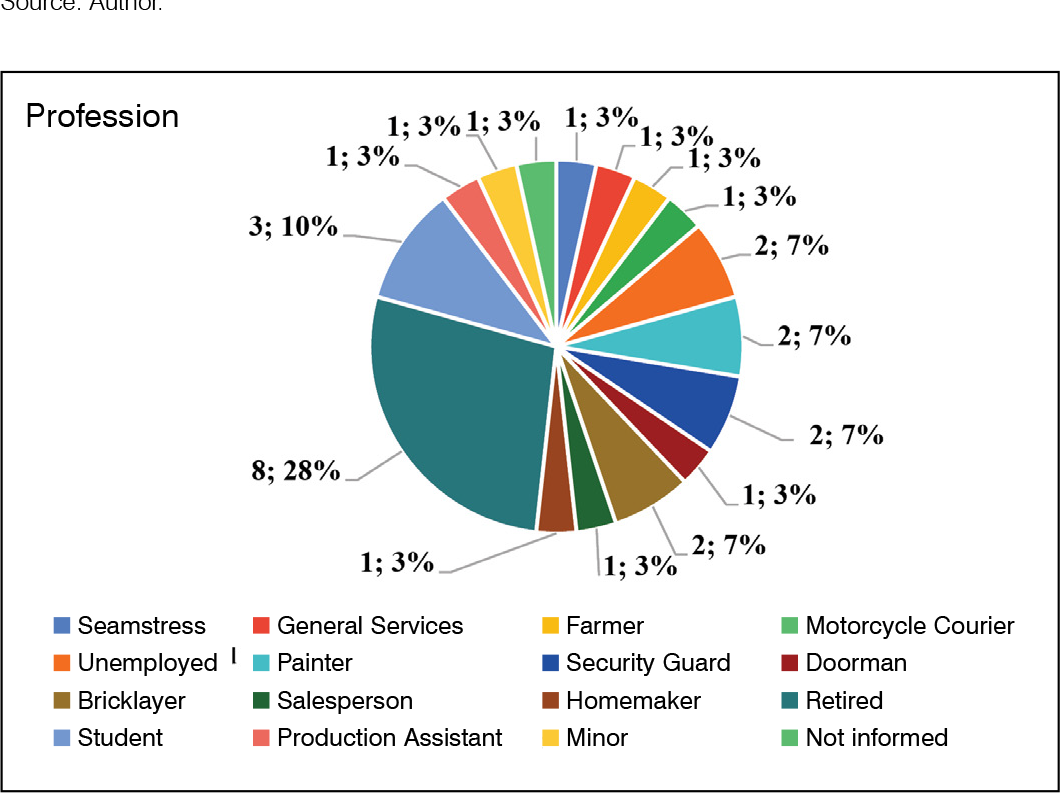
In Figure 1, it is possible to verify the occupations or professions of the patients evaluated in this research. It is noted that most patients were retired (28.0%) and students (10.0%).
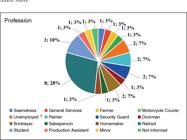
Occupation of patients with spinal tuberculosis treated in the trauma department of UNIFESP, Hospital São Paulo, from 2005 to 2024. São Paulo - SP. (n=29).
Table 2 presents the comorbidities of patients with vertebral tuberculosis evaluated in this research. It is observed that 34.6% of patients reported some pre-existing comorbidity, with the most frequent being infectious diseases, metabolic/endocrine diseases, and substance use, each representing 13.8% of cases. In addition, 24.1% of patients reported being smokers.
Comorbidities of patients with vertebral tuberculosis treated in the trauma department of UNIFESP, Hospital São Paulo, from 2005 to 2024. São Paulo - SP. (n=29).
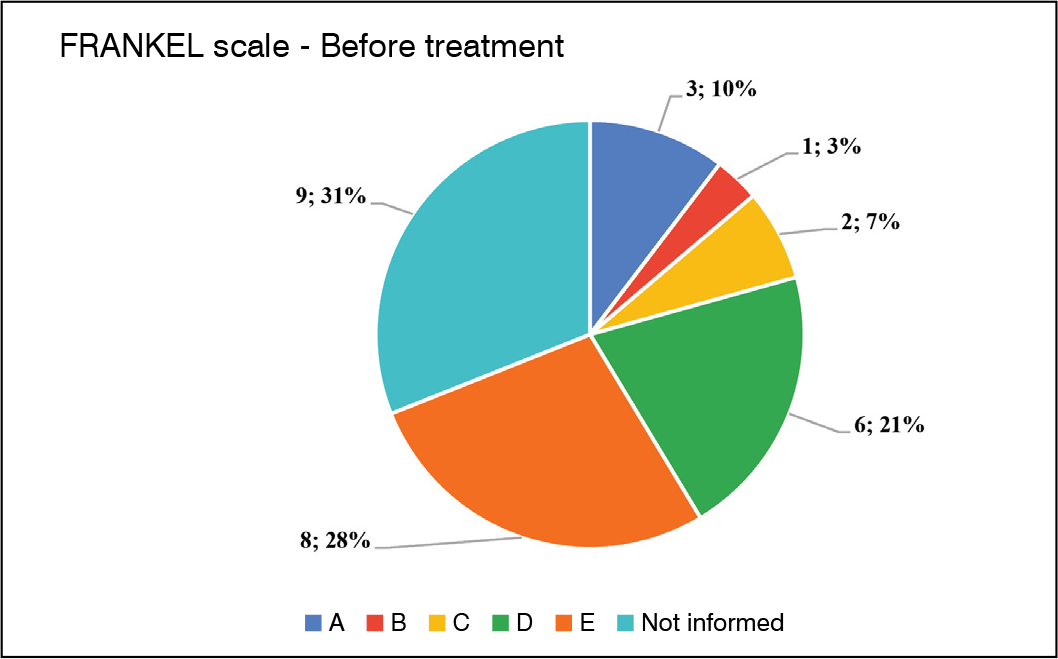
Figure 2 presents the pre-operative Frankel classification of patients with vertebral tuberculosis evaluated in this study. It is observed that most patients did not have this information recorded (31.0%). Among those with documented classification, the most prevalent grades were E (28.0%) and D (21.0%).
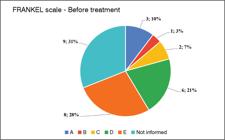
Preoperative Frankel classification presented by patients with spinal tuberculosis treated at the trauma department of UNIFESP, Hospital São Paulo, from 2005 to 2024. São Paulo - SP. (n=29).
Table 3 shows the clinical characteristics of patients with spinal tuberculosis evaluated in this research.
Clinical characteristics of patients with spinal tuberculosis treated at the trauma department of UNIFESP, Hospital São Paulo, from 2005 to 2024. São Paulo - SP. (n=29).
The analysis of Table 2 shows that the thoracic segment was the most affected by vertebral tuberculosis (48.3%). In the radiological findings, it was found that most patients presented moderate kyphosis (20° to 40°), corresponding to 34.5% of cases, followed by 20.7% with mild kyphosis (<20°). Regarding the diagnosis, surgical biopsy was the most used method (44.8%), and concerning the treatment adopted, the clinical approach predominated, being performed in 55.2% of cases.
Figure 3 presents the postoperative Frankel classification of patients with vertebral tuberculosis who underwent surgical treatment (n = 13). It is noted that 42.0% of patients did not have this information recorded. Among those with documented classification, the most prevalent grades were E (33.0%) and A (17.0%).
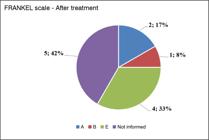
Postoperative Frankel classification presented by patients with vertebral tuberculosis treated in the trauma department of UNIFESP, Hospital São Paulo, from 2005 to 2024. São Paulo - SP. (n=13).
DISCUSSION
The results of this study provide a detailed view of the sociodemographic, clinical, and treatment characteristics of 29 patients diagnosed with vertebral tuberculosis treated at the Orthopedics and Traumatology Department of UNIFESP - Hospital São Paulo.
Vertebral tuberculosis, also known as Pott’s disease or tuberculous spondylitis, usually occurs as a secondary complication of a primary infection in the lungs or other organs, predominantly disseminated hematogenously. The classic manifestations include reduction of the disc space due to erosion and bone destruction of the adjacent vertebrae. There is also an atypical form of the disease, characterized by different patterns of involvement, such as isolated lesions in a single vertebra, exclusive involvement of the posterior structures, multiple affected vertebrae, or intraspinal involvement.10
The findings of this research corroborate the literature that points to vertebral tuberculosis as a condition that predominantly affects males.2,11-13 However, unlike some studies that indicate higher prevalence in older age groups, in this study, most cases occurred among individuals aged 31 to 50 years, representing the most prevalent involvement in the economically active population.2,11,12 This pattern may be related to factors such as greater occupational exposure, socioeconomic vulnerability14 and the presence of comorbidities that favor immunosuppression and reactivation of latent infection by Mycobacterium tuberculosis.1
The higher prevalence of patients of mixed ethnicity and low education may be associated with social inequalities, which influence both access to health services and the risk of tuberculosis infection,15,16 in addition to reflecting regional characteristics of the studied population. Previous studies show that extrapulmonary tuberculosis, including vertebral tuberculosis, is associated with unfavorable socioeconomic conditions, due to factors such as late access to diagnosis and difficulties in treatment follow-up.12,17
The high prevalence of comorbidities, especially infectious, metabolic/endocrine diseases, and substance use, reinforces the need for a multidisciplinary management of these patients.18 Coinfection with HIV, for example, is a known risk factor for vertebral tuberculosis, as immunosuppression facilitates the hematogenous spread of Mycobacterium tuberculosis to the spine.19 Smoking and the use of alcohol and other substances are also important risk factors, both for the development of active tuberculosis and for worsening treatment response.20
Generally, the main clinical manifestation reported is pain in the dorsal or lumbar region, evolving over months, accompanied by stiffness, deformities, and systemic symptoms such as low fever, weight loss, and malaise, common characteristics of tuberculosis in general.11 In more severe cases, neurological deficits and pronounced deformities, especially kyphosis, may occur.21
In this research, the radiological evaluation identified moderate kyphosis (20° to 40°) as the most frequent alteration. These findings align with the fact that most patients, at the time of diagnosis, were classified in Frankel stages D and E, highlighting the insidious course of the disease. Progressive kyphotic deformity is one of the main sequelae of vertebral tuberculosis and is associated with neurological deficits and poorer quality of life.1,22
Moreover, the predominance of thoracic segment involvement is consistent with the literature, which points to this region as the most frequently affected due to the rich vascularization of the thoracic spine, facilitating the hematogenous spread of the bacillus.1,23
Regarding diagnosis, surgical biopsy was the most used method, evidencing the need for an invasive approach to confirm vertebral tuberculosis in many cases.24 This approach is often necessary, as the clinical and radiological findings of vertebral tuberculosis can overlap with other pathologies, such as pyogenic spondylodiscitis and neoplasms.1,2
Clinical treatment was the main approach used, according to the guidelines for managing osteoarticular tuberculosis.1,25 All patients included in the study completed the therapeutic regimen with positive outcomes, with only one death recorded, which was associated with pre-existing comorbidities. According to the literature, the conventionally indicated antibiotic therapy for pulmonary tuberculosis also shows efficacy in treating the vertebral form,1,2 with the fusion of the affected vertebral bodies, evidenced in imaging studies, being one of the main criteria for assessing cure.24
However, the need for surgical treatment in 44.8% of cases reflects the severity of the condition in many patients, especially those with significant deformities or neurological impairment.26
The analysis of pre and post-operative Frankel classifications reveals that most patients maintained their neurological condition stable or showed improvement after surgical intervention. At the end of treatment, more than 70% were in Frankel stage E, indicating significant functional recovery.27 It is also noteworthy that the absence of this record in a significant number of cases may be associated with failures in medical documentation or the fact that some patients did not present neurological deficits at the time of evaluation.
Moreover, it is emphasized that previous studies indicate that the neurological prognosis of vertebral tuberculosis depends on the timeliness of diagnosis and treatment, with late interventions potentially resulting in irreversible sequelae.2,5,12,13
Corroborating these findings, Sharma et al.28 reinforce that younger age and earlier diagnosis were reported as favorable prognostic factors. The severity of the disease (number of damaged vertebrae) and the extent of spinal deterioration (instability, deformity, abnormalities) influence the clinical outcome. The existence of paraplegic symptoms at the time of initial diagnosis is considered a poor prognosis.
In light of the findings of this study, the importance of early diagnosis and appropriate management of vertebral tuberculosis is emphasized, especially in vulnerable populations. The high prevalence of comorbidities and unfavorable socioeconomic factors reinforces the need for a multidisciplinary approach to optimize the prognosis of these patients. Furthermore, the analysis of neurological classifications shows that, although most individuals have shown improvement or maintenance of functional status after treatment, the lack of complete records limits a more accurate assessment of clinical evolution. Thus, future studies with larger samples and more detailed follow-up are essential to deepen the understanding of the outcomes of spinal tuberculosis and improve therapeutic strategies.
CONCLUSION
Spinal tuberculosis remains a significant challenge in clinical practice, especially due to its insidious course and potential for neurological complications. This study highlighted the predominance of the disease in male individuals, young adults, economically active, of mixed ethnicity, and with low education, reinforcing the relationship between tuberculosis and socioeconomic factors. Moreover, the high prevalence of comorbidities emphasizes the importance of a multidisciplinary approach in managing these patients.
It was found that the thoracic segment was the most affected, and moderate kyphosis was the main deformity observed. Surgical biopsy was the most commonly used diagnostic method, and most patients underwent clinical treatment, with good outcomes in neurological evolution. However, the absence of complete records of the Frankel classification limited a more accurate assessment of functional progression. In light of this, the need for improvements in clinical documentation and future studies to enhance the diagnostic and therapeutic strategies for spinal tuberculosis is reinforced.
-
Reviewed by: Alexandre Fogaça
-
Study conducted by the Department of Orthopedics and Traumatology of the Federal Universidade Federal de São Paulo, Paulista School of Medicine (UNIFESP), Rua Pedro de Toledo, 650 - Vila Clementino, São Paulo, SP, Brazil. 04039-002.
DATA AVAILABILITY DECLARATION
The contents underlying the research are available in the SciELO Dataverse of the Journal Coluna/Columna, at the link: https://doi.org/10.48331/SCIELODATA.PED0XD.
REFERENCES
-
1 Leowattana W, Leowattana P, Leowattana T. Tuberculosis of the spine. World J Orthop. 2023;14(5):275-293. doi: 10.5312/wjo.v14.i5.275.
» https://doi.org/10.5312/wjo.v14.i5.275. -
2 Chipeio ML, Sayah A, Hunter CJ. Spinal Tuberculosis. Am J Trop Med Hyg. 2021;104(5):1605-1606. doi: 10.4269/ajtmh.20-1529.
» https://doi.org/10.4269/ajtmh.20-1529. -
3 Wang B, Wang Y, Hao D. Current Study of Medicinal Chemistry for Treating Spinal Tuberculosis. Curr Med Chem. 2021;28(25):5201-5212. doi: 10.2174/0929867328666201222125225.
» https://doi.org/10.2174/0929867328666201222125225. -
4 Zanon IB, Tsai VL, Ribeiro TC, Astur N, Mendonça RGM, Gotfryd AO, et al. The profile of Pott’s disease in a South American reference service. Coluna/Columna. 2021 Apr;20(2):109-13. doi: 10.1590/S1808-185120212002234844.
» https://doi.org/10.1590/S1808-185120212002234844. -
5 Janse Van Rensburg A, Dube A, Curran R, Ambaw F, Murdoch J, Bachmann M, et al. Comorbidities between tuberculosis and common mental disorders: a scoping review of epidemiological patterns and person-centred care interventions from low-to-middle income and BRICS countries. Infect Dis Poverty. 2020;9(1):4. doi: 10.1186/s40249-019-0619-4.
» https://doi.org/10.1186/s40249-019-0619-4. -
6 Wu W, Lyu J, Liu X, Luo F, Hou T, Zhou Q, et al. Surgical Treatment of Thoracic Spinal Tuberculosis: A Multicenter Retrospective Study. World Neurosurg. 2018;110:e842-e850. doi: 10.1016/j.wneu.2017.11.126.
» https://doi.org/10.1016/j.wneu.2017.11.126. -
7 Zaheen A, Bloom BR. Tuberculosis in 2020 - New Approaches to a Continuing Global Health Crisis. N Engl J Med. 2020;382(14):e26. doi: 10.1056/NEJMp2000325.
» https://doi.org/10.1056/NEJMp2000325. -
8 Wang G, Dong W, Lan T, Fan J, Tang K, Li Y, et al. Diagnostic accuracy evaluation of the conventional and molecular tests for Spinal Tuberculosis in a cohort, head-to-head study. Emerg Microbes Infect. 2018;7(1):109. doi: 10.1038/s41426-018-0114-1.
» https://doi.org/10.1038/s41426-018-0114-1. -
9 Moule MG, Cirillo JD. Mycobacterium tuberculosis Dissemination Plays a Critical Role in Pathogenesis. Front Cell Infect Microbiol. 2020;10:65. doi: 10.3389/fcimb.2020.00065.
» https://doi.org/10.3389/fcimb.2020.00065. -
10 Na S, Lyu Z, Zhang S. Diagnosis and Treatment of Skipped Multifocal Spinal Tuberculosis Lesions. Orthop Surg. 2023;15(6):1454-1467. doi: 10.1111/os.13744.
» https://doi.org/10.1111/os.13744. -
11 Gao S, Hu Y, Sheng W. Multifocal Noncontiguous Spinal Tuberculosis. Am J Trop Med Hyg. 2023;109(5):983-984. doi: 10.4269/ajtmh.23-0060.
» https://doi.org/10.4269/ajtmh.23-0060. -
12 Teles Filho RV, Abe G de M, Azevêdo LHS de, Melo NC, Rabahi MF, Daher MT. Perfil epidemiológico da tuberculose óssea no Brasil. Rev. Med. 2019;98(5):315-23. doi: http://dx.doi.org/10.11606/issn.1679-9836.v98i5p315-323
» http://dx.doi.org/10.11606/issn.1679-9836.v98i5p315-323 -
13 Ferreira DD, Tosetto VLN, Senn PB, Espindola EC, Fritzen CH, Dambros VF, et al. Bone tuberculosis: epidemiological and hospital scenario in Brazil in the last 5 years. RSD. 2023;12(5):e24912541755. doi: 10.33448/rsd-v12i5.41755.
» https://doi.org/10.33448/rsd-v12i5.41755. -
14 Boussaid S, M’rabet M, Rekik S, Jammali S, Rahmouni S, Zouaoui K, et al. Spinal Tuberculosis: Features and Early Predictive Factors of Poor Outcomes. Mediterr J Rheumatol. 2023;34(2):220-228. doi: 10.31138/mjr.34.2.220.
» https://doi.org/10.31138/mjr.34.2.220. -
15 Moura RF, Cesar CLG, Goldbaum M, Okamura MN, Antunes JLF. Factors associated with inequalities in social conditions in the health of elderly white, brown and black people in the city of São Paulo, Brazil. Brasil. Ciênc saúde coletiva. 2023;28(3):897-907. doi: 10.1590/1413-81232023283.08582022.
» https://doi.org/10.1590/1413-81232023283.08582022. -
16 Bertolozzi MR, Takahashi RF, França FOS, Hino P. A ocorrência da tuberculose e sua relação com as desigualdades sociais: Estudo de revisão Integrativa na Base PubMed. Esc Anna Nery. 2020;24(1): e20180367. doi: 10.1590/2177-9465-EAN-2018-0367.
» https://doi.org/10.1590/2177-9465-EAN-2018-0367. -
17 Delpino FM, Arcêncio RA, Nunes BP. Determinantes sociais e mortalidade por tuberculose no Brasil: estudo de revisão. Rev Baiana Saúde Pública. 2021;45(1):228-41. doi: 10.22278/2318-2660.2021.v45.n1.a3479.
» https://doi.org/10.22278/2318-2660.2021.v45.n1.a3479. -
18 Dahlan RH, Ompusunggu SE, Gondowardojo YRB, Priambodo R, Anugerah SW. Spinal tuberculosis: A case series and a literature review. Surg Neurol Int. 2022;13:196. doi: 10.25259/SNI_1201_2021.
» https://doi.org/10.25259/SNI_1201_2021. -
19 Li K, Liu B, Zhang Q. Recurrent Spinal Tuberculosis with HIV Infection After Surgery: A Rare Case of Recurrence and Drug Resistance. Infect Drug Resist. 2023;16:7827-7833. doi: 10.2147/IDR.S438184.
» https://doi.org/10.2147/IDR.S438184. -
20 Thomas BE, Thiruvengadam K, S R, Kadam D, Ovung S, Sivakumar S, et al. Smoking, alcohol use disorder and tuberculosis treatment outcomes: A dual co-morbidity burden that cannot be ignored. PLoS One. 2019;14(7):e0220507. doi: 10.1371/journal.pone.0220507.
» https://doi.org/10.1371/journal.pone.0220507. -
21 Yong LN, Ahmedy F, Yin KN, Engkasan JP. Functional Outcomes in Spinal Tuberculosis: A Review of the Literature. Asian Spine J. 2021;15(3):381-391. doi: 10.31616/asj.2020.0086.
» https://doi.org/10.31616/asj.2020.0086. -
22 Chen L, Liu C, Ye Z, Liang T, Huang S, Chen J, et al. Multiple Spinal Tuberculosis with Severe Kyphosis: A Case Report. Front Surg. 2022;9:815514. doi: 10.3389/fsurg.2022.815514.
» https://doi.org/10.3389/fsurg.2022.815514. -
23 Sun X, Yang J, Yu L, Shi Y, Guo W. Thoracic tuberculosis misdiagnosed as lumbar compression fracture and treated with percutaneous kyphoplasty (PKP): a case report and literature review. Food Sci Technol. 2022;42:e29821. doi: 10.1590/fst.29821
» https://doi.org/10.1590/fst.29821 -
24 Ruparel S, Tanaka M, Mehta R, Yamauchi T, Oda Y, Sonawane Set al. Surgical Management of Spinal Tuberculosis-The Past, Present, and Future. Diagnostics (Basel). 2022;12(6):1307. doi: 10.3390/diagnostics12061307.
» https://doi.org/10.3390/diagnostics12061307. -
25 Kumar V, Neradi D, Sherry B, Gaurav A, Dhatt SS. Tuberculosis of the spine and drug resistance: a review article. Neurosurg Rev. 2022;45(1):217-229. doi: 10.1007/s10143-021-01595-1.
» https://doi.org/10.1007/s10143-021-01595-1. -
26 Gan J, Zhang C, Tang D, Du X. Surgical treatment of spinal tuberculosis: an updated review. Eur J Med Res. 2024;29(1):588. doi: 10.1186/s40001-024-02198-4.
» https://doi.org/10.1186/s40001-024-02198-4. -
27 Sharma A, Chhabra HS, Chabra T, Mahajan R, Batra S, Sangondimath G. Demographics of tuberculosis of spine and factors affecting neurological improvement in patients suffering from tuberculosis of spine: a retrospective analysis of 312 cases. Spinal Cord. 2017;55(1):59-63. doi: 10.1038/sc.2016.85.
» https://doi.org/10.1038/sc.2016.85. -
28 Kirshblum S, Botticello A, Benedetto J, Donovan J, Marino R, Hsieh S, et al. A Comparison of Diagnostic Stability of the ASIA Impairment Scale Versus Frankel Classification Systems for Traumatic Spinal Cord Injury. Arch Phys Med Rehabil. 2020;101(9):1556-1562. doi: 10.1016/j.apmr.2020.05.016.
» https://doi.org/10.1016/j.apmr.2020.05.016.

 Source: Author.
 Source: Author.
 Source: Author.