 Therapeutic strategies for tongue musculature: a systematic literature review
ABSTRACT
Purpose To analyze the different therapeutic strategies prescribed in orofunctional rehabilitation of the tongue musculature.
Research strategies Regional Portal of the Virtual Health Library for Latin America and the Caribbean, Embase, PubMed/MEDLINE, Scientific Electronic Library Online, SciVerse Scopus and Cochrane databases were consulted, with the descriptors "exercise therapy” OR “physiology” OR “musculoskeletal physiological phenomena” OR “digestive system and oral physiological phenomena” AND “speech therapy” OR “myofunctional therapy” OR “speech language pathology” AND “tongue”. Studies indexed until October 5, 2023, were included.
Selection criteria Studies with an interventionist design with exercises for tongue musculature were included.
Data analysis Three reviewers selected, extracted and tabulated the information from the studies. The PEDro scale was used to measure the studies’ methodological quality.
Results 1.036 studies were found, and 18 were included in this review. The samples varied between 16 and 148 subjects, aged between 4 and 95 years. Only seven studies clearly described the exercises execution, and the number of sets, repetitions, and contraction duration. Fourteen studies clearly defined the exercises’ objectives. The average score of the PEDro Scale analysis was 6.9, and 56.25% of the studies scored ≥7.
Conclusion There is a lack of a clear description of the exercises’ goals and their clinical indications, which can lead to confusion and inadequate prescription. Future studies will need to provide a clear description of the outcomes, in order that we can define, according to the exercises and training program specificity, what the effects of different training methodological parameters in this musculature are.
Keywords:
Tongue; Exercise; Myofunctional Therapy; Physiology; Speech, Language and Hearing Sciences
INTRODUCTION
The tongue is a muscular organ covered by mucosa, located in the oral cavity and composed of extrinsic and intrinsic musculature. The extrinsic musculature consists of the palatoglossus, the hyoglossus, styloglossus and genioglossus muscles. The latter originates in a bone structure, and is responsible for moving the tongue. The intrinsic musculature, consisting of the upper longitudinal, lower longitudinal, transversal and vertical muscles, has its origin and insertion in the tongue and changes its shape during tongue function(1,2). Although anatomically the tongue muscles are studied separately, functionally there are some overlaps(2).
There are several peculiarities among the tongue muscles. There are regional differences in the fiber type distribution of the extrinsic muscles, groupings of the different types, variability in their size, fibers’ division and interconnection, and abundance of loose connective tissue(2). The tongue’s motor units, described in a ratio of 25 muscle fibers per motor neuron(3), are small and concentrated in the anterior third, with 71% of type II fast-twitch fibers, while in the posterior third, 66% are type I fibers(4). The intrinsic muscles, on average, contain less type I fibers (42%) in the blade than in the body (58%) and at the base (58%)(2). These peculiarities make the function of the tongue muscles very complex, thereby increasing the difficulty for their rehabilitation.
The biomechanics of the tongue has some particularities, as the tongue does not exert significant external force, but continuously remodels itself to adequately performing its functions. The tongue blade has a smaller number of slow-twitch fibers, which seems convenient for performing fine motor tasks. Similarly, the abundance of loose connective tissue seems relevant for changes in shape. In the absence of bones, the muscles themselves provide the supports or pillars on which they mechanically interact, and this is probably because a rigid support conflicts with fine movement(2).
The tongue performs unique movements during speech, chewing and swallowing; however, the anatomical specializations underlying these movements are still largely unknown(1). The effectiveness of a therapy for tongue musculature requires an adequate exercise prescription. However, studies with a detailed description of the techniques are scarce(5). Apparently, there is no clarity or unanimity about the parameters used for the exercise prescription in this musculature rehabilitation.
PURPOSE
Therefore, the objective of this systematic literature review was to define the parameters (number of sets and repetitions, frequency, isometric time, rest time and therapy time) of the exercises prescribed in speech therapy intervention for tongue muscles. Secondarily, we sought to analyze the quality of interventionist studies in the area.
RESEARCH STRATEGY
This systematic literature review was conducted according to the instructions of Cochrane Collaboration(6) and PRISMA Guideline (Preferred Reporting Items for Systematic Reviews and Meta-Analysis)(7). The protocol number registered in PROSPERO is CRD42020186283.
For the formulation of the proposal, the PICOS strategy was used: Participant - individuals of any age; Intervention - tongue muscles; Comparison - absence of comparison group; Outcome - parameters prescribed in the exercises for the tongue musculature; Studies - randomized or not – clinical trials, giving rise to the following structured question: What is the level of evidence for the exercises and parameters of tongue muscle training prescribed by speech therapists in the oromyofunctional rehabilitation of the tongue muscles?
The search strategy was initially established for the PubMed database, using the keywords identified in the Health Sciences Descriptors (HSD) related to the exposure of interest and results: "exercise therapy” OR “physiology” OR “musculoskeletal physiological phenomena” OR “digestive system and oral physiological phenomena” AND “speech therapy” OR “myofunctional therapy” OR “speech language pathology” AND “tongue". The Boolean operator OR was used to combine the terms in each PICO concept; the AND operator was used to combine the different concepts of the PICOS (participant, exhibition, outcome). A sensitive search strategy was adapted for the other databases: Embase, Latin American Literature of Health Sciences of the Americas and Caribbean - LILACS, Scopus, Cochrane and The Scientific Electronic Library Online - SciELO. The complete search strategy, with the terms used for the databases, are described in Table 1. Studies indexed until October 5, 2023, were included. The database results were cross-checked to locate and eliminate duplicates.
SELECTION CRITERIA
Studies with an interventional design (randomized clinical trial and non-randomized clinical trial - quasi-experimental), which presented some exercise for the tongue musculature, were included. No language or date restrictions were applied. Observational articles, comments, letters, book chapters, editorials, communications, opinions, literature reviews, systematic reviews, conference abstracts, duplicate studies, intervention studies in reports or case series were excluded. Studies on syndromes, metabolic diseases and other basic features were also excluded. Studies not available were excluded. The review studies were read to see if any studies, not found in the search phase, could be included.
In this review, studies that prescribed exercise for the tongue musculature were considered. The main outcome of this review was the parameters used in the exercise prescription for this musculature.
DATA ANALYSIS
Three reviewers independently (ACCO, ACNF, MEPA) analyzed the titles and abstracts, selecting those that would meet the eligibility criteria. Disagreements were discussed among the reviewers. Two reviewers independently (ACCO, ACNF) read articles considered eligible or uncertain in full, and selection criteria for inclusion were applied. The reasons for excluding the evaluated full texts were recorded. Next, three reviewers (ACCO, ACNF, MEPA) extracted and tabulated information regarding authors, year of publication, objective, methodological design, participants’ number and characteristics, exposure characteristics, outcome measures and main results.
Two authors, using the PEDro Physiotherapy Evidence Database Scale(8), performed a blind and independent evaluation of the studies’ quality. This scale consists of eleven assessment items: specified eligibility criteria; random allocation to groups; secret allocation; similar groups; blinded participants; blinded therapists; blinded evaluators; result obtained in more than 85% of the initial sample; treatment intention; statistical comparisons; precision and variability measures(8).
RESULTS
Results summary
The included studies were moved to data extraction, following a standard form in Google Drive®. These data were first summarized in spreadsheets, according to the nature of the outcome measures. For the results’ quantitative measures, the mean values, frequency, and standard deviations were recorded, whenever possible. Finally, the data were grouped into tables. We tried to summarize the data so that there was uniformity in the presentation. No meta-analysis was performed due to the data heterogeneity. It should be noted that this review was not intended to assess the effects of the exercises, but rather to characterize them. Thus, only the data directly related to the purpose of this review were tabulated in a synthesized way.
Analysis of selected studies
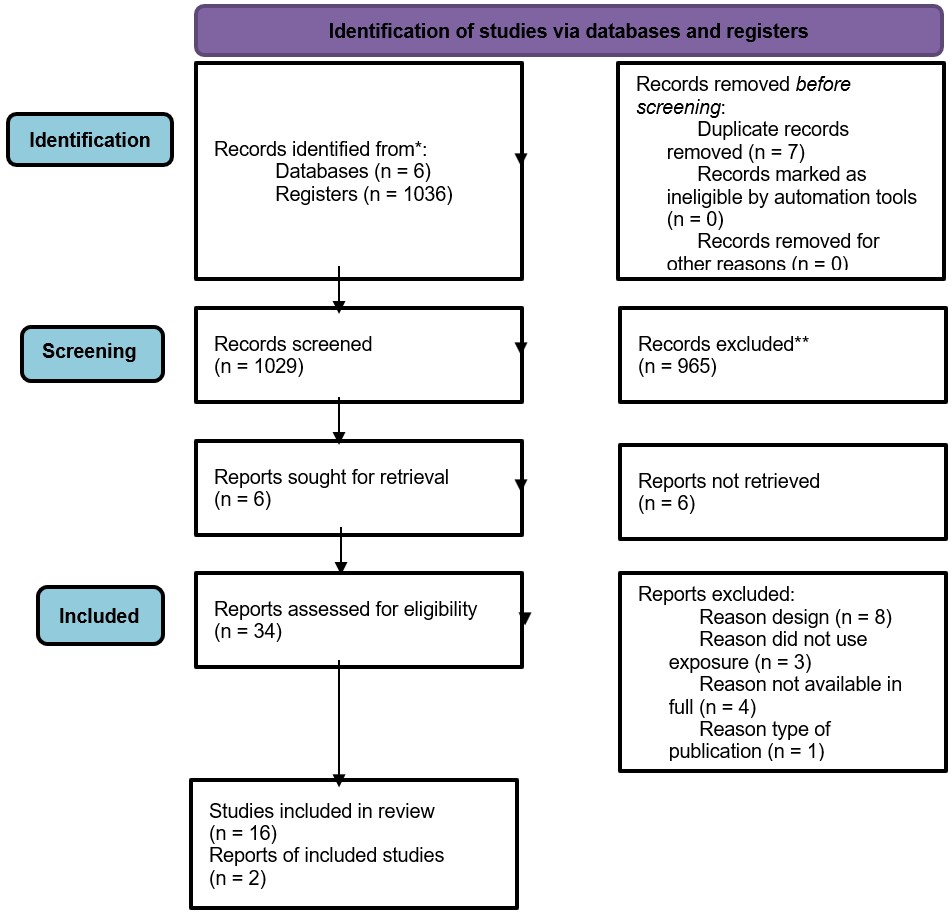
A total of 1,036 articles were found from the consulted databases. After removing duplicate records, 1,029 records remained. In analyzing the titles and abstracts, 965 studies were eliminated. Therefore, 34 studies met the inclusion criteria for full text review. After reading the studies in full, 16 articles were excluded according to the reasons described in Figure 1, and eighteen(9-26) were included as they met the inclusion criteria (Figure 1).
Characteristics of included studies
The characteristics of the studies and participants are described in Table 2. The eighteen studies were carried out in eight countries, published between 2005 and 2023. In the last ten years, thirteen of these studies were published, seven in the last five years. The studies’ sample size varied between 16 and 148 subjects, aged between four and 95 years, with a large heterogeneity in their populations. Five studies evaluated patients with head and neck cancer and/or chemotherapy(11,14,16,23,26); five evaluated patients with Apnea Syndrome and Obstructive Sleep Hypopnea(10,17,20,24,25); two in anterior open bite(9,18); two in healthy adults(12,13); one in healthy elderly(21); one in orthognathic surgery patients(19) and two in patients with dysarthria after stroke(15,22) (Table 2).
Regarding the nomenclature and description of the executed exercises, eight studies described these two items in a sufficiently clear manner, generating no doubt from the reviewers about the used exercises(11,13,16,21-23,25,26). Six studies did not inform how long the contraction was maintained during exercise(9,17-20,24). Four studies presented the exercises’ name, but did not describe their execution(9,11,19,24); and two did not present the exercises’ name and description(18,20) (Table 3).
Regarding the exercises’ parameters, six studies presented the number of sets, repetitions and muscle contraction time(11,16,22,23,25,26); two studies did not present the muscle contraction time(10,17) and one did not present the number of repetitions(14). Eight studies did not present these parameters sufficiently for the exercises to be replicated(9,10,12,14,18-20,24) (Table 3).
As for the exercises’ goals and the results evaluation, three studies did not clearly define the exercises’ objectives(11,12,24). Objective assessments of the tongue musculature were used in twelve studies(11-14,16,18,21-26). The Iowa Oral Performance Instrument (IOPI), a portable instrument connected to a small balloon filled with air, which transmits to the digital display the isometric pressure (in kilopascals, kPa) that the tongue produces when pressing the balloon against the palate, was used in ten studies(13,14,16,18,21-26). Objective assessments, but not directly of the tongue musculature, were used in four studies(10,17,19,20). One study described only the protocols used(9). The combination of clinical assessment with IOPI was mentioned in two studies(16,18) (Table 4).
Description of the exercise objective, method used for the evaluation of the tongue and main results
Methodological Quality
The PEDro Scale analysis shows that, methodologically, studies have a good score. The Scale warns that the high score does not directly provide evidence of the clinical usefulness of the treatment. In addition, it should not be used to compare studies from different therapy areas, especially since in some areas of physiotherapy it is not possible to satisfy all items on the scale(8). The methodology regarding randomization, blinding and analysis of study results was quite satisfactory. However, despite the good methodological quality of the studies, other scales need to be created that assess the technical quality of the different exercises and training programs in obtaining the desired clinical results.
In the PEDro Scale analysis, two studies were excluded(16,23), as they are related to the clinical trial registration and not research results. Since the objective of this review was not to verify the exercises’ results, but rather what exercises were used, we decided to keep these studies in the review, but they were not evaluated through PEDro for not compromising the analysis score in the items related to the results. The average score of the sixteen studies analyzed was 6.9, with an SD of 1.36. The most frequent scores were 7 (31.25%) and 6 (31.25%), and 56.3% of the studies scored ≥7. All studies specified the eligibility criteria (although this item is not used for the score), and presented the measures’ precision and variability, statistical data, and groups similarity. The items random allocation in groups(12,21), secret allocation(12,21,22) and intention to treat(19) were not described in these studies. One study specified blinded participants(25) and two indicated therapist blinding(9,25) (Table 5).
DISCUSSION
On one hand, the fact that 18 randomized clinical trials(9-26) were found in the existing literature suggests that the idea of a lack of publications dealing with exercises for the tongue musculature in the speech therapy does not hold true. Of the 18 studies, 13 were published in the last ten years, and only three were developed on a healthy population. On the other hand, the fact that only 18 studies were included, and that it was not possible to carry out a meta-analysis due to their methodological diversity, shows that studies with higher methodological quality are still needed to better elucidate the tongue anatomy and its function, as well as which exercises are the most appropriate to train/rehabilitate this musculature(29).
While reviewing the existent literature, we observed a lack of uniformity in the nomenclature of the prescribed exercises, a lack of standardization of the prescriptions and a lack of uniformity in the evaluated parameters. Studies in healthy populations are needed to determine normality standards or normal values for the outcomes, which can then be used to guide evidence-based clinical practice on what is a healthy condition, and to better define which outcomes are suitable for the orofacial muscles according to the different goals. Once the parameters and their objectives are defined, they should be applied to different populations (e.g. the different facial growth patterns) as there is also a lack of studies with excellent methodological quality and that have used clear training parameters for the musculature of the tongue in these different populations.
A study, designed to verify the students' knowledge about the commonly prescribed exercises, while enrolled in their final year of full-time study in either a Bachelor of Speech Pathology or Masters of Speech Pathology Program, demonstrated that they did not master the appropriate use of exercises in different areas of speech therapy. The authors suggest that discussing and deepening the knowledge in this area would be beneficial for students and clinical supervisors(30), in order to define a clear methodology, with a clear description of the exercises, as well as clearly identifying the parameters that should be used in different training programs for this musculature. Without a uniform nomenclature, and an adequate description of exercises and training parameters, it is difficult to clearly define which exercises are effective, what their effects are, and which training program would be the most suitable for the treatment of different orofacial disorders in clinical practice. The need for greater knowledge about exercise physiology was also verified in a study with trained professionals; the authors also indicate the need for more technical-scientific support to guide clinical practice(31).
Eight studies described the exercises clearly enough and presented a number of sets, repetitions and muscle contraction time(11,13,16,21-23,25,26), whereas ten studies did not disclose such parameters, making it impossible to replicate the exercises(9,10,12,14,15,17-20,24). The strength training strategies for large muscle groups in the body has its parameters quite consolidated. On one hand, strength training requires the use of high loads to increase muscle force production capacities and improve the muscle structure and fiber quality(32). On the other hand, resistance training depends on the number of repetitions and sets imposed during training as the main variables(33). Muscle power, which decreases in large muscles with aging, benefits from training programs that vary the speed of contraction and the used loads(34).
However, orofacial muscles are recruited differently and have different neuromuscular structure than large skeletal muscles responsible to generate motion. Therefore, the orofacial myofunctional therapy, being a science that also intervenes in the skeletal musculature, needs to consolidate its parameters according to the desired objectives, aimed at producing the necessary adaptations to the intrinsic characteristics of its treated musculature. In addition, muscle loading is an incipient theme in speech therapy. Strength training at high intensities leads to the adaptation (i.e., hypertrophy) of type II muscle fibers. In the context of training, strength usually refers to the maximal strength and is measured during a single or a minimum number of repetitions(13). Although there are different ways and different equipment available to apply loads to limb muscles, orofacial muscles bring a challenge due to the difficulty in implementing similar methods as those used for limb muscles(13,32-34).
Nevertheless, IOPI is the instrument worldwide used for assessing tongue pressure/strength(35). Such an instrument, or another with similar function, is needed for the strength training principles (e.g., loads and overload) to be applied. Without a clear definition of which loads, or which mechanical overload should be applied for strengthening orofacial muscles in rehabilitation, it becomes difficult to evaluate the effects of different exercise programs, as well as to clearly define which parameters should be used for the treatment of each neuromuscular dysfunction.
Despite the importance of the tongue for our most basic daily living activities (e.g., eating, speaking), the understanding of its structure and function apparently is still at an early stage. An explanation for the lack of studies on the human tongue could be due to its complex anatomy. There are few anatomical resources in the literature clearly showing this complex anatomy, and this has constituted a real barrier for researchers in this field. Thus, the diagnosis and treatment of tongue disorders are delayed in relation to other structures of the head and neck(2). Since the tongue is a muscular hydrostat, it differs from other skeletal muscle groups, as its movement is performed by a complex pattern of contractions of fibers aligned in intersecting planes. In addition, this structure does not move around a joint. Thus, the morphological and biomechanical properties of the tongue and its supporting musculature differ substantially from the skeletal musculature of the limbs and core. Therefore, one question regarding the existing knowledge in the strength-training field is how the training specificity would manifest itself in this muscle group. At the present time, knowledge is still limited to indicate whether the tongue muscle group shows specificity effects similar to those of the limbs, also because initial investigations were not striking(13).
The limitations of this research are the design of the studies considered. This research included only clinical trials due to methodological rigor and because they are considered clinical studies with the highest level of evidence, but relevant studies with other designs may not have been identified. This research did not perform a manual search, outside of the systematic search. It is observed that some studies use descriptors not present in MESH, which prevents them from being located in the databases with Boolean operators with MESH terms. Our study verified the need, which has also been pointed out by other authors(30,31), for research that evaluates the effectiveness of prescribed exercises considering different parameters in a healthy population and in populations with different pathologies.
CONCLUSIONS
For the question it was proposed to answer, this review found that the parameters used in the exercises prescribed by speech therapists in the oromyofunctional rehabilitation of the tongue musculature varied widely. There is no shortage in the literature of exercise prescriptions, and there is a good quality of the reviewed studies. However, there is a lack of consensus and of a clear description of the exercises’ goals, as well as a lack of a clear description of the parameters indicated for achieving specific rehabilitation goals. This can lead to confusion and inadequate exercise prescription in clinical practice. Therefore, there is a need for studies, with objective measures, aimed at defining, according to specificity on strength, endurance, power, and speed, which are the effects of different parameters on this musculature both in healthy subjects and in orofacial patients of different populations. Such concepts need to be better understood and applied to the reality of orofacial myofunctional therapy of the tongue musculature.
ACKNOWLEDGEMENTS
Dr. Rafaela Soares Rech for her assist, consultancy on study design and encouragement to start the work. Dr. Bárbara de Lavra Pinto Aleixo without whose support, encouragement and exchanges there would be no such work. Dr. Mônica Carminatti for her special attention and dedication.
-
Study conducted at Universidade Federal do Rio Grande do Sul – UFRGS - Porto Alegre (RS), Brasil.
-
Financial support: Scholarship for undergraduate students - Institutional Scholarship Program for Scientific Initiation and Technological Initiation and Innovation - Fundação de Amparo à Pesquisa do Estado do Rio Grande do Sul.
REFERENCES
-
1 Sanders I, Mu L. A three-dimensional atlas of human tongue muscles. Anat Rec (Hoboken). 2013;296(7):1102-14. http://doi.org/10.1002/ar.22711 PMid:23650264.
» http://doi.org/10.1002/ar.22711 -
2 Sanders I, Mu L, Amirali A, Su H, Sobotka S. The human tongue slows down to speak: muscle fibers of the human tongue. Anat Rec (Hoboken). 2013;296(10):1615-27. http://doi.org/10.1002/ar.22755 PMid:23929762.
» http://doi.org/10.1002/ar.22755 - 3 Diels HJ. New concepts in nonsurgical facial nerve rehabilitation. Adv Otolaryngol Head Neck Surg. 1995;9:289-315.
- 4 Fonseca RP. Características cinesiológicas da musculatura intrínseca e extrínseca lingual na produção do fonema /r/. Rev Soc Bras Fonoaudiol. 2005;10(3):178-83.
-
5 Coutrin GC, Guedes LU, Motta AR. Treinamento muscular na face: a prática dos fonoaudiólogos de Belo Horizonte. Rev Soc Bras Fonoaudiol. 2008;13(2):127-35. http://doi.org/10.1590/S1516-80342008000200006
» http://doi.org/10.1590/S1516-80342008000200006 -
6 Higgins JPT, Thomas J, Chandler J, Cumpston M, Li T, Página MJ, et al. Cochrane handbook for systematic reviews of Interventions. Version 6.0. Cochrane Training; 2019 [cited 2020 Feb 3]. Available from: www.training.cochrane.org/handbook
» www.training.cochrane.org/handbook -
7 Page MJ, McKenzie JE, Bossuyt PM, Boutron I, Hoffmann TC, Mulrow CD, et al. The PRISMA 2020 statement: an updated guideline for reporting systematic reviews. BMJ. 2021;372(71):n71. http://doi.org/10.1136/bmj.n71 PMid:33782057.
» http://doi.org/10.1136/bmj.n71 -
8 Physiotherapy Evidence Database: PEDro. Escala de PEDro – Português (Brasil). Sydney: Physiotherapy Evidence Database; 1999 [cited 2020 May 4]. Available from: https://pedro.org.au/wp-content/uploads/PEDro_scale_portuguese(brasil).pdf
» https://pedro.org.au/wp-content/uploads/PEDro_scale_portuguese(brasil).pdf -
9 Degan VV, Puppin-Rontani RM. Remoção de hábitos e terapia miofuncional: restabelecimento da deglutição e repouso lingual. Pro Fono. 2005;17(3):375-82. http://doi.org/10.1590/S0104-56872005000300011 PMid:16389794.
» http://doi.org/10.1590/S0104-56872005000300011 -
10 Guimarães KC, Drager LF, Genta PR, Marcondes BF, Lorenzi-Filho G. Effects of oropharyngeal exercises on patients with moderate obstructive sleep Apnea Syndrome. Am J Respir Crit Care Med. 2009;179(10):962-6. http://doi.org/10.1164/rccm.200806-981OC PMid:19234106.
» http://doi.org/10.1164/rccm.200806-981OC -
11 Carnaby-Mann G, Crary MA, Schmalfuss I, Amdur R. “Pharyngocise”: Randomized controlled trial of preventative exercises to maintain muscle structure and swallowing function during head-and-neck chemoradiotherapy. Int J Radiat Oncol Biol Phys. 2012;83(1):210-9. http://doi.org/10.1016/j.ijrobp.2011.06.1954 PMid:22014959.
» http://doi.org/10.1016/j.ijrobp.2011.06.1954 -
12 Kothari M, Svensson P, Basic A, Christiansen B, Vigsø M, Truc L, et al. Influence of the ability to roll the tongue and tongue-training parameters on oral motor performance and learning. Arch Oral Biol. 2011;56(11):1419-23. http://doi.org/10.1016/j.archoralbio.2011.04.017 PMid:21621193.
» http://doi.org/10.1016/j.archoralbio.2011.04.017 -
13 Clark HM. Specificity of training in the lingual musculature. J Speech Lang Hear Res. 2012;55(2):657-67. http://doi.org/10.1044/1092-4388(2011/11-0045) PMid:22215031.
» http://doi.org/10.1044/1092-4388(2011/11-0045) -
14 Lazarus CL, Husaini H, Falciglia D, DeLacure M, Branski RC, Kraus D, et al. Effects of exercise on swallowing and tongue strength in patients with oral and oropharyngeal cancer treated with primary radiotherapy with or without chemotherapy. Clin Paper Head Neck Oncol. 2014;43(5):523-30. http://doi.org/10.1016/j.ijom.2013.10.023 PMid:24332586.
» http://doi.org/10.1016/j.ijom.2013.10.023 -
15 Mackenzie C, Muir M, Allen C, Jensen A. Non-speech oro-motor exercises in post-stroke dysarthria intervention: a randomized feasibility trial. Int J Lang Commun Disord. 2014;49(5):602-17. http://doi.org/10.1111/1460-6984.12096 PMid:24889103.
» http://doi.org/10.1111/1460-6984.12096 -
16 Nuffelen GV, Steen LV, Vanderveken O, Specenier P, Laer CV, Rompaey DV, et al. Study protocol for a randomized controlled trial: tongue strengthening exercises in head and neck cancer patients, does exercise load matter? Trials. 2015;16(1):395. http://doi.org/10.1186/s13063-015-0889-5 PMid:26340887.
» http://doi.org/10.1186/s13063-015-0889-5 -
17 Diaféria G, Santos-Silva R, Truksinas E, Haddad FLM, Santos R, Bommarito S, et al. Myofunctional therapy improves adherence to continuous positive airway pressure treatment. Sleep Breath. 2017;21(2):387-95. http://doi.org/10.1007/s11325-016-1429-6 PMid:27913971.
» http://doi.org/10.1007/s11325-016-1429-6 -
18 Van Dyck C, Dekeyser A, Vantricht E, Manders E, Goeleven A, Fieuws S, et al. The effect of orofacial myofunctional treatment in children with anterior open bite and tongue dysfunction: a pilot study. Eur J Orthod. 2016;38(3):227-34. http://doi.org/10.1093/ejo/cjv044 PMid:26136435.
» http://doi.org/10.1093/ejo/cjv044 -
19 Prado DGA, Berretin-Felix G, Migliorucci RR, Bueno MRS, Rosa RR, Polizel M, et al. Effects of orofacial myofunctional therapy on masticatory function in individuals submitted to orthognathic surgery: a randomized trial. J Appl Oral Sci. 2018;26:e20170164. http://doi.org/10.1590/1678-7757-2017-0164 PMid:29412368.
» http://doi.org/10.1590/1678-7757-2017-0164 -
20 Huang YS, Chuang LC, Hervy-Auboiron M, Paiva T, Lin CH, Guilleminault C. Neutral supporting mandibular advancement device with tongue bead for passive myofunctional therapy: a long term follow-up study. Sleep Med. 2019;60:69-74. http://doi.org/10.1016/j.sleep.2018.09.013 PMid:30448089.
» http://doi.org/10.1016/j.sleep.2018.09.013 -
21 Van den Steen L, Schellen C, Verstraelen K, Beeckman AS, Vanderwegen J, Bodt M, et al. Tongue-strengthening exercises in healthy older adults: specificity of bulb position and detraining effects. Dysphagia. 2018;33(3):337-44. http://doi.org/10.1007/s00455-017-9858-3 PMid:29052051.
» http://doi.org/10.1007/s00455-017-9858-3 -
22 Byeon H. Is the combined application of tongue pressure training and tongue base exercise more effective in improving the strength of tongue and lips in korean patients with flaccid dysarthria. Indian J Public Health Res Dev. 2018;9(11):1041-7. http://doi.org/10.5958/0976-5506.2018.01594.2
» http://doi.org/10.5958/0976-5506.2018.01594.2 -
23 Baudelet M, Van den Steen L, Duprez F, De Bodt M, Deschuymer S, Goeleven A, et al. Study protocol for a randomized controlled trial: prophylactic swallowing exercises in head-and-neck cancer patients treated with (chemo)radiotherapy (PRESTO trial). Trials. 2020;21(1):237. http://doi.org/10.1186/s13063-020-4171-0 PMid:32122397.
» http://doi.org/10.1186/s13063-020-4171-0 -
24 O’Connor-Reina C, Garcia JMI, Ruiz ER, Dominguez MDCM, Barrios VI, Jardin PB, et al. Myofunctional therapy app for severe apnea-hypopnea sleep obstructive syndrome: pilot randomized controlled trial. JMIR Mhealth Uhealth. 2020;8(11):e23123. http://doi.org/10.2196/23123 PMid:33093013.
» http://doi.org/10.2196/23123 -
25 Poncin W, Correvon N, Tam J, Borel JC, Berger M, Liistro G, et al. The effect of tongue elevation muscle training in patients with obstructive sleep apnea: a randomised controlled trial. J Oral Rehabil. 2022;49(11):1049-59. http://doi.org/10.1111/joor.13369 PMid:36081312.
» http://doi.org/10.1111/joor.13369 -
26 Baudelet M, Duprez F, Steen LV, Nuyts S, Nevens D, Goeleven A, et al. Increasing adherence to prophylactic swallowing exercises during head and neck radiotherapy: the multicenter, randomized controlled PRESTO‑Trial. Dysphagia. 2023;38(3):886-95. http://doi.org/10.1007/s00455-022-10513-6 PMid:36121560.
» http://doi.org/10.1007/s00455-022-10513-6 -
27 Page MJ, McKenzie JE, Bossuyt PM, Boutron I, Hoffmann TC, Mulrow CD, et al. The PRISMA 2020 statement: an updated guideline for reporting systematic reviews. BMJ. 2021;372(71):n71. http://doi.org/10.1136/bmj.n71 PMid:33782057.
» http://doi.org/10.1136/bmj.n71 -
28 PRISMAStatement. 2024 [cited 2020 May 4]. Available from: http://www.prisma-statement.org/
» http://www.prisma-statement.org/ -
29 Martinelli RLC, Marchesan IQ. Exercícios para a língua são realmente necessários para tratar as funções orofaciais? Rev CEFAC. 2018;20(6):689-91. http://doi.org/10.1590/1982-0216201820614618
» http://doi.org/10.1590/1982-0216201820614618 -
30 Rumbach A, Rose T, Bomford C. Analysis of speech-language pathology students’ knowledge regarding the use of non-speech oral motor exercises (NSOMEs) in clinical practice: an exploratory pilot study. Speech Lang Hear. 2016;19(1):46-54. http://doi.org/10.1080/2050571X.2015.1116730
» http://doi.org/10.1080/2050571X.2015.1116730 -
31 Torres GMX, César CPHAR. Physiology of exercise in orofacial motricity: knowledge about the issue. Rev CEFAC. 2019;21(1):e14318. http://doi.org/10.1590/1982-0216/201921114318
» http://doi.org/10.1590/1982-0216/201921114318 -
32 Schoenfeld BJ, Grgic J, Ogborn D, Krieger JW. Strength and hypertrophy adaptations between low- vs. high-load resistance training. J Strength Cond Res. 2017;31(12):3508-23. http://doi.org/10.1519/JSC.0000000000002200 PMid:28834797.
» http://doi.org/10.1519/JSC.0000000000002200 -
33 Schoenfeld BJ, Grgic J, Haun C, Itagaki T, Helms ER. Calculating set-volume for the limb muscles with the performance of multi-joint exercises: implications for resistance training prescription. Sports (Basel). 2019;7(7):177. http://doi.org/10.3390/sports7070177 PMid:31336594.
» http://doi.org/10.3390/sports7070177 -
34 Falk JH No, Kennedy MD. The multimodal nature of high-intensity functional training: potential applications to improve sport performance. Sports (Basel). 2019;7(2):33. http://doi.org/10.3390/sports7020033 PMid:30699906.
» http://doi.org/10.3390/sports7020033 -
35 Reis VS, Araújo TG, Furlan RMMM, Mota AR. Correlação entre pressão de língua e atividade elétrica da musculatura supra-hióidea. Rev CEFAC. 2017;19(6):792-800. http://doi.org/10.1590/1982-021620171968617
» http://doi.org/10.1590/1982-021620171968617

 *Consider, if feasible to do so, reporting the number of records identified from each database or register searched (rather than the total number across all databases/registers)**If automation tools were used, indicate how many records were excluded by a human and how many were excluded by automation toolsFrom: Page et al.(