| Cassol et al.(10), 2019 (Brazil) / Descriptive observational cross-sectional study |
53 patients: 7 males and 46 females; ages ranging from 22 to 69 years, with a mean age of 41 years. |
To investigate the auditory health of individuals with tinnitus associated with TMD during the pre-dental treatment stage. |
Conventional pure-tone audiometry (PTA) |
Tinnitus laterality |
Tinnitus showed a strong association with the side affected by TMD, occurring on the same side in 52 out of the 53 participants analyzed (98%). When bilateral TMD was observed, tinnitus was also bilateral and more intense on the side where TMD was more severe. |
All patients with TMD, regardless of the presence of tinnitus, should be referred for audiological monitoring. |
| Speech audiometry |
Aural fullness and otalgia |
Unilateral tinnitus was reported by the majority of participants and was associated with the presence of aural fullness (77%) and absence of otalgia (53%). |
| Acoustic immittance measures |
|
Most participants presented bilateral hearing thresholds within normal limits (RE = 43%; LE = 50%), followed by moderate hearing loss (RE = 30%; LE = 25%), as well as poorer performance in high-frequency audiometry (HFA) compared with conventional pure-tone audiometry (PTA). |
| High-frequency audiometry (HFA) |
|
Fifty percent of the participants showed absence of transient evoked otoacoustic emissions (TEOAE), despite normal conventional audiometry findings. |
| Otoacoustic emissions (OAE) |
|
|
| Kanji and Khoza-Shangase(13), 2013 (South Africa) / Exploratory, comparative, non-experimental pilot study |
20 participants: |
To identify the clinical signs and symptoms of tinnitus in patients with TMD. |
Questionnaire (adapted from the tinnitus questionnaire of the Carolina Ear and Hearing Clinic [2005]) related to tinnitus perception and the impact of tinnitus on the individual’s lifestyle. |
Pitch, loudness, tinnitus onset, duration, and location |
In the group without TMD (Group B), the majority of participants (8 out of 10) reported tinnitus with constant frequency and duration, whereas in the group with TMD (Group A), only 3 out of 10 reported this pattern. All participants in Group A described tinnitus as a single sound, whereas three participants in Group B reported multiple sounds. The sounds most frequently reported in Group A were “ringing” and “whistling,” whereas in Group B the predominant descriptions were “ringing” and “buzzing.” |
The characteristics of tinnitus in patients with TMD differed from those observed in patients without TMD. |
| Group A with TMD: 10 participants (1 male and 9 females) |
Conventional pure-tone audiometry (PTA) |
Regarding loudness, no statistically significant difference was observed between the groups; however, the group with TMD presented lower mean loudness (25.4 dB) compared with Group B (33.5 dB). Concerning pitch, eight participants in Group A matched their tinnitus to 6 kHz (6 with pure tone and 2 with narrowband noise). In the group without TMD, half of the participants matched tinnitus to 8 kHz, three to 1 kHz, one to 3 kHz, and one to 250 Hz narrowband noise. |
Tinnitus may occur in patients with TMD and may present as high-frequency tinnitus, highlighting the importance of careful evaluation in patients with tinnitus, as this may have implications for both diagnosis and clinical management. |
| Group B without TMD: 10 participants (5 males and 5 females) |
Speech audiometry |
|
|
|
Acoustic immittance measures |
|
|
|
Psychoacoustic tinnitus measurements |
|
|
| Lacerda et al.(12), 2016 (Brazil) / Descriptive observational cross-sectional study |
19 individuals with TMD, with a predominance of females in the sample (89.47%). |
To evaluate the impact of tinnitus on the quality of life of patients with TMD. |
Pure-tone audiometry, acuphenometry, and the Brazilian version of the THI questionnaire. |
Time since symptom onset, sound description, location, type, duration, and frequency |
A total of 63.12% of participants had experienced tinnitus for less than five years, and 15.79% described tinnitus sounds resembling whistling, rain, and/or crickets. |
|
| The mean age was 53.5 years (range: 26 to 72 years). |
Regarding laterality, there was a predominance of right-ear tinnitus (42.11%), and 52.63% of participants reported continuous tinnitus. |
A significant correlation was observed between THI scores, tinnitus duration, and frequency of occurrence. |
|
Audiometric evaluation demonstrated mean hearing thresholds above 25 dB HL at frequencies of 3000, 4000, 6000, and 8000 Hz bilaterally. |
The tinnitus reported by patients with TMD caused a moderate impact on quality of life and could be perceived even in the presence of background noise, although daily activities could still be performed. |
|
Acuphenometry revealed a mean tinnitus loudness of 21 dB SL in the right ear and 17.85 dB SL in the left ear, whereas the mean tinnitus pitch was 3775 Hz in the right ear and 3750 Hz in the left ear. |
|
|
The total THI score was 37.8 points. |
|
|
|
|
| Vielsmeier et al.(14), 2011 (Germany) / Case-control study |
30 patients with a confirmed diagnosis of TMD and tinnitus compared with a group of 61 patients with tinnitus but without subjective complaints of TMD. |
To investigate differences in clinical and demographic characteristics between the groups. |
Otorhinolaryngological evaluation, including otoscopy and pure-tone audiometry. |
Age at onset, type of onset (gradual or abrupt), type of tinnitus (pulsatile or non-pulsatile), loudness, tinnitus awareness/perception, masking, somatosensory modulation, hyperacusis, and tinnitus-related handicap assessed through the THI |
Patients with tinnitus and TMD presented better auditory function (P < 0.0005), lower age (P = 0.001), and earlier tinnitus onset age (P = 0.002), in addition to being more frequently female (P = 0.003). These patients also reported lower subjective tinnitus loudness (P = 0.01) and greater ability to modulate tinnitus through jaw or neck movements (P = 0.001). |
Classical risk factors for tinnitus (age, male sex, and hearing loss) appear to be less relevant in patients with tinnitus and TMD, suggesting a causal role of TMJ pathology in the generation and maintenance of tinnitus. Based on this finding, treatment of TMD may represent a causally oriented therapeutic strategy for tinnitus. |
| Mean age of the total sample: 49.1 years. |
Tinnitus Sample Case History Questionnaire and the German version of the Tinnitus Handicap Inventory (THI). |
Furthermore, perceived tinnitus loudness was higher among patients without TMD (P = 0.01; mean difference: 13.1; 95% CI: 3.1–23.1). |
| 56 males (61.5%) and 35 females (38.5%). |
|
The remaining evaluated variables did not demonstrate significant differences between groups. |
|
|
|
| Morais and Gil(11), 2012 (Brazil) / Descriptive observational cross-sectional study |
To characterize tinnitus in individuals with normal hearing and investigate its relationship with TMD. |
20 adults of both sexes (70% female) with complaints of tinnitus and hearing thresholds within normal limits. |
Audiological and otological history, acuphenometry, and application of a checklist of TMD signs and symptoms, developed by the researcher based on data from the literature, consultation with professionals in the field, and the Tinnitus Handicap Inventory (THI) questionnaire. |
Investigation of tinnitus laterality, type, and duration, as well as identification of pitch and loudness. |
Most participants reported high-pitched (75%), continuous (90%), and bilateral (60%) tinnitus. Acuphenometry revealed a mean pitch of 8.6 kHz and a mean loudness of 14.1 dB SL. Tinnitus-related distress was classified as mild, with a mean THI score of 25 points. |
The most frequent tinnitus profile was characterized as high-pitched, continuous, and bilateral; 90% of participants presented at least one sign or symptom of TMD, and no correlation was observed between tinnitus and acuphenometry, THI scores, or the TMD checklist. |
|
Regarding TMD, 90% of participants presented at least one sign or symptom, with asymmetric mouth-opening movement being the most frequent finding (70%). |
| The age of the sample ranged from 20 to 55 years, with a mean age of 32.1 years. |
A statistically significant correlation was observed between tinnitus pitch and loudness (the higher the pitch, the lower the loudness – P = 0.002), as well as between pitch and THI score (P = 0.002; the higher the pitch, the higher the THI score). No significant correlations were observed between findings from the TMD checklist and the psychoacoustic tinnitus parameters or THI scores, suggesting that, despite the high prevalence of TMD signs and symptoms in the sample, no direct relationship was identified between tinnitus characteristics and TMD. |
|
|

 Psychoacoustic characteristics of tinnitus in temporomandibular disorders: a systematic review
 Thumbnail
 Thumbnail
 Thumbnail
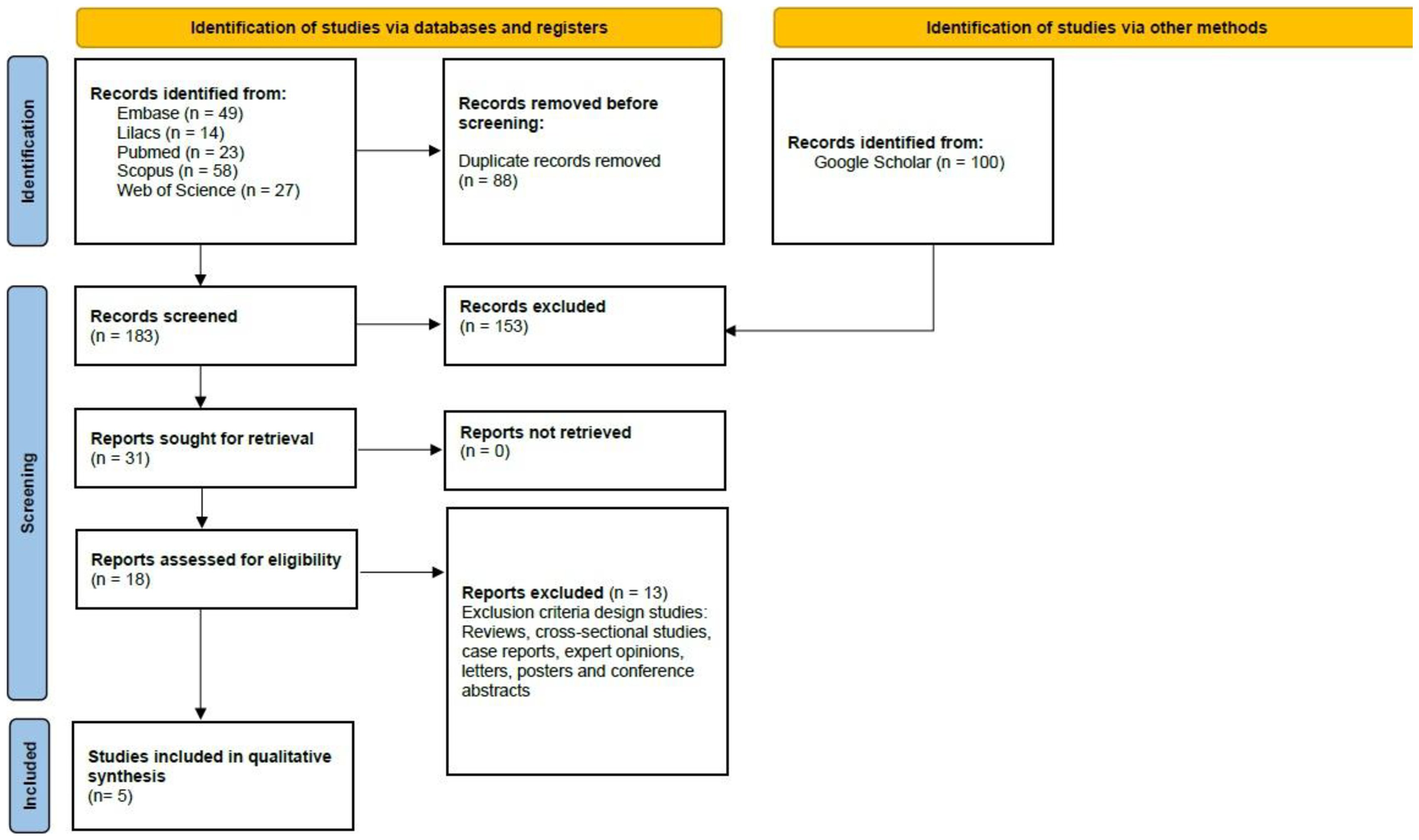 From: Page et al.(
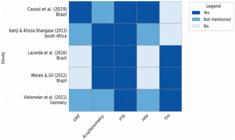
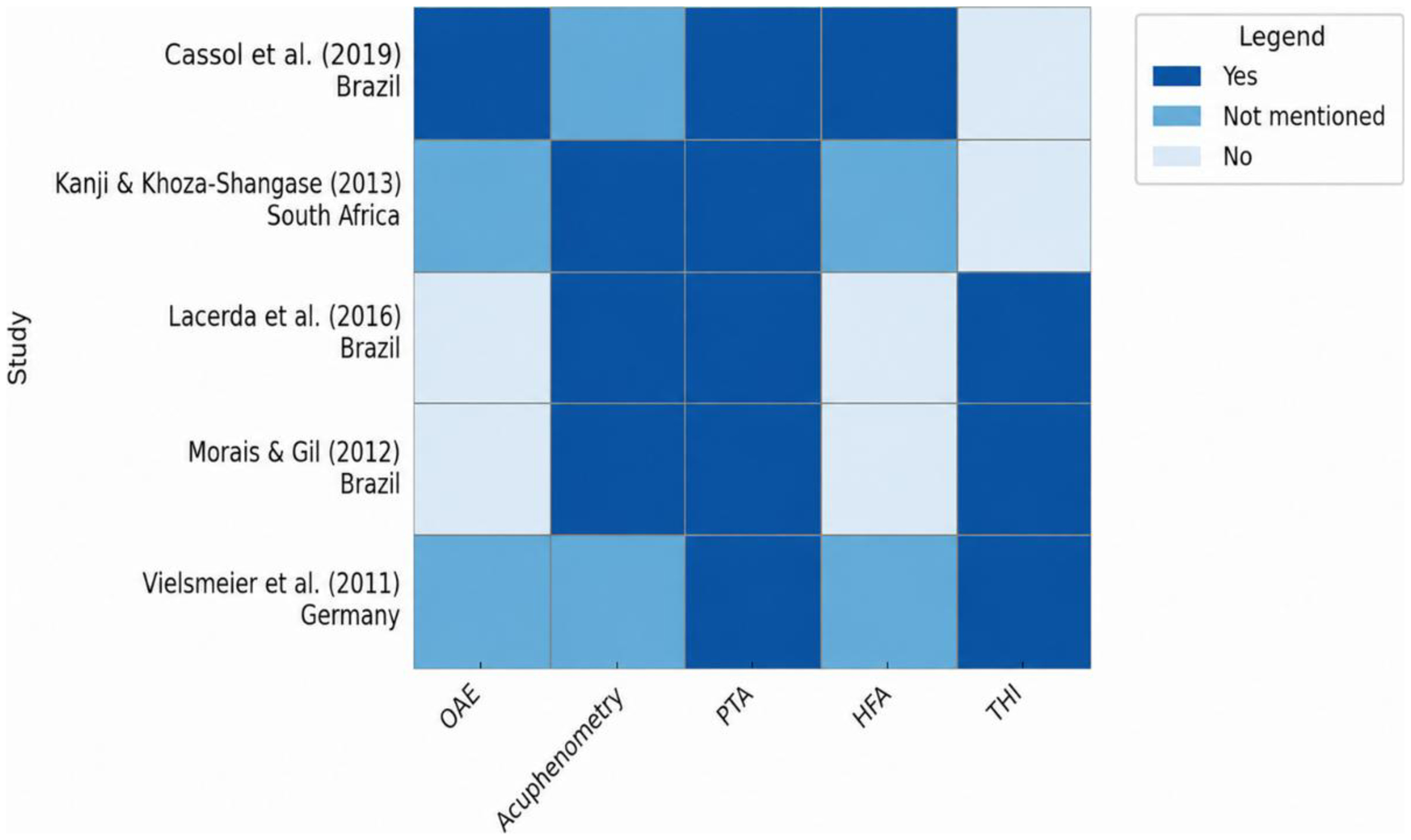 Legend: Heatmap of the audiological procedures reported in the included studies. The shades of blue represent the presence, absence, or lack of mention of each procedure in each study: dark blue (yes): the procedure was clearly described and performed in the study; medium blue (not mentioned): the study did not mention the procedure, making it impossible to confirm whether it was performed; light blue (no): the study explicitly stated that the procedure was not performed. The mapped procedures were: Otoacoustic Emissions (OAE), Acuphenometry, Conventional Pure-Tone Audiometry (PTA), High-Frequency Audiometry (HFA), and Tinnitus Handicap Inventory (THI). The figure allows visualization of which assessments were conducted in each study and identification of patterns in the use of audiological instruments