 Cortical and subcortical auditory evoked potentials with verbal stimulus: correlation and association in adults
Purpose To analyze the correlation and association between the Long Latency Auditory Evoked Potential (LLAEP) and the Frequency Following Response (FFR) in young adults with normal hearing thresholds.
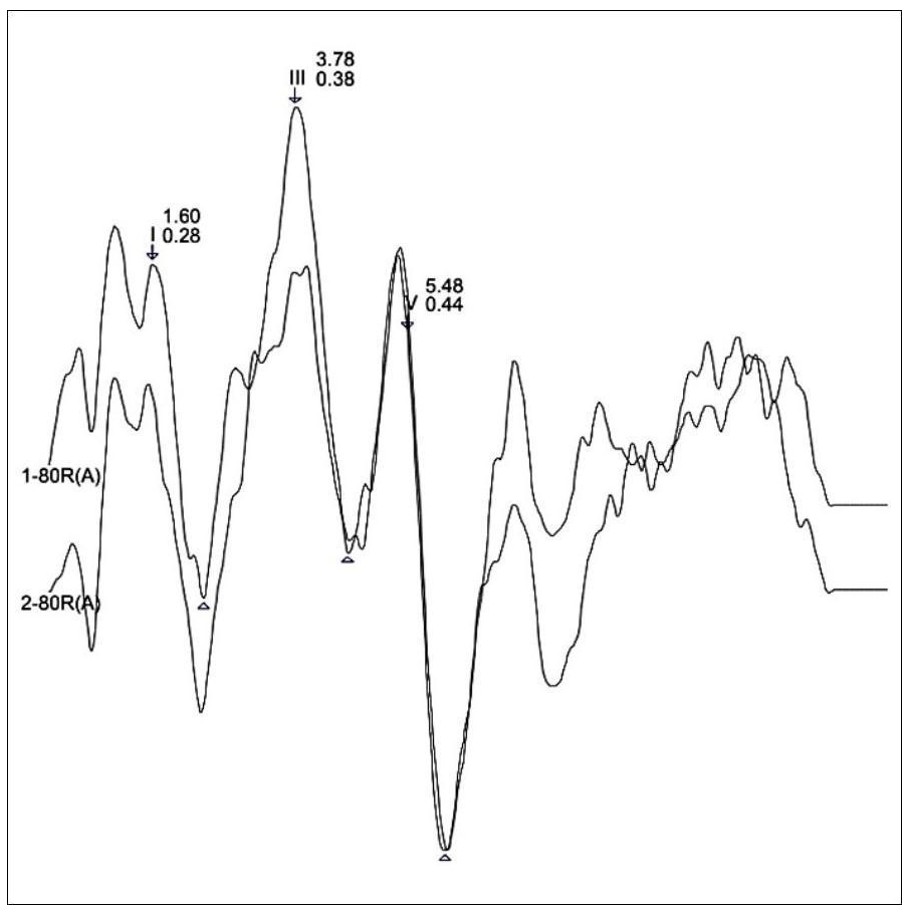
Methods This was a cross-sectional, quantitative, and qualitative study. The sample included 32 young adults (mean age of 22.5 years) of both sexes who met the inclusion criteria. The participants underwent basic audiological evaluation, screening of auditory skills through the Random Gap Detection Test and Dichotic Digits Test, and electrophysiological tests: Auditory Brainstem Response with click stimulus, Long Latency Auditory Evoked Potential, and Frequency Following Response with verbal stimulus.
Results A statistically significant and positive brightness was observed between waves V, A and C and waves P1 and N2, evidencing the participation of auditory structures of the primary auditory cortex in the generation of FFR responses, and a negative appearance between waves C and N2, reflecting the different auditory abilities to generate the responses of each component. There was no significant association between individuals classified as normal and altered in the tests in general performed in the present study or when associated between each component.
Conclusion Waves V, A, and C correlate with waves P1 and N2 of the Long Latency Auditory Evoked Potential in young adults. There was no evidence of associations between the qualitative results of the Frequency Following Response and the Long Latency Auditory Evoked Potential.
Keywords
Hearing; Electrophysiology; Evoked Potentials; Young Adult; Association; Correlation of Data
 Thumbnail
 Thumbnail
 Thumbnail
 Thumbnail
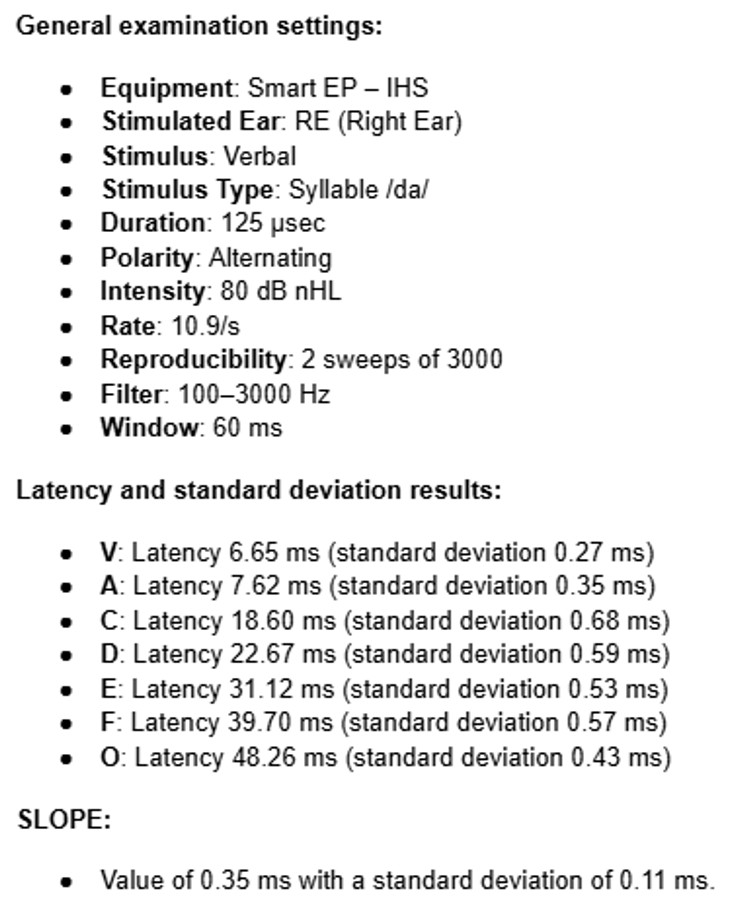
 Caption: IHS = Intelligent Hearing Systems; RE = Right Ear; µsec = microseconds; dB nHL = hearing level; s = seconds; Hz = Hertz; ms = milliseconds
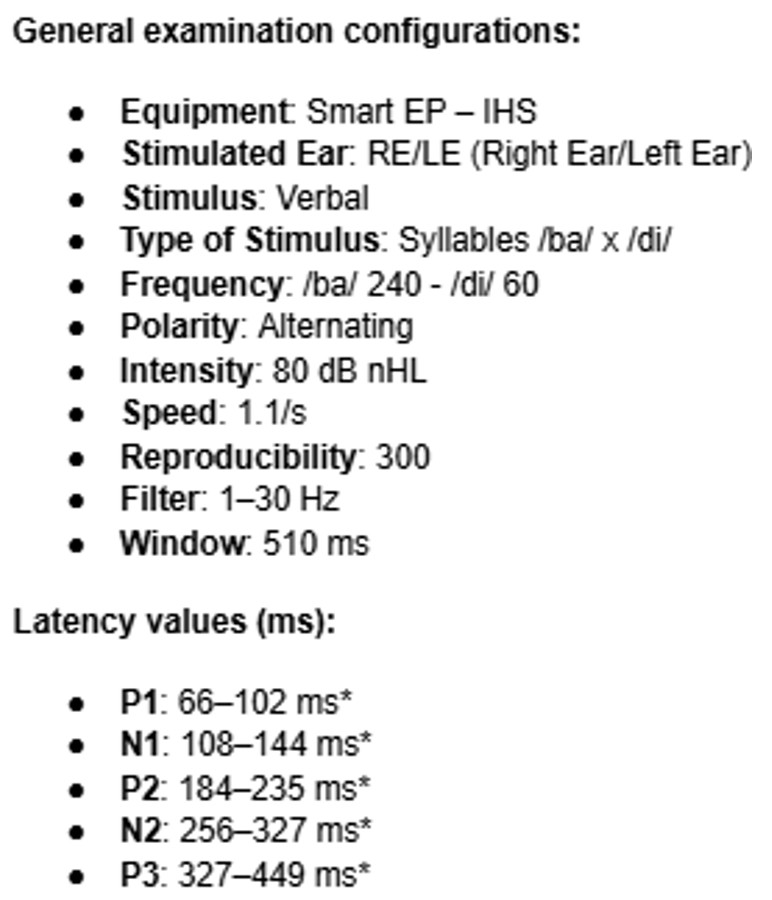
 Caption: IHS = Intelligent Hearing Systems; RE = Right Ear; LE = Left Ear; dB nHL = hearing level; s = seconds; Hz = Hertz; ms = milliseconds; added with 2SD (standard deviations)