 Visual reinforcement audiometry and its association with neonatal hearing screening and the offer of speech therapists, services and equipment
Purpose To analyze the outpatient production of the visual reinforcement audiometry (VRA) in the Unified Health System (SUS), in the Federation Units (UFs) of Brazil, between 2004 and 2021, and its association with Neonatal Hearing Screening (NHS) and offering audiologists, hearing health services and VRA equipment.
Methods Ecological mixed study, which used data from the SUS Outpatient Information System, of the National Registry of Health Establishments and of the Brazilian Institute of Geography and Statistics. The dependent variable was the rate of performance of the “visual reinforcement audiometry (air/bone route)” procedure, per 10 thousand inhabitants, while the independent variables were the rates of NHS, speech therapists, hearing health services and VRA equipment. Descriptive and inferential statistics and spatial analysis were performed.
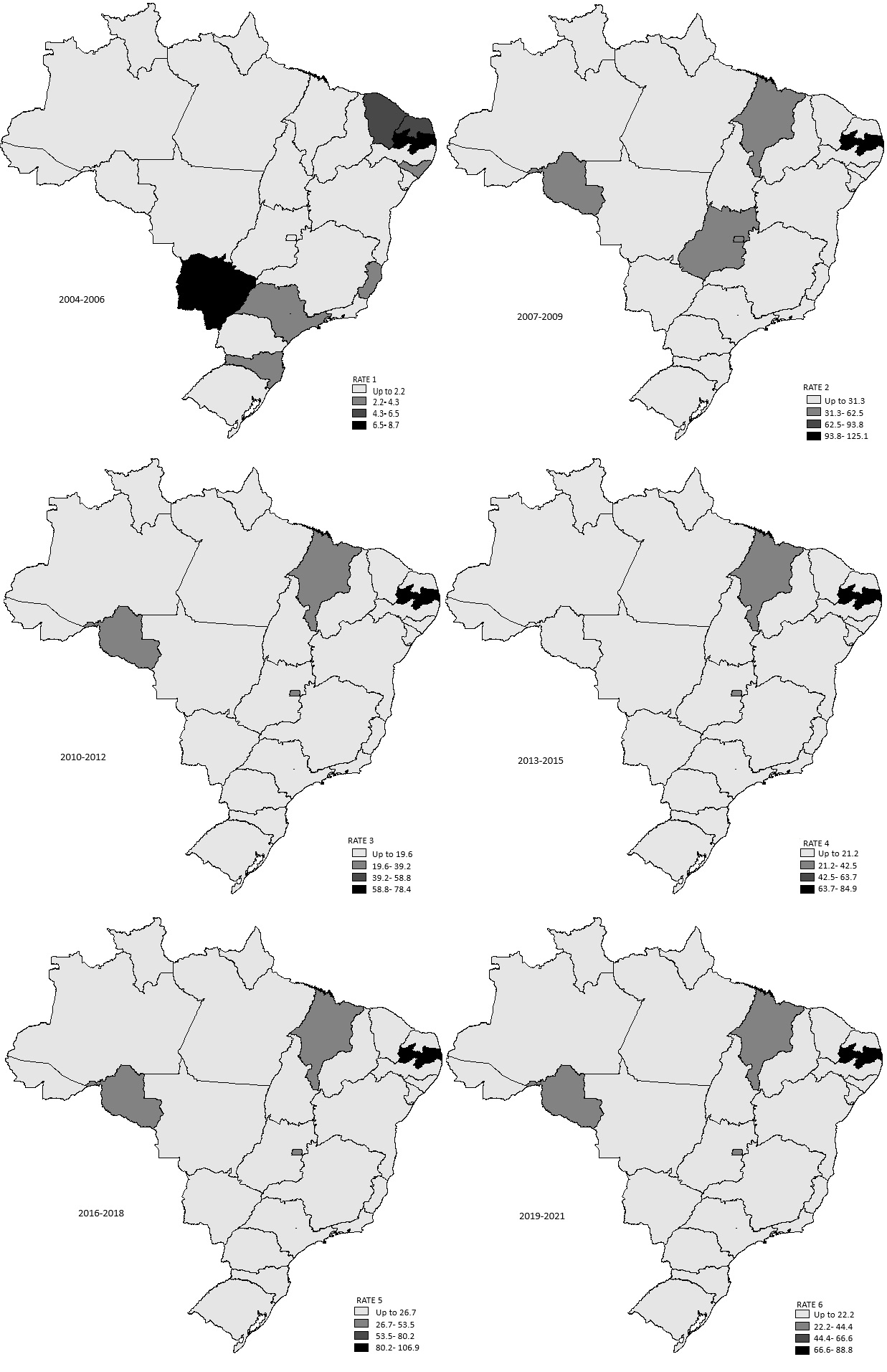
Results The VRA rate in Brazil was 11.8/10 thousand inhabitants between 2004 and 2021. In the UFs, VRA rates varied from 0 to 125.1/10 thousand inhabitants in the periods studied. The lowest rate for this exam was recorded in the 2004-2006 triennium, while the highest was seen in the 2007-2009 triennium. It was found that there was no significant correlation between the VRA performance rate for the 2016-2018 three-year period with the rates of NHS, speech therapists, hearing health services and VRA equipment.
Conclusion The realization of the VRA is restricted and discrepant among Brazilian states and does not show any association with the variables investigated, indicating the need for measures to improve access to this exam in the SUS.
Keywords:
Hearing; Hearing Loss; Public Health Policy; Unified Health System; Health Information Systems
 Thumbnail
 Thumbnail
 Caption: Taxa de realização de VRA = VRA completion rate