 Words for clinical use in speech-language pathology in Brazilian portuguese-speaking children: a focus on familiarity and representativeness from expert judges
Purpose To provide a word bank based on familiarity and representativeness for the 18- to 36-month age group, considering the Brazilian cultural context.
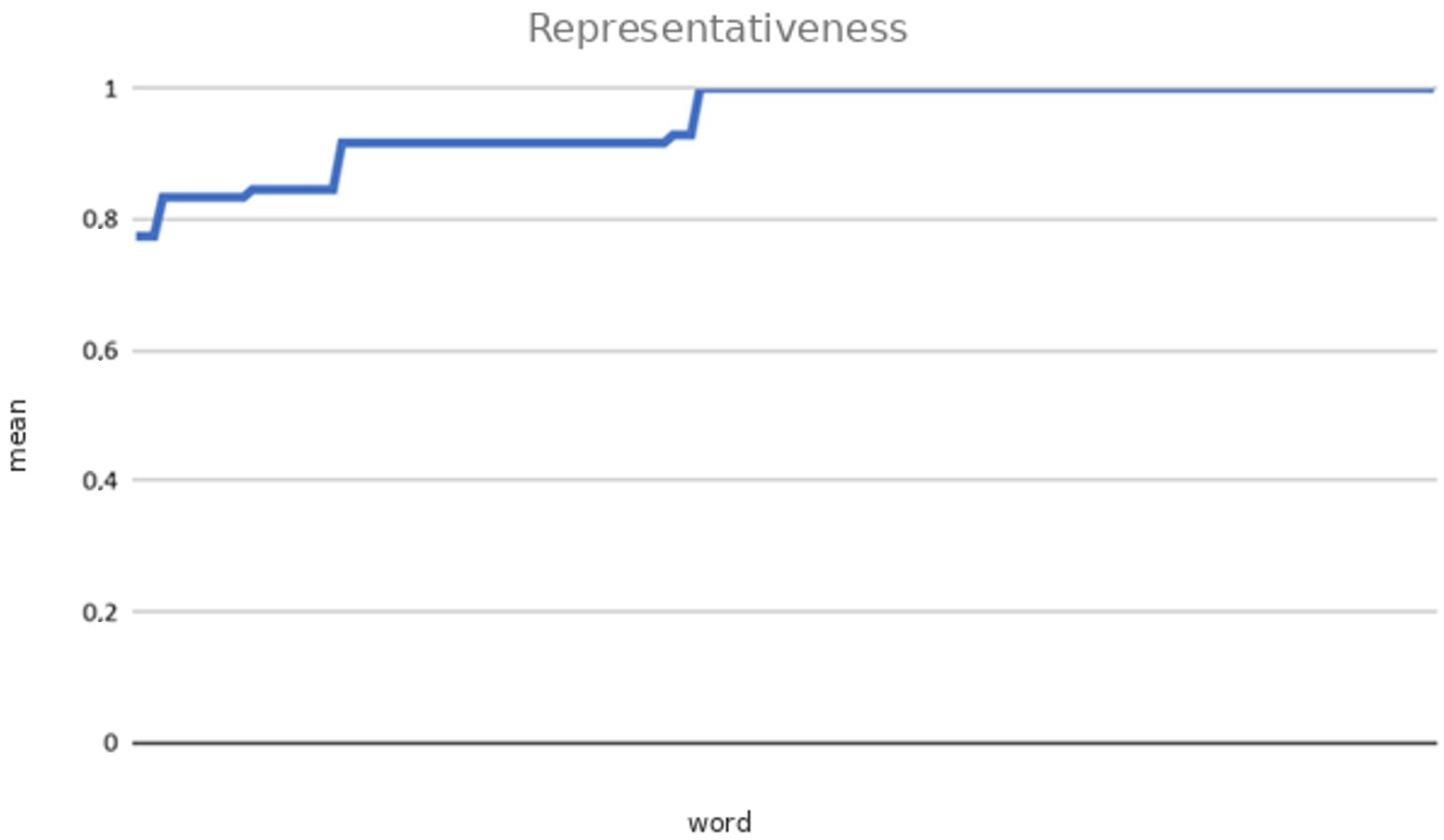
Methods This was a cross-sectional study with a quantitative design. The questionnaire, sent to expert judges, was based on the list of words and sentences from the MacArthur-Bates Communicative Development Inventories (MB-CDIs). Three groups of experts participated: experienced speech therapists, speech therapists, and mothers with no training in the area. The questionnaire included 21 questions on familiarity and 13 on representation, which were answered using a Likert scale on familiarity (familiar or unfamiliar) and representativeness (representation by pictures or not). The responses were analyzed using descriptive and inferential statistics and visually represented through word clouds.
Results According to the criteria, only those that met the mean values were selected, leaving a total of 146 words. Based on the list from the MB-CDIs inventory adapted to Portuguese, the words were organized by category to generate the word bank, called the Word Bank for Childhood Language Development (BPDLI): A Validated Instrument for Brazilian Portuguese.
Conclusion This work provides a validated tool that can be used in clinical language assessment and intervention at early ages, allowing for greater sensitivity to the child's cultural and family context. This word bank also has therapeutic potential for approaches to phonology, narrative language, and augmentative and alternative communication.
Keywords:
Language Development; Child Language; Vocabulary; Language Tests; Validation Study
 Thumbnail
 Thumbnail
 Thumbnail