
 Crime and violences in São Paulo: theoretical-methodological retrospective, advances, limits and future perspectives
This article analyzes the relationships between crime, violence and cities, a traditional object of the social sciences and urban studies. With the city of São Paulo as the background and reported murders as the parameter, the article registers the evolution of vital and criminal records and questions the hypothesis that analyzes and explains crime distribution, in urban territories, based on the dualistic and binary logic between non-violent and violent neighborhoods, between center and periphery. Evaluating the stock of knowledge available in this field of study and discussing methodological issues related to the quality of the data that support analyses, the article proposes some methodological approaches that, today, can better explain crime distribution in a diversified and complex metropolitan fabric.
crime; violence; homicides; cities; city of São Paulo
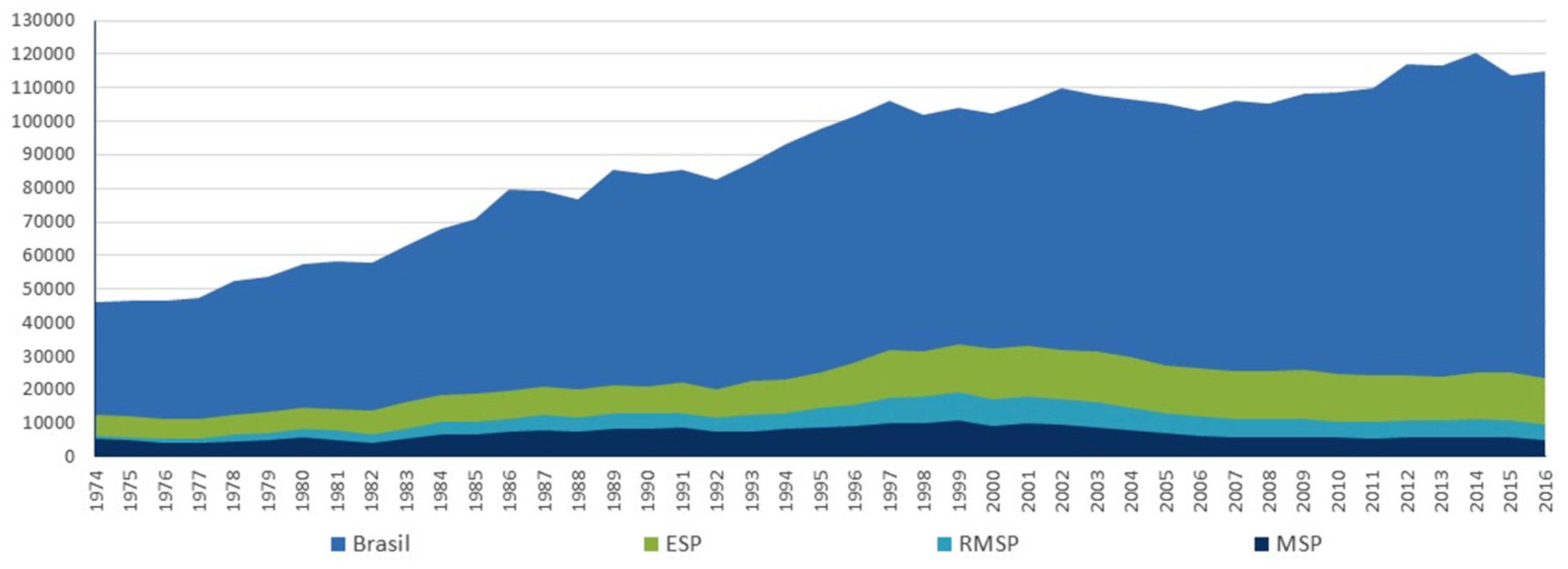 Fonte: IBGE – Estatísticas do Registro Civil.
 Fonte: IBGE – Estatísticas do Registro Civil; Projeção da População do Brasil para o Período 1980-2016.7
 Fonte:
 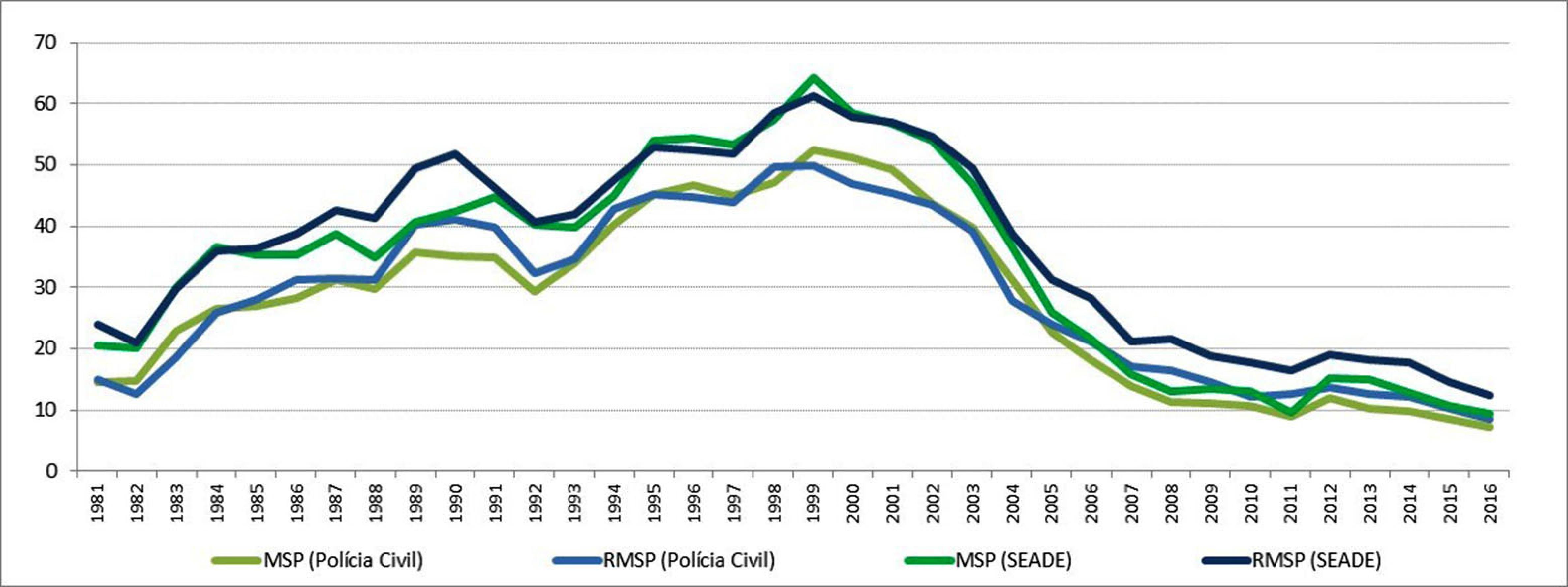 Fonte:
  Fonte: SSP-SP - RES SSP 160/01 (homicídios dolosos); Fundação Sistema Estadual de Análise de Dados – Seade (população residente).* Exceto MSP.
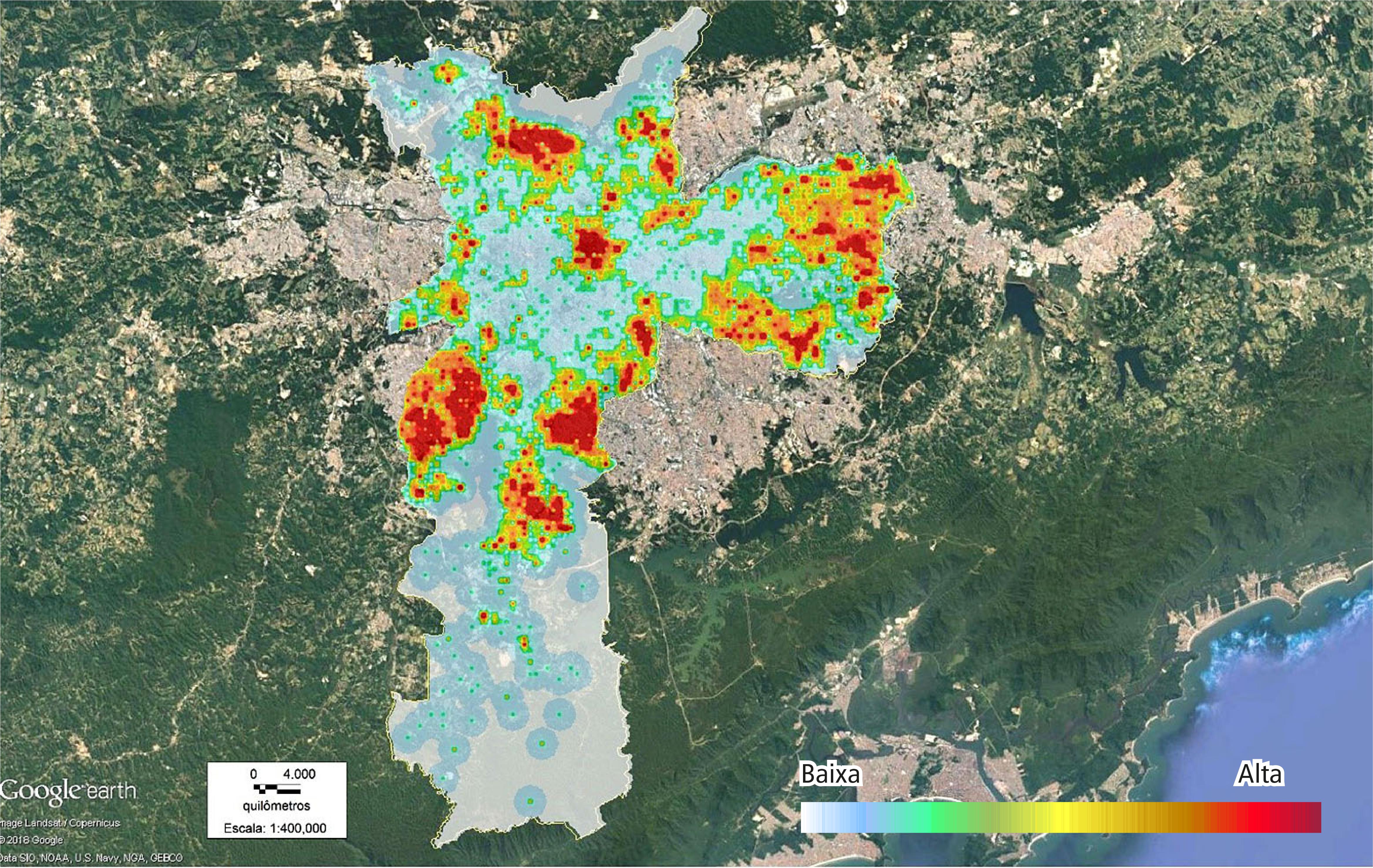 Fonte: Infocrim/SSP-SP. Elaborado pelos autores.
 Fonte: Infocrim/SSP-SP. Elaborado pelos autores.
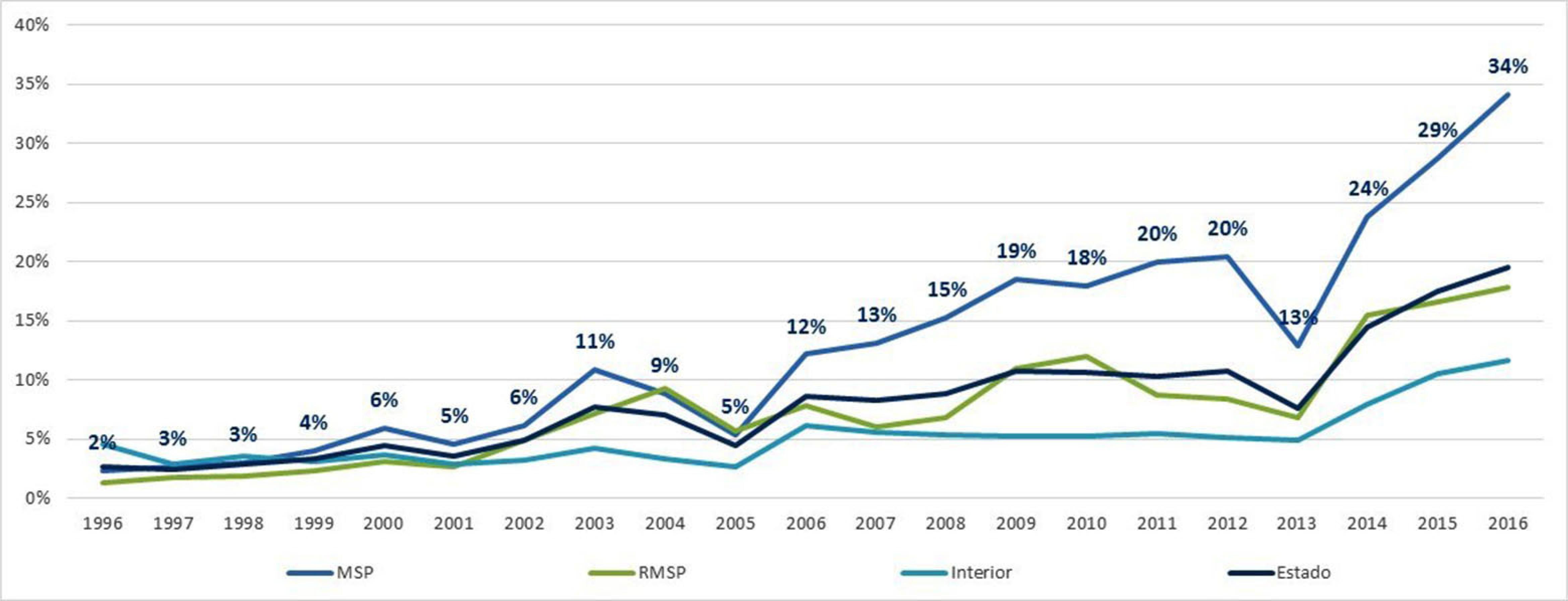 Fonte: SSP-SP - RES SSP 160/01.* Exceto MSP.
 Fonte: Núcleo de Estudos da Violência (