 Industrial heritage and tourism development in the Ruhr metropolis*
Abstract
This article addresses an experience of cultural and environmental valorization related to tourism in the Ruhr metropolis, a German industrial region with a long tradition in coal mining and steel production that, until the end of the past century, had neither major tourist attractions nor any intention of developing them. To this end, the article emphasizes the role of industrial heritage, which has been the flagship of the region’s successful tourism development in recent decades, and its connection with the ecological recovery of the Emscher River. However, the main objective of the article is to show that industrial tourism can drive other dimensions of tourism that broaden the scope of regional opportunities, particularly in industrial areas like the Ruhr metropolis.
Regional transformation; Tourism development; Industrial heritage; Ruhr Metropolis
Resumo
Neste artigo, é abordada uma experiência de valorização cultural e ambiental relacionada ao turismo na metrópole do Ruhr, uma região industrial alemã com longa tradição de mineração de carvão e produção de aço que, até o final do século passado, não tinha grandes atrações turísticas ou sequer considerava tê-las. Para isso, enfatiza-se o papel do patrimônio industrial e sua conexão com a recuperação ecológica do rio Emscher, que tem sido o carro-chefe do bem-sucedido desenvolvimento turístico da região nas últimas décadas. No entanto, o principal objetivo do artigo é demonstrar que o turismo industrial pode atuar como impulsionador de outras dimensões do turismo que ampliam o escopo das oportunidades de desenvolvimento regional, particularmente em antigas áreas industriais.
transformação regional; desenvolvimento do turismo; patrimônio industrial; metrópole do Ruhr
Introduction
At the turn of the 20th to the 21st century, we witnessed a major transformation of capitalism and the contemporary world (Evans, 2024; Rullani and Romano, 2003; Veltz, 2000; Kumar, 1998). The traditional industrial forces that commanded the processes of accumulation and development during the last century no longer occupy a central place in current forms of work organization and production and, moreover, have come to be questioned for their environmental liabilities accumulated over more than a century of economic exploitation. This has happened not only in the so-called developed countries, but also in the peripheral ones, especially those with some degree of industrialization. As such, this major socioeconomic transformation underway has led to a broad and persistent debate about the transition processes and possible alternative paths in each country, region or city.
In this context, tourism has positioned itself as a strategic activity capable of making territories more dynamic, exploiting territorial assets and creating favourable environments for innovation, as well as being an important source of income. However, this is not the same as the old tourism practices typical of the Fordist era, which resulted in mass tourism. In fact, the development of tourism accompanies the transformations taking place in other spheres of production, valorising its products and services and making tourist practices more sophisticated and differentiated (Maitland and Newman, 2009; Uriely, 2005; Munt, 1994). Clearly, the phenomenon of globalisation has been a decisive factor in the development of tourism in recent decades, due to the multiplication of means of transportation and the extraordinary increase in tourist flows linked to it.
On the one hand, the cultural dimension (in the broad sense) of tourist practices has gained momentum, making it possible not only to broaden the scope of experiences, but also to put new destinations on the tourist map. The case of Bilbao, following the construction of the Guggenheim Museum, is quite emblematic, as it transformed the previously unattractive port city in the Basque Country into an international destination (Farook, 2022). On the other hand, natural sanctuaries should be highlighted due to their relationship with ecology and environmental issues. Although the effects of tourism on ecosystems, especially the most vulnerable ones, can be criticised, the increase in tourist packages and services aimed at contact with nature, from a more contemplative perspective, is equally significant (Chen and Prebensen, 2017). In both cases (cultural tourism and environmental or ecological tourism), what is aimed for is the valorisation of diversity, experiences and originality, and of course the leisure dimension that accompanies these practices.
This article discusses cultural and environmental dimensions related to tourism development in the Ruhr metropolis, a region of Germany with a long tradition of coal mining and steel production, which until the end of the last century had virtually no major tourist attractions or even considered them in local politics. Given its importance in this context, the industrial heritage is highlighted as a territorial asset, which has been the flagship of the region’s successful tourism development in recent decades.1 Nonetheless, the main objective is to demonstrate that industrial heritage tourism can act as a driver of other dimensions of tourism that broaden the scope of regional opportunities. The article concludes by pointing out some relevant aspects of this experience that could help to develop tourism in former industrial areas.
Tourism in former industrial areas
As mentioned above, new tourism experiences and practices have gained ground in this landscape of cultural transformations in the contemporary world (Cooper and Hall, 2008). In the midst of the multiple and diverse trajectories of tourism development in the new century, some places have become tourist hotspots through the conversion of former industrial areas into cultural and leisure spaces, especially in large cities or metropolises. The case of the urban renewal of harbours, for example, is a widely known experience. Since the 1970s, but especially in the 1980s and 1990s, several cities around the world, such as Baltimore, Barcelona, Buenos Aires, Bilbao, Cape Town and London, have transformed old harbour facilities (infrastructure and equipment) into leisure spaces by recovering the city’s lost link with the waterfront (Desfor et al., 2011; Hall, 1993).
A specific approach taken in this article, called industrial tourism (or industrial heritage tourism or even post-industrial tourism), focuses on industrial facilities located in traditional production areas that have been progressively deactivated and transformed into tourist and cultural attractions. In this sense, based on experiences in the European continent, Chmielewska and Lamparska (2012, p. 69) state that
Post-industrial tourism includes a former industrial area evolving to new purposes. The reuses may include a change or expansion in the function of the site from being fully industrial into a tourist attraction or to a new functional purpose much different from its original use. Thus, not all sites have to be converted into museums. Some may just become recreation or entertainment places, they may also be converted into objects accompanying tourism, such as hotels, restaurants, etc.
And they add to it: It may be noticed an increase in popularity of postindustrial tourism. Traditional industry, including numerous sites located underground or on the earth’s surface, gives tourists nostalgic and novel experiences. (Ibid.)
It is known that these initiatives are not limited to the old continent. In the United States and also in Canada, there have been movements aimed at industrial tourism. The River of Steel National Heritage Area in Pennsylvania (USA) is a prime example. At the end of the 1980s, following the collapse of the steel industry in that country, particularly in the city of Pittsburgh, once known as Smoky City, a group of citizens mobilised to maintain and restore the industrial facilities that were being closed. The proposal was to turn them into centres of memory and, at the same time, centres of cultural, scientific and technological production (Dietrich-Ward, 2018; Duryea, 2014). Thus, both the preservation of local identity and tourist attractions could be linked to the development of creative and productive activities on a sustainable basis. In 1996, the River of Steel National Heritage Area was created through a state law that recognised its strategic importance for regional development
These experiences lead us to the main problem surrounding the issue of tourism in former industrial areas: how and to what extent can tourism be a vector for productive transformation in areas that have historically remained largely alien to these practices? Let’s begin by saying that in our understanding tourism does not have the power to structurally transform the economy of territories, and even less so a former industrial region, where all the infrastructure and the local economy itself have been geared towards manufacturing production for more than half a century, or even longer in many cases, since the industrial revolution. However, it can be a strategic tool to change the way environment is used, or even to put forward the idea of new possibilities for economic development related to technological innovation and creative activities. These observations are needed to assess the real importance of tourism in places where it is being promoted as a driver of development.
Another relevant question is whether the promotion of tourism in a former industrial region can be anchored solely in the valorisation of industrial heritage. In the case of Pittsburgh, as mentioned, it is clear that the intention is to go further. The same intention applies to some European experiences. Albeit the literature on industrial tourism is still very much focused on the reconversion of old facilities, possible new functionalities and governance and sustainability models (Somoza-Medina and Monteserín-Abella, 2021; Cordeiro, 2012). It stands to reason that these ‘refunctionalised’ facilities represent a tourist and cultural heritage of extraordinary value, as is also the case in the Ruhr metropolis,2 but, as we shall see, these are not the only places of tourist interest that can be found there. In fact, they are part of a wider set of tourist assets, which they can support (and vice versa).
In the context of this debate, it is worth emphasising once again that these regions need to be developed as tourist destinations under extremely negative conditions, including environmental liabilities, air pollution, heavy traffic, lack of suitable and/or equipped spaces for tourism, lack of receptive culture, lack of hotels, food and transport services to meet tourist demand. Furthermore, from the point of view of spatial planning, institutionalisation and governance, promoting tourism development in traditionally industrial areas is particularly challenging. On the one hand, it requires physical and institutional adaptation of spaces oriented for this new function; on the other, it demands the construction of a local tourist culture that supports it and guarantees sustainability over time.
The experience of the Ruhr metropolis
For some decades now, the Ruhr Valley region in Germany, which includes the cities of Dortmund, Bochum, Essen and Duisburg, among others, has stood out as a territorial laboratory of the productive transformations underway in contemporary European economy (Zimmermann, 2023; Hospers, 2004). Historically a coal mining territory and then steel production region, it became the most important industrial park in Germany throughout the 20th century (Danielzyk and Wood, 1993). Despite the allied bombing raids at the end of the Second World War, which completely destroyed the cities, the infrastructure and the factories themselves, the Ruhr Valley’s economy managed to get back on its feet and occupy this prominent place again until the 1960s, when the first signs of the exhaustion of the industrial model centred on manufacturing and large factories appeared. In this context, both the coal mining and steel sectors were directly affected, notwithstanding the fact that the former’s days were already numbered due to the replacement of the energy source by oil - even if the last mine was only closed in 2018.
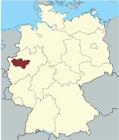
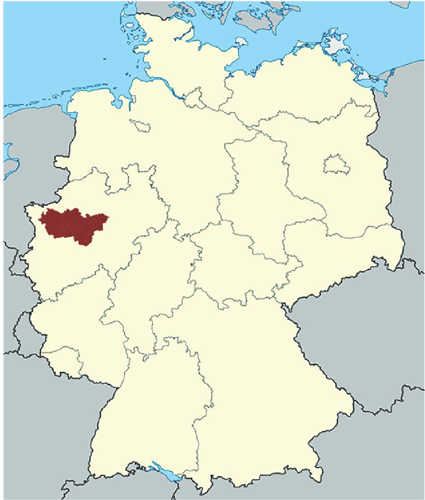
After the post-war industrial development, and/or as a consequence of it, a metropolitan area was formed in the Ruhr region that today covers 53 municipalities and has more than 5 million inhabitants - the largest metropolitan area in Germany (Figure 1). It was in this context, already consolidated in the 1970s, that economic development alternatives began to be considered and implemented. Dahlbeck et al. (2021) identify four main stages in the construction of these alternatives. The first one, called Integrated Structural Policy (1966-1974), corresponds to the first recognition of the crisis and was centred on the problems of employment and company closures. In the second one, called the Centralised Structural Policy (1975-1986), the federal government pursued the agenda of the country’s economic transformation through technological investments and productive diversification. The third one, Regionalised Structural Policy (1987-1999), follows the same line of action, but with a stronger focus on regional and intra-regional specificities, increasing the participation of local institutions (Danielzyk and Wood, 2004; Fürst and Kilper, 1995). Finally, the fourth stage, from 2000 onwards, corresponds to the Structural Policy for Leading Sectors, which includes education and knowledge, environmental and energy services, logistics services, information and communication technologies, creative industries, start-ups, event production, culture and entertainment.
An additional factor of great importance for understanding the processes of regional transformation is the creation of the European Union (EU), which since 1993 has been an important player in the economic development of its member states. The institution has acted on several fronts, including the economic and financial restructuring of countries in favour of greater economic integration, among which the common currency, structural funds, regional policy and the free movement of European citizens in the Schengen area are among the main achievements. Financial support from the European Regional Development Fund (ERDF) and the European Social Fund (ESF), which included urban and cultural regeneration of cities and the development of tourism, was significant, especially before the 2006 reforms, when structural change in industrial regions was a priority.
Considering its current profile, which at the same time retains its industrial characteristics and develops centres of technological innovation and advanced service production, the whole process of regional transformation in the Ruhr metropolis seems to be a remarkable achievement. As a result, in 2010 the city of Essen was chosen as the European Capital of Culture, recognising not only the importance of the economic transformation processes underway, but also the cultural development achieved by the region. A launch festival was held at the Zollverein Industrial Complex (a UNESCO World Heritage Site since 2001 and an icon of industrial tourism in the region) in January 2010, when the chairman of the selection committee, José Manuel Barroso, said:
Essen and the entire Ruhr Basin, with its old heavy-industry complexes, remind us of the beginnings of the European integration project: half a century ago, the first steps were taken towards the creation of the European Union, in the form of peaceful cross-border cooperation in the coal and steel sectors. The Ruhr Basin was therefore one of the starting points for our European project. Today, the region is successfully undergoing fundamental change, without losing any of its character.
The mention of Essen’s selection as European Capital of Culture brings our investigation back to tourism. Despite the fact that not all cultural activity is related to tourism practices, in the case of the European Capitals of Culture - an EU programme to promote the cultural life of its cities for a year - these dimensions are inseparable. In fact, the election of the city represents a strong leverage for the development of tourism, which in turn is committed to making it sustainable in time and space. It is worth to mention that, in the case of Essen, the choice had a regional coverage that affected, to varying degrees, all the cities that make up the Ruhr metropolis. Lastly, this event can be considered the main driver of tourism development in the region in more recent times.3
In order to better understand the manifestations of tourism development in the Ruhr metropolitan area, the next section explores the different dimensions of the tourism offer and the institutional organisation of tourism promotion and development in the region. The main sources used here are secondary information from scientific literature, websites, institutional information and field visits carried out between September and November 2023.
Tourism in the Ruhr metropolis
According to the German National Tourist Board, with its more than 1,000 industrial monuments, 200 museums, 250 festivals, 120 theatres and important music venues, the Ruhr metropolis seems to be one of Germany’s leading cultural territories. There are also sports attractions, especially at the stadium of Borussia Dortmund - one of the country’s most important football teams - the German Football Museum, as well as recreational, ecological and even architectural attractions (with projects by renowned architects such as Alvar Aalto, Norman Foster, Rem Koolhaas, Mario Botta and David Chipperfield, among others). As for the cities, destroyed during the Second World War and rebuilt under industrial standards, now they have a modern and/or multicultural appeal, offering a variety of tourist attractions and services. Some of these attractions are assessed below with regard to four dimensions of tourism development: cultural, ecological, leisure and entertainment and events.
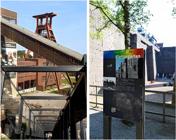
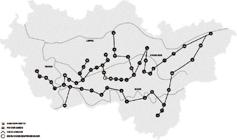
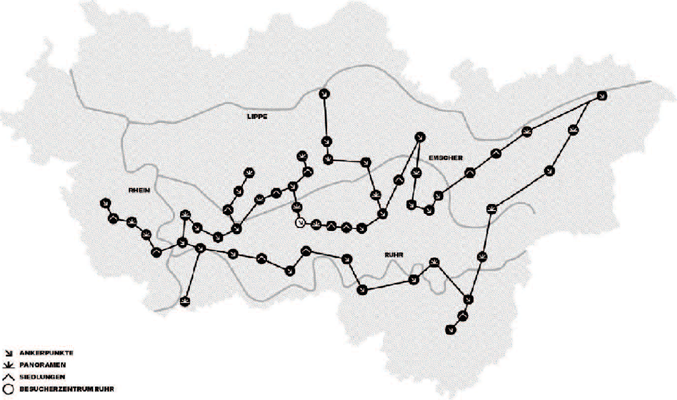
Cultural dimension. Some figures have already been presented in the previous paragraph. They show an intense cultural life in the region (music, theatre, exhibitions, performing arts), and the number of industrial museums reveals a strong concern for memory and local identity. In fact, industrial tourism is a distinctive feature of the Ruhr metropolis. In this sense, the Ruhr Industrial Culture Route (Route der Industriekultur) is one of the most well-known and distinct in Germany. It consists of a series of former industrial sites transformed into museums and/or cultural centres (Ankerpunkte), sites of special industrial interest at artificially elevated points and transformed into landmarks (Panoramen) and former urban settlements linked to this period (Siedlungen). The Route stretches for more than 400 kilometres and covers most of the region’s municipalities - not to mention the industrial objects that can be found everywhere in public spaces, or those sites that are still waiting to be appreciated.
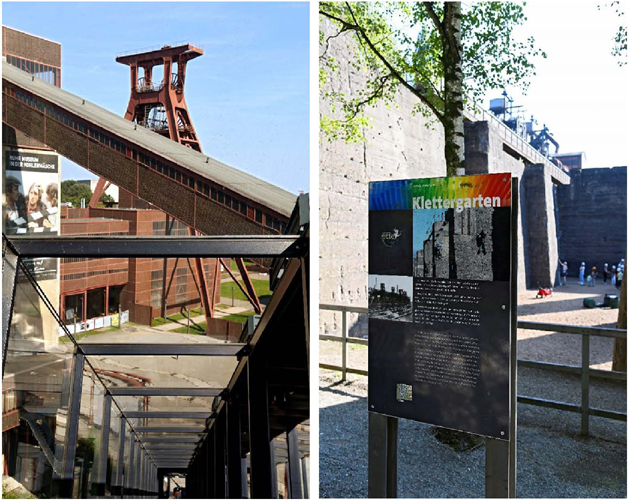
In this context, the main attractions or anchors are the aforementioned Zollverein Industrial Complex4 which, in addition to being a Unesco World Heritage Site, has the added value of having been designed by the OMA office of the renowned Dutch architect Rem Koolhaas, and the Landschaftspark Duisburg-Nord, a former steel factory and blast furnace designed as a cultural site and tourist attraction by the prestigious German architect Peter Latz5 (Ganser, 1996; Brownley-Raines, 2011). While developed with different concepts, both are centres of intense cultural life. Last but important, it is worth mentioning that notwithstanding industrial tourism has gained momentum in the process of the Ruhr’s productive transformation, discussions about the conservation of industrial heritage are older and were already present in the 1960s and 1970s (Berger, Golombek and Wicke, 2018). These discussions and concerns were decisive in consolidating the idea of a new regional development in present days.
Ecological dimension. Years before he became Chancellor of Germany, Willy Brandt declared on 28 April 1961: ‘The sky over the Ruhr must be blue again’. This statement is valuable for two major reasons. Firstly, because it reflects the environmental situation of the region at the time (without any prospect of tourist development); secondly, because it would prove to be premonitory. Still incomplete, the environmental recovery of the Ruhr was quite substantial. Several initiatives to improve the environment were implemented after the closure of the coal mines and steel mills, including the regeneration and expansion of green areas in and around the towns. However, the greatest leverage for the environmental transformation of the region came from the Internationale Bauausstellung Emscher Park, an initiative of the state government of North Rhine-Westphalia carried out between 1989 and 1999, whose main objectives were, through a set of architectural interventions along the Emscher river and its surroundings, to promote both ecological restoration and industrial tourism (Shaw, 2002; Ganser, 1996). During the exhibition period, more than 100 projects/ interventions were developed and implemented in a subregion of 17 municipalities of the Ruhr metropolis. It is worth to highlight that this area was heavily affected by industrialisation and environmental degradation in the region after Second World War, and that the River Emscher was considered at the time the most polluted river course in Germany (Zimmermann, 2023; De Marchi, 2005; Weber and Konitzky, 1993).
Leisure and entertainment. The leisure and entertainment options in the Ruhr metropolis are many and varied. On the one hand, cities that used to be ‘grey and dirty’ (Ruhr Tourism GMBH), to the point of being avoided by travellers, have been transformed into attractive, modern cities. The centres of these cities, in particular, have taken on a more cosmopolitan appearance, with significant presence of immigrants from different parts of the world. The example of the city of Dortmund is quite representative. Four major ‘anchors’ have opened in the city centre in recent decades: the Dortmund City and State Library (in 1999, in a new building designed by Mario Botta), the U-Tower (in 2010), the Thier-Galerie Dortmund (in 2011) and the German Football Museum (in 2015). As a result, the city centre was renovated and given a new urban look. Other cities in the region have also followed this trend.6 On the other hand, leisure and entertainment options, as well as venues for conferences, conventions and art exhibitions, have multiplied. Here are some examples of these options, taking into account the city, the entertainment activity and the year of opening: Alpinecenter Bottrop (Bottrop, indoor skiing, 2001); TauchRevier Gasometer (Duisburg, indoor diving, 2001); Gasometer Oberhausen (Ober-hausen, art exhibition and cultural events, 1994); Jahrhunderthalle (Bochum, events venue, 2003); Movie Park Germany (Bottrop, theme park, 2005); AQUApark (Oberhausen, water park, 2009); Legoland Discovery Centre (Oberhausen, 2013); and Sea Life Abenteuer Park (Oberhausen, aquarium, 2013). All these facilities represent major economic investments aimed at the entertainment market profit, which also makes up the region’s tourism offer. Some of these investments are directly linked to industrial heritage and tourism.
Events. In terms of events, which are an important factor in fostering the development of tourism, the Ruhr metropolis, as mentioned, listed more than 250 festivals in 2023. Even if not all of them have the same visibility and scale (some can be called local), nor the same sequence or continuity, the offer of activities related to events - especially artistic and cultural ones - is fairly consistent. It can be seen in Chart 1, which lists some of the most representative festivals in the Ruhr metropolis, mobilising a massive audience and obtaining extensive press coverage. Some events are organised by the region and others by the cities, but all of them have significant impacts on the territory. Most take place in the spring and summer months. Special attention should be paid to those linked to the region’s industrial heritage: ExtraSchicht, RuhrTriennale, Traumzeitfestival and Ruhr Games.
All the tourism practices and dimensions listed so far are supported by a powerful communication strategy, mainly in German language, but also in English. The fact that communication is predominantly in German is because a very small percentage of tourism in the Ruhr metropolis is foreign.7 At the same time, tourist guides, magazines and tourist information about the Ruhr region can be found in newsagents and bookshops. One of the most important means of communication, however, apart from local agencies or each municipality, is the website of the Ruhr tourism promotion and development agency (Metropole Ruhr Tourismus), where is possible to find up-to-date information on the region’s tourism offer (Metropole Ruhr Tourismus GmbH).8 It is worth emphasizing the importance of industrial heritage as a central element of this agency communication work, because of its strong link to the construction of the regional identity.
Tourism statistics are always difficult and complex. Despite this, some trends can be obtained by considering aggregate values in the Ruhr metropolis, where the majority of visitors are locals or from neighbouring regions, as well as nationals. Thus, according to Metropole Ruhr Tourismus (2022), until the covid-19 pandemic, the number of arrivals and overnights had been rising steadily, from 3.1 million and 5.9 million in 2010 to 4 million and 7.8 million in 2019 respectively. In turn, the number of beds in hotels and inns increased from 42,100 to 50,100 in the same period. Considering that figures of establishments went from 672 to 605, it can be inferred that new, larger and modern facilities were built, while other, smaller and more traditional ones, were closed. To sum up, between 2010, the year when Essen (and the Ruhr metropolis) was chosen as European Capital of Culture, and 2019, the year before the covid-19 pandemic, tourism in the region continued to grow, which is considered a significant achievement by the agency.9
The institutional framework for tourism promotion and development
Even if it cannot be said that tourism promotion and development strategies in the Ruhr metropolis are the product of institutional action alone, it is important to emphasise the role that local and regional institutions play in fostering this vector of transformation. In general terms, public governance for tourism promotion in Germany takes place at three institutional levels: federal, state and local. At federal level, the German National Tourist Board (GNTB), financed by the Federal Ministry for Economic Affairs and Climate Action, is responsible for promoting the country’s tourism abroad, including institutional support for the bids for European Capital of Culture for the cities of Weimar (1999), Essen (2010) and Chemnitz (2025).
At state level, all the 16 states (Länder) have tourism promotion agencies. In the case of the Ruhr metropolis, the North RhineWestphalia Tourism Agency (Tourismus NRW e.V.), based in the city of Düsseldorf, is responsible for these activities. Although it is not a funding agency, its main objective is “providing advice and promoting innovation among its members in all areas of tourism, profiling tourism as a business factor, optimising the framework conditions for tourism marketing and promoting tourism cooperation in NRW”. At the same time, it recognises among its main assets
the countless industrial monuments in NRW, which testify to the Ruhr Area as one of the most important centres of industrialization and mining in Europe, all of which are now creatively used as museums, leisure facilities and much more. These include, e.g., the Zollverein in Essen, one of six incredible Unesco World Heritage Sites in NRW.
The third level - and probably the most relevant one - is the local level. This scale is of great importance for the promotion and development of tourism in Germany, particularly in the bigger cities such as Hamburg, Berlin and Munich, which have large municipal departments with the specific purpose of destination management and marketing. In the Ruhr region, the cities also have tourism promotion offices, but these are mostly for tourist information. However, along with the growth of tourism in recent decades, municipal agencies have become more proactive, especially in positioning local tourism on a regional level. As shown in the previous section, the development of tourism has been quite diverse and consistent and has affected, albeit to different ways and degrees, most of the municipalities that make up this territory.
Last but not least, in 1998, the Ruhr Regional Planning Authority (RVR), which has represented the interests of the 53 municipalities for over 100 years, and owns major infrastructure projects such as Route of the Industrial Culture and the “Emscher Landscape Park, founded the RuhrTourismus GmbH, a limited liability company, with the aim of “bundling product development, marketing and sales and the development of an independent regional tourism profile for the Ruhr metropolis”. As mentioned, this company plays an important role in the development of metropolitan tourism (especially since Essen was chosen as the European Capital of Culture in 2010). Its tasks are regionwide coordination of tourism activities and marketing, management of ERDF funding (EU Regional Policy) and national funding (in particular for smaller towns). Nowadays, the agency is involved in promoting major regional events (see ‘events dimension’ above), maintains a network of 21 museums and promotes the Route of Industrial Culture.
Conclusions
These conclusions highlight relevant aspects of tourism development in the Ruhr metropolis that may be useful for comparative studies and/or future research. To begin with, it cannot be emphasised enough that this trajectory of tourism development is taking place in the context of the great economic transformation of the Ruhr region which, until recently, still copes with the environmental liabilities of the industrial past linked to coal and steel production. The success achieved by tourism in the region demonstrates that it is possible to broaden new development horizons even in these challenging environments. In fact, the experience seems to indicate that, by properly refunctionalising former industrial sites (linked to an ecological regeneration strategy as in the case of Emscher Park), other dimensions of tourism development can be taken into account.
Despite being left in the background, the metropolitan perspective is also an aspect that has to be taken into consideration. The regional distribution of tourism assets is closely linked to the territorial dynamics of a metropolitan area which, in the case of the Ruhr, is polycentric. This means that, on the one hand, tourist spaces co-exist with disputes between cities that are part of the same economic, political and cultural ecosystem. On the other hand, there is a need to coordinate actions and institutional co-operation, which is characteristic of metropolitan governance. Thus, the presence of an institution like the RVR, which in turn creates a specific institutional structure to promote tourism development, should be seen as a strategic and relevant possibility for other experiences of this kind.
Another significant aspect related to the metropolitan perspective is connectivity. In the Ruhr region, a well-developed regional transport system facilitates access to different tourist attractions. So, on the same day, using public transport to watch a Borussia Dortmund football match can also be a great opportunity to attend cultural events or visit places other than those located in the city of Dortmund. This is possible because no place or location is more than an hour away from the city of Dortmund by train or bus. This is, therefore, a strategic factor when the Ruhr experience is used as a model or inspiration for tourism development in former industrial areas, which contrasts, for example, with the metropolitan regions of Latin America, where public transport and mobility are particularly weak.
Finally, it is important to note that the four dimensions assessed in this article do not fully cover the region’s tourism offer, which, as already mentioned, is extremely diverse and complex. Nothing has been said, for example, about the museums and exhibitions of modern art, the medieval landscapes or the route of the churches. Nor was there any mention of the academic congresses and trade fairs that bring visitors to the region, which are considered significant activities for attracting tourism today. Gastronomy is also an aspect that is being tried to improve as a tourist asset. Undoubtedly, all these elements could help to better qualify the Ruhr metropolis’ tourism development and industrial heritage as its main anchor.
Acknowledgments
We would like to thank Henning Deuter, from the Metropole Ruhr Tourismus Agency, for the interview he kindly gave us for this article.
Notes
(*)
(1)
(2)
(3)
(4)
(5)
(6)
(7)
(8)
(9)
References
- BERGER, S.; GOLOMBEK, J.; WICKE, C. (2018). “A post-industrial mindscape? The mainstreaming and touristification of industrial heritage in the Ruhr”. In: WICKE, Ch.; BERGER, S.; GOLOMBEK J. (ed.). Industrial Heritage and Regional Identities. Londres, Routledge.
- BERKENBOSCH, K.; GROOTE, P.; STOFFELEN, A. (2022). Industrial heritage in tourism marketing: legitimizing post-industrial development strategies of the Ruhr Region, Germany. Journal of Heritage Tourism, v. 17, n. 3, pp. 327-341.
-
BROWNLEY-RAINES, A. (2011). Wandel durch (Industrie) Kultur [Change through (industrial) culture]: conservation and renewal in the Ruhrgebiet. Planning Perspectives, v. 26, n. 2, pp. 183-207. DOI: https://doi.org/10.1080/02665433.2011.550443
» https://doi.org/10.1080/02665433.2011.550443 - CHEN, J.; PREBENSEN, N. (2017). “Research Progress in Nature Tourism”. In: CHEN, J.; PREBENSEN, N. (ed.). Nature Tourism. Londres, Routledge.
- CHMIELEWSKA, M.; LAMPARSKA, M. (2012). Post-Industrial tourism as a chance to develop cities in traditional industrial regions in Europe. Sociologie Romaneasca, v. 10, n. 3, pp. 67-75.
- COOPER, C.; HALL, M. (2008). Contemporary Tourism: an international approach. Oxford (UK), Routledge.
- COPIC, S. et al. (2014). Transformation of industrial heritage: An example of tourism industry development in the Ruhr area (Germany). Geographica Pannonica, v. 18, n. 2, pp. 43-50.
- CORDEIRO, J. M. L. (2012). Oportunidades e fragilidades do turismo industrial. Revista Turismo & Desenvolvimento, n. especial, pp. 9-18.
-
CREATIVE TOURISM NETWORK. Disponível em: https://www.creativetourismnetwork.org/interview-with-petra-hedorfer-ceo-of-the-german-national-tourist-board/ https://www.creativetourismnetwork.org/interview-with-petra-hedorfer-ceo-of-the-german-national-tourist-board/ Acesso em: 10 fev 2024.
» https://www.creativetourismnetwork.org/interview-with-petra-hedorfer-ceo-of-the-german-national-tourist-board/» https://www.creativetourismnetwork.org/interview-with-petra-hedorfer-ceo-of-the-german-national-tourist-board/ - DAHLBECK, E. et al. (2021). Analysis of the historical structural change in the German hard coal mining Ruhr area (Case Study). Dessau-Roßlau, German Environment Agency.
- DANIELZYK, R.; WOOD, G. (1993). Restructuring old industrial and inner urban areas: a contrastive analysis of state policies in Great Britain and Germany. European Planning Studies, v. 1, n. 2, pp. 123-147.
-
DANIELZYK, R.; WOOD, G. (2004). Innovative strategies of political regionalization: the case of North Rhine-Westphalia. European Planning Studies, v. 12, n. 2, pp. 191-207. DOI: https://doi.org/10.1080/0965431042000183932
» https://doi.org/10.1080/0965431042000183932 - DE MARCHI, P. M. (2005). IBA Emscher Park: uma oficina de 10 anos para a reestruturação da antiga região industrial do vale do Ruhr, Alemanha. In: IX ENANPUR. Salvador, 23-27 maio.
- DESFOR, G. et al. (ed.) (2011). Transforming Urban Waterfronts. Fixity and Flow. Nova York, Routledge.
-
DEUTSCHE ZENTRALE FÜR TOURISMUS. Nachhaltiges Reisen. Disponível em: https://www.germany.travel/en/trade/global-trade-corner/tourismus-nrw-ev.html Acesso em: 10 fev 2024.
» https://www.germany.travel/en/trade/global-trade-corner/tourismus-nrw-ev.html - DIETRICH-WARD, A. (2018). “From mills to malls. Industrial heritage and regional identity in metropolitan Pittsburg”. In: WICKE, Ch.; BERGER, S.; GOLOMBEK, J. (ed.). Industrial Heritage and Regional Identities. Londres, Routledge.
- DURYEA, S. (2014). Holding on to Steel: Pittsburg Culture in the Age of Globalization. Globalizations, v. 11, n. 6, pp. 767-776.
-
EUROPEAN COMMISSION (2010). Essen becomes European Capital of Culture 2010, in the presence of Commission President José Manuel Barroso. Disponível em: https://ec.europa.eu/commission/presscorner/detail/en/IP_10_10 Acesso em: 16 out 2023.
» https://ec.europa.eu/commission/presscorner/detail/en/IP_10_10 - EVANS, D. (2024). Transformations of Contemporary Capitalism. The second industrial divide and flexible specialisation. Abingdon/UK, Routledge.
-
FAROOK, A. (2022). The Bilbao effect: how the design of a museum transformed the economy of the city. Disponível em: https://www.snaptrude.com/blog/the-bilbao-effect-how-the-design-of-a-museum-transformed-the-economy-of-the-city Acesso em: 21 nov 2023.
» https://www.snaptrude.com/blog/the-bilbao-effect-how-the-design-of-a-museum-transformed-the-economy-of-the-city - FÜRST, D.; KILPER, H. (1995). The innovative power of regional policy networks: a comparison of two approaches to political modernization in Northrhine-Westfalia. European Planning Studies, v. 3, n. 3, pp. 287-304.
- GANSER, K. (1996). “Architecture as a process: the IBA Emscher Park”. In: WACHTEN, K. (ed.). Change Without Growth: Sustainable Development for the 21st Century. Eutin, Struve’s Buchdruckerei und Verlag GmbH.
- HALL, P. (1993). “Waterfronts: A new urban frontier”. In: BRUTTOMESSO R. (ed.). Waterfronts. A new frontier for cities on water. Venice, Citta d’Acqua/Cities on Water, pp. 12-20.
- HOSPERS, G.-J. (2004). Restructuring Europe’s rustbelt: the case of the German Ruhrgebiet. Intereconomics, v. 39, n. 3, pp. 147-156.
- HUNING, S.; FRANK, S. (2011). “Urban waterscapes as products, media and symbols of change - the reinvention of the Ruhr. In: MIND THE GAP. LANDSCAPES FOR A NEW ERA. EFLA REGIONAL CONGRESS OF LANDSCAPE ARCHITECTURE, Tallinn, Estonia, 2-4 November.
- KUMAR, K. (1998). Da sociedade pós-industrial à pós-moderna: novas teorias sobre o mundo contemporâneo. Rio de Janeiro, Zahar.
- LATZ, P. (2017). Rust Red - The Landscape Park Duisburg Nord. Munich, Hirmer Publishers.
- MAITLAND, R.; NEWMAN, P. (ed.) (2009). World Tourism Cities: Developing tourism off the beaten track. Londres, Routledge.
-
METROPOLE RUHR TOURISMUS GmbH (2022). Territoriales strategiekonzept tourismus ruhrgebiet für die themenfelder Tourismus, Kultur und Naturerbe 2022. Disponível em: https://www.ruhr-tourismus.de/Territoriales_Strategiekonzept_Tourismus_Ruhrgebiet_-220207.pdf Acesso em: 13 nov 2023.
» https://www.ruhr-tourismus.de/Territoriales_Strategiekonzept_Tourismus_Ruhrgebiet_-220207.pdf -
METROPOLE RUHR TOURISMUS GmbH (2023). Metropole Ruhr: Touristische Jahresbilanz 2022. Disponível em: https://presse.ruhr-tourismus.de/pressrealeases/metropole-ruhr-touristische-jahresbilanz-2022 Acesso em: 12 dez 2023.
» https://presse.ruhr-tourismus.de/pressrealeases/metropole-ruhr-touristische-jahresbilanz-2022 - MUNT, I. (1994). The ‘other’ postmodern tourism: Culture, travel and the new middle class. Theory, Culture and Society, v. 11, n. 3, pp. 101-123.
- OEVERMAN, H.; MIEG, H. (2021). Urban development planning and world cultural heritage: two perspectives of planning practice dealing with industrial heritage. Planning Practice and Research, v. 36, n. 4, pp. 1-12.
-
RUHR TOURISM GMBH. The Ruhr region. Disponível em: https://www.ruhr-tourismus.de/en/dasruhrgebiet/ Acesso em: 4 nov 2023.
» https://www.ruhr-tourismus.de/en/dasruhrgebiet/ - RULLANI, E.; ROMANO, L. (2003). (A cura di). Il Postfordismo. Idee per il capitalismo prossimo venturo. Milão, Etaslibri.
- SHAW, R. (2002). The International Building Exhibition (IBA) Emscher Park, Germany: A Model for Sustainable Restructuring? European Planning Studies, v. 10, n. 1, pp. 77-97.
- SOMOZA-MEDINA, X.; MONTESERÍN-ABELLA, O. (2021). The Sustainability of industrial heritage tourism far from the axes of economic development in europe: two case studies. Sustainability, v. 13, n. 3, pp. 1-27.
- URIELY, N. (2005). The tourist experience: conceptual developments. Annals of Tourism Research, v. 32, n. 1, pp. 199-216.
- VELTZ, P. (2000). Le Nouveuau Monde Industriel. Paris, Gallimard.
- VILELA, A. (2022). Waterfront, back and sideways. New urban dynamics of old harbor areas, in the cases of Belém-Brazil and Duisburg-Germany. Master thesis. Germany/Brazil, Spring Program, TU-Dortmund/ Universidade Federal do ABC.
- WEBER, P.; KONITZKY, A. (1993). L’Exposition Architecturale Internationale I.B.A. Emscher Park (Ruhr). Le rôle du tourisme dans un programme structurel du Land de Rhénanie-Westphalie (RFA). Hommes et Terres du Nord, Année 1993, n. 2, pp. 85-90.
-
ZIMMERMANN, K. (2023). Water infrastructure as a driver of regionalization in the Ruhr, Germany. Territory, Politics, Governance, Special Issue: Water infrastructure and regional governance. DOI: https://doi.org/10.1080/21622671.2023.2180426
» https://doi.org/10.1080/21622671.2023.2180426

 Source: own elaboration, Fatbardha Gela, Department of Spatial Planning TU Dortmund.
 Fonte: Uwe Grützner, Department of Spatial Planning TU Dortmund, 2024.
 Source: Publicity image Route Industriekultur.