 Evaluation of optimal dosage combinations of oral midazolam and esketamine for pediatric preoperative sedation: A randomized, double-blind clinical trial
Objective To evaluate the efficacy and safety of combinations of oral midazolam and esketamine for pediatric preoperative sedation.
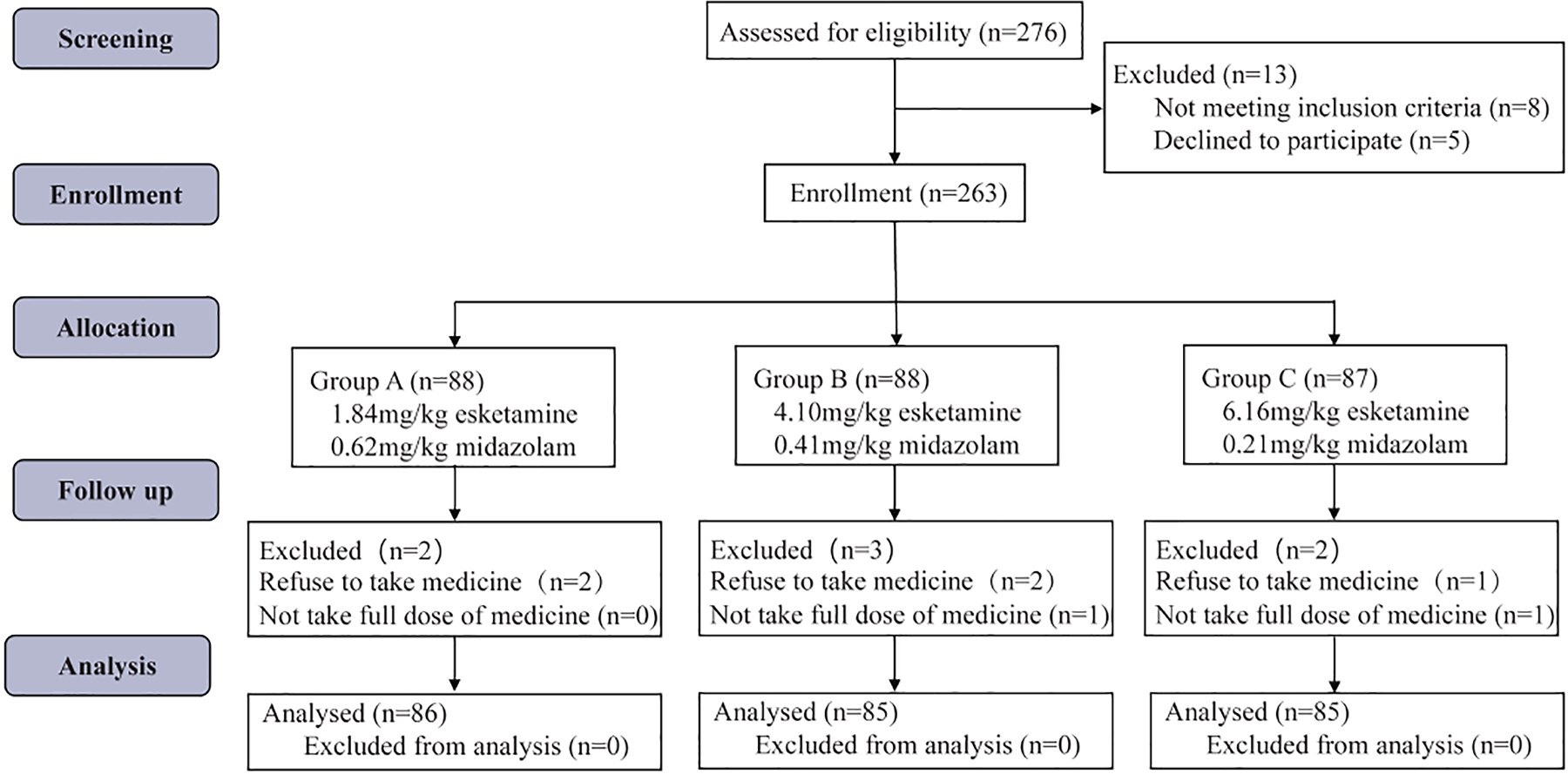
Intervention Children aged 1‒6-years undergoing elective surgery were assigned to Group A (0.62 mg/kg midazolam and 2.05 mg/kg esketamine), Group B (0.41 mg/kg midazolam and 4.1 mg/kg esketamine), and Group C (0.21 mg/kg midazolam and 6.16 mg/kg esketamine). The combination was administered orally before anesthesia induction.
Outcomes Primary outcome was sedation success, defined as a modified Ramsay sedation score ≥3a, low parent-child separation anxiety, and acceptance of the face mask for inhalation induction. Secondary outcomes included parental satisfaction, occurrence of Adverse Events (AE), and recovery times.
Results The sedation success rate in Group B was 71.8%, which was significantly higher than Group A (53.5%, p < 0.05) but not Group C (68.2%, p > 0.05). There was no difference in the sedation success rate between Group A and Group C (p > 0.05). The overall incidence rate of AE in Group C was 25.90%, which was significantly higher than that in Group A (2.30%) and Group B (4.70%) (p < 0.05). No significant differences in sedation success rates were observed between genders within each group (p > 0.05).
Conclusion The combination of 0.41 mg/kg midazolam and 4.1 mg/kg esketamine provided the most effective sedation with the fewest adverse events in pediatric patients. This regimen may reduce rescue sedation needs and improve perioperative flow.
Trial registration http://www.chictr.org.cn (ChiCTR2400080633; date of first registration: February 4th, 2024).
Keywords
Esketamine; Midazolam; Pediatric patients; Oral; Preoperative anxiety
 Thumbnail