 Correlation study on different types of chronic sinusitis and eustachian tube dysfunction: analysis of prevalence and risk factors
Objectives This study investigated the Eustachian Tube Dysfunction (ETD) prevalence and its influencing factors in Chronic Rhinosinusitis (CRS) patients undergoing Functional Endoscopic Sinus Surgery (FESS), based on postoperative histopathological subtypes. The findings may aid in the diagnosis and individualized management of CRS with comorbid ETD.
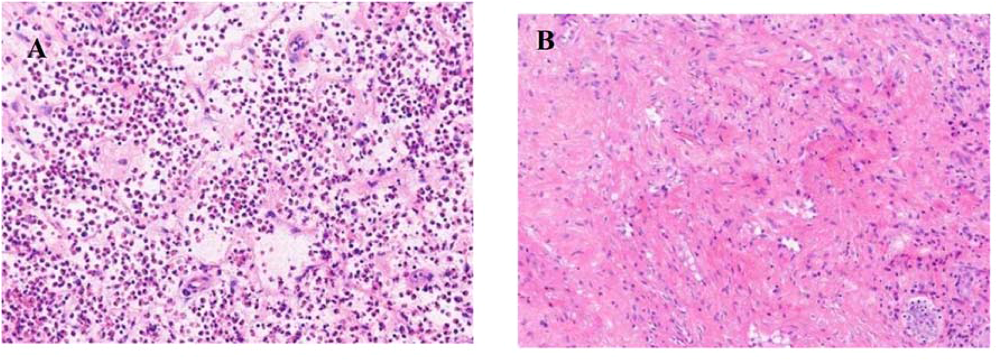
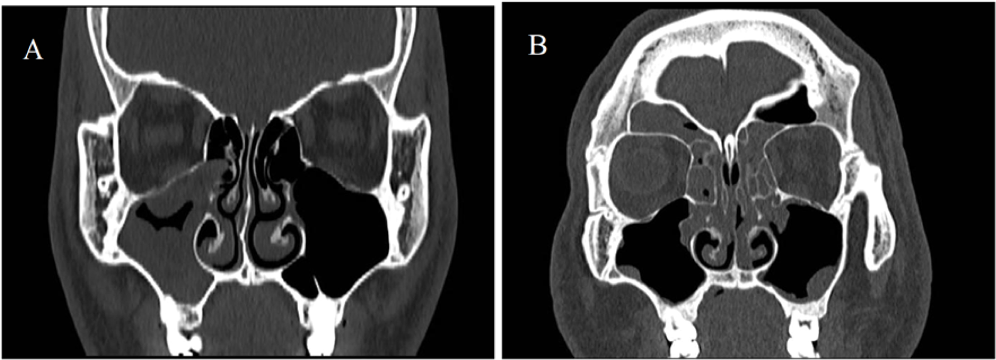
Method This study included 92 patients who underwent FESS surgery for CRS and were hospitalized in the Otolaryngology Head and Neck Surgery Department of Zhengzhou University People's Hospital from January 2024 to May 2024. According to the postoperative pathological results, the patients were divided into the Chronic Rhinosinusitis without Nasal Polyps (CRSsNP) group and the Chronic Rhinosinusitis with Nasal Polyps (CRSwNP) group. The CRSwNP group was further divided into an Eosinophilic Chronic Rhinosinusitis with Nasal Polyps (EosCRSwNP) subgroup. General information, imaging examination data, 7-item symptom score scale for eustachian tube dysfunction (Eustachian Tube Dysfunction Questionnaire-7, ETDQ-7), and eustachian tube pressure score (Eustachian Tube Score, ETS) of all included patients were collected. The prevalence of ETD in patients with different pathological types of CRS, the influencing factors of eustachian tube function in preoperative CRS patients, and the consistency of the two eustachian tube function detection methods and the test efficacy of the two eustachian tube function detection methods were analyzed.
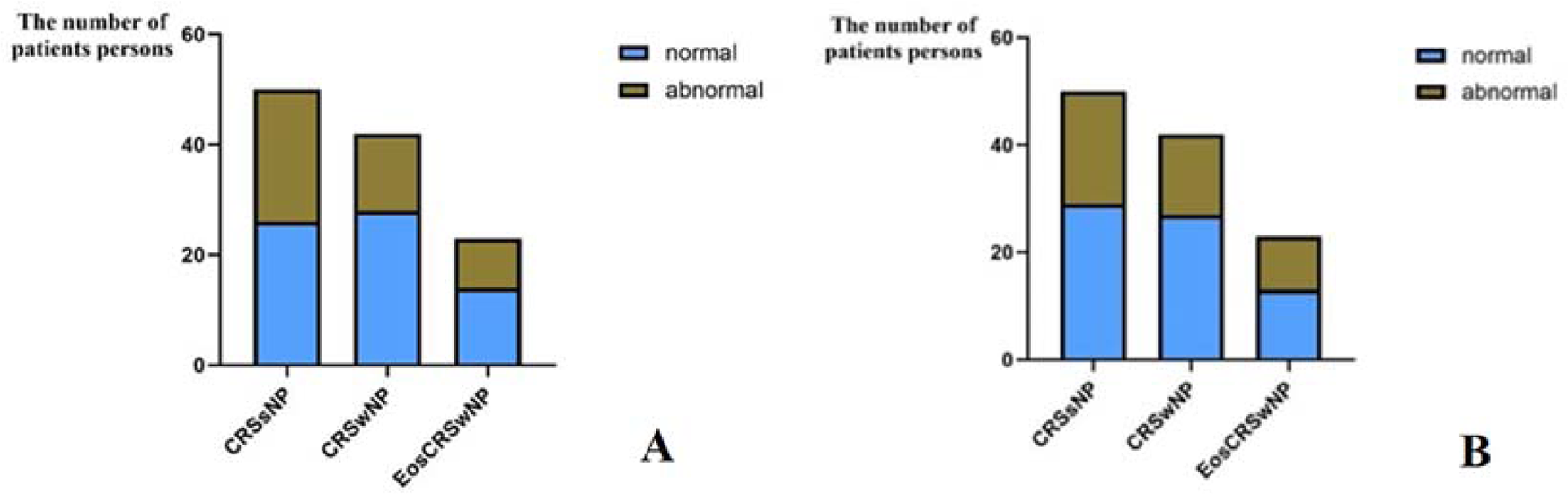
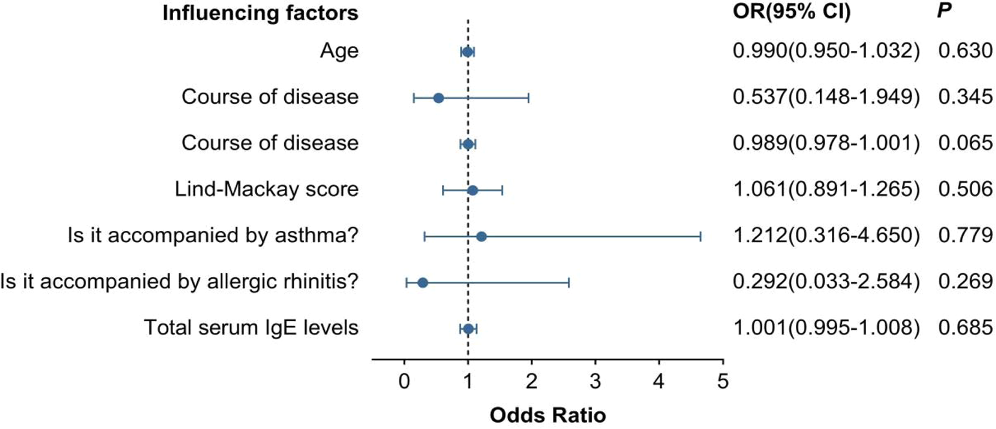
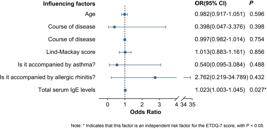
Results Correlations & Risk Factors: CRSwNP: Serum total IgE moderately correlated with preop ETDQ-7 (ρ = 0.497, p = 0.001). EosCRSwNP: Age (γ = 0.534, p < 0.01) and IgE (ρ = 0.506, p < 0.05) strongly correlated with ETDQ-7. IgE was an independent risk factor (OR = 1.010). Using the ETDQ-7 score and ETS score as the main diagnostic methods for ETD indicates that there is no statistically significant difference in the prevalence of ETD among the three groups of patients (CRSsNP, CRSwNP, and EosCRSwNP) (p > 0.05). Two types of examination methods were used to test the preoperative eustachian tube function of patients with different pathological types of CRS. The consistency degree of the results of the ETDQ-7 score and the ETS score was different. Among them, the patients in the EosCRSwNP group had the highest score, while those in the CRSsNP group had the lowest score (CRSsNP group: κ = 0.396, p < 0.01; CRSwNP group: κ = 0.421, p < 0.01; EosCRSwNP group: κ = 0.563, p < 0.01).
Conclusion ETD Incidence & Correlation: ETD occurrence in CRS varies slightly by subtype but remains comparable overall. CRSwNP patients show a significant association between ETD symptoms and serum total IgE levels. The ETDQ-7 score and the ETS score, as subjective and objective methods for evaluating the function of the eustachian tube, have good consistency in results and can relatively accurately assess the eustachian tube function of patients with CRS.
Keywords
Chronic Rhinosinusitis; Functional endoscopic sinus surgery; Eustachian tube dysfunction; Eosinophilic chronic Rhinosinusitis with nasal polyps
 Thumbnail
 Thumbnail
 Thumbnail
 Thumbnail
 Thumbnail