 Diagnosis and management of acute abnormal uterine bleeding during menacme
ABSTRACT
Objective: To provide a protocol for the diagnosis and management of Acute Abnormal Uterine Bleeding (AUB) during menacme, addressing common causes, clinical evaluation, and treatment options.
Methods: A review of current evidence and guidelines was performed to create a structured approach for healthcare professionals.
Results: Acute AUB, defined as excessive uterine bleeding unrelated to pregnancy, requires immediate intervention. Causes vary by age and include coagulopathies, anovulation, and structural anomalies. Clinical stability, lab workups, and imaging are pivotal in guiding management. Initial treatment focuses on hemodynamic stabilization followed by medical therapies such as antifibrinolytics, hormonal agents, or surgical intervention when necessary.
Conclusion: Early intervention in AUB ensures optimal outcomes, reduces complications, and allows transition to maintenance therapy to prevent recurrence.
Keywords:
Abnormal uterine bleeding; Menorrhagia; Acute bgynecological conditions; Menstrual disorders
Introduction
Acute Abnormal Uterine Bleeding (AUB-a) is defined as excessive blood flow originating from the uterus, unrelated to pregnancy, requiring immediate intervention to reduce blood loss and prevent clinical and hemodynamic instability.1 It may present as an isolated episode or as an acute manifestation of a chronic condition, often requiring hospitalization and increasing healthcare costs.2
AUB can be caused by polyps, adenomyosis, leiomyomas, endometrial hyperplasia or malignancy, coagulopathy, ovulatory dysfunction, endometrial causes, iatrogenic factors, and a final group comprising unclassified causes, grouped under the acronym PALM-COEIN. Regarding acute bleeding, the disorders most frequently associated vary by age (Table 1). Ovulatory disorders predominantly occur in the early years following menarche, mainly due to the immaturity of the hypothalamic-pituitary-ovarian axis, and during the menopausal transition phase. However, other conditions can also present with anovulatory cycles, such as polycystic ovary syndrome, thyroid disorders, and hyperprolactinemia, which may manifest as acute bleeding symptoms.4,5,6,7
Coagulopathies are another cause of AUB-a, with evidence showing their presence in 10% to 34% of women with increased menstrual volume since menarche or other types of bleeding, such as epistaxis and gingival bleeding. Von Willebrand disease is the most common coagulopathy.7,8,9 Given the relative scarcity of evidence in the treatment of Acute Abnormal Uterine Bleeding (AUB-a), this protocol aims to propose a management and care pathway for emergency or urgent cases. This approach applies provided that gestational causes of bleeding have been reliably excluded.
Clinical evaluation and diagnosis
At the initial evaluation of women with Acute Abnormal Uterine Bleeding (AUB-a), upon admission, the approach focuses on assessing vital signs and hemodynamic stability (particularly pulse, blood pressure, and mucosal color), in addition to ruling out pregnancy. Hemodynamic stability can be evaluated through the palpation of peripheral pulses, blood pressure, heart rate, level of consciousness, and urinary output, as described in Table 2.
In general, women with Acute Abnormal Uterine Bleeding (AUB-a) seek medical care when blood loss is significant enough to cause symptoms related to bleeding. Approximately 35% of these patients present with anemia at the time of consultation, with hemoglobin levels below 10 g/dL observed in 13.7% of cases. Based on clinical findings, hematimetric evaluation (hemoglobin and hematocrit) is indicated. This assessment will determine the need for intravenous access for volume replacement (crystalloids, preferably Ringer’s lactate) and, if necessary, transfusion of blood products.10
Simultaneously, a thorough medical history should be taken, detailing the bleeding onset, duration, characteristics, and volume. Personal history should address prior episodes of AUB, comorbidities, previous surgeries, habits, gynecological and obstetric history, with particular attention to menstrual cycle regularity, contraceptive use, and medications, especially antipsychotics, antidepressants, and antiepileptics that may interfere with hormone production and ovulation, as well as anticoagulants. Clinical and gynecological examinations should also be performed.11
Regarding gynecological evaluation, a speculum examination is essential to assess and quantify bleeding, as well as to identify cervical lesions, polyps, or fibroids protruding through the cervicals. The bimanual examination should evaluate uterine size, adnexal palpation, and other pelvic abnormalities (Table 3).
Information obtained from general and gynecological examinations that may aid in the diagnosis of AUB-a in non-pregnant women.
To determine the likely etiology of AUB-a, the classification system suggested by PALM-COEIN should be adopted. Clinical reasoning may indicate the need for imaging or additional laboratory tests. Trans-vaginal ultrasound can aid in diagnosing structural abnormalities of the uterus. Endometrial biopsy (methods: pipelle, Novak, hysteroscopy, or uterine curettage) is recommended for women at higher risk of hyperplasia and endometrial malignancy, especially those over 40-years old, with a history of prolonged anovulation, diabetes, obesity, family history of endometrial cancer, prolonged exposure to unopposed estrogen, or tamoxifen use.12,13,14
Early treatment initiation for AUB-a is recommended, with the primary goal being the control of bleeding to prevent more severe consequences.
Management and treatment
The primary goals guiding the treatment of Acute Abnormal Uterine Bleeding (AUB-a) are to control the current bleeding, stabilize the patient, and reduce the risk of excessive blood loss in subsequent cycles. After achieving hemodynamic stabilization, clinical treatment options are divided into hormonal and non-hormonal medications. In some cases, surgical intervention may be necessary, including procedures such as endometrial tamponade, dilation and curettage, hysteroscopy, endometrial ablation, uterine artery embolization, or hysterectomy.
Hysterectomy is considered a last-resort therapeutic option and should take into account the woman’s reproductive desires and whether her family planning is complete.
Non-hormonal treatment
Antifibrinolytics
In cases of abnormal uterine bleeding, antifibrinolytics are often considered, with tranexamic acid being a first-line treatment, reducing reported menstrual blood loss by 34% to 54%. It can be administered orally or parenterally, either alone or in combination with hormonal therapies.15,16,17 It is also effective in reducing blood loss secondary to coagulopathies, with contraindications limited to acute thromboembolic vascular disease and a history of hypersensitivity to its components.18 Commonly reported side effects include headache, lower back pain, abdominal pain, and fatigue.19
The recommended oral dose of tranexamic acid is 1.5g to 4g per day, with an initial suggested dose of 500 mg every 8 h for 3 to 5 days, which can be increased to a maximum of 4g. For intravenous use, in cases requiring hospitalization, a dose of 10 mg/kg every 8 h for 3 to 5 days is recommended.20
Although less studied, another antifibrinolytic option is amino-caproic acid, preferably administered intravenously at a loading dose of 4g to 5g , followed by a maintenance dose of 1g/hour for a maximum of 24 h, reserved for in-hospital treatment.21
Intravenous antifibrinolytic therapy is recommended in AUB-a cases, particularly in the presence of hemodynamic instability.
Nonsteroidal anti-inflammatory drugs (NSAIDs)
Through the inhibition of prostaglandins, NSAIDs can reduce uterine bleeding and relieve pelvic discomfort. They can be used in combination with antifibrinolytics and hormonal treatments, but are less effective when used alone. The most commonly used drugs include mefenamic acid, naproxen, ibuprofen, flurbiprofen, and diclofenac. Few studies have compared NSAIDs directly, with no evidence of superiority among them. The most frequent side effects are gastrointestinal, though rarely severe.22
Some NSAIDs with proven efficacy for managing acute and chronic bleeding are described in Table 2.3
Hormonal treatment
Hormonal medications are considered first-line therapy for women with Acute Abnormal Uterine Bleeding (AUB-a) and include Combined Hormonal Contraceptives (CHCs) and oral progestogens.
Although not currently available in Brazil, high-dose intravenous estrogen (25 mg every 4 to 6 h for 24 h) should be noted as it rapidly induces endometrial growth, stimulates uterine artery contraction, promotes platelet aggregation, and coagulation. The literature demonstrates bleeding control in 72% of cases.23 Ulipristal acetate should also be mentioned as it has been shown to rapidly induce amenorrhea in women with uterine fibroids, potentially serving as a useful treatment for acute bleeding emergencies related to fibroids.24
Combined hormonal contraceptives (CHCs)
The use of CHCs is recommended for the treatment of AUB-a in the absence of contraindications to estrogen. They can also be used as maintenance therapy after stabilization of the acute episode. The most studied and therapeutically effective formulations are monophasic, containing ethinylestradiol combined with progestogens.18 Due to the lack of robust scientific evidence comparing available treatments for AUB-a, Table 4 has been prepared based on treatments cited in references 11,17,22, and 24.
It is worth noting that high-estrogen-dose contraceptives, such as ethinylestradiol 35 mg, do not demonstrate superiority in controlling acute bleeding and are associated with a higher risk of side effects.25 Additionally, there is insufficient evidence to recommend contraceptives with natural estrogens, such as estradiol valerate or estradiol, for AUB-a.
Although not classified as a contraceptive, another possible medication is the combination of ethinylestradiol 0.05 mg and cyproterone acetate 10 mg, administered at 1 tablet 3 times daily with gradual reduction based on symptom control, while adhering to contraindications.
Isolated progestogens
The oral use of medroxyprogesterone acetate (currently with limited availability in Brazil) and norethisterone is also validated for the treatment of acute abnormal uterine bleeding (AUB-a) due to their mechanism of inhibiting endometrial proliferation. In cases where estrogens are contraindicated, isolated progestogens are particularly indicated.
Levonorgestrel intrauterine systems, etonogestrel subdermal implants, and depot medroxyprogesterone acetate are formulations containing isolated progestogens that can be used as maintenance treatments for abnormal bleeding, but they are not suitable for managing acute episodes.1,3,25
The formulations and doses are summarized in Tables 5 and 6, highlighting that it is possible to establish either isolated non-hormonal or hormonal treatments, as well as to combine both therapeutic modalities when appropriate.26,27,28,29
Formulations and dosages of the main hormonal treatments used in the clinical management of AUB.
Coagulopathies and patients on anticoagulants
These situations pose significant challenges in the management of Acute Abnormal Uterine Bleeding (AUB-a), as they often contraindicate the use of estrogens. A multidisciplinary evaluation is strongly recommended. Desmopressin, administered intranasally, subcutaneously, or intravenously, can be used in cases of AUB-a secondary to von Willebrand disease.28,29
Procedures and surgical treatments
Surgical treatments are considered second-line options in AUB-a and are reserved for cases refractory to clinical treatment or AUB secondary to structural causes, particularly submucosal leiomyomas and endometrial polyps.
Intrauterine tamponade
The use of intrauterine balloons is well-known in obstetrics for postpartum hemorrhage, particularly the Bakri balloon, which is employed in cases of uterine atony. Literature also reports the use of a Foley catheter inflated with distilled water or saline for controlling acute, non-gestational bleeding, especially in adolescents with coagulopathies refractory to clinical treatment. This technique shows promise as a low-cost, low-risk therapeutic option. The recommendation is for the balloon to remain in the uterine cavity for 2 to 48 h, with continuous clinical reassessment. A size 26 Foley catheter with 20 to 30 mL of saline is suggested. However, robust evidence is lacking to recommend this as a routine approach.30,31,32
Dilation and curettage/hysteroscopy
Dilation and curettage are reserved options due to the risk of adhesion formation. However, in some settings, they may be a necessary consideration. It is important to emphasize that curettage may not address structural lesions causing the bleeding, as it is performed “blindly”. When possible, hysteroscopy should be prioritized for visualizing the uterine cavity and targeting the treatment of focal lesions such as polyps and submucosal leiomyomas. Furthermore, using a resectoscope, endometrial ablation becomes a viable option. However, data are scarce regarding its use in acute cases, with limited evidence on the best timing for its application, as well as challenges in visualizing lesions during active bleeding.33,34,35,36 Both curettage and hysteroscopy are adequate for histopathological evaluation of the endometrium. Options such as intrauterine balloons and radiofrequency ablation are also available, though not always accessible.37
Uterine artery embolization
This technique is used in certain cases of obstetric hemorrhage but with limited data on its application in AUB-a. It may be considered when clinical treatment fails in women with contraindications to surgical approaches or in cases where fertility preservation is desired. Reports suggest that embolization might be the most appropriate therapeutic option in the presence of arteriovenous malformations.38,39
Hysterectomy
Hysterectomy is considered the last option for women with AUB-a and is generally limited to cases of treatment failure or contraindications to medical therapy, or when the severity of bleeding warrants this approach. It may also be performed in response to underlying medical conditions. Hysterectomy can be carried out via laparotomy, laparoscopy, or vaginally.40,41 This option must be carefully considered, particularly in women who have not completed childbearing (Fig. 1).11
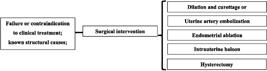
Summary of the main surgical interventions in AUB. Source: translated, adapted, and modified from Munro MG; Southern California Permanente Medical Group’s Abnormal Uterine Bleeding Working Group. Acute uterine bleeding unrelated to pregnancy: a Southern California Permanente Medical Group practice guideline. Perm J. 2013;17(3):43–56.20
Conclusion
In cases of Acute Abnormal Uterine Bleeding (AUB-a), the severity of the bleeding dictates the urgency and focus of care, which may necessitate transfusions, hospitalization, or the possibility of outpatient treatment. Whenever feasible, the management of AUB-a should initially prioritize medical treatment. Treatment choices are guided by the patient’s history, clinical examination, medical background, and contraindications, as well as considering reproductive desires and the severity of the bleeding, which determines hemodynamic status.
Once the acute bleeding episode is controlled, transitioning to maintenance therapy and referring the patient for outpatient evaluation should be considered. If prompt outpatient follow-up is not feasible, continuing medication for three cycles is advisable to prevent recurrence. Surgical treatment is reserved for cases of clinical instability, lack of response to medical therapy, or the presence of contraindications to medical treatment.
References
- 1 American College of Obstetricians and Gynecologists. ACOG Committee opinion no 557: management of acute abnormal uterine bleeding in nonpregnant reproductive-aged women. Obstet Gynecol. 2013;121(4):891–896.
- 2 Munro MG, Critchley HOD, Fraser IS. The two FIGO systems for normal and abnormal uterine bleeding symptoms and classification of causes of abnormal uterine bleeding in the reproductive years: 2018 revisions. Int J Gynecol Obstet. 2018;143(3):393–408.
- 3 Munro MG, Mainor N, Basu R, Brisinger M, Barreda L. Oral medroxyprogesterone acetate and combination oral contraceptives for acute uterine bleeding: a randomized controlled trial. Obstet Gynecol. 2006;108(4):924–929.
- 4 Krassas GE, Pontikides N, Kaltsas T, Papadopoulou P, Paunkovic J, Paunkovic N, et al. Disturbances of menstruation in hypothyroidism. Clin Endocrinol (Oxf). 1999;50(5):655–659.
- 5 Hale GE, Hughes CL, Burger HG, Robertson DM, Fraser IS. Atypical estradiol secretion and ovulation patterns caused by luteal out-of-phase (LOOP) events underlying irregular ovulatory menstrual cycles in the menopausal transition. Menopause. 2009;16(1):50–59.
- 6 Kelly B, Buttigieg E. Evaluation and management of heavy vaginal bleeding (Noncancerous). Obstet Gynecol Clin North Am. 2022;49(3):591–606.
- 7 Van Voorhis BJ, Santoro N, Harlow S, Crawford SL, Randolph J. The relationship of bleeding patterns to daily reproductive hormones in women approaching menopause. Obstet Gynecol. 2008;112(1):101–108.
- 8 Evans L, Rhodes A, Alhazzani W, Antonelli M, Coopersmith CM, French C, et al. Surviving Sepsis Campaign: international Guidelines for management of Sepsis and Septic Shock 2021. Crit Care Med. 2021;49(11):e1063–e1143.
- 9 Edlund M, Blomback M, von Schoultz B, Andersson O. On the value of menorrhagia as a predictor for coagulation disorders. Am J Hematol. 1996;53(4):234–238.
- 10 Maybin JA, Critchley HO. Medical management of heavy menstrual bleeding. Womens Health. 2016;12(1):27–34.
- 11 Munro MG, Southern California Permanente Medical Group’s Abnormal Uterine Bleeding Working Group. Acute uterine bleeding unrelated to pregnancy: a Southern California Permanente Medical Group practice guideline. Perm J. 2013;17(3):43–56.
- 12 Ash SJ, Farrell SA, Flowerdew G. Endometrial biopsy in DUB. J Reprod Med. 1996;41(12):892–896.
- 13 Stovall TG, Solomon SK, Ling FW. Endometrial sampling prior to hysterectomy. Obstet Gynecol. 1989;73(3 Pt 1):405–409.
- 14 Tahir MM, Bigrigg MA, Browning JJ, Brookes ST, Smith PA. A randomized controlled trial comparing transvaginal ultrasound, outpatient hysteroscopy and endometrial biopsy with inpatient hysteroscopy and curettage. Br J Obstet Gynaecol. 1999;106(12):1259–1264.
- 15 Abu Hashim H. Medical treatment of idiopathic heavy menstrual bleeding. What is new? An evidence-based approach. Arch Gynecol Obstet. 2013;287(2):251–260.
- 16 Naoulou B, Tsai MC. Efficacy of tranexamic acid in the treatment of idiopathic and non-functional heavy menstrual bleeding: a systematic review. Acta Obstet Gynecol Scand. 2012;91(5):529–537.
- 17 James AH, Kouides PA, Abdul-Kadir R, Dietrich JE, Edlund M, Federici AB, et al. Evaluation and management of acute menorrhagia in women with and without underlying bleeding disorders: consensus from an international expert panel. Eur J Obstet Gynecol Reprod Biol. 2011;158(2):124–134.
- 18 Whitaker L, Critchley HO. Abnormal uterine bleeding. Best Pract Res Clin Obstet Gynaecol. 2016;34:54–65.
- 19 Ray S, Ray A. Non-surgical interventions for treating heavy menstrual bleeding (menorrhagia) in women with bleeding disorders. Cochrane Database Syst Rev. 2016;11(11), CD010338.
- 20 Shankar M, Lee CA, Sabin CA, Economides DL, Kadir RA. von Willebrand disease in women with menorrhagia: a systematic review. BJOG. 2004;111(7):734–740.
- 21 Screening and management of bleeding disorders in adolescents with heavy menstrual bleeding: ACOG COMMITTEE OPINION SUMMARY, number 785. Obstet Gynecol. 2019;134(3):658–659.
- 22 Bofill Rodriguez M, Lethaby A, Farquhar C. Non-steroidal anti-inflammatory drugs for heavy menstrual bleeding. Cochrane Database Syst Rev. 2019;9(9), CD000400.
- 23 Benetti-Pinto CL, Rosa-E-Silva ACJS, Yela DA, Soares Júnior JM. Abnormal uterine bleeding. Rev Bras Ginecol Obstet. 2017;39(7):358–368.
- 24 Arendas K. Leyland NA use of ulipristal acetate for the management of fibroid-related acute abnormal uterine bleeding. J Obstet Gynaecol Can. 2016;38(1):80–83.
- 25 Roth LP, Haley KM, Baldwin MK. A retrospective comparison of time to cessation of acute heavy menstrual bleeding in adolescents following two dose regimens of combined oral hormonal therapy. J Pediatr Adolesc Gynecol. 2022;35(3):294–298.
- 26 El-Hemaidi I, Gharaibeh A, Shehata H. Menorrhagia and bleeding disorders. Curr Opin Obstet Gynecol. 2007;19(6):513–520.
- 27 Ammerman SR, Nelson AL. A new progestogen-only medical therapy for outpatient management of acute, abnormal uterine bleeding: a pilot study. Am J Obstet Gynecol. 2013;208(6):499.e1–499.e5.
- 28 Godin R, Marcoux V, Tagalakis V. Abnormal uterine bleeding in women receiving direct oral anticoagulants for the treatment of venous thromboembolism. Vascul Pharmacol. 2017;93–95:1–5.
- 29 Davis E, Sparzak PB. Abnormal uterine bleeding, 2021 Feb 10. StatPearL· [Internet]. Treasure IslandFL: StatPearls Publishing; 2021.
- 30 Stanley JDO, Adeyemi-Fowode O. Intrauterine foley ballon catheter to manage acute heavy menstrual bleeding in perimenarchal 10-year-old girl. Obstet Gynecol. 2019;134(1):77–80.
- 31 Hamani Y, Ben-Shachar I, Kalish Y, Porat S. Intrauterine balloon tamponade as a treatment for immune thrombocytopenic purpura-induced severe uterine bleeding. Fertil Steril. 2010;94(7):2769.e13–2769.e15.
- 32 Goldrath MH. Uterine tamponade for the control of acute uterine bleeding. Am J Obstet Gynecol. 1983;147(8):869–872.
- 33 Nilsson L, Rybo G. Treatment of menorrhagia. Am J Obstet Gynecol. 1971;110(5):713–720.
- 34 Richards SR. Endometrial ablation for life-threatening abnormal uterine bleeding. A report of two cases. J Reprod Med. 1994;39(9):741–742.
- 35 Milad MP, Valle RF. Emergency endometrial ablation for life-threatening uterine bleeding as a result of a coagulopathy. J Am Assoc Gynecol Laparosc. 1998;5(3):301–303.
- 36 Osuga Y, Okagaki R, Ozaki S, et al. Successful emergency endometrial ablation for intractable uterine bleeding in a postmenopausal woman complicated with liver cirrhosis and morbid obesity. Surg Endosc. 2001;15(8):898.
- 37 Al-l-Inizi S. NovaSure radiofrequency endometrial ablation for the management of acuteabnormal uterine bleeding. Int J Gynaecol Obstet. 2017;139(2):247–248.
- 38 Phelan 2nd JT, Broder J, Kouides PA. Near-fatal uterine hemorrhage during induction chemotherapy for acute myeloid leukemia: a case report of bilateral uterine artery embolization. Am J Hematol. 2004;77(2):151–155.
- 39 Peitsidis P, Manolakos E, Tsekoura V, Kreienberg R, Schwentner L. Uterine arteriovenous malformations induced after diagnostic curettage: a systematic review. Arch Gynecol Obstet. 2011;284(5):1137–1151.
- 40 Thakar R, Ayers S, Clarkson P, Stanton S, Manyonda I. Outcomes after total versus subtotal abdominal hysterectomy. N Engl J Med. 2002;347(17):1318–1325.
- 41 Learman LA, Summitt Jr RL, Varner RE, et al. Total or supracervical Hysterectomy (TOSH) Research Group. A randomized comparison of total or supracervical hysterectomy: surgical complications and clinical outcomes. Obstet Gynecol. 2003;102(3):453–462.