 Brazil and the TPNW: Brazilian Interests and the Promotion of the Norm of Nuclear Prohibition
Abstract
The Treaty on the Prohibition of Nuclear Weapons (TPNW) formalises the norm of nuclear prohibition and is presented as a way to fill a gap regarding nuclear disarmament. Brazil played a leading role in the negotiation of this treaty, in line with its historical advocacy for disarmament. This article aims to analyse the foundations of the Brazilian position, guided by the following question: Can Brazil be considered a norm entrepreneur in favour of the prohibition of nuclear weapons? We hypothesise that Brazil has not truly solidified its role as a normative entrepreneur, exhibiting an ambiguous stance. We begin the article with a discussion of the contributions of norm constructivism. Next, we present some elements of the nuclear normative order. Finally, we analyse Brazil’s posture regarding TPNW and the norm of nuclear prohibition. We provide a historical reconstruction of Brazil’s position, situating it in the context of the norm cluster around nuclear weapons. Despite being vocal in advocating for disarmament, we conclude that Brazil has not fully established itself as a norm entrepreneur in promoting the norm of nuclear prohibition and presents an ambiguous stance due to its weak adherence to humanitarian motivation as the foundation of this norm.
Keywords
Brazil; nuclear disarmament; TPNW; nuclear prohibition; norm constructivism
Resumo
O Tratado sobre a Proibição de Armas Nucleares (TPNW) formaliza a norma de proibição nuclear e é apresentado como uma forma de preencher uma lacuna com relação ao desarmamento nuclear. O Brasil desempenhou um papel de liderança na negociação desse tratado, de acordo com sua defesa histórica do desarmamento. Este artigo tem como objetivo analisar os fundamentos da posição brasileira, orientado pela seguinte questão: O Brasil pode ser considerado um empreendedor de normas em favor da proibição de armas nucleares? Nossa hipótese é que o Brasil não solidificou verdadeiramente seu papel de empreendedor normativo, exibindo uma postura ambígua. Iniciamos o artigo com uma discussão sobre as contribuições do construtivismo normativo. Em seguida, apresentamos alguns elementos da ordem normativa nuclear. Por fim, analisamos a postura do Brasil em relação à TPNW e à norma de proibição nuclear. Apresentamos uma reconstrução histórica da posição do Brasil, situando-a no contexto do conjunto de normas em torno das armas nucleares. Apesar de defender com veemência o desarmamento, concluímos que o Brasil não se estabeleceu totalmente como um empreendedor de normas na promoção da norma de proibição nuclear e apresenta uma postura ambígua devido à sua fraca adesão à motivação humanitária como base dessa norma.
Palavras-chave
Brasil; desarmamento nuclear; TPNW; proibição nuclear; construtivismo normativo
Introduction
Brazil conventionally seeks to present an image on the international stage as a peaceful country that values dialogue, which is recognised as part of its diplomatic tradition. Since the beginning of the atomic age, Brazil has constantly defended the need for disarmament. In 2017, Brazil took part in the negotiations that resulted in the Treaty on the Prohibition of Nuclear Weapons (TPNW), which was presented as a way of filling a gap in terms of nuclear disarmament by banning nuclear weapons. This initiative is essentially distinct from the central architecture of the non-proliferation regime, which has the Nuclear Non-Proliferation Treaty (NPT) as its centrepiece and recognises the existence of two categories of states: those that developed nuclear weapons before 1967 and are legitimate nuclear powers, and the rest, which are not.
The TPNW, which entered into force in 2021, is based on the concept that nuclear weapons are a threat to humanity, and it is a legally binding instrument that aims to establish a ban on nuclear weapons and lead to their total elimination. In 2017, the International Campaign to Abolish Nuclear Weapons (ICAN) won the Nobel Peace Prize (The Nobel Prize 2022). It is a coalition of non-governmental organisations that promoted efforts to create a treaty banning nuclear weapons. In the same year, the Arms Control Association awarded the Arms Control Persons of the Year prize to the disarmament delegations of Brazil, South Africa, Austria, Ireland, Mexico and New Zealand and Ambassador Elayne Whyte Gómez of Costa Rica for their leadership in the negotiations (Arms Control Association 2018). These awards illustrate that the conclusion of the treaty and its entry into force has received significant attention, and the commitment is considered a milestone in disarmament.
It is possible to argue that the TPNW aims to promote a new international normative arrangement based on the stigmatisation and complete rejection of the possession and use of nuclear weapons. In this context, actors such as ICAN and the delegations that led the TPNW negotiations could be understood as norm entrepreneurs in the terms proposed by Finnemore and Sikkink (1998). These actors seek to promote the prohibition norm in contrast to the non-proliferation norm.
In this scenario, Brazil, which is in favour of the TPNW, played an important role in the treaty’s negotiation conference, and was the first state to sign the document on 20 September 2017; however, more than seven years later, it has still not ratified it, nor was it among the first 50 ratifying states required for the treaty to enter into force. In light of this, this article aims to investigate the following question: Is it possible to consider Brazil as a norm entrepreneur in favour of the prohibition of nuclear weapons? We argue that, despite being vocal in its defence of disarmament, Brazil’s role as a norm entrepreneur can be considered ambiguous: on the one hand, the country has internalised the prohibition norm by its own means, in particular by its incorporation into the federal constitution; on the other hand, Brazil has not consolidated itself as a central norm entrepreneur in the international promotion of the nuclear prohibition norm, having not concluded its accession to the TPNW and maintaining a frame of reference far removed from the humanitarian basis that characterises the normative discourse of the activists who led the discussions on this treaty. In this sense, the Brazilian government requalifies its discourse in order to take advantage of the moment to promote already consolidated interests.
To investigate this issue, it is necessary to address the issue of nuclear disarmament, the TPNW itself and Brazil’s role in its creation. We argue, on the one hand, that the Brazilian position in support of the TPNW is based on three interrelated elements: reaffirmation of commitments to non-proliferation in the context of an unequal regime; configuration of a pressure tool in relation to frustrations with the efforts of nuclear-armed countries towards disarmament and in support of other Brazilian positions; and, finally, the constitution of an instrument to capture the attention of public opinion. On the other hand, Brazil has a diplomatic tradition far removed from humanitarian disarmament. In this sense, although the country has acted to promote the norm, it is questionable whether it has fully consolidated itself as a normative entrepreneur in the international sphere since it has an understanding and discourse built on different bases and rooted in a trait of pragmatism that is highly valued in its diplomatic tradition in general terms, which leads to considerations more focused on practical interests in defence of disarmament, approaching the norm from an instrumental perspective.
This article aims to contribute to understanding how Brazil fits into the normative order regarding nuclear weapons. This issue reflects the country’s dissatisfaction with a global nuclear order that is seen as unequal and discriminatory, and the little progress made by the nuclear powers in their commitments to disarmament is still mobilised by Brazil to defend certain positions in terms of international security, including its refusal to sign the Additional Protocol to the NPT. As such, this topic is highly relevant, linking existing perspectives on the global nuclear order and the non-proliferation regime with Brazil’s actions in this sphere.
This article starts with a literature review of the contributions of norm constructivism on the role of norm entrepreneurs and the formation of norm clusters. We then review the literature on the normative context surrounding the issue of nuclear weapons, identifying the norm cluster that includes non-proliferation and prohibition prescriptions motivated by different values. To analyse Brazil’s role as a norm entrepreneur in favour of nuclear prohibition, we make a historical reconstruction of Brazil’s stance on the issue of disarmament, identifying the main pillars of its action during the negotiation of the TPNW, and seeking to place them in the context of the normative cluster.
In addition to this introduction, the article consists of four sections. The first presents a brief discussion of the theoretical foundations for understanding norms. The second part discusses how the TPNW can be understood from the point of view of normative dynamics, relating the issue to the problem of justice in the nuclear non-proliferation regime. Next, we focus on Brazil, analysing the grounds for Brazilian support for the TPNW and the country’s role in the normative life cycle concerning the nuclear ban. We end the article with some final considerations and suggestions for future research on the subject.
Norm dynamics: a framework for analysing non-proliferation and disarmament
In this section, we briefly present the theoretical foundations that inform our analysis of norm dynamics. The literature on norms in International Relations is vast and presents different manifestations from different theoretical currents. In this article, we do not intend to provide an exhaustive review of this literature.
There are various definitions of what norms are. For the purposes of this analysis, they can be seen as intersubjective understandings that establish standards of appropriate behaviour for actors with certain identities.1 Norms perform regulatory functions, prescribing behaviour, and constitutive functions, influencing the very formation of actors’ identities.
The first phase of constructivist literature on norms, concentrated mainly in the 1990s, sought to demonstrate the relevance of norms for international politics. In this first wave of studies, norms were approached as relatively static elements, structuring political and social relations. In this context, we highlight Finnemore and Sikkink’s (1998) proposal for a model of the life cycle of norms, in which norm entrepreneurs, basically represented by activists supported by an organisational platform, play an important role in the emergence stage of norms. These norm entrepreneurs are responsible for pressuring governments (and other political actors) to adopt the proposed new norms and subsequently spread them to other states. The members of ICAN would, in this sense, be a clear example of norm entrepreneurs in favour of the prohibition of nuclear weapons.
Later literature, sometimes referred to as critical constructivism (Wiener and Puetter 2009), allowed for a significant deepening of understanding of how norm dynamics work. The linear nature of the first interpretations of norm diffusion was overcome, and the literature incorporated discussions about the possibility of norm regression or decay, the result of processes of contestation and non-compliance.2 Norms have also come to be understood through a more fluid lens, considering their meaning-in-use (Wiener 2008; Panke and Petersohn 2011; Wiener 2014; Bloomfield 2015; Stimmer 2019; Deitelhoff and Zimmermann 2020; Zähringer 2021; Lantis and Wunderlich 2022). Thus, the critical strand perceives norms as constituted by and constitutive of specific uses, showing great concern for the transformations undergone by norms and the different meanings they can have, as these depend on the context and the actors involved.
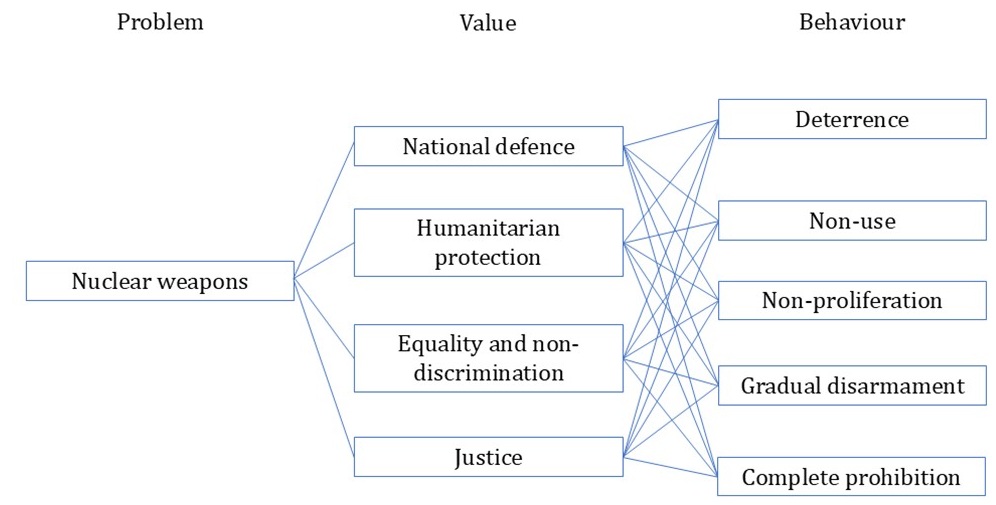
In more recent literature, norms have increasingly come to be seen as interconnected sets of perceptions about appropriate behaviour, called norm clusters (Lantis and Wunderlich 2018; Winston 2018; Lantis and Wunderlich 2022). In this sense, Carla Winston (2018) draws attention to the subcomponents of norms, formed by interconnected systems of values, perceptions of problems and behavioural prescriptions. In other words, for the same problem (such as the risk of nuclear war), different values (humanitarian conceptions, war prevention, and the promotion of national defence, for example) can lead to different behavioural prescriptions (non-proliferation, disarmament, nuclear prohibition, nuclear deterrence, among others). Each political actor can relate to the norm cluster and interpret the norms in a particular way, in light of their specific context. Due to the complexity of these clusters, the processes of socialisation and diffusion of their components do not necessarily occur cohesively, so different states (and sub-state actors) can present different combinations of the same norm. This is relevant for analysing the norm of prohibition of nuclear weapons because the coexistence of these different combinations can help to understand the different behaviours about the proposal to ban nuclear weapons.
The second phase of the constructivist literature on norms also focused more on analysing the role of states as norm entrepreneurs (Müller and Wunderlich 2013; Wunderlich 2020; Flonk 2021; Lawrinson 2022). In this sense, civil society actors are not the only ones that can propose new norms and campaign for their adoption and dissemination. Thus, considering the importance of norms as constitutive elements of identities, there are incentives for middle powers to take on the role of norm entrepreneurs as a strategy to reinforce their recognition as ‘good citizens’ in international society (Wunderlich 2013: 33). An essential aspect of this discussion lies in the concept that action in favour of common goals is strongly intertwined with the pursuit of individual interests, so that they cannot be separated. This strand of analysis disassociates itself from understanding norm entrepreneurship as a phenomenon based on purely altruistic motivations, which was predominant in the first approaches to the subject and in studies focused on non-governmental organisations.
It should be noted that norm entrepreneurs are actors who seek to promote norms, are intentional, and advocate the acceptance and institutionalisation of new standards of behaviour in an effort that consistently requires time, energy, and resources (Wunderlich 2020). The activities of norm entrepreneurs are not only about building and disseminating new norms but also about institutionalising these norms and continually interpreting and reinforcing them (Johnstone 2007).
Thus, regardless of whether they are states or civil society actors, norm entrepreneurs can be recognised as those
[A]ctors who set out to alter the prevailing normative order according to certain ideas or norms that they deem more suitable as compared to the existing ones. [...] The behaviour of norm entrepreneurs is characterised by proactivism: their actions show a considerable degree of consistency, strength of purpose, and intentionality, are future-oriented, and show a continuously high level of activism. (Wunderlich 2013: 37)
Next, we will explore in more detail how the current literature approaches the nuclear prohibition norm that underpins the TPNW and is one of the components of the norm cluster around nuclear weapons.
The nuclear order, the TPNW and the construction of the international nuclear prohibition norm
The nuclear order built up over the second half of the 20th century is centred on the norms of non-proliferation, deterrence, and non-use (Freedman 2013). This way, the logic promoted by the NPT establishes the legal possession of nuclear weapons by a small group of states that adopt the doctrine of deterrence, while the other parties to the treaty refrain from developing or acquiring nuclear weapons (Walker 2000). Despite the strength of the mechanisms sustaining the status quo – which include not only the institutions of the non-proliferation regime but also a series of government agencies, academic programmes, non-governmental organisations, and think tanks that make up the non-proliferation complex (Craig and Ruzicka 2013) – there is an almost constant perception of an imminent crisis in the normative order (Walker 2000; Ayson 2005; Price 2007; Bulletin of the Atomic Scientists 2022).
The roots of this sense of instability can be traced to the very nature of the nuclear order, which is based on a discriminatory instrument through which some states are recognised as having greater rights and responsibilities than others. It can even be pointed out that when it was created, the NPT was not conceived as a definitive instrument and was only extended indefinitely in 1995, 25 years after it came into force. In any case, the consolidation of two distinct categories of countries promotes, implicitly or explicitly, the perception that some countries are more reliable and responsible than others, even leading to the understanding that it is a system built on racialised, gendered, and patriarchal categories (Gusterson 1999; Egeland 2021).
This configuration of the nuclear order has been the source of tensions and friction since its founding moments, which can be seen in the key issue of the relationship between the non-proliferation and disarmament norms in the NPT. The international treaty emphasises the first norm, as represented by its very name. However, the nuclear-armed countries needed to make some concessions for the negotiations to progress. This was achieved through vague signalling in the NPT of efforts towards disarmament without establishing timelines or mechanisms for its implementation. Nonetheless, the burden of guaranteeing international peace and security in terms of the nuclear issue constantly falls on nuclear-disarmed countries, such as Brazil, which express frustration at the limited progress made in disarmament efforts.
In any case, the weight of the obligations on one of the categories of countries is underpinned by a discourse of today versus tomorrow. While non-proliferation is presented as an urgent problem that must be tackled today and whose existence justifies the need for security guarantees by some states, disarmament is an issue for tomorrow, which can only produce significant results for the realisation of a world free of nuclear weapons when the other matter is resolved (Januário 2021). These dichotomies express points of tension intrinsic to the non-proliferation regime and the global nuclear order, underpinning a logic of inequality and strengthening the NPT as a tool for sustaining the status quo – as Brazilian ambassador Araújo de Castro said in the 1970s, the ultimate expression of the freezing of world power (Castro 1971).
These aspects signal a justice problem in the nuclear order (Müller 2010; Tannenwald 2013), with dissatisfaction and the desire to reformulate the system rooted in the order itself. This is not to ignore the fact that the NPT represents the compromise that was possible at the time of its creation and that the initiative can be judged to have had a considerable degree of success when taking into account the small number of countries that remain outside it and that have developed nuclear weapons since it entered into force. However, understanding these difficulties is essential to assessing the current context in terms of nuclear policy.
The TPNW, in contrast to the NPT, is based on the norm of nuclear prohibition, establishing, among other obligations, the commitment of its state parties never to ‘develop, test, produce, manufacture, otherwise acquire, possess or stockpile nuclear weapons or other nuclear explosive devices’ (Treaty on the Prohibition of Nuclear Weapons 2017 art. 1). It should be emphasised that the impetus for setting in motion negotiations on a new commitment came from debates about the humanitarian impacts associated with nuclear weapons. At the end of the first decade of the 2000s, some actors began to stimulate the search for new formulas to promote disarmament, and the final document of the 2010 NPT Review Conference explicitly mentioned the humanitarian issue. Since then, frustrations with traditional initiatives in this area have fuelled the desire of some groups of states and civil society for new solutions and alternative frameworks for the debate. Among the initiatives generated in this context were three conferences held between 2013 and 2014 in Oslo, Nayarit, and Vienna to discuss the humanitarian impact of nuclear weapons, which were based on dialogue between civil society, state actors, victims, and academics (Gibbons 2018). The meetings added vigour to the clamour for negotiating a ban treaty on nuclear weapons. The experience gained by some participants from previous successful experiences, notably the 1997 Ottawa Convention on Anti-Personnel Mines and the 2008 Oslo Convention on Cluster Munitions, was fundamental to the process.
To understand the normative discussion around the TPNW, we need to recognise that nuclear disarmament and prohibition are not an end in themselves. These norms are ultimately aimed at preventing the negative consequences that would result from nuclear wars, nuclear tests, accidents involving nuclear weapons, or access to these weapons by terrorist groups. The fact that nuclear disarmament and prohibition are not an end in themselves is relevant because it influences states’ calculations about the usefulness of maintaining their own arsenals or remaining under the nuclear umbrella of an ally. As long as some states still have nuclear weapons, there is a risk that they will be used, and consequently, there are incentives for other states to maintain their own arsenals as a defence resource. In this sense, the norm of disarmament clashes with other norms that also aim to reduce the risk of nuclear wars, such as the norms of non-proliferation (which underpins the NPT), non-use, and deterrence (Freedman 2013).
As a result of this clash between norms and the rational incentives for states to preserve their deterrence capability, it is still difficult to imagine that the TPNW will be able to guarantee a world free of nuclear weapons. Nuclear-capable countries and those protected by the nuclear umbrella of some power, such as NATO members, are reluctant to give up what they perceive as a valuable defence resource. Furthermore, once nuclear knowledge has been acquired, it cannot be eliminated and forgotten; so, in a scenario of absolute disarmament, there could be a new race between nations seeking to produce an arsenal in order to become the sole nuclear power and thus enjoy a significant strategic advantage.
Faced with this, China, North Korea, the United States, France, India, Israel, Pakistan, the United Kingdom and Russia, the countries that currently have nuclear weapons – whether considered legitimate or not – boycotted the TPNW negotiations. Even countries apparently in favour of a nuclear ban were reluctant to join the treaty once it was concluded. Some notable examples are Japan (Tomonaga 2018), Australia (Hood and Cormier 2020) and Norway (Nystuen, Egeland and Hugo 2018), countries that rely to some extent on US nuclear protection.
On the other hand, countries that do not have nuclear weapons, and do not have (nor have significant incentives to seek) nuclear protection from a major power, question the asymmetries intrinsic to the norms of non-proliferation, non-use, and deterrence. The current normative order results in one of the most profound dilemmas of arms control regimes: the need to establish the parameters of who can have nuclear arsenals and who cannot. This asymmetry clashes with conceptions of one of the strongest metanorms in international politics, justice (Müller 2013). This perception of injustice inherent in the non-proliferation regime as a result of unequal treatment can only be overcome, in principle, through disarmament and the universalisation of the norm (Müller, Becker-Jacob and Seidler-Diekmann 2013: 59).
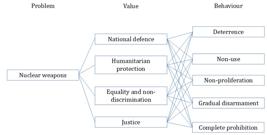
shows some of the central components of the norm cluster around nuclear weapons. Once their existence is recognised as a problem, different values prescribe different courses of action. Thus, values of national defence, humanitarian protection, equality and non-discrimination, and justice can be related to the prescription of different behaviours, such as deterrence, non-use, non-proliferation, gradual disarmament, and prohibition, which have different foundations and are not always compatible with each other.
These tensions give rise to fault lines since the rules in force are constantly being challenged. This process of contestation is not necessarily negative, as it can give rise to reforms that are beneficial to the regime. Norm entrepreneurs play an important role in this; in other words, it is possible to think of the role of these norm entrepreneurs not only in proposing new norms, but also in promoting reforms in the current normative systems through contestation (Müller and Wunderlich 2018).
In addition to ICAN, some of the main norm entrepreneurs who have sought to establish and spread the nuclear ban norm include states such as Austria and the Holy See. But this norm has so far developed entirely outside the group of states that can make it effective and has therefore failed to pass the first stage of the norm life cycle, that of normative emergence (Vilmer 2022). The norm is further weakened in its current status by the profile of the states that have joined it, since a lot of the countries that have joined the TPNW are small, illiberal democracies or autocracies, so there are not many significant moral leaders who can lead a process of norm diffusion through socialisation and emulation (Vilmer 2022: 8).
In fact, there have been widespread analyses that point out that the TPNW is utopian or ineffective in its attempt to promote a world free of nuclear weapons (e.g. Onderco 2017; Silva 2019), with critics pointing out that concrete mechanisms for denuclearisation and verification of commitments have not been established. There is an understanding that the treaty is not only ineffective, but also harmful to the existing institutions linked to the non-proliferation regime. In this way, some nuclear powers seek to delegitimise the promotion of the nuclear ban norm on the international stage, highlighting their opposition to the current norms, which are considered essential for the stability of the international security environment, as can be seen in the joint statement issued by the representatives of the United States, France and the United Kingdom at the UN on the occasion of the approval of the TPNW:
France, the United Kingdom and the United States have not taken part in the negotiation of the treaty on the prohibition of nuclear weapons. We do not intend to sign, ratify or ever become party to it. […] This initiative clearly disregards the realities of the international security environment. Accession to the ban treaty is incompatible with the policy of nuclear deterrence, which has been essential to keeping the peace in Europe and North Asia for over 70 years. (United States of America, United Kingdom and France 2017: 1)
However, some perspectives emphasise that the great milestone that animates the treaty and should serve as a parameter for its analysis is not the immediate and concrete banning of nuclear weapons, but the reframing of the terms of the debate (Williams 2018). Thus, its proponents and the norm entrepreneurs should not be taken as naïve because, from the outset, they were aware that the adoption of the TPNW would not automatically imply the end of nuclear weapons – the treaty aimed to promote the stigmatisation of nuclear weapons by promoting the norm of nuclear prohibition, driving the debate in the nuclear-armed countries and their allies (Sauer and Reveraert 2018). The value of nuclear weapons as providers of international stability and security is being challenged. This way, it would become progressively more difficult for states to justify the possession of nuclear weapons in the face of their gradual delegitimisation, and the effort to promote a nuclear ban may be characterised as a challenge or an act of resistance to the structures and institutions of the current regime (Ritchie 2019). In this sense, the TPNW’s great value may lie precisely ‘in its long-term normative influence’ (Hanson 2018: 1).
In any case, the TPNW is currently in a situation of ambiguity. On the one hand, in December 2021, a UN General Assembly resolution (A/RES/76/34) calling on states that have not yet done so to join the TPNW was passed with 128 votes in favour (United Nations 2022), and, as of January 2024, the TPNW had 69 states parties, and 24 states that had signed but not yet ratified it (United Nations Office for Disarmament Affairs 2024). On the other hand, despite its apparently broad scope, the TPNW is systematically rejected by nuclear-capable states and those under their protection. Therefore, it is still far from achieving its intended results. Against this backdrop, in the next section we discuss Brazil’s posture.
Brazil’s normative stance on disarmament
Brazil had already presented itself as an advocate of nuclear disarmament as a primary response to the risk of nuclear wars and expressed frustration at the little progress made on the issue, even before joining the instruments of the non-proliferation regime. This orientation persisted after the ascension to the NPT in the 1990s. It is worth noting that the 1988 Federal Constitution established that the country’s nuclear activities would only be aimed at peaceful purposes and nowadays Brazil is one of only three countries with this type of provision in their constitutional charters4 (Goldemberg, Feu Alvim and Mafra 2018). In 1998, Brazil – alongside Egypt, Ireland, Mexico, New Zealand, South Africa, Sweden, and Slovenia – took part in founding the New Agenda Coalition, which set out to promote disarmament and non-proliferation. The Coalition’s work impacted the resumption of attempts to promote the fulfilment of the nuclear disarmament obligation laid down in the NPT through the so-called ‘thirteen steps.’ However, the initiative was not successful in its implementation (Herz and Lage 2013). In any case, this shows Brazil’s defence of disarmament and its diplomatic efforts on the issue.
Brazil showed itself to be favourable and engaged in the initiatives within the UN that led to the negotiation of the TPNW. In this process, Brazil’s stance was constantly critical of the asymmetry and injustice crystallised in the NPT, as illustrated by Ambassador Antonio Guerreiro’s statement in 2012 to the Preparatory Committee for the NPT Review:
The question we should ask ourselves now is whether the basic inequality enshrined in the [non-proliferation] treaty has been, or is in the process of being reduced. […] It is simply not admissible that more than 20 years after the end of the Cold War nuclear weapons still continue to be an integral part of military and security doctrines. […] After all the world has always been and will always be an unstable environment. Waiting for a Kantian universal and perpetual peace to commit to forswear atomic weapons simply runs counter to the ultimate objective of the NPT, which is the total and irreversible elimination of nuclear weapons. […] An international order in which rights and obligations are the same for all participants is the only guarantee against challenges and attempts of disruption. (Guerreiro 2012: 1–2)
This reflects Müller’s (2013) argument about the importance of justice as a metanorm that permeates arms control regimes. It also clearly illustrates Brazil’s stance criticising the discriminatory order of the NPT, and an apparent belief that the norm of nuclear prohibition underpins the conception of the NPT itself. This interpretation does not find universal support in the international arena.
In December 2015, Brazil voted in favour of a General Assembly resolution establishing a Working Group to discuss legal measures to achieve a world free of nuclear weapons (Duarte 2017). A document submitted by the South American country to the Working Group stated that
Brazil would like that the final report of the Open-ended Working Group to the General Assembly of the United Nations at its seventy-first session recommends the immediate commencement of negotiations on a treaty for the prohibition of nuclear weapons, which would establish the main prohibitions and obligations associated with that goal, as well as the general provisions regarding future steps aimed at the complete elimination of nuclear weapons, the verification thereof and other relevant aspects pertaining to an all-encompassing nuclear disarmament framework. (Brazil 2016: 4)
In line with its publicised position, the state was in favour of adopting the report drawn up by the Working Group, which recommended that an assembly be held in 2017 to negotiate a legal instrument to ban nuclear weapons. In December 2016, the UN adopted a resolution establishing the start of negotiations for such a legal instrument, leading to their total elimination. The initiative came from South Africa, Austria, Brazil, Ireland, Nigeria, and Mexico, and work began in March 2017 (Duarte 2017).
Considering the above, we argue that three interrelated elements help clarify Brazil’s position on the nuclear prohibition norm and the TPNW and can, to some extent, be applied to other countries that find themselves in a similar position regarding the non-proliferation regime. Firstly, the Treaty on the Prohibition of Nuclear Weapons can be understood as a way for Brazil to reiterate its commitments to non-proliferation in the context of a global nuclear order that is seen as unequal, imposed, and fragile and is, therefore, a move both to reinforce its commitment to the non-proliferation norm and to indicate its intention to modify the current configuration of the normative order. It is worth noticing that according to Brazil’s interpretation of nuclear norms, there is no incongruence among the norms of non-proliferation, disarmament, and prohibition since they all reinforce that the existence of nuclear weapons is a security problem and establish different degrees of dealing with this issue, from avoiding their spread to their total elimination.
Brazil has been one of the most prominent critics of the discriminatory and, from the point of view of its authorities, unfair nature of the non-proliferation regime. The country was the target of pressure for decades due to its refusal to sign the NPT and the development of its nuclear programme, and was viewed with suspicion by the international community. The situation only changed in the 1990s, with Brazil joining the treaty in 1998. Still, it had already signed equivalent commitments with the IAEA through the Quadripartite Agreement between Argentina, Brazil, the IAEA and the Brazilian-Argentine Agency for Accounting and Control of Nuclear Materials (ABACC), drawn up in 1991 and in force since 1994. These initiatives strengthened the NPT’s weight in Latin America (Dawood and Herz 2013).
However, Brazil has not ceased to be a critic of the global nuclear order, and despite not being viewed with the same suspicion as in the past, friction with the central institutions of the non-proliferation regime has persisted. Spektor (2016) points out that even in the Fernando Henrique Cardoso administration, when Brazil signed the NPT, mistrust and suspicion of the regime’s institutions and its inspectors could be observed. Brazil’s actions can be seen as an expression of ‘creative adaptation,’ in which the country accepted the regime to promote foreign policy objectives in the pursuit of a more peaceful world and access to cutting-edge technology, but without losing its disarmament-orientated vision of the future (Lamazière 1998). Against this backdrop, Brazil’s stance on negotiating the TPNW can be understood as a way of reaffirming Brazil’s commitment to non-proliferation and a world free of nuclear weapons despite all the difficulties characterising the nuclear order and the state’s criticism of it.
Secondly, Brazil can use the TPNW to strengthen its positions, especially on the issue of nuclear disarmament. This is motivated by the perception of many states and non-state actors that the commitments made by the nuclear powers in the NPT to reduce their arsenals and make concrete efforts towards disarmament have not been satisfactorily fulfilled. As already mentioned, there is strong discontent on this issue. Although arsenals today are much smaller than the peak seen during the Cold War, nuclear weapons are still central aspects of the strategies of nuclear-armed countries and are undergoing processes of modernisation and upgrading, demonstrating the persistence of the norm of nuclear deterrence as a guideline for the stance of the nuclear powers. This led to disbelief and dissatisfaction with the prevailing step-by-step approaches to disarmament, which reached a high point in the negotiations for the TPNW with the realisation that it was necessary to reframe the debate, mark a position and pursue new avenues, albeit without the support of the nuclear-armed countries.
For Brazil, taking a stand means reinvigorating its criticism of the nuclear order and, more than that, strengthening the foundations of positions it has adopted for years, particularly concerning the Additional Protocol to the NPT. Brazil has rejected this commitment ever since it was drawn up. One of the arguments put forward is precisely the little progress made in favour of disarmament, considering that the Additional Protocol would once again place the burden of security on the nuclear-disarmed countries, while the nuclear-armed countries would not suffer similar pressures (Hibbs 2010). These concerns again reflect the theme of justice as the basis for Brazil’s criticism of the nuclear order.
In addition, Brazil’s support for the TPNW represents a way for the country to show itself as engaged in relevant issues on the international security agenda, showing itself as an interested and responsible actor. The ambition to become a major power appears at various moments in the history of Brazilian foreign policy, and the country has often sought a prominent place in international politics. In this field, we can point to the plea for a permanent seat on the main international body dealing with security, first on the Executive Council of the League of Nations and later on the UN Security Council (UNSC). This objective is pursued, with greater or lesser emphasis, by various governments, and Brazil’s participation in the promotion of the TPNW can be understood as a way of strengthening its credentials and, at the same time, setting a different international agenda from the states that are permanent members of the UNSC, while respecting its own diplomatic tradition and history in terms of defending disarmament.
In this sense, the compromise negotiations would represent an opportunity to occupy a space that was being created since an instrument had been promoted without the traditional players in international security. In fact, the TPNW negotiating process allowed nuclear-disarmed countries a degree of agency that they did not previously have due to the constraints of the NPT (Hanson 2018). Thus, the quest to reinforce its position of diplomatic prestige on the multilateral stage can be identified as one of the values underpinning Brazil’s actions in favour of the nuclear ban norm.
Beatrice Fihn, ICAN’s executive director, touches on some of these issues when discussing Brazil’s participation and emphasising the country’s importance due to its size and regional influence. Thus,
It’s not a sort of humanitarian disarmament-focused country but it’s been extremely interesting to work with Brazil […] It wants a permanent seat on the Security Council. And that’s why I think it was very important to have that country reject nuclear weapons in the way that it had done with this treaty. The country has aspirations of being a great power, but without nuclear weapons. I think that’s a very smart branding as well. (Mekata 2018: 85)
Finally, the negotiation and formalisation of the TPNW are ways of attracting public opinion and promoting awareness of the dangers of nuclear weapons. In this sense, an increase in civilian involvement can generate pressure on governments to promote the end of the nuclear age and strengthen Brazil’s position in the two ways mentioned above. In fact, the participation of civil society was essential to the formulation of the commitment and one of the aims of its supporters is precisely to draw society’s attention to these issues, generating pressure for governments to act in favour of disarmament. Thus, the intention is to raise the profile of the problem of nuclear weapons as an essential item on the contemporary international agenda due to the humanitarian consequences of their use.
For Brazil, being associated with the initiative in the eyes of public opinion is a way of reinforcing the legitimacy of its position, both in terms of criticising the current nuclear order and the need to reform it while maintaining its commitment to the norms of non-proliferation and nuclear disarmament and in terms of reinforcing the image of a responsible and committed country that has a valid frustration with disarmament efforts and the instruments of the central institutions of the non-proliferation regime.
The three points presented – reaffirmation of commitments to non-proliferation and disarmament norms, reinforcement of a leading position in multilateral structures, and a way of attracting public attention to the nuclear issue – help us to understand the reasons for Brazil’s support for the TPNW and the nuclear ban norm, revealing interests to be pursued or strengthened by the initiative. In this way, Brazil played a leading role in negotiating the agreement and was the first country to sign it. Even so, Brazil’s role as a norm entrepreneur of the nuclear ban can be considered ambiguous.
In the context of the norm cluster around the issue (represented in Figure 1), Brazil has internalised the nuclear ban norm, as evidenced by the inclusion of the issue in the 1988 Constitution. However, the country did not promptly ratify the TPNW, revealing a weakness in its position as a central norm entrepreneur in the international sphere. In fact, there is not ‘a continuously high level of activism’ (Wunderlich 2013: 37) in promoting the prohibition norm. Thus, although the literature on norms does not specify the sufficient and necessary criteria for an actor to be considered a norm entrepreneur, the internalisation of the norm, although apparently necessary when it comes to states, does not seem to be sufficient. Norm entrepreneurs are generally recognised for their high level of commitment to the dissemination, institutionalisation, and reinforcement of the norm, which may have been compromised in Brazil’s case, as illustrated by its failure to adhere to the TPNW.
As a matter of fact, Brazil’s stance has been discursively based on issues related to the search for a fairer and less discriminatory nuclear order. Still, the Brazilian government’s discourses have not strongly mobilised the humanitarian aspect. As mentioned, the existence of vested interests in promoting a norm does not disqualify an actor as a norm entrepreneur. However, Brazil’s stance on the issue seems to reveal a purely instrumental character attributed to the issue, and it is not possible to see a continuous and vigorous effort to promote the nuclear ban through the systematic defence of the TPNW. In this sense, Brazil’s position was more guided by the logic of consequences, based on a cost-benefit calculation, than by the logic of appropriateness, motivated by the identification of appropriate behaviour in the context and by a sense of identity (March and Olsen 1998; March and Olsen 2011).
The incentive to create the treaty served Brazilian interests in the spheres discussed here. It can be related to the attempt to show itself as a good global citizen, reinforce its credentials as a relevant actor, and strengthen its international prestige. Furthermore, the TPNW does not represent a high cost for Brazil since it strengthens positions already defended and giving up nuclear weapons is a constitutional provision. Even so, proactivity has not characterised Brazil’s position since the treaty was finalised, which can be linked to the distancing from the framework used to promote the norm. Framing refers to how the issue is presented, i.e. in what terms the problem of justice identified in the current order is conceived so that the promotion of a new norm is necessary and how the possible paths are formulated to highlight certain issues and generate a kind of identification among the norm’s promoters.
Regarding the nuclear ban and its representation through TPNW, the framework used by the leading norm entrepreneurs concerns humanitarian disarmament. As noted by ICAN’s executive director, Beatrice Fihn, and quoted above, Brazil does not have a tradition and an approach geared towards this concept. Although mentioned in official speeches and initiatives regularly, the humanitarian impacts of nuclear weapons are not the subject of major debates and efforts at the government level, and initiatives by individuals and non-governmental organisations in this regard are limited. Brazil approaches disarmament in traditional terms, reinforcing aspects related to the impact of nuclear weapons on state security and the inequality in the non-proliferation regime. Even when considering other humanitarian disarmament initiatives that have provided a framework for movements in favour of the TPNW, Brazil does not show much adherence, and it is possible to point out, for example, that the country did not adhere to the Convention on Cluster Munitions.5
The message that accompanied the submission of the TPNW for consideration by the Presidency and the Brazilian National Congress addressed the humanitarian issue, but emphasised that there would be no burden on the country and reinforced how already consolidated Brazilian interests would be served. Thus,
The Treaty takes into account contemporary international political and security realities and serves Brazil’s national interest. Indeed, the current geopolitical environment ignores the security of countries in which nuclear deterrence is not part of defence doctrines and which have chosen not to develop this type of weaponry. The continued existence of nuclear weapons in the world poses a threat to Brazil’s national security, as well as that of citizens in all countries. By increasing the pressure for disarmament in the world, the Treaty aligns itself with Brazil’s interest in not being the object of the threat or use of nuclear weapons and contributes to the relative increase in the power of deterrence and defence of the Brazilian Armed Forces. (Brazil 2018: 21)
In this way, a traditional discourse is highlighted. There is no great effort to promote a humanitarian framework for debating the issue, committing the time and resources expected of a norm entrepreneur. In this sense, in the context of the norm cluster around nuclear weapons, humanitarian values are not among the primary motivations for Brazil’s stance in defence of the prohibition rule. Thus, while countries like Austria and advocacy networks such as ICAN have emphasised the humanitarian issue in their positions, Brazil has focused more on discussions related to the injustice of the nuclear order based on the non-proliferation norm when disconnected from the disarmament norm.
Thus, when considering the nuclear norm cluster, Brazil’s defence of the nuclear prohibition norm is based on justice, equality, and security values but is far removed from humanitarian motivations. This means that the framework adopted by the country differs from that of the main actors promoting the TPNW, which limits its capacity to develop a vigorous action reinforcing the primary international efforts since the discussion is put in different terms, with varying points of origin and argumentative-discursive logics. This connection between the norm cluster and the framing of norms is significant because one of the hallmarks of norm entrepreneurs is the constant effort to interpret and reinterpret the norm, which is enhanced by an aligned discourse between the main players. The adoption of different frameworks reveals not only a different position in the norm cluster but also impacts the ability to continually defend the world view and particular meaning of the norm in question, and these points can be observed in the Brazilian case.
It should also be noted that Brazil’s actions are limited because it has not ratified the treaty. Hence, Brazil was not able to participate fully in the First Meeting of the Parties to the TPNW in 2022, even though it has made significant contributions to the preparatory meetings. An important caveat here is that the difficulty of ratification seems to be related to internal disagreements in Congress and the position of Jair Bolsonaro’s government on disarmament in general (Spektor, Kassenova and Florentino 2019; Santiago 2022).
Closing remarks
In this article, we seek to analyse Brazil’s role as a norm entrepreneur in promoting the norm of nuclear prohibition, formalised in the TPNW. Based on a theoretical foundation of norm constructivism, we present some pillars of the nuclear order based on a cluster that includes interconnected and partially incompatible norms: non-proliferation, deterrence, non-use, disarmament, and nuclear prohibition. We then sought to situate the Brazilian position by analysing the motivations behind Brazil’s role in the TPNW negotiations.
We concluded that, despite playing a leading role in this process, Brazil did not fully consolidate itself as a central norm entrepreneur in the promotion of the nuclear ban norm due to its distance from the humanitarian rationale defended by other norm entrepreneurs around the TPNW and, above all, the absence of a proactive and intense activist stance to disseminate, institutionalise and reinforce the norm, mainly due to the different framework adopted. Brazil’s stance can be understood in terms of three motivations: reaffirming previous commitments to non-proliferation and disarmament norms, strengthening diplomatic protagonism within multilateral structures, and attracting domestic public attention to the issue.
The purpose of the discussion presented here was to situate the Brazilian position concerning the norm cluster around the nuclear issue and its role as a norm developer. Future research could contribute to advancing understanding of the issue. In particular, more research is needed on the domestic conditioning factors of this process, especially on how the relationship between the Ministry of Foreign Affairs, the Presidency of the Republic, and the National Congress influenced the processes that followed the signing of the TPNW, and the reluctance of the Brazilian government to finalise the ratification process. Future research could also contribute to a deeper understanding of the position of other Latin American countries on the issue from a comparative perspective.
Notes
-
1
For discussions on the meaning of norms, cf. e.g. Finnemore e Sikkink (1998: 891-893); Duffield (2007); Winston (2018: 2-3); Wunderlich (2013: 21-23).
-
2
The first phase of constructivist literature on norms has also been criticized for treating states targeted by norm diffusion as passive recipients, incorporating an implicit liberal bias, and representing an almost teleological view of the diffusion process by focusing on successful cases of norm socialisation (e.g. Bloomfield 2015: 312-314).
-
3
These numbers refer to the period up to January 2024.
-
4
The other two countries are New Zealand and the Philippines.
-
5
This rejection of the Convention on Cluster Munitions may stem from the fact that the Brazilian company Avibras is a producer and exporter of this type of weaponry (Salles and Janone 2022).
Acknowledgements
This study was financed in part by the Coordenação de Aperfeiçoamento de Pessoal de Nível Superior - Brasil (CAPES) – Finance Code 001
References
-
Arms Control Association [online]. 2018. ‘Core Group of Negotiators for the Treaty on the Prohibition of Nuclear Weapons Voted 2017 Arms Control Persons of the Year.’ 9 January. At https://www.armscontrol.org/pressroom/2018-01/acpoy-2017-winner [Accessed on 15 January 2024].
» https://www.armscontrol.org/pressroom/2018-01/acpoy-2017-winner - Ayson, R. 2005. ‘Selective Non-Proliferation or Universal Regimes?’ Australian Journal of International Affairs 59(4), pp. 431–437.
- Bloomfield, A. 2015. ‘Norm Antipreneurs and Theorising Resistance to Normative Change.’ Review of International Studies 42(2), pp. 310–333.
-
Brazil. 2018. Diário da Câmara dos Deputados [online]. Ano LXXIII, 159. Brasília, 3 October.At https://imagem.camara.gov.br/Imagem/d/pdf/DCD0020181003001590000.PDF#page= [Accessed on 15 January 2024].
» https://imagem.camara.gov.br/Imagem/d/pdf/DCD0020181003001590000.PDF#page= -
Brazil. 2016. ‘Effective Measures, Legal Norms and Provisions on Nuclear Weapons: A Hybrid Approach towards Nuclear Disarmament’ [online]. United Nations, General Assembly, Open-Ended Working Group Taking forward Multilateral Nuclear Disarmament Negotiations, A/AC.286/WP.37. Geneva, 9 May. At https://documents-dds-ny.un.org/doc/UNDOC/GEN/G16/093/11/PDF/G1609311.pdf?OpenElement [Accessed on 15 January 2024].
» https://documents-dds-ny.un.org/doc/UNDOC/GEN/G16/093/11/PDF/G1609311.pdf?OpenElement -
Bulletin of the Atomic Scientists [online]. 2022. ‘The 2022 Nuclear year in review: A Global Nuclear Order in Shambles.’ 26 December. At thebulletin.org/2022/12/the-2022-nuclear-year-in-review-a-global-nuclear-order-in-shambles [Accessed on 15 January 2024].
» thebulletin.org/2022/12/the-2022-nuclear-year-in-review-a-global-nuclear-order-in-shambles - Castro, J A A. 1971. ‘O congelamento do Poder Mundial.’ Revista de Informação Legislativa 8(31), pp. 37–52.
- Craig, C and J Ruzicka. 2013. ‘The Nonproliferation Complex.’ Ethics and International Affairs 27(3), pp. 329–348.
- Dawood, L and M Herz. 2013. ‘Nuclear Governance in Latin America.’ Contexto Internacional 35(2), pp. 497–535.
- Deitelhoff, N and L Zimmermann. 2020. ‘Things We Lost in the Fire: How Different Types of Contestation Affect the Robustness of International Norms.’ International Studies Review 22(1), pp. 51–76.
- Duarte, S de Q 2017. ‘The Role of Brazil in Multilateral Disarmament Efforts.’ Revista Brasileira de Política Internacional 60(2).
- Duffield, J. 2007. ‘What are International Institutions?’ International Studies Review 9(1), pp. 1–22.
- Egeland, K. 2021. ‘The Ideology of Nuclear Order.’ New Political Science 43(2), pp. 208–230.
- Finnemore, M and K Sikkink. 1998. ‘International Norm Dynamics and Political Change.’ International Organization 52(4), pp. 887–917.
- Flonk, D. 2021. ‘Emerging Illiberal Norms: Russia and China as Promoters of Internet Content Control.’ International Affairs 97(6), pp. 1925–1944.
- Freedman, L. 2013. ‘Disarmament and Other Nuclear Norms.’ Washington Quarterly 36(2), pp. 93–108.
- Gibbons, R D. 2018. ‘The Humanitarian Turn in Nuclear Disarmament and the Treaty on the Prohibition of Nuclear Weapons.’ Nonproliferation Review 25(1–2), pp. 11–36.
- Goldemberg, J, C Feu Alvim and O Y Mafra. 2018. ‘The Denuclearization of Brazil and Argentina.’ Journal for Peace and Nuclear Disarmament 1(2), pp. 383–403.
-
Guerreiro, A. 2012. ‘Statement by Ambassador Antonio Guerreiro.’ I Preparatory Committee for the 2015 Review Conference of the NPT. Vienna, Austria, 30 April – 11 May. At https://unoda-web.s3-accelerate.amazonaws.com/wp-content/uploads/assets/WMD/Nuclear/NPT2015/PrepCom2012/statements/20120502/Brazil.pdf [Accessed on 15 January 2024].
» https://unoda-web.s3-accelerate.amazonaws.com/wp-content/uploads/assets/WMD/Nuclear/NPT2015/PrepCom2012/statements/20120502/Brazil.pdf - Gusterson, H. 1999. ‘Nuclear Weapons and the Other in the Western Imagination.’ Cultural Anthropology 14(1), pp. 111–143.
- Hanson, M. 2018. ‘Normalizing Zero Nuclear Weapons: The Humanitarian Road to the Prohibition Treaty.’ Contemporary Security Policy 39(3), pp. 464–486.
- Herz, M and V C Lage. 2013. ‘A Atual Política Nuclear Brasileira.’ BRICS Policy Center, Policy Brief.
-
Hibbs, M. 2010. ‘Nuclear Suppliers Group and the IAEA Additional Protocol.’ Carnegie Endowment for International Peace [online]. 18 August. At http://carnegieendowment.org/publications/index.cfm?fa=view&id=41393 [Accessed: 15 January 2024].
» http://carnegieendowment.org/publications/index.cfm?fa=view&id=41393 - Hood, A and M Cormier. 2020. ‘Can Australia Join the Nuclear Ban Treaty without Undermining ANZUS?’ Melbourne University Law Review 44(1).
- Johnstone, I. 2007. The Secretary-General as Norm Entrepreneur. In: Chesterman, S. ed. Secretary or General? The UN Secretary-General in World Politics. Cambridge: Cambridge University Press, pp. 123–138.
- Januário, L E. 2021. Compassos e Descompassos Nucleares: As Estratégias de Argentina e Brasil frente à Ordem Nuclear Global e para o Relacionamento Bilateral (1985-1991). PhD Thesis. Programa de Pós-Graduação em Relações Internacionais San Tiago Dantas (UNESP-UNICAMP-PUC-SP), Brazil.
- Lamazière, G. 1998. ‘Desarmamento Nuclear e Hegemonia- Em Busca de um Novo Paradigma.’ O Brasil e as Novas Dimensões da Segurança Internacional, IEA, pp. 1–12.
- Lantis, J S and C Wunderlich. 2018. ‘Resiliency Dynamics of Norm Clusters: Norm Contestation and International Cooperation.’ Review of International Studies 44(3), pp. 570–593.
- Lantis, J S and C Wunderlich. 2022. ‘Reevaluating Constructivist Norm Theory: A Three-Dimensional Norms Research Program.’ International Studies Review 24(1), pp. 1–27.
- Lawrinson, B. 2022. ‘The Limits of State-Led Norm Entrepreneurship: The United Kingdom and the Preventing Sexual Violence in Conflict Initiative (PSVI).’ The British Journal of Politics and International Relations.
- March, J G and J P Olsen. 1998. ‘The Institutional Dynamics of International Political Orders.’ International Organization 52(4), pp. 943–969.
- March, J G and J P Olsen. 2011. The Logic of Appropriateness. In: The Oxford Handbook of Political Science. Oxford University Press.
- Mekata, M. 2018. ‘How Transnational Civil Society Realized the Ban Treaty: An Interview with Beatrice Fihn.’ Journal for Peace and Nuclear Disarmament 1(1), pp. 79–92.
- Müller, H. 2010. ‘Between Power and Justice: Current Problems and Perspectives of the NPT Regim.’ Strategic Analysis 34(2), pp. 189–201.
- Müller, H. 2013. Where it All Began. In: Müller, H and C. Wunderlich (eds.) Norm Dynamics in Multilateral Arms Control: Interests, Conflicts, and Justice. 1st ed. Athens: The University of Georgia Press, pp. 1–19.
- Müller, H, U Becker-Jacob and T Seidler-Diekmann. 2013. Regime Conflicts and Norm Dynamics: Nuclear, Biological, and Chemical Weapons. In: Müller, H and C. Wunderlich (eds.) Norm Dynamics in Multilateral Arms Control: Interests, Conflicts, and Justice. 1st ed. Athens: The University of Georgia Press, pp. 51–81.
- Müller, H and C Wunderlich (eds.) 2013. Norm Dynamics in Multilateral Arms Control: Interests, Conflicts, and Justice. 1st ed. Athens: The Georgia University Press.
- Müller, H and C Wunderlich. 2018. ‘Not Lost in Contestation: How Norm Entrepreneurs Frame Norm Development in the Nuclear Nonproliferation Regime.’ Contemporary Security Policy 39(3), pp. 341–366.
- Nystuen, G, K Egeland and T G Hugo. 2018. The TPNW and its Implications for Norway. Norwegian Academy of International Law.
- Onderco, M. 2017. ‘Why Nuclear Weapon Ban Treaty is Unlikely to Fulfil its Promise.’ Global Affairs 3(4–5), pp. 391–404.
- Panke, D and U Petersohn. 2011. ‘Why International Norms Disappear Sometimes.’ European Journal of International Relations 18(4), pp. 719–742.
- Price, R. 2007. ‘Nuclear Weapons Don’t Kill People, Rogues Do.’ International Politics 44(2–3), pp. 232–249.
- Ritchie, N. 2019. ‘A Hegemonic Nuclear Order: Understanding the Ban Treaty and the Power Politics of Nuclear Weapons.’ Contemporary Security Policy 40(4), pp. 409–434.
-
Salles, S and L Janone. 2022. ‘Exportador, Brasil se Recusa a Aderir Convenção contra Uso de Bombas de Fragmentação.’ CNN Brasil [online]. 5 March. At https://www.cnnbrasil.com.br/nacional/exportador-brasil-se-recusa-a-aderir-convencao-contra-uso-de-bombas-de-fragmentacao/ [Accessed: 15 January 2024].
» https://www.cnnbrasil.com.br/nacional/exportador-brasil-se-recusa-a-aderir-convencao-contra-uso-de-bombas-de-fragmentacao/ -
Santiago, B C. 2022. ‘Why Brazil Shouldn’t Let Bolsonaro Stand in the Way of Ratifying the Nuclear Ban Treaty.’ Bulletin of the Atomic Scientists [online]. 19 April. At https://thebulletin.org/2022/04/why-brazil-shouldnt-let-bolsonaro-stand-in-the-way-of-ratifying-the-nuclear-ban-treaty/ [Accessed on 15 January 2024].
» https://thebulletin.org/2022/04/why-brazil-shouldnt-let-bolsonaro-stand-in-the-way-of-ratifying-the-nuclear-ban-treaty/ - Sauer, T and M Reveraert. 2018. ‘The Potential Stigmatizing Effect of the Treaty on the Prohibition of Nuclear Weapons.’ Nonproliferation Review 25(5–6), pp. 437–455.
- Silva, M V M. da 2019. ‘O Tratado sobre a Proibição de Armas Nucleares (TPAN): Inovação no Desarmamento Nuclear ou Esforço Inócuo?’ Meridiano 47 - Journal of Global Studies 20.
- Spektor, M. 2016. ‘The Evolution of Brazil’s Nuclear Intentions.’ Nonproliferation Review 23(5–6), pp. 635–652.
-
Spektor, M, T Kassenova and L P Florentino. 2019. ‘Brazil’s Nuclear Posture Under Bolsonaro.’ Arms Control Association [online]. 19 September. At https://www.armscontrol.org/act/2019-09/features/brazil%E2%80%99s-nuclear-posture-under-bolsonaro [Accessed on 15 January 2024].
» https://www.armscontrol.org/act/2019-09/features/brazil%E2%80%99s-nuclear-posture-under-bolsonaro - Stimmer, A. 2019. ‘Beyond Internalization: Alternate Endings of the Norm Life Cycle.’ International Studies Quarterly 63(2), pp. 270–280.
- Tannenwald, N. 2013. Justice and Fairness in the Nuclear Nonproliferation Regime.
-
The Nobel Prize. 2022. ‘The Nobel Peace Prize 2017’ [online] At https://www.nobelprize.org/prizes/peace/2017/summary/ [Accessed:15 January 2024].
» https://www.nobelprize.org/prizes/peace/2017/summary/ - Tomonaga, M. 2018. ‘Can Japan Be a Bridge-Builder between Deterrence-Dependent States and Nuclear Weapon Ban Treaty Proponents?’ Medicine, Conflict, and Survival 34(4), pp. 289–294.
-
Treaty on the Prohibition of Nuclear Weapons [Online]. 2017. New York, 7 July 2017. At https://treaties.un.org/doc/Treaties/2017/07/20170707%2003-42%20PM/Ch_XXVI_9.pdf [Accessed on 15 January 2024].
» https://treaties.un.org/doc/Treaties/2017/07/20170707%2003-42%20PM/Ch_XXVI_9.pdf -
United Nations. 2022. ‘Resolutions adopted by the General Assembly at its 76th session.’ [online]. At https://research.un.org/en/docs/ga/quick/regular/76 [Accessed on15 January 2024].
» https://research.un.org/en/docs/ga/quick/regular/76 -
United Nations Office for Disarmament Affairs. 2024. ‘Treaty on the Prohibition of Nuclear Weapons.’ [online]. At https://treaties.unoda.org/t/tpnw [Accessed on 15 January 2024].
» https://treaties.unoda.org/t/tpnw -
United States of America, United Kingdom and France. 2017. ‘Joint Press Statement from the Permanent Representatives to the United Nations of the United States, United Kingdom and France Following the Adoption of a Treaty Banning Nuclear Weapons.’ [online]. New York, 7 July. At: https://usun.usmission.gov/joint-press-statement-from-the-permanent-representatives-to-the-united-nations-of-the-united-states-united-kingdom-and-france-following-the-adoption/#:~:text=France%2C%20the%20United%20Kingdom%20and,with%20respect%20to%20nuclear%20weapons. [Accessed on 15 January 2024].
» https://usun.usmission.gov/joint-press-statement-from-the-permanent-representatives-to-the-united-nations-of-the-united-states-united-kingdom-and-france-following-the-adoption/#:~:text=France%2C%20the%20United%20Kingdom%20and,with%20respect%20to%20nuclear%20weapons. - Vilmer, J B J. 2022. ‘The Forever-Emerging Norm of Banning Nuclear Weapons.’ Journal of Strategic Studies 45(3), pp. 478–504.
- Walker, W. 2000. ‘Nuclear Order and Disorder.’ International Affairs 76(4), pp. 703–724.
- Wiener, A. 2008. The Invisible Constitution of Politics: Contested Norms and International Encounters. 1st ed. Cambridge: Cambridge University Press.
- Wiener, A. 2014. A Theory of Contestation. Berlin, Heidelberg: Springer Berlin Heidelberg.
- Wiener, A and U Puetter. 2009. ‘The Quality of Norms Is what Actors Make of it: Critical Constructivist Research on Norms.’ International Law and International Relations 5(1), pp. 1–16.
- Williams, H. 2018. ‘A Nuclear Babel: Narratives Around the Treaty on the Prohibition of Nuclear Weapons.’ Nonproliferation Review 25(1–2), pp. 51–63.
- Winston, C. 2018. ‘Norm Structure, Diffusion, and Evolution: A Conceptual Approach.’ European Journal of International Relations 24(3), pp. 638–661.
- Wunderlich, C. 2013. Theoretical Approaches in Norm Dynamics. In: Müller, H and C Wunderlich (eds.) Norm Dynamics in Multilateral Arms Control: Interests, Conflicts and Justice. 1st ed. Athens: The University of Georgia Press, pp. 20–49.
- Wunderlich, C. 2020. Rogue States as Norm Entrepreneurs: Black Sheep or Sheep in Wolves’ Clothing? 1st ed. Springer.
- Zähringer, N. 2021. ‘Taking Stock of Theories Around Norm Contestation: A Conceptual Re-Examining of the Evolution of the Responsibility to Protect.’ Revista Brasileira de Politica Internacional 64(1).

 Source: elaborated by the authors