
 Floristic-structural composition of shrub formation along an altitudinal gradient in the Ibirapuitã Biological Reserve, Rio Grande do Sul, Brazil
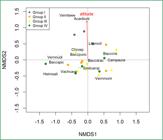
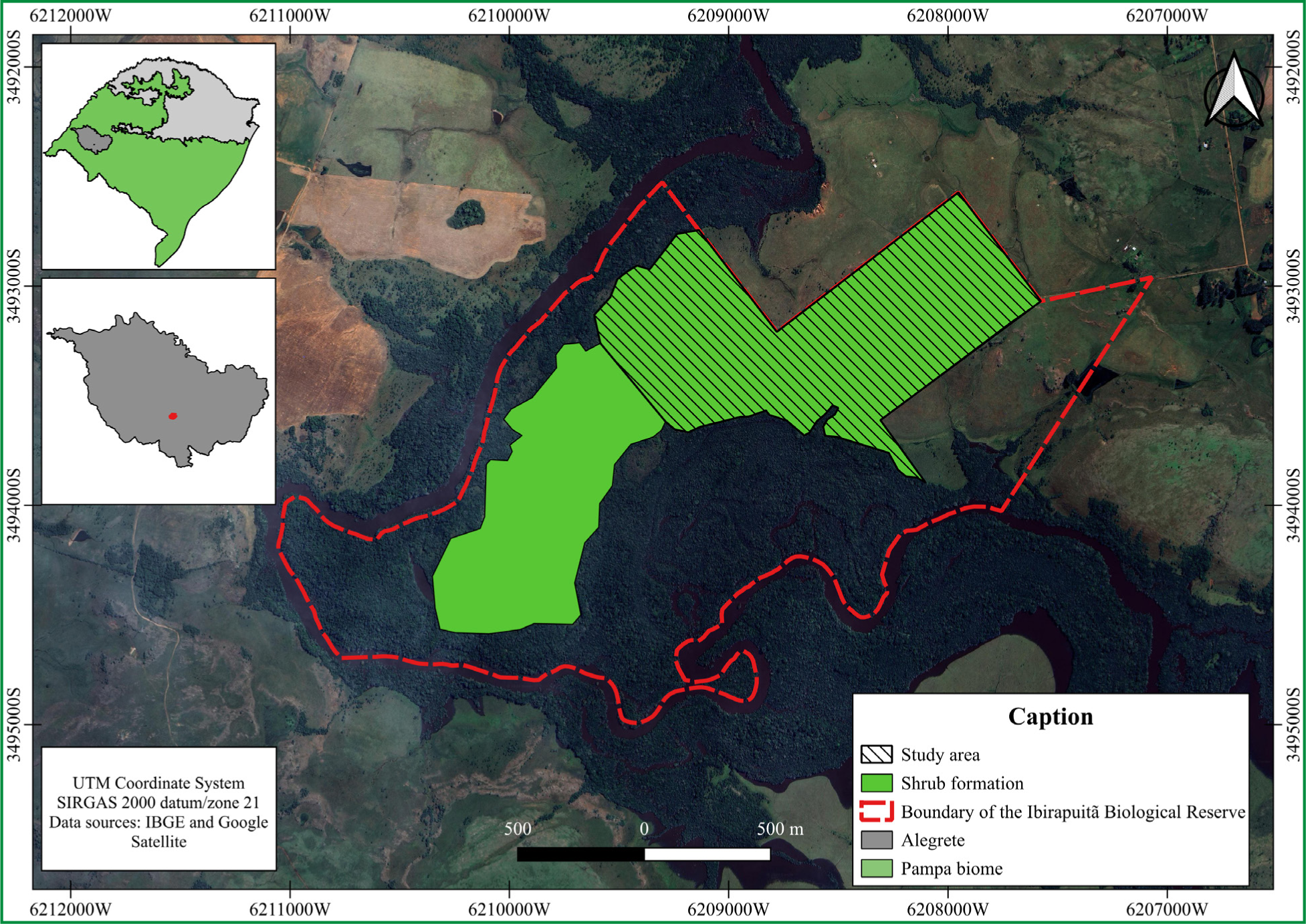
The aim of this study was to characterize and analyze the floristic-structural composition of the shrub formation along an altitudinal gradient in the Ibirapuitã Biological Reserve, Rio Grande do Sul, Brazil. A total of 20 plots (100 m2; 25 × 4 m) were randomly allocated along a 40 m altitudinal gradient (80–120 m a.s.l.). The plots were grouped into four altitudinal groups (I – upper slope; II – middle slope; III – lower slope; IV – plain). In each plot, floristic composition, phytosociological descriptors, species richness, and soil cover were assessed. Rarefied richness was also estimated (standardized to 250 individuals). Differences in floristic composition among groups were analyzed using NMDS (stress = 7.80%), followed by PERMANOVA (F = 1.87; p = 0.024). Soil cover data were analyzed using the Kruskal–Wallis test (p < 0.05). A total of 1,907 individuals belonging to 49 species were recorded. Differences in floristic composition were observed among groups. Altitude was associated with variations in floristic composition and species richness along the gradient, although this effect was not consistent across all groups. Soil cover did not vary significantly along the gradient. The shrub formation was characterized by the predominance of pioneer shrub species, particularly those of the genus Baccharis, reflecting natural succession in the Pampa biome in the absence of disturbances.
Keywords
Conservation Unit; Pampa; Phytosociology;
Vassoural
; Woody encroachment
 Thumbnail
 Thumbnail
 Thumbnail
 Source: Authors (2025)
 Source: Authors (2025)In where: A) sampling points; B) sampling points overlaid on the digital elevation model (DEM); C) slope elevation profile.
 Source: Authors (2025)In where: Group I = upper slope third; Group II = middle slope third; Group III = lower slope third; Group IV = plain; Altitude = altitude (m). Acanbuni = Acanthostyles buniifolius; Bacccris = Baccharis crispa; Baccdrac = Baccharis dracunculifolia; Baccpunc = Baccharis punctulata; Baccspic = Baccharis spicata; Campaure = Campomanesia aurea; Chrosp = Chromolaena sp.; Heimsali = Heimia salicifolia; Lithmoll = Lithraea molleoides; Smilcamp = Smilax campestris; Vachcave = Vachellia caven; Vermont = Vernonanthura montevidensis; Vernnudi = Vernonanthura nudiflora; Verntwee = Vernonanthura tweediana.