 Optimizing Paliavana sericiflora Benth. Micropropagation: Spectral Quality and Biodegradable Microcontainers as Conservation Tools
ABSTRACT
Background: Paliavana sericiflora, a vulnerable species. Brazilian endemic from the rupestrian fields, lacks established seedling production methods. Micropropagation offers a promising alternative for its conservation. This study evaluated the influence of spectral quality on in vitro multiplication, elongation, rooting and acclimatization in biodegradable microcontainer of P. sericiflora. Established shoots were subcultured in MS medium with plant growth regulators for bud multiplication under four spectral qualities: white, red, blue, and purple (red and blue combination 1:1). The same spectra were used in the elongation and rooting stages.
Results: All light spectra influenced bud multiplication. Buds with the highest vigour were produced under white, blue, and violet light, with values close to 1. Red light induced more elongated buds, but with lower vigour compared to the others. The elongation and rooting stages were most successful under purple or white light, yielding the highest number of roots approximately 12 roots per plant. The use of biodegradable microcontainers resulted in 100% survival, producing more vigorous plants for nursery hardening-off.
Conclusion: Spectral quality had no significant effect on bud multiplication, but purple and white lights promoted better elongation, rooting, and plant vigour. These stages can be conducted simultaneously, optimizing time and development. Acclimatization was efficient, and seedlings were ready for hardening-off in approximately 110 days.
Keywords:
In vitro culture; Spectral quality; Biodegradable container; ‘Campo rupestre’.
HIGHLIGHTS
Quality spectra influenced the in vitro multiplication, elongation, and rooting of P. sericiflora. Red light enhances elongation, while purple and white light aided rooting. Biodegradable microcontainers improved acclimatization, boosting survival and plant vigour. The protocol efficiently produces seedlings, benefiting germplasm banks and conservation.
INTRODUCTION
In the ‘canga’ areas, also known as ‘campos rupestres’, rocky outcrops that characterize their phytophysiognomy can be observed. From these, a specialized ecosystem has developed and adapted to specific soil and climate conditions. The campos rupestres grow herbaceous and shrubby vegetation with a high capacity to withstand extreme temperatures and to develop under a small layer of organic matter and with low fertility (Negreiros et al., 2009; Messias et al., 2012). The soil is very shallow, and the water availability is low, in addition to having high heat and light intensity. However, these rocky outcrops are of great economic interest, as many are a source of minerals, such as iron. Therefore, endemic species are under great anthropogenic pressure, whether due to economic activities or climate change, which can lead to changes in the ferruginous ecosystem and increase the threat of extinction. (Messias et al., 2012; Gomes et al., 2023).
Paliavana sericiflora Benth. occurs in a ‘canga’ area and is categorized as endangered species (SiBBr, 2020). It is a shrub species that occurs between rocks under the organic matter present, with potential in landscaping and ecological restoration (Anastácio et al., 2018; Rossini et al., 2020).
Seedling production of many plant species can be hampered by various factors, such as low viability and number of seeds (i.e., seed quality), short seed production periods, seed collection difficulties and different types of seed dormancies, types of dispersal and seasonality in fruit production (Lara et al., 2021). Thus, micropropagation is one of the methods that can facilitate the production of these species, allowing these problems to be overcome.
Micropropagation enables the seedling production of different forest species, which facilitates endangered plant reintroduction into the ecosystem. In addition to enabling the mass production of seedlings and improving morphophysiological features, this technique also makes it possible to produce seedlings free from pathogens or diseases and to create germplasm banks for the genetic conservation of endangered or economically important plants (Lopes et al., 2024). Conservation with micropropagation guarantees the permanence of the species genetic material in a small space, allowing seedlings to be produced regardless of seed sourcing and climatic conditions, producing seedlings with a uniform pattern (George et al., 2008).
The production of micropropagated seedlings can be maximized or improved by refining culture protocols, both in terms of internal and external conditions, and can minimize costs of production. Adjustments can range from changing the source of carbohydrates and antioxidant components and nutritional adjustments to altering culture conditions, such as by using different spectral quality. This can promote morphogenic responses at different stages of culture (Souza et al., 2022; Hashim et al., 2021).
The spectral quality can influence growth and development in vitro, and it is important to determine the best spectrum to promote physiological activities. Excessive light can also be harmful to plants, as it can damage plant structures such as leaves and flowers. Therefore, it is important to provide the right spectral quality for plants to optimize the different stages of in vitro culture (Oliveira et al., 2021; Gonçalves et al., 2023).
Light is a fundamental factor in the micropropagation of plant species. The spectral quality and intensity used in culture provide different responses in terms of growth and development (Frade et al., 2023). White fluorescent lamps are commonly used on in vitro culture, whereas LED lamps are a promising alternative because they are more efficient in terms of energy consumption and induce desired responses in plant tissue growth (Erig and Schuch, 2005; Pasa et al., 2012). For the white, blue, and red-spectral quality, the responses observed have been found to differ depending on the stage and species being studied, and the specificity of the response can help optimize in vitro culture.
Biodegradable containers are an alternative to minimize plastic waste and plant mortality, while also promoting root development during the acclimatization phase, maximizing the production of micropropagated plants (Faria et al., 2021). Considering the need for studies to improve seedling production protocols for endangered species and to optimize the production of micropropagated seedlings, this work aimed to evaluate the effect of spectral quality on the in vitro multiplication, elongation, and rooting stages, as well as the efficiency of biodegradable microcontainers during the acclimatization of Paliavana sericiflora.
MATERIALS AND METHODS
Research site and plant material
Plant material was provided by GERDAU Açominas S.A., Ouro Branco, MG, Brazil. Shoots used in the experiments made up the established in vitro plant material bank (Leite et al., 2024; code ACF88E2 in SisGen).
Spectral quality
The explants were kept in a growth room and four spectral qualities were tested: white LED lamp/37 µmol m−2 s−1, red LED lamp/9 µmol m−2 s−1, blue LED lamp/14 µmol m−2 s−1 and, purple (red and blue combination, 1:1) / 14 µmol m−2 s−1. The spectral quality (Figure 1) was obtained by normalizing the intensity via a USB-650 RED TIDE radiometer spectrum (Ocean Optics Inc.)

Graphs of the absolute irradiance as a function of the wavelength (nm) of the light emitted during the in vitro culture of Paliavana sericiflora. (a) White LED lamp, (b) blue LED lamp, (c) purple (red and blue combination, 1:1), and (d) red LED lamp.
Effect of the spectral quality on in vitro multiplication
After asepsis and germination of the seeds, the explants were isolated and standardized to a size of 1-2 cm only microcuttings with only aerial part (Leite et al., 2024). These explants were then inoculated into test tubes (25 × 150 mm) containing 10 mL of basal MS medium (Murashige and Skoog, 1962) supplemented with 0.4 g L⁻¹ activated charcoal, 30 g L⁻¹ sucrose, 0.50 mg L⁻¹ of 6-benzylaminopurine (BAP, Sigma®), 0.05 mg L⁻¹ of α-naphthaleneacetic acid (NAA, Sigma®), and 6 g L⁻¹ of agar. The culture medium pH was adjusted to 5.8 ± 0.05 prior to agar addition. Sterilization was achieved by autoclaving the culture medium at 121 °C and 1.0 kgf cm⁻² for 20 min.
After inoculation, the explants were kept in a growth room for 30 days at a temperature of 24 ± 1 °C and a photoperiod of 16 hours. Four spectral qualities were tested according to the treatments [(white, red, blue, and, purple (red and blue combination, 1:1) - Figure 2].

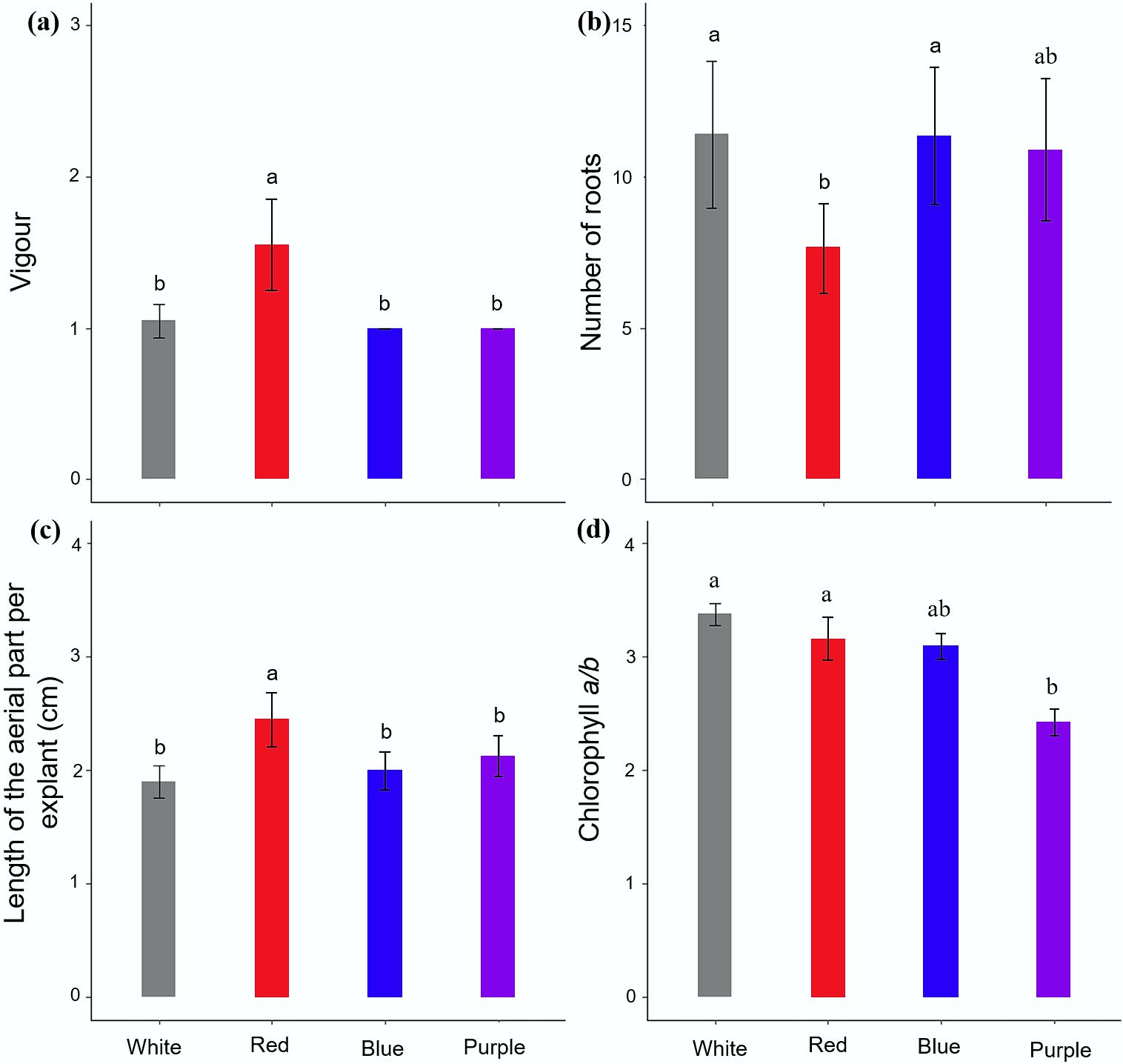
Features observed at 30 days of in vitro multiplication of Paliavana sericiflora regarding the light spectrums [white, red, blue, and, purple (red and blue combination, 1:1)]: (a) vigour, (b) number of roots per explant, (c) Length of the aerial part per explant (cm) and (d) chlorophyll (a/b) ratio. Averages followed by the same letter do not differ significantly according to Tukey’s test. Bars represent the standard error of the sample.
A completely randomized design with 20 replicates per treatment was employed Being evaluated, vigour (Vig, Leite et al., 2024), number of buds per explant (Nbu), number of leaves per explant (Nle), number of roots per explant (Nro), length of the aerial part per explant (Lea, cm), chlorophyll a content (Cla, µg mg-1), chlorophyll b content (Clb, µg mg-1), total chlorophyll content (a+b) (Clt, µg mg-1), chlorophyll a/b ratio(Clab), and carotenoid content (Car, µg mg-1).
Effect of spectral quality on in vitro elongation and rooting
During the multiplication stage, shoots exceeding 2 cm in height and free of visible nutrient deficiencies were isolated. These shoots were then subcultured into test tubes (25 × 150 mm) containing 10 mL of basal MS medium (Murashige and Skoog, 1962) supplemented with 0.4 g L⁻¹ of activated charcoal, 30 g L⁻¹ of sucrose, 0.05 mg L⁻¹ BAP, 0.1 mg L⁻¹ NAA, 0.1 mg L⁻¹ of indole-3-butyric acid (IBA, Sigma®), and 6 g L⁻¹ of agar. The conditions for preparing the culture medium were the same as the item effect of the spectral quality on in vitro multiplication.
After, the explants were kept in a growth room for 30 days at a temperature of 24 ± 1 °C and a 16-hour photoperiod. Four spectral qualities were tested according to the treatments [(white, red, blue, and, purple (red and blue combination, 1:1) - Figure 2].
A completely randomized design with 20 replicates per treatment was employed. Being evaluated vigour according to (Vig, Leite et al., 2024), number of shoots per explant (Nso), number of leaves per explant (Nle), number of roots per explant (Nro), length of the aerial part per explant (Lea, cm), chlorophyll a content (Cla, µg mg-1), chlorophyll b content (Clb, µg mg-1), chlorophyll total (a+b) content (Clt, µg mg-1), chlorophyll a/b ratio (Clab), carotenoid content (Car, µg mg-1), stomatal density (Sde, µm²), and leaf area (Lar, cm²).
Leaf area, photosynthetic pigment contents, and stomatal density
Leaf area was determined using ImageJ software, with an HP Deskjet Ink Advantage 1516 scanner. Twenty leaves were assessed per treatment, collected from the 3rd and 4th paired leaves, from the apex towards the base. The quantification of photosynthetic pigments (chlorophyll a, b, total (a+b) and carotenoids) was carried out according to the methodology of Lichtenthaler (1987).
Stomata were analysed under a microscope, using the middle third, without the main vein, of the first three fully expanded leaves from the apex to the base of the explants. Each leaf or fragment was dehydrated using 70% alcohol and then stored on slides.
To make the slides, the material was washed in distilled water, and then the abaxial side of the leaf was lightly scraped, and digested with 0.5% sodium hypochlorite for 12 hours. Then, the leaves were immersed in safranin, and washed to remove excess dye, and 1:1 glycerine water was used to make the slides. The slides were analysed and photographed using a light microscope (ZEISS-JENEMED2®), with all images captured at the same scale using a Premiere® MA88-300 camera.
To determine the stomatal density (DES) of the leaves, three fields with a leaf area of 10.28 µm² were randomly photographed, within which the number of stomata was counted and the number of stomata per 1 µm² was then calculated.
Acclimatization and obtaining micropropagated seedlings
Following in vitro development, complete plantlets with shoots and roots were transferred to 4.5 cm³ microcontainer (patent application BR 1020230071899) placed within polypropylene cups in a mini-incubator system (Brondani et al., 2018). The substrate for acclimatization comprised a mixture of decomposed pine bark and vermiculite, 60 plants being acclimatized. Plants were cultivated under a 16-hour photoperiod with a irradiance of 40 μmol m⁻² s⁻¹ for 20 days to evaluate survival.
Statistical analysis
Normality of residuals and homoscedasticity of data were assessed using the Shapiro-Wilk (P > 0.05) and Hartley tests (P > 0.05), respectively. Subsequently, one-way analysis of variance (ANOVA) was performed (P < 0.05) to compare treatment means, followed by Tukey’s test (P < 0.05) for multiple comparisons. Principal component analysis (PCA) was employed to explore data patterns. Statistical analyses were performed using R software (version 4.0.3, 2020). The packages ExpDes.pt (Ferreira et al., 2021; Arnhold, 2013) were used for ANOVA and mean comparison tests, while Factoextra and FactoMineR (Kassambara and Mund, 2020) were used for PCA and principal component analyses.
RESULTS
Effect of spectral quality on in vitro multiplication
Only four variables significantly differed between the spectra tested. Similarly, vigour (Figure 2a) and shoot length (Figure 2c) showed similar results, with the red spectrum showing higher averages. For vigour, the higher the average was, the lower the vigour of the shoots. The red spectrum had an average close to two, where it was possible to see the induction of shoots but with reduced leaf growth.
Plants grown under red light exhibited slight etiolation and longer shoots compared to other treatments (Figure 2b). However, this spectral quality also resulted in a lower number of roots. White and blue spectral quality yielded the highest number of roots, although not different from the purple (red and blue combination, 1:1 - Figure 2b). The chlorophyll a/b ratio (Figure 2d) was significantly higher under white, red, and blue light compared to other treatments. No significant differences were observed in the number of buds per explant across all spectral quality, with an average of approximately three shoots per explant (Table 1).
The average number of leaves per explant during in vitro multiplication was approximately 20 leaves (Table 1), with no significant differences observed for this variable. Photosynthetic pigments showed no difference between treatments, with means of 0.12 µg mg-1 for chlorophyll a, 0.04 µg mg-1 for chlorophyll b, and 0.17 µg mg-1 for total chlorophyll, carotenoids had an average value of 0.03 µg mg-1.
Principal component analysis (PCA) revealed the strongest correlations between red light treatments and the variables for vigour and shoot length (Figure 3a). White and blue spectral quality were positioned near the variables associated with photosynthetic pigments, while the purple (red and blue combination, 1:1) spectrum aligned closely with the number of leaves. The variables that contributed most to PCA were photosynthetic pigments, namely total chlorophyll, a, b, and carotenoids (Figure 3b). The cutoff line was set at 10%, encompassing only 4 variables that account for 90% of the total variance in the data.
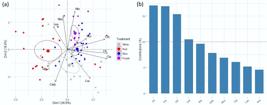
Features of Paliavana sericiflora explant at the in vitro multiplication stage after 30 days in different spectral quality [(white, red, blue, and, purple (red and blue combination, 1:1)]. (a) Principal component analysis (PCA), where: Dim1 = principal component 1 (PC1), Dim2 = principal component 2 (PC2). (b) Contributions of variables to principal components (PC1 and PC2). In (a) and (b): Vig = vigour, Nbu = number of buds per explant, Nle = number of leaves per explant, Nro = number of roots per explant, Lea = length of the aerial part per explant, Cla = chlorophyll a content, Clb = chlorophyll b content, Clt = total chlorophyll (a+b) content, Clab = chlorophyll (a/b) ratio, and Car = carotenoid content.
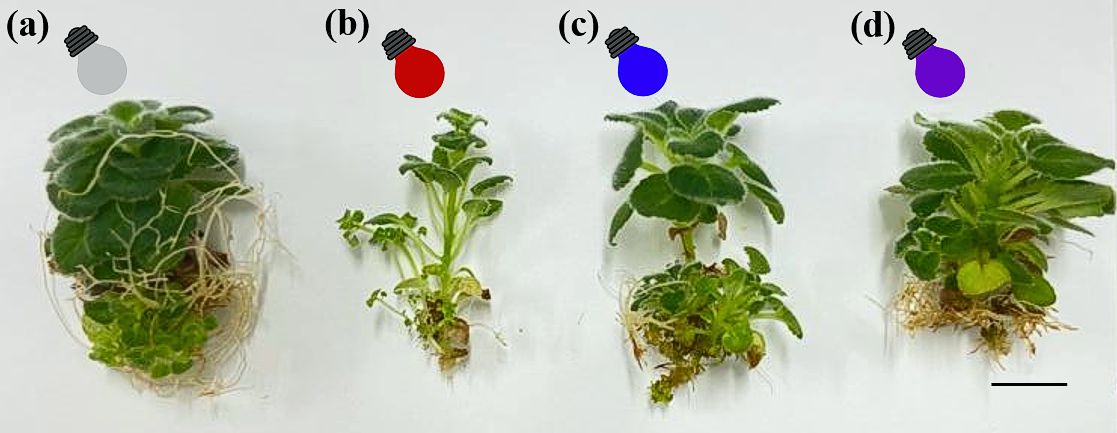
White and blue spectral bands (Figures 4a and 4c) produced the greatest number of shoots suitable for the next stages of in vitro culture, with underdevelopment and etiolation observed in the red spectral band (Figure 4b) and little buds were formed under purple light (Figure 4d).

Features observed at 30 days of in vitro multiplication of Paliavana sericiflora regarding the spectrum band used (a) white, (b) red, (c) blue, and (d) purple (red and blue combination, 1:1). Bar: 1 cm.
Effect of spectral quality on in vitro elongation and adventitious rooting
Only four variables showed significant differences among the spectral quality used. Shoot length (Figure 5a) showed opposite results to leaf area (Figure 6d), where the tallest plants had the smallest leaf area, which may be a response to the lowest light intensity using this spectrum (i.e. 9 µmol m−2 s−1). The red spectrum was responsible for producing the largest plants, reaching 3 cm of the aerial part, however with a leaf area of less than 0.25 mm². Similar to the leaf area, the stomatal density was directly correlated, where the largest leaf areas had a greater number of stomata per area (Figure 5e).

Features observed at 30 days of in vitro elongation and rooting of Paliavana sericiflora regarding the spectrum band used [white, red, blue, and purple (red and blue combination, 1:1)]. (a) Shoot length (cm), (b) chlorophyll a content (µg mg-1), (c) carotenoid content (µg mg-1), (d) leaf area (mm²) and (d) stomatal density (µm²). Means followed by the same letter do not differ significantly according to Tukey’s test. Bars represent the standard error of the sample.

Features of Paliavana sericiflora explant at the in vitro elongation and rooting stage after 30 days in different spectral quality [(white, red, blue, and, purple (red and blue combination, 1:1)]. (a) Principal component analysis (PCA), where: Dim1 = principal component 1 (PC1), Dim2 = principal component 2 (PC2). (b) Contributions of variables to principal components (PC1 and PC2). In (a) and (b): Vig = vigour, Nso = number of shoots per explant, Nle = number of leaves per explant, Nro = number of roots per explant, Lea = length of the aerial part per explant, Cla = chlorophyll a content, Clb = chlorophyll b content, Clt = total chlorophyll (a+b) content, Clab = chlorophyll (a/b) ratio, Car = carotenoid content, Sde = stomatal density, and Lar = leaf area.
The purple spectrum (1:1 combination of red and blue), along with the white and blue spectra, resulted in the largest leaf areas. The maximum value, 0.65 mm², was observed under white light. For chlorophyll a and carotenoids (Figures 5b and 5c), the blue spectrum had the highest content of these photosynthesizing pigments.
The average observed vigour was 1, which is considered excellent (Table 2). The number of shoots per explant was 2, the number of leaves and roots observed was 20 and 10, respectively. The content of photosynthetic pigments was 0.035 µg mg-1 for chlorophyll a, 0.14 µg mg-1 for total chlorophyll, and 3.15 for the chlorophyll a/b ratio.
The PCA showed a strong correlation between the red spectrum and the elongation of shoots and between the blue spectrum and both carotenoids and plant vigour. The white, purple (red and blue combination, 1:1) spectra were the most responsive when the leaf area, stomatal density, and number of leaves and roots were considered (Figure 6a). The cutoff line that encompasses the variables representing approximately 90% of the total variance in the data (Figure 6b) was set at around 8%, capturing all variables involving photosynthetic pigments and leaf area, with the greatest contribution from total chlorophyll and chlorophyll a.
In terms of elongation/rooting, the white and purple (red and blue combination, 1:1) spectral bands (Figures 7a and 7d) produced the greatest number of roots, followed by the blue band (Figure 7c) and, finally, the red band (Figure 7b), which produced the most elongated plants with the fewest roots but were successfully acclimatized. The red spectrum, despite having less intensity of light energy, still had a root presence.
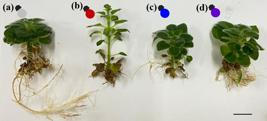
Features observed at 30 days of in vitro elongation and rooting of Paliavana sericiflora regarding the spectrum band used (a) white, (b) red, (c) blue and (d) purple (red and blue combination, 1:1). Bar: 1 cm.
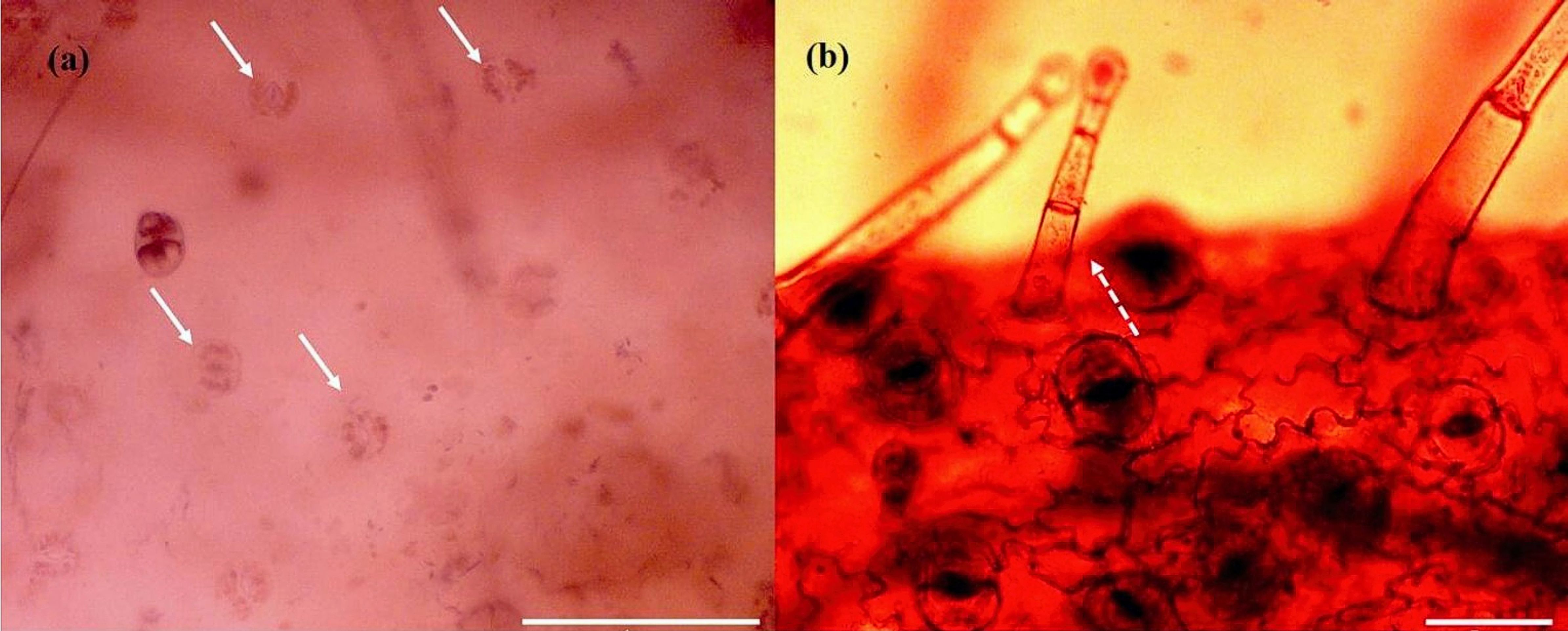
In the elongation and rooting stages, all spectral bands promoted the formation of complete plants suitable for acclimatization. Stomata were observed only on the abaxial side of the leaves up to the leaf edge (Figure 8a). In addition to the experiments, on the leaves of plants in all treatments, numerous trichomes were observed on both sides of the leaf and all over the limb (Figure 8b), at the end of acclimatization. This reinforces the fidelity of the produced clones to naturally occurring plants in the rocky field habitat.

Characteristics of Paliavana sericiflora at 30 days of in vitro elongation and rooting under white light. (a) Stomata visualized in the middle third of the second fully expanded leaf, with continuous arrows highlighting the stomata. (b) trichomes found on the leaf edge, with the serrated arrow highlighting the trichome. Bar: (a) 1 µm and (b) 5 µm.
The spectral qualities proved effective for the micropropagation of Paliavana sericiflora. Acclimatization in a biodegradable microcontainer in the mini-incubator system was effective, enhancing plant growth, directing root growth (Figure 9), reducing fungal infestation, or even minimizing its impact due to the reduced substrate quantity and better moisture control. Survival was 100% for plants acclimatized from the adventitious rooting stage.

Schematic representation of the stages performed in the in vitro culture of Paliavana sericiflora. Bar: 1 cm. National Genetic Heritage Management System (SisGen): ACF88E2.
DISCUSSION
Improving micropropagation protocols plays a crucial role since they can reduce culture time and maximize gains or products of interest. Among the points that can be adjusted, the quality of light presents various responses. The replacement of fluorescent lamps with LED lamps has been used mainly to stimulate the production of secondary metabolites, which are important in plant cultivation processes (Hashim et al., 2021).
In vitro multiplication aims to rapidly increase the number of shoots while maintaining optimal vigour. While test tubes facilitated the production of vigorous plantlets, the number of new shoots generated within the evaluated period was lower compared to studies using larger container volumes. An average of four shoots were obtained using 250 mL flasks containing 40 mL of medium (Leite et al., 2024).
However, in subsequent stages, the use of test tubes with individualized plantlets becomes essential, as it favors the development of more vigorous shoots, potentially improving survival during acclimatization.
The white, blue, and purple (a red and blue combination at 1:1) spectral bands promoted root formation, particularly when shoot proliferation increased (multiplication). However, since more energy was directed toward root development under these spectra, aerial growth was reduced. In contrast, red light produced the largest plants, suggesting a shift in resource allocation toward shoot elongation. This may be attributed to the fact that red light is known to stimulate stem elongation. These responses may also be closely related to the low light intensity, which may have caused etiolation; however, the plants still exhibited good vigour. A similar effect of red-light dominance was observed in mulberry studies (Pasa et al., 2012), where shoot growth was enhanced under red light or even in darkness for the black mulberry cultivar (Rubus sp.) Xavante variety.
Spectral quality act directly on the content of photosynthesizing pigments. In some cases, as observed in this study, this effect is only observed when the proportion of some of these pigments is evaluated, such as the ratio between chlorophyll a and chlorophyll b, which was greater for white, red, and blue pigments. In many cases, chlorophyll a is always two or three times greater than chlorophyll b, regardless of the range, and the difference between treatments will be low (Gonçalves et al., 2023; Souza et al., 2022). Principal component analysis (PCA) of the multiplication stage confirmed that photosynthetic pigments, especially total chlorophyll, chlorophyll a, and chlorophyll b, were the variables that most contributed to distinguishing the treatments. White, blue, and purple light spectra favored higher pigment contents, indicating improved physiological performance under these conditions.
Many plants grow in vitro and need to progress through all stages, depending on their features. In some cases, during the multiplication and elongation stages, it is possible to see the presence of roots. As seen by Leite et al. (2024), for the same species under study, it is possible to see that root production is facilitated. In this way, the elongation and rooting stages can occur simultaneously with a few adjustments to the growing medium, thus reducing the growth time.
In elongation/rooting, only the variables shoot length, chlorophyll a content, carotenoid content, leaf area and stomatal density showed significant differences between the spectrum bands tested.
Red light promoted the greatest shoot growth. In studies on Myrtus communis, red light also stimulated the growth of shoots in the medium, and the authors highlighted that this occurred independently of the cytokinin content in the medium culture (Cioć et al., 2018). In Dendranthema grandiflorum, red light also promoted shoot elongation (Braga et al., 2009). Red light activates phytochromes that promote the synthesis of auxins and gibberellins, stimulating cell elongation. This stimulus favors aerial plant growth (Pashkovskiy et al., 2023). Some plant species are also known to increase the production of phenolic compounds, flavonoids, antioxidants, and other bioactive substances under specific light spectral qualities, as reported in previous studies (Hashim et al., 2021; Younas et al., 2018).
The highest levels of chlorophyll a and carotenoids were detected under the blue spectral range. This result may be explained by the fact that blue light is efficiently absorbed by photosynthetic pigments and plays a key role in regulating stomatal opening and chloroplast development, enhancing pigment synthesis. Similar responses have been reported in Eucalyptus dunnii Maiden and the hybrid Eucalyptus urophylla (Frade et al., 2023), where blue light stimulated greater pigment accumulation compared to other wavelengths. Additionally, blue light is known to influence the biosynthesis of secondary metabolites, some of which have pharmacological potential, as demonstrated in studies with cherry tomato seedlings grown under controlled conditions (Kim et al., 2014). Although there are few studies on the medicinal potential of Paliavana sericiflora, understanding the influence of spectral quality on secondary compounds is still important for future research and protocol development.
Various factors influence leaf area, which can increase or decrease in width and length, depending on the environment and nutritional conditions. In the literature, there are reports of individuals with reduced leaf area when exposed to high irradiance, as well as increased leaf area when exposed to low irradiance (Lavanhole et al., 2018). This can lead to differences in the content of photosynthesizing pigments present in each of them, or low intensities can reduce the production of photoassimilates (George et al., 2008). However, this study did not reveal any significant differences in total chlorophyll content. The combination of purple (red and blue combination, 1:1) light was one of the least effective at producing these pigments, as it resulted in almost three times the leaf area compared to the red-light treatment, while maintaining the same pigment content. Stomatal density did not differ between the spectral quality studied, which allows us to infer that there was no somaclonal variation.
The use of microcontainers improved survival during acclimatization, exceeding the results observed in a recent study with the species (Leite et al., 2024). The protocol used made it possible to optimize the in vitro culture of the species, reducing culture days and accelerating the process of producing seedlings (Leite et al., 2024), which is extremely important for the species, which is vulnerable to extinction.
Biodegradable containers were effective in seedling production, enhancing one of the most sensitive stages of micropropagation: acclimatization. The acclimatization process was carried out with 60 seedlings, achieving 100% survival. This is consistent with findings for P. sericiflora, where studies with Eucalyptus microcorys demonstrated the effectiveness of microcontainers in plant production (Faria et al., 2022) and the potential to promote rooting of microcuttings by up to 70% (Faria et al., 2021).
CONCLUSIONS
Spectral quality had no significant effect on bud multiplication during the in vitro culture. Elongation and rooting stages could be performed concurrently. The purple (red and blue combination, 1:1) and white spectral quality yielded the best results for plant growth and vigour during these combined stages, promoting the development of more vigorous plantlets for acclimatization. Acclimatization was efficient with complete plants, achieving a 100% survival percentage. Approximately 110 days are required to produce seedlings ready for hardening off.
ACKNOWLEDGEMENTS
We thank the National Council for Scientific and Technological Development, Brazil (“Conselho Nacional de Desenvolvimento Científico e Tecnológico - CNPq”), the Coordination for Improvement of Higher Education Personnel, Brazil (“Coordenação de Aperfeiçoamento de Pessoal de Nível Superior - CAPES - Código de Financiamento 001”), and the Foundation for Research of the State of Minas Gerais, Brazil (“Fundação de Amparo à Pesquisa do Estado de Minas Gerais - FAPEMIG”). We also thank the Research and Innovation Unit in Ferruginous Rupestrian Grassland (‘Unidade de Pesquisa e Inovação em Campos Rupestres Ferruginosos’), GERDAU Açominas S.A. (‘Convênio DICON/UFLA: 008/2020’).
Data availability
The datasets supporting the conclusions are included in the article.
REFERENCES
- ANASTÁCIO, A. C. A.; SANTOS, L. M.; SANTOS, M. S. Guia de plantas: flores no campo rupestre. CVRD, 2018. 131 p.
-
ARNHOLD, E. Package in the R environment for analysis of variance and complementary analyses. Brazilian Journal of Veterinary Research and Animal Science, v. 50, p. 488-492, 2013. https://doi.org/10.11606/issn.1678-4456.v50i6p488-492
» https://doi.org/10.11606/issn.1678-4456.v50i6p488-492 -
BRAGA, F. T.; PASQUAL, M.; CASTRO, E. M. D.; et al. Quality of light on the in vitro culture of Dendranthema grandiflorum cv. Rage: morphophysiological characteristics. Ciência e Agrotecnologia, v. 33, p. 502-510, 2009. https://doi.org/10.1590/S1413-70542009000200022
» https://doi.org/10.1590/S1413-70542009000200022 -
BRONDANI, G. E.; OLIVEIRA, L. S.; KONZEN, E. R.; et al. Mini-incubators improve the adventitious rooting performance of Corymbia and Eucalyptus microcuttings according to the environment in which they are conditioned. Anais da Academia Brasileira de Ciências, v. 90, p. 2409-2423, 2018. https://doi.org/10.1590/0001-3765201720170284
» https://doi.org/10.1590/0001-3765201720170284 -
CIOĆ, M.; SZEWCZYK, A.; ŻUPNIK, M.; et al. LED lighting affects plant growth, morphogenesis and phytochemical contents of Myrtus communis L. in vitro. Plant Cell, Tissue and Organ Culture, v. 132, p. 433-447, 2018. https://doi.org/10.1007/s11240-017-1340-2
» https://doi.org/10.1007/s11240-017-1340-2 -
ERIG, A. C.; SCHUCH, M. W. Light type in the in vitro multiplication of raspberry plants (Rubus idaeus L.) ‘Batum’’. Revista Brasileira de Fruticultura, v. 27, p. 488-490, 2005. https://doi.org/10.1590/S0100-29452005000300035
» https://doi.org/10.1590/S0100-29452005000300035 -
FARIA, J. C. T.; RIBEIRO-KUMARA, C.; COSTA, R. S. R.; et al. Use of biodegradable polyester-based microvessels for micropropagation of mature Eucalyptus microcorys. New Zealand Journal of Forestry Science, v. 52, 2022. https://doi.org/10.33494/nzjfs522022x139x
» https://doi.org/10.33494/nzjfs522022x139x -
FARIA, J. C. T.; TERRA, J. A. P.; MOLINARI, L. V.; et al. Use of polylactic acid microvessel to obtain microplantlets of Eucalyptus microcorys through indirect organogenesis. 3 Biotech, v. 11, p. 364, 2021. https://doi.org/10.1007/s13205-021-02822-8
» https://doi.org/10.1007/s13205-021-02822-8 -
FERREIRA, E. B.; CAVALCANTI, P. P.; ALVES, D. N. ExpDes.pt: Experimental Designs Package. R package version 1.2.1, 2021. Available at: https://CRAN.R-project.org/package=ExpDes.pt
» https://CRAN.R-project.org/package=ExpDes.pt -
FRADE, S. R. P.; SOUZA, D. M. S. C.; FERNANDES, S. B.; et al. Spectral quality influence on in vitro morphophysiological responses of Eucalyptus dunnii Maiden and Eucalyptus grandis W. Hill ex Maiden × E. urophylla S. T. Blake. New Zealand Journal of Forestry Science, v. 53, 2023. https://doi.org/10.33494/nzjfs532023x218x
» https://doi.org/10.33494/nzjfs532023x218x - GEORGE, E. F.; HALL, M. A.; DE KLERK, G. J. Plant propagation by tissue culture: Volume I. The background. Springer, Heidelberg, 2008. p. 205-226.
-
GOMES, S. E. V.; GOMES, R. A.; DANTAS, B. F. Climate and seed size of a dry forest species: influence on seed production, physiological quality and tolerance to abiotic stresses. Journal of Seed Science, v. 45, e202345013, 2023. https://doi.org/10.1590/2317-1545v45264166
» https://doi.org/10.1590/2317-1545v45264166 -
GONÇALVES, D. S.; SOUZA, D. M. S. C.; FERNANDES, S. B.; et al. Effect of light spectra on in vitro multiplication, elongation and adventitious rooting stages of Bambusa vulgaris Schrad. ex J. C. Wendl. Advances in Bamboo Science, v. 4, p. 100035, 2023. https://doi.org/10.1016/j.bamboo.2023.100035
» https://doi.org/10.1016/j.bamboo.2023.100035 -
HASHIM, M.; AHMAD, B.; DROUET, S.; et al. Comparative effects of different light sources on the production of key secondary metabolites in plants in vitro cultures. Plants, v. 10, p. 1521, 2021. https://doi.org/10.3390/plants10081521
» https://doi.org/10.3390/plants10081521 -
KASSAMBARA, A.; MUNDT, F. Package ‘factoextra’. Version 1.0.7, 2020. 84 p. Available at: Available at: https://cloud.r-project.org/web/packages/factoextra/index.html Accessed in: 20 Mar. 2024.
» https://cloud.r-project.org/web/packages/factoextra/index.html -
KIM, E. Y.; PARK, S. A.; PARK, B. J.; et al. Growth and antioxidant phenolic compounds in cherry tomato seedlings grown under monochromatic light-emitting diodes. Horticultural Environment and Biotechnology, v. 55, p. 506-513, 2014. https://doi.org/10.1007/s13580-014-0121-7
» https://doi.org/10.1007/s13580-014-0121-7 -
LARA, C. S.; COSTA, C. R.; SAMPAIO, P. D. T. B. The rosewood (Aniba spp.) seed and seedling market in the State of Amazonas. Revista de Economia e Sociologia Rural, v. 59, p. e221035, 2021. https://doi.org/10.1590/1806-9479.2021.221035
» https://doi.org/10.1590/1806-9479.2021.221035 -
LAVANHOLE, D. F.; OLIVEIRA, P. S.; DA VITÓRIA, E. L.; et al. Estimation of leaf area through allometric relationships in Aechmea blanchetiana (Baker) L. B. S. M. under different light conditions. Iheringia Série Botânica, v. 73, p. 363-373, 2018. https://doi.org/10.21826/2446-8231201873313
» https://doi.org/10.21826/2446-8231201873313 -
LEITE, D. M.; FERNANDES, S. B.; DE SOUSA, K. I. R.; et al. Improvement in the production of micropropagated seedlings of Paliavana sericiflora Benth: an endangered species. Plant Cell, Tissue and Organ Culture, v. 156, p. 1-13, 2024. https://doi.org/10.1007/s11240-023-02677-2
» https://doi.org/10.1007/s11240-023-02677-2 -
LICHTENTHALER, H. K. Methods in enzymology: chlorophylls and carotenoids, pigments of photosynthetic biomembranes. Methods in Enzymology, v. 148, p. 350-382, 1987. https://doi.org/10.1016/0076-6879(87)48036-1
» https://doi.org/10.1016/0076-6879(87)48036-1 -
LOPES, M. P.; LEITE, D. M.; CARMO, D. G.; et al. A germination and micropropagation protocol for an endangered grass, Gymnopogon doellii, for ex situ conservation. Seed Science and Technology, v. 52, p. 41-55, 2024. https://doi.org/10.15258/sst.2024.52.1.05
» https://doi.org/10.15258/sst.2024.52.1.05 -
MESSIAS, M. C. T. B.; LEITE, M. G. P.; MEIRA-NETO, J. A. A.; et al. Phytosociology of quartzitic and ferruginous rupestrian grasslands in the Iron Quadrangle, Minas Gerais. Acta Botanica Brasílica, v. 26, 2012. https://doi.org/10.1590/S0102-33062012000100022
» https://doi.org/10.1590/S0102-33062012000100022 -
MURASHIGE, T.; SKOOG, F. A revised medium for rapid growth and bioassays with tobacco tissue cultures. Physiologia Plantarum, v. 15, p. 473-497, 1962. https://doi.org/10.1111/j.1399-3054.1962.tb08052.x
» https://doi.org/10.1111/j.1399-3054.1962.tb08052.x -
NEGREIROS, D.; MORAES, M. L. B.; FERNANDES, G. W. Characterization of soil fertility of four leguminous shrubs of rupestrian fields, Serra do Cipó, MG, Brazil. Revista Chilena de Suelo y Nutrición Vegetal, v. 8, p. 30-39, 2009. https://doi.org/10.4067/S0718-27912008000300003
» https://doi.org/10.4067/S0718-27912008000300003 -
OLIVEIRA, T.; BALDUINO, M. C. M.; CARVALHO, A. A.; et al. The effect of alternative membrane system, sucrose, and culture methods under photosynthetic photon flux on growth and volatile compounds of mint in vitro. In Vitro Cellular and Developmental Biology - Plant, v. 57, p. 529-540, 2021. https://doi.org/10.1007/s11627-020-10147-z
» https://doi.org/10.1007/s11627-020-10147-z -
PASA, M. S.; CARVALHO, G. L.; SCHUCH, M. W.; et al. Light quality and growth regulators on in vitro multiplication and rooting of blackberry ‘Xavante’. Ciência Rural, v. 42, p. 1392-1396, 2012. https://doi.org/10.1590/S0103-84782012000800010
» https://doi.org/10.1590/S0103-84782012000800010 -
PASHKOVSKIY, P.; IVANOV, Y.; IVANOVA, A.; et al. Influence of light of different spectral compositions on growth parameters, photosynthetic pigment contents and gene expression in Scots pine plantlets. International Journal of Molecular Sciences, v. 24, p. 2063, 2023. https://doi.org/10.3390/ijms24032063
» https://doi.org/10.3390/ijms24032063 -
ROSSINI, J.; ARAUJO, A. O.; CHAUTEMS, A. Paliavana in Flora e Funga do Brasil. Rio de Janeiro Botanical Garden, 2020. Available at: Available at: https://floradobrasil.jbrj.gov.br/FB7874 Accessed in: 14 Feb. 2024.
» https://floradobrasil.jbrj.gov.br/FB7874 -
SIBBR. Information System on Brazilian Biodiversity: Taxonomic Catalog of the Fauna of Brazil and List of the Flora of Brazil, 2020. Available at: Available at: https://ala-bie.sibbr.gov.br/ala-bie/species/333047?lang=pt_BR Accessed in: 01 Apr. 2024.
» https://ala-bie.sibbr.gov.br/ala-bie/species/333047?lang=pt_BR -
SOUZA, D. M. S. C.; FERNANDES, S. B.; SILVA, E. O.; et al. Effect of light intensity on in vitro introduction and multiplication of Eucalyptus grandis × Eucalyptus urophylla. In Vitro Cellular and Developmental Biology - Plant, v. 58, p. 225-239, 2022. https://doi.org/10.1007/s11627-021-10237-6
» https://doi.org/10.1007/s11627-021-10237-6 -
YOUNAS, M.; DROUET, S.; NADEEM, M.; et al. Differential accumulation of silymarin induced by exposure of Silybum marianum L. callus cultures to several spectra of monochromatic lights. Journal of Photochemistry and Photobiology B - Biology, v. 184, p. 61-70, 2018. https://doi.org/10.1016/j.jphotobiol.2018.05.018
» https://doi.org/10.1016/j.jphotobiol.2018.05.018
-
Scientific Editor:
Anderson Cleiton José