45S5 bio-glass flame spheroidization. Chemical composition and bioactivity
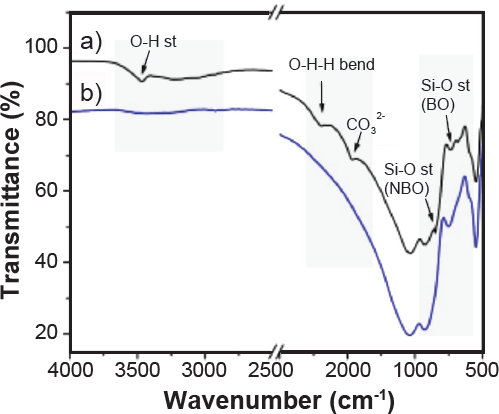
45S5 bioglass microspheres are very attractive in the biomedical field, as they can stimulate and guide bone and soft tissue regeneration. One of the main factors influencing the success of these materials is their chemical composition. Therefore, knowing the effect of the microsphere synthesis method on this composition is extremely important. In this work, microspheres with a diameter distribution of 35-150 µm were prepared from a bio-glass with the composition 45S5 using the flame spheroidization method. Their bioactivity was studied in a simulated biological fluid (SBF) at 37 ºC. An important loss in the concentration of Na and P was detected in the spheroidization process, reaching 85% and 73%, respectively, in microspheres smaller than 65 µm. The P distribution was heterogeneous. These modifications affected the early stages of the hydroxyapatite formation mechanism, delaying its deposition on the surface of the microspheres concerning the parent bio-glass.
Keywords:
Bioactive glass; microspheres; hydroxyapatite; tissue engineering
 Thumbnail
 Thumbnail
 Thumbnail
 Thumbnail
 Thumbnail
 Thumbnail
 Thumbnail
 Thumbnail
 Thumbnail
 Thumbnail
 Thumbnail
 Thumbnail