
 Comparison of PEEP titration methods to improve respiratory system compliance in acute respiratory distress syndrome: a randomized controlled study
Objective To compare the effects of four positive end-expiratory pressure titration methods on respiratory system compliance over the first 3 days of mechanical ventilation and to analyze the agreement between derived positive end-expiratory pressure and compliance values among these methods immediately after randomization.
Methods Single-center, randomized study acute respiratory distress syndrome patients were assigned to one of four groups based on positive end-expiratory pressure titration methods: electrical impedance tomography, transpulmonary pressure measured via an esophageal catheter, the best compliance approach with daily positive end-expiratory pressure titration, and a control group using a low positive end-expiratory pressure/ fraction of inspired oxygen table with adjustments as necessary. The primary outcome was mean respiratory system compliance over the first 3 days of mechanical ventilation. Immediately post-randomization, the best positive end-expiratory pressure according to each method was assessed for every patient, and within-patient agreement of titrated positive end-expiratory pressure and compliance for pairs of methods was calculated with the Bland-Altman method.
Results Forty-nine patients participated. Compared to control, the mean difference in compliance was 0.03mL/cmH2O (95%CI -2.74 to 2.8) in the Electrical impedance tomography Group; 1.90mL/cmH2O (95%CI -0.98 to 4.78) in the Catheter Group, and 1.42mL/cmH2O (95%CI -1.35 to 4.19) in the best compliance group. Within-patient agreement of titrated positive end-expiratory pressure and compliance was poor, with 95% limits of agreement ranging from -9.3 to 9cmH2O for positive end-expiratory pressure and from -8.5 to 11.4mL/cmH2O for compliance.
Conclusion No significant differences in mean respiratory system compliance were found among positive end-expiratory pressure titration methods compared to control. The agreement between titrated positive end-expiratory pressure and respiratory system compliance using different methods was low.
Keywords
Respiration, artificial; Respiratory distress syndrome; Positive-pressure respiration; Lung compliance
 Thumbnail
 Thumbnail
 Thumbnail
 Thumbnail
 Thumbnail
 EIT - electrical impedance tomography; PEEP - positive end expiratory pressure; FiO2 - fraction of inspired oxygen. Full intervention: positive end expiratory pressure titration according to the allocated method on all 3 study days. Partial intervention: positive end expiratory pressure titration following the allocation was not applied to all 3 days. The reason for the discontinuation is indicated in the line below each item within the follow-up boxes.
 PEEP - positive end expiratory pressure, EIT - electrical impedance tomography.
 PEEP - positive end expiratory pressure, EIT - electrical impedance tomography.
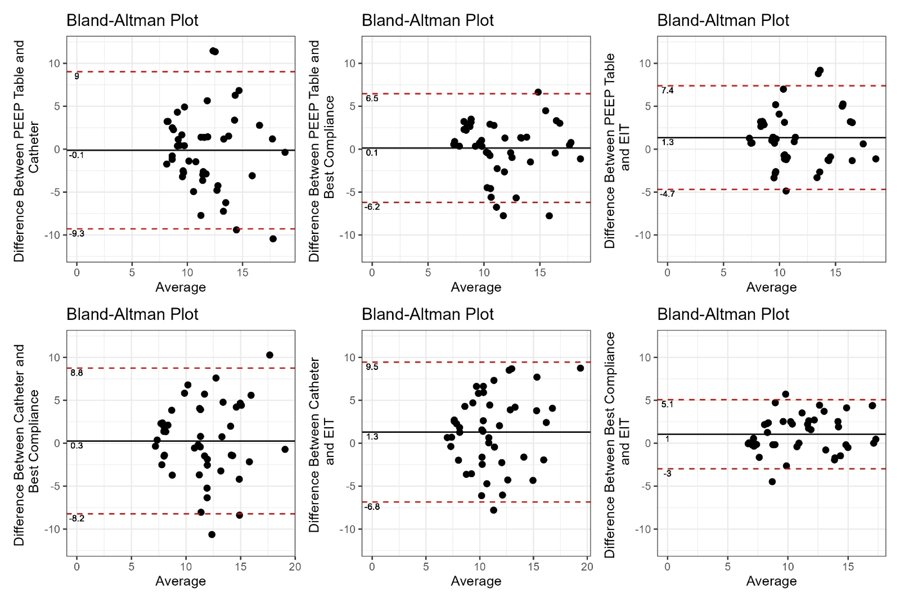 PEEP - positive end expiratory pressure; EIT - electrical impedance tomography.
