 Early selection in a second-generation progeny trial of Eucalyptus urophylla S.T. Blake
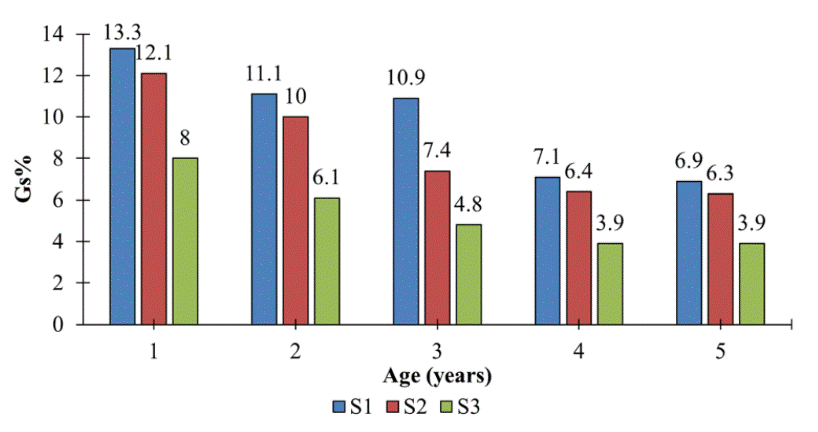
This study evaluated the efficacy of early selection in a second-generation Eucalyptus urophylla progeny trial by comparing three selection strategies: mass selection, combined selection (among and within families), and within-family selection. A randomized complete block design was used, comprising 23 progenies with 30 single-tree plot replicates. Diameter at breast height (DBH) and total height were measured annually from one to five years after planting. Early selection efficiency was tested for DBH at a selection intensity of 11.9% to compare the percentage of selected individuals across ages. The performance evaluated by the consistency of selected individuals across ages varied greatly. From the third year onward, the estimated proportion of consistently selected individuals reached 75%, indicating reliability of early selection for seed orchard establishment. Among the strategies, combined selection (among and within families) proved most effective at five years, yielding an estimated genetic gain of 6.3%.
Keywords:
Eucalyptus spp.; genetic correlation; microsatellite markers; tree breeding
 Thumbnail