
 Total saponins in yerba mate leaves: influence of clones, sites and harvest seasons
Abstract
Yerba mate (Ilex paraguariensis) is an important source of bioactive compounds, including triterpene saponins. This study aimed to analyze the effects of genotypes, cultivation sites, and harvest seasons on the total saponin content in yerba mate leaves, as well as estimate the genetic parameters and predict the genotypic values. We harvested mature leaves from nine clones, cultivated in two clonal tests, and harvested in two seasons (winter and summer), and analyzed them using the vanillin-sulfuric acid spectrophotometric method. The total saponin content trait showed high selection accuracy and significant effects of clones, without interactions. High genetic control was observed, with clone mean broad-sense heritability of 0.93. The genotypic value for total saponin content ranged from 28.13 to 51.54 mg g-1 on a dry weight basis. Selecting yerba mate clones with low or high leaf saponin levels may be useful for specific industries, such as pharmaceuticals, cosmetics, or beverages.
Keywords:
Ilex paraguariensis; triterpene saponins; secondary metabolites; heritability; breeding program
INTRODUCTION
Saponins are a highly diverse class of secondary metabolites widely found in the Plant Kingdom and serve a general defense function in plants, in addition to possible effects on the regulation of plant growth and development (Costa et al. 2013, Faizal and Geelen 2013, Hussain et al. 2019). They are high-molecular-weight molecules composed of aglycones (triterpenic or steroidal nucleus) linked to sugar chains, which gives them surfactant amphiphilic properties (Hussain et al. 2019). Different saponins are present in many plant species, including grains, legumes, and tea (Camellia sinensis (L.) Kuntze) (Sharma et al. 2023). Yerba mate (Ilex paraguariensis A.St.-Hil.) is a tree species whose leaves are commonly consumed in the form of non-alcoholic beverages and stands out as an important source of triterpene saponins, especially derivatives of ursolic and oleanolic acids (Souza et al. 2011, Mateos et al. 2017). Ursanes, oleananes, and their derivatives have been extensively studied in recent years for their potent anticancer and anti-tumorigenic potential (Biswas and Dwivedi 2019). The saponins found in yerba mate leaves have in vitro preventive effects on inflammation and colon cancer (Puangpraphant et al. 2011), and in vivo assays have shown anti-hyperlipidemic and anti-obesity activities. A study with rats also demonstrated that ingested yerba mate aqueous infusions had a protective renal function (Kuropka et al. 2021). Therefore, yerba mate leaves prove to be an important source of saponins for human health and have potential for industrial extraction, reaching a concentration of 53.09 mg g-1 or 5.3% (w/w) of total saponins on a dry weight basis (Aguiar et al. 2024).
The various useful biological properties of triterpenic saponins make them valuable chemicals for industry (Magedans et al. 2021). These molecules have different applications, with notable presence in cosmetics, food, agronomy, cleaning, and pharmaceutical industries (Moses et al. 2014, Timilsena et al. 2023), highlighting the potent antineoplastic activity of some triterpenoid saponins (Biswas and Dwivedi 2019). However, saponins are recognized to confer a bitter taste to food and beverages. When ingested orally, they appear to be practically non-toxic to humans (Oakenfull 1981). Still, excessive consumption of these substances should be avoided, as they are considered anti-nutritional factors and can cause indigestion-related disorders (Samtiya et al. 2020). However, few studies have been carried out and it is a very diverse group of molecules, and consequently, difficult to generalize regarding their effects on the human body.
Considering the technical challenges of chemically synthesizing these complex molecules, natural sources of saponins should be sustainably explored to obtain plant material with higher yields of these compounds (Magedans et al. 2021). A few studies indicate that genotype highly influences saponin levels in Manihot esculenta (Daemo et al. 2022), Glycine max (Panneerselvam et al. 2013, Kaur et al. 2017), Centella asiatica (Thomas et al. 2010), and I. paraguariensis (Nakamura et al. 2009). However, numerous external (biotic and abiotic) and internal (such as age and phenological phase) factors affect the synthesis and accumulation of saponins in plants (Szakiel et al. 2011, Magedans et al. 2021). Clarifying the impact of environmental factors on saponin levels is crucial, particularly for plants destined for food or pharmaceutical purposes (Szakiel et al. 2011). This endeavor aids in determining optimal growth conditions and ideal harvest time, thereby ensuring the acquisition of high-value plant material.
To explore the potential of yerba mate leaves as a saponin source and enhance industrial yield, we need to comprehend the factors influencing their content. Thus, this study aimed to analyze the influence of genotypes (clones), sites, and harvest seasons on saponin levels in yerba mate leaves. As the main hypothesis, we expect high heritability for the trait saponin content in yerba mate leaves, indicating the predominance of genetic over environmental factors. To validate this hypothesis, we analyzed the total saponin content in mature leaves of nine yerba mate clones cultivated in two clonal tests situated in geographically distant areas and employing different cultivation systems, encompassing both winter and summer harvests.
MATERIAL AND METHODS
Experimental design and saponins quantification
We analyzed mature leaves of nine yerba mate clones, cultivated in two sites (Espumoso, Rio Grande do Sul State/RS, and São Mateus do Sul, Paraná State/PR, Brazil) and harvested in two seasons (July/2022 - winter, and January/2023 - summer), totaling a 9 x 2 x 2 factorial experiment. For each site and harvest the experimental design was completely randomized with five replications (composed of six plants) of each clone.
These clones were selected previously for interesting traits, such as high productivity and methylxanthine levels. They are from the Southern region of Brazil, and most of them were selected and vegetatively rescued from a provenances and progenies test conducted by Brazilian Agricultural Research Corporation (Embrapa Forestry) in Ivaí, Paraná State (Table 1). Some of them are included in the National Cultivar Registry at the Ministry of Agriculture and Livestock (MAPA - Brazil). The areas were chosen because they are part of or close to traditional yerba mate production regions, in addition to the large distance (413 linear km) and different cultivation systems. The sites represent the most common yerba mate cultivation systems in each State, with full sunlight predominating in Rio Grande do Sul and shaded cultivation in Paraná. In Espumoso (RS) site, the clonal test was conducted under full sunlight, while in São Mateus do Sul (PR) site, yerba mate was cultivated in the forest understory composed of large native trees, providing an average shading of 70%, considered as an agroforestry system. Shading was determined using a luxmeter, with measurements of light intensity taken in the forest understory and in adjacent open areas. Details of each site and climatic conditions during the harvesting periods are presented in Table 2.
Mature leaves of yerba mate were collected for analyses according to the sampling scheme described by Aguiar et al. (2024a), with five biological replicates of each clone, consisting of six plants, totaling n=30. Within 24 hours after harvest, the leaves were dried in a microwave oven for enzymatic inactivation (Tomasi et al. 2021), and ground in a knife mill, with particle size of less than 1 mm. After processing, the samples were kept in a freezer at -20 ºC. Extraction of saponins was carried out hydroalcoholic solvent in an ultrasound bath. Total saponin content was determined using the vanillin-sulfuric acid spectrophotometric method adapted for yerba mate leaves (Aguiar et al. 2024b), expressed in mg g-1 on a dry weight basis - equivalent to oleanolic acid, with triplicate analyses.
Statistical analyses
Restricted Maximum Likelihood/Best Linear Unbiased Prediction (REML/BLUP) procedure was performed in the Selegen-REML/BLUP software (Resende 2016) for saponin content trait in all experiments. In individual analyses (for each site and season), Model 20 from Selegen-REML/BLUP was used: , where : data vector, : vector of fixed effects of repetition summed with the overall mean, : vector of genotypic random effects, and : vector of errors or residuals (random). Uppercase letters represent the incidence matrices for the respective effects.
In the joint analysis of sites and seasons, Model 155 was used: , where: : data vector, : vector of fixed effects of the combinations of repetition-site-season summed with the overall mean, : vector of genotypic random effects, : vector of random effects of the genotypes x sites interaction, : vector of random effects of the genotypes x seasons interaction, : vector of random effects of the genotypes x sites x seasons interaction, : vector of random permanent effects of plots within sites, and : vector of errors or residuals (random). Uppercase letters represent the incidence matrices for the respective effects.
From the analyses, deviance values were obtained, and likelihood ratio tests (LRT) were conducted. Estimates of accuracy and genetic parameters of the clones were obtained at the level of sites and seasons, as well as in the overall mean of environments (all sites and seasons). Genotypic values were predicted via BLUP.
RESULTS AND DISCUSSION
Deviance analyses
Significant effects of clones were observed in the individual analyses of the experiments conducted in all sites and seasons (Table 3). The selective accuracies were high, equal to or greater than 0.95 in all analyses. For each experiment, the high proportion of genotypic variance (Vg) relative to phenotypic variance (Vp) resulted in a clone mean broad-sense heritability greater than 0.90 (Figure 1A). The coefficients of relative variation (CVrel) ranged from 1.39 to 2.68. The mean saponin content was at least 14% higher in winter compared to summer, in both sites, ranging from 37.97 (Espumoso, RS, full sunlight, summer) to 46.58 mg g-1 (São Mateus do Sul, PR, shaded, winter) (Figure 1B).
Individual deviance analyses for total saponin content (mg g-1 on dry basis - equivalent to oleanolic acid) of yerba mate clones evaluated in winter and summer harvests, in the clonal tests of Espumoso, RS, and São Mateus do Sul, PR (Brazil), corresponding to full sunlight and shaded systems, respectively
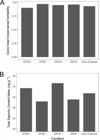
Clone mean broad-sense heritability (A) and total saponin content mean (B) for individual and joint deviance analyses. EFSW: Espumoso, RS (Full Sunlight), Winter; EFSS: Espumoso, RS (Full Sunlight), Summer; SSHW: São Mateus do Sul, PR (Shaded), Winter; SSHS: São Mateus do Sul, PR (Shaded), Summer
The higher saponin contents in winter than in summer indicate seasonality in the synthesis of these defense compounds. Seasonality in the production of other secondary metabolites of yerba mate, such as methylxanthines and caffeoylquinic acids, has also been reported (Duarte et al. 2023, Aguiar et al. 2024a). It is known that the synthesis of triterpenic saponins is complex, involving many stages and being highly susceptible to various inducers (Magedans et al. 2021). Environmental factors can simultaneously affect these compounds' synthesis (Yang et al. 2018). Possibly, the lower temperatures may have contributed to higher levels of saponins, since these compounds appear to be important in yerba mate cold tolerance (Rakocevic et al. 2012). Higher levels of saponins were also observed in Q. brasiliensis leaves during the winter (Costa et al. 2013). We cannot accurately determine which factors influenced the higher accumulation of saponins in winter, and only studies under controlled environmental conditions can elucidate the interference of these factors in saponin synthesis in yerba mate. In addition to external factors affecting the plant, vegetative rest, flowering, and fruiting can also interfere with the synthesis of these compounds (Szakiel et al. 2011). The seasons analyzed in this study (summer and winter) are considered periods of species growth pause (Rakocevic and Martim 2011) and are the usual harvesting times. Furthermore, we only collected mature leaves, minimizing possible interference from their age. The site influenced minimally the saponins content, even with different cultivation systems (full sunlight and shaded), edaphoclimatic differences, and considerable geographical distance (413 linear km).
In the joint analysis of sites and seasons, there was a significant effect of clones (Table 4). The doubles (clones x sites and clones x seasons) and triple (clones x sites x seasons) interactions, as well as the permanent environment effect, were not significant at a 1% error probability. The absence of significant interactions is supported by the high values of genotypic correlations. Additionally, the sum of interaction variances accounted for less than 20% of genotypic variance. As observed in individual deviance analyses, the genotypic variance in the joint analysis accounted for a large part of phenotypic variance, resulting in high clone mean broad-sense heritability, 0.93 (Figure 1A). The accuracy of clone selection was of high magnitude. Repeatability was statistically different from zero according to the confidence interval and was also high.
Genotypic values
Since interactions were not significant and genotypic correlations were high, we only present the genotypic values (BLUPs) resulting from joint analysis (Table 5). Clones BRS 409 and BRS 408 stood out with the highest total saponin contents, while Aupaba and Yari showed the lowest contents. To increase saponin levels, the genetic gain would be 16.7% with the selection of the two best clones compared to the mean of the original population composed of nine clones. But if the goal is to obtain lower saponin levels, genetic gain resulting from the selection of two clones would be 22%, that is, a reduction of 22% in saponin content compared to the mean of the original population.
The selection accuracies obtained in this study are considered very high, indicating the effectiveness of inferring genotypic values and, consequently, the correct ranking of clones for selection purposes (Resende and Duarte 2007). Analyses of genetic parameters indicate genetic variability and high heritability in determining total saponin content in yerba mate leaves, enabling the selection of clones according to industrial objectives. Studies with various annual plant species also indicated strong genetic control over saponin levels (Thomas et al. 2010, Panneerselvam et al. 2013, Kaur et al. 2017, Daemo et al. 2022). In yerba mate progenies, a high broad-sense heritability of 0.75 for saponins derived from ursolic acid has already been observed using another analysis method (Nakamura et al. 2009). For other secondary metabolites of species, such as methylxanthines (caffeine and theobromine) and phenolic compounds, high heritability values have also been verified in progenies (Nakamura et al. 2009, Cardozo Junior et al. 2010, Friedrich et al. 2017). Therefore, we can infer that genotype strongly influences secondary metabolites in yerba mate leaves. Thus, establishing commercial plantations with selected yerba mate clones is an effective way to obtain standardized raw material with suitable levels of secondary metabolites for industrial purposes.
This is the first study to estimate the genetic parameters of some bioactive compound from yerba mate leaves through clonal tests. The results demonstrate the possibility of increasing or reducing total saponin content through the selection of specific clones. Clones with low saponin content, such as Aupaba and Yari, may be suitable for the market of mild mate beverages. This is because saponins are known to impart a bitter taste to species’ leaves (Pires et al. 1997). These yerba mate clones were sensorially analyzed, with Aupaba and Yari being considered mild, while BRS 408 and BRS 409 are moderately mild (Wendling et al. 2017a, Wendling et al. 2017b). Thus, there may be a possible negative correlation between saponin levels obtained in our study and the beverages’ mildness. However, conducting a sensory panel with all clones is necessary to verify this hypothesis.
The selection of the two clones with the highest saponin content (BRS 408 and BRS 409) would result in a content of 48.81 mg g-1, demonstrating the species’ potential as a new, still unexplored source for industrial saponin extraction for pharmaceuticals or cosmetics, for example. All mentioned clones (Aupaba, Yari, BRS 408, and BRS 409) are also highly productive in leaf mass (Wendling et al. 2017a, Wendling et al. 2017b). Therefore, whether for low (Aupaba and Yari) or high (BRS 408 and BRS 409) saponin content selection, establishing commercial plantations of these clones would result in large-scale production of raw material with saponin levels suitable for each industrial purpose. Additionally, breeding programs should always work to expand the genetic base of available clones to safeguard against susceptibility to various pests - diseases and insects (Salgotra and Chauhan 2023).
CONCLUSIONS
There is a strong genotype effect on saponin content in yerba mate leaves. Clone selection can be for low or high saponin content, with possibilities for different industrial applications. We recommend harvesting yerba mate leaves in winter to maximize saponin yield.
ACKNOWLEDGEMENTS
This work was supported by the Coordenação de Aperfeiçoamento de Pessoal de Nível Superior (CAPES) - Finance Code 001.
Data Availability
The datasets generated and/or analyzed in this study, as well as the supplementary tables and figures, are available from the corresponding author upon reasonable request.
REFERENCES
- Aguiar NS, Gabira MM, Duarte MM, Tomasi JC, Hansel FA, Lavoranti OJ, Deschamps C, Helm CV, Wendling I2024a How shading levels affect bioactive compounds in leaves of yerba mate clones. Biochemical Systematics and Ecology 113:104796
- Aguiar NS, Hansel FA, Reis CAF, Lazzarotto M, Wendling I2024b Optimizing the vanillin-acid sulfuric method to total saponin content in leaves of yerba mate clones. Chemistry and Biodiversity 21:e202301883
- Biswas T, Dwivedi UN2019 Plant triterpenoid saponins: biosynthesis, in vitro production, and pharmacological relevance. Protoplasma 256:1463-1486
- Cardozo Junior EL, Donaduzzi CM, Ferrarese-Filho O, Friedrich JC, Gonela A, Sturion JA2010 Quantitative genetic analysis of methylxanthines and phenolic compounds in mate progenies. Pesquisa Agropecuária Brasileira 45:171-177
- Costa F, Yendo ACA, Fleck JD, Gosmann G, Fett-Neto AG2013 Accumulation of a bioactive triterpene saponin fraction of Quillaja brasiliensis leaves is associated with abiotic and biotic stresses. Plant Physiology and Biochemistry 66:56-62
- Daemo BB, Yohannes DB, Beyene TM, Abtew WG2022 Biochemical analysis of cassava (Manihot esculenta Crantz) accessions in southwest of Ethiopia. Journal of Food Quality 2022:9904103
- Duarte MM, Aguiar NS, Gabira MM, Tomasi JC, Vieira LM, Helm CV, Nogueira AC an Wendling I2023 Seasonality and genotype influence on Ilex paraguariensis cuttings rooting a bioactive compounds. Plant Genetic Resources: Characterization and Utilization 21:174-181
- Faizal A, Geelen D2013 Saponins and their role in biological processes in plants. Phytochemistry Reviews 12:877-893
- Friedrich JC, Gonela A, Vidigal MCG, Vidigal Filho PS, Sturion JA, Cardozo Junior EL2017 Genetic and phytochemical analysis to evaluate the diversity and relationships of mate (Ilex paraguariensis A.St.-Hil.) elite genetic resources in a germplasm collection. Chemistry and Biodiversity 14:e1600177
- Hussain M, Debnath B, Qasim M, Bamisile BS, Islam W, Hameed MS, Wang L, Qiu D2019 Role of saponins in plant defense against specialist herbivores. Molecules 24:1-21
- Kaur K, Gill BS, Sharma S2017 Assessment of genetic variability, heritability and genetic advance in soybean genotypes. Journal of Crop and Weed 13:84-89
- Kuropka P, Zwyrzykowska-Wodzińska A, Kupczyński R, Włodarczyk M, Szumny A, Nowaczyk RM2021 The effect of Ilex × meserveae S. Y. Hu extract and its fractions on renal morphology in rats fed with normal and high-cholesterol diet. Foods 10:818
- Magedans YVS, Phillips MA, Fett-Neto AG2021 Production of plant bioactive triterpenoid saponins: from metabolites to genes and back. Phytochemistry Reviews 20:461-482
- Mateos R, Baeza G, Martínez-López S, Sarriá B, Bravo L2017 LC-MSn characterization of saponins in mate (Ilex paraguariens, St. Hil) and their quantification by HPLC-DAD. Journal of Food Composition and Analysis 63:164-170
- Moses T, Papadopoulou KK, Osbourn A2014 Metabolic and functional diversity of saponins, biosynthetic intermediates and semi-synthetic derivatives. Critical Reviews in Biochemistry and Molecular Biology 49:439-462
- Nakamura KL, Cardozo Junior L, Donaduzzi CM, Schuster I2009 Genetic variation of phytochemical compounds in progenies of Ilex paraguariensis St. Hil. Crop Breeding and Applied Biotechnology 9:116-123
- Oakenfull D1981 Saponins in food - a review. Food Chemistry 6:19
- Panneerselvam K, Tsukamoto C, Honda N, Kikuchi A, Lee JD, Yang SH, Chung G2013 Saponin polymorphism in the Korean wild soybean (Glycine soja Sieb. and Zucc.). Plant Breeding 132:121-126
- Pires VS, Guillaume D, Gosmann G, Schenkel EP1997 Saponins from Ilex dumosa, an erva-maté (Ilex paraguariensis) adulterating plant. Journal of Agricultural and Food Chemistry 45:1027-1031
- Puangpraphant S, Berhow MA, Mejia EG2011 Mate (Ilex paraguariensis St. Hilaire) saponins induce caspase-3-dependent apoptosis in human colon cancer cells in vitro. Food Chemistry 125:1171-1178
- Rakocevic M, Martim SF2011 Time series in analysis of yerba-mate biennial growth modified by environment. International Journal of Biometeorology 55:161-171
- Rakocevic M, Janssens M, Schere R2012 Light responses and gender issues in the domestication process of yerba-mate, a subtropical evergreen. In Bezerra AD and Ferreira TS (eds) Evergreens. Nova Science Publishers, New York, p. 63-95
- Resende MDV2016 Software Selegen-REML/BLUP: a useful tool for plant breeding. Crop Breeding and Applied Biotechnology 16:330-339
- Resende MDV, Duarte JB2007 Precisão e controle de qualidade em experimentos de avaliação de cultivares. Pesquisa Agropecuária Tropical 37:182-194
- Salgotra RK, Chauhan BS2023 Genetic diversity, conservation, and utilization of plant genetic resources. Genes 14:174
- Samtiya M, Aluko RE, Dhewa T2020 Plant food anti-nutritional factors and their reduction strategies: an overview. Food Production, Processing and Nutrition 2:6
- Sharma K, Kaur R, Kumar S, Saini RK, Sharma S, Pawde SV, Kumar V2023 Saponins: A concise review on food related aspects, applications and health implications. Food Chemistry Advances 2:1-9
- Souza LM, Dartora N, Scoparo CT, Cipriani TR, Gorin PAJ, Iacomini M, Sassaki GL2011 Comprehensive analysis of maté (Ilex paraguariensis) compounds: Development of chemical strategies for matesaponin analysis by mass spectrometry. Journal of Chromatography A 1218:7307-7315
- Szakiel A, Pączkowski C, Henry M2011 Influence of environmental abiotic factors on the content of saponins in plants. Phytochemistry Reviews 10:471-491
- Thomas MT, Kurup R, Johnson AJ, Chandrika SP, Mathew PJ, Dan M, Baby S2010 Elite genotypes/chemotypes, with high contents of madecassoside and asiaticoside, from sixty accessions of Centella asiatica of south India and the Andaman Islands: For cultivation and utility in cosmetic and herbal drug applications. Industrial Crops and Products 32:545-550
- Timilsena YP, Phosanam A, Stockmann R2023 Perspectives on saponins: food functionality and applications. International Journal of Molecular Sciences 24:1-22
- Tomasi JC, Lima GG, Wendling I, Helm CV, Hansel FA, Godoy RCB, Grunennvaldt RL, Melo TO, Tomazzoli MM, Deschamps C2021 Effects of different drying methods on the chemical, nutritional and colour of yerba mate (Ilex paraguariensis) leaves. International Journal of Food Engineering 17:551-560
- Wendling I, Santin D, Nagaoka R, Sturion JA2017a BRS BLD Aupaba e BRS BLD Yari: cultivares clonais de erva-mate para produção de massa foliar de sabor suave. Embrapa Florestas, Colombo, 6p
- Wendling I, Sturion JA, Santin D2017b BRS 408 e BRS 409: cultivares clonais de erva-mate para produção de massa foliar. Embrapa Florestas, Colombo , 5p
- Yang L, Wen K-S, Ruan X, Zhao Y-X, Wei F, Wang Q2018 Response of plant secondary metabolites to environmental factors. Molecules 23:1-26

