 The 34-bp deletion effectively differentiates the monoecious phenotype in cucumber
Abstract
The sex phenotype in cucumbers, determined by the F locus, is crucial for crop productivity. Identifying markers for this trait aids in selecting gynoecious varieties for higher yields, but existing molecular markers show low correlation with the gynoecious trait. This challenge can be addressed by indirectly selecting target lines and eliminating monoecious genotypes through accurate screening. This study seeks to develop a molecular marker closely linked to the F locus to differentiate monoecious cucumber phenotypes. Genetic analysis of a 1,000 kb region around the F locus in both gynoecious and monoecious lines revealed two polymorphisms: a 34-base pair deletion (34Del) and a 16-base pair insertion (16In). Only the 34Del polymorphism consistently co-segregated with the monoecious phenotype, effectively distinguishing homozygous from heterozygous monoecious lines. Therefore, the 34Del polymorphism can serve as a reliable marker for use in cucumber breeding programs to improve yield.
Keywords:
Cucumis sativus; gynoecious; marker assisted selection; 34Del marker; 16In marker
INTRODUCTION
Cucumber (Cucumis sativus L., 2n = 14), a member of the Cucurbitaceae family, is an important commercial crop worldwide. It is consumed both raw and as a processed product. As the most widely cultivated cucurbit, cucumber ranks second in global vegetable production (Cramer and Wehner 1998). Among its key breeding targets, fruit yield - an inherited quantitative trait - is the most critical (Harpaz‐Saad et al. 2012, Nguyen et al. 2020). Yield is influenced by genetic factors, environmental conditions, and some genotype-environment interactions (Harpaz‐Saad et al. 2012), but it has low heritability (Harpaz‐Saad et al. 2012), making direct selection for yield improvement difficult. To overcome this challenge, breeders focus on traits with higher heritability and a strong correlation to yield, such as the ratio of female flowers (sex expression type), stem length, the number of branches per plant, and fruit size and length (Ikram et al. 2017). Several studies have found a positive correlation between the number of female flowers per plant and yield, confirming the potential of improving cucumber yield through manipulation of sex expression (Harpaz‐Saad et al. 2012, Ikram et al. 2017).
Cucumbers exhibit a variety of sex phenotypes, including gynoecious (only pistillate flowers), androecious (only staminate flowers), monoecious (both pistillate and staminate flowers), andromonoecious (bisexual and staminate flowers), and hermaphrodite (bisexual flowers). These phenotypes are controlled by three main genetic loci: Androecious (A), Monoecious (M), and Female (F) (Iwahori et al. 1970). The F locus is essential for female flower development (Knopf and Trebitsh 2006, Li et al. 2009, Jat et al. 2019), while the M locus determines whether a flower is bisexual (mm) or unisexual (M_) (Pierce and Wehner 1990, Mibus and Tatlioglu 2004, Li et al. 2012, Liu et al. 2018). The A locus promotes male flower production in plants with homozygous recessive ff and aa genotypes (Pitrat et al. 1997). The interaction of these three loci governs cucumber sex expression, producing phenotypes such as andromonoecious (ffmm), monoecious (A_ffM_), androecious (aaffM_), hermaphrodite (F_mm), and gynoecious (F_M_) (Robinson et al. 1976).
Traditionally, selecting gynoecious lines has been a time-consuming process, primarily dependent on observing floral sex expression in the field. This classical selection method has several limitations, including the influence of environmental factors on sex expression and the difficulty of early identification (Wang 2021). To address these challenges, molecular marker-assisted selection has become essential for improving the efficiency and accuracy of cucumber breeding, particularly in selecting elite phenotypes, such as the gynoecious trait (Avramidou et al. 2015).
Environmental factors, in addition to genetic variables, play a significant role in influencing cucumber sex expression (Saito et al. 2007, Staub et al. 2008). The balance between auxins, abscisic acid, ethylene, and gibberellins is crucial for determining plant sex expression, as this balance mediates hormonal fluctuations. Among these hormones, ethylene is considered the primary regulator of female traits in cucumbers (Takahashi and Jaffe 1984, Trebitsh et al. 1997). Current research highlights the enzyme ACC (1-aminocyclopropane-1-carboxylic acid) synthase as a key player in ethylene production within plants (Win et al. 2015). The F locus, located on the long arm of chromosome 6, includes the gene CsACS1 in cucumbers (Knopf and Trebitsh 2006, Jat et al. 2019). The dominant F allele carries an additional copy of CsACS1, known as CsACS1G, whereas the recessive f allele has only one copy of CsACS1 (Jat et al. 2019). CsACS1G has been shown to result from a gene duplication and recombination event between CsACS1 and CsBCAT (Li et al. 2009, Jat et al. 2019).
Polymerase chain reaction (PCR) can help detect gynoecious cucumber lines by using primer sequences targeting the breakpoint of the duplicated region. Several genetic markers associated with the F locus have been identified. These include the P3A/P2A primer pair spanning the genomic sequence of CsACS1G (Li et al. 2009), a primer pair amplifying the upstream region of CsACS1G covering the recombination site between CsBCAT and CsACS1G (Wu et al. 2012), and the Primer R/Primer F primer pair covering the breakpoint of the 30.2-kb duplicated region (Yamasaki et al. 2001). Although these markers can detect gynoecious lines, they cannot discriminate between homozygous and heterozygous plants. In addition, several simple sequence repeat (SSR) markers linked to the cucumber gynoecious locus have been discovered (Yamasaki et al. 2001), but their utility is limited due to the significant genetic distance between these markers and the F locus. The co-dominant molecular marker BCAT, which identifies a 56-bp deletion in the 3’UTR of CsBCAT, has been shown to be linked to the F locus and can discriminate homozygous and heterozygous gynoecious lines with about 80% accuracy (Robinson et al. 1976). However, in cucumber breeding programs, elite monoecious varieties are often improved by introgressing the gynoecious trait from exotic cucumber lines to increase the number of female flowers (Le and Le 2024). Backcross introgression is often used for this purpose. Inaccurate selection of gynoecious lines during the breeding process can result in the unintentional elimination of individuals with the desired genotype in each backcross generation. This problem can be solved by indirect selection of target lines by precise removal of monoecious individuals.
The aim of this research is to identify a novel co-dominant molecular marker capable of distinguishing monoecious lines from gynoecious lines as well as differentiating between homozygous and heterozygous monoecious cucumbers. By analyzing sequence polymorphisms between gynoecious and monoecious lines near the duplicated region of the F locus, we aim to develop a reliable marker. This marker will then be mapped to inbred cucumber lines and F2 and F3 segregating populations to evaluate its accuracy.
MATERIAL AND METHODS
Sequences
The F locus sequences for the monoecious cucumber line (Chinese long inbred line 9930) were obtained from NCBI (GenBank accession code: ACHR00000000; Chromosome 6: NC_026660) and CuGenDB (http://cucurbitgenomics.org/). The F locus sequences for the gynoecious Gy14 line were downloaded from the China National Genebank Database (https://db.cngb.org/) and CuGenDB. A comparison was made between the sequences 500 kb upstream and downstream of the 3’UTR of CsBCAT from both monoecious and gynoecious lines.
Evaluation of sex expression
Sex expression in the cucumber population was evaluated after the first flower appeared. For eight consecutive days, the sex phenotype of individual plants was recorded by documenting the sex type of all flowers on each plant daily. Gynoecious plants were defined as having only female flowers (Figure 1a). Subgynoecious plants had either a higher proportion of female flowers than male flowers or an equal number of both. Monoecious plants predominantly produced male flowers (Figure 1a).

Cucumber plant materials and flourish conditions
All cucumber varieties used in this study were indigenous to Vietnam. The plants were cultivated in net houses at Tan Loc Phat Seed Limited Company. To test the accuracy of molecular markers for the F locus, F2 and F3 segregating populations were utilized (Figure 1). The inbred population consisted of 13 lines, with 10 plants per line (Figure 1b). The monoecious line TLP14 and the gynoecious line TLP10 were crossed to produce an F1 hybrid. A single plant from the F1 generation was self-pollinated to generate the F2 generation. A total of 131 plants were randomly selected from the F2 population to assess the correlation between sex genotype and phenotype. Self-pollination of F2 plants - categorized as gynoecious, subgynoecious, or monoecious (two plants per group) - produced the F3 generation. A total of 15 plants were randomly selected from each of the six groups to further examine the association between genotype and sex phenotype (Figure 1c). In total, 214 cucumber plants (131 F2 and 83 F3) were used. All plant materials were grown in sacks, following standard plant protection protocols. They were kept at a day/night temperature of 24 °C/18 °C, with 16 hours of assimilation light, and irrigated with a fertilizer solution via a drip system.
DNA extraction, sequencing, and genotyping
Genomic DNA was extracted from young cucumber leaves by using Plant DNAzol® Reagent (Invitrogen, 10978-021) following the manufacturer’s instructions. Genotyping of the three studied populations was performed by PCR using two primer pairs: the 34-del primer pair (forward: TGGAGATAAAGCGTAAGGGAA; reverse: CCTCCAACGTCATAGAGTAAA) and the 16-in primer pair (forward: CGATCAGATATAACTGCAGCAGT; reverse: TAATAGTCGCTGCCAAGTAAAGC). PCR reactions were performed under the following cycling conditions: an initial denaturation step of 30 seconds at 98 °C, followed by 30 cycles of 3 seconds at 98 °C, 3 seconds at 56 °C, and 5 seconds at 72 °C. The final extension step was 30 seconds at 72 °C. Amplified fragments were analyzed by electrophoresis on either a 2% agarose gel or a 12% polyacrylamide gel using 1X TBE buffer. Gels were stained with ethidium bromide (0.1 g mL-1) to visualize DNA bands. PCR products were purified and sequenced on a 3500 Genetic Analyzer (Applied Biosystems).
Statistical analysis
The significance of the differences between the observed and predicted ratios in the F2 and F3 segregating populations, based on Mendel’s law, was assessed using the chi-square test.
RESULTS AND DISCUSSION
A 34-bp deletion and a 16-bp insertion identified in the F locus
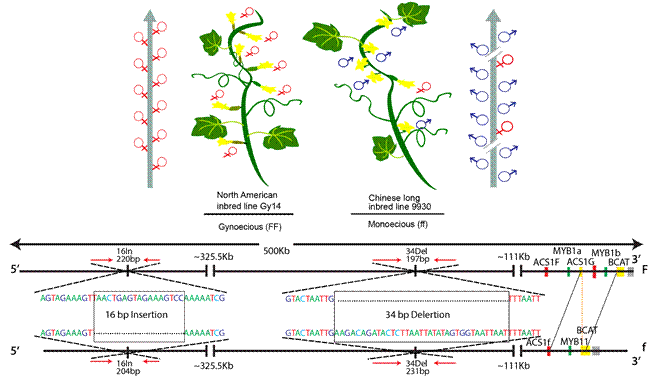
The 56-bp deletion in the 3’UTR of CsBCAT has been strongly linked to the F locus and can be used to distinguish between homozygous and heterozygous gynoecious lines (Robinson et al. 1976). To further explore this region, we compared the sequences 500 kb upstream and downstream of CsBCAT in the gynoecious cucumber line Gy14 and the monoecious line 9930. Clustering analysis revealed two polymorphisms: a 34-bp deletion located approximately 111 kb upstream of CsBCAT, and a 16-bp insertion located around 325.5 kb downstream of CsBCAT (Figure 2). PCR primer pairs (34Del and 16In) were designed to amplify the regions surrounding these polymorphisms. Specifically, the 34Del primer pair targeted the 34-bp deletion, while the 16In primer pair amplified the 16-bp insertion (Figure 2).

Positions of 34Del and 16In markers relative to F locus. The 34-bp deletion and 16 insertions in F locus of cucumber gynoecious line (North American inbred line Gy14) as compared with cucumber monoecious line (Chinese long inbred line 9930). These polymorphisms were upstream and were around 111 kb and 325.5 kb from CsACS1, respectively. PCR Primers were designed to amplify these two regions. PCR products would be 197 bp (F) and 231 bp (f) for 34Del and 204 bp (f) and 220 bp (F) for 16In. Each polymorphism region is zoomed in. Rectangles: Polymorphism regions. Nucleotides are highlighted in green, red, back, and blue for A, T, G, and C, respectively. Horizonal broken lines are deleted nucleotides.
Both the 34-bp deletion and 16-bp insertion identified in different gynoecious Vietnamese cucumber lines
Since the insertion/deletion polymorphisms were originally identified in non-Vietnamese cucumber lines, we next investigated whether these variants were present in Vietnamese gynoecious lines. To do this, the regions surrounding the 34-bp deletion and 16-bp insertion sites were sequenced in two gynoecious and two monoecious inbred lines. Consistent with our earlier results, both the 34-bp deletion and the 16-bp insertion were detected in the two gynoecious inbred lines but not in the monoecious lines (Figure 3). This indicates that these polymorphisms are well conserved across different gynoecious cucumber lines, including those from Vietnam.

The 34-bp deletion in gynoecious lines and the 16-bp deletion in monoecious lines at F/f locus of Vietnam cucumbers. PCR and sequencing reactions were performed with 34Del primer (A) and 16In primer (B) for 2 gynoecious (TLP08_Gyno and TLP10_Gyno) and 2 monoecious (TLP04 _mono and TLP14_mono) inbred lines. The two deletion mutations were highlighted in yellow.
34Del and 16In primers can differentiate between homozygous and heterozygous F/f loci
To test whether the 34Del and 16In markers could distinguish between homozygous and heterozygous plants, two sets of PCR primer pairs were used to amplify the regions surrounding the 34-bp deletion and the 16-bp insertion sites. PCR products for the 34Del primer pair were either 197 bp or 231 bp, corresponding to the 34-bp deletion (allele F) or the normal sequence (allele f). Similarly, the 16In primers generated products of 204 bp or 220 bp, indicating the presence of the normal sequence (allele F) or the 16-bp insertion (allele F), respectively. DNA samples from monoecious, gynoecious, and subgynoecious plants were used for PCR amplification. The results (Figure 4a) showed both 197 bp (FF) and 231 bp (ff) products for the 34Del primer pair, while heterozygous plants (Ff) produced both bands. A similar pattern was observed for the 16In primers (Figure 4b). These findings suggest that both the 34Del and 16In markers can reliably differentiate between homozygous and heterozygous plants with respect to sex phenotypes.

34Del and 16In markers could distinguish between homozygous and heterozygous F locus. PCR reactions were performed with the primer pair 34Del (A) and 16In (B) for DNA samples from gynoecious, subgynoecious, and monoecious cucumber. 34Del PCRs have two products appearing at 197 bp and 231 bp corresponding to F and f alleles while 16In PCR have two products at 204 bp and 220 bp for f and F alleles.
Correlation between sex genotypes determined by 34Del and 16In markers and phenotypic sex traits in three cucumber populations
Three cucumber populations were analyzed: inbred lines, an F2 population, and an F3 population (Figures 1b, c). The first population consisted of 13 inbred lines from various regions in Vietnam (Figure 1b). The F2 population included 131 plants derived from a cross between the monoecious TLP14 line and the gynoecious TLP10 line. Among the F2 progeny, 62 plants displayed subgynoecious or gynoecious phenotypes, while 69 plants exhibited monoecious phenotypes. Six F2 progeny were self-pollinated to produce the F3 population, which consisted of six sub-populations, each containing 12-15 plants (Figure 1c). Four F3 sub-populations displayed only monoecious phenotypes, while two sub-populations had ratios of gynoecious or subgynoecious to monoecious plants of 8:5 and 8:7, respectively. Only four F3 sub-populations followed the expected Mendelian ratio for sex phenotypic segregation. The F2 population and the other F3 sub-populations did not strictly adhere to Mendelian segregation. Since the gynoecious phenotype is governed by a dominant F allele, the expected ratio of gynoecious or subgynoecious to monoecious plants in the F2 and F3 populations should have been approximately 3:1. Deviation from this ratio in certain populations could be attributed to the relatively small sample sizes, which may not have been fully representative of the broader populations. However, the primary objective of this study was to evaluate the utility of the novel molecular markers for distinguishing the gynoecious phenotype in Vietnamese cucumber lines. Therefore, the segregating populations used in this study were deemed sufficient for this purpose.
To accurately determine the sex genotypes in the three studied populations, PCR reactions were conducted using the two markers, 34Del and 16In. For the 34Del marker, the observed genotype ratio in the F2 population was 38:49:44, and four out of six F3 populations also deviated from the expected 1:2:1 ratio, indicating the presence of segregation distortion (SD). Similarly, for the 16In marker, the F2 population showed a genotype ratio of 96:20:15, and none of the F3 populations followed Mendelian inheritance patterns. These results also suggest SD. SD refers to the deviation of genetic segregation ratios from the expected Mendelian fractions (Lyttle 1991). SD can arise due to genetic or sample bias. Genetic bias occurs when there are maternal or paternal biases toward specific alleles, which can lead to the abortion of certain gametes or the selective fertilization of particular genotypes (Taylor and Ingvarsson 2003, Anhalt et al. 2008). Chromosomal rearrangements and genetic abnormalities are additional factors that contribute to SD (Jenczewski et al. 1997). Clusters of markers displaying SD, known as SD regions (SDRs), tend to show skewed inheritance in the same direction (Lu et al. 2002). Three SDRs have been identified on cucumber chromosomes 1, 4, and 6 (Ren et al. 2009). These SDRs contain alleles that significantly affect the viability or germination of pollen or embryos (Ren et al. 2009). On chromosome 6, the SDR spans from 21,073,888 to 29,076,220 bp. The CsACGS1 gene is located at 26,242,353-26,244,409 bp on chromosome 6. The 34Del and 16In markers lie within this SDR, approximately 111 kb and 435 kb from CsACGS1, respectively. This proximity likely explains why their genotype frequencies deviate from the expected 1:2:1 Mendelian ratio. Sample bias may also contribute to SD, as the small sample sizes of the F2 and F3 populations might not fully represent the broader population.
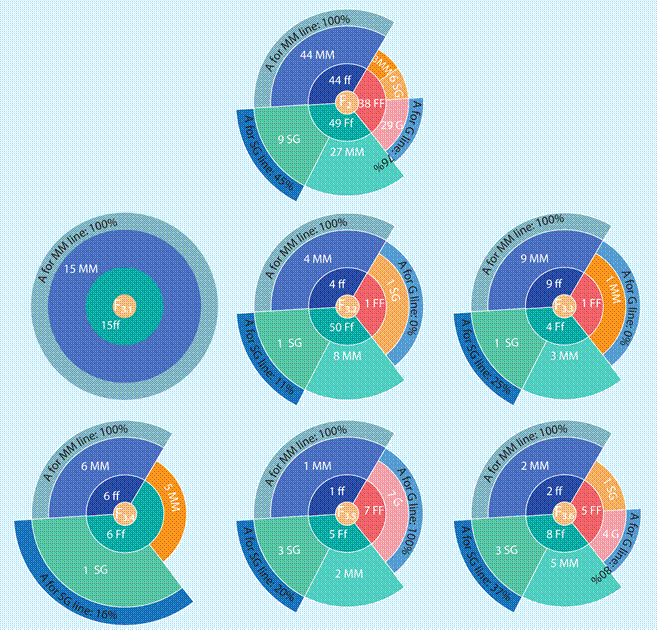
The compatibility of the 34Del marker with sex traits across three populations was evaluated (Table 1 and Figure 5). The marker effectively distinguished monoecious lines and showed varying levels of accuracy for gynoecious and subgynoecious lines. Its accuracy for identifying gynoecious lines ranged from 40% in inbred lines, 76% in the F2 population, and 80-100% in the F3 population. For subgynoecious lines, accuracy varied between 45% in the F2 population and 11-80% in the F3 population. Overall, the 34Del marker was highly accurate, identifying approximately 80% of gynoecious phenotypes and 100% of monoecious phenotypes. However, it was unable to reliably identify subgynoecious phenotypes, likely due to the instability of the subgynoecious trait, which may result from the presence of only a single dominant F allele.

The accuracy of marker 34Del for different sexual phenotypes in the F2 and F3 populations. MM: Monoecious; SG: Subgynoecious; G: Gynoecious; A: Accuracy. The innermost circle corresponds to the population name. The second circle represents the genotype. The third circle corresponds to the phenotype. The fourth circle represents the level of precision of the marker for a certain trait.
The correlation between the 16In marker genotype and sex traits across the three studied populations was also examined (Table 1). In the inbred line population, the marker accurately identified 100% of gynoecious plants but correctly classified only 33% of monoecious lines. In the F2 and F3 populations, however, the marker failed to differentiate between gynoecious, subgynoecious, and monoecious plants. This failure is likely due to the long genetic distance between the 16In marker and the F locus (Figure 2). These findings suggest that the 16In marker is not closely linked to the F locus and is therefore unsuitable for identifying monoecious sex traits in cucumbers.
A co-dominant molecular marker, located approximately 111 kb from the 34Del marker and derived from a 56-bp deletion in the 3’UTR of CsBCAT, has been shown to accurately identify monoecious lines and achieve around 80% accuracy for gynoecious lines (Robinson et al. 1976, Zhang et al. 2015). The proximity of these markers led to the hypothesis that combining them might improve the accuracy of cucumber sex phenotype determination. However, combining the two markers did not enhance gynoecious line identification in the three studied populations. This could be due to the tight linkage between the two loci or the relatively small sample sizes, which may have limited the accurate assessment of the combined markers. Testing this combination in a backcross population may yield better results. In a breeding program aimed at producing gynoecious cucumber varieties from monoecious lines through backcrossing, the use of both markers improved gynoecious line identification, although it did not achieve 100% accuracy (data not shown).
Currently, no perfect markers exist for the identification of gynoecious cucumbers. However, a marker that can accurately identify monoecious cucumbers is highly valuable for breeding programs, particularly for backcrossing to introgress the F locus into elite cucumber lines. Achieving 100% accuracy for the gynoecious trait remains challenging, but combining molecular genotypic markers with phenotypic selection methods can improve the accurate identification of target gynoecious lines. The potential to enhance accuracy by combining multiple markers is an intriguing area for further exploration.
In conclusion, this study developed the co-dominant 34Del marker, located approximately 111 kb from the csACS1G gene, which accurately identifies gynoecious plants with about 80% accuracy and monoecious plants with 100% accuracy.
Data Availability
The datasets generated and/or analyzed during the current research are available from the corresponding author upon reasonable request.
REFERENCES
- Anhalt M, Heslop-Harrison P, Byrne S, Guillard A, Barth S2008 Segregation distortion in Lolium: evidence for genetic effects. Theoretical and Applied Genetics 117:297-306
- Avramidou E, Kapazoglou A, Aravanopoulos F, Xanthopoulou A, Ganopoulos I, Tsaballa A2015 Global DNA methylation changes in Cucurbitaceae inter-species grafting. Crop Breeding and Applied Biotechnology 15:112-116
- Cramer CS, Wehner TC1998 Fruit yield and yield component means and correlations of four slicing cucumber populations improved through six to ten cycles of recurrent selection. Journal of the American Society for Horticultural Science 123:388-395
- Harpaz‐Saad S, Yoon GM, Mattoo AK and Kieber JJ2012 The formation of ACC and competition between polyamines and ethylene for SAM. Annual Plant Reviews 44:53-81
- Ikram MMM, Esyanti RR, Dwivany FM2017 Gene expression analysis related to ethylene induced female flowers of cucumber (Cucumis sativus L.) at different photoperiod. Journal of Plant Biotechnology 44:229-234
- Iwahori S, Lyons JM, Smith OE1970 Sex expression in cucumber plants as affected by 2- chloroethylphosphonic acid, ethylene, and growth regulators. Plant Physiology 46:412-415
- Jat GS, Munshi AD, Behera TK, Choudhary H, Dash P, Ravindran A, Kumari S2019 Genetics and molecular mapping of gynoecious (F) locus in cucumber (Cucumis sativus L.). The Journal of Horticultural Science and Biotechnology 94:24-32
- Jenczewski E, Gherardi M, Bonnin I, Prosperi M, Olivieri I, Huguet T1997 Insight on segregation distortions in two intraspecific crosses between annual species of Medicago (Leguminosae). Theoretical and Applied Genetics 94:682-691
- Knopf RR, Trebitsh T2006 The female-specific Cs-ACS1G gene of cucumber. A case of gene duplication and recombination between the non-sex-specific 1-aminocyclopropane-1-carboxylate synthase gene and a branched-chain amino acid transaminase gene. Plant and Cell Physiology 47:1217-1228
- Le TTL, Le TTK2024 Utilization of marker-assisted backcrossing to generate new gynoecious cucumber lines with genetic heritage similar to the indigenous Vietnamese cucumber. Molecular Breeding 44:42
- Li Z, Huang S, Liu S, Pan J, Zhang Z, Tao Q, Shi Q, Jia Z, Zhang W, Chen H, Si L, Zhu L, Cai R2009 Molecular isolation of the M gene suggests that a conserved-residue conversion induces the formation of bisexual flowers in cucumber plants. Genetics 182:1381-1385
- Li Z, Wang S, Tao Q, Pan J, Si L, Gong Z, Cai R2012 A putative positive feedback regulation mechanism in CsACS2 expression suggests a modified model for sex determination in cucumber (Cucumis sativus L). Journal of Experimental Botany 63:4475-4484
- Liu W, Qin Z, Xin M, Zhou X, Yang J, Wang C2018 Analysis of CsPAP-fib regulation of cucumber female differentiation in response to low night temperature conditions. Scientia Horticulturae 240:81-88
- Lu H, Romero-Severson J, Bernardo R2002 Chromosomal regions associated with segregation distortion in maize. Theoretical and Applied Genetics 105:622-628
- Lyttle W1991 Segregation distorters. Annual Review of Genetics 25:511-581
- Mibus H, Tatlioglu T2004 Molecular characterization and isolation of the F/f gene for femaleness in cucumbers (Cucumis sativus L). Theoretical and Applied Genetics 109:1669
- Nguyen PTD, Luong NH, Ho PTB, Le KT, Le LTT2020 BCAT- based marker for marker assisted selection in Vietnam cucumber breeding. Journal of Applied Horticulture 22:87-91
- Pierce LK, Wehner TC1990 Review of genes and linkage groups in cucumber. HortScience 25:605-615
- Pitrat M, Chauvet M, Foury C1997 Diversity, history and production of cultivated cucurbits. Acta Horticulturae 492:21-28
- Ren Y, Zhang Z, Liu J, Staub E, Han Y, Cheng Z, Li X, Lu J, Miao H, Kang H, Xie B, Gu X, Wang X, Du Y, Jin W, Huang S2009 An integrated genetic and cytogenetic map of the cucumber genome. PLoS ONE: 4.
- Robinson RW, Munger HM, Whitaker TW, Bohn GW1976 Genes of the cucurbitaceae. HortScience 11:554-568
- Saito S, Fujii N, Miyazawa Y, Yamasaki S, Matsuura S, Mizusawa H, Fujita Y, Takahashi H2007 Correlation between development of female flower buds and expression of the CS-ACS2 gene in cucumber plants. Journal of Experimental Botany 58:2897-2907
- Staub JE, Robbins MD, Wehner TC2008 Cucumber. In Prohens J and Nuez F (eds) Vegetables I: Asteraceae, Brassicaceae, Chenopodicaceae, and Cucurbitaceae. Springer, New York, p. 241-282
- Takahashi H, Jaffe MJ1984 Further studies of auxin and ACC induced feminization in the cucumber plant using ethylene inhibitors. Phyton 44:81-86
- Taylor R, Ingvarsson K2003 Common features of segregation distortion in plants and animals. Genetica 117:27-35
- Trebitsh T, Staub JE, O'Neill SD1997 Identification of a 1-aminocyclopropane-1-carboxylic acid synthase gene linked to the female (F) locus that enhances female sex expression in cucumber. Plant Physiology 113:987-995
- Wang H2021 Cucumber economic values and its cultivation and breeding. IntechOpen: 201-208.
- Wehner TC, Lower RL, Staub JE, Tolla GE1989 Convergent-divergent selection for cucumber fruit yield. HortScience 24:667-669
- Win KT, Zhang C, Song K, Lee JH, Lee S2015 Development and characterization of a codominant molecular marker via sequence analysis of a genomic region containing the Female (F) locus in cucumber (Cucumis sativus L). Molecular Breeding 35:1-10
- Wu T, Qin Z, Feng Z, Zhou X, Xin M, Du Y2012 Functional analysis of the promoter of a female-specific cucumber CsACS1G gene. Plant Molecular Biology Reporter 30:235-241
- Yamasaki S, Fujii N, Matsuura S, Mizusawa H, Takahashi H2001 The M locus and ethylene controlled sex determination in andromonoecious cucumber plants. Plant and Cell Physiology 42:608-619
- Zhang Z, Mao L, Chen H, Bu F, Li G, Sun J, Li S, Sun H, Jiao C, Blakely R, Pan J, Cai R, Luo R, Van de Peer Y, Jacobsen E, Fei Z, Huang S2015 Genome-wide mapping of structural variations reveals a copy number variant that determines reproductive morphology in cucumber. The Plant Cell 27:1595-1604