 Genetic diversity assessment of walnt (Juglans regia L.) varieties from Argentina using SSR markers
Abstract
Walnut is a globally important nut crop in terms of production and consumption. This study assesses the genetic diversity of the walnut germplasm collection from Catamarca, Argentina (including 13 registered cultivars), using Simple Sequence Repeat markers. Results revealed high genetic diversity, with alleles per locus ranging from 2 to 9 (average 4.67), expected heterozygosity between 0.47 and 0.72 (average 0.64), and 100% polymorphic loci. The average polymorphism information content (PIC) was 0.580, and the mean Shannon’s index (I) value was 1.19. Cluster analysis using Nei´s distances and Bayesian STRUCTURE approximation were consistent with the walnut varietal pedigree. This pioneering study in Argentina offers valuable insights for walnut conservation and breeding programs. It underscores the genetic richness of local walnut germplasm in Catamarca, highlighting its potential to enhance diversification and improvement of walnut production in Argentina.
Keywords:
Microsatellite; molecular marker; germplasm characterization; Catamarca-Argentina
INTRODUCTION
Persian walnut (Juglans regia L.), a nut crop within the family Juglandaceae, is a diploid species (2n= 32, genome size 572.8 Mb) (Woodworth 1930) cultivated across the world's temperate regions (Mcgranahan and Leslie 2009) and is economically important due to its high-quality wood and energy-rich nuts. In addition, it is a valuable resource of proteins, vitamins and antioxidants, as well as of easily digestible fats, especially omega-3 (Bernard et al. 2017). This has led the Food and Agriculture Organization (FAO) to include it in the group of priority plants.
Juglans originated and developed from eastern Europe through the Himalayas to regions of China and it is likely that the walnut was domesticated in Iran and Afghanistan and then introduced to other countries (Bayazit et al. 2007). Global walnut production has shown a consistent upward trend over the past decade (2012-2021), rising from 2,368,722 to 3,500,172 tons (Manthos et al. 2023) with walnut cultivation being distributed worldwide. Walnut global production is mostly provided by China, Turkey, the USA and Iran. In the southern hemisphere, Persian walnut is grown in Chile, Argentina and Australia, ranking 8th, 12th and 22nd, respectively, in terms of harvested area worldwide (FAOSTAT 2025). In Argentina, walnut production reached 18,488 tn in 2019, being Catamarca province, located in northwestern Argentina, the main producing region, with 5,850 tn (Carabajal et al. 2022). This province is home to a large population of walnut trees and represents a heterogeneous and interesting genetic resource for breeders.
In this context, the genetic improvement program of Instituto Nacional de Tecnología Agropecuaria, Estación Experimental Agropecuaria Catamarca (INTA EEA Catamarca), has successfully selected and characterized highly promising varieties that allow for diversifying the supply of walnut varieties. The development of locally selected varieties facilitates the acquisition of germplasm adapted to the diverse climatic conditions of Catamarca, including mountainous regions with low temperatures and warmer valleys (Carabajal et al. 2022, Carabajal et al. 2024).
The introduction of new genotypes and the conservation of old genotypes are necessary to increase production and export. To achieve this goal, it is important to focus on the detection of elite genotypes and the characterization of their genetic diversity (Guney et al. 2021).
In order to investigate the variability and genetic diversity, several studies on walnut germplasm have been carried out around the world, for example: in the Balkans (Solar et al. 2000), Italy (Foroni et al. 2007, Pollegioni et al. 2011, Di Pierro et al. 2022), Iran (Karimi et al. 2010, Vahdati et al. 2015, Ebrahimi et al. 2017), Central Asia (Molnar et al. 2011), China (Chen et al. 2014), India (Shah et al. 2018, Wani et al. 2024), eastern and central Anatolia (Orhan et al. 2020, Guney et al. 2021), Pakistan (Magige et al. 2022), Greece (Manthos et al. 2023), and worldwide (Bernard et al. 2018). These studies, particularly those of genomic DNA polymorphisms, offer excellent opportunities to study spatio-temporal genetic diversity, population structure, and differentiation resulting from the dynamic interaction of evolutionary forces at intraspecific levels.
Simple sequence repeat (SSR) markers (or microsatellites) are characterized by their high polymorphism, indicative of the presence of multiple alleles and genetic variations within a given population. The polymorphic nature of these markers allows them to accurately discriminate between genotypes. Their multiallelism, codominance, repeatability and adequate genome coverage make them invaluable in genetic diversity assessments and genetic mapping efforts (Chikh-Rouhou et al. 2021, Beise et al. 2022, Tao et al. 2023, Wani et al. 2024).
In addition to these properties, SSR markers require low amount of DNA, can be easily automated for high throughput screening, and can be implemented in low-complexity laboratories; therefore, the sharing of data around the world is more comprehensive (Gonçalves-Vidigal and Rubiano 2011).
Some of the potential applications of microsatellites in walnut genetics include pedigree analysis, breeding programs, population genetics, germplasm management, pollen flow studies, and cultivar identification. These molecular markers have been widely used in genotype characterization and cultivar identification in walnut (Magige et al. 2022, Zhang et al. 2024) and also other species, such as chrysanthemum (Mekapogu et al. 2025), apple (Hassani et al. 2022) and melon (Zhang et al. 2023). Undercharacterized walnut genetic resources provide a valuable genetic reservoir for the breeding and improvement of local varieties. This study aimed to assess the genetic diversity of the walnut germplasm collection from Catamarca, Argentina (including 13 INTA-registered cultivars), using SSR markers to support conservation, breeding programs, and provide complementary molecular information for variety registration.
MATERIAL AND METHODS
Plant material
A total of 71 accessions from the INTA EEA Catamarca (lat 28° 28’ 6.78” S, long 65° 43’ 40.27” W) collection were included in this study (Supplementary Table 1), 13 of them are registered at the INASE: Argentina INTA, Jais Franquette INTA, Jais Mayette INTA, California INTA, Davis INTA, Ramillete INTA, Trompito INTA, Dennett INTA, Yaco Tula INTA, Chichi Jais INTA, Choya INTA, Cóndor Huasi INTA, and Del Saz INTA. Some of the analyzed accessions belonged to the same variety, and some were Californian and French varieties included with the purpose of comparing national diversity. Fresh leaves from the accessions were collected and stored at -80 °C until DNA extraction.
DNA extraction
DNA extraction was performed for each accession used in this study. DNA was extracted using the NucleoSpin Plant II Kit (Macherey-Nagel, Düren, Germany), following the manufacturer’s guidelines. DNA integrity was verified through 1.0% agarose gel electrophoresis. Subsequently, quality and quantity were assessed using a NanoDrop™ 1000 Spectrophotometer (Thermo Fisher Scientific Inc., Waltham, MA, USA). Only the DNA samples with A260/A280 values ranging from 1.80 to 2 and A260/A230 values above 2 were used for PCR reactions. The DNA samples were brought to a working concentration of 10 ng μL-1.
SSR markers
Nine SSR primer pairs developed for Juglans nigra and applied to breeding populations of J. regia, which have been shown to be highly polymorphic, were used to amplify the genomic DNA of walnut accessions (Woeste et al. 2002, Dangl et al. 2005) (Supplementary Table 2).
PCR conditions
PCR reactions were carried out in 10 µL volumes containing 20 ng DNA template, 0.2 µM of each primer (Alpha DNA, Montreal, Canada), 0.2 mM of each dNTP (Inbio Highway, Tandil, Argentina), 1X Reaction buffer, nuclease-free water, 2 mM MgCl2 and 1 U Taq Platinum (Invitrogen, Waltham, MA, USA). Amplification was performed using a Mastercycler EP gradient thermocycler (Eppendorf, Hamburg, Germany) under the following conditions: an initial denaturation at 94 °C for 10 min; 40 cycles of 94 °C for 60 s, 58 °C for 45 s, and 72 °C for 60 s; followed by a final extension at 72 °C for 10 min. PCR reactions for each SSR were performed individually.
SSR data analysis
Amplified polymorphic fragments from genomic DNA (or SSR) were analyzed by labeling the forward primer with a 6-FAM, VIC, PET or NED fluorescent dye (Alpha DNA, Montreal, Canada) and separated on a Genetic Analyzer ABI3500 (Applied Biosystems, CA, USA). The fragments were run by capillary co-electrophoresis in two groups, Pool A (WGA 1, WGA 69, WGA 71 and WGA 331) and Pool B (WGA 32, WGA 225, WGA 332, WGA 376 and WGA 276). The size of each fragment was determined using the LIZ 500 internal-lane standard (GeneScan500 LIZ Size Standard; Applied Biosystems, CA, USA). GeneMapper Software Version 4.0 (Applied Biosystems, CA, USA) was used to score the SSR alleles. Alleles were assigned based on size comparison against standard allelic ladders, utilizing the ID software (Applied Biosystems, CA, USA).
Genetic diversity and structure analysis
Genetic diversity measures, including total number of alleles (Na), number of effective alleles (Ne), observed heterozygosity (Ho), expected heterozygosity (He), Fixation Index (F) [calculated as (1-Ho/He)], Shannon's information index (I) and test for deviations from Hardy-Weinberg Equilibrium (HWE) were computed using GeneAlEx v.6.5 (Peakall and Smouse 2012). The polymorphic information content (PIC) was estimated following Botstein et al. (1980). The frequency of null alleles was estimated using Microchecker (Van Oosterhout 2004).
Cluster analysis was carried out using the dist.genpop function in the adegenet package (Jombart and Ahmed 2011) with Nei's distance (Nei 1972). UPGMA was performed using the hclust tool in the stats package (R Core Team 2025). Finally, the dendrogram was plotted using the ggplot2 package (Wickham 2016). All packages belong to the R language (R Core Team 2025). Genetic differentiation among UPGMA-inferred clusters was assessed using pairwise Fst values (p value estimated after 9999 permutations) using GeneAlEx v.6.5 (Peakall and Smouse 2012). Genetic structure was analyzed using STRUCTURE 2.3.4 (Pritchard et al. 2000). The number of K tested ranged from 1 to 10, and 10 replicates were run for each of them, with one million iterations performed after a burn-in period of 500,000 iterations. No information on the origin of the individuals was used for the definition of the sets or groups, and the analysis was run under the correlated allele frequencies model (Falush et al. 2003).
For the choice of the most likely K, we used the ΔK method described by Evanno et al. (2005) and implemented it in StructureSelector (Li and Liu 2018). Genetic differentiation among STRUCTURE-inferred clusters was assessed using pairwise Fst values (p value estimated after 9999 permutations) using GeneAlEx v.6.5 (Peakall and Smouse 2012).
RESULTS AND DISCUSSION
Nine polymorphic SSR primer pairs were tested in 71 accessions of J. regia from the INTA EEA Catamarca collection, generating 42 fragments sizing from 162 to 280 bp. Genetic diversity within walnut accessions was assessed using metrics such as the total number of alleles (Na), number of effective alleles (Ne), observed heterozygosity (Ho), expected heterozygosity (He), Shannon's information index (I), Fixation Index (F), and polymorphic information content (PIC) (Table 1).
Different combinations and numbers of WGA markers have been used in the characterization of diverse populations of J. regia around the world (Woeste et al. 2002, Dangl et al. 2005, Foroni et al. 2007, Karimi et al. 2010, Ruiz-García et al. 2011, Bernard et al. 2018, Plugatar et al. 2023, Wani et al. 2024, Suprun et al. 2025, Nurzhuma et al. 2025). In this study, the mean number alleles was 4.67, the total number of different alleles per locus ranged from two (WGA 376) to nine (WGA 1). The SSR with highest number of alleles was WGA 1 (Na = 9), similar to that observed in Greek populations (Manthos et al. 2023). However, in several studies, the SSR marker with highest number of alleles detected was WGA 276 (Dangl et al. 2005, Karimi et al. 2010, Pollegioni et al. 2011, Bernard et al. 2018, Orhan et al. 2020, Plugatar et al. 2023, Nurzhuma et al. 2025).
Ho ranged from 0.32 (WGA 71) to 0.78 (WGA 225), with a mean of 0.62, whereas He ranged from 0.48 (WGA 376) to 0.73 (WGA 1), with a mean of 0.64. Comparable research on Persian walnut populations in Iran reported Ho and He values of 0.68 and 0.70, respectively (Karimi et al. 2010), while populations from Eastern Anatolia, Turkey, showed diversity values of 0.60 and 0.62 for Ho and He, respectively (Orhan et al. 2020). In another study, which included walnut landraces from the northeast of the Greek Parnon mountains, the values were 0.47 and 0.84 (Manthos et al. 2023); for populations of Kazakhstan the values were 0.55 and 0.70 (Nurzhuma et al. 2025); for Italian walnut, the values were 0.59 and 0.64, respectively (Pollegioni et al. 2011) and for a walnut collection from Spain and the USA, 0.51 and 0.57 (Ruiz-García et al. 2011). Also, in a study of global walnut diversity, the values found were 0.47 and 0.56, respectively (Bernard et al. 2018). In this study, the mean values for Ho and He were within the range reported for other collections analyzed using SSR markers, even when some of those collections are geographically close to the center of domestication or origin. Nevertheless, comparisons with previous studies should be interpreted with caution due to differences in marker sets, sample size, and population types. Other studies employing a combination of universal molecular markers (Başak et al. 2025) reported PIC values ranging from 0.22 to 0.31, with the highest values observed for RAPD markers (mean = 0.31), followed by ISSR (0.25) and iPBS (0.22). When combining these markers (three iPBS, two ISSR, and three RAPD), the mean number of alleles (Na) was 1.73 and expected heterozygosity (He) was 0.21. These values are substantially lower than those obtained in the present study using SSR markers.
In five of the nine loci analyzed (WGA32, WGA225, WGA276, WGA331, and WGA376), observed heterozygosity (Ho) exceeded expected heterozygosity (He), resulting in negative Fixation Index (F) values (Table 1). In contrast, loci WGA1, WGA69 and WGA71 showed positive F values and significant heterozygote deficits; in these cases, the possible presence of null alleles is suggested (Table 1). Higher Ho than He values, and negative F indices at specific loci have also been reported in previous walnut studies (Ruiz-García et al. 2011, Khokhlov 2018, Balapanov et al. 2019, Orhan et al. 2020, Cseke et al. 2022, Di Pierro et al. 2022). According to Orhan (2020), walnut genotypes propagated by seed through open pollination typically exhibit high levels of heterozygosity. Similarly, hybrids between J. nigra and J. regia, showed high heterozygosity (Ho 0.83, He 0.74) and a negative mean fixation index (F= -0.11) (Cseke et al. 2022). In the present study, although involving crosses within the same species, the elevated heterozygosity observed may be attributed to the use of genetically diverse accessions, which gave rise to different varieties.
The Shannon’s index (I) and PIC varied from 0.67 to 1.57 and from 0.36 to 0.69 at WGA376 and WGA1 loci, respectively, with a mean value of 1.19 for I and 0.58 for PIC. A comparative assessment of different polymorphism studies indicates that these values are on the order of those reported in different studies (Karimi et al. 2010, Pollegioni et al. 2011, Vahdati et al. 2015, Ebrahimi et al. 2017, Bernard et al. 2018, Orhan et al. 2020, Di Pierro et al. 2022, Li et al. 2023, Shavvon et al. 2023, Nurzhuma et al. 2025, Suprun et al. 2025). PIC is a widely used measure to assess genetic diversity in a population (Beise et al. 2022, Chalbi et al. 2023). This is commonly used because of its ability to discriminate individuals, based on the number and frequency of the alleles. In our case, except for WGA376, all loci had a value > 0.5, that is, they are considered informative markers. It is interesting to note that studies with ISSR markers show lower PIC and I values: a mean PIC of 0.52 and a mean I of 0.4 in populations from Anatolia (Çilesiz 2025) and a mean I of 0.38 in Morrocco populations (Karibi et al. 2019).
Of the nine SSR markers, WGA 376 was the least informative. The values for this marker are variable: for studies of traditional Italian walnuts (Di Pierro et al. 2022), Iranian varieties (Nickravesh et al. 2022) and Spanish collection (Ruiz-García et al. 2011) this marker showed lower values; in others studies this marker showed intermediate values (Vahdati et al. 2015, Bernard et al. 2018, Plugatar et al. 2023, Shah et al. 2023, Wani et al. 2024, Nurzhuma et al. 2025, Suprun et al. 2025).
The Nei´s genetic distance among samples was calculated based on allele frequency data, and clusters were generated using the average grouping method (Figure 1). The first cluster observed included Sunland (Californian variety, PI159568 x Lompoc) and accessions related to 003 Agüero, 007 Agüero, Valentina, AER Andalgalá, Padre Pio, Aurora, and Jaime Ciote, all of them Sunland seedlings. The second cluster observed had two groups that included accessions related to Choya INTA (Marchetti seedling), Esquiú INTA (Sunland seedling), Ramillete INTA and the other subgroup with accessions California INTA (UC59-124 x Serr), Trompito INTA (Lompoc x UC49-46), Fernor (traditional French variety not included in the walnut breeding program of INTA EEA Catamarca), Yaco Tula INTA (Chandler x Howard), and Chandler accessions (different seedlings of this Californian variety). The following subgroup included accessions Davis INTA (Serr x Ashley), Dennett INTA (Howard x UC59-124) and Howard (Pedro x UC56-224), Jais Mayette INTA (Mayette seedling), A59 and San Isidro (both seedling of unknown Californian varieties). The third cluster included Tulare and Argentina INTA (Howard x Franquette seedling). Finally, the last cluster included a subgroup with accessions related to Condor Huasi INTA (Franquette x Payne seedling), Sorrento (an Italian variety not used in the walnut breeding program of INTA EEA Catamarca) and Criolla Linda (seedling of local selection); and the last subgroup that included accessions related to the Franquette variety (not analyzed in this study): Chichi Jais INTA, Jais Franquette INTA and Del Saz.
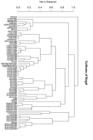
UPGMA dendrogram showing the grouping of the 71 walnut accessions studied based on their variation at nine SSR loci with Nei´s Genetic distance.
FST values were calculated among the clusters inferred from UPGMA based on Nei’s genetic distances, to quantify genetic differentiation (Table S3). Overall, significant differences among clusters were detected, supporting the inferred clustering pattern. Dendrograms serve as an effective tool for summarizing microsatellite data and can illustrate. The relationships and similarities among varieties (Dangl et al. 2005). In this study, we analyzed different accessions of the same varieties to verify the identity of the genotype. The dendrogram, in which six clusters were identified, showed that the accessions belonging to the same cultivar, such as the cases of Yaco Tula INTA, Davis INTA, Dennett INTA, California INTA and Jais Franquette INTA, are tightly related. Genetic relationships can also be observed in the cluster which grouped Aurora, Jaime Ciote, Padre Pío, AER Andalgalá, Valentina, 007 Agüero and 003 Agüero, all of them seedlings of Sunland. Similarly, similarities with the nut of Franquette variety was observed in the cluster that grouped accessions related to Franquette, Chichi Jais INTA (natural hybrid between Franquette x Wilson Wonder), Jais Franquette INTA (seedling Franquette), Del Saz INTA (Seedling Franquette), Condor Huasi (Franquette x Payne seedling) and Criolla Linda (Seedling local selection). Cluster grouped different accessions of Yaco Tula INTA with high level of similarity and Chandler blanca 01, Chandler amarillo and Chandler potrero, all of them seedlings of Chandler, which is parent of Yaco Tula INTA. Regarding Pulpera, it is a seedling derived from material introduced into Catamarca from J. regia germplasm from California. Pulpera was not used in breeding programs; consequently, it presents a distinct genetic background relative to the pool that characterizes walnut germplasm in Catamarca.
Structure analysis infers accession ancestry from genotypic information. The most likely number of clusters was evaluated considering the Evanno ΔK method. The highest value of ΔK was 3 (Supplementary Figure 2), thus all accessions were categorized into three major clusters (Figure 2): K1: 007 Agüero, 003 Agüero, AER Andalgalá, Aurora, Davis INTA, Dennett INTA, Howard, Jaime Ciote, Padre Pio, Ramillete INTA, Esquiú INTA, Sunland and Valentina; K2: California INTA, Chandler amarillo, Chandler potrero, Fernor, Pulpera, Trompito INTA and Yaco Tula INTA; and K3: A59, Argentina INTA, Chichi Jais INTA, Condor Huasi INTA, Criolla Linda, Del Saz INTA, Jais Franquette INTA, Jais Mayette INTA, Tulare, San Isidro, Sorrento and Wilson Wonder. The analysis showed relationships between the accessions: for example, most of K1 accessions are related to Sunland: 003 Agüero, 007 Agüero, AER Andalgalá, Aurora, Jaime Ciote, Padre Pio, Ramillete INTA, Valentina, and Esquiú INTA, this is similar to dendrogram. For K2, accessions are related to California INTA, Yaco Tula INTA, Trompito INTA and Chandler. Finally, most of K3 accessions are related to Franquette: Argentina INTA, Jais Franquette INTA, Chichi Jais INTA, Del Saz INTA and Condor Huasi INTA, the other accessions such as A59 or Criolla Linda were seedlings of unknown parents and both were grouped with different accessions in dendrogram and STRUCTURE.

Genetic structure results inferred by the Bayesian method for 71 walnut accessions based on nine SSR markers, using K=3 and K=5. The corresponding membership probability is presented in the vertical axis. Vertical bars represent each accession in this study, and bars are divided into several colors when there is evidence of admixture.
The second most probable ΔK corresponded to K = 5 (SI Figure 2), providing a finer subdivision of the genetic structure. For ΔK = 5 analysis (Figure 2) K1 includes accessions related to Sunland, K2 includes accessions California INTA, and Yaco Tula INTA, similar to ΔK=3. For K=3 and K=4, separated groups were observed, K=3 included Jais Franquette INTA and Del Saz INTA (both seedlings from Franquette), and K=4 included Davis INTA (Serr x Asley) and Dennett INTA (Howard x UC59-124). Finally, K=5 included Argentina INTA and Chichi Jais INTA. To support the STRUCTURE results, pairwise Fst among the groups inferred in ΔK3 and ΔK5 were calculated, and all comparisons gave significant results (P < 0.001) (SI Table 3). Both ΔK3 and ΔK5 offer complementary insights into the global genetic structure. Thus, the results obtained from the STRUCTURE analysis are consistent with the clustering of walnut genotypes obtained by UPGMA analysis.
Clustering patterns inferred from UPGMA were largely consistent with those obtained using STRUCTURE, supporting the identified genetic relationships, although some discrepancies were observed. Notably, the cluster comprising 003 Agüero, 007 Agüero, AERandalgala, Aurora, Jaimeciote, Padrepio, Sunland 01, Sunland 02, and Valentina, as well as the cluster comprising Esquiu01, Esquiu02, Ramillete01, Ramillete02, and Ramillete03 in the UPGMA dendrogram, corresponded to cluster K1 inferred by STRUCTURE under both K = 3 and K = 5. All these accessions are seedlings derived from Sunland.
In addition, this genetic analysis may enable the identification of distinct germplasm groups associated with key agronomic traits, such as yield characteristics (lateral or apical fruiting, nut size) and chilling requirements, thereby facilitating the expansion of walnut cultivation across different productive zones in Catamarca, particularly under the province’s diverse environmental conditions and in the context of climate change.
It is interesting to note that the results obtained with the set of SSR markers used in this study are also qualitatively similar (although it is not supported by statistical analysis) to the ancestry relationships described in the ancestry scheme proposed by Dangl (2005) and Tulecke and McGranahan (1994) and the pedigree relations of walnut cultivars with 12 varieties obtained by the INTA EEA Catamarca breeding program (Supplementary Figure 1).
In conclusion the present study is the first work to evaluate the genetic diversity of walnut in Catamarca and Argentina. The results revealed that the local germplasm has high genetic diversity and the set of primers used were efficient for the characterization of Persian walnut varieties. This study contributes to a better understanding of the genetic diversity within walnut germplasm collections, providing valuable information for crop conservation and improvement programs, as well as complementary information on molecular markers for variety registration. The certification of cultivars will contribute to greater reliability across the entire production chain, while also facilitating the tracing of the genetic lineage of prospective new cultivars (Jamali et al. 2019, Yu and Chung 2021, Poletto et al. 2024).
Data Availability Statement
The supplementary file and datasets used and analyzed during the current study are available from the corresponding author upon reasonable request.
REFERENCES
- Balapanov I, Suprun I, Stepanov I, Tokmakov S, Lugovskoy A2019 Comparative analysis Crimean, Moldavian and Kuban Persian walnut collections genetic variability by SSR-markersScientia Horticulturae 253:322-326
- Başak İ, Muradoğlu F, Özer G, Güler E2025 Genetic diversity assessment of promising walnut (Juglans regia L.) genotypes using RAPD, ISSR, and iPBS markersMitteilungen Klosterneuburg: Journal of Viticulture, Oenology, Pomology and Fruit Processing 75:115-130
- Bayazit S, Kazan K, Gülbitti S, Çevik V, Ayanoğlu H, Ergül A2007 AFLP analysis of genetic diversity in low chill requiring walnut (Juglans regia L.) genotypes from Hatay, TurkeyScientia Horticulturae 111:394-398
- Beise DC, Oliveira LO, Santos DD, Stefenon VM2022 Assessing genetic structure of Eugenia uniflora L. populations along an environmental gradient using a novel set of SSR markersSouth African Journal of Botany 149:530-536
- Bernard A, Barreneche T, Lheureux F, Dirlewanger E2018 Analysis of genetic diversity and structure in a worldwide walnut (Juglans regia L.) germplasm using SSR markersPLOS ONE 13:e0208021
- Bernard A, Lheureux F, Dirlewanger E2017 Walnut: past and future of genetic improvementTree Genetics & Genomes 14:1
- Botstein D, White RL, Skolnick M, Davis RW1980 Construction of a genetic linkage map in man using restriction fragment length polymorphismsAmerican Journal of Human Genetics 32:314-331
-
Carabajal DE, Colica JJ, Delgado EA, Fernandez F2024 El INTA Catamarca registró tres nuevas variedades de nogal (Juglans regia L.) en el INASE. Available at <Available at https://repositoriosdigitales.mincyt.gob.ar/vufind/Record/INTADig_d6bd78fea097b2b21c22b76240f104bb >. Accessed on March 2025.
» https://repositoriosdigitales.mincyt.gob.ar/vufind/Record/INTADig_d6bd78fea097b2b21c22b76240f104bb - Carabajal DE, Colica JJ, Prataviera AG, Delgado EA, Gariglio NF2022 Agronomic characterization of the ‘Trompito INTA’ Persian walnut cultivarAgricultural Research 11:429-435
- Chalbi A, Chikh-Rouhou H, Mezghani N, Slim A, Fayos O, Bel-Kadhi MS, Garcés-Claver A2023 Genetic diversity analysis of onion (Allium cepa L.) from the arid region of Tunisia using phenotypic traits and SSR markersHorticulturae 9:1098
- Chen L, Ma Q, Chen Y, Wang B, Pei D2014 Identification of major walnut cultivars grown in China based on nut phenotypes and SSR markersScientia Horticulturae 168:240-248
- Chikh-Rouhou H, Mezghani N, Mnasri S, Mezghani N, Garcés-Claver A2021 Assessing the genetic diversity and population structure of a Tunisian melon (Cucumis melo L.) collection using phenotypic traits and SSR molecular markersAgronomy 11:1121
- Çilesiz Y2025 Genetic diversity assessment of walnut (Juglans regia L.) genotypes from inner Anatolia region Türkiye using ISSR and RAPD markersScientific Reports 15:30850
- Cseke K, Bujdosó G, Báder M, Mertl T, Benke A, Kámpel JD2022 Genetic identification of hybrid walnuts (Juglans × Intermedia Carr.) in Hungary, the hidden potential for future breedingSustainability 14:4782
- Dangl GS, Woeste K, Aradhya MK, Koehmstedt A, Simon C, Potter D, Leslie CA, McGranahan G2005 Characterization of 14 microsatellite markers for genetic analysis and cultivar identification of walnutJournal of the American Society for Horticultural Science 130:348-354
- Di Pierro EA, Franceschi P, Endrizzi I, Farneti B, Poles L, Masuero D, Khomenko I, Trenti F, Marrano A, Vrhovsek U, Gasperi F, Biasioli F, Guella G, Bianco L, Troggio M2022 Valorization of traditional italian walnut (Juglans regia L.) production: Genetic, nutritional and sensory characterization of locally grown varieties in the Trentino regionPlants 11:1986
- Ebrahimi A, Zarei A, McKenna JR, Bujdoso G, Woeste KE2017 Genetic diversity of Persian walnut (Juglans regia) in the cold-temperate zone of the United States and EuropeScientia Horticulturae 220:36-41
- Evanno G, Regnaut S, Goudet J2005 Detecting the number of clusters of individuals using the software structure: A simulation studyMolecular Ecology 14:2611-2620
- Falush D, Stephens M, Pritchard JK2003 Inference of population structure using multilocus genotype data: linked loci and correlated allele frequenciesGenetics 164:1567-1587
-
FAOSTAT - Organización de las Naciones Unidas para la Alimentación y la Agricultura2025 Available at <Available at https://www.fao.org/faostat/es/#home >. Accessed on 01 March 2025.
» https://www.fao.org/faostat/es/#home - Foroni I, Woeste K, Monti LM, Rao R2007 Identification of ‘Sorrento’ walnut using simple sequence repeats (SSRs)Genetic Resources and Crop Evolution 54:1081-1094
- Gonçalves-Vidigal MC, Rubiano LB2011 Development and application of microsatellites in plant breedingCrop Breeding and Applied Biotechnology 11:66-72
- Guney M, Kafkas S, Keles H, Zarifikhosroshahi M, Gundesli MA, Ercisli S, Necas T, Bujdoso G2021 Genetic diversity among some walnut (Juglans regia L.) genotypes by SSR MarkersSustainability 13:6830
- Hassani SA, Sardoei AS, Ghorbanzadeh A, Bigloo HAG, Ghasemi H2022 Assessment of genetic diversity in Iranian apple genotypes using SSR markersInternational Journal of Horticultural Science and Technology 9:487-496
- Jamali SH, Cockram J, Hickey LT2019 Insights into deployment of DNA markers in plant variety protection and registrationTheoretical and Applied Genetics 132:1911-1929
- Jombart T, Ahmed I2011 adegenet 1.3-1: new tools for the analysis of genome-wide SNP dataBioinformatics 27:3070-3071
- Kabiri G, Bouda S, Elhansali M, Haddioui A2019 Genetic diversity and structure of walnut (Juglans regia L.) genotypes from Middle and High Atlas mountains of Morocco as investigated by Inter-Simple Sequence Repeat (ISSR) markersAustralian Journal of Crop Science 13:1983-1991
- Karimi R, Ershadi A, Vahdati K, Woeste K2010 Molecular characterization of Persian walnut populations in Iran with microsatellite markersHortScience 45:1403-1406
- Khokhlov SPE, Balapanov I, Suprun I, Tokmakov S2018 Identification of walnut cultivars from Nikita Botanical Gardens using SSR-markersActa Horticulturae 1208:47-52
- Li X, Wang X, Cui Z, Shi W, Huang J, Wang J2023 Development of polymorphic microsatellite markers and identification of applications for wild walnut (Juglans regia L.) in Middle AsiaDiversity 15:1073
- Li YL, Liu JX2018 StructureSelector: A web‐based software to select and visualize the optimal number of clusters using multiple methodsMolecular Ecology Resources 18:176-177
- Magige EA, Fan PZ, Wambulwa MC, Milne R, Wu ZY, Luo YH, Khan R, Wu HY, Qi HL, Zhu GF, Maity D, Khan I, Gao Gao, LM LM, Liu J2022 Genetic diversity and structure of Persian walnut (Juglans regia L.) in Pakistan: Implications for conservationPlants 11:1652
- Manthos I, Sotiropoulos T, Karapetsi L, Ganopoulos I, Pratsinakis ED, Maloupa E, Madesis P2023 Molecular characterization of local walnut (Juglans regia) genotypes in the North-East Parnon mountain region of GreeceInternational Journal of Molecular Sciences 24:17230
- McGranahan G, Leslie C2009 Breeding walnuts (Juglans regia). In McGranahan G, Leslie C and Gradziel TM (eds) Breeding plantation tree crops: Temperate species. Springer, New York, p. 249-273
- Mekapogu M, Lim SH, Choi YJ, Lee SY, Jung JA2025 Evaluation of genetic diversity and identification of cultivars in spray-type chrysanthemum based on SSR markersGenes 16:81
- Molnar T, Zaurov D, Eisenman S, Ford T, Nikolyi L, Funk R2011 Persian walnuts (Juglans regia L.) in Central AsiaAnnual Report of the Northern Nut Growers Association 101:56-69
- Nei M1972 Genetic distance between populationsThe American Naturalist 106:283-292
- Nickravesh MH, Vahdati K, Amini F, Di Pierro EA, Amiri R, Woeste K, Arab MM2023 Reliable propagation of Persian walnut varieties using SSR marker-based true-to-type validationHortScience 58:64-66
- Nurzhuma M, Kokhmetova A, Kumarbayeva M, Keishilov Z, Bakhytuly K, Bolatbekova A, Kokhmetova A, Mukhametzhanov K, Akan K2025 Assessment of genetic diversity in walnut (Juglans regia L.) genotypes from Southern and Southeastern Kazakhstan using microsatellite markersHorticulturae 11:810
- Orhan E, Eyduran SP, Poljuha D, Akin M, Weber T, Ercisli S2020 Genetic diversity detection of seed-propagated walnut (L.) germplasm from Eastern Anatolia using SSR markersFolia Horticulturae 32:37-46
- Peakall R, Smouse PE2012 GenAlEx 6.5: Genetic analysis in Excel. Population genetic software for teaching and research - an updateBioinformatics 28:2537-2539
- Plugatar Y, Suprun II, Khokhlov S, Stepanov IV, Al-Nakib EA2023 Comprehensive agrobiological assessment and analysis of genetic relationships of promising walnut varieties of the Nikitsky Botanical GardensVavilov Journal of Genetics and Breeding 27:454
- Poletto T, Poletto I, Marques CEC, Silva AKS, Kubenka K, Chatwin W, Gailing O, Stefenon VM2024 CertiBase: A genetic database for cultivar certification and genetic breeding of pecan in BrazilCrop Breeding and Applied Biotechnology 24:e493924310
- Pollegioni P, Woeste K, Olimpieri I, Marandola D, Cannata F, Malvolti ME2011 Long-term human impacts on genetic structure of Italian walnut inferred by SSR markersTree Genetics & Genomes 7:707-723
- Pritchard JK, Stephens M, Donnelly P2000 Inference of population structure using multilocus genotype dataGenetics 155:945-959
-
R Core Team2025 R: A language and environment for statistical computing. R Foundation for Statistical Computing, Vienna. Available at <https://www.r-project.org/>.
» https://www.r-project.org/ - Ruiz-García L, Ortega G, Denia A, Frutos D2011 Identification of a walnut (Juglans regia L.) germplasm collection and evaluation of their genetic variability by microsatellite markersSpanish Journal of Agricultural Research 9:179-192
- Shah UN, Mir JI, Ahmed N, Fazili KM2018 Assessment of germplasm diversity and genetic relationships among walnut (Juglans regia L.) genotypes through microsatellite markersJournal of the Saudi Society of Agricultural Sciences 17:339-350
- Shavvon RS, Qi HL, Mafakheri M, Fan PZ, Wu HY, Vahdati FB, Al-Shmgani HS, Wang YH, Liu J2023 Unravelling the genetic diversity and population structure of common walnut in the Iranian PlateauBMC Plant Biology 23:201
- Solar A, Ivancic A, Stampar F, Hudina M2000 Genetic resources for walnut (Juglans regia L.) improvement in Slovenia. Evaluation of the Largest Collection of Local GenotypesGenetic Resources and Crop Evolution 49:491-501
- Suprun I, Stepanov I, Anatov D2025 Analysis of genetic diversity and relationships of local walnut populations in the Western Caspian region of the North CaucasusHorticulturae 11:65
- Tao L, Ting Y, Chen H, Wen H, Xie H, Luo LY, Huang K, Zhu J, Liu SR, Wei CL2023 Core collection construction of tea plant germplasm in Anhui Province based on genetic diversity analysis using simple sequence repeat markersJournal of Integrative Agriculture 22:2719-2728
- Tulecke W, McGranahan G1994 Appendix 1. In Tulecke W and McGranahan G (eds) The walnut germplasm collection of the University of California, Davis. University of California Genetic Resources Conservation Program, Davis, p. 35
- Vahdati K, Pourtaklu SM, Karimi R, Barzehkar R, Amiri R, Mozaffari M, Woeste K2015 Genetic diversity and gene flow of some Persian walnut populations in southeast of Iran revealed by SSR markersPlant Systematics and Evolution 301:691-699
- Van Oosterhout C, Hutchinson WF, Wills DP, Shipley P2004 MICRO‐CHECKER: software for identifying and correcting genotyping errors in microsatellite dataMolecular Ecology Notes 4:535-538
- Wani AW, Hassan GI, Bhat KM, Ahmad M, Siddiqui MH, Kumar S, Naresh RK, Gupta RK2024 Utilizing SSR markers to examine the population structure and molecular genetic diversity of walnut (Juglans regia L.) genotypes in the Northwestern Himalayan region of Jammu and KashmirBioResources 19:4213-4237
- Wickham H2016 ggplot2: Elegant graphics for data analysis. In Wickham H (ed) Appendices. Springer International Publishing, Cham, 189-201.
- Woeste K, Burns R, Rhodes O, Michler C2002 Thirty polymorphic nuclear microsatellite loci from black walnutJournal of Heredity 93:58-60
- Woodworth R1930 Meiosis of microsporogenesis in the Juglandaceae. American Journal of Botany: 863-869.
- Yu JK, Chung YS2021 Plant variety protection: Current practices and insightsGenes 12:1127
- Zhang J, Yang J, Lv Y, Zhang X, Xia C, Zhao H, Wen C2023 Genetic diversity analysis and variety identification using SSR and SNP markers in melonBMC Plant Biology 23:39
- Zhang S, Li Y, Li Y, Zhang Y, Hao Y, Hou Z, Qi J2024 Development of SSR markers for and fingerprinting of walnut genetic resourcesForests 15:405
Edited by
-
SCIENTIFIC EDITOR:
Luiz Antônio dos Santos Dias