 Marker-assisted selection for tomato spotted wilt virus (TSWV) resistance in Italian tomato genotypes
ABSTRACT
The tomato (Solanum lycopersicum L.) is one of the most important vegetables from an economic, social, and nutritional point of view, being widely consumed throughout the world, both fresh and processed. Due to its importance, this crop is a constant focus of genetic improvement programs that seek to develop superior genotypes, such as higher quality, yield, and disease resistance. Thus, the aim of this study was to select experimental indeterminate Italian tomato hybrids with high yield, superior fruit quality, and resistance to TSWV (tomato spotted wilt virus) via molecular markers. The trial was conducted in the municipality of Ijaci, southern Minas Gerais, Brazil. A randomized block design was used, with 16 hybrids (12 experimental and 4 commercial controls), four replications, and five plants per plot. Evaluations were carried out for yield, fruit quality, and resistance to TSWV under natural infection and through molecular markers to identify the Sw5 gene. Six experimental hybrids stood out in terms of high yield, with hybrid TO-014 being superior to the others, presenting better size and higher commercial classification. Most genotypes showed few defects, revealing good qualitative characteristics, with the exception of three hybrids (TO-004, TO-042, and TO-134), which demonstrated greater susceptibility to TSWV. Seven experimental hybrids were considered resistant to TSWV because they carry the Sw-5 gene and did not show symptoms of infection in the field. Six of these hybrids also stood out in terms of yield and fruit quality, demonstrating that resistance to the virus has a direct impact on productive characteristics.
Index terms:
Solanum lycopersicum L.; hybrids; fruit yield; fruit quality; Sw-5 gene
RESUMO
O tomateiro (Solanum lycopersicum L.) é uma das hortaliças mais relevantes do ponto de vista econômico, social e nutricional, sendo amplamente consumido em todo o mundo, tanto na forma in natura quanto industrializada. Devido à sua importância, essa cultura é foco constante de programas de melhoramento genético que buscam desenvolver genótipos superiores, como maior qualidade, produtividade e resistência a doenças. Assim, o objetivo deste estudo foi selecionar híbridos experimentais de tomate, italiano indeterminado, com alta produtividade, qualidade superior de frutos e resistência ao TSWV (tomato spotted wilt vírus) via marcadores moleculares. O experimento foi conduzido no município de Ijaci, sul de Minas Gerais, BRASIL. Utilizou-se o delineamento em blocos ao acaso, com 16 híbridos (12 experimentais e 4 controles comerciais), quatro repetições e cinco plantas por parcela. As avaliações foram realizadas para produtividade, qualidade de frutos e resistência ao TSWV sob infecção natural e através de marcadores moleculares para identificar o gene Sw5. Seis híbridos experimentais se destacaram quanto à produtividade sendo o híbrido TO-014 superior aos demais apresentando melhor tamanho e maior classificação comercial. A maioria dos genótipos apresentaram poucos defeitos, revelando boas características qualitativas, com exceção de três híbridos (TO-004, TO-042 e TO-134), que mostraram maior suscetibilidade ao TSWV. Sete híbridos experimentais foram considerados resistentes ao TSWV por carregarem o gene Sw-5 e não apresentarem sintomas de infecção no campo. Seis desses híbridos também se destacaram quanto à produtividade e qualidade de frutos, evidenciando que a resistência ao vírus tem impacto direto sobre características produtivas.
Termos para indexação:
Solanum lycopersicum L.; híbridos; produtividade de frutos; qualidade de frutos; gene Sw-5.
Introduction
Tomato (Solanum lycopersicum L.), a member of the Solanaceae family, is among the most widely cultivated and consumed vegetables worldwide (Food and Agriculture Organization of the United Nations - FAOSTAT, 2022; Quinet et al., 2019). In BRAZIL, the species holds significant economic and social importance due to its large cultivated areas and its substantial contribution to employment generation (Bissacotti et al., 2021). This importance is mainly attributed to its pleasant flavor (Li et al., 2020), affordable price (Salehi, 2019), relatively short growth cycle, high yield, and high nutritional value (Li et al., 2018). The crop is rich in various health-promoting compounds, such as vitamins, phenolic compounds, and carotenoids with antioxidant and anticancer properties (Formisano et al., 2021; Shah et al., 2021).
Brazilian consumers predominantly prefer fresh tomatoes. In this context, the qualitative traits of the fruits are key determinants for market acceptance, as they directly influence purchasing decisions (Zayat et al., 2022). Studies indicate a preference for tomatoes with uniform red coloration, high firmness, absence of injuries, and elongated forms rather than round fruits (Silva et al., 2013; Peixoto et al., 2017). It is also noteworthy that fruit size and shape are among the main quality attributes driving these preferences (Bertin & Génard, 2018). For this reason, there has been a growing market demand for Italian tomato hybrids, which have shown excellent yields in recent years (Furquim et al., 2024). In addition to their favorable size, this tomato type also presents good organoleptic quality, thick pericarp, high soluble solids content, and pleasant texture and aroma, which contribute to higher added value in the market (Seabra Junior et al., 2022; Vieira et al., 2018).
Despite these advantages, the production system for Italian tomatoes still faces several challenges. Among them, the most prominent is the simultaneous need for cultivars that are both high-yielding and resistant to the main diseases affecting the crop, especially in open-field cultivation, which is predominant in most regions of the country (Furquim et al., 2024). The commercial tomato market is highly demanding, and there is a concurrent need for cultivars with superior fruit quality (Nascimento et al., 2023). Therefore, the development of hybrids that combine high productivity, fruit quality, and resistance to the main diseases affecting the crop is of great importance for growers (Acharya et al., 2018; Tamta & Singh, 2017; Vieira et al., 2018; Vijeth et al., 2018).
Among the primary diseases that reduce tomato yield and compromise fruit quality worldwide, viral infections are particularly notable, especially those caused by Orthotospovirus tomatomaculae (tomato spotted wilt virus, TSWV), the causal agent of the disease commonly known as “vira-cabeça” (Lima & Michereff Filho, 2015; Panno et al., 2021). The disease can reduce marketable fruit production by up to 96%, causing significant damage to the crop (Gupta et al., 2018; Islam et al., 2022; Quartezani et al., 2018), which may render the cultivation of susceptible varieties unviable in regions where the pathogen is present. TSWV was first reported in Brazil in the 1990s, initially in production areas in the states of Minas Gerais and Pernambuco (Resende et al., 1996). Since then, the virus has gradually spread across major tomato-producing regions, representing a continuous threat to production (Lima & Michereff Filho, 2015). The first symptoms observed in infected plants include growth arrest, curling and bronzing of young leaves, appearance of small dark brown spots, and purple downward-arching veins. Leaves and fruits develop characteristic dark concentric rings, along with inhibition of the main shoot, which prevents plant development (Costa & Ventura, 2010; García-Estrada et al., 2022).
The incidence and severity of TSWV symptoms are influenced by several factors, especially the presence of insect vectors (Nachappa et al., 2020), plant age at infection, and climatic conditions (Fajardo et al., 2000). The interaction between these environmental factors and disease epidemiology creates uncertainty when identifying resistant tomato genotypes based solely on natural field infection (Qi et al., 2021). Advances in genetic engineering and the growing use of molecular markers have enabled the mapping of genes of interest in tomato (Kim et al., 2020; Osei et al., 2019). In marker-assisted selection, molecular markers closely linked to resistance genes increase selection accuracy while reducing time and costs in breeding programs (Chitwood-Brown et al., 2021; Hasan et al., 2021). In tomato, eight resistance loci to TSWV have been identified in cultivated and wild genotypes: Sw-1a, Sw-1b, sw-2, sw-3, sw-4, Sw-5, Sw-6, and Sw-7 (Qi et al., 2021). Among these, Sw-5 has been cloned due to its effectiveness against TSWV (Brommonschenkel et al., 2000; Oliveira et al., 2018). The Sw-5 locus contains six homologous paralogous genes-Sw-5a, Sw-5b, Sw-5c, Sw-5d, Sw-5e, and Sw-5f (Oliveira et al., 2018). However, only Sw-5b confers broad-spectrum resistance to multiple TSWV isolates and other orthotospoviruses (Qi et al., 2022; Tong et al., 2023; Zhu et al., 2017), and is widely used in breeding programs (Huang et al., 2021), although resistance breakdown has already been reported (Fidan & Sari, 2019; Rodríguez-Negrete et al., 2023).
Marker-assisted selection for disease resistance is widely used in public and private breeding programs (Foolad & Panthee, 2012). However, there is a lack of studies focusing specifically on Italian tomatoes that integrate molecular approaches with traits related to yield and fruit quality. Therefore, the aim of this study was to evaluate experimental hybrids of indeterminate Italian tomatoes that combine high yield, superior fruit quality, and resistance to TSWV through marker-assisted selection.
Material and Methods
General experimental conditions
The agronomic trial was conducted under field conditions from February to July 2022 at the Center for Development and Technology Transfer (CDTT) of the Federal University of Lavras (UFLA), located in Ijaci, Minas Gerais, Brazil (21°10′S, 44°55′W; altitude 832 m). According to the Köppen classification, the region has a Cwb/Cwa climate, characterized as humid mesothermal, tropical highland, with mild summers. The average annual temperature is 19.4 °C, and mean annual rainfall is 1,530 mm, with precipitation concentrated between November and February (Prefeitura de Ijaci, 2018). During the experimental period, the mean daily maximum temperature was 27.8 °C and the mean daily minimum was 14.9 °C (Instituto Nacional de Meteorologia - INMET, 2025).
Treatments and experimental design
The trial followed a randomized complete block design (RCBD) with 16 genotypes, four replications, and five plants per plot. Twelve experimental indeterminate Italian tomato hybrids were evaluated (TO-001, TO-004, TO-012, TO-014, TO-042, TO-084, TO-085, TO-087, TO-088, TO-133, TO-134, and TO-137). Four commercial hybrids (Caniati, Colt, Gyottone, and Danona) were included as controls. Caniati and Colt were considered resistant controls for TSWV; Gyottone and Danona were used as susceptible controls.
Caniati (Syngenta®) is an indeterminate Italian tomato hybrid with high yield potential and resistance to TSWV, valued for fruit firmness, color, and shape (Syngenta®, 2024). Colt (HM Clause®) also produces uniform clusters of firm fruits and exhibits resistance to TSWV and Geminivirus, favoring its adaptability to multiple seasons (HM Clause®, 2024). Gyottone (East West Seed®) performs well in tropical climates but lacks resistance to TSWV (East West Seed®, 2024). Danona (East West Seed®) produces vigorous plants and high-quality fruits but is susceptible to TSWV.
Field establishment and management
Soil pH was corrected according to soil analysis. Dolomitic limestone (3 t ha⁻¹) was applied, and the soil was plowed and harrowed to a depth of 20 cm. Raised beds were prepared and fertilized with 150 g m⁻² of single superphosphate and 200 g m⁻² of NPK 04-14-08, incorporated with a rotary tiller. Drip irrigation lines were installed and covered with plastic mulch.
Seedlings were produced in 128-cell trays and grown in a greenhouse until they developed four to five true leaves. Transplanting took place on March 10, 2022, at 0.70 m × 1.20 m spacing. Each plot consisted of five plants.
Plants were trained with two stems supported by nylon twines attached to stakes and wires. Suckering was performed weekly, leaving the lateral shoot below the first cluster to form the second stem. Apical pruning was conducted once plants reached approximately 2 m in height.
Irrigation was applied using drip tapes with a flow rate of 1.6 L h⁻¹. Fertigation was performed weekly with soluble fertilizers according to crop recommendations (Trani, Tivelli, & Carrijo, 2011), starting two weeks after transplanting.
Phytosanitary management followed preventive and demand-based applications of agrochemicals registered for tomato crops, respecting recommended doses and pre-harvest intervals (AGROFIT, 2024).
Agronomic evaluations
Harvesting began around 90 days after transplanting (DAT) and continued for 30 days, with five harvests at seven-day intervals. The following traits were evaluated:
a) Total yield (t ha⁻¹): total fruit weight per plot divided by the number of plants, multiplied by 12,000 plants ha⁻¹, and expressed in t ha⁻¹.
b) Boxes per thousand plants: total production per plot divided by number of plants, multiplied by 1,000, and divided by 20 kg (weight of one commercial box).
c) Number of fruits per plant: total number of fruits harvested in the plot divided by number of plants.
d) Average fruit weight (g fruit⁻¹): total fruit weight divided by number of fruits.
e) Yield by fruit class: classification into 3A, 2A, and 1A categories following size/diameter rules (Rodrigues, Zambon, & Muraro, 2007). Weights were converted to t ha⁻¹.
f) Fruit diameter and length: three fruits per class were measured using a calibrated ruler for classification validation.
g) Fruit rejection: defective fruits were classified according to Normative Instruction No. 33 (Brasil, 2018) and expressed as percentage of total harvested fruits.
Statistical analysis
Statistical analyses were performed in R (R Core Team, 2024). ANOVA was conducted using the F-test (5% significance). Residual normality was verified with the Shapiro-Wilk test, and variance homogeneity with Bartlett’s or Levene’s test (car package). When necessary, data transformations were applied. Significant means were grouped with the Scott-Knott test (agricolae package) at 5%.
Resistance analysis to TSWV by natural infection and molecular markers
Symptomatic plants were evaluated monthly from transplanting to the end of harvest, totaling six assessments. Evaluations were conducted on five plants per plot with four replications, resulting in a total of 20 plants per genotype. The symptoms assessed included leaf bronzing, purpling, apical stunting, necrotic rings, and characteristic fruit lesions (Amorim et al., 2016; Inoue-Nagata, Lopes, & Ávila, 2005; Lv et al., 2023). Infection incidence per plot was calculated as a percentage.
For laboratory evaluation, leaf tissue samples were collected from each plot, pooled by genotype, and stored at −20 °C for subsequent molecular analyses.
DNA was extracted following Lodhi et al. (1994), with modifications. DNA integrity was checked on 0.7% agarose gel.
PCR was performed using primers Sw-5-2 (Dianese et al., 2010) to detect the Sw-5 resistance allele. Reaction conditions followed standard protocols (Dianese et al., 2010; Oliveira et al., 2015). PCR products were resolved on 1% agarose gel stained with Gel Red and visualized using a MiniBis Pro system (DNR Bio-Imaging Systems®).
Results and Discussion
Productivity and fruit quality
The hybrids Caniati, TO-084, TO-088, TO-014, TO-085, Gyottone, TO-001, Colt, and TO-087 exhibited the highest fruit yields, ranging from 102.78 to 132.54 t ha⁻¹ (Table 1).
Consequently, these hybrids also stood out in terms of the number of boxes per thousand plants, with values between 428.25 and 552.25 boxes. Since this unit is widely used by Brazilian tomato growers to express crop productivity, and represents merely a conversion of total yield, the performance trends of both variables were consistent. According to data from the Municipal Agricultural Production survey (Instituto Brasileiro de Geografia e Estatística -IBGE, 2023), the national average tomato yield in 2023 was 70.6 t ha⁻¹, with Goiás achieving the highest mean productivity (85.7 t ha⁻¹) and Minas Gerais reaching 75 t ha⁻¹. In this context, most hybrids evaluated in the present study markedly outperformed the national average, with commercial and experimental genotypes showing increases ranging from 45.6% to 87.7%. These results highlight the potential of these hybrids to improve the productive efficiency of the crop.
Tomato production can be conducted under different training and crop management systems (Wamser et al., 2007; Almeida et al., 2015), which may influence productivity and fruit quality depending on the genotype. Even so, the yields obtained in this study exceeded those commonly reported in the literature for similar cultivation systems. For example, Dalastra et al. (2020), when evaluating indeterminate Italian tomato cultivars under the same training system adopted here, recorded a maximum yield of 69.24 t ha⁻¹ for the cultivar Giuliana, a value considerably lower than those observed in the present research. Likewise, Zamban et al. (2018), studying the application of calcium and boron in indeterminate Italian hybrids, reported a maximum yield of 52.8 t ha⁻¹ for the hybrid Netuno.
Although few studies have been conducted under cultivation and training conditions comparable to those used here, all cited works reported maximum yields lower than those achieved by the top-performing hybrids in this study, reinforcing their agronomic potential. Nevertheless, the varietal group grown may substantially influence productive potential. Silva et al. (2023), for instance, reported yields ranging from 134.87 to 164.40 t ha⁻¹ in experiments with indeterminate salad-type hybrids under a similar training system.
Regarding commercial fruit classification, hybrid TO-014 showed the highest concentration of fruits in the largest category (3A), representing 28.45% of its total production (Table 1). Overall, fruit production in all hybrids was predominantly concentrated in categories 2A and 1A. The experimental hybrids TO-084, TO-088, and TO-085, as well as the commercial hybrids Caniati, Gyottone, and Colt, stood out in category 2A, with values ranging from 45.4% to 52%. With the exception of Gyottone, these hybrids-along with TO-087, TO-133, TO-134, TO-012, and the commercial hybrid Danona-also showed a high proportion of fruits in category 1A, with values similar to those obtained in category 2A. Identifying hybrids capable of producing larger fruit is a relevant strategy for growers because fruit size is strongly associated with market value (Parca et al., 2019). Larger fruits contribute to higher average fruit weight and tend to achieve superior commercial prices. Therefore, for Italian-type tomatoes, categories 3A and 2A are the most desirable, with the former representing the highest value class.
Significant differences were not observed among hybrids for the number of fruits per plant (Table 1), with an overall mean of 58.43 fruits per plant recorded in the experiment. In contrast, the average fruit weight differed significantly among hybrids, with Gyottone and TO-014 standing out, reaching 184.65 and 189.30 g fruit⁻¹, respectively. These values are consistent with the superior performance of TO-014 in the 3A fruit size category and reinforce that fruit size is as important as fruit number for commercial production. A high fruit load is not advantageous if fruits fail to reach desirable size without thinning, a labor-demanding practice. Therefore, fruit size classification is a key parameter in breeding programs. The fruit number and average weight values obtained in this study exceed those reported by Berni et al. (2019), who evaluated indeterminate Italian tomato hybrids grown in substrate in Manaus, AM, and recorded maximum averages of 44.8 and 41.8 fruits per plant for the cultivars Cordillera and Vivacy, respectively, and a maximum fruit weight of 132.8 g fruit⁻¹ for BRS Nagai. These results highlight the high productive and qualitative potential of the hybrids Gyottone and TO-014 for cultivation in southern Minas Gerais and likely for other regions where large, high-quality fruits are required.
In the study conducted by Shirahige et al. (2010), the commercial hybrid Sahel exhibited the highest average fruit weight (172.9 g fruit⁻¹), although this result was achieved only through fruit thinning, a practice that considerably increases production costs. In contrast, the hybrids Gyottone and TO-014 in the present study reached high average fruit weights without thinning, a desirable attribute for growers aiming to reduce labor costs.
Regarding the biometric traits used for fruit classification, significant differences among hybrids were observed only in the fruit length of category 2A, although the magnitude of variation was small (Table 2). This indicates the effectiveness and consistency of the manual biometric classification adopted in this study. The overall mean fruit lengths for categories 3A, 2A, and 1A were 9.17, 8.41, and 7.42 cm, respectively, while the corresponding mean diameters were 7.49, 6.44, and 5.69 cm. Proper pre-classification of fruits is essential to ensure uniformity, facilitate handling, and reduce losses along the distribution chain (Chitarra & Chitarra, 2005). The selection and correct implementation of classification methods-manual or mechanized-are fundamental for achieving standardized batches and obtaining superior market value.
The measurements presented in Table 2 show that all hybrids produced fruits with greater length than diameter, consistent with the characteristics of the Italian tomato varietal group, which is defined by elongated fruit shapes (Vieira et al., 2018). According to Normative Instruction No. 33 of July 18, 2018 (Brasil, 2018), these hybrids can therefore be classified as producing oblong fruits.
Regarding the qualitative attributes of the hybrids, no significant differences were observed in the percentage of fruits exhibiting deformities, cracks (concentric, radial, or microcracks), or open locules (Table 3).
The incidence of these defects was below 3%, a level considered low and agronomically satisfactory, as reduced defect rates minimize fruit discard and, consequently, financial losses for growers. It is important to highlight that external defects such as cracks and blemishes directly compromise fruit appearance-an essential characteristic for consumer acceptance and market value, since visually appealing fruits tend to reach higher commercial prices (Oltman et al., 2014). In contrast, the incidence of perforated or spotted fruits varied significantly among hybrids. In 81.2% of the genotypes, these damages were minimal, ranging from 0.77% to 7.67%. However, the hybrids TO-042 (15.52%), TO-004 (13.62%), and TO-134 (8.90%) exhibited the highest levels of damage. This may be attributed to the fact that some plants in the experiment, including those of the hybrids with the highest spotted-fruit incidence, displayed characteristic symptoms of TSWV infection during fruiting and harvesting, which likely increased their susceptibility to blemish formation.
Defects observed in tomato genotypes may arise from physiological, entomological, pathological, or mechanical causes. Although such defects do not alter the nutritional value of the fruit, their presence markedly reduces marketability (Ferreira, Freitas, & Lazzari, 2004; Seabra Junior et al., 2022). To minimize the occurrence and impact of these disorders, it is essential to adopt appropriate management strategies, including adequate irrigation practices, balanced fertilization, careful handling during harvest, and the use of cultivars with resistance to diseases, blemishes, and cracking. These measures contribute to maintaining fruit quality and ensuring greater commercial value.
Viral resistance analysis
The electrophoretic analysis of genomic DNA (Figure 1) revealed the amplification patterns obtained from the genotyping of the evaluated entries.
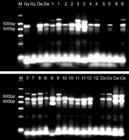
Electrophoretic profile of genomic DNA amplification of indeterminate Italian tomato hybrids (two replicates per hybrid) using primer Sw-5-2. Lavras, southern Minas Gerais state, Brazil. M = 1 kb marker (Cellco); Gy = ‘Gyottone’ (susceptible control); Da = ‘Danona’ (susceptible control); Co = ‘Colt’ (resistant control); Ca = ‘Caniati’ (resistant control); 1 = TO-001; 2 = TO-004; 3 = TO-012; 4 = TO-014; 5 = TO-042; 6 = TO-084; 7 = TO-085; 8 = TO-087; 9 = TO-088; 10 = TO-133; 11 = TO-134; 12 = TO-137.
The correspondence between each entry and the interpretation of the resulting band profiles is presented in Table 4, along with the percentage of TSWV incidence observed under field conditions. Genotyping with the molecular marker Sw-5-2 was performed on both experimental and commercial hybrids, resulting in two distinct DNA banding patterns (Figure 1), which indicate the resistance status of each genotype to TSWV.
The presence of two bands at approximately 464 bp and 574 bp in the electrophoretic profile is interpreted as heterozygosity in the genomic region amplified by the marker; in other words, these hybrids possess one resistant allele and one susceptible allele. This distinction is possible because the molecular marker Sw-5-2 is codominant, which allows the simultaneous detection of both resistant and susceptible alleles. In codominant markers, heterozygous individuals (carrying two different alleles for the gene of interest) show a distinct two-band pattern (Dianese et al., 2010). This pattern was observed in the experimental hybrids TO-001, TO-012, TO-014, TO-084, TO-085, TO-087, and TO-088 (Table 4), indicating that they are heterozygous resistant. No hybrid, whether commercial or experimental, was classified as homozygous resistant.
In contrast, homozygous individuals exhibit only a single band corresponding to either the resistant or the susceptible allele. This pattern was observed in the experimental hybrids TO-004, TO-042, TO-133, TO-134, and TO-137 (Table 4), which demonstrated an amplification fragment of approximately 464 bp, similar to that of the two susceptible controls (Gyottone and Danona), and are therefore considered susceptible.
In practical terms, the use of this codominant marker enables the precise identification of hybrids carrying resistance to TSWV in the heterozygous state, a crucial factor in the development of resistant cultivars. These hybrids are particularly valuable, as resistance to TSWV is one of the most desirable traits in tomato breeding due to the economic impact caused by the virus and the difficulty of controlling it through other measures. The study by Dianese et al. (2010) further reinforces the importance of molecular markers in plant breeding, as techniques such as electrophoresis allow direct genotype analysis, facilitating the identification of homozygous and heterozygous individuals.
Furthermore, it is noteworthy that all hybrids classified as resistant based on the electrophoretic profile (Figure 1) showed no incidence of TSWV under natural field infection conditions (Table 4), supporting the effectiveness of the resistance gene in practical scenarios. Conversely, hybrids classified as susceptible exhibited some degree of apparent viral infection in the field, indicating the absence of mechanisms capable of preventing symptom expression.
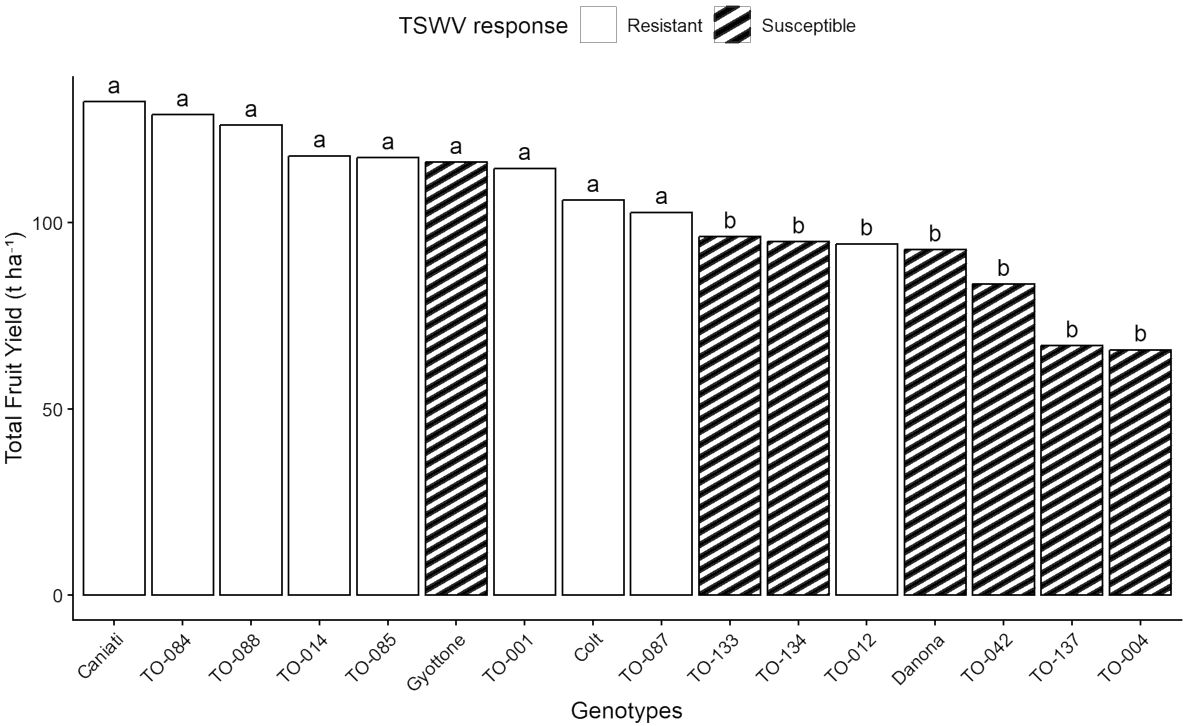
It is also important to highlight that all experimental and commercial hybrids with the highest total yield demonstrated resistance to TSWV, with the exception of the commercial hybrid Gyottone (Figure 2). Among these, the experimental hybrid TO-014 stands out, as it not only exhibited high productivity but also achieved the highest yield in the 3A category, a result attributed to its high average fruit weight. On the other hand, the experimental hybrids TO-004, TO-042, and TO-134 performed poorly due to their higher percentage of blemished fruits. This can be attributed to the absence of resistance alleles to TSWV, which led to a more pronounced manifestation of disease symptoms in the plants and fruits of these hybrids. These findings reinforce the importance of TSWV resistance, as viral infection can cause substantial losses in both yield and fruit quality. The presence of the virus in susceptible plants reduces productivity and increases the proportion of defective fruits, thereby decreasing the commercial value of the harvest (Kabaş et al., 2021). Thus, in addition to providing greater precision, the use of molecular markers proves to be a valuable tool that accelerates the development of new cultivars by optimizing the time and resources required in breeding programs (Hasan et al., 2021).

Relationship between productivity and the presence of the Sw-5 gene for TSWV resistance, comparing hybrids carrying the gene with those lacking it. Lavras, southern Minas Gerais, Brazil.
On the other hand, caution is required, as the effectiveness of the TSWV resistance gene may be compromised depending on factors such as location, climate, and the timing of insect infestation, which can lead to the emergence of new viral variants and the breakdown of resistance (Lopez et al., 2011). It is noteworthy that the Sw-5 gene is present in several commercial cultivars widely cultivated in Brazil and other countries and has shown considerable durability over time. Under high disease pressure, temporary reductions in yield may occur due to partial resistance breakdown; however, the Sw-5 gene may subsequently regain effectiveness.
Conclusions
All hybrids showed high yield, especially TO-001, TO-014, TO-084, TO-085, TO-087, and TO-088; TO-014 also produced superior commercial-grade fruits. Most genotypes showed similar fruit quality, though TO-004, TO-042, and TO-134 were more susceptible to TSWV-related blemishes. Genotyping confirmed TSWV resistance in TO-001, TO-012, TO-014, TO-084, TO-085, TO-087, and TO-088, supporting their potential to maintain yield and fruit quality under virus pressure. These hybrids outperform commercial controls and warrant broader evaluation for future release.
Data Availability Statement
Data available upon request to authors.
References
- Acharya, B. et al. (2018). Breeding tomato for simultaneous improvement of processing quality, fruit yield, and dual disease tolerance. International Journal of Vegetable Science, 24(5):407-423.
-
AGROFIT. (2024). Sistema de Agrotóxicos fitossanitários. Ministério da Agricultura, Pecuária e Abastecimento. Available in: <https://www.gov.br/agricultura/pt-br/acesso-a-informacao/tecnologia-da-informacao/sistemas/orgaos/mapa/vegetal/agrofit-sistema-de-agrotoxicos-fitossanitarios>.
» https://www.gov.br/agricultura/pt-br/acesso-a-informacao/tecnologia-da-informacao/sistemas/orgaos/mapa/vegetal/agrofit-sistema-de-agrotoxicos-fitossanitarios - Almeida, V. S. et al. (2015). Sistema Viçosa para o cultivo de tomateiro. Horticultura Brasileira, 33(1):74-79.
- Amorim, L. et al. (2016). Manual de fitopatologia: Doenças das plantas cultivadas (5th ed.). Agronômica Ceres.
- Berni, R. et al. (2019). Desempenho agronômico de cultivares de tomateiro tipo italiano sob cultivo em substrato na região de Manaus, AM Manaus: Embrapa Amazônia Ocidental (Boletim de Pesquisa e Desenvolvimento), 19p.
- Bertin, N., & Génard, M. (2018). Tomato quality as influenced by preharvest factors. Scientia Horticulturae, 233:264-276.
- Bissacotti, A. P. et al. (2021). Tomate: Botânica, produção, composição nutricional e benefícios à saúde. Cadernos de Ciência & Tecnologia, 38(2):e26643.
- Brasil. Ministério da Agricultura, Pecuária e Abastecimento. (2018). Instrução Normativa nº 33, de 18 de julho de 2018. Diário Oficial da União, Seção1, Edição: 142, p. 3, 25 julho de 2018.
- Brommonschenkel, S. H. et al. (2000). The broad-spectrum tospovirus resistance gene Sw-5 of tomato is a homolog of the root-knot nematode resistance gene Mi. Molecular Plant-Microbe Interactions, 13(10):1130-1138.
- Chitarra, M. I. F., & Chitarra, A. B. (2005). Pós-colheita de frutas e hortaliças: Fisiologia e manuseio (2nd ed.). Lavras-MG: Editora UFLA.
- Chitwood-Brown, J. et al. (2021). Breeding for resistance to fusarium wilt of tomato: A review. Genes, 12(11):1673.
- Costa, H., & Ventura, J. A. (2010). Doenças do tomateiro no estado do Espírito Santo: Reconhecimento e manejo. In Instituto Capixaba de Pesquisa, Assistência Técnica e Extensão Rural- Incaper. Tomate Vitória, ES: Incaper, (pp.227-317).
- Dalastra, G. M. et al. (2020). Trocas gasosas e produtividade de tomateiro com diferentes hastes por planta. Iheringia, Série Botânica, 75:e2020020.
- Dianese, E. C. et al. (2010). Development of a locus-specific codominant SCAR marker for assisted selection of the Sw-5 gene cluster. Molecular Breeding, 25:133-142.
-
EastWestSeed. (2024). Cultivos - Tomate Available in: <https://br.eastwestseed.com/cultivos>
» https://br.eastwestseed.com/cultivos - Fajardo, T. V. M. et al. (2000). Doenças causadas por vírus em tomate. In F. X. R. V. Zambolim et al. (Eds.), Controle de doenças de plantas: Hortaliças Viçosa, MG: UFV, v.1 (pp. 848-877).
-
Food and Agriculture Organization of the United Nations - FAOSTAT. (2022). Crops and livestock products Available in: https://www.fao.org/faostat/en/#data/QCL
» https://www.fao.org/faostat/en/#data/QCL - Ferreira, S. M. R., Freitas, R. J. S., & Lazzari, E. N. (2004). Padrão de identidade e qualidade do tomate de mesa. Ciência Rural, 34(1):329-335.
- Fidan, H., & Sari, N. (2019). Molecular characterization of resistance-breaking TSWV isolate. Applied Ecology and Environmental Research, 17(2):5321-5339.
- Foolad, M. R., & Panthee, D. R. (2012). Marker-assisted selection in tomato breeding. Critical Reviews in Plant Sciences, 31(2):93-123.
- Formisano, L. et al. (2021). Pearl grey shading net boosts carotenoid and phenolic accumulation. Antioxidants, 10(12):1999.
- Furquim, M. G. D. et al. (2024). Análise comparativa entre os materiais de tomate de mesa cultivados em Goiás. Revista em Agronegócio e Meio Ambiente, 17:e10811.
- García-Estrada, R. S. et al. (2022). Viruses of economic impact on tomato crops. Viruses, 14(6):1251.
- Gupta, R. et al. (2018). An insight into the tomato spotted wilt virus interaction. Plant Biotechnology Reports, 12:157-163.
- Hasan, N. et al. (2021). Recent advancements in MAS. Journal of Genetic Engineering and Biotechnology, 19(1):128.
-
HM Clause®. (2024). Global vegetable seeds company Available in: <https://www.hmclause.com>.
» https://www.hmclause.com - Huang, H. et al. (2021). Stepwise artificial evolution of an Sw-5b immune receptor extends its resistance spectrum against resistance-breaking isolates ofTomato spotted wilt virus Plant Biotechnology Journal, 19(11):2164-2176.
-
Instituto Brasileiro de Geografia e Estatística - IBGE. (2023). Produção agrícola municipal Available in: <https://www.ibge.gov.br/estatisticas/economicas/agricultura-e-pecuaria>
» https://www.ibge.gov.br/estatisticas/economicas/agricultura-e-pecuaria -
Prefeitura Municipal de Ijaci. (2018). Plano Municipal de saneamento básico: PMSB - Ijaci Available in: <https://www.researchgate.net/figure/Figura-2-Classificacao-climatica-de-Koeppen-para-Minas-Gerais-considerando-o-clima_fig1_328913917>
» https://www.researchgate.net/figure/Figura-2-Classificacao-climatica-de-Koeppen-para-Minas-Gerais-considerando-o-clima_fig1_328913917 - Inoue-Nagata, A. K., Lopes, C. A., & Ávila, A. C. (2005). Doenças viróticas. In C. A. Lopes., & A. C. Ávila (Eds.). Doenças do tomateiro Brasilia: Embrapa Hortaliças. (pp. 83-85).
-
Instituto Nacional de Meteorologia - INMET. (2025). Mapa de estações meteorológicas Available in: https://mapas.inmet.gov.br/
» https://mapas.inmet.gov.br/ - Islam, M. M. et al. (2022). Genome-wide identification and functions against tomato spotted wilt tospovirus of PR-10 inSolanum lycopersicum International Journal of Molecular Sciences, 23(3):1502.
- Kabaş, A. et al. (2021). Identification of new sources of resistance to resistance-breaking isolates of tomato spotted wilt virus. Saudi Journal of Biological Sciences, 28(5):3094-3099.
- Kim, M. et al. (2020). Development of molecular markers forTy-2andTy-3selection in tomato breeding. Scientia Horticulturae, 265:109230.
- Li, J. et al. (2020). Comparison and analysis of tomato flavor compounds using different extraction methods. Journal of Food Measurement and Characterization, 14:465-475.
- Li, Y. et al. (2018). Can the world’s favorite fruit, tomato, provide an effective biosynthetic chassis for high-value metabolites? Plant Cell Reports, 37:1443-1450.
-
Lima, M. F., & Michereff Filho, M. (2015). Vira-cabeça do tomateiro Embrapa Hortaliças. (Comunicado Técnico 110). Available in: https://www.infoteca.cnptia.embrapa.br/infoteca/bitstream/doc/1026816/1/COT110.pdf
» https://www.infoteca.cnptia.embrapa.br/infoteca/bitstream/doc/1026816/1/COT110.pdf - Lodhi, M. A. et al. (1994). A simple and efficient method for DNA extraction from grapevine cultivars and Vitisspecies. Plant Molecular Biology Reporter, 12:6-13.
- Lopez, C. et al. (2011). Evolutionary analysis of tomatoSw-5resistance-breaking isolates ofTomato spotted wilt virus Revista de Virologia Geral, 92(1):210-215.
- Lv, J. et al. (2023). Pathological features and genetic polymorphism analysis of tomato spotted wilt virus in infected tomato fruit. Genes, 14(9):1788.
- Nachappa, P. et al. (2020). Tomato spotted wilt virus benefits its thrips vector by modulating metabolic and plant defense pathways in tomato. Frontiers in Plant Science, 11:575564.
- Nascimento, A. S. M. et al. (2023). Qualidade pós-colheita de tomate obtido de diferentes estabelecimentos na cidade de São Luís, Maranhão. Revista Foco, 16(5):e1836.
- Oliveira, A. S. et al. (2018). The Sw-5 gene cluster: Tomato breeding and research toward orthotospovirus disease control. Frontiers in Plant Science, 9:1055.
- Oliveira, R. M. D. et al. (2015). Análise de fatores de resistência a Tospovirus em acessos de Solanum. Pesquisa Agropecuária Tropical, 45(3):340-347.
- Oltman, A. E. et al. (2014). Consumer attitudes and preferences for fresh market tomatoes. Journal of Food Science, 79(10):S2091-S2097.
-
Osei, K. M. et al. (2019). Marker-assisted selection (MAS): A fast-track tool in tomato breeding. In Tatu Nyaku, S., & Danquah, A. Recent advances in tomato breeding and production IntechOpen. Available in:https://doi.org/10.5772/intechopen.76007
» https://doi.org/10.5772/intechopen.76007 - Panno, S. et al. (2021). A review of the most common and economically important diseases that undermine the cultivation of tomato crop in the mediterranean basin. Agronomy, 11(11):2188.
- Parca, T. A. et al. (2019). Características produtivas e morfológicas de frutos de tomate em resposta a sistemas de raleio. Nativa, 7(5):478-483.
- Peixoto, J. V. M. et al. (2017). Tomaticultura: Aspectos morfológicos e propriedades físico-químicas do fruto. Revista Científica Rural, 19(1):96-117.
- Qi, S. et al. (2021). Natural resources resistance to tomato spotted wilt virus (TSWV) in tomato (Solanum lycopersicum). International Journal of Molecular Sciences, 22(20):10978.
- Qi, S. et al. (2022). A newNLRgene for resistance to tomato spotted wilt virus in tomato (Solanum lycopersicum). Theoretical and Applied Genetics, 135:1493-1509.
- Quartezani, W. Z. et al. (2018). Análise geoestatística do “vira-cabeça” na cultura do tomateiro. Summa Phytopathologica, 44(1):51-55.
- Quinet, M. et al. (2019). Tomato fruit development and metabolism. Frontiers in Plant Science, 10:1554.
-
R Core Team. (2024): A language and environment for statistical computing R version 4.6.0 Available in: <https://www.r-project.org/>.
» https://www.r-project.org/ - Resende, R. O. et al. (1996). New tospoviruses found in Brazil. Acta Horticulturae, 431:78-89.
- Rodrigues, L. R., Zambon, F. R. A., & Muraro, D. (2007). Classificação do tomate por atacadistas e produtores Curitiba. Horticultura Brasileira, 25(4):521-526.
- Rodríguez-Negrete, E. A. et al. (2023). A novel tomato spotted wilt virus isolate encoding a noncanonical NSm C118F substitution associated withSw-5tomato gene resistance breaking. Molecular Plant Pathology, 24:(10):1300-1311.
- Salehi, B. et al. (2019). Beneficial effects and potential risks of tomato consumption for human health: An overview. Nutrition, 62:201-208.
- Seabra Junior, S. et al. (2022). Selection of thermotolerant Italian tomato cultivars with high fruit yield and nutritional quality for the consumer taste grown under protected cultivation. Scientia Horticulturae, 291:110559.
- Shah, K. K. et al. (2021). Bioactive compounds in tomato and their roles in disease prevention. Fundamental and Applied Agriculture, 6(2):210-224.
- Shirahige, F. H. et al. (2010). Produtividade e qualidade de tomates Santa Cruz e Italiano em função do raleio de frutos. Horticultura Brasileira, 28(3):292-298.
- Silva, R. T. et al. (2013). Caracterização dos consumidores de tomate no município de Apodi-RN. Agropecuária Científica no Semiárido, 9(1):104-109.
- Silva, S. et al. (2023). Relação entre os atributos produtivos associados ao desempenho agronômico de híbridos de tomate, salada indeterminado. Revista Delos, 16(46):2353-2369.
-
Syngenta®Vegetable Seeds. (2024). Caniati - sementes de hortaliças Brasil Available in: <https://www.syngentavegetables.com/pt-br/product/seed/tomate/caniati>.
» https://www.syngentavegetables.com/pt-br/product/seed/tomate/caniati - Tamta, S., & Singh, J. P. (2017). Heterosis in tomato for growth and yield traits. International Journal of Vegetable Science, 24(2):169-179.
- Tong, C. et al. (2023). Development of novel specific molecular markers for the Sw-5b gene to assist with tomato spotted wilt virus-resistant tomato breeding. Phytopathology Research, 5:59.
- Trani, P. E., Tivelli, S. W., & Carrijo, O. A. (2011). Fertirrigação em hortaliças (2nd ed.). Campinas: Instituto Agronômico. 51p. (Série Tecnologia APTA. Boletim Técnico IAC, 196).
- Vieira, S. D. et al. (2018). Cultivares. In C. Nick., D. Silva., & A. Borém (Eds.). Tomate: Do plantio à colheita Viçosa: Editora UFV. pp. 85-101.
- Vijeth, S. et al. (2018). Evaluation of tomato hybrids for resistance to leaf curl virus disease and for high-yield production. Horticulture, Environment, and Biotechnology, 59:699-709.
- Wamser, A. F. et al. (2007). Produção do tomateiro em função dos sistemas de condução de plantas. Horticultura Brasileira, 25(2):238-243.
- Zamban, D. T. et al. (2018). Applications of calcium and boron increase yields of Italian tomato hybrids (Solanum lycopersicum) in two growing seasons. Revista Colombiana de Ciencias Hortícolas, 12(1):82-93.
- Zayat, J. Z. M. et al. (2022). viabilidade econômica da produção de tomate do tipo saladete no sul do estado de goiás. Revista Ibero-Americana de Humanidades, Ciências e Educação, 8(6):1455-1486.
- Zhu, M. et al. (2017). The intracellular immune receptor Sw-5b confers broad-spectrum resistance to tospoviruses through recognition of a conserved 21-Amino acid viral effector epitope. The Plant Cell, 29(9):2214-2232.
-
Editor de seção:
Renato Paiva http://orcid.org/0000-0001-5107-0285