 Parent dwarf hybrids of tomato: Photosynthetic efficiency and desirable agronomic traits
ABSTRACT
The introduction of dwarfism genes into hybrids, through dwarf male parents, is still a challenge, and can impact photosynthetic characteristics related to productivity. The objective was to select hybrids from dwarf male parents that have desirable agronomic parameters and greater photosynthetic efficiency. Were used 15 hybrids [1: (FP 5 × MP 1); 2: (FP 5 × MP 2); 3: (FP 5 × MP 3); 4: (FP 3 × MP 3); 5: (FP 3 × MP 2); 6: (FP 3 × MP 1); 7: (FP 1 × MP 1); 8: (FP 1 × MP 2); 9: (FP 1 × MP 3); 10: (FP 2 × MP 1); 11: (FP 2 × MP 3); 12: (FP 2 × MP 2); 13: (FP 4 × MP 3); 14: (FP 4 × MP 2); 15: (FP 4 × MP 1)], from the female and male parents, and from the UFU MC TOM1 donor parent. Agronomic and photosynthetic traits were evaluated. Hybrids outperformed the donor parent in all agronomic traits, particularly hybrid 12, which had intermediate results for pulp thickness, fruit production per plant, longitudinal diameter, and transverse diameter, but showed one of the smallest internodes distances observed. Regarding the photosynthetic traits, hybrid 12 also showed the highest efficiency in electron transfer and, especially, the best result for water use efficiency. Hybrid 12 is promising for the breeding program.
Index terms:
Solanum lycopersicum L.; abiotic stress; dwarfism genes; sustainable production; water use efficiency
RESUMO
A introdução de genes de nanismo em híbridos, por meio de genitores masculinos anões, ainda é um desafio e pode impactar características fotossintéticas relacionadas à produtividade. Objetivou-se selecionar híbridos oriundos de genitores masculinos anões que apresentem parâmetros agronômicos desejáveis e maior eficiência fotossintética. Foram utilizados 15 híbridos [1: (FP 5 × MP 1); 2: (FP 5 × MP 2); 3: (FP 5 × MP 3); 4: (FP 3 × MP 3); 5: (FP 3 × MP 2); 6: (FP 3 × MP 1); 7:(FP 1 × MP 1); 8: (FP 1 × MP 2); 9: (FP 1 × MP 3); 10: (FP 2 × MP 1); 11: (FP 2 × MP 3); 12: (FP 2 × MP 2); 13: (FP 4 × MP 3); 14: (FP 4 × MP 2); 15: (FP 4 × MP 1)], provenientes dos genitores femininos e masculinos, além do genitor doador UFU MC TOM1. Foram avaliadas características agronômicas e fotossintéticas. Os híbridos superaram o genitor doador em todas as características agronômicas, com destaque para o híbrido 12, que apresentou resultados intermediários para espessura de polpa, produção de frutos por planta, diâmetro longitudinal e diâmetro transversal, mas exibiu uma das menores distâncias entre entrenós observadas. Em relação às características fotossintéticas, o híbrido 12 também apresentou a maior eficiência na transferência de elétrons e, especialmente, o melhor resultado para eficiência no uso da água. O híbrido 12 é promissor para o programa de melhoramento.
Termos para indexação:
Solanum lycopersicum L.; estresse abiótico; genes do nanismo; produção sustentável; uso eficiente da água
Introduction
Climate change is one of the biggest challenges faced by modern agriculture. Rising temperatures, changing precipitation patterns, and the frequency of extreme events are generating unprecedented pressures on global agricultural systems (Blain, Sobierajski & Martins, 2023). In this scenario, there are reports that tomato (Solanum lycopersicum L.) cultivation has been strongly affected worldwide (Bhandari, Neupane & Adhikari, 2021; Kürklü, Pearson & Feklek, 2025).
In this context, developing plants with greater resilience to environmental stress becomes a priority, and searching for more efficient germplasm is essential to ensure the sustainability of agricultural production. Plants such as Solanum pennellii, a wild species of tomato, have stood out due to their tolerance to water stress and other adverse conditions. This species is often used in breeding programs to introduce traits of resistance to different types of biotic and abiotic stress in commercial tomato (S. lycopersicum) cultivars. Its ability to grow in inhospitable environments makes S. pennellii an important model for studies of plant physiology and genetic improvement (Pessoa et al., 2023). However, S. pennellii fruits are small and of low commercial value (Semel et al., 2007), requiring several backcrosses that can result in the loss of alleles of interest (Gonçalves Neto et al., 2010; Maciel et al., 2018; Maluf et al., 2010).
Research has proven that it is possible to obtain tomato plants with normal architecture and more compact by using dwarf male parents (Finzi et al., 2017; Pereira et al., 2024). The dwarf tomato cultivar UFU MC TOM1 has stood out in supporting breeding programs (Maciel, Silva & Fernandes, 2015; Maciel et al., 2024; Pereira et al., 2024). In addition to promoting the reduction of plant internodes, the use of cv. UFU MC TOM1 and its dwarf descendants have contributed significantly to obtaining higher yields and more nutritious fruits (Finzi et al., 2017; Oliveira et al., 2021; Pereira et al., 2024). Additionally, UFU MC TOM1 shows broad-spectrum resistance to pests due to the presence of acylsugar-containing allelochemicals (Maciel et al., 2024; Mattos et al., 2025; Oliveira et al., 2024), bacterial resistance (Jacinto et al., 2024; Jacinto et al., 2025) and multiple compounds associated with resistance to various biotic and abiotic stresses (Jacinto et al., 2025; Pereira et al., 2024). This germplasm is part of the UFU Tomato Breeding Program and is registered in the BG BIOFORT software at the INPI (Maciel et al., 2019).
Despite all the potential observed in the use of dwarf tomato germplasm, a better understanding aimed at plants with greater resilience and photosynthetic efficiency is needed. The main objective is to establish the basis for future studies on the potential use of dwarf tomato in breeding programs to obtain plants with greater resilience to abiotic stresses.
Material and Methods
The experiment was conducted between March and July 2023 at the Vegetable Experimental Station of the Federal University of Uberlândia (EEH-UFU), located at the Monte Carmelo Campus, MG (18º 42’ 43.19” S, 47º 29’ 55.8” W, altitude of 873 m). According to Köppen’s classification, the climate of the region is tropical (Aw), with temperatures ranging from 13 to 30 °C and annual rainfall of 1,569.7 mm (Sismet, 2025).
The dwarf plant populations used in the study were obtained from the UFU germplasm bank. The initial hybridization was performed in 2018, crossing UFU-TOM-Mother-2♀ with UFU MC TOM 1♂. The maternal line, UFU-TOM-Mother-2, is a pre-commercial homozygous line of normal size (dwarf, DD) and indeterminate growth habit (SPSP), with agronomic characteristics of interest for Santa Cruz tomatoes. The male parent UFU MC TOM 1 is a dwarf line (DD), with indeterminate growth habit (SPSP) and mini-tomato fruits (Finzi et al., 2017; Maciel, Silva & Fernandes, 2015).
From the F1 generation, successive backcrosses were carried out between 2019 and 2022. The first backcross (F1BC1) was followed by self-fertilization, giving rise to the F2BC1 generation. Dwarf plants were selected in this generation and subjected to a second cycle of backcrossing (F1BC2) and self-fertilization, obtaining the F2BC2 generation. The process was repeated for the F1BC3 generation, and the F2BC3 generation was obtained. In the F2BC1, F2BC2 and F2BC3 generations, only dwarf plants with a genetic background of the Santa Cruz type were selected. This backcrossing procedure was carried out according to the diagram proposed by Pereira et al. (2024) for salad-type tomatoes.
To obtain the hybrids, crosses were carried out between three parents with dwarf architecture and indeterminate growth habit (male parents) and five pre-commercial tomato lines with Santa Cruz fruits, normal architecture and indeterminate growth habit.
The donor parent UFU MC TOM1 was used as control, totaling 24 treatments [1: Hybrid (FP 5 × MP 1); 2: Hybrid (FP 5 × MP 2); 3: Hybrid (FP 5 × MP 3); 4: Hybrid (FP 3 × MP 3); 5: Hybrid (FP 3 × MP 2); 6: Hybrid (FP 3 × MP 1); 7: Hybrid (FP 1 × MP 1); 8: Hybrid (FP 1 × MP 2); 9: Hybrid (FP 1 × MP 3); 10: Hybrid (FP 2 × MP 1); 11: Hybrid (FP 2 × MP 3); 12: Hybrid (FP 2 × MP 2); 13: Hybrid (FP 4 × MP 3); 14: Hybrid (FP 4 × MP 2); 15: Hybrid (FP 4 × MP 1); 16: Female Parent (FP 1); 17: Female parent (FP 2); 18: Female Parent (FP 3); 19: Female Parent (FP 4); 20: Female Parent (FP 5); 21: Male parent (MP 1); 22: Male parent (MP 2); 23: Male parent (MP 3); 24: Donor parent (DP)].
The study employed a randomized block design with 24 treatments and three replicates. Each experimental plot consisted of six plants arranged in single rows, with a spacing of 1 × 0.25 m. Cultivation was conducted in a 7 × 21 m arched greenhouse with a ceiling height of 4 m, covered with 150-micron transparent polyethylene film treated with ultraviolet inhibitors and equipped with side curtains of white aphid-proof netting. All agronomic practices were performed in accordance with established protocols for tomato cultivation in protected environments (Alvarenga, 2013; Finzi et al., 2020).
Harvests were carried out weekly, from April 11 to June 19, 2023, totaling nine harvests. The fruits of each experimental plot were harvested at the stage of complete maturation, and the following agronomic evaluations were conducted: longitudinal diameter (LD), transverse diameter (TD); pulp thickness (PT), fruit production per plant (PROD), expressed in kilograms per plant; and internode distance (ID).
The means of the traits LD, TD, PT, PROD and ID were calculated based on the values obtained from all plants in the plot after the nine harvests.
Water use efficiency (A/gs) was evaluated at 78 days after transplanting in three leaves of the middle third of one plant per plot, during the morning (± 8 h). Measurements were carried out using a portable infrared gas analyzer (ILi-6800, Licor, Nebraska, USA). Dissipated energy flux per active reaction center (DIo/RC), trapped energy flux per reaction center (TRo/RC), maximum primary efficiency of the photochemical process in PSII (Fv/Fo), and maximum efficiency of PSII (Phi_Po), essential parameters for understanding the changes in photochemical and non-photochemical composition in the photosystem II of plants in response to the environment, were evaluated using FluorPen (Photon Systems Instruments, Czech Republic). Data were collected for the genotypes Donor parent (DP), S. pennellii, one of the hybrids selected for agronomic potential, the female parent (FP 2), and the male parent (MP 2). The wild accession S. pennellii (LA-716) was used only as a control for fluorescence and gas exchange analyses. It was not included in the experiment for agronomic evaluations.
The data were subjected to analysis of variance using the F test (p < 0.05). Means were compared using the Scott-Knott test (p < 0.05). Then, multivariate analysis of genetic dissimilarity between genotypes was performed by generalized Mahalanobis distance. Genetic divergence was represented by a dendrogram obtained by the hierarchical Unweighted Pair-Group Method Using Arithmetic Averages (UPGMA). The relative contribution of quantitative traits was calculated according to the criterion of Singh (1981).
Additionally, an unsupervised classification of the data was performed using a Kohonen’s self-organizing map (SOM) (Cruz & Nascimento, 2018; Spanoghe et al., 2020). Different arrangements of neurons were tested, and the 4x4 arrangement was chosen for the classification. A number of 1000 interactions was used for the learning process, with radius equal to one and the hexagonal topology. After obtaining the treatments in each neuron and the distance from neighboring neurons, a hierarchical clustering of them was performed based on the UPGMA method.
The analyses were performed using GENES software, integrated with Matlab software (Cruz, 2016) and R v. 4.2.1 software (R Core Team, 2023). SOMs were generated in R software using the Kohonen package (Wehrens & Kruisselbrink, 2018).
Results and Discussion
Notably, the mean temperature observed inside the greenhouse during the experiment was higher (30 °C) than that recommended for tomato cultivation (29 °C) (Alvarenga, 2013). (Figure 1). It is possible to state that the high mean temperature observed in the environment can be considered a stress condition.
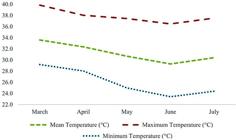
Temperature monitoring during the experimental period under greenhouse cultivation conditions.
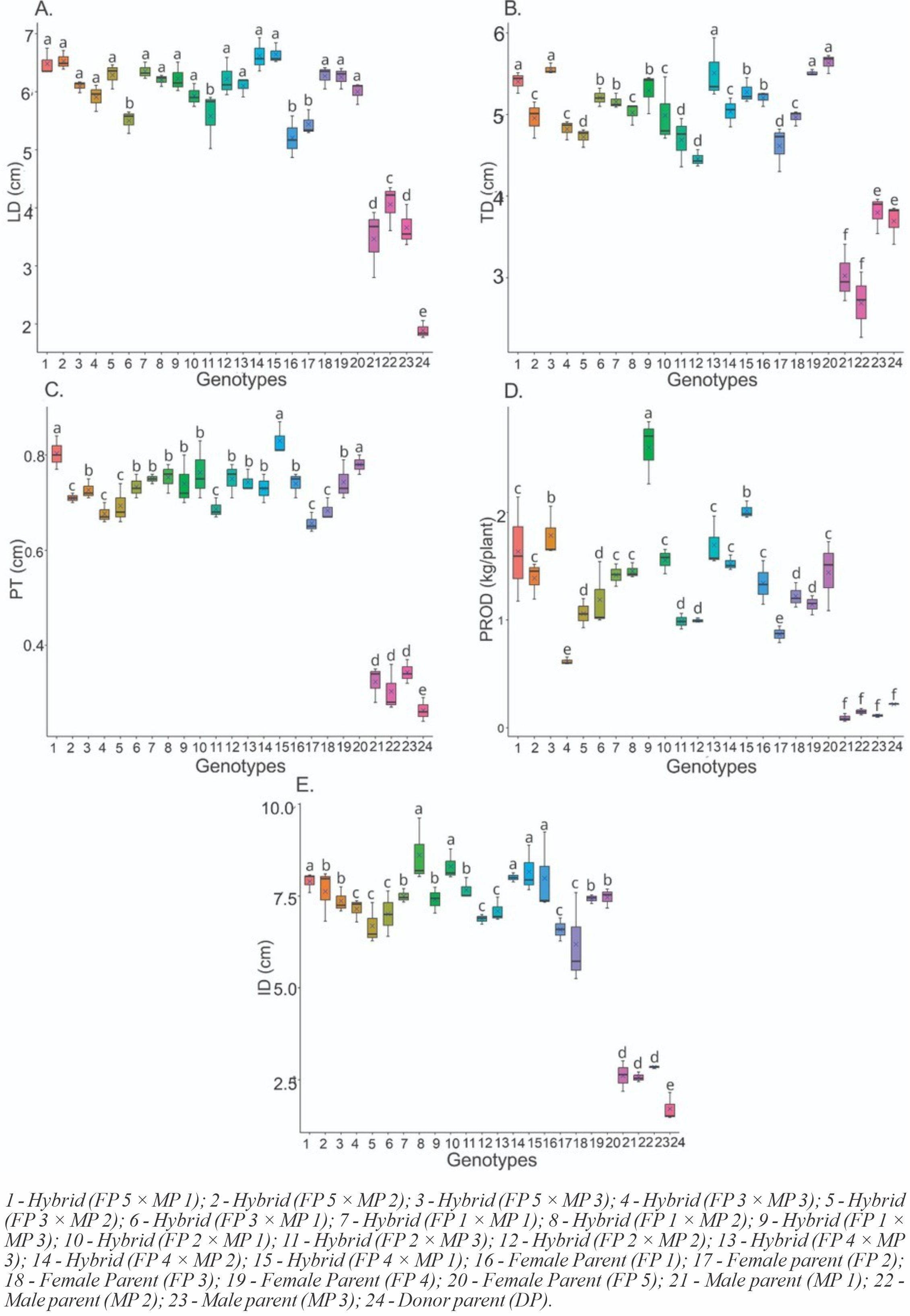
The tomato hybrids from dwarf male parent, the parental genotypes and the donor parent (UFU MC TOM1) differed statistically for all agronomic parameters evaluated. The hybrids outperformed the donor parent in all traits, and for the longitudinal (LD) and transverse (TD) diameters the hybrids showed values of 5.5 to 6.64 cm [hybrids 6 (FP 3 × MP 1) and 15 (FP 4 × MP 1)] and 4.46 to 5.55 cm [hybrids 12 (FP 2 × MP 2) and 3 (FP 5 × MP 3)], respectively (Figure 2a and 2b).

Means referring to agronomic evaluations of longitudinal diameter in cm (LD), transverse diameter in cm (TD), pulp thickness in cm (PT), production in kilograms per plant (PROD) and internode distance in cm (ID).
Fruit shape is determined by the LD to TD ratio. The donor parent (UFU MC TOM1) had a fruit shape of 1.95, while the hybrids had a fruit shape close to 1, globular type. Similar results were reported by Mattos et al. (2025), who observed the same fruit shape, typical of the salad segment.
Pulp thickness (PT) followed the same trend; all hybrids stood out in comparison with the donor parent (UFU MC TOM 1), especially hybrids 1 (FP 5 × MP 1) and 15 (FP 4 × MP 1), which had higher pulp thickness, 0.80 and 0.83 mm, with these results being 49 and 54% higher than those of the parents (Figure 2C).
These results indicate an improvement in fruit quality, given that fruits with thicker pulp have greater firmness and mechanical resistance (Vieira et al., 2019).
Production per plant (PROD) is one of the main traits to be evaluated in order to obtain more productive hybrids. Hybrid 9 (FP 1 × MP 3) obtained the highest PROD, reaching 2.6 kg per plant, followed by hybrids 3 (FP 5 × MP 3) and 15 (FP 4 × MP 1), which had 1.78 and 2.01 kg per plant, being 256, 244 and 175% superior to the parents (Figure 2d).
Regarding the internode distance (ID), hybrids 4 (FP 3 × MP 3), 5 (FP 3 × MP 2), 6 (FP 3 × MP 1), 12 (FP 2 × MP 2) and 13 (FP 4 × MP 3) (7.15, 6.68, 7.01, 6.88 and 7.09, in the same order) had lower ID than female parents 16 (FP 1), 19 (FP 4) and 20 (FP 5) (7.42 and 7.46, respectively). However, the lowest ID was observed in the donor parent, followed by the male parents (Figure 2E). The ID trait is related to plant architecture, since shorter internodes allow for more compact plants, and this characteristic is desirable for smaller plants (Finzi et al., 2017).
The use of dwarfism genes in tomato, whose monogenic inheritance (Maciel, Silva & Fernandes, 2015) results in hybrids with short internodes and high yield, is a strategy that has been widely validated. Studies such as those conducted by Finzi et al. (2017) and Pereira et al. (2024) demonstrate that hybrids resulting from crosses between parents with normal architecture and dwarf parents produce a greater number of bunches per meter.
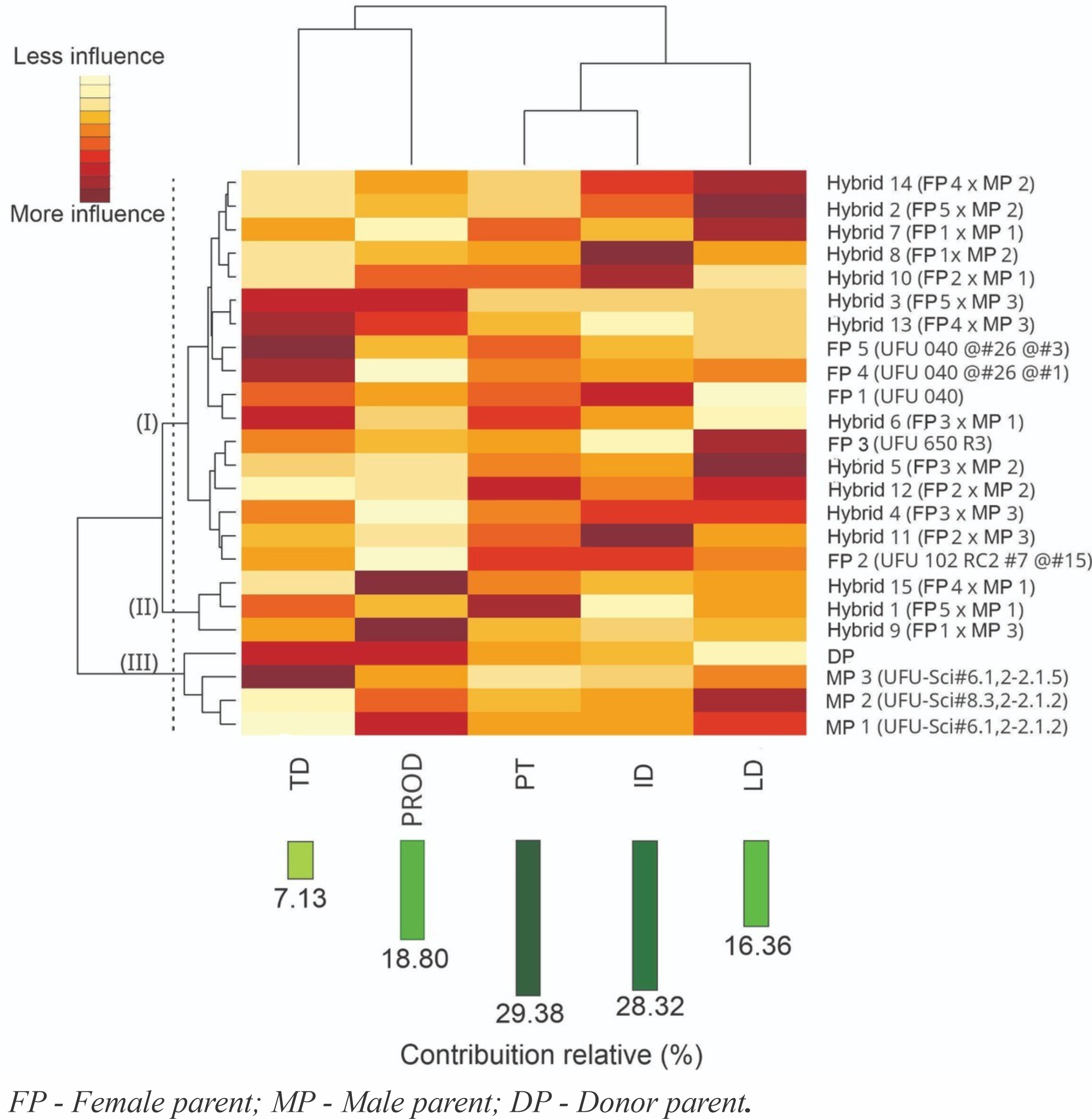
The dendrogram grouped the genotypes into three clusters: Cluster I - included most of the hybrids, which exhibited intermediate results for PT and PROD. This cluster also included hybrids 4 (FP 3 × MP 3), 5 (FP 3 × MP 2), 6 (FP 3 × MP 1), 12 (FP 2 × MP 2) and 13 (FP 4 × MP 3), with lower ID values compared to female parents, making them promising for cultivation that seeks fruit quality without compromising plant architecture (Figure 3).

Dendrogram representative of the genetic dissimilarity between the parents, hybrids and donor parent of tomato, obtained by the UPGMA method. Transverse diameter in cm (TD), production in kilograms per plant (PROD), pulp thickness in cm (PT), internode distance in cm (ID) and longitudinal diameter in cm (LD).
Cluster II brought together hybrids 1 (FP 5 × MP 1), 9 (FP 1 × MP 3) and 15 (FP 4 × MP 1), with high values of PT, with hybrid 15 (FP 4 × MP 1) being particularly relevant for combining good production and ID and TD. These genotypes were responsible for considerable genetic differentiation in the cluster, being promising candidates for breeding programs focused on compact and productive plants.
On the other hand, Cluster III included the donor parent (DP) and the male parents.The donor parent, despite showing typical characteristics of dwarf plants with the shortest ID (1.71 cm), had reduced yield (0.22 kg per plant) and lower PT (0.26 cm). These genotypes have adequate architecture for intensive cultivation systems, but they showed significant agronomic limitations. In this study, it is evident that greater benefits can be achieved by using dwarf tomato parents to obtain hybrids aiming at normal architecture.
In addition to the formation of the clusters, it is possible to highlight the grater responses of the genotypes to the traits under study, such as PT, for which hybrids 1(FP 5 × MP 1) and 12 (FP 2 × MP 2) presented highest values (Figure 3). PT was the trait that contributed the most to genetic dissimilarity (29.38%), followed by ID (28.32%) and PROD (18.80%).
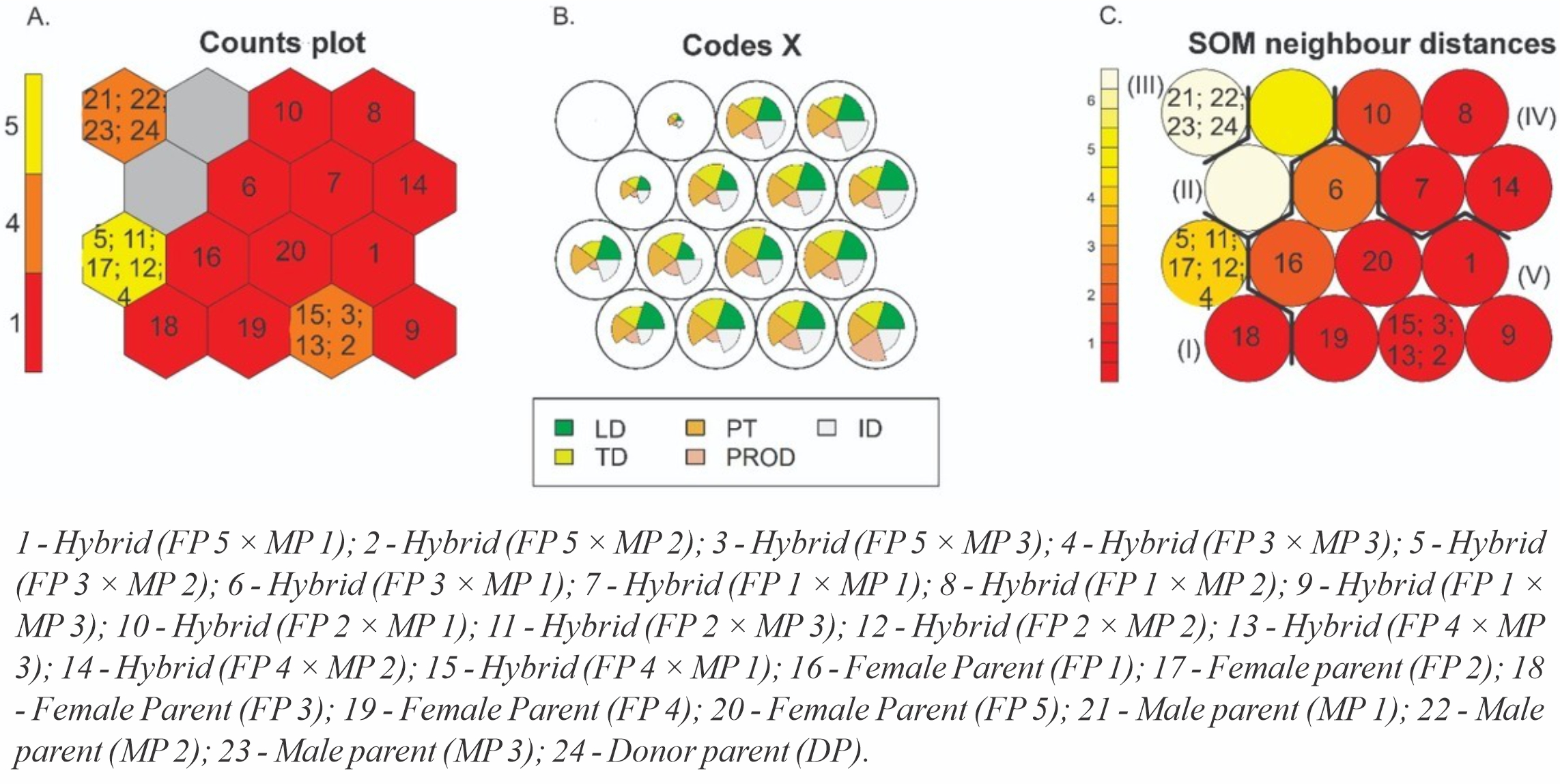
A total of 16 neurons were formed, and two of these neurons did not have any genotype, allowing the formation of 14 clusters by the neural network clustering method (Figure 4A).

(A): Classification of treatments according to the number of neurons. (B): Representation of neurons and the magnitude of influence of variables. (C): Distances from nearest neighbors and clustering of neurons based on the UPGMA method as a function of distances. Longitudinal diameter in cm (LD); transverse diameter in cm (TD); pulp thickness in cm (PT); production in kilograms per plant (PROD); internode distance in cm (ID). I, II, III, IV and V: clusters obtained after grouping the treatments.
The effect of each trait on each cluster formed in the SOM was demonstrated, with the traits LD, TD, PT and ID being responsible for the arrangement obtained (Figure 4B). The clustering of neurons based on the UPGMA method as a function of distances clustered the genotypes into five clusters (Figure 4C). Cluster I was formed by hybrids: 4 (FP 3 x MP 3), 5 (FP 3 × MP 2), 11 (FP 2 × MP 3), 12 (FP 2 × MP 2) and the female parent FP 2 and FP 3. Cluster II did not have any genotype, and cluster III was similar to the dendrogram (Figure 3), with the male parents and the donor parent together. Cluster IV contained hybrids 7 (FP 1 × MP 1), 8 (FP 1 × MP 2), 10 (FP 2 × MP 1) and 14 (FP 4 × MP 2) and cluster V was composed of hybrids 1 (FP 5 × MP 1), 2 (FP 5 × MP 2), 3 (FP 5 × MP 3), 6 (FP 3 × MP 1), 9 (FP 1 × MP 3), 13 (FP 4 × MP 3), 15 (FP 4 × MP 1), and female parents 16 (FP1), 19 (FP 4) and 20 (FP 5).
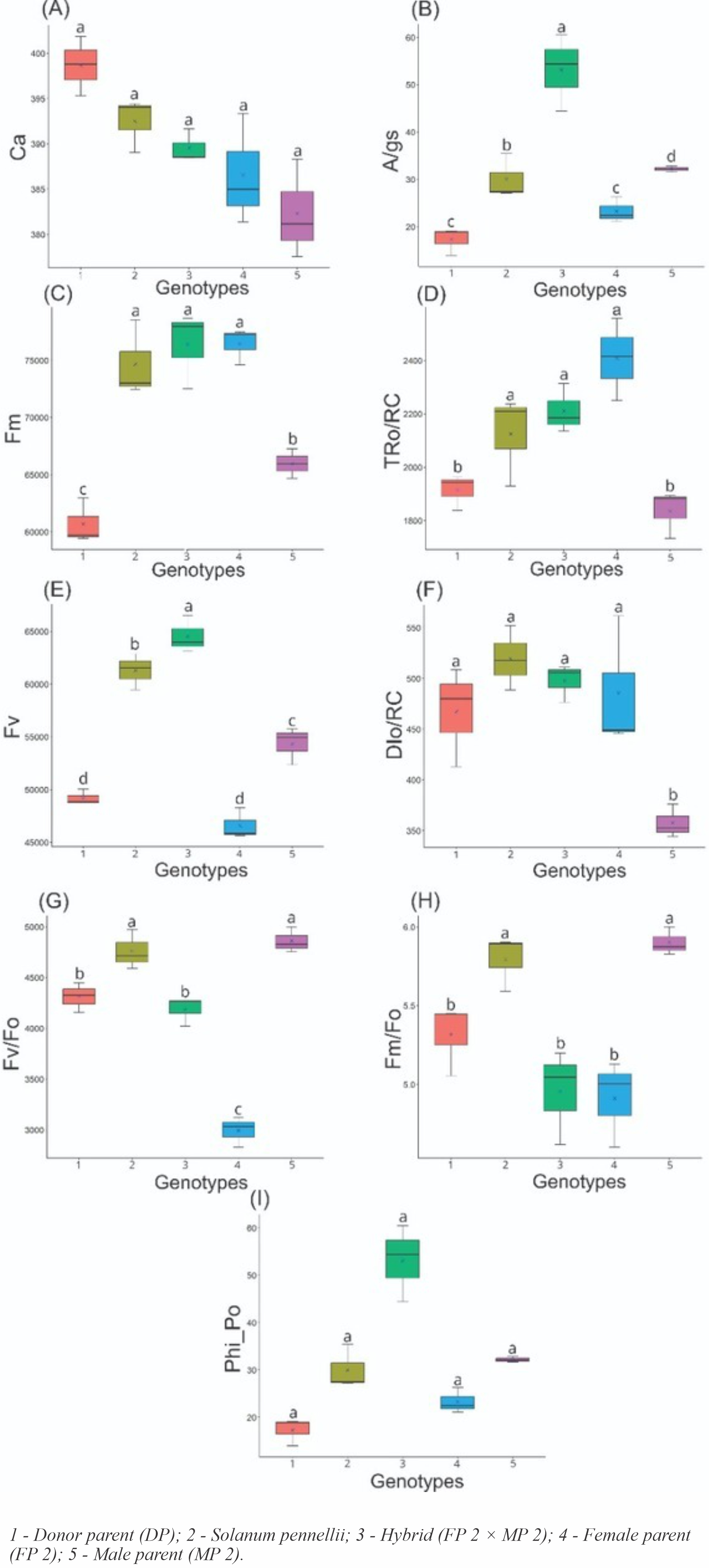
Hybrid 12 (FP 2 × MP 2), despite having intermediate results for PROD, PT, TD and LD, stood out from the parents, showing good results for ID. In view of this performance, the photosynthetic efficiency of the plants was evaluated and compared to those of their parents, the donor parent and S. pennellii. The genotypes differed in terms of the photosynthetic parameters evaluated (Figure 5). Maximum fluorescence (Fm) was higher in the S. pennellii, hybrid 12 (FP 2 × MP 2) and in FP 2, while Phi_Po remained similar among all genotypes (Figures 5A and I). These results suggest that these materials, especially hybrid 12, have higher structural and functional integrity of PSII, reflected by the increase in Fm. Lower values of Fm and Phi_Po may be related to damage or disorganization in the PSII complexes, reducing the maximum capacity to convert light energy into chemical energy (Dias et al., 2019).
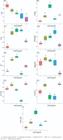
Means referring to agronomic evaluations of ambient CO2 concentration (Ca) (A), intrinsic water use efficiency (A/gs) (B), maximum fluorescence of chlorophyll a (Fm) (C), electron transport through PSII (Fm/Fo)(H), maximum efficiency of PSII (Phi_Po (I), equivalent to Fv/Fm ratio), ratio between photochemical and non-photochemical quantum efficiencies (potential activity of PSII) (Fv/Fo) (G), trait fluorescence (Fv) (E), trapped energy flux (leading to reduction in QA) per reaction center (TRo/RC) (D), and dissipated energy flux per active reaction center (DIo/RC) (F).
The highest values of the ratio between photochemical and non-photochemical quantum efficiencies (potential activity of PSII) (Fv/Fo) observed in Solanum pennellii and in the male parent (MP 2), followed by the donor parent and hybrid 12. Trait fluorescence was higher in hybrid 12 (Figure 5E). The Fv/Fo ratio is considered to be one of the most sensitive parameters of the electron transport chain for photosynthesis (Mohammed, Zarco-Tejada & Miller, 2003). The increase of Fv/Fo in the genotypes suggests greater functional integrity of the PSII reaction centers and/or a greater number of active reaction centers, resulting in greater efficiency in electron transport. This effect can contribute to photosynthetic performance, even under stress conditions. On the other hand, the reduction in Fv/Fo observed in the female parent reflects the reduction in Fv, indicating a limited capacity in the transport of electrons to the primary acceptors. This sensitivity can make the plant more vulnerable to biotic and abiotic stresses (Janka et al., 2013).
The trapped energy flux (leading to reduction in QA) per reaction center (TRo/RC) was lower in the donor parent and in the female parent (Figure 5D), suggesting a lower capacity of RCs to reduce plastoquinone (QA). DIo/RC, on the other hand, represents the ratio of the total dissipation of unused energy in QA reduction per active RC, occurring as heat, fluorescence, or energy transfer (Kissi et al., 2020). In this study, the highest DIo/RC values were recorded in the donor parent, S. pennellii, hybrid 12 (FP 2 × MP 2) and female parent (Figure 5F). According to Taiz et al. (2017), DIo/RC can also reflect the integrity of PSII, since the energy not directed to the photochemical phase needs to be dissipated to avoid the accumulation of free electrons, which favor oxidative stress. In turn, the little altered value of DIo/RC in the male parent suggests energy utilization by the reaction centers.
When selecting genotypes, it is crucial to consider both photosynthetic efficiency, as seen above, and response to the demand in water use. In this study, hybrid 12 (FP 2 × MP 2) showed the best results for intrinsic water use efficiency (A/gs) (Figure 5 B), followed by S. pennellii. The values found for A/gs can help in decisions related to irrigation management, indicating greater stomatal control and less water loss. The greater intrinsic water use efficiency observed in hybrid 12 may be associated with lower stomatal conductance. Stomatal regulation limits water loss through transpiration, but this hybrid may exhibit a greater capacity for CO2 assimilation, even under conditions that limit the plant (Flexas, 2016; Egea et al., 2018). These results are particularly important when considering the challenges faced by tomato-producing regions in Brazil, where water scarcity is a constant (Lima et al., 2024; Silva et al., 2024; Silva et al., 2025).
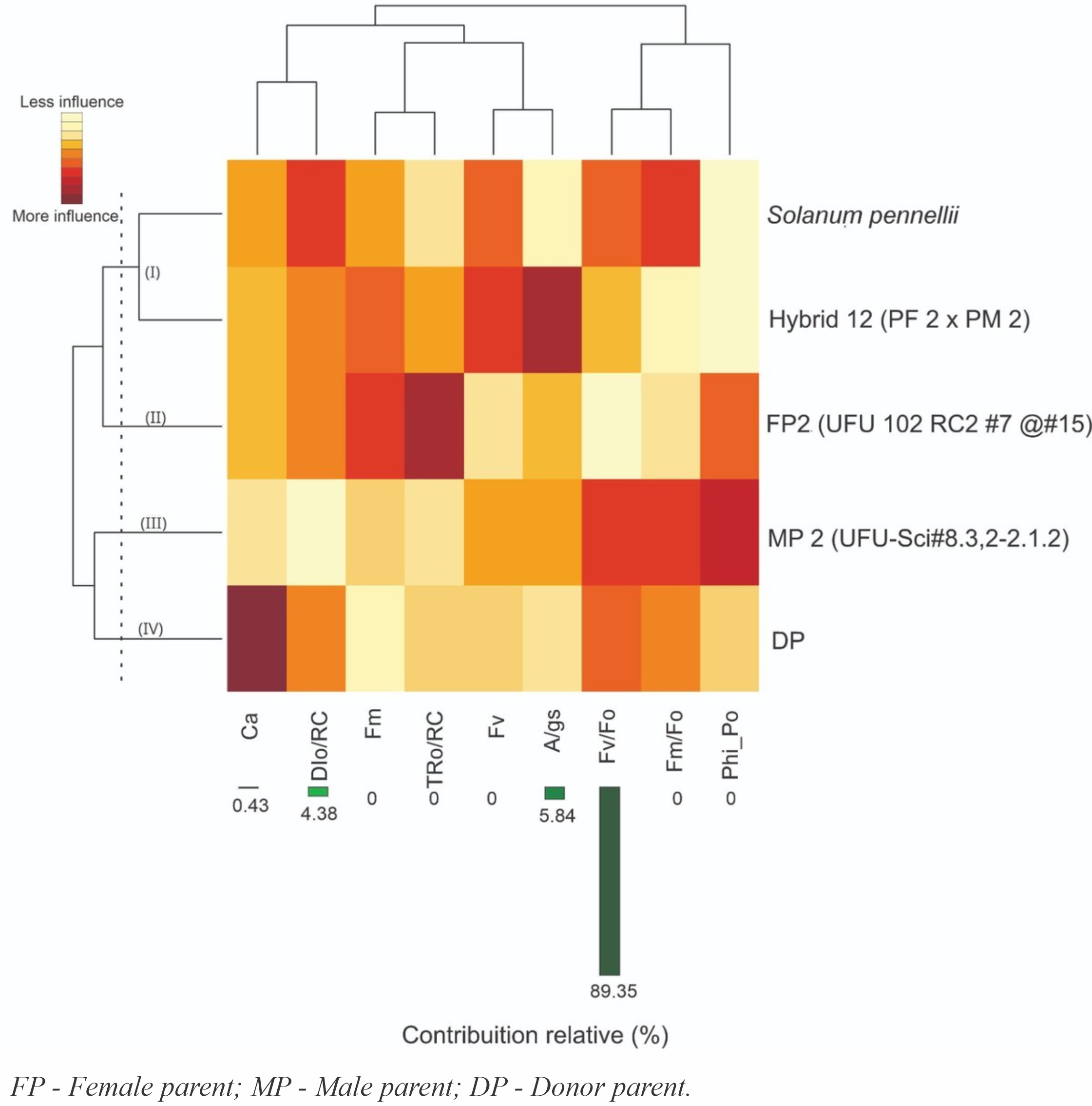
Regarding the photosynthetic parameters, Fv/Fo exerted a great influence on the separation of genotypes into four clusters (89.35). Cluster I, composed of S. pennellii and hybrid 12 (FP 2 × MP 2), showed high similarity and stood out for its high values of photosynthetic efficiency. Cluster II contained the female parent FP 2 (UFU 102 RC2 #7 @#15). Cluster III was formed by the male parent MP 2 (UFU-Sci#8.3,2-2.1.2), and Cluster IV was composed of the donor parent (Figure 6).

Dendrogram representative of the genetic dissimilarity between the parents, hybrids and donor parent of tomato, obtained by the UPGMA method. Ambient CO2 concentration (Ca), dissipated energy flux per active reaction center (DIo/RC), maximum chlorophyll fluorescence after dark adaptation for 20 minutes (Fm), trapped energy flux reaction center (TRo/RC), trait fluorescence (Fv), intrinsic water use efficiency (A/gs), maximum primary efficiency of the photochemical process in PSII (Fv/Fo), electron transport through PSII (Fm/Fo) and maximum efficiency of PSII (Phi_Po).
The fact that cluster 1 was comprised of S. pennellii and hybrid 12 (FP 2 × MP 2) confirms the hypothesis that this hybrid is indicated for conditions of low water availability, in view of the good results obtained for photosynthetic efficiency parameters (Figures 6).
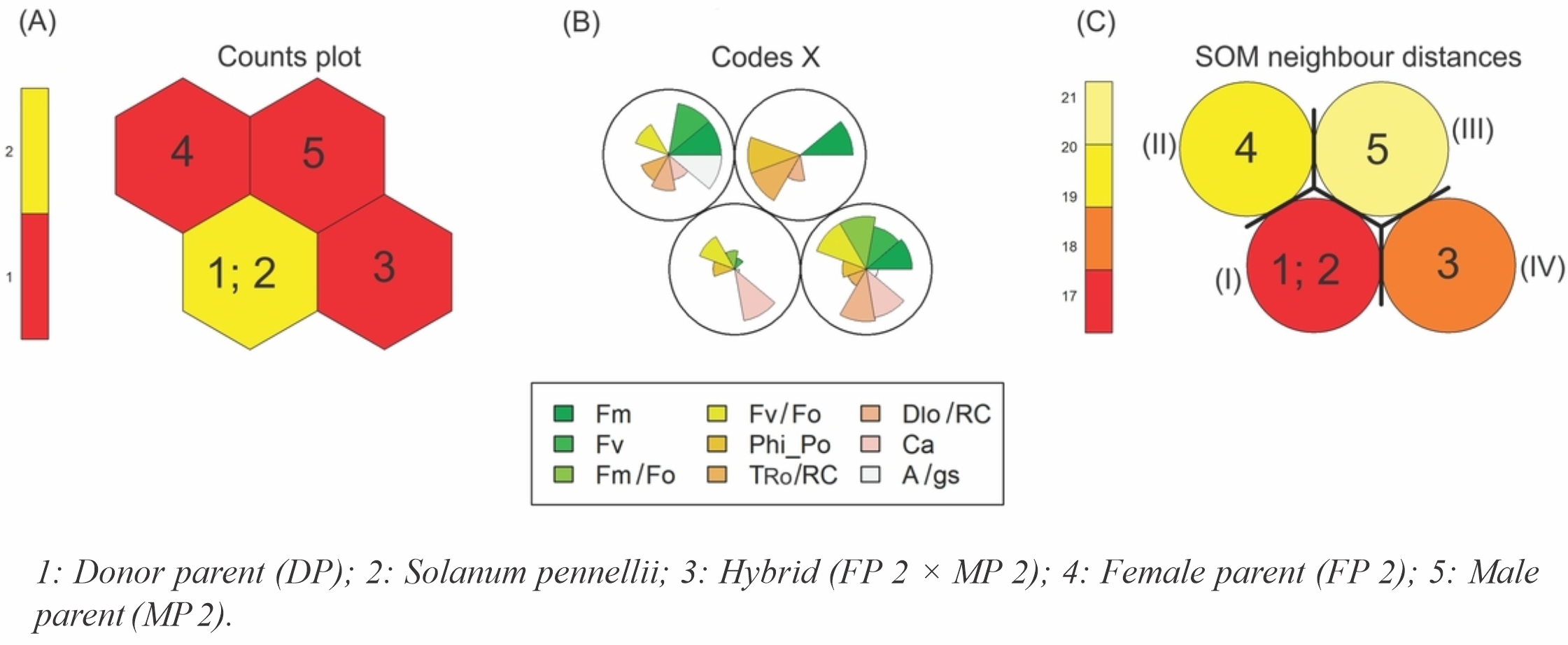
Four neurons (Figure 7A) and subsequently four clusters were defined based on the UPGMA method as a function of distances (Figure 7C). Cluster I: donor parent and S. pennellii, cluster II: female parent (FP 2), cluster III: male parent (MP 2) and cluster IV: hybrid 12 (FP 2 × MP 2). Most of the traits analyzed were important for hybrid 12 (FP 2 × MP 2) to be in cluster IV, proving its potential (Figure 7B).

(A): Classification of treatments according to the number of neurons. (B): Representation of neurons and the magnitude of influence of traits. (C): Distances from nearest neighbors and clustering of neurons based on the UPGMA method as a function of distances. Maximum chlorophyll fluorescence after dark adaptation for 20 minutes (Fm), trait fluorescence (Fv), electron transport through PSII (Fm/Fo), maximum primary efficiency of the photochemical process in PSII (Fv/Fo), maximum efficiency of PSII (Phi_Po), trapped energy flux per reaction center (TRo/RC), dissipated energy flux per active reaction center (DIo/RC), ambient CO2 concentration (Ca), intrinsic water use efficiency (A/gs). I, II, III and IV: clusters obtained after grouping the treatments.
Hybrid 12 (FP 2 × MP 2) has potential for breeding programs targeting smaller plants with desirable agronomic characteristics. However, more studies are needed to better explore its potential, especially in terms of water efficiency. In view of this, it is suggested that a greater number of hybrid combinations derived from dwarf male parents be evaluated under challenging conditions.
Conclusions
Tomato hybrids derived from dwarf male parents may represent a strategy in plant breeding aimed at obtaining plants with greater resilience. Hybrid 12 (FP 2 x MP 2), despite having intermediate results for PROD, PT, TD and LD, stood out with good results for ID. In addition, it showed the best results for the photosynthetic parameters evaluated, especially intrinsic water use efficiency.
Acknowledgments
National Council for Scientific and Technological Development (CNPq) grant number 310083/2021-4, the Minas Gerais Research Support Foundation (FAPEMIG), the Coordination for the Improvement of Higher Education Personnel (CAPES) finance Code 001, and the Federal University of Uberlândia (UFU). Grateful to the Instituto Federal de Educação, Ciência e Tecnologia Goiano, Rio Verde and Pro-Rectorate of Research, Postgraduate Studies and Innovation (PROPPI).
Data Availability Statement
Data available upon request to authors.
References
- Alvarenga, M. A. R. (2013). Tomate: Produção em campo, em casa-de-vegetação e em hidroponia Lavras: Editora UFLA, 455p.
- Bhandari, R., Neupane, N., & Adhikari, D. P. (2021). Climatic change and its impact on tomato production in plain area of Nepal. Environmental Challenges, 4:100-129.
- Blain, G. C., Sobierajski, G. R., & Martins, L. L. (2023). Elevações na frequência de ocorrência de secas meteorológicas no Estado de São Paulo sob condições de mudanças climáticas. Derbyana, 44:1-13.
- Cruz, C. D., & Nascimento, M. (2018). Inteligência computacional aplicada ao melhoramento genético Viçosa: Editora UFV, 414p.
- Cruz, C. D. (2016). Genes Software - extended and integrated with the R, Matlab and Selegen. Acta Scientiarum Agronomy, 38(4):547-552.
- Dias, A. S. et al. (2019). Gas exchange, quantum yield and photosynthetic pigments of Indian West Indian cherry under saline stress and potassium fertilization. Revista Caatinga, 32:429-439.
- Egea, I. et al. (2018). The drought-tolerant Solanum pennellii regulates leaf water loss and induces genes involved in amino acid and ethylene/jasmonate metabolism under dehydration. Scientific Reports, 8:2791.
- Finzi, R. R. et al. (2020). Agronomic potential of BC1F2 dwarf round tomato populations. Ciência e Agrotecnologia, 44:e028819.
- Finzi, R. R. et al. (2017). Growth habit in mini tomato hybrids from a dwarf line. Bioscience Journal, 33(1):52-56.
- Flexas, J. (2016). Genetic improvement of leaf photosynthesis and intrinsic water use efficiency in C3 plants: Why so much little success? Plant Science, 251:155-161.
- Gonçalves Neto, A. C. et al. (2010). Resistance to the South American tomato pinworm in tomato plants with high foliar acylsugar contents. Horticultura Brasileira, 28(2):203-208.
- Jacinto, A. C. P. et al. (2025). Inactivated bacterial suspension as an attenuator for the control of bacterial spot (Xanthomonas euvesicatoria pv. perforans) in dwarf tomato plants. Tropical Plant Pathology, 50:40.
- Jacinto, A. C. P. et al. (2024). Reaction of tomato lineages and hybrids to Xanthomonas euvesicatoria pv. perforans Agronomy-Basel, 14(6):1211.
- Janka, E. et al. (2013). High temperature stress monitoring and detection using chlorophyll a fluorescence and infrared thermography in chrysanthemum (Dendranthema grandiflora). Plant Physiology and Biochemistry, 67:87-94.
- Kissi, Y. A. et al. (2020). Influência da composição de substrato no desempenho morfofisiológico das mudas de Trema micrantha (L.) Blume. Revista Desafios, 7(4):1-13.
- Kürklü, A., Pearson, S., & Felek, T. (2025). Climate change impacts on tomato production in high-tech soilless greenhouses in Türkiye. BMC Plant Biology, 25:339.
- Lima, A. F. S. et al. (2024). Carbon and water scarcity footprints of banana under current and future climate conditions in the Brazilian semiarid region. Environmental Development, 51:101034.
- Maciel, G. M. et al. (2024). New insights into the use of dwarf tomato plants for pest resistance. Bragantia, 83:e20240066.
- Maciel, G. M. et al. (2019). Image phenotyping of inbred red lettuce lines with genetic diversity regarding carotenoid levels. International Journal of Applied Earth Observation and Geoinformation, 81:154-160.
- Maciel, G. M. et al. (2018). Tomato genotypes with determinate growth and high acylsugar content presenting resistance to spider mite. Crop Breeding and Applied Biotechnology, 18(1):1-8.
- Maciel, G. M., Silva, E. C. D., & Fernandes, M. A. R. (2015). Dwarfism occurrence in tomato plant type grape. Revista Caatinga, 28(4):259-264.
- Maluf, W. R. et al. (2010). Resistance to the South American tomato pinworm Tuta absoluta in high acylsugar and/or high zingiberene tomato genotypes. Euphytica, 176:113-123.
- Mattos, T. P. et al. (2025). Introgression of dwarfing genes into tomato fruit through backcrossing aiming at salad-type background. Revista Caatinga, 38:e12718.
- Mohammed, G. H., Zarco-Tejada, P.; & Miller, J. R. (2003). Applications of chlorophyll fluorescence in forestry and ecophysiology. In J. R. DeEll., & P. M. A. Toivonen. Practical applications of chlorophyll fluorescence in plant biology Springer, Boston, MA (pp.79-124).
- Oliveira, C. S. et al. (2024). Saladette-type dwarf tomato introgression lines with agronomic potential, improved fruit quality, and biotic stress tolerance. Ciência e Agrotecnologia, 48:e002624.
- Oliveira, C. S. et al. (2021). Artificial neural networks and genetic dissimilarity between dwarf saladette tomato populations. Food Chemistry, 3:100056.
- Pereira, L. M. et al. (2024). Introgression of the self-pruning gene into dwarf tomatoes to obtain salad-type determinate growth lines. Plants, 13(11):1522.
- Pessoa, H. P. et al. (2023). Uncovering tomato candidate genes associated with drought tolerance using Solanum pennellii introgression lines. Plos One, 18(6):e0287178.
-
R Core Team. (2023). R: A language and environment for statistical computing R Foundation for Statistical Computing, Vienna, Austria. Available in: <https://www.R-project.org>.
» https://www.R-project.org - Semel, Y. et al. (2007). Metabolite analysis for the comparison of irrigated and non-irrigated field grown tomato of varying genotype. Metabolomics, 3:289-295.
- Silva, D. A. et al. (2025). Irrigation strategies and soil conditioning on thermal index and yield of cherry tomato. Revista Brasileira de Engenharia Agrícola e Ambiental, 29(6):e280430..
- Silva, C. J. et al. (2024). Gas exchange and productivity of industrial tomato plants under different types of irrigation and non-woven fabric mulch. Revista Brasileira de Engenharia Agrícola e Ambiental, 28(2):e271470.
- Singh, D. (1981). The relative importance of characters affecting genetic divergence. Indian Journal of Genetics e Plant Breeding, 41:237-245.
- Spanoghe, M. C. et al. (2020). Genetic pattern recognition in crop species using a self-organizing map: the example of the highly heterozygous autotetraploid potato (Solanum tuberosum L.). Genetic Resources and Crop Evolution, 67:947-966.
-
Sismet. (2025). Sismet Cooxupé. Informações sobre as condições climáticas em Monte Carmelo-MG Available in: <https://sismet.cooxupe.com.br:9000/dados/estacao/pesquisarDados/?estCooxupe=1&cdEstacao=12>
» https://sismet.cooxupe.com.br:9000/dados/estacao/pesquisarDados/?estCooxupe=1&cdEstacao=12> - Taiz, L. et al. (2017). Fisiologia e desenvolvimento vegetal 6.ed. Porto Alegre: ArtMed, 888p.
- Vieira, D. A. P. et al. (2019). Mechanical resistance, biometric and physicochemical characteristics of tomato cultivars for industrial processing. Ciência e Tecnologia de Alimentos, 39:363-370.
- Wehrens, R., & Kruisselbrink, J. (2018). Flexible self-organizing maps in Kohonen 3.0. Journal of Statistical Software, 87(7):1-18.