 Enhancing the yield of purple eggplant through pruning practices and biocomplex fertilization
ABSTRACT
Eggplant production has increased globally in recent years; however, productivity remains constrained by biotic and abiotic stresses, including insect and disease pressure, drought, temperature extremes, soil salinity, waterlogging, nutrient limitations, and variable light intensity. Appropriate pruning strategies combined with balanced biocomplex fertilization are expected to provide complete nutrition, addressing limitations mentioned. This study aimed to evaluate the effects of pruning and biocomplex fertilizer dosage on the growth, yield, and quality of purple eggplant. Pruning treatments included no pruning (M0), mainstem pruning (M1) and primary-branch pruning (M2). Biocomplex fertilizer was applied at 0, 10, and 15 tons ha-1, corresponding to B0, B1, and B2, respectively. The experiment was arranged in a factorial randomized block design with three replications. Growth, yield, and quality of eggplant were observed. The results showed that combinations of pruning and biocomplex fertilization (M1B1 and M1B2) significantly improved yield components compared to the control (M0B0). Treatments M1B1 and M1B2 increased the number of productive branches by 82.7%, fruit set by 51.2%, number of fruits by 100% and 211%, and fresh weight of fruit by an average of 53.1%. The M2B2 treatment showed the maximum improvement, increasing fruit set by 70.7% and fresh fruit yield by 137.9% relative to the control. No significant interaction was observed for leaf number, leaf area, fruit length, fruit diameter, chlorophyll content, total soluble solids. Overall, primary branch pruning combined with 15 tons ha-1 biocomplex fertilizer (M2B2) was the most effective treatment, increasing purple eggplant yield by 137.9%.
Index terms:
Cutting; main stem; mixed nutrition; primary branch;
Solanum melongena
RESUMO
A produção de berinjela aumentou globalmente nos últimos anos; no entanto, a produtividade permanece limitada pela pressão de insetos e doenças, seca, temperaturas extremas, salinidade do solo, encharcamento, limitações de nutrientes e intensidade luminosa variável. Estratégias de poda adequadas, combinadas com fertilização biocomplexa balanceada, podem mitigar essas limitações. Este estudo teve como objetivo avaliar os efeitos dessa combinação na produtividade da berinjela roxa. Os tratamentos de poda incluíram ausência de poda (M0), poda do caule principal (M1) e poda dos ramos primários (M2). O fertilizante biocomplexo foi aplicado nas doses de 0, 10 e 15 toneladas ha-¹, correspondentes a B0, B1 e B2, respectivamente. O experimento foi conduzido em delineamento de blocos casualizados com três repetições. Foram observados o crescimento, a produtividade e a qualidade da berinjela. Os resultados mostraram que as combinações de poda e fertilização biocomplexa (M1B1 e M1B2) melhoraram a produtividade em comparação ao controle (M0B0). Os tratamentos M1B1 e M1B2 aumentaram o número de ramos produtivos em 82,7%, a frutificação em 51,2%, o número de frutos em 100% e 211%, respectivamente, e o peso fresco dos frutos em uma média de 53,1%. O tratamento M2B2 apresentou a melhoria máxima, aumentando a frutificação em 70,7% e a produção de frutos frescos em 137,9%. Não foram observadas interações significativas para o número e área das folhas, comprimento e diâmetro dos frutos, teor de clorofila e sólidos solúveis totais. No geral, o tratamento M2B2 foi o mais eficaz, aumentando a produção de berinjela roxa em 137,9%.
Termos de indexação:
Estaca; caule principal; nutrição mista; ramo primário;
Solanum melongena
Introduction
Eggplant (Solanum melongena L.) is recognized as the third most important vegetable crop in Asia and holds significant value in the Mediterranean region (Alam & Salimullah, 2021). Among solanaceous crops, it ranks fifth in global importance after potato, tomato, pepper, and tobacco (Cericola et al., 2013; Food and Agriculture Organization -FAO, 2024; Sukprasansap, Sridonpai & Phiboonchaiyanan, 2019). The crop is cultivated on more than 1.7 million hectares worldwide, with Indonesia ranking fifth in production after China, India, Egypt, and Turkiye (Oladosu et al., 2021). However, eggplant production in Indonesia faces several challenges, including technical constraints in cultivation and environmental factors such as suboptimal plant nutrition management, which limit productivity (Hidayat, Safitri, & Nugrahani, 2024).
In addition to its economic importance, eggplant is valued for its nutritional and functional properties. It contains dietary fiber, essential minerals (iron, calcium, potassium, magnesium, sodium, zinc, and phosphorus), and various vitamins, including C, thiamine, niacin, B6, B12, A, E, D, and K (Ghosh, 2022; Gürbüz et al., 2018). Purple eggplant, in particular, is rich in phenolic compounds and flavonoids that protect cells from oxidative damage (Colak et al., 2022). These bioactive compounds have been associated with potential applications in pharmaceutical formulations due to their antioxidant and anti-inflammatory properties (Koley et al., 2019). Thus, improving eggplant productivity and quality is important not only for economic reasons but also for enhancing its nutritional benefits.
Addressing the constraints in eggplant production requires adopting improved agronomic practices. Agricultural intensification, particularly through optimized canopy management and nutrient supply, offers a practical approach to increasing yield and quality. Among these practices, pruning and fertilization are widely recognized for their roles in enhancing plant performance.
Pruning is an essential horticultural practice involving the strategic removal of plant parts, such as branches or buds, to regulate growth, enhance flowering and fruiting, and maintain plant structure (Aneja et al., 2024; Danziger & Bernstein, 2021). Additionally, pruning can optimize both the biomasses accumulation on roots and leaves (Nie et al., 2021) and the distribution of assimilates to generative organs such as flowers and fruits (Silva et al., 2019). It also reduces apical dominance, stimulates lateral shoot development, and enhances canopy light interception, thereby improving photosynthetic efficiency (Wang & Jiao, 2018; Nair et al., 2024). The selection of correct methods tends to reduce pathogen threat and boost yields (Ikeuchi et al., 2016) through increasing the capacity of regeneration and modifying metabolites (Cao et al., 2022). Empirical studies have demonstrated that pruning can enhance yield and fruit quality. For example, removal of secondary branches improved production and quality in pecan (Hellwig et al., 2025), while in eggplant it increased fruit size and weight (Arabsalmani, Jalali, & Jafari, 2021) and reduced disease incidence (Zakeri & Roudbari, 2023).
Alongside canopy management, adequate nutrient supply is essential to support plant growth and the increased demand associated with reproductive development. Fertilization can be applied through inorganic, organic, or integrated nutrient sources. However, excessive use of inorganic fertilizers may lead to environmental degradation, including soil deterioration and eutrophication (Sabry, 2015). Organic fertilizers offer an alternative by supplying nutrients and beneficial microorganisms, such as nitrogen and sulfur-fixing bacteria and fungi, including Azotobacter, Azospirillum, Rhizobium, and Aspergillus spp. (Mohamed, El-Beltagi, & Abd-Elsalam, 2021; Singh & Reddy, 2012; Zapata, López & Saldarriaga, 2024). Nevertheless, organic inputs often vary in nutrient composition and have slower release rates, complicating precise nutrient management (Panday et al., 2024).
To overcome these limitations, biocomplex fertilizers have been developed as integrated nutrient sources that combine organic materials, inorganic fertilizer, and beneficial microorganisms. These formulations typically include components such as goat manure, vermicompost, dolomite, and NPK fertilizer, which enhance soil fertility and nutrient availability (Rengga, Sugito, & Sudiarso, 2024). In addition, biocomplex fertilizers may contain plant growth regulators such as auxins and cytokinins that stimulate root and shoot development (Arfarita et al., 2024).
The integration of pruning and biocomplex fertilization is expected to enhance plant physiological efficiency, in which optimal nutrient supply from the biocomplex fertilizer is complemented by improved assimilate distribution resulting from pruning. Evidence from related Solanaceae crops, such as tomato (Solanum lycopersicum) and chili pepper (Capsicum annuum), indicates a similar response pattern, with greater increases in fruit number and weight under combined treatments than under individual applications. These findings highlight the potential of integrating canopy management and biocomplex fertilization as an effective strategy for enhancing eggplant productivity.
Based on this rationale, this study hypothesized that the combined application of pruning and biocomplex fertilizer would improve the growth, yield, and quality of purple eggplant (Solanum melongena L.). Pruning is expected to optimize canopy structure and assimilate partitioning, while biocomplex fertilizer provides essential nutrients and growth-promoting compounds. Therefore, the objective of this study was to evaluate the effects of different pruning methods and biocomplex fertilizer doses on the growth, yield, and quality of purple eggplant.
Material and Methods
Growth conditions and plant material
This study was conducted in the experimental garden at Tegalgondo, Karang Ploso, Malang, East Java, Indonesia (7⸰55’14” S, 122⸰37’53” E), at an elevation of 539 m above sea level. The experiment was carried out from May to August 2024. During the growth period, daily temperatures ranged from 18.7 °C to 27.9 °C, with an average of 22.7 °C, and average rainfall was 26 mm.
Irrigation was applied manually at a rate of 1500 mL per polybag when rainfall was insufficient. Seeds of the eggplant (Solanum melongena L.) cultivar Antaboga were sown in trays using organic humus as the growing medium. Seedlings at 30 days after sowing (DAS), with 3-4 true leaves, were transplanted into 30 x 18 cm polybags filled with a 1:1 (v/v) mixture of soil and sand (Fandi, Muchtar, & Notarianto, 2020). The soil used was Andosol with a dusty clay texture, characterized by a pH of 6.7, a cation exchange capacity of 15 cmol kg-1, a water-holding capacity of 48%, and an organic matter content of 20.8%.
Experimental setup
The experiment was arranged in a factorial Randomized Block Design (RBD) with two factors. The first factor was pruning type (M), consisting of three levels: M0 (no pruning), M1 (main stem pruning), and M2 (primary branch pruning). The second factor was biocomplex fertilizer dosage (B), also consisting of three levels: B0 (no fertilizer), B1 (10 tons ha-1), and B2 (15 tons ha-1). A total of nine treatment combinations were tested in a 3 × 3 factorial arrangement, each replicated three times. Each experimental unit consisted of four plants, resulting in 108 polybags in total.
Main stem pruning was performed at the apical portion of the plant by removing 7 cm of the shoot prior to flowering, at 28 days after transplanting (DAT) (Arabsalmani, Jalali & Jafari, 2021). Primary branch pruning involved cutting 7 cm from the shoot tips of the primary branches. The apical portions of the first three primary branches were pruned at 35 DAT, followed by pruning of the next three primary branches at 42 DAT (Ramanjineyulu et al., 2024). Biocomplex fertilizer was applied in three split doses at 3, 16, and 32 DAT by incorporating it into the growing medium.
Plant characters measurements
Observations were conducted from 14 to 70 DAT at 7-day intervals. Measured parameters included the number of productive branches, leaf number, leaf area, percentage of flowers to fruit (fruit set), number and fresh weight of fruit, fruit length and diameter, leaf chlorophyll content, and total soluble solids (TSS).
Leaf chlorophyll content was measured using a SPAD (Soil Plant Analysis Development) meter. SPAD readings were converted to chlorophyll content using the equation: Chl = (117.1 × SPADi)/ (148.84 × SPADi) (Ling, Huang, & Jarvis, 2011).
TSS was measured using a pre-calibrated refractometer. A 5 g ground fruit sample was mixed with 10 drops of distilled water, homogenized, and a drop of the extract was placed on the refractometer prism. The results were expressed as ⸰Brix (Bayu, Rizqiati, & Nurwantoro, 2017).
Statistical analysis
Each observation variable was measured using four plants per treatment. Harvesting was conducted at 60-70 DAT, when fruits were mature but still unripe, characterized by a shiny skin surface.
Data were tested for normality using the Jarque-Bera test and analyzed using one-way analysis of variance (ANOVA). When significant differences were detected, means were compared using Tukey’s Honestly Significant Difference (HSD) test at a 5% probability level. In addition, principal component analysis (PCA) and hierarchical cluster analysis were performed using XLStat 2019 software.
Results and Discussion
The interaction between pruning type and biocomplex fertilizer dose had a significant effect (p<0.05) on several growth and yield parameters of Antaboga purple eggplant. This effect was particularly evident in the number of productive branches, number of fruits, fruit set (%), and fresh weight of fruits, as presented in Table 1.
Pruning the main stem combined with 10-15 tons ha-1 of biocomplex fertilizer resulted in statistically similar numbers of productive branches (Table 1). Unpruned plants maintained apical dominance, which was not disturbed at the main growth point, allowing relatively stable vegetative growth. In addition, the application of 10-15 tons ha-1 of biocomplex fertilizer combined with main stem and primary branch pruning enhanced lateral branch development by ensuring adequate nutrient availability, thereby promoting new shoot formation in leaf axils (Marini, 2020). Removal of the apical meristem in the main stem (M1) tends to breaks apical dominance, reducing auxin levels and increasing cytokinin activity, thereby stimulating lateral shoot formation. Newly formed lateral shoots subsequently produce auxin, which can suppress cytokinin activity; therefore, pruning of primary branches is required to stimulate flower formation in axillary buds (Aneja et al., 2024; Wang & Jiao, 2018).
The highest number of fruits was obtained from primary branch pruning combined with 15 tons ha-1 of biocomplex fertilizer. Similarly, the highest fruit set percentage and fresh fruit weight were also recorded in the M2B2 treatment (Table 1). This response is associated with auxin redistribution, which promotes the formation of productive branches, while sufficient nutrient supply supports fruit development. Higher fruit numbers generally require greater nutrient availability. According to Rengga, Sugito and Sudiarso (2024), biocomplex fertilizer contains essential macro- and micronutrients, including nitrogen (N), phosphorus (P), and potassium (K), which are essential for plant growth. Nitrogen supports protein and chlorophyll synthesis, thereby promoting the development of new shoots and branches. Phosphorus enhances root development and meristem formation, while potassium improves nutrient translocation to actively growing plant tissues. Adequate nutrient supply supports proper ovary development into fruit, resulting in improved fruit formation and nutritional quality.
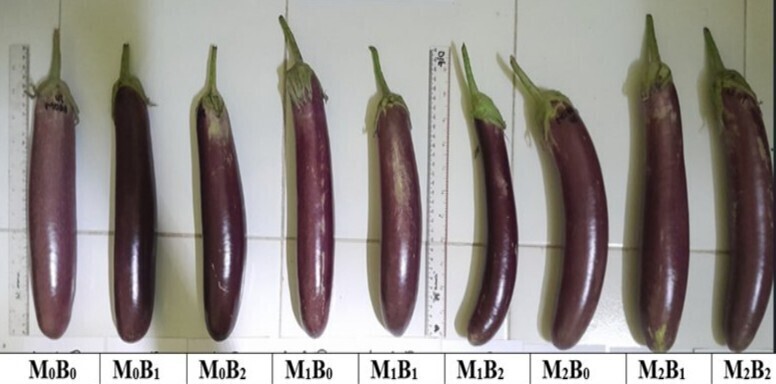
Fruit performance is visually presented in Figure 1. Overall, primary branch pruning combined with 15 tons ha-1 biocomplex fertilizer (M2B2) produced the highest fresh weight (24.62 tons ha-1), which was not statistically different from that of plants pruned at the main stem combined with the same fertilizer dose (M1B2), which yielded 17.58 tons ha-1 (Table 1). Compared with the untreated control, this value represented a 1.27-fold increase in the fresh fruit weight. Pruning reduces competition between vegetative and reproductive organs, thereby increasing assimilate allocation to fruit development (Nair et al., 2024). In addition, biocomplex fertilizer, rich in phosphorus and potassium, enhances flowering and fruiting, thereby increasing fruit set percentage (Yalong et al., 2020). Aji, Sugiarto & Arfarita (2024) also reported that combining shoot pruning with 15 tons ha-1 biocomplex fertilizer improved tomato yield, indicating similar physiological responses in related Solanaceae cops, including purple eggplant.
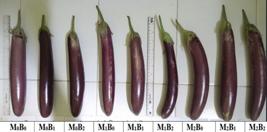
Eggplant (Solanum melongena L.) cv. Antaboga fruits harvested at 60 DAT under different pruning and biocomplex fertilizer combinations. Treatments include M0 (no pruning), M1 (main stem pruning), and M2 (primary branch pruning) combined with B0 (no fertilizer), B1 (biocomplex 10 tons ha-1), and B2 (biocomplex 15 tons ha-1).
No significant interaction was observed between pruning and biocomplex dose for leaf number, leaf area, fruit diameter, fruit length, chlorophyll content, and total soluble solids (TSS). Pruning significantly affected fruit diameter and chlorophyll content, whereas fertilizer dose significantly affected leaf number, fruit diameter, fruit length, and fruit quality parameters (Table 2).
Table 2 shows that pruning the main stem resulted in fruit diameter comparable to that of primary branch pruning. Apical pruning redirects the assimilates from vegetative to reproductive growth, improving fruit development. Reduced canopy density also enhances light interception and photosynthetically active radiation (PAR) in upper leaves. Consequently, pruning improves light use efficiency, air circulation, yield quality, and disease management (Aneja et al., 2024; Ikeuchi et al., 2016). Pruning of unproductive branches reduces competition for assimilates, resulting in larger fruit size (Nuraga, 2025). Plants subjected to main stem (M1) and primary branch (M2) pruning showed similar chlorophyll contents (75.58 and 77.53 μg mL-1, respectively), both higher than unpruned plants (Table 2). This is attributed to improved sink-source balance and reduced competition between vegetative and reproductive growth (Aneja et al., 2024; Arabsalmani, Jalali, & Jafari, 2021). Pruning also enhances photosynthetic efficiency by increasing functional leaf chlorophyll content (Nie et al., 2021).
Increasing biocomplex fertilizer dose from 10 to 15 tons ha-1 (B1 to B2) did not significantly affect chlorophyll content (Table 2). Biocomplex fertilizer contains N as the main component of nitrogen, which is essential for chlorophyll and protein synthesis. At 15 tons ha-1, nutrient supply was sufficient to meet metabolic demands, including the synthesis of sugars and carbohydrates that contribute to total soluble solids (TSS). However, the higher dose did not significantly increase TSS, likely because plants had already reached an optimal level of nutrient absorption and utilization at 10 tons ha-1. Potassium in the biocomplex fertilizer plays a critical role in photosynthesis, sugar translocation, and starch formation, all of which contribute to TSS. Increased photosynthetic activity promotes greater sugar accumulation in the fruit, thereby enhancing TSS and improving fruit sweetness. In addition, potassium is involved in enzyme activation and the distribution of assimilates, supporting carbohydrate synthesis (Arfarita et al., 2024; Nurliawati & Faqih, 2024).
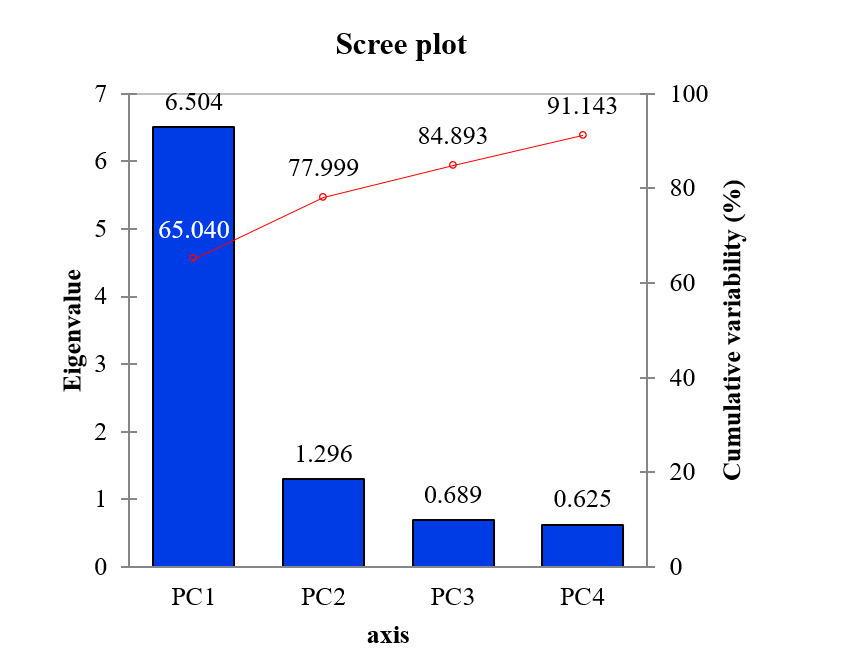
Cluster analysis indicated that pruning of the main stem or primary branch shoots combined with a biocomplex fertilizer dose of 10-15 tons ha-1 significantly influenced the morphophysiological traits of purple eggplant. Principal component analysis (PCA) identified two principal components with eigenvalues greater than 1 (PC1 = 6.50 and PC2 = 1.30), which together explained 78.00% of the total variance (Figure 2). Based on the Kaiser criterion, components with eigenvalues less than 1 were excluded, indicating that PC1 and PC2 were sufficient to represent the dataset.
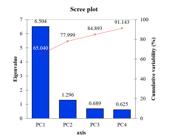
Scree plot showing eigenvalues (bars) and cumulative percentage variance explained (line) for the first four principal components (PC1-PC4) derived from principal component analysis (PCA).
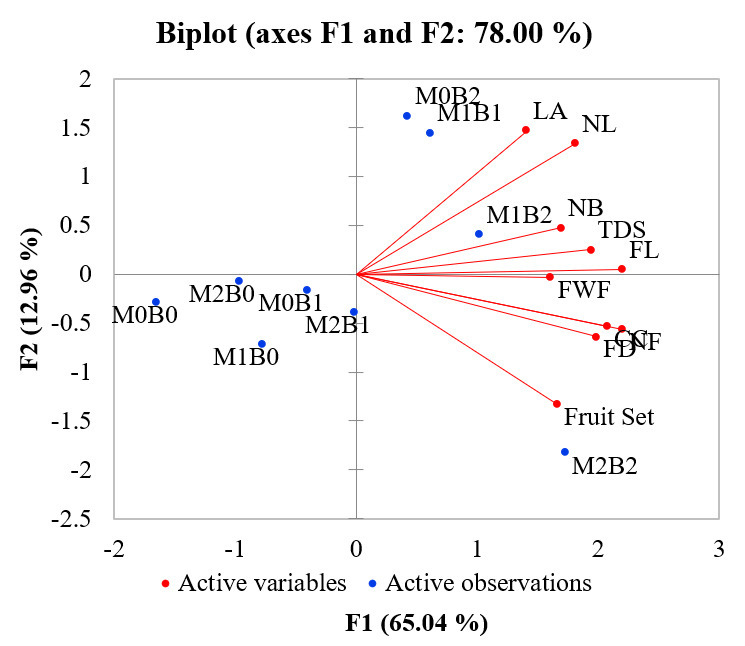
Factor loadings above 0.3 were considered meaningful contributors to the principal components and to the variability of data (Tavakol & Wetzel, 2020). The factor loading matrix (Table 3) showed that PC1 was strongly associated with yield- and quality-related traits, including fruit length (FL), number of fruits (NF), fruit diameter (FD), fresh weight of fruits (FWF), chlorophyll content (CC), fruit set, and total soluble solids (TSS), indicating that this component represents overall productivity and fruit performance. PC2 was mainly associated with vegetative growth traits, particularly leaf area (LA) and number of leaves (NL), and showed a negative association with fruit set, suggesting a contrast between vegetative growth and reproductive development.
These relationships were further confirmed in the PCA biplot (Figure 3), where yield-related traits clustered along PC1, while vegetative traits were aligned with PC2. Treatment distribution indicated that M2B2 was closely associated with yield-related variables, suggesting superior reproductive output and fruit quality. The analysis biplot in Figure 3 is a visualization of the results of the PCA calculation in Table 3. The biplot displays the first principal component (PC1), where the proximity between points indicates the similarity of characteristics between variables.

Principal component analysis (PCA) biplot showing the distribution of morphophysiological traits of Solanum melongena L. cv. Antaboga under different combinations of pruning and biocomplex fertilizer application. Treatments include M0 (no pruning), M1 (main stem pruning), and M2 (primary branch pruning) combined with B0 (no fertilizer), B1 (biocomplex at 10 tons ha-1), and B2 (biocomplex at 15 tons ha-1). F1 and F2 represent the first and second principal components, explaining 65.04% and 12.96% of the variance, respectively (total = 78.00%).
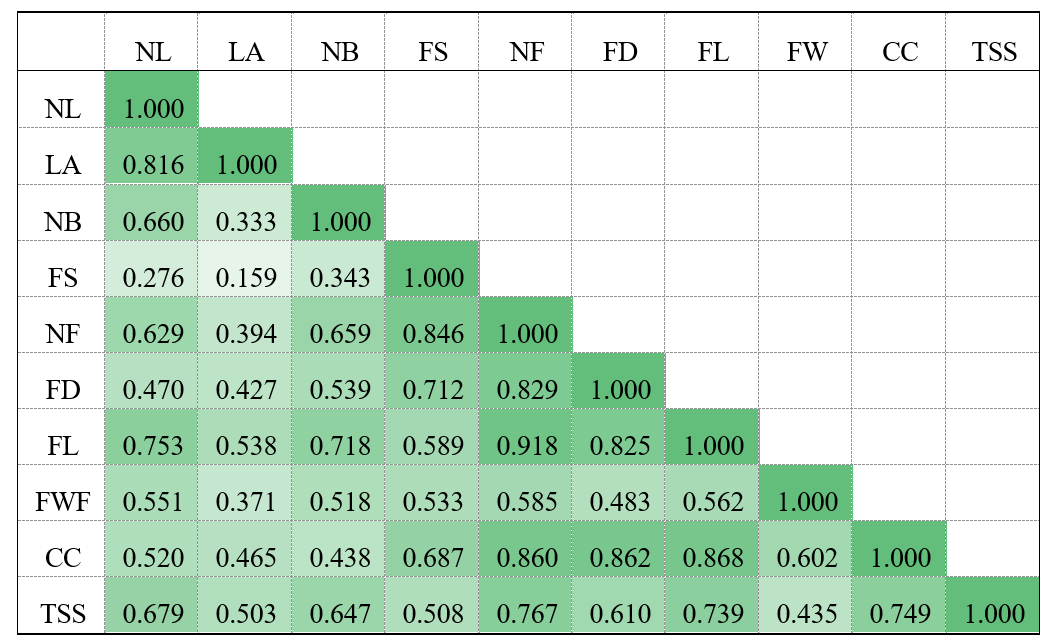
The correlation matrix (Figure 4) illustrates the strength and direction of linear relationships among the variables derived from PCA (Table 3). All observed variables exhibited positive correlations, with no negative correlations detected (Figures 3 and 4). The strongest relationship, indicated by the darkest shade, was observed between FL and NF, while CC showed strong associations with NF, FD, and FL (Figure 4). Integrated nutrient management, combining chemical fertilizers, organic inputs, and microbial-based fertilizers such as biocomplex, has been reported to enhance eggplant yield components, including fruit length, fruit diameter, and number of fruits per plant (Sumanth et al., 2024). Chlorophyll is a magnesium-containing pigment located at the center of a porphyrin ring with phytol side chains. It is associated with several biochemical compounds, including alkaloids, saponins, tannins, steroids, and glycosides (Ebrahimi et al., 2023). In young fruits, chlorophyll contributes to green coloration of the skin; however, during ripening, it degrades and is replaced by carotenoids or anthocyanins, which impart red, yellow, or purple coloration to the fruit (Syvash & Zolotareva, 2017).
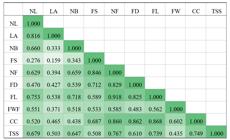
Correlation analysis among morphophysiological characteristics of Solanum melongena L. cv. Antaboga, including the number of leaves (NL), leaf area (LA), number of branches (NB), fruit set (FS), number of fruit (NF), fruit diameter (FD), fruit length (FL), fresh weight of fruit (FWF), chlorophyll content (CC), and total soluble solids (TSS). Values in bold indicate correlations significantly different from 0 at alpha = 0.95.
Overall, the combined application of pruning and biocomplex fertilizer significantly improved yield-related traits, including the number of productive branches, fruit set, and fruit yield. However, no significant effects were observed on fruit quality traits, including chlorophyll content and total soluble solids.
Conclusions
Pruning of primary branch shoots combined with biocomplex fertilizer at a dose of 15 tons ha-1 increased purple eggplant yield by 137.9%. Pruning and biocomplex fertilizer application, when considered individually, had significant effects on the number of leaves, leaf area, fruit diameter, fruit length, chlorophyll content, and total soluble solids. However, further studies are required to enhance fruit quality attributes, including antioxidant content and other bioactive compounds such as fiber, folate, and vitamins.
Data Availability Statement
Data available upon request to authors.
References
- Alam, I., & Salimullah, M. (2021). Genetic engineering of eggplant (Solanum melongena L.): Progress, controversy and potential. Horticulturae, 7(4):78.
- Aneja, N. M. et al. (2024). Pruning in horticulture: A blend of art and science. Journal of Scientific Research and Reports, 30(10):313-329.
- Arabsalmani, K., Jalali, A. H., & Jafari, P. (2021). Study the effect of plant pruning on eggplant (Solanum melongena cv. Bellen) yield in greenhouse condition. Journal of Horticultural Sciences, 35(4):621-630.
- Arfarita, N. et al. (2024). The effect of VP3 biofertilizer and compost application on red spinach (Amaranthus dubius) and green spinach (Amaranthus viridis) yield and quality. Journal of Tropical Life Science, 14:27-38.
- Aji, A., Sugiarto, N., & Arfarita A. (2024). Pruning shoots and providing biocomplex fertilizer are efforts to increase tomato (Solanum lycopersicum L.) yields. Agronisma, 12(1):174-191.
- Bayu, M. K., Rizqiati, H., & Nurwantoro, N. (2017). Analisis total padatan terlarut, keasaman, kadar lemak, dan tingkat viskositas pada kefir optima dengan lama fermentasi yang berbeda. Jurnal Teknologi Pangan, 1(2):33-38.
- Cao, M. et al. (2022). Pruning improves seedling development and bioactive secondary metabolite accumulation in the leaves of Ginkgo biloba Trees, 36(3):953-966.
- Cericola, F. et al. (2013). The population structure and diversity of eggplant from Asia and the Mediterranean Basin. PloS One, 8(9):e73702.
- Danziger, N., & N, Bernstein. (2021). shape matters: Plant architecture affects chemical uniformity in large-size medical cannabis plants. Plants, 10(9):1834.
- Colak, N. et al. (2022). The phenolics and antioxidant properties of black and purple versus white eggplant cultivars. Molecules, 27(8):2410.
- Ebrahimi, P. et al. (2023). Chlorophylls as natural bioactive compounds existing in food by-products: A critical review. Plants , 12(7):1533.
- Fandi, A. A., Muchtar, R., & Notarianto, N. (2020). Pengaruh media tanam terhadap pertumbuhan tanaman terong (Solanum melongena L.) dengan sistem hidroponik. Jurnal Ilmiah Respati, 11(2):114-127.
-
Food and Agriculture Organization - FAO. (2024). Global eggplant statistics, food and agriculture organization statistical yearbook Rome. Available in: <https://www.fao.org/faostat/en/#data/QI>.
» https://www.fao.org/faostat/en/#data/QI - Ghosh, S. K. (2022). Eggplant (Solanum melongena L.) and climate resilient agricultural practices. In S. R. Choudhury., & C. K. Panda. Climate change dimensions and mitigation strategies for agricultural sustainability Vol. II. New Delhi. (pp. 1-24).
- Gürbüz, N. et al. (2018). Health benefits and bioactive compounds of eggplant. Food Chemistry, 268:602-610.
- Hellwig, C. G. et al. (2025). Central and hedge pruning lead to improvement in pecan production and quality in high-density orchards. Ciência e Agrotecnologia, 49:e020224.
- Hidayat, R., Safitri, M. D., & Nugrahani, P. (2024). Composition of growing media and concentration of foliar fertilizer affected yield and quality of purple eggplant (Solanum melongena L.). Jurnal Ilmu Pertanian Indonesia, 30(1):48-54.
- Ikeuchi, M. et al. (2016). Plant regeneration: Cellular origins and molecular mechanisms. Development, 143(9):1442-1451.
- Koley, T. K. et al. (2019). Antioxidant potential of Indian eggplant: Comparison among white, purple and green genotypes using chemometrics. Agricultural Research, 8:9-20.
- Ling, Q., Huang, W., & Jarvis, P. (2011). Use of a SPAD-502 meter to measure leaf chlorophyll concentration inArabidopsis thaliana Photosynthesis Research, 107:209-214.
-
Marini, R. P. (2020). Physiology of pruning fruit trees Virginia Cooperative Extention. Available in: https://www.pubs.ext.vt.edu/content/dam/pubs_ext_vt_edu/422/422-025/SPES-235.pdf
» https://www.pubs.ext.vt.edu/content/dam/pubs_ext_vt_edu/422/422-025/SPES-235.pdf - Mohamed, H. I., El-Beltagi, H. E-D. S., & Abd-Elsalam, K. A. (2021). Plant growth-promoting microbes for sustainable biotic and abiotic stress management Springer International Publishing.
- Nair, M. A. et al. (2024). Pruning in horticulture: A blend of art and science. Journal of Scientific Research and Reports , 30(10):313-329.
- Nie, J. et al. (2021). Plant pruning affects photosynthesis and photo assimilate partitioning in relation to the yield formation of field-grown cotton. Industrial Crops and Products, 173:114087.
- Nurliawati, G., & Faqih, A. (2024). The effect of crops spacing and dossage of potassium fertilizer on growth and yield of sweet corn (Zea mays Saccharata sturt L.). Devotion. Journal of Research and Community Service, 5(2):256-266.
- Nuraga, G. W. (2025). Effect of shoot pruning and in-row spacing on yield and fruit size of eggplant (Solanum melongena L.). Jefore Ethiopian Journal of Applied Sciences, 1(1):88-96.
- Oladosu, Y. et al. (2021). Genetic diversity and utilization of cultivated eggplant germplasm in varietal improvement. Plants , 10(8):1714.
- Panday, D. et al. (2024). Rooted in nature: The rise, challenges, and potential of organic farming and fertilizers in agroecosystems. Sustainability, 16(4):1530.
- Rengga, I. A., Sugito, Y., & Sudiarso, D. (2024). Respon pertumbuhan dan hasil sawi hijau akibat pemberian pupuk hayati dan NPK. Agro Bali Agricultural Journal, 7(1):218-226.
- Sabry, A. K. H. (2015). Synthetic fertilizers; role and hazards. Fertilizer Technology, 5(1):110-133.
- Singh, H., & Reddy, S. M. (2012). Improvement of wheat and maize crops by inoculating Aspergillus spp in alkaline soil fertilized with rock phosphate. Archives of Agronomy and Soil Science, 58(5):535-546.
- Silva, G. L. et al. (2019). Effects of fruit thinning and main stem pruning in melon crops. Journal of Experimental Agriculture International, 39(3):1-10.
- Sukprasansap, M., Sridonpai, P., & Phiboonchaiyanan, P.P. (2019). Eggplant fruits protect against DNA damage and mutations. Mutation Research/Fundamental and Molecular Mechanisms of Mutagenesis, 813:39-45.
- Sumanth, B. T. et al. (2024). Influence of integrated nutrient management (INM) on growth, yield and quality of brinjal (Solanum melongena L.). International Journal of Research in Agronomy, 7(2):431-434.
- Syvash, O. O., & Zolotareva, O. K. (2017). Regulation of chlorophyll degradation in plant tissues. Biotechnologia Acta, 10(3):20-30.
- Tavakol, M., & Wetzel, A. (2020). Factor analysis: A means for theory and instrument development in support of construct validity. International Journal of Medical Education, 11:245-247.
- Wang, Y., & Jiao, Y. (2018). Axillary meristem initiation-a way to branch out. Current Opinion in Plant Biology, 41:61-66.
- Yalong, K. et al. (2020). A split supply of bio-organic and chemical fertilizer synergistically affects root system architecture and improves above-ground growth in pear tree (Pyrus pyrifolia Nakai). [Preprint]. Research Square, https://doi.org/10.21203/rs.2.23996/v1
- Zakeri, H., & Roudbari, Z. (2023). Determining the efficiency of silicon fertilizer and branch pruning on greenhouse eggplant yield and post-harvest shelf life. Journal of Horticultural Science, 36(4):869-883.
- Zapata, D., López, J. E., & Saldarriaga, J. F. (2024). Plant growth-promoting and biocontrol potential of Aspergillus tubingensis and Talaromyces islandicus Journal of Soil Science and Plant Nutrition, 24:2354-2370.