 Comparison between methods of ocular infrared thermography in horses undergoing training for hippotherapy
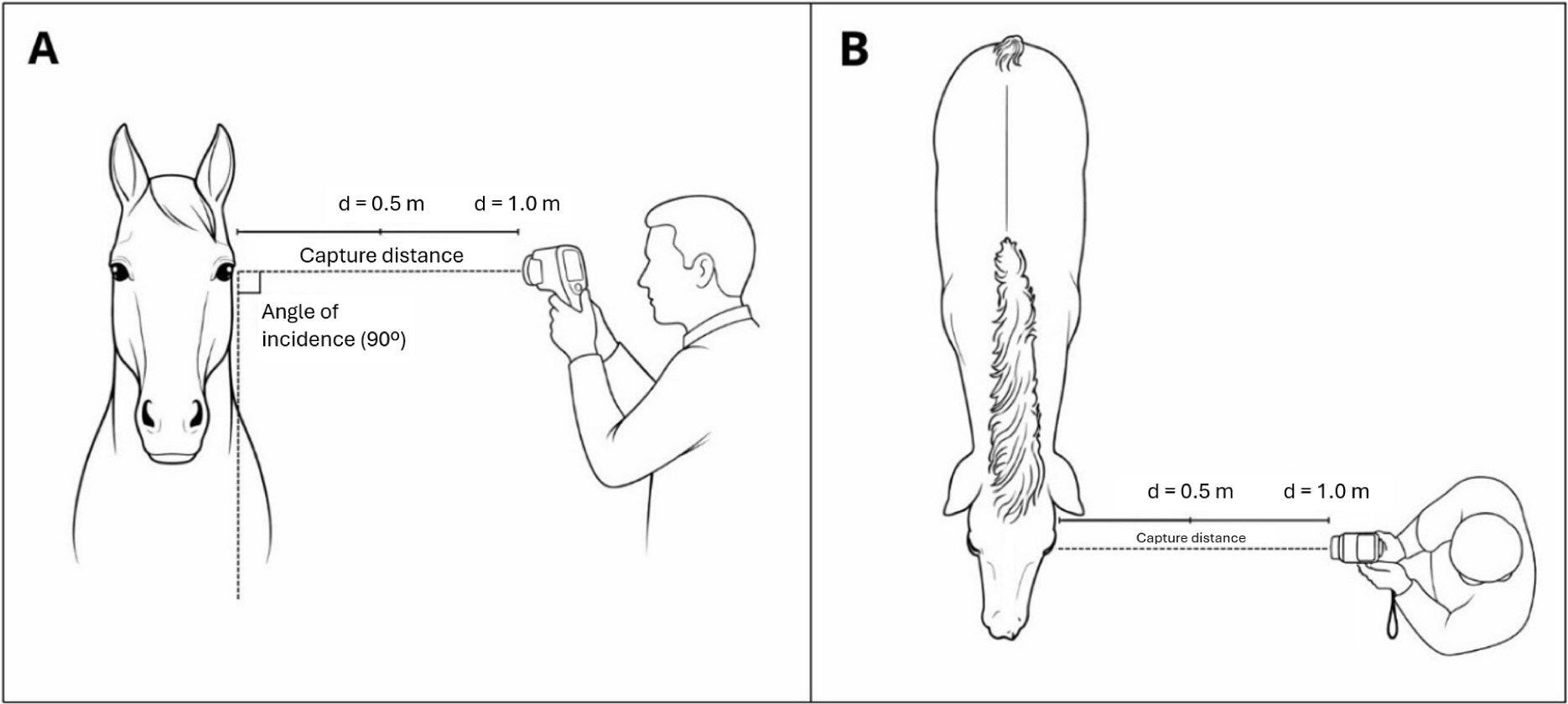
The assessment of stress in horses requires objective, sensitive, and non-invasive methods, with infrared ocular thermography being a promising tool in this context. This study aimed to compare different methods for acquiring thermal images of the ocular region in horses, focusing on areas currently considered to present higher thermal sensitivity to potentially stressful stimuli, in order to contribute to the methodological refinement of this technique. Seven Quarter Horse geldings in training for hippotherapy were evaluated over six months. Thermographic evaluations were performed using a FLIR E40 thermal camera at distances of 0.5m and 1.0m from the animals' eyes, at a 90° angle, on both right and left sides, specifically targeting the lacrimal caruncle, medial canthus, and lateral canthus regions. Data collected over time were analyzed using ANOVA and Tukey’s test for multiple comparison of means. Capture distance significantly influenced ocular temperature (p < 0.001). However, ocular regions and eye side showed no significant differences (p > 0.05). Despite the absence of statistical differences among the three ocular regions evaluated, the lacrimal caruncle exhibited greater thermal stability throughout the experimental period. The 0.5m distance provided greater consistency in image acquisition and lower operational variability, being recommended for future evaluations. Although no differences were observed between eye sides, standardization of the evaluation on the left eye is recommended due to easier handling and evaluator positioning. Adopting the most stable methodological parameters identified in this study significantly contributes to increasing the reproducibility and reliability of sequential thermographic evaluations in horses.
Keywords:
animal welfare; lacrimal caruncle; horses; physiology; quarter horse
 Thumbnail
 Thumbnail