
 Advancement of the reproductive cycle in oat combinations on productivity and nutritional quality for silage
Abstract
The combination of winter cereal cultivars aims to extend the harvest window, in addition to favoring dual purposes: grazing during the period and grain and/or silage production. The experiment on which this study is based was carried out at the Animal Production Center (NUPRAN) of the Agricultural and Environmental Sciences Sector of UNICENTRO, in Guarapuava-PR. The objective was to evaluate the productive and bromatological characteristics of two oat combinations: T1 - TamPic: 90% white oats GMX Tambo + 10% black oats GMX Picasso; and T2 - TamGau: 30% white oats GMX Tambo + 70% white oats UPF Gaudéria. The design was randomized blocks, in a 2x5 factorial scheme, with two oat combinations associated with five harvests, with cutting intervals of seven days, from pre-flowering for silage production, with five replicates. Regardless of the combinations evaluated, the advancement of the reproductive cycle promoted an increase in the plant dry matter content and dry biomass production; it reduced the mineral matter and crude protein contents. The TamPic combination was superior for bromatological chemical quality, with (CP: 108.59 g/kg-1 DM; NDF: 595.46 g/kg-1 DM; ADF: 428.24 g/kg-1 DM), despite the lower dry biomass production compared to the TamGau combination (6.49 t ha-1 versus 7.83 t ha-1).
Key-words:
winter crops; harvest for silage; forage quality; phenotypic response
Resumo
A combinação de cultivares de cereais de inverno tem como objetivo ampliar a janela de colheita, além de favorecer dupla finalidade: pastejo no período e produção de grãos e/ou ensilagem. O experimento sobre o qual versa este estudo foi realizado no Núcleo de Produção Animal (NUPRAN) do Setor de Ciências Agrárias e Ambientais da UNICENTRO, em Guarapuava-PR. Objetivou-se avaliar características produtivas e bromatológicas de duas combinações de aveias: T1 - TamPic: 90% de aveia branca GMX Tambo + 10% de aveia preta GMX Picasso; e T2 - TamGau: 30% de aveia branca GMX Tambo + 70% de aveia branca UPF Gaudéria. O delineamento foi de blocos ao acaso, em esquema fatorial 2x5, sendo duas combinações de aveias associadas a cinco colheitas, com intervalos de corte de sete dias, a partir do pré-florescimento para produção de silagem, com cinco repetições. Independentemente das combinações avaliadas, o avanço do ciclo reprodutivo promoveu aumento nos teores de matéria seca da planta e na produção da biomassa seca; reduziu os teores de matéria mineral e de proteína bruta. A combinação TamPic foi superior para a qualidade química bromatológica, com PB: 108,59 g/kg-1 MS; FDN: 595,46 g/kg-1 MS; FDA: 428,24 g/kg-1 MS, apesar da menor produção de biomassa seca em comparação à combinação TamGau (6,49 t ha-1 contra 7,83 t ha-1).
Palavras-chave:
culturas hibernais; colheita para silagem; qualidade de forragem; resposta fenológica
1. Introducion
Intercropping or “mixes”, as they are popularly called, involves sowing combinations of species and/ or cultivars for silage production in the same area. This practice reduces losses during the process owing to its use for dual purposes, with a wide harvest window for ensiling, balancing dry biomass production and nutritional value(1). Oats have great potential, as they can be used for grazing and as food preserved as silage(2). Their dual purpose allows for grazing at the end of fall and beginning of winter, and grain production or ensiling later on(3).
A dry matter (DM) content of 30-40% is desirable upon ensiling. For combinations of different species and/or cultivars, the desired DM content is reached at different times depending on the genotype of each cultivar. Due to advancements in the production cycle, cultivars tend to accumulate more dry matter per unit area(4,5). Consequently, as dry matter accumulates, the contents of crude protein and mineral matter decrease because of the requirement for nutrients to advance the cycle(6). An increase in neutral detergent fiber content occurs due to the loss of cytoplasmic compounds from cells and the concentration of fiber carbohydrates, which decreases the leaf/stem ratio and increases lignin concentration and cell wall thickening(7).
Winter cereals cut at the pre-flowering stage contain high levels of crude protein, digestible fiber and mineral salts(8), which can interfere with fermentation process due to the high buffering capacity of the forage and its resistance to pH reduction, which can lead to effluent production. As the phenological cycle advances to the starchy grain stage, there is a reduction in crude protein and an increase in fiber carbohydrate concentration and starch deposition in grains, which provides greater dry matter digestibility(9). The ensiling process is based on anaerobic fermentation, in which microorganisms multiply and transform soluble carbohydrates into organic acids, providing appropriate conditions for preservation and maintaining the nutritional quality and stability of the ensiled forage(10).
Therefore, the present study aimed to evaluate the biomass production, morphological composition, chemical composition, and dry matter degradation of silages made from combinations of oat cultivars subjected to successive cuts from the onset of flowering.
2. Material and methods
The experiment was conducted from April 21 to August 15, 2022, at the Animal Production Center (NUPRAN) of the Agricultural and Environmental Sciences Sector at the State University of the Midwest (UNICENTRO) in Guarapuava, state of Paraná. The experiment was approved by the Ethics Committee on Animal Experimentation (Official Letter 007/2023 - CEUA/UNICENTRO). The fieldwork was carried out in 2022, and the laboratory and CEUA analyses were conducted in 2023.
According to the Köppen classification, the climate of the Guarapuava region is classified as humid mesothermal subtropical (Cfb), characterized by cool summers, mild winters, and no distinct dry season. At an altitude of approximately 1,100 m, the region has an average annual rainfall of 1,944 mm, an average minimum annual temperature of 12.7 °C, an average maximum annual temperature of 23.5°C, and a relative humidity of 77.9%. The soil in the experimental area is classified as a typical Bruno latosol(11).
Before crop implementation, management consisted of controlling weeds and insects using chemical methods. This involved applying the herbicide based on glyphosate (commercial product Roundup WG: 1.5 kg ha-1) and imidacloprid + beta-cyfluthrin (commercial product Connect: 1 L ha-1). At the time of sowing the experimental area, the soil chemical properties (profile from 0 to 20 cm) were as follows: pH CaCl2 0.01 M: 5.98, Phosphorus: 15.30 mg dm-3, K+: 0.43 cmolc dm-3, OM: 23.73%, Al3+: 0.21 cmolc dm-3, H+Al3+: 6.42 cmolc dm-3, Ca2+: 6.33 cmolc dm-3, Mg2+: 1.67 cmolc dm-3 and base saturation of 56.75%.
The experiment consisted of two oat combinations: white (Avena sativa) and black (Avena strigosa) oats. The treatments were T1 - TamPic: 90% white oats GMX Tambo + 10% black oats GMX Picasso, and T2 - TamGau: 30% white oats GMX Tambo + 70% white oats UPF Gaudéria. These combinations followed the company’s recommendations (GMAX Genética Gaúcha®) for the evaluated genotypes, which are commercially available. To avoid piracy of genetic material, the oat combinations require validation through experimentation regarding the productive and qualitative aspects of the resulting forage.
The experiment consisted of two oat combinations: white (Avena sativa) and black (Avena strigosa) oats. The treatments were as follows: T1: 90% white oats (GMX Tambo) and 10% black oats (GMX Picasso); and T2: 30% white oats (GMX Tambo) and 70% white oats (UPF Gaudéria). These combinations follow the company's recommendations (GMAX Genética Gaúcha®) for the genotypes evaluated, which are commercially available. To avoid piracy of genetic material, oat combinations require validation through experimentation regarding the productive and qualitative aspects of the resulting forage.
According to GMAX Genética Gaúcha®, a genetic improvement company, the GMX Tambo® cultivar is a forage white oat recommended for cultivation in the southern region of Brazil, with sowing from March to August. It is characterized by high plant height and tolerance to frost during early development and is recommended for use as a soil cover, for grazing, and pre-dried production. The GMX Picasso® cultivar is an intermediate-cycle black oat, recommended for cultivation in the southern region of Brazil, with sowing from May to June. It is characterized by medium plant height, high regrowth capacity, resistance to lodging, good tillering, and moderate resistance to diseases such as rust and leaf spot, and is recommended for soil cover and forage.
The UPF Gaudéria® cultivar was developed by the Oat Research Program (PPA) of the School of Agronomy and Veterinary Medicine of the University of Passo Fundo (UPF) to introduce new oat cultivars with high yield and forage production potential. According to UPF, the cultivar is resistant to lodging, leaf spot, and leaf rust, and has an average cycle of 124 days from emergence to maturity.
The experiment was a 2 × 5 factorial randomized block design with two oat combinations, five harvest periods, and five replications. The experimental area consisted of five blocks, each containing 10 plots measuring 15.5 m2 (2.21 m × 7.0 m) in size. A total of 50 plots were used, with a useful area of 5.1 m2 (1.36 m × 5.0 m) allocated for the evaluations.
The oat combinations were sown on April 21, 2022 in a no-till system, using a 17 cm row spacing, 20 cm sowing depth, and sowing density following the supplier's recommendations (300 to 400 plants per m2-1). The population density 20 days after sowing was 353 plants m2-1 for TamGau and 408 plants m2-1 for TamPic.
The climatic data from the experimental period (Figure 1) showed minimum temperatures of -3 °C and maximum temperatures of 28 °C. Seven frost events occurred during the experiment. There were 23 rainfall events during the experimental management period, with an average of 17 mm each and variations between 0.1 and 60 mm.
For basal fertilization, 250 kg ha-1 of 04-20-20 fertilizer (N-P2O5-K2O) was applied. Topdressing was carried out on May 15, 2022, at the oat tillering stage, using 300 kg ha-1 of urea with a formula of 46-0000, according to the Fertilization and Liming Recommendations for the State of Paraná(12).
The cultivars were subjected to five harvest periods starting at the early pre-flowering stage. The first harvest took place on July 16, 2022, 87 days after sowing. The subsequent harvests occurred at seven-day intervals, concluding with the final harvest on August 12, 2022.
Harvesting began when the oat combinations entered the reproductive flowering stage, and was carried out manually, with the aid of a serrated sickle, at a height of 12 cm above the ground. The materials were sent to the laboratory for physical analysis of the entire plant composition, through separation of the stem, leaf, and reproductive structures and, subsequently, from the chemical analysis based on dry matter.
The silages were prepared by ensiling in rectangular vacuum packages, with 200 µm, with dimensions of 0.25 m × 0.40 m, using a vacuum packer, regulated to a specific mass, with a fixed weight of 2 kg of the original material. This promoted displacement of the water column when immersed in a container of water, standardizing the storage conditions of the original material with a calculated specific mass of 220 kg of DM m-3. The experimental silos were opened 60 days after ensiling, and the material was sent for evaluation of biomass production, morphological composition of the plant, chemical composition and ruminal degradation of dry matter of the two oat combinations.
At the time of plant harvest, the physical composition was evaluated, for the silage samples were dried in a forced air oven at 55 ºC for 72 hours(13), and sent for chemical and DM degradability analysis. The relationship between plant weight, total useful area harvested, and DM content of a homogeneous, known sample of the respective plot allowed for estimation of dry biomass production (kg ha-1). Next, the whole plant samples were ground in a Wiley mill with a 1 mm mesh sieve.
The pre-dried, ground samples were analyzed for total DM content in an oven at 105 ºC, crude protein (CP) using the micro-Kjeldahl method, and mineral matter (MM) via incineration at 550 ºC, according to AOAC(13). The neutral detergent fiber (NDF) levels were obtained using α-amylase(14), and the acid detergent fiber (ADF) levels were estimated according to Goering and Van Soest(15), in a nonsequential manner.
The relative feed value (RFV) was obtained from the relationship between the potential dry matter intake as a percentage of body weight (DMI, BW), calculated using the following formula: DMI, BW % = (120 ÷ NDF). The estimated rumen degradation of DM (DMD) was calculated using the formula DMD, % = [88.9 - (0.779 × ADF)], according to the methodology described by Bolsen et al.(16). The RFV was estimated using the formula RFV = [(%DMS × DMI, BW) ÷ 1.29] × 100.
The rumen degradation rate of dry matter (DM) was estimated using the in situ technique with 12 cm × 8 cm nylon bags containing 5 g of pre-dried, 1-mm ground material. The bags were subsequently incubated in the rumen(17). A 72-month-old male bovine with an average body weight of 800 kg and a permanent rumen cannula was used for the analysis. This experiment was previously approved by the Ethics Committee on Animal Experimentation (CEUA/UNICENTRO) with Official Letter 019/2023. The incubation times used were 24 and 48 hours.
The data were subjected to the Shapiro-Wilk and Bartlett tests to check for normality and homogeneity of variance, respectively. Once these assumptions were met for biomass production, the morphological composition of the plant, chemical analysis, and the rumen degradation of dry matter, an F-test was performed at a 5% confidence level using analysis of variance (ANOVA) in the SAS (Statistical Analysis System) software(18).
The mathematical model used for the analysis of variance was: Yijkl = µ + Mi + ECj + Bk + (Mi*ECj) l + Eijkl, where: µ = mean of treatments; Mi = effect of oat combinations, order i, where 1 = TamPic and 2 = TamGau; ECj = effect of harvest time of order j, where 1 = first; 2 = second, 3 = third, 4 = fourth and 5 = fifth; Bk = effect of block of order k, where 1 = first; 2 = second, 3 = third, 4 = fourth and 5 = fifth; (Mi*Cj)l = effect of the interaction between oat combinations and harvest time; and Eijkl = random error associated with each observation Yijkl.
The data were also subjected to polynomial regression analysis, considering the variable days of evaluation after the onset of flowering for each oat cultivar combination, ranging from one to 28 days, using the “proc reg” procedure of the SAS software(18). The selection of the best model was based on the coefficient of determination.
3. Results and discussion
Interactions were observed (P < 0.05) was observed between combinations of oats × harvest times for the DM contents of the plant and its structural components (Table 1).
Dry matter contents of the whole plant and its morphological components, and oat combinations associated with different harvest times.
The DM content in the TamGau combination for the whole plant, leaves, stems, and reproductive structures increased linearly (P<0.05), in the following proportions: 2.53, 3.18, 2.70, and 13.22 g/kg-1 DM, respectively, from the first harvest and the onset of flowering until the fifth harvest and reaching the starchy grain stage. For the TamPic combination, the linear increases (P < 0.05) were smaller, at 1.70, 1.68, 2.19, and 10.97 g/kg-1 DM, respectively. This information is highly practical for rural producers because estimating the plant DM allows for estimating the degree of DM dilution as the crop production cycle progresses(7). Lower plant DM increase rates indicate better nutrient conservation, a wider harvest window for silage production, and greater tolerance to end-of-cycle diseases.
On average, higher (P < 0.05) dry matter contents were observed in TamGau than in TamPic, regardless of harvest time. These higher contents were observed in the whole plant (170.86 g/kg-1 DM versus 155.90 g/kg-1 DM), leaves (187.84 g/kg-1 DM versus 171.97 g/kg-1 DM), stems (154.18 g/kg-1 DM versus 139.73 g/kg-1 DM), and reproductive structures (338.92 g/kg-1 DM versus 286.40 g/kg-1 DM).
Later stages provide more development time and a greater concentration of dry matter in the plant. This can be related to the fact that white oats have a longer cycle than black oats and therefore have more time for nutrient concentration(19).
Regarding the participation of the structural components of the whole plant (g/kg-1 DM), there was no interaction (P > 0.05) between oat combinations and harvest times (Table 2). Regardless of oat combinations, the mean values showed a decrease (P < 0.05) in the participation of leaves and stems with the advancement of the reproductive cycle of the combinations: 9.91 and 6.71 g/kg-1 DM, respectively. On average, the participation of the reproductive structure increased (P < 0.05) by 16.63 g/kg-1 DM.
Plant morphological composition (g/kg-1 DM) in oat combinations associated with different harvest times, from the onset of flowering.
On average, regardless of the evaluated harvest times, there was no difference (P > 0.05) in the participation of leaves, stems, and reproductive structures of the whole plant between the TamGau and TamPic combinations. This lack of difference can be explained by the combination of the two oats with different reproductive cycles. Intercropping two or more winter forage grasses combines the peaks of dry matter production reached at different times. This interferes with the differentiation of their structures, resulting in increased production and extending the period of pasture use. Intercropping annual winter grasses, as occurred with oats in this study, can efficiently advance or prolong forage availability(20).
Black oats have an earlier cycle than white oats, resulting in earlier development of their structures (stems and reproductive structures)(21). However, black oats participated less in the TamPic combination than white oats, meaning they do not exhibit this pattern. The most significant changes in forage plant composition result from development and maturity. Thus, most species experience a decline in nutritional value as the cycle progresses due to the lower leaf/stem ratio and the increasing lignification of the cell wall(21).
The thickness of the cell wall makes the plant difficult to digest, as it reduces the accessibility of and/or fixation of rumen microorganisms. It has been observed that digestibility can vary according to cell wall deposition. The structure and thickness of the cell wall explain the low degradability of some materials that have indigestible chemical components(22). The low digestibility of certain tissues is mainly due to their dense cell arrangement, thick cell walls, and lignin content(6).
Table 3 lists the interactions (P<0.05) between oat combinations and harvest times for dry biomass production. Dry biomass production in the TamGau combination increased linearly (P < 0.05) by 164.76 kg ha-1 per day as the reproductive cycle progressed. Meanwhile, the TamPic combination maintained a dry biomass production at a rate of 164.48 kg ha-1 per day.
Dry biomass production of oat combinations associated with different harvest times, from the onset of flowering.
On average, regardless of harvest time, higher dry matter production (P < 0.05) was obtained for TamGau than for TamPic (7.83 kg ha-1 versus 6.49 kg ha-1; Table 3). According to Lehmen(23), an increase in dry matter production per area is observed as the phenological stages of the crops advance. Black oats, single, are characterized by high dry matter production at the beginning of their cycle, due to earlier development(4). In contrast, white oats have a longer cycle, providing a wider window of growth and biomass production compared to black oats. In the present study, black oats did not express this characteristic when intercropped with white oats, as the first harvests of such combinations presented lower dry biomass values.
On average, the oat combinations evaluated showed interaction (P < 0.05), with higher mineral matter content (95.36 versus 84.90 g/kg-1 DM) for the TamPic combination than for the TamGau combination. However, for crude protein, neutral detergent fiber, and acid detergent fiber, there was an opposite trend, with higher values for the TamGau combination (Table 4).
Contents of mineral matter, crude protein, neutral detergent fiber, and acid detergent fiber of oat combinations associated with different harvest times, from the onset of flowering.
MM contents decreased by 1.61 and 2.31 g/kg-1 DM per day for TamGau and TamPic, respectively. Similarly, crude protein (CP) content decreased by 3.02 and 1.41 g/kg-1 DM per day for TamGau and TamPic, respectively. Regarding NDF and ADF content, values remained stable with advancing physiological maturity for both cultivars. The lack of decrease in NDF and ADF content with advancing physiological maturity is due to the accumulation of starch in the grains and the concentration of ether extract in the plant, which keeps NDF and ADF content stable.
Schmidt et al.(24) explained that the high mineral content in silage may be linked to the loss of organic matter during fermentation. This results in a higher mineral concentration in the mass. Therefore, there was likely less organic matter loss during the fermentation of the TamGau combination than that of the TamPic combination. This can be explained by the longer permanence of the TamGau combination in the vegetative phase and its higher organic matter content.
According to Horst et al.(9), the increase in the DM content of the plant is related to the fact that DM production increases as the plant continues to develop, whereas CP and MM contents tend to decline. This is suggested to be associated with the plant's uptake of nutrients, as the demand for nutrients for starch and protein deposition in the grain filling phase increases as the harvest season progresses.
In a study by Mattos Leão et al.(19), a reduction in hemicellulose content was observed in black oat silage. In contrast, white oat silage showed an increase in hemicellulose content with each harvest. The reduction in NDF content for the TamPic combination can be explained by the greater digestibility of the hemicellulose fraction during silage fermentation(19), as it is one of the three components of NDF. ADF is related to the less digestible fibrous part in the rumen and is considered a limiting factor for animal performance(25). The decrease in ADF for the TamPic combination may be due to the degradation of the partially digestible portion (cellulose) by the action of organic acids produced during the silage fermentation process(26).
Table 5 shows that there was no interaction (P < 0.05) between oat combinations and harvest times for the relative feed value. However, for ruminal degradation of DM, there was an interaction (P < 0.05) whether in 24 or 48 hours incubations. Thus, ruminal degradation of DM decreased linearly (P < 0.05) with 24 and 48 hours incubations in the TamGau combination, at a rate of 6.70 and 2.70 g/kg-1 DM per day, respectively, with each day of advancement in the reproductive cycle. For the TamPic combination, there was a smaller linear decrease (P < 0.05) each day, with values of 4.64 and 1.70 g/kg-1 DM per day.
Relative feed value (RFV) and ruminal DM degradation at 24 and 48 hours of incubation of oat combinations associated with different harvest times from the onset of flowering.
Data in Table 5 also show that, on average, higher values (P < 0.05) of relative feed value (90.66 versus 80.27) and ruminal degradation of DM in 24 hours (497.71 versus 371.21 g/kg-1 DM) of the silage were observed for the TamPic combination, compared with TamGau, regardless of the evaluated harvest time. However, there was no difference in the ruminal degradation of DM in 48 hours between the evaluated combinations.
The greater degradation at 24 hours for the TamPic combination can be attributed to its lower levels of low digestibility fiber (ADF) and consequently higher levels of relative feed value (Table 5). As plants mature, the levels of NDF and ADF increase, when these fibers are less digestible, they interfere with the resulting nutritional quality and with the use of forage by the animal(27). Thus, an increase in fiber carbohydrate levels can affect gastrointestinal tract repletion, limiting intake in ruminants(28).
The relative feed value is related to the intake and digestibility. TamPic had a higher relative feed value because it presented lower levels of NDF and ADF. The relative feed value is an estimate of the nutritional value of forage that combines intake potential, as estimated by NDF, with digestibility, as represented by NDF and ADF. This value should only be used to compare forages(29).
The greater degradation within 24 hours is because non-fiber carbohydrates (NFC), represented by water-soluble sugars (mono and disaccharides), starch, and pectin, are promptly and completely digested in the gastrointestinal tract of ruminants(30).
In general, despite the evaluation of data using regression equations, producers can define the type of preserved food they wish to produce using different combinations of oats. When harvested at the onset of flowering, wilting was necessary to obtain the pre-dried product owing to the low dry matter content (134.81 g/kg-1 DM). This resulted in a material with a high participation of leaves, on average 555.00 g/kg-1 DM, which, consequently, determined the high CP content (146.94 g/kg-1 DM) and greater digestibility of NDF and ADF, as evidenced by rumen degradation of dry matter within 24 or 48 hours at 506.46 g/kg-1 DM and 600.39 g/kg-1 DM, respectively. However, there was a low production of dry biomass per unit area at 4.94 tons.
Other producers may need silage harvested 28 days before the onset of flowering, in the starchy grain stage, with a lower CP content (90.62 g/kg-1 DM), higher NDF and ADF levels, and a lower ruminal degradation capacity of 365.08 g/kg-1 DM and 535.72 g/kg-1 DM in 24 and 48 hours respectively, as well as higher dry biomass production per unit area (9.20 tons), at a lower production cost.
Both preserved foods, when harvested at the beginning or end of the production cycle, serve specific functions in diets that require highly digestible, physically effective fiber with higher protein levels. When harvested at the onset of flowering, both products are bulky foods with buffering characteristics. In contrast, bulky feed with structured carbohydrate fiber and low protein content provides a dynamic aspect to different diets due to the structured fiber, which helps the animals' rumination rate.
4. Conclusion
Regardless of the oat combination, advancing in the reproductive cycle resulted in increased dry matter content and dry biomass production. However, mineral matter and crude protein content decreased, and rumen dry matter degradation was limited in both combinations. The TamPic combination had a superior chemical composition and dry matter digestibility, while the TamGau combination produced more dry biomass. These results highlight the importance of selecting genotypes based on the objective of forage production, whether the priority is nutritional quality or dry biomass productivity.
Data availability statement
Data will be made available on request to the corresponding author.
References
-
1 Dall´ Agnol E, Zeni M, Fontaneli RS, Bondan C. Misturas de cereais de inverno de duplo propósito para silagem de planta inteira. Research, Society and Development. 2022;11(8): e45511830938. Available from: http://dx.doi.org/10.33448/rsd-v11i8.30938
» http://dx.doi.org/10.33448/rsd-v11i8.30938 -
2 Zamarchi G, Pavinato PS, Menezes LFG, Martin TN. (2014). Silagem de aveia branca em função da adubação nitrogenada e pré-murchamento. Semina: Ciências Agrárias. 2019;35(4):2185-2185. Available from: http://dx.doi.org/10.5433/16790359.2014v35n4p2185
» http://dx.doi.org/10.5433/16790359.2014v35n4p2185 -
3 Zilio M, Peloso JA, Mantovani A. Produção de forragem e de grãos de trigo de duplo propósito submetido a diferentes densidades de semeadura, adubação nitrogenada e manejos de corte. Revista De Ciências Agroveterinárias. 2018;16(4):367- 375. Available from: http://dx.doi.org/10.5965/223811711642017367
» http://dx.doi.org/10.5965/223811711642017367 -
4 Dall' Agnol E, Zeni M, Silveira DC, Fontaneli RS, Rebesquini R, Panisson FT, Ceolin MET, Escobar FM, Webber MPC. 7. Revista Plantio Direto & Tecnologia Agrícola. 2021;1(180):30-35. https://www.bdpa.cnptia.embrapa.br/consulta/busca?b=ad&id=1132333&biblioteca=vazio&busca=ILP&qFacets=ILP&sort=&paginacao=t&paginaAtual=3
» https://www.bdpa.cnptia.embrapa.br/consulta/busca?b=ad&id=1132333&biblioteca=vazio&busca=ILP&qFacets=ILP&sort=&paginacao=t&paginaAtual=3 -
5 Moreira GLP, Moreira ES, Prates CJN, Cardoso NS, Viana AES, Lopes SC. Produtividade da biomassa e composição bromatológica de genótipos de aveia forrageira em Vitória da Conquista. Scientia Plena. 2017;13(3):1-10. Available from: http://dx.doi.org/10.14808/sci.plena.2017.030201
» http://dx.doi.org/10.14808/sci.plena.2017.030201 -
6 Bueno AVI, Ribeiro MG, Jacovaci FA, Três TT, Leão GFM, Gomes ALM, Jobim CC. Nutritional value and digestible dry matter production of oat genotypes for ensiling. Ciência Animal Brasileira. 2020;21(e-58129). Available from: http://dx.doi.org/10.1590/1809-6891v21e-58129
» http://dx.doi.org/10.1590/1809-6891v21e-58129 -
7 Dochwat A, Neumann M, Bumbieris Junior VH, Heker Junior JC, Cristo FB, Zdepski BF, Souza AM, Matchula AF. Produção e qualidade nutricional de forragem de aveia preta cultivada em diferentes povoamentos sob regime de cortes sucessivos. Arquivo Brasileiro de Medicina Veterinária e Zootecnia. 2020;72(05):1936-1946. Available from: http://dx.doi.org/10.1590/16784162-11313
» http://dx.doi.org/10.1590/16784162-11313 -
8 Jobim CC, Nussio LG, Reis RA, Schmidt P. Avanços metodológicos na avaliação da qualidade da forragem conservada. Revista Brasileira de Zootecnia. 2007;36:101-119. Available from: https://doi.org/10.1590/S1516-35982007001000013
» https://doi.org/10.1590/S1516-35982007001000013 -
9 Horst EH, Neumann M, Mareze J, Leão GFM, Dochwat A. Silagem pré-secada de cereais de inverno em estádio de préflorescimento: Revisão. Pubvet. 2017;11(4):415-423. Available from: http://dx.doi.org/10.22256/pubvet.v11n4.415-423
» http://dx.doi.org/10.22256/pubvet.v11n4.415-423 -
10 Macêdo AJS, Santos EM, Oliveira JS, Perazzo AF. Microbiologia de silagens: Revisão de Literatura. Revista Electrónica de Veterinária. 2017;18(9):1-11. Available from: https://www.redalyc.org/articulo.oa?id=63653009020
» https://www.redalyc.org/articulo.oa?id=63653009020 -
11 Michalovicz L, Müller MML, Tormena CA, Warren A, Dick MV, Meert L. Soil chemical attributes, nutrient uptake and yield of no-till crops as affected by phosphogypsum doses and parceling in southern Brazil. Archives of Agronomy and Soil Science. 2018;65(3):385-399. Available from: http://dx.doi.org/10.1080/03650340.2018.1505041
» http://dx.doi.org/10.1080/03650340.2018.1505041 - 12 Sociedade Brasileira De Ciências Do Solo, Núcleo Estadual Paraná. Manualdeadubaçãoecalagemdo estado do Paraná, Curitiba, 2017.
- 13 Association Of Official Analytical Chemists - A.O.A.C. Official methods of analysis. 16.ed Washington, D.C. 1995.
-
14 Van Soest PJ, Robertson JB, Lewis BA. Methods for Dietary Fiber, Neutral Detergent Fiber, and Nonstarch Polysaccharides in Relation to Animal Nutrition. Journal of Dairy Science. 1991;74(10):3583-3597. Available from: http://dx.doi.org/10.3168/jds.s0022-0302(91)78551-2
» http://dx.doi.org/10.3168/jds.s0022-0302(91)78551-2 -
15 Goering HK, Van Soest PJ. Forage fiber analyses: (apparatus, reagents, procedures, and some applications). Washington, D.C.: Agricultural Research Service, U.S. Dept. of Agriculture; 1970. Available from: https://handle.nal.usda.gov/10113/CAT87209099
» https://handle.nal.usda.gov/10113/CAT87209099 -
16 Bolsen KK, Ashbell G, Weinberg ZG. Silage fermentation and silage additives - Review -. Asian Australasian Journal of Animal Sciences. 1996;9(5):483-494. Available from: http://dx.doi.org/10.5713/ajas.1996.483
» http://dx.doi.org/10.5713/ajas.1996.483 -
17 Nocek JE. In situ and Other Methods to Estimate Ruminal Protein and Energy Digestibility: A Review. Journal of Dairy Science. 1988:71(8):2051-2069. Available from: http://dx.doi.org/10.3168/jds.s0022-0302(88)79781-7
» http://dx.doi.org/10.3168/jds.s0022-0302(88)79781-7 - 18 SAS institute. Statistical Analysis System: SAS Institute INC: 1993.
-
19 Mattos Leão GF, Jobim CC, Neumann M, Santos SK, Horst EH, Santos LC. Aspectos produtivos e nutricionais de cereais de inverno em regimes de corte para ensilagem. Archivos de Zootecnia. 2019;68(262):128-136. Available from: http://dx.doi.org/10.21071/az.v68i262.4132
» http://dx.doi.org/10.21071/az.v68i262.4132 - 20 Tavares AR, Fontaneli RS, Santos HP, Favero D, Biazus V, Rebechi IA. Rendimento de Forragem em Consorciações de Gramíneas Anuais de Inverno. In: Mostra De Iniciação Científica, 9. Mostra De Pós-Graduação Da Embrapa Trigo, 6., 2015. A construção de um cientista! Anais eletrônicos [Anais]. Embrapa, Passo Fundo-RS.
-
21 Demétrio JV, da Costa ACT, Oliveira PSR. Produção de biomassa de cultivares de aveia sob diferentes manejos de corte. Pesquisa Agropecuária Trop. 2012;42(2):198-205. Available from: http://dx.doi.org/10.1590/S1983-40632012000200011
» http://dx.doi.org/10.1590/S1983-40632012000200011 -
22 Basso KC, Barbero LM. Anatomia foliar de forrageiras e a sua relação com o valor nutritivo. Vet Not. (Online). 2015;20(1):1-10. Available from: http://dx.doi.org/10.14393/VTV21N1a2015.24423
» http://dx.doi.org/10.14393/VTV21N1a2015.24423 -
23 Lehmen RI, Fontaneli RS, Fontaneli RS, Santos HP. Rendimento, valor nutritivo e características fermentativas de silagens de cereais de inverno. 2014;44(7):1180-1185. Available from: http://dx.doi.org/10.1590/0103-8478cr20130840
» http://dx.doi.org/10.1590/0103-8478cr20130840 -
24 Schmidt P, Novinski CO, Junges D, Almeida R, Souza CM. Concentration of mycotoxins and chemical composition of corn silage: A farm survey using infrared thermography. Journal of Dairy Science. 2015;98(9):6609-6619. Available from: http://dx.doi.org/10.3168/jds.2014-8617
» http://dx.doi.org/10.3168/jds.2014-8617 -
25 Gralak E, Faria MV, Possato Júnior O, Rossi ES, Silva CA, Rizzardi DA, Mendes MC, Neumann M. Capacidade Combinatória de Híbridos de Milho para Caracteres Agronômicos e Bromatológicos da Silagem. Revista Brasileira de Milho E Sorgo. 2014;13(2):187-200. Available from: http://dx.doi.org/10.18512/1980-6477/rbms.v13n2p187-200
» http://dx.doi.org/10.18512/1980-6477/rbms.v13n2p187-200 -
26 Larsen SU, Hjort-Gregersen K, Vazifehkhoran AH, Triolo JM. Co-ensiling of straw with sugar beet leaves increases the methane yield from straw. Bioresource Technology. 2017;245:106-115. Available from: http://dx.doi.org/10.1016/j.biortech.2017.08.117
» http://dx.doi.org/10.1016/j.biortech.2017.08.117 -
27 Fischer A, Duchini PG, Echeverria JR, Miqueloto T, Bernardon A, Américo LF (2017). Animal production on cultivated pasturelands in temperate climate regions of Latin America. Archivos Latinoamericanos de Producción Animal. 2017;25(12):45-55. Available from: https://dialnet.unirioja.es/servlet/articulo?codigo=6810395
» https://dialnet.unirioja.es/servlet/articulo?codigo=6810395 -
28 Mattos Leão GF, Jobim CC, Neumann M, Bueno AVI, Ribeiro MG, Jacovaci FA, Horst EH, Silva MRH, Askel EJ. Parâmetros nutricionais e estabilidade aeróbia de silagens de cereais de inverno submetidas a diferentes regimes de corte no estádio vegetativo. Arquivo Brasileiro de Medicina Veterinária E Zootecnia. 2016;68(6):1664-1672. Available from: http://dx.doi.org/10.1590/1678-4162-9082
» http://dx.doi.org/10.1590/1678-4162-9082 -
29 Marafon F, Neumann M, Carletto R, Wrobel FDL, Mendes ED, Spada CA, Faria MV. Características nutricionais e perdas no processo fermentativo de silagens de milho, colhidas em diferentes estádios reprodutivos com diferentes processamentos de grãos. Semina: Ciências Agrárias. 2015;36(2):917. Available from: http://dx.doi.org/10.5433/1679-0359.2015v36n2p917
» http://dx.doi.org/10.5433/1679-0359.2015v36n2p917 -
30 Bezerra HFC, Santos EM, Oliveira JS, Carvalho GGP, Cassuce MR, Perazzo AF, Freitas DSS, Santos VS. Degradabilidade ruminal in situ de silagens de capim-elefante aditivadas com farelo de milho e inoculante da microbiota autóctone. Revista Brasileira de Saúde E Produção Animal. 2015;16(2):265-277. Available from: http://dx.doi.org/10.1590/s1519-99402015000200001
» http://dx.doi.org/10.1590/s1519-99402015000200001
Edited by
-
Editor:
Rondineli P. Barbero

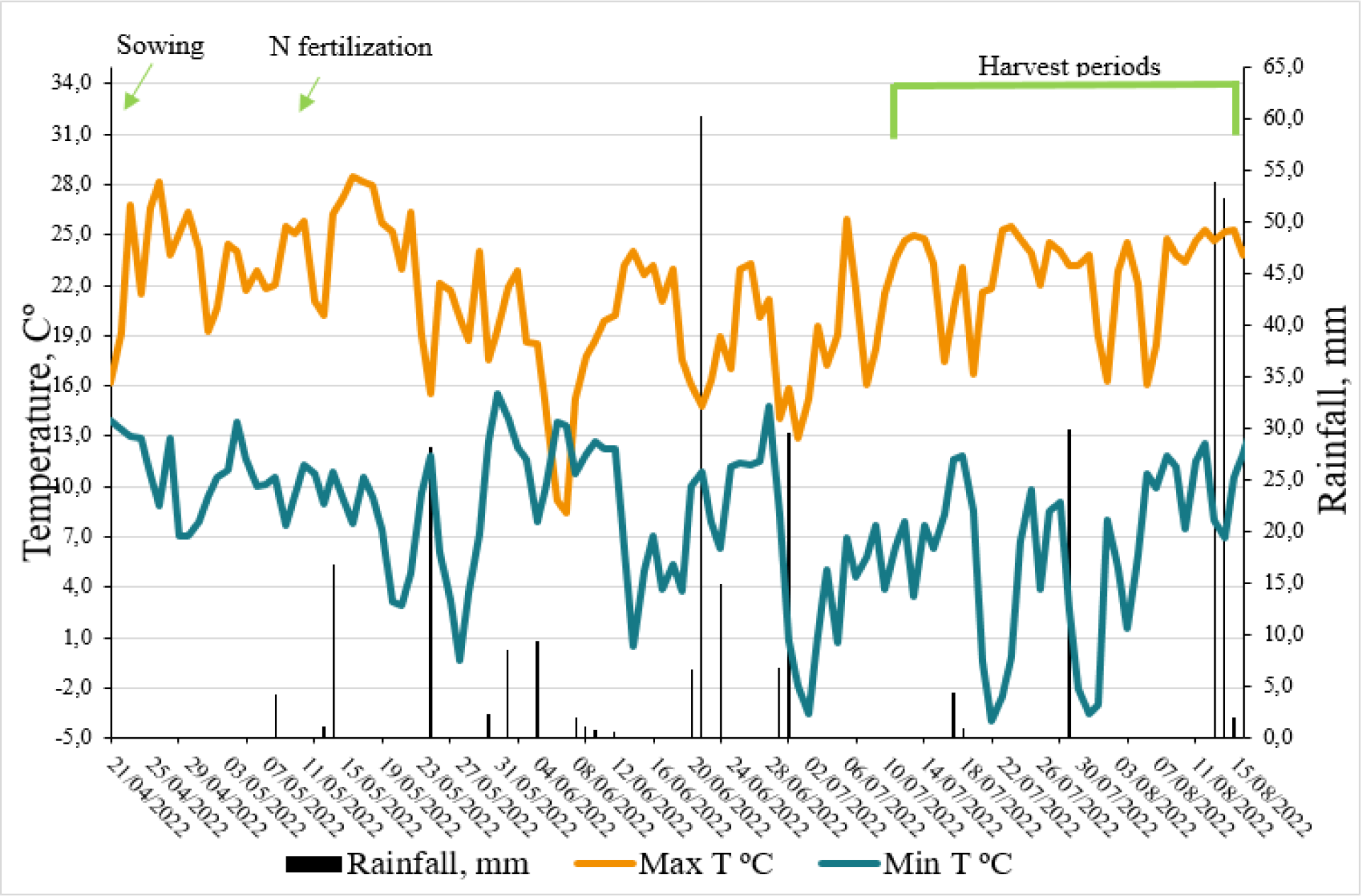 Source: SIMEPAR/UNICENTRO experimental station, Guarapuava, state of Paraná, Brazil, 2022.