 Probiotic and dietary fermented milk drink made from goat's milk with added seriguela pulp: processing and analysis
Abstract
The search for a better quality of life has driven the food market to develop new functional products whose composition reduces or eliminates nutrients that can cause problems to consumer health, such as sugar, as well as the use of less allergenic matrices. Therefore, the objective of the present work was to develop a probiotic and dietary fermented dairy drink made from goat's milk with the addition of seriguela pulp, as well as analyzing its physicochemical, microbiological and sensory characteristics. The formulations were processed using the sweeteners thaumatin and sucralose. The probiotic used was Lactobacillus acidophilus and its viability was evaluated for a period of 28 days. Regarding the physical and chemical characteristics, there was a reduction in pH and an increase in acidity during storage of the dairy drink. The results of the analyses for molds, yeasts, and coagulase-positive Staphylococcus were within the limits recommended by law. The probiotic strain used remained active during the 28 days of storage (9 log CFU/mL). The formulations prepared with sweeteners presented a higher sensory acceptance index than the control formulation with sugar, indicating that the replacement of sucrose with high and low intensity sweeteners did not negatively interfere in the sensory perception of the tasters. The probiotic and dietary fermented milk drink developed proved to be an excellent innovative option for the functional foods market, for those intolerant/allergic to cow's milk and for consumers with sugar metabolism problems.
Keywords:
Functional food; dairy matrix; no added sugar; Lactobacillus acidophilus; Streptococcus thermophilus e Lactobacillus bulgaricus.
Resumo
A busca por uma melhor qualidade de vida tem impulsionado o mercado de alimentos no desenvolvimento de novos produtos funcionais, que apresentem na sua composição a redução ou ausência de nutrientes que possam trazer problemas à saúde do consumidor como é o caso do açúcar, bem como a utilização de matrizes menos alergênicas. Diante disso, o objetivo do presente trabalho foi desenvolver a bebida láctea fermentada probiótica e dietética de leite de cabra adicionada de polpa de seriguela bem como analisar as caraterísticas físico-químicas, microbiológicas e sensoriais. As formulações foram processadas utilizando os edulcorantes taumatina e sucralose. O probiótico utilizado foi o Lactobacillus acidophilus e a sua viabilidade foi avaliada por um período de 28 dias. Com relação as características físico-químicas, houve uma redução do pH e aumento da acidez durante a estocagem da bebida láctea. Os resultados das análises para bolores e leveduras e Staphylococus coagulase positiva estavam dentro dos limites preconizados pela legislação. A cepa probiótica utilizada se manteve ativa durante os 28 dias de armazenamento (9 log UFC/mL). As formulações elaboradas com edulcorantes apresentaram índice de aceitação sensorial maior do que a formulação controle com açúcar sinalizando que a substituição da sacarose por edulcorantes de alta e baixa intensidade não interferiram de forma negativa na percepção sensorial dos provadores. A bebida láctea fermentada probiótica e dietética desenvolvida mostrou-se uma excelente opção inovadora para o mercado de alimentos funcionais, de intolerantes/alérgicos ao leite de vaca e de consumidores que apresentam problemas no metabolismo de açúcares.
Palavras-chave:
Alimento funcional; matriz láctea; sem adição de açúcar; Lactobacillus acidophilus; Streptococcus thermophilus e Lactobacillus bulgaricus.
1. Introduction
Market segments related to health, well-being, and high-quality healthy foods have shown continuous growth in recent years. Among the product categories included in this segment are probiotic functional foods and foods for special dietary purposes with reduced sugar content. Probiotic functional foods are recognized for playing a fundamental role in promoting consumer health and consist of live microorganisms that must be administered in sufficient quantities to confer health benefits to the consumer. Meanwhile, foods for special dietary purposes, with no added sugar, meet the demands of a growing niche of consumers who, for health reasons or in pursuit of a healthier diet, avoid the consumption of this nutrient in their regular diet (1,2).
The dairy matrix has been widely studied as a basis for the development of probiotic foods, and fermented dairy beverages represent a potential dairy derived product for this market segment. According to the Technical Regulation of Identity and Quality for Dairy Beverages, a fermented dairy beverage is defined as a dairy product obtained from the mixture of milk and whey, with or without the addition of food products or food substances, vegetable fat, fermented milk(s), selected lactic starter cultures, and other dairy products (3). Fermented dairy beverages produced from cow’s milk and containing sugar in their formulation are already commercially available. The probiotic fermented dairy beverage produced from goat milk and without added sugar represents a new market alternative, expanding the portfolio of dairy-derived products offered to a growing niche of consumers, including individuals who are intolerant or allergic to cow’s milk products, as well as consumers seeking foods for special dietary purposes. The sugar-free version of fermented dairy beverages incorporates low and high intensity sweeteners in its formulation as substitutes for sucrose traditionally used in conventional formulations.
According to Brazilian Institute of Geography and Statistics (IBGE) (4) the goat herd population increased by approximately 16 % between 2006 and 2017, reaching a total of more than 8 million animals and an annual production of approximately 25 million liters of milk, demonstrating its potential within the Brazilian agribusiness sector. Goat farming in Brazil is more widely distributed in the North and Northeast regions of the country, with the Northeast region accounting for about 70 % of this production (approximately 18 million liters per year). This scenario makes the Northeast region an important target for the regulation of goat milk production processes as well as for the development of new products derived from this raw material.
Goat milk and its derivatives have become increasingly popular as a healthy alternative to cow’s milk products, particularly for the nutrition of infants, the elderly, and individuals with gastrointestinal disorders. Goat milk is characterized by higher digestibility and lower allergenic potential compared to cow’s milk, and these properties are closely related to its composition.
Cruz et al.(5) reported that goat milk contains amounts of αs2-casein and κ-casein similar to those found in bovine milk; however, the αs1-casein fraction is present in lower quantities in goat milk (approximately 15 % of total casein) compared to cow’s milk (about 38 % of total casein). Studies associate the lower allergenic potential of goat milk with the reduced proportion of the αs1-casein fraction, making goat milk less allergenic than cow’s milk (6). Due to its composition, the goat milk matrix has been investigated as a carrier for viable probiotic strains in the development of new food products, such as cheese (7) and fermented milk (8,9,10).
The incorporation of dairy products with regional fruit pulps represents an additional attraction due to the sensory and nutritional characteristics of the fruits added to the formulations. Spondias purpurea (seriguela) is native to Central and South America and is widely found in the Northeast region of Brazil. It is a red or orange fruit that, when ripe, presents a pulp with a pleasant aroma and flavor. This fruit is rich in carotenoids and micronutrients, such as calcium, phosphorus, iron, provitamin A, and B-complex vitamins. In addition, its pulp, peel, and seeds contain bioactive compounds such as quercetin, hydroxycinnamic acids, ellagic acid, chlorogenic acid, protocatechuic acid, flavonoids, gallic acid, vanillic acid, p-coumaric acid, and ferulic acid (11).
Adapted to the edaphoclimatic conditions of the semi-arid region, seriguela shows good resistance to drought and low establishment and management costs, making it a viable productive alternative for small rural producers. In addition to its commercialization in the fresh form, the industrial processing of seriguela presents strong potential, playing a strategic role in regional agroindustrial development as a raw material for frozen pulps, juices, ice creams, jams, sweets, and fermented beverages. This processing adds value to the product, reduces post-harvest losses, commonly associated with the high perishability of the fruit, and expands opportunities for entry into new markets (12).
In this context, the objective of the present study was to process and characterize a probiotic and diet fermented dairy beverage produced from goat milk with added seriguela pulp (Spondias purpurea), aiming to diversify and expand the availability of goat milk-derived dairy products in the market.
2. Materials and methods
The present study was conducted at the Food Processing Laboratory of the Instituto Federal de Educação, Ciência e Tecnologia Baiano (IFBaiano) - Campus Serrinha.
2.1 Raw materials
Milk, whey, seriguela, and starch used in the experiments were purchased from the local market in the municipality of Serrinha. Maltitol and sucralose were obtained from the company Ingredientes On Line, and thaumatin from Zhaozhan (China). The thermophilic starter cultures Lactobacillus bulgaricus and Streptococcus thermophilus were purchased from the local market in the city of Serrinha, and the probiotic culture HOWARU® DOPHILUS LYO 10 DCU was obtained from the company Fermentech. All cultures were used according to the supplier’s recommendations.
2.2 Processing of fermented dairy beverages
Preliminary tests were carried out in order to standardize the formulations. Three formulations were processed, differing in the sweetener used: Formulation 1 with the sweetener sucralose and Formulation 2 with the sweetener thaumatin. Formulation 3 (control formulation) was prepared with sugar for comparison purposes. The composition of the three formulations is presented in Table 1.
Final composition of the formulations of probiotic and diet fermented dairy beverage produced from goat milk.
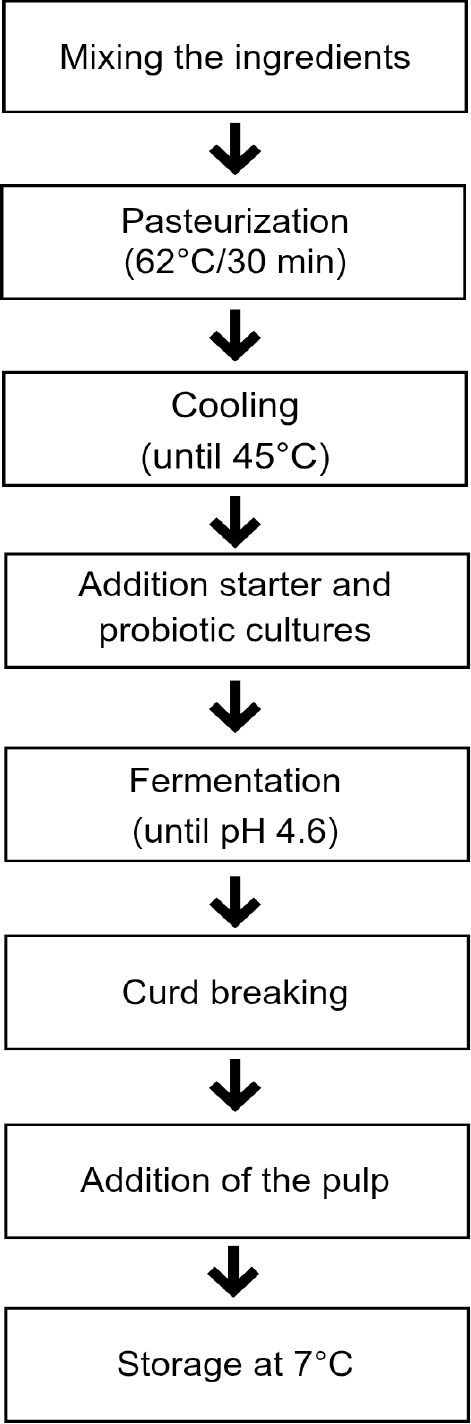
The processing of the probiotic and diet fermented dairy beverages followed the steps represented in the flowchart shown in Figure 1: mixing of the ingredients (goat milk, goat milk whey, corn starch, maltitol, sugar, and the sweeteners) according to Table 1. The mixture was pasteurized at 62 °C for 30 min, followed by cooling to 45 °C. Subsequently, the starter cultures (Streptococcus thermophilus and Lactobacillus bulgaricus) and the probiotic culture (Lactobacillus acidophilus) were added. Fermentation was carried out in an incubation chamber until a final pH of 4.6 was reached. After fermentation, the curd was broken, seriguela (Spondias purpurea) pulp was added, and the product was stored at 7 °C until the time of analysis.

2.3 Physicochemical analyses
The physicochemical analyses of the fermented dairy beverages were performed in triplicate according to the recommendations of the Instituto Adolfo Lutz (13), as described below.
2.3.1 pH analysis
The pH was determined using a Lucadema pH meter, model Luca-210, previously calibrated with buffer solutions at pH 6.8 and pH 4.0. For the determination of hydrogen potential, 50 g of each sample were weighed into a beaker, and the pH meter electrode was inserted into the sample to obtain the final pH value.
2.3.2 Acidity analysis
For total acidity determination, 5 g of each sample were weighed and mixed with 50 mL of distilled water. Subsequently, four drops of phenolphthalein solution were added to the samples, followed by titration with a standard sodium hydroxide solution (0.1 M). The titration was stopped when a color change from white to pink was observed, after which the volume of sodium hydroxide consumed was recorded and used to calculate the acidity of the product.
2.4 Microbiological analyses
The enumeration of molds and yeasts and of coagulase-positive Staphylococcus was performed using the pour plate method. For the first analysis, PDA agar (Potato Dextrose Agar) was used, with incubation for 7 days at 25 °C. For the second analysis, Baird-Parker agar was used, with incubation for 48 h at 35 °C (14).
For the viability analysis of the probiotic culture (Lactobacillus acidophilus), MRS medium supplemented with 3 % maltose was used, with incubation at 37 °C for 72 h (15).
2.5 Sensory analysis
The samples were evaluated by 70 untrained panelists aged between 15 and 45 years, who were consumers of fermented dairy beverages and diet products. The samples were served in 50 mL cups coded with three-digit numbers obtained from a random number table. For the sensory acceptance test of the probiotic and diet fermented goat milk beverage with seriguela pulp (Spondias purpurea), a nine-point structured hedonic scale was used, ranging from 1 - disliked extremely to 9 - liked extremely, to evaluate the attributes of color, aroma, flavor, texture, and overall impression.
Purchase intention was also evaluated using a five-point scale, where 1 - would certainly not buy and 5 - would certainly buy. The acceptance index (AI) of the formulations was calculated using Equation 1.
This project was approved by the Research Ethics Committee of the Faculdade Anísio Teixeira (FAT) (approval number: 7.084.819 / CAAE: 83175024.0.0000.5631).
2.6 Shelf-life analysis of the fermented dairy beverage
Analyses of pH, acidity, mold and yeast counts, coagulase-positive Staphylococcus, as well as the viability of the probiotic culture (Lactobacillus acidophilus), were performed at 0, 7, 14, 21, and 28 days, according to the methodologies previously described (sections 2.3 and 2.4). These analyses were conducted using Formulation 2.
2.7 Statistical analysis
The results were evaluated by analysis of variance (ANOVA) and comparison of means using the Tukey test (p < 0.05), employing the software SISVAR.
3. Results and discussion
3.1 Physicochemical analyses
The results of the physicochemical analyses (pH and acidity) of Formulation 2 (with thaumatin) during the shelf-life period (1, 7, 14, 21, and 28 days) are presented in Table 2.
pH and acidity values during the shelf life of Formulation 2 (with thaumatin) of the probiotic and diet fermented goat milk dairy beverage.
As shown in Table 2, a slight reduction in pH and an increase in acidity were observed during the storage of the fermented dairy beverage. Fermentation of the dairy beverages was carried out until pH 4.6 (the isoelectric point of casein), and pH was monitored every 30 minutes until the end of the fermentation process. The initial pH of the dairy beverage (time 0) showed a slight decrease (from 4.6 to 4.4) due to the addition of seriguela pulp (Spondias purpurea). Although there is no federal regulation establishing specific pH and acidity limits for fermented dairy beverages, the acidity values observed in the present study fall within the minimum range recommended for yogurt (0.6 to 1.5 g of lactic acid/100 g) and fermented milk (0.6 to 2.0 g of lactic acid/100 g), according to the Technical Regulation of Identity and Quality (RTIQ) for Fermented Milks(16).
The acidity of dairy beverages is related to the milk solids content, with lactose (a disaccharide present in milk and whey) being the most abundant solid component. During fermentation, thermophilic cultures use lactose as a carbon source for growth, and as a result of bacterial metabolism, lactic acid is produced, directly contributing to the increase in acidity in the final product. Other factors are also associated with changes in pH and acidity in fermented dairy products, such as the composition of milk and whey, which are influenced by the physiological conditions of the animal; post-processing conditions, including curd breakage and the addition of other ingredients, such as fruit preparations; the addition of other microbial cultures and their postacidification capacity; as well as storage temperature and time. It is worth noting that, in addition to the starter cultures, the probiotic culture Lactobacillus acidophilus was also added at the beginning of fermentation. During its multiplication and adaptation to the medium, this culture metabolized lactose with the production of lactic acid, influencing the final pH and acidity values. Similar results to those observed in the present study were reported by Costa et al. (17) for fermented dairy beverages prepared with different stabilizers and thickeners. Gomes et al. (18), when analyzing a goat milk beverage formulated with the addition of guava jelly during a 28-day storage period, and Vénica et al. (19), when producing low-lactose yogurt using Lactobacillus acidophilus La-5 as the probiotic strain for 21 days, also observed changes in pH and acidity during the shelf life of the developed products.
3.2 Sensory analysis
The probiotic and diet fermented dairy beverages processed in this study showed significant differences regarding the attributes overall impression, aroma, flavor, and texture, as presented in Table 3.
Mean results obtained (n = 62) for the attributes evaluated in the sensory analysis of the three formulations of probiotic and diet fermented goat milk dairy beverages. F1: formulation with the sweetener sucralose; F2: formulation with the sweetener thaumatin; and F3: control formulation prepared with sucrose.
According to the data presented in Table 3, the scores obtained for the evaluated attributes (overall impression, aroma, flavor, and texture) in Formulations 1 and 2 were higher when compared with the control formulation (F3) prepared with sugar. This result indicates that the replacement of sugar with sweeteners did not negatively affect sensory acceptance.
One of the major challenges in the processing of products without added sugar and with the addition of sweeteners is related to the impact of this substitution on the sensory characteristics of the final product. In the present study, the sweeteners used were sucralose and thaumatin, which are high-intensity sweeteners, meaning they present a much higher sweetness than sucrose (600- 3000 times sweeter, respectively). Therefore, small amounts of these sweeteners are sufficient to provide a sweetness profile similar to that of sugar foods in which they are added (20,21).
In Formulations 1 and 2, maltitol was used, a sugar alcohol belonging to the polyol group. It provides sweetness to the product since its sweetening power is about 80-90 % Staphylococus that of sucrose, and is therefore considered a low-intensity sweetener. Metabolically, polyols behave like carbohydrates; however, they are absorbed independently of insulin through passive absorption and without increasing blood glucose levels (low glycemic index), which allows their consumption by diabetic individuals. In the food industry, they are often used in combination with high-intensity sweeteners (such as sucralose and thaumatin) when sugar restriction is required. It is worth noting that during the preliminary formulation tests, the fermented dairy beverages were produced using only thaumatin and sucralose, without maltitol, and due to the characteristic acidity of dairy beverages, the resulting sweetness was not considered pleasant. Thus, the importance and necessity of maltitol to complement the final sweetness of the formulations were observed. The combination of high and low intensity sweeteners was responsible for the higher acceptance index for the flavor attribute of Formulations 1 and 2 when compared with Formulation 3 (processed with sugar). Among polyols, maltitol presents properties that most closely resemble those of sucrose, which helps explain the good acceptance of the formulations containing this sweetener (22).
Another aspect related to the flavor attribute is the fact that goat milk and its derivatives generally present a characteristic “goaty” flavor due to the profile of mediumand short-chain fatty acids present in this milk matrix. Butyric (C4:0), caproic (C6:0), caprylic (C8:0), and capric (C10:0) acids are typical of goat milk, causing products derived from this milk to present distinctive flavor and aroma characteristics. Lactic fermentation combined with probiotics and fruit addition has been considered an effective strategy to reduce or mask the “goaty flavor” in dairy products, improving sensory acceptance. The panelists who evaluated the probiotic and diet fermented goat milk beverage with seriguela pulp (Spondias purpurea) reported that the characteristic goat milk flavor was attenuated in the formulations and did not negatively affect the acceptance of the dairy beverages (23).
The texture of fermented dairy products is related to the presence of casein proteins in this type of food matrix. Casein in goat milk is subdivided into the following fractions: αs1, αs2, β, and κ-casein, forming a complex micellar system that occurs approximately in the proportions of 1:2:5:2, respectively. Goat milk is considered rich in β-casein and poor in αs1-casein. The βand κ-casein fractions are mainly responsible for the typical texture of dairy products, influencing the formation of the curd in fermented derivatives (24). For the texture attribute, Formulations 1 and 2 did not differ significantly from each other, demonstrating that the use of sweeteners did not affect the perception of texture by the panelists in the dairy beverages. The acceptance index (AI) shown in Table 4 reinforces these results, since the values obtained for Formulations 1 and 2 were 83 % and 82 %, respectively.
The sensory acceptance indices for the evaluated attributes are presented in Table 4, corroborating the previously obtained results. The F1 and F2 formulations exhibited higher acceptance indices compared to the F3 formulation.
According to the data shown in Figure 2, formulation 1, prepared with sucralose, showed a higher purchase intention and a lower rejection rate (13 % would probably not buy and 6 % would certainly not buy) when compared with formulations 2 and 3. The good acceptance of food formulations containing sucralose in their composition has already been reported by other authors (25,26,27). The sensory profile of seriguela favors its application in the production of jams, juices, and fermented beverages due to the combination of its sensory characteristics, such as intense aroma and sweet taste associated with the high sugar content present in the fruit at the ripe stage. Processed products containing seriguela in their formulation have shown satisfactory sensory acceptance indices due to the fruit’s sensory attributes (28,29).

Purchase intention for the formulations of probiotic and diet fermented goat milk beverage.
3.3 Viability of the probiotic culture
The analysis of the viability of the probiotic culture in the probiotic and diet fermented goat milk beverage of formulation 2 (with thaumatin), with and without seriguela pulp, was carried out during refrigerated storage (1, 7, 14, 21, and 28 days), and the results are presented in Table 5.
Number of viable probiotic culture cells (log CFU/mL) in the probiotic and diet fermented goat milk beverage during five weeks of refrigerated storage for formulation 2, without and with seriguela pulp.
Microbiological stability of the probiotic and diet fermented goat milk beverage under refrigerated storage for formulation 2.
No change in the viability of the probiotic culture was observed during the shelf life of the probiotic and diet fermented goat milk beverage with and without Spondias purpurea pulp. On the other hand, it was observed that the formulation processed without seriguela pulp presented a probiotic count of 6 log CFU/mL when compared with the formulation processed with seriguela pulp (9 log CFU/mL). The addition of fruit juices or pulps to probiotic dairy products is an effective strategy to increase probiotic viability until the moment of product consumption, as they modify the product’s pH and provide additional nutrient sources for the growth and survival of probiotics (30,31). The enrichment of fermented goat milk beverage through the incorporation of seriguela pulp can be considered an ideal strategy to improve the growth and survival of the probiotic culture, as it provides additional fermentable substrates (sugars for the metabolism of probiotic cultures) and additional protection due to its antioxidant properties (11).
The results obtained in the present study are consistent with those reported in previous research, in which the incorporation of plant-derived ingredients significantly enhanced probiotic viability during storage. Soares et al. (32) reported a survival rate of 62.26 % for Lactobacillus acidophilus in Greek yogurt containing cubiu syrup. Similarly, Machado et al. (33) observed a significant increase in the counts of Lactobacillus acidophilus in goat milk yogurt supplemented with honey throughout 28 days of refrigerated storage.
According to the literature, a concentration of 108 to 109 CFU/mL of viable probiotics must be present in a food product at the time of consumption in order to exert beneficial effects on host health. In this context, the fermented dairy beverage containing seriguela pulp provides the recommended daily intake of probiotics, even after 28 days of storage.
The findings of the present study confirm that fermented goat milk beverage constitutes a suitable matrix for the development and maintenance of the probiotic strain Lactobacillus acidophilus. This may be attributed to the favorable properties of the goat milk matrix, including its appropriate pH, high buffering capacity, and elevated nutrient content, which, when combined with fruit derivatives, may further enhance probiotic viability during storage (31). Previous studies have also demonstrated that goat milk represents an appropriate matrix for maintaining therapeutic levels of Lactobacillus acidophilus (33,34).
3.4 Microbiological Stability During Shelf Life
4. Conclusion
The processing of a probiotic and diet fermented dairy beverage using goat milk represents an alternative for individuals allergic to cow’s milk and for consumers who cannot consume sugar. The formulations prepared with sweeteners (sucralose and thaumatin) showed higher sensory acceptance index (AI) values for all evaluated attributes (overall impression, aroma, flavor, and texture) when compared with the control formulation prepared with sugar. The acceptance indices of the formulations processed with sucralose and thaumatin were very similar, indicating that both sweeteners have strong potential for use in sugar-free products. Processing in accordance with good manufacturing practices ensured microbiological stability within the evaluated period. The probiotic Lactobacillus acidophilus remained viable during refrigerated storage for a period of 28 days (count of 9 log CFU/mL).
Generative AI use statement
The authors did not use generative artificial intelligence tools or technologies in creating or editing any part of this manuscript.
Acknowledgment
We thank the Fundação de Amparo à Pesquisa do Estado da Bahia for funding the project.
Data availability statement
The complete dataset supporting the results of this study is available upon request from the corresponding author.
References
-
1 Kashyap PC, Chia N, Nelson H, Segal E, Elinav E. Microbiome at the frontier of personalized Medicine. Mayo Clinic Proceedings. 2017; 92 (12), 1855-1864. https://doi.org/10.1016/j.mayocp.2017.10.004
» https://doi.org/10.1016/j.mayocp.2017.10.004 -
2 Brasil. Ministério da Saúde. Resolução nº 135 de 08 de fevereiro de 2017. Regulamento técnico referente a alimentos para fins especiais. Diário Oficial da União. 2017 fev 08; seção 1. https://bvsms.saude.gov.br/bvs/saudelegis/anvisa/2017/rdc0135_08_02_2017.pdf
» https://bvsms.saude.gov.br/bvs/saudelegis/anvisa/2017/rdc0135_08_02_2017.pdf -
3 Brasil. Ministério da Agricultura, Pecuária e Abastecimento. Portaria SDA/MAPA nº 1.333, de 21 de julho de 2025. Regulamento Técnico de Identidade e Qualidade de Bebida Láctea. Diário Oficial da União. 2025 jul 23; seção 1. https://www.legisweb.com.br/legislacao/?id=481476
» https://www.legisweb.com.br/legislacao/?id=481476 -
4 IBGE. Censo Agropecuário 2006 e 2017. Disponível em: https://sidra.ibge.gov.br
» https://sidra.ibge.gov.br - 5 Cruz, A. G. et al. Química, bioquímica, análise sensorial e nutrição no processamento de leite e derivados. Rio de Janeiro: Elsevier, 2016.
-
6 Dayenoff P, Pizarro J, Banus G, Andrade-Montemayor H. Valoración de las fracciones de caseínas en leche de cabra Criolla y Saanen. Ciência Veteinária. 2021; 23(2): 77-90. http://dx.doi.org/10.19137/cienvet202123202
» http://dx.doi.org/10.19137/cienvet202123202 -
7 Pappa EC, Kondyli E, Bosnea L, Malamou E, Vlachou AM. Chemical,microbiological, sensory, and rheological properties of fresh goat milk cheese made by different starter cultures during storage. Journal of Food Process Engineering. 2022; 45(7),e13788. https://doi.org/10.1111/jfpe.13788
» https://doi.org/10.1111/jfpe.13788 -
8 Costa MP, Frasao BS, Silva ACO, Freitas MQ, Franco RM, Conte-Junior CA. Cupuassu (Theobroma grandiflorum) pulp, probiotic, and prebiotic: Influence on color, apparent viscosity, and texture of goat milk yogurts. Journal of Dairy Science. 2015; 98(9), 5995-6003. https://doi.org/10.3168/jds.2015-9738
» https://doi.org/10.3168/jds.2015-9738 -
9 Siriwardhana J, Rasika DMD, Yapa D, Weerathilake WADV, Priyashantha, H. Enhancing probiotic survival and quality of fermented goat milk beverages with bael (Aegle marmelos) fruit pulp. Food Chemistry Advances. 2024; 5,100792 https://doi.org/10.1016/j.focha.2024.100792
» https://doi.org/10.1016/j.focha.2024.100792 -
10 El-Sayed MI, Aly E, El-Deeb AM. Improving the physicochemical and antioxidative properties of fermented goat milk using carob molasses and some probiotic strains. Food Science and Biotechnology. 2024; 33(3), 657-666. https://doi.org/10.1007/s10068-023-01382-2
» https://doi.org/10.1007/s10068-023-01382-2 -
11 Silva RV, Costa SC, Branco CR, Branco A. Invitro photoprotective activity of the Spondias purpurea L peel crude extract and its incorporation in a pharmaceutical formulation. Industrial Crops and Products. 2016, 83: 509-514. http://doi.org/10.1016/j.indcrop.2015.12.077
» http://doi.org/10.1016/j.indcrop.2015.12.077 -
12 Neris TS, Loss RA, Guedes, SF.Physical-chemical characterization of seriguela (Spondias purpurea L) collected in the municipality of Barra do Bugres/MT at different maturation stages. Natural Resources. 2017, 7: 9-18 https://doi.org/10.6008/SPC2237-9290.2017.001.0002
» https://doi.org/10.6008/SPC2237-9290.2017.001.0002 -
13 Instituto Adolfo Lutz. Métodos físico químicos para análise de alimentos, 1ª ed. Digital: São Paulo, 2008. Disponível em: http://www.ial.sp.gov.br/resources/editorinplace/ial/2016_3_19/analisedealimentosial_2008.pdf
» http://www.ial.sp.gov.br/resources/editorinplace/ial/2016_3_19/analisedealimentosial_2008.pdf - 14 Okazaki M M, Nascimento MS, Taniwaki MH, Silveira NFA, Silva N da, Gomes RAR, Junqueira VCA. Métodos de análise microbiológica em alimentos. ITAL: Instituto de Tecnologia de Alimentos: São Paulo, 2015.
-
15 Ashraf R, Shah NP.Selective and differential enumerations of Lactobacillus delbrueckii subsp. bulgaricus, Streptococcus thermophilus, Lactobacillus acidophilus, Lactobacillus casei and Bifidobacterium spp. in yoghurt - A review. International Journal of Food Microbiology. 2011, 149 (3):194-208. https://doi.org/10.1016/j.ijfoodmicro.2011.07.008
» https://doi.org/10.1016/j.ijfoodmicro.2011.07.008 -
16 Brasil. Ministério da Agricultura, Pecuária e Abastecimento. Instrução Normativa MAPA nº 46 de 23/10/2007. Regulamento Técnico de Identidade e Qualidade de leites fermentados. Diário Oficial da União. 2007 out 24;seção 1. https://www.normasbrasil.com.br/norma/?id=76475
» https://www.normasbrasil.com.br/norma/?id=76475 -
17 Costa AVS, Nicolau ES, Torres MCL, Fernandes PR, Rosa, SIR, Nascimento, RC. Desenvolvimento e caracterização físicoquímica, microbiológica de bebida láctea fermentada elaborada com diferentes estabilizantes/espessantes. Semina: Ciências Agrárias. 2013; 34(1):209-226. http://doi.org/10.5433/1679-0359
» http://doi.org/10.5433/1679-0359 -
18 Gomes JJL, Duarte AM, Batista ASM, Figueiredo RMF, Sousa EP, Souza EL Physicochemical and sensory properties of fermented dairy beverages made with goat’s milk, cow’s milk and a mixture of the two milks. LWT-Food Science and Technology. 2013; 54 (1),18-24. https://doi.org/10.1016/j.lwt.2013.04.022
» https://doi.org/10.1016/j.lwt.2013.04.022 -
19 Vénica CI, Wolf IV, Bergamini, CV, Perotti M.C. Influence of lactose hydrolysis on galacto-oligosaccharides, lactose, volatile profile and physicochemical parameters of diferent yogurt varieties. Journal of the Science of Food and Agriculture. 2016; 96(15), 4929-4939. https://doi.org/10.1002/jsfa.7870
» https://doi.org/10.1002/jsfa.7870 -
20 Nicolucia IG, Takehara CT, Bragotto APA. Edulcorantes de alta intensidade: tendências de uso em alimentos e avanços em técnicas analíticas. Química Nova. 2022, 45(2): 207-217. http://dx.doi.org/10.21577/0100-4042.20170828
» http://dx.doi.org/10.21577/0100-4042.20170828 -
21 Kant R. Sweet proteins - Potential replacement for artificial low calorie sweeteners. Nutritional Journal. 2005, 4(5): 1 - 6. https://doi.org/10.1186/1475-2891-4-5
» https://doi.org/10.1186/1475-2891-4-5 -
22 Saraiva A, Carrascosa C, Raheem D, Ramos F, Raposo, A. Maltitol: Analytical Determination Methods, Applications in the Food Industry, Metabolism and Health Impacts.International Journal of Environmental Research and Public Health. 2020, 17: 1-28. https://doi.org/10.3390/ijerph17145227
» https://doi.org/10.3390/ijerph17145227 -
23 Silva G de J., Gonçalves BRF, Conceição DG, Pontes SFO, Ferrão SPB. Perfil de ácidos graxos e frações proteícas do leite de cabra. Revista do Instituto Laticínios Cândido Tostes. 2015, 70 (6): 338-348. https://doi.org/10.14295/2238-6416.v70i6.474
» https://doi.org/10.14295/2238-6416.v70i6.474 -
24 Dayenoff P, Pizarro J, Banus G, Andrade-Montemayor H. Valoración de las fracciones de caseínas en leche de cabra Criolla y Saanen. Ciência Veterinária. 2021, 23 (2): 77-90. http://dx.doi.org/10.19137/cienvet202123202
» http://dx.doi.org/10.19137/cienvet202123202 -
25 Jesus MACL, Araujo RO, Oliveira CHS, Pereira IS. Processamento e análises físico química, microbiológica e sensorial de doce de leite pastoso sem adição de açúcar e formulado com soro de leite. Research, Society and Development. 2024, 13(8):v. 13, n.8, e8113846582. http://dx.doi.org/10.33448/rsd-v13i8.46582
» http://dx.doi.org/10.33448/rsd-v13i8.46582 -
26 Rodrigues, APS, Santos GAS, Carvalho HJM, Schmiele M, Sobrinho PSC, Rocha LOF.Efeito da adição de colágeno e sucralose nas características tecnológicas e sensoriais do iogurte. Research, Society and Development. 2021, 10 (11): e507101119841. http://doi.org/10.3390/nu11102494
» http://doi.org/10.3390/nu11102494 - 27 Santana ATMC, Bachiega P, Morzelle MC, Abreu LR, Souza EC. Avaliação Sensorial de iogurte à base de pitaia (Hylocereus undatus), enriquecido com quinoa (Chenopodium quinoa) e sucralose. Revista Instituto Laticínios “Cândido Tostes”. 2012 (67): 21-25.
-
28 Silva AA, Souza PHM, Oliveira, LS, Gaban, SVF. Effects of Seriguela (Spondias purpurea) and Orange Peel (Citrus sinensis) on the Physicochemical and Sensory Properties, Phenolic Content, and Antioxidant Activity of Wheat Beer. Food Science and Technology. 2024 (4), 2867 - 2877 http://doi.org/10.1021/acsfoodscitech.4c00453
» http://doi.org/10.1021/acsfoodscitech.4c00453 -
29 Nogueira JP, Jesus MACL. Desenvolvimento, avaliação físico-química, sensorial e colorimétrica da geleia de seriguela diet. Revista Brasileira de Tecnologia Agroindustrial. 2014 (8): 1531-1544 https://doi.org/10.3895/S1981-36862014000200007S1
» https://doi.org/10.3895/S1981-36862014000200007S1 -
30 Ranadheera CS, Naumovski N, Ajlouni S. Non-bovine milk products as emerging probiotic carriers: Recent developments and innovations. Current Opinion in Food Science. 2018; 22, 109-114. https://doi.org/10.1016/j.cofs.2018.02.010
» https://doi.org/10.1016/j.cofs.2018.02.010 -
31 El-Sayed MI, Aly E, El-Deeb AM. Improving the physicochemical and antioxidative properties of fermented goat milk using carob molasses and some probiotic strains. Food Science and Biotechnology. 2024; 33(3), 657-666. https://doi.org/10.1007/s10068-023-01382-2
» https://doi.org/10.1007/s10068-023-01382-2 -
32 Soares JVS, Costa ACP, Silva AKS, Moura RPM, Pereira CVL. Caracterização físico-química de iogurte grego probiótico de Lactobacillus acidophilus endocapsulados com calda de cubiu (Solanum sessiliflorum Dunal). Brazilian Journal of Development. 2023, 9 (3): 9139-9159. https://doi.org/10.34117/bjdv9n3-019
» https://doi.org/10.34117/bjdv9n3-019 -
33 Machado TADG, de Oliveira MEG, Campos MIF, de Assis POA, de Souza EL, Madruga MS. Impact of honey on quality characteristics of goat yogurt containing probiotic Lactobacillus acidophilus LWT - Food Science anda Technology. 2017; 80, 221-229. https://doi.org/10.1016/j.lwt.2017.02.013
» https://doi.org/10.1016/j.lwt.2017.02.013 -
34 Elkot WF, Talaat H, Abdeldaiem AM, Alnuzaili ES, Eljeam HAA, Ammar AF. Effect of using dried white sapote fruit (Casimiroa edulis)on the quality characteristics of bio-low-fat goat milk yoghurt drink. Saudi Journal of Biological Sciences. 2023; 30(12),103844. https://doi.org/10.1016/j.sjbs.2023.103844
» https://doi.org/10.1016/j.sjbs.2023.103844 - 35 Brasil. Instrução Normativa n° 161 de 01 de julho de 2022. Estabelece os padrões microbiológicos dos alimentos. Diário Oficial da União. 6 jul 2022;126 (Seção 1):235.
Edited by
-
Editor:
Luiz Augusto B. Brito