 Measurement properties of the pain numerical rating scale in Brazilian children and adolescents with musculoskeletal pain
BACKGROUND AND OBJECTIVES Musculoskeletal pain is highly prevalent among children and adolescents and may negatively impact physical function, participation in daily activities, and quality of life. Reliable and valid instruments are essential for accurately assessing pain intensity and monitoring clinical outcomes in both research and clinical practice. Although the Pain Numerical Rating Scale (PNRS) is widely used, evidence regarding its measurement properties in Brazilian children and adolescents with musculoskeletal pain remains limited. Therefore, this study aimed to test the measurement properties related to reliability and construct validity of the PNRS in children and adolescents with musculoskeletal pain.
METHODS We conducted a methodological study to evaluate the measurement properties of the PNRS. Children and adolescents with musculoskeletal pain were recruited from public schools. Data were collected using self-reported questionnaires. Test-retest reliability was evaluated using the Intraclass Correlation Coefficient (ICC) and the Measurement error was evaluated using Standard Error of Measurement (SEM) and Minimal Detectable Change (MDC). The hypothesis testing of construct validity was measured using a Pearson Correlation (r) between the PNRS and the Brief Pain Inventory.
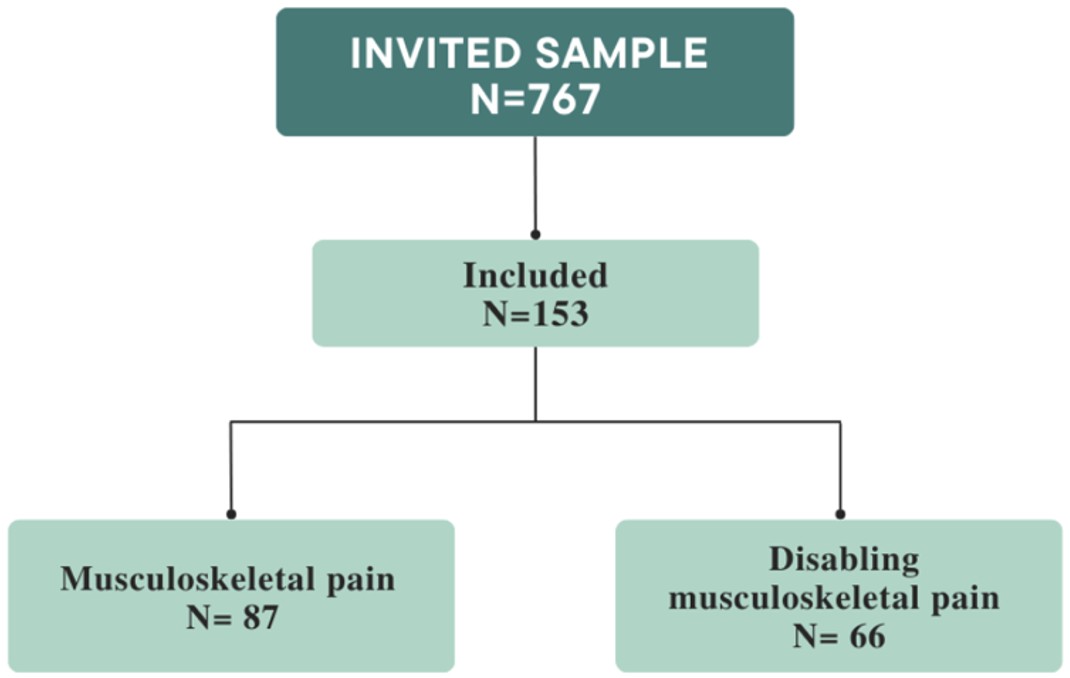
RESULTS A sample of 153 children and adolescents with musculoskeletal pain and with a mean age of 16.0 years old (Standard Deviation (SD): 2.7) were included in this study. Test-rest reliability by ICC was of 0.71 (95% Confidence Interval (CI): 0.62 to 0.78). The SEM was 1.74 (15.8%), with an MDC of 3.66 points. The hypothesis testing of construct validity was confirmed with 90% by prior hypotheses. Children and adolescents with disabling musculoskeletal pain reported more intense pain than children and adolescents with musculoskeletal pain (mean difference 1.9 (95% CI: 2.65 to 1.15)).
CONCLUSION The PNRS demonstrated adequate reliability and construct validity for assessing pain intensity in children and adolescents with musculoskeletal pain, supporting its use in clinical and research settings., considering the Brazilian context; however, caution is needed with the MDC values.
Keywords:
Adolescent; Children; Disability; Musculoskeletal pain
The Pain Numerical Rating Scale demonstrated adequate reliability in children and adolescents with musculoskeletal pain
Construct validity was supported, with 90% of the a priori hypotheses confirmed
The scale is suitable for clinical and research use in Brazil, although caution is warranted
 Thumbnail