 Leisure-time physical activity as a discriminator of the absence of musculoskeletal pain in military police officers
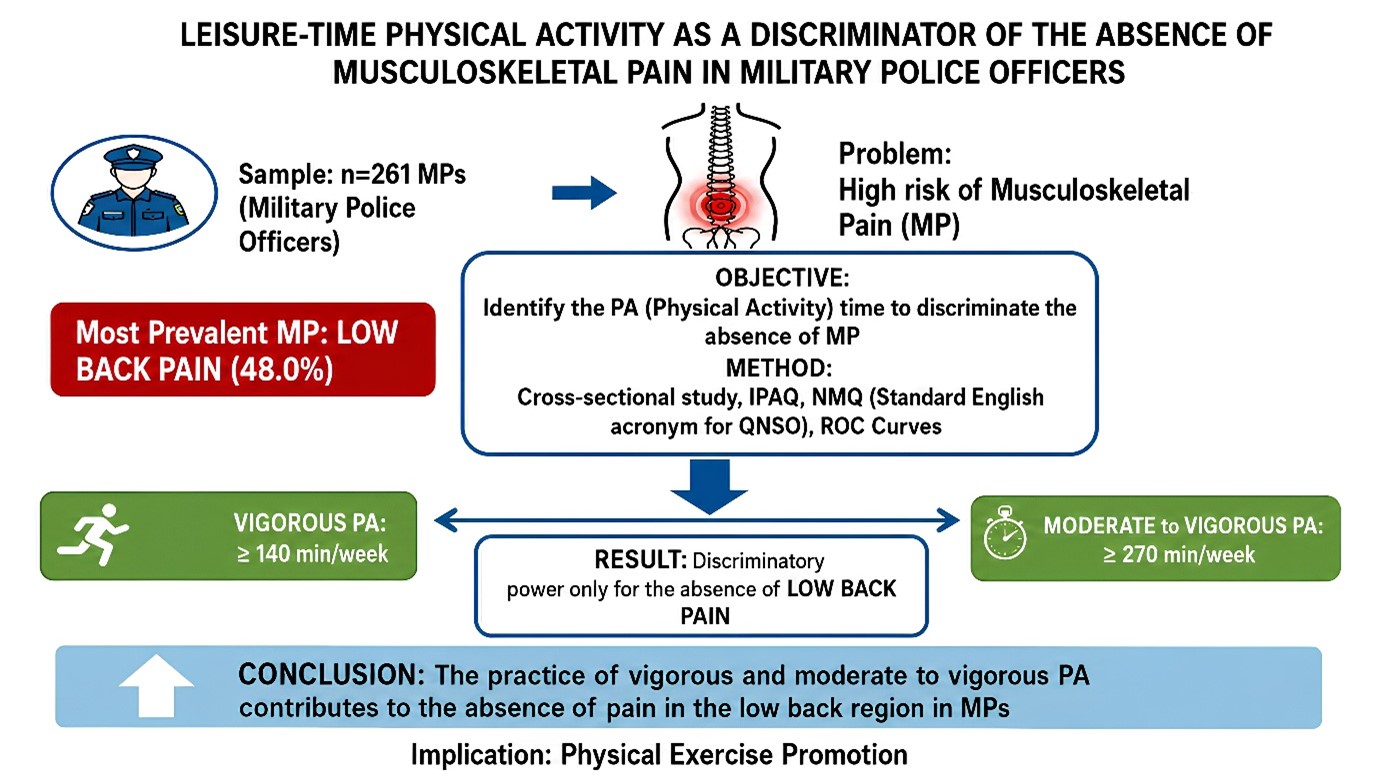
BACKGROUND AND OBJECTIVES Regular physical activity is essential for promoting health and well-being, particularly in demanding professions such as military policing, where officers are at increased risk of musculoskeletal pain (MP). Despite its importance, the amount of physical activity required to prevent this condition remains insufficiently explored in the literature. This study aimed to identify the amount of physical activity capable of discriminating the absence of musculoskeletal pain among military police officers.
METHODS This cross-sectional study included 261 military police officers and used data from the Police Force Health Study (ESTOP), conducted in Jequié, Bahia, Brazil. Physical activity was assessed using the International Physical Activity Questionnaire (IPAQ), long version, considering different leisure-time activity intensities. Musculoskeletal pain was measured using the Nordic Musculoskeletal Questionnaire (NMQ). Discriminatory analysis was performed using Receiver Operating Characteristic (ROC) curves, with calculation of the area under the curve (AUC), sensitivity, and specificity. Cutoff points were determined using the Youden index, and all analyses were conducted using Stata version 16.
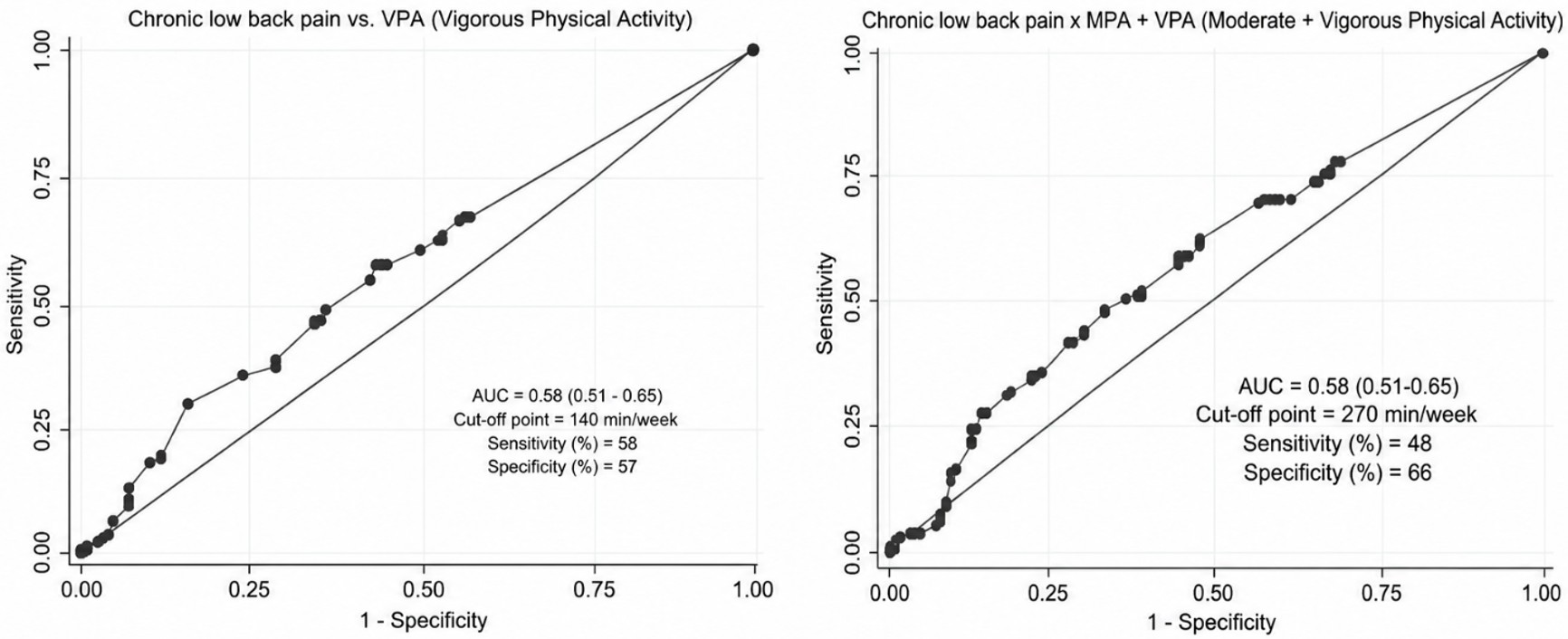
RESULTS Among the 261 military police officers (43.8 ± 7.4 years; 79.0% men), the lower back was the anatomical region with the highest prevalence of pain (48.0%). Discriminatory power was identified for the absence of low back pain, with cutoff points of 140 minutes per week of vigorous physical activity (AUC = 0.58; sensitivity = 58%; specificity = 57%) and 270 minutes per week of moderate-to-vigorous physical activity (MVPA) (AUC = 0.58; sensitivity = 48%; specificity = 66%).
CONCLUSION Vigorous physical activity (140 min/week) and MVPA physical activity (270 min/week) demonstrated discriminatory capacity for the absence of low back pain among military police officers, highlighting the importance of promoting physical activity within this population.
Keywords:
Low back pain; Military personnel; Motor activity; Occupational health; Police
Prevalence of musculoskeletal pain: the study identified a high prevalence of low back pain among military police officers, with 48% of participants reporting this condition, highlighting the relevance of this issue to the occupational health of this professional group
Comprehensive methodology: The study employed a cross-sectional design involving 261 military police officers and used validated instruments (IPAQ and NMQ) to assess physical activity and musculoskeletal pain, thereby enhancing the robustness of the findings
Physical activity cut-off points: The study established specific physical activity thresholds that may serve as reference values for the absence of low back pain: 140 minutes per week of vigorous physical activity (VPA) and 270 minutes per week of moderate-to-vigorous physical activity (MVPA)
Implications for health policies: The findings suggest the need to implement institutional policies that promote physical activity among military police officers, aiming not only to improve physical health but also to prevent pain and musculoskeletal injuries, thereby enhancing quality of life and professional performance
 Thumbnail