
 Early defoliation modifies root morphology and does not alter the yield of sesame plants
ABSTRACT
Sesame plants are highly resistant. However, mechanical damage from hail, pest, and disease attacks, or machinery traffic, can cause a loss in leaf area, characterizing defoliation. In intensified production systems, where leaf area reduction may occur, the effects of defoliation are known for different crop species. For sesame, there are no studies on the response of these plants to defoliation in initial development stages. Thus, the objective of this research was to analyze the growth, photosynthetic efficiency (chlorophyll a fluorescence), root morphology, and grain yield of sesame subjected to defoliation. The experiment was carried out in 20-L pots, and the plants were subjected to two treatments: control (without defoliation) and defoliation. Defoliation was imposed 22 days after sowing. Plant height, stem diameter, and chlorophyll fluorescence were evaluated throughout the plant development. At physiological maturity, root morphology, and yield components were evaluated. Sesame plants under defoliation showed rapid recovery in diameter and height (34 and 50 days after defoliation, respectively). Although leaf area was reduced by defoliation, there were no changes in photosynthetic efficiency between treatments. The damage caused by defoliation caused an increase in root length and surface area and favored the increase in very thin and thin roots. Sesame plants subjected to defoliation resulted in shoot dry mass, grain yield, and harvest index similar to plants without mechanical damage. Early defoliation does not cause damage to sesame under the study conditions, generating possibilities for the future use of this crop in intensified production systems with this type of stress.
Key words
Sesamum indicum L.; number of capsules; photochemical quenching; mechanical stress; harvest index
Introduction
Sesame (Sesamum indicum L.) is considered one of the oldest cereals cultivated by humanity. In addition to human consumption, sesame has been used in animal feed due to its high levels of crude protein, minerals, amino acids, and fatty acids (Kabinda et al. 2012). This crop is an oilseed that is highly adapted to various soil and climate conditions. Due to its great variability in cultivated environments, sesame has characteristics that make it an excellent option for agricultural diversification, with great economic potential both in Brazil and worldwide. In the 2023/24 harvest, sesame grain yield in Brazil was 547 kg·ha–1, with a production in the country of 361.3 thousand tons (Conab 2024).
Although sesame production has increased globally, its yield is still very low in different regions due to the harmful effects of biotic and abiotic stress (Jeyaraj and Beevy 2024). Drought, salinity, cold, heat, heavy metals, and nutritional imbalances—whether deficiency or excess—are the most harmful agents that compromise its growth and yield. In Brazil, the low grain yield is justified by the sowing season of this species, which occurs after the late soybean harvest, usually starting in March, and due to its drought tolerance.
Furthermore, mechanical damage, such as hail, pest and disease attacks, machinery traffic, and the presence of animals, can also impact agricultural yield by causing a loss in leaf area, characterizing defoliation (Ferreira et al. 2024). In Brazil, there are also technologies that cause early defoliation; however, they do not cause grain yield losses (Ferreira et al. 2024, Karam et al. 2020). Defoliation may or may not be compensated by the plant, depending on damage severity and its physiological conditions at the time of mechanical stress. Some plants can alter the allocation patterns of nutrients and photoassimilates, as well as increase photosynthetic efficiency and rate, positively interfering with the growth rate and, consequently, the final production of plants subjected to defoliation damage (Blanco et al. 2023).
A robust and well-developed root system is an important characteristic for exploring the soil profile and for tolerance to environmental factors. The root is the main organ through which plants absorb water and nutrients essential to their development cycle (Lyzenga et al. 2023). Thus, mechanical stress, such as defoliation, can result in a reduction in the root system due to the reallocation of carbon and nitrogen compounds for the formation of new post-stress leaf primordia (Ferreira et al. 2024). In field conditions, where more than one environmental factor can occur simultaneously, root biology is an important component for plants to more efficiently obtain scarce soil resources (Lynch and Brown 2012). Understanding how the root system of sesame plants would respond after defoliation is of paramount importance in this scenario of limited natural resources, as a function of the preferred sowing time for this crop in Brazil. Additionally, understanding how the root system responds to shoot cutting could fill the gaps in the literature regarding sesame defoliation.
Knowledge of how early defoliation affects the morphophysiological characteristics of sesame plants can also provide information on the responses involved in plant recovery after this abiotic stress. Understanding when plant reestablishment occurs and whether changes in chlorophyll a fluorescence occur after defoliation will provide important information for the management of this crop under these situations. To date, no study has investigated sesame growth, physiological characteristics, root morphology, and yield components as a function of defoliation in early stages—characterized by the appearance of the third pair of leaves.
Therefore, considering the hardiness of sesame and the expansion of the cultivated area in Brazil, the hypothesis of this research is that sesame plants subjected to defoliation are able to recover growth without altering the root system, maintaining a yield similar to plants without mechanical damage. In this context, the objective of this study was to analyze sesame growth, chlorophyll a fluorescence, root morphology, and yield under early defoliation.
MATERIAL AND METHODS
The experiment was conducted in a greenhouse at the Santa Clara Educational Unit of Universidade Federal de Alfenas (Unifal-MG), located in Alfenas, Minas Gerais, Brazil, at 818 m altitude, 21°25'20"S and 45°59'00"W. The average maximum temperature was 35 °C, the average minimum temperature was 18 °C, and the average relative humidity was 79%. The plant material used was the commercial cultivar K3. This material was chosen due to its use in agricultural areas that grow sesame in Brazil in the second harvest, after soybeans. The plants vary in size from medium to tall, with narrow, light green leaves, and dark brown seeds.
For cultivation, 20-L pots previously filled with dystrophic red latosol were used, maintaining two plants per pot. A chemical analysis of the soil was performed to correct acidity and fertilization (Table 1). At sowing, 100 mg·dm–3 of 11–52–00 (NPK) and 156 mg·dm–3 of 00–00–60 (KCl), 1 mg·dm–3 of boric acid (PA), 2.5 mg·dm–3 of zinc chloride (PA), and 5 mg·dm–3 of manganese sulfate (PA) were used per pot. Three topdressing fertilizations were performed with 20 mg·dm–3 of urea (45–00–00), and one of boric acid (PA) (1 mg·dm–3). Daily irrigation was performed to maintain the soil close to 80% of its maximum water retention capacity throughout the experimental period.
Chemical soil attributes in the 0–20 cm layer used for the experiment. Alfenas, Minas Gerais, Brazil.
The experiment was conducted in a completely randomized design, consisting of two treatments: control and defoliation, with 14 replicates each, totaling 28 pots in the entire experiment.
When the plants developed the third leaf pair, the treatments were applied, corresponding to the 22nd day after sowing. Defoliation was performed randomly, with the aid of scissors, adopting a cutting height of 10 cm above the soil surface, eliminating all plant shoot in the defoliation treatment (Fig. 1). In the control treatment, the plants were grown without mechanical damage.

Biometric analysis and photosynthetic efficiency
Stem height and diameter were measured at 22, 27, 30, 33, 37, 40, 43, 49, 56, 61, and 72 days after sowing, using a tape measure and digital caliper in 14 replicates.
To measure photosynthetic efficiency through chlorophyll a fluorescence variables, a Mini-PAM modulated fluorometer (Heinz Walz, Effeltrich, Germany) was used. The minimum fluorescence (Fo) was measured at a sufficiently low light to avoid photochemical reactions, and the maximum fluorescence (Fm) was measured by applying a saturating light pulse of 7,000 µmol photons·m–2·s–1 for 0.8 s. In the samples adapted in the dark, the maximum quantum yield of photosystem II was estimated by the Fv/Fm ratio. The leaves were then illuminated with actinic light at 1,500 µmol photons·m–2·s–1. Constant fluorescence (Fs) was obtained and then another saturating light pulse was applied for 1 s to obtain the maximum fluorescence emitted by the leaves (Fm’). Actinic light was removed, and leaves were irradiated with far-red light to obtain light-adapted Fo (Fo’). Photochemical quenching was calculated as qP = (Fm’ – Fs)/(Fm’ – Fo’), and nonphotochemical quenching was calculated as NPQ = (Fm/Fm’)–1 (Banks 2017, van Kooten and Snel 1990). Chlorophyll a was analyzed on the first pair of leaves that developed after defoliation (second bud from the base to the apex) in defoliated plants and on the third bud from the base to the apex in control plants, in 10 replicates per treatment. These analyses were performed 11 and 18 days after defoliation.
Root morphology
To analyze the morphology of the root system, the WinRhizo Pro 2007a image analysis system (Regent Instruments, Sainte-Foy, QC, Canada) was used, coupled to a professional scanner (Epson, Expression 10000 XL, Epson America, Inc., USA), equipped with a tensor processing unit. The procedures for obtaining the images were according to Marques et al. (2018). When sesame plants reached physiological maturity, in ten replicates per treatment. The following characteristics were determined: length (cm), surface area (cm2), average diameter (mm), and root volume (cm3). Length, surface area, and root volume were also analyzed by diameter classes (0 to 4.5 mm) using the same software (Marques et al. 2018). The roots were then stored in paper bags and transported to a forced air circulation oven at 65 °C until constant mass was obtained. Concomitantly, the ratio between root and shoot dry matter (RDW/SDW; g·g–1), specific root length (SRL; cm·g–1), root fineness (RF; cm·cm–3), and root tissue density (RMDe; g·cm–3) were analyzed. After constant shoot and root weight was obtained, root and shoot dry matter of sesame plants was measured at the end of the experiment.
Yield components
At physiological maturity, the capsules were collected and the number of capsules per plant was determined. Subsequently, the seed weight of all capsules per plant was calculated, in ten replicates per treatment. The harvest index (HI) was obtained by dividing sesame seed yield by total biomass (Heidarieh et al. 2024).
Data analysis
For all parameters analyzed, the means and standard deviation were calculated. For statistical analysis, analysis of variance (ANOVA) and the Tukey’s test at 5% probability were used, using the Sisvar software version 4.3 (Universidade Federal de Lavras, Lavras, Brazil).
RESULTS
Biometric analysis and photosynthetic efficiency
Sesame plants from both treatments grew throughout the crop cycle (Fig. 2). Fifty days after mechanical damage (72 days after sowing), the height of defoliated sesame plants resembled that of control plants (Fig. 2a). The stem diameter of defoliated plants was similar to that of control plants 34 days after mechanical damage (56 days after sowing) (Fig. 2b).
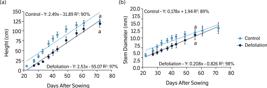
Height and diameter of sesame plants in the control and defoliation treatments in the days after sowing.
There was no significant difference for the maximum quantum yield of photosystem II (Fv/Fm), photochemical quenching (qP), and nonphotochemical quenching (NPQ) between the control and defoliated sesame plants for 11 and 18 days after mechanical damage (Table 2).
Photosynthetic efficiency through chlorophyll a fluorescence variables in sesame plants 11 and 18 days after defoliation.
Root morphology
Root length and surface area were greater in plants under defoliation compared to the control (Fig. 3a,b). There was no significant difference for root diameter or volume between the control and defoliated sesame (Fig. 3c,d).
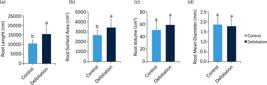
Root morphology of sesame plants from control and defoliation treatments. Length (a), surface area (b) volume (c) and root diameter (d).
Regarding length, surface area and root volume by diameter classes, higher averages were observed in very thin and thin roots in plants under defoliation compared to the control. There was no significant difference in length, surface area or root volume in the diameter class of thick roots between control and defoliation (Fig. 4).

Diameter classes of sesame roots from control and defoliation treatments. Length (a), surface area (b) and root volume (c). Very thin < 0.5 mm, thin > 0.5 < 0.2 mm, and thick > 0.2 mm. Means followed by the same letter for the treatments do not differ by the Tukey test at 5% probability (p ≤ 0.05). Each value indicates treatment mean ± standard deviation, n = 10.
Root dry matter was higher in defoliated sesame plants compared to control (Fig. 5a). Shoot dry matter was similar between control and defoliated plants (Fig. 5b). Specific root length (SRL), root fineness (RF), root tissue density (RMDe), and root to shoot ratio were similar between control and defoliated plants (Fig. 5c–f).

Morphological attributes of sesame plants from control and defoliation treatments. RDW – Root dry matter (a), SDW – shoot dry matter (b), SRL – specific root length (c), RF – root fineness (d), RMDe – root tissue density (e), and RDW/SDW – root-shoot ratio (f).
Production components
There was no significant difference in the number of capsules, seed weight or harvest index for the control and defoliated plants (Fig. 6).

Production components of sesame plants in control and defoliation treatments. Number of capsules (a), seed weight (b) and harvest index (c).
DISCUSSION
Biometrics and photosynthetic efficiency
Defoliation caused a decrease in sesame biometric variables after mechanical damage. This results from the reduction in the availability of photoassimilates for drains as a function of leaf area loss due to the cut. Over time, it was observed that the plants subjected to defoliation resumed growth, equaling the control plants 50 days after the implementation of the treatment. Growth resumption after defoliation is possibly related to the mobilization of carbon and nitrogen compounds from the roots to the shoot (Ferreira et al. 2024). In addition, as new leaves emerged, the production of photoassimilates, together with ideal water and nutrition conditions, favored sesame growth and development.
Thirty-four days after defoliation, stem diameter was reestablished. The rapid recovery of stem diameter in a short period may be an adaptation of sesame after defoliation to support the plant. With the sympodial growth of sesame, cutting the apex leads to the sprouting of lateral buds, which requires greater robustness and strength from the plants after mechanical damage.
No significant differences were observed for chlorophyll a fluorescence at 11 and 18 days, indicating that early defoliation did not affect the photosynthetic efficiency of sesame. This fact may be associated with the maximum quantum yield of photosystem II (Fv/Fm), whose values remained around 0.83 both 11 and 18 days after defoliation. Similar situation was reported by Dias et al. (2022) for salt stress in sesame. This indicates the absence of damage to the photosystems and the kinetics of chlorophyll a fluorescence emission (Dias et al. 2022). Furthermore, plants under ideal growing conditions present Fv/Fm in the range of 0.75 to 0.85, and values below this range reflect photoinhibitory damage to the reaction centers of photosystem II (Guidi et al. 2019, Kitajima and Butle 1975).
Photochemical quenching (qP) was similar in plants regardless of treatment. Thus, the excited energy was used to oxidize plastoquinone and feed the electron transport chain, increasing plant photosynthetic efficiency (Pshybytko 2023). The similarity in this process for both treatments demonstrates that defoliation did not compromise the photochemical phase of photosynthesis in sesame plants. The same pattern was observed in NPQ, which is related to the dissipation of excess absorbed light energy in the form of heat (Guidi et al. 2019), thus protecting the photosystems. All these results indicated that defoliation did not cause damage to the photosynthetic apparatus and photosynthetic efficiency was established in the new leaves emitted after damage.
Root morphology and yield
Roots are the main inputs for mineral nutrients necessary for plant growth, development, and seed production (Lyzenga et al. 2023). A well-developed root system is an important characteristic for stress tolerance. Sesame has a robust and well-developed root system, making it tolerant to drought and allowing it to reach deeper soil layers (Miao et al. 2021). Thus, sesame plants subjected to defoliation showed beneficial changes in root morphology, with an increase in root length and surface area, which also allowed an increase in root dry matter. This was probably the main factor responsible for the benefits observed in the shoot, such as growth resumption (height and diameter), photosynthetic efficiency, and yield itself, since this process resulted in the development of finer roots and a greater increase in root dry matter. Roots also have a characteristic of high plasticity, responding according to environmental factors (Karlova et al. 2021), such as defoliation.
The greater root length of sesame subjected to defoliation could facilitate the exploration of the soil profile and the contact of roots with nutrients (Griffiths et al. 2021). Root surface area was also increased, improving water and nutrient absorption, contributing to the nutritional status of plants under defoliation (Marques et al. 2023). With the larger root surface, there is a tendency for greater exudation of organic acids, providing beneficial effects for the rhizospheric environment (Marques et al. 2023, Zemrany et al. 2007). Thus, it is possible that the similarity in yield of control and defoliated plants is due to a robust root system and good management conditions for the crop.
Regarding diameter classes, very thin and thin roots had increased length, surface area, and volume of plants under defoliation. This result may be a strategy by the plants in the lower energy investment for the construction of the root system. Very thin and thin roots are responsible for the absorption of water and nutrients, evidencing the growth of the root system and, consequently, the increase in the morphophysiological characteristics and grain yield of sesame plants under defoliation. Imada et al. (2008) observed that root surface area is strongly linked to the absorption of nutrients, and that the increase in root volume improves the efficiency of nutrient absorption, resulting in an ideal plant development.
The dry matter of the sesame shoot under defoliation was similar to that of control plants, possibly due to growth resumption and similarities in height, diameter, and chlorophyll a fluorescence variables. The relationship between root and shoot dry matter did not change in the plants between treatments. This can be attributed to the rapid shoot recovery. The same pattern was observed for specific root length (SRL), root fineness (RF) and root tissue density (RMDe), suggesting, as previously discussed, that the sesame plant shows hardiness faced to mechanical stress.
Grain yield was not influenced by defoliation. Wang et al. (2024) reported that height, among other factors, is one of the main characteristics for seed yield in sesame since, according to the authors, the greater the height, the greater the development of capsules. Thus, with the rapid shoot recovery (height and diameter) and good growing conditions, the plants did not suffer a reduction in the number of capsules or seed weight. In addition, sesame under defoliation did not alter harvest index (HI), which indicates the efficiency of transport of photoassimilates produced in the leaves for grain filling, being reduced by abiotic stress (Heidarieh et al. 2024, Ran et al. 2019). Moderate and severe water stress in different sesame genotypes reduced biomass, seed yield, and harvest index (Heidarieh et al. 2024). Even under defoliation, there were no changes in HI compared to the control. This result correlates with growth data, with the maximum quantum yield of photosystem II (Fv/Fm), biomass and yield, showing that sesame recovers from mechanical stress in early development stages. With the positive response of sesame to early defoliation, it is evident that this crop can be used in production systems where mechanical leaf damage occurs in early development stages, as seen in other crops such as maize (Karam et al. 2020).
CONCLUSION
Early defoliation in sesame causes a decrease in height and diameter immediately after mechanical damage. However, plants quickly recover after stress. Defoliation does not alter the maximum quantum yield of photosystem II (Fv/Fm), suggesting no damage to the photosystems.
Sesame plants under defoliation have a high dry root biomass accumulation capacity. Sesame recovery after defoliation involves an increase in root length and surface area. In addition, the plants invest in very thin and thin roots that are indicated for greater absorption of water and nutrients. As a result, there were no changes in the production components or the harvest index, indicating that this mechanical damage does not cause grain yield losses.
Under the conditions in which the experiment was conducted, it can be concluded that early defoliation does not cause losses in sesame yield. However, studies in different environments are necessary to demonstrate the use of this crop in production systems in which mechanical damage may occur in initial development stages.
ACKNOWLEDGMENTS
Coordination for the Improvement of Higher Education Personnel, Foundation for Research Support of the State of Minas Gerais and National Council for Scientific and Technological Development.
-
How to cite: Marques, D. M., Blasco, A. C., Borghi, É., Karam, D., Magalhães, P. C., Mantovani, J. R., Penha, N. C., Santos Filho, P. R., Souza, T. C. (2025). Early defoliation modifies root morphology and does not alter the yield of sesame plants. Bragantia, 84, e20240239. https://doi.org/10.1590/1678-4499.20240239
-
FUNDING
Coordenação de Aperfeiçoamento de Pessoal de Nível SuperiorFinancing Code 001Grant No.: AUXPE PPGB 88887.808609/2023-00Aid No.: 2411/2022Fundação de Amparo à Pesquisa do Estado de Minas GeraisGrant No.: APQ-251-22Conselho Nacional de Desenvolvimento Científico e TecnológicoGrant No.: 404642/2025-0
DATA AVAILABILITY STATEMENT
The data that support the findings of this study are available on request from the corresponding author.
REFERENCES
-
Banks, J. M. (2017). Continuous excitation chlorophyll fluorescence parameters: a review for practitioners. Tree Physiology, 37, 1128-1136. https://doi.org/10.1093/treephys/tpx059
» https://doi.org/10.1093/treephys/tpx059 -
Blanco, C. A., Hernandez, G., Conover, K., Dively, G. P., Nava-Camberos, U, Portilla, M., Abel, C. A., Williams, P. and Hutchison, W. D. (2023). Severe defoliation of vegetative maize plants does not reduce grain yield: Further implications with action thresholds. Southwest Entomology, 48, 791-804. https://doi.org/10.3958/059.048.0404
» https://doi.org/10.3958/059.048.0404 -
[Conab] Companhia Nacional de Abastecimento. (2024). Acompanhamento da safra brasileira de grãos: 11º Levantamento da Safra 2023/24. Available at: https://www.conab.gov.br/info-agro/safras/graos/boletim-da-safra-de-graos Accessed: Aug. 26, 2024.
» https://www.conab.gov.br/info-agro/safras/graos/boletim-da-safra-de-graos -
Dias, A. S., Lima, G. S., Silva, S. S., Soares, L. A. A., Chaves, L. H. G., Gheyi, H. R., Lacerda, C. N. and Fernandes, P. D. (2022). Gas exchange, photosynthetic pigments, and photochemical efficiency of sesame under salt stress and phosphate fertilization. Semina: Ciências Agrárias, 43, 1237-1256. https://doi.org/10.5433/1679-0359.2022v43n3p1237
» https://doi.org/10.5433/1679-0359.2022v43n3p1237 -
Ferreira, J. P., Marques, D. M., Karam, D., Borghi, E., Magalhães, P. C., Souza, K. R. D., Arantes, D. S. and Souza, T. C. (2024). How does early defoliation influence the morphophysiology and biochemical characteristics of maize? Plant Growth Regulation, 103, 747-761. https://doi.org/10.1007/s10725-024-01145-x
» https://doi.org/10.1007/s10725-024-01145-x -
Griffiths, M., Roy, S., Guo, H., Seethepalli, A., Huhman D, Ge, Y., Sharp, R. E., Fritschi, F. B. and York, L. M. (2021). A multiple ion-uptake phenotyping platform reveals shared mechanisms affecting nutrient uptake by roots. Plant Physiology, 185, 781-795. https://doi.org/10.1093/plphys/kiaa080
» https://doi.org/10.1093/plphys/kiaa080 -
Guidi, L., Lo Piccolo, E. and Landi, M. (2019). Chlorophyll fluorescence, photoinhibition and abiotic stress: Does it make any difference the fact to be a C3 or C4 species? Frontiers in Plant Science, 10, 174. https://doi.org/10.3389/fpls.2019.00174
» https://doi.org/10.3389/fpls.2019.00174 -
Heidarieh, Z., Jafari, A., Ebrahimi, H. R., Haghighi, B. J. and Miri, H. R. (2024). Seed priming alleviates the adverse effects of drought stress on sesame genotypes by improving biochemical and physiological characteristics. South African Journal of Botany, 167, 256-269. https://doi.org/10.1016/j.sajb.2024.02.023
» https://doi.org/10.1016/j.sajb.2024.02.023 -
Imada, S., Yamanaka, N. and Tamai, S. (2008). Water table depth effects Populus alba fine root growth and whole plant biomass. Functional Ecology, 22, 1018-1026. https://doi.org/10.1111/j.1365-2435.2008.01454.x
» https://doi.org/10.1111/j.1365-2435.2008.01454.x -
Jeyaraj, S. and Beevy, S. S. (2024). Insights into the drought stress tolerance mechanisms of sesame: the queen of oilseeds. Journal of Plant Growth Regulation, 43, 3370-3391. https://doi.org/10.1007/s00344-024-11353-4
» https://doi.org/10.1007/s00344-024-11353-4 -
Kabinda, J., Madzimure, J., Murungweni, C. and Mpofu, I. D. T. (2012). Significance of sesame (Sesamum indicum L.) as a feed resource towards small-ruminant animal production in Southern Africa: a review. Tropical Animal Health and Production, 54, 106. https://doi.org/10.1007/s11250-022-03062-5
» https://doi.org/10.1007/s11250-022-03062-5 -
Karam, D., Borghi, E., Magalhães, P. C., Paes, M. C. D., Pereira Filho, I. A., Mantovani, E. C., Souza, T. C. and Adegas, F. S. (2020). Antecipe: cultivo intercalar antecipado. Embrapa. Available at: https://www.infoteca.cnptia.embrapa.br/infoteca/handle/doc/1126609 Accessed on: Aug. 26, 2024.
» https://www.infoteca.cnptia.embrapa.br/infoteca/handle/doc/1126609 -
Karlova, R., Boer, D., Hayes, S. and Testerink, C. (2021). Root plasticity under abiotic stress. Plant Physiology, 187, 1057-1070. https://doi.org/10.1093/plphys/kiab392
» https://doi.org/10.1093/plphys/kiab392 -
Kitajima, M. and Butler, W. L. (1975). Quenching of chlorophyll fluorescence and primary photochemistry in chloroplasts by dibromothymoquinone. Biochimica et Biophysica Acta (BBA) - Bioenergetics, 376, 105-115. https://doi.org/10.1016/0005-2728(75)90209-1
» https://doi.org/10.1016/0005-2728(75)90209-1 -
Lynch, J. P. and Brown, K. M. (2012). New roots for agriculture: exploiting the root phenome. Philosophical Transactions of the Royal Society B, 367, 1598-1604. https://doi.org/10.1098/rstb.2011.0243
» https://doi.org/10.1098/rstb.2011.0243 -
Lyzenga, W. J., Liu, Z., Olukayode, T., Zhao, Y., Kochian, L. V. and Ham, B.-K. (2023). Getting to the roots of N, P, and K uptake. Journal of Experimental Botany, 74, 1784-1805. https://doi.org/10.1093/jxb/erad035
» https://doi.org/10.1093/jxb/erad035 -
Marques, D. M., Magalhães, P. C., Marriel, I. E., Gomes Júnior, C. C., Silva, A. B., Reis, C. O., Souza, K. R. D. and Souza, T. C. (2023). Does Azospirillum brasilense mitigate water stress and reduce the use of nitrogen fertilizers in maize? South African Journal of Botany, 156, 278-285. https://doi.org/10.1016/j.sajb.2023.03.041
» https://doi.org/10.1016/j.sajb.2023.03.041 -
Marques, D. M., Veroneze Júnior, V., Silva, A. B., Mantovani, J. R., Magalhães, P. C. and Souza, T. C. (2018). Copper toxicity on photosynthetic responses and root morphology of Hymenaea courbaril L. (Caesalpinioideae). Water Air Soil Pollution, 229, 138. https://doi.org/10.1007/s11270-018-3769-2
» https://doi.org/10.1007/s11270-018-3769-2 -
Miao, H. M., Langham, D. R., Zhang, H. Y. (2021). Botanical descriptions of sesame. In H. M. Miao, H. Y. Zhang, C. Kole (Eds.), The sesame genome (pp. 19-58). Springer. https://doi.org/10.1007/978-3-319-98098-0_2
» https://doi.org/10.1007/978-3-319-98098-0_2 -
Pshybytko, N. L. (2023). Non-photochemical quenching of chlorophyll a fluorescence as an indicator of the state of a plant photosynthetic apparatus under abiotic stress. Journal of Applied Spectroscopy, 90, 60-65. https://doi.org/10.1007/s10812-023-01503-z
» https://doi.org/10.1007/s10812-023-01503-z -
Ran, H., Kang, S., Hu, X., Li, F., Du, T., Tong, L. and Parsons, D. (2019). Newly developed water productivity and harvest index models for maize in an arid region. Field Crops Research, 234, 73-86. https://doi.org/10.1016/j.fcr.2019.02.009
» https://doi.org/10.1016/j.fcr.2019.02.009 -
van Kooten, O. and Snel, J. F. (1990). The use of chlorophyll fluorescence nomenclature in plant stress physiology. Photosynthesis Research, 25, 147-150. https://doi.org/10.1007/BF00033156
» https://doi.org/10.1007/BF00033156 -
Wang, C., Niu, J., Miao, H., Li, C., Duan, Y., Ju, M., Cao, H., Wei, L., Wang, H. and Zhang, H. (2024). Genetic variation, correlation, and association mapping of seed yield and its component traits in sesame. Genetic Resources and Crop Evolution, 71, 603-619. https://doi.org/10.1007/s10722-023-01644-2
» https://doi.org/10.1007/s10722-023-01644-2 -
Zemrany, H. E., Czarnes S., Hallett, P. D., Alamercery, S., Bally, R. and Monrozier, L. J. (2007). Early changes in root characteristics of maize (Zea mays) following seed inoculation with the PGPR Azospirillum lipoferum CRT1. Plant and Soil, 291, 109-118. https://doi.org/10.1007/s11104-006-9178-0
» https://doi.org/10.1007/s11104-006-9178-0
Edited by
-
Section Editor:
Cláudia Sales Marinho https://orcid.org/0000-0001-6636-6468


 Means followed by the same letter for the treatments do not differ by the Tukey’s test at 5% probability (p ≤ 0.05) at 50 days for height and 34 days for stem diameter. Each value indicates treatment mean ± standard deviation, n = 14.
 Means followed by the same letter for the treatments do not differ by the Tukey’s test at 5% probability (p ≤ 0.05). Each value indicates treatment mean ± standard deviation, n = 10.
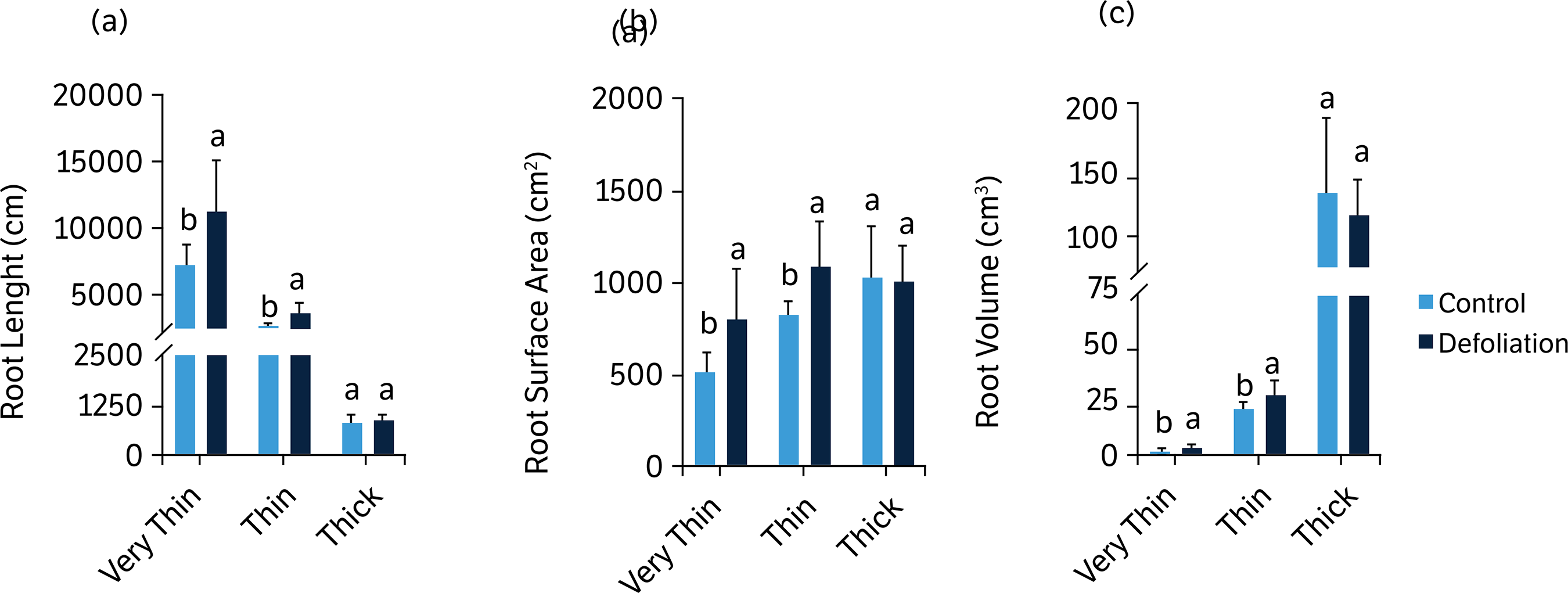
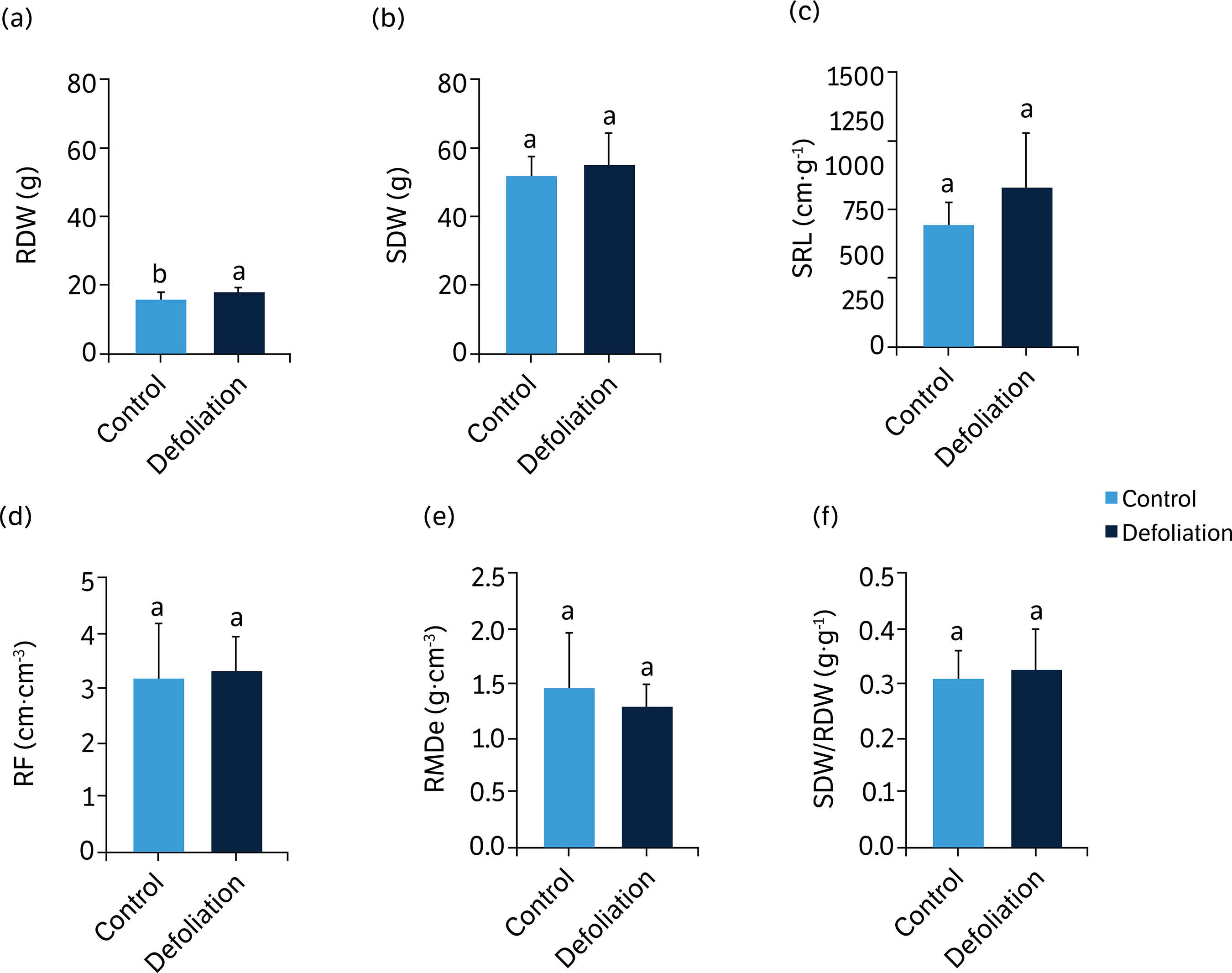 Means followed by the same letter for the treatments do not differ by the Tukey’s test at 5% probability (p ≤ 0.05). Each value indicates treatment mean ± standard deviation, n = 10.
 Means followed by the same letter for the treatments do not differ by the Tukey’s test at 5% probability (p ≤ 0.05). Each value indicates treatment mean ± standard deviation, n = 10.