 Protein hydrolysates for agricultural formulations: LC-MS/MS identification of dipeptides and field evaluation in soybean
ABSTRACT
This study establishes LC-NL(46)-MS/MS as a selective and efficient method for profiling bioactive dipeptides in protein hydrolysates, addressing limitations of conventional full-scan analyses. Four formulations were evaluated: two commercial biostimulants (Biost1 and Biost2) and two prototypes (MVP1 and MVP2). Computational predictions revealed non-toxic dipeptides with diverse bioactivities, including ACE and DPP-IV inhibition, antioxidant effects, and similarities to CLE peptide fragments involved in plant signaling. MVP1 exhibited superior peptide diversity and CLE-related sequences, suggesting enhanced biostimulant potential. Field trials in soybean demonstrated the safety of these hydrolysates, with no negative impacts on growth or yield, though statistical significance was not achieved. Qualitative productivity gains (up to 8.7%) in MVP1 highlight their role as sustainable signaling mediators. These findings provide a foundation for quality control in biostimulant production and future research on combined formulations under stress conditions, emphasizing the dual function of protein hydrolysates as nutrient carriers and sources of bioactive peptides for agricultural applications.
Key words
plant biostimulants; dipeptides; mass spectrometry; liquid chromatography; soybean yield
INTRODUCTION
Protein hydrolysates exert beneficial effects on both animals and plants. In both contexts, they enhance growth, bolster resistance to environmental stressors, and promote overall health. Nutraceutical food consumption holds growing interest for humanity. The rising popularity of fast food, typically rich in fats, carbohydrates, and sodium, underscores the urgency of enhancing these foods’ nutritional quality. From a nutritional and metabolic perspective, incorporating antioxidants, antihypertensives, and glucose regulators yields substantial health benefits (Hamadou 2025).
In animal nutrition, hydrolysates derived from protein residues are widely used as palatabilizers (Monteiro et al. 2025) and to boost protein bioavailability (Shokri and Jarpa-Parra 2025). The market available nutraceutical products already add significant value to fish, dog, and cat food for sick animals.
Protein hydrolysates have also gained significant prominence in agriculture (Kergaravat et al. 2025). Derived from sources like fish and collagen, they reportedly boost productivity in crops such as soybeans, corn, beans, and others (Madende and Hayes 2020). Agricultural biostimulants containing these hydrolysates are applied via seed treatment or foliar spraying. Manufactured through acidic, basic, enzymatic hydrolysis, or their combinations, hydrolysates combined with macro and micronutrients offer extensive possibilities in field applications (Colla et al. 2017). Commercially, protein hydrolysates facilitate amino acid availability to plants. Research indicates that soil microorganisms utilize 30–40% of these amino acids for respiration, while the remainder supports cell biomass production and maintenance (Jones et al. 2005, Jones et al. 2009). Furthermore, 30–40% of the nitrogen from respired amino acids is excreted as ammonium into the soil, in which plants and microbes can uptake it or oxidize it into nitrate.
Peptides in protein hydrolysates represent an emerging underexplored aspect of plant immunity yet. Mounting evidence indicates that these small molecules act as signaling mediators, interacting with membrane receptors to initiate perception and response cascades. Consequently, peptides are increasingly viewed as phytocytokine like compounds that amplify defense mechanisms, bridging initial stress perception with intricate morphophysiological and biochemical adaptations.
This role positions them as potential key players in plant immune signaling against biotic stress (Pastor-Fernández et al. 2023). Recent enzymatic and molecular studies revealed that hydrolysates applied to maize plants modulate metabolic pathways, including glycolysis and the Krebs cycle (Ertani et al. 2009). Specifically, they stimulate enzymes in carbon metabolism (e.g., malate dehydrogenase, isocitrate dehydrogenase, citrate synthase) and nitrogen assimilation (e.g., nitrate reductase, glutamine synthetase, glutamate synthase, aspartate aminotransferase) (Schiavon et al., 2008). Likewise, from an enzymatic and molecular perspective, hydrolysates enhance nitrogen and carbon metabolism enzymes (Ertani et al. 2013).
Protein hydrolysates enhance plant metabolism by boosting photosynthesis and energy supply, potentially improving nitrogen assimilation through carbon skeleton production and amino acid biosynthesis (Colla et al. 2015). However, high concentrations of free amino acids can repress root nitrate uptake by overloading phloem, with effects varying by nitrate levels and amino acid types—e.g., exogenous glutamine reduces nitrate influx in barley roots (Fan et al. 2006, Miller et al. 2007).
In grapevine, whey derived hydrolysates improve heat and drought tolerance, accelerate photosynthetic recovery, up-regulate stress genes (HSFA2, HSP101), and inhibit pathogens like Plasmopara viticola, acting as both biostimulants and elicitors for sustainable viticulture (Alfonso et al. 2025).
Foliar applications of animal-derived hydrolysates benefit horticulture by enhancing product quality, resource efficiency, and stress tolerance, linked to their molecular composition (Colla et al. 2015). In kiwi fruit, low-molecular-weight fractions (1–3 kDa) stimulate shoot and root growth at low rates, while higher fractions (> 3 kDa) require higher doses (Quartieri et al. 2002). Amino acids and peptides also improve leaf mineral status, boosting cation uptake and crop growth (Garcia et al. 2011).
Hydrolysis cleaves proteins into peptides and amino acids, with bioactivity depending on reagent reactivity and reaction time. Peptides exhibit stronger effects than free amino acids in plants; for instance, dipeptides GG and GN outperform free glycine in regulating tobacco growth (Fedoreyeva et al. 2022). Protein hydrolysates surpass free amino acids and inorganic nitrogen in bioactivity (Santi et al., 2017), with activities including antioxidant effects, ACE/DPP-IV inhibition, and stimulation (Minkiewicz et al. 2019). In plants, they may contain CLE peptide fragments (CLV3/CLE), involved in signaling (Breiden and Simon 2016, Yamaguchi et al. 2016, Wang et al. 2025).
Peptide analysis typically uses proteomics for longer sequences (> 4 residues), missing many bioactive dipeptides (Li et al. 2007, Bechaux et al. 2019, Peng et al. 2019). Specialized methods include capillary electrophoresis and liquid chromatography-tandem mass spectrometry (LC-MS/MS) for dipeptide quantification (Ozawa et al. 2020), and fast screening for di-/tripeptides in hydrolysates (Poliseli et al. 2021).
This study aimed to identify dipeptides in commercial biostimulants (Biost1 and Biost2) and prototypes (MVP1 and MVP2) using LC-NL(46)-MS/MS, and evaluate MVP1 and Biost1 in soybean seed treatments for yield improvement.
MATERIAL AND METHODS
The commercial protein hydrolysates Biost1 and Biost2 were purchased from the local market in Jandaia do Sul, Paraná, Brazil. Biost1 is a liquid from wet blue cattle skin collagen hydrolysis and is composed of 45% of a mixture of soluble protein, peptides, and amino acids. Biost2 is a liquid from tannin cattle skin collagen hydrolysis and is composed of 20% of a mixture of soluble protein, peptides, and amino acids.
MVP1 (minimally viable product 1) is a soluble solid from chicken residues hydrolysis, provided by BRFoods Company in Toledo, Paraná, Brazil, and contains 70% of a mixture of proteins, peptides, and amino acids. MVP2 (minimally viable product 2) is a liquid from untreated cattle skin collagen hydrolysis under development by a company in Jandaia do Sul and contains 30% of a mixture of soluble proteins, peptides, and amino acids.
Commercial HPLC-grade acetonitrile and formic acid were purchased from Vetec-Sigma-Aldrich in Duque de Caxias, Rio de Janeiro, Brazil. A whey protein hydrolysate was used as a sensitivity standard and was purchased from the local market in Brazil. Deionized water was produced using a Milli-Q system from Millipore in Billerica, MA, United States of America.
Liquid chromatographic mass spectrometry parameters
The analysis was based on the protocol described by Poliseli et al. (2021). A mixture of acetonitrile: water: formic acid (70.0: 29.9: 0.1 v/v/v) was used as the mobile phase and was pumped isocratically at a flow rate of 300 μL.min-1 using a LC pump (Waters 515). A XBridge C18 3.5 mm (4.6 × 50 mm) column (Waters) was used for the separation. The injection volume was 5 μL, and the run time was 5 min at room temperature. The PremierXE triple-quadrupole mass spectrometer (Waters Corporation, Milford, MA, United States of America) was used for the Neutral Loss of 46 Da (NL46, LC-NL(46)-MS/MS) and collision-induced dissociation (CID, LC-CID-MS/MS) MS/MS experiments. The electrospray ionization source (ESI) was set at 4 KV and operated in positive ion mode. The desolvation gas was set at 350°C, and the source block was set at 110°C. The cone voltage (20 V), collision energy (15 V), and collision gas pressure (argon) (3 × 10⁻³ Torr) were previously optimized.
The analysis was conducted using the LC-NL(46)-MS/MS method to search for protonated dipeptide candidates (PDC), and CID spectra were obtained for the PDC. The ions with an intensity of at least 1,000 arbitrary units were selected for CID fragmentation. The CID mass spectra were manually interpreted according to the method described by Poliseli et al. (2021). The search for y1 ions (protonated amino acids MH+) with an intensity above 5% of the base peak was initiated. The second amino acid was determined by subtracting y1 from the protonated dipeptide candidate (DCP) (amino acid residue, amino acid molecular weight minus water, Y) resulting in the dipeptide YX. Confirmatory immonium ions and ions related to the observed amino acids were investigated after determining the YX peptides. Isobaric peptides can appear for the same precursor ion. Leucine and isoleucine are isobaric and cannot be unambiguously distinguished under the MS/MS fragmentation conditions used. Thus, whenever this ambiguity was present during manual interpretation, residues were annotated as (I/L).
Sample preparation
One hundred milligrams of protein hydrolysate was dissolved in 1 mL of a 50 mM ammonium bicarbonate solution in water, following the protocol developed by Poliseli et al. (2021). The solution was vortexed for 40 seconds and centrifuged at 4,000 revolutions per minute for 15 minutes at room temperature (25°C). One hundred microliters of the supernatant were collected and diluted in 900 microliters of the mobile phase, vortexed for 1 minute, centrifuged at 4,000 revolutions per minute for 10 minutes, and stored at -20°C for 1 hour. Finally, 100 microliters of the supernatant were diluted in 900 microliters of the mobile phase and directly injected into the LC-MS/MS system.
Dipeptide candidates from commercial biostimulant samples were identified through neutral loss of 46 Da, as described in the previous section. Protonation occurred due to sample dilution in the mobile phase. The extraction was performed using a modified proteomic protocol (Poliseli et al. (2021), dissolving peptides in an NH4HCO3 water solution. Whey protein hydrolysate samples were used as a positive control standard due to their high nitrogen content and sensitivity to the method.
Bioactivity and toxicity prediction of di- and tripeptides by computational analysis
Peptides functionality was evaluated loading the sequences into the BIOPEP-UWM database. The web server PeptideRanker was employed to predict the probability (between 0 and 1) of a peptide being bioactive (Mooney et al. 2012). To infer toxicity risks associated with the identified peptides, the program OSIRIS2 was used (Sander et al. 2009).
Soybean test
The experiments were carried out in the field on soybean crops (Glycine max L.) during the 2020/2021 harvest. The first experiment was conducted at the Technological Center (CTC) of Cooperativa Agropecuária e Industrial (COCARI) in Mandaguari, Paraná, Brazil, located at the geographic coordinates 23°30’S and 51°42’W, with an average altitude of 655 meters, and soil classified as Red Latosol. The second experiment was conducted in a commercial area at Sítio Santo Antônio in Borrazópolis, Paraná, Brazil, located at coordinates 23°52’ S and 51°32’ W, with an average altitude of 447 meters, and soil classified as Red Latosol. Both experiments consisted of three treatments: control (dose of 0), RE (200 grams per hectare), and a commercial product, Bless (1 liter per hectare).
The soybean productivity was evaluated in both experiments. The mean confidence interval was adopted as a statistical criterion for discriminating and comparing the effects of treatments on soybean crop characteristics. The confidence interval establishes the range of values within which the average of the data set values is located and is an efficient and reliable method for interpreting significant differences (Payton et al. 2000). Statistical analyses were performed using the Microsoft Office Excel software, with a 95% confidence level.
RESULTS
Protein hydrolysates from commercial biostimulants and MVPs
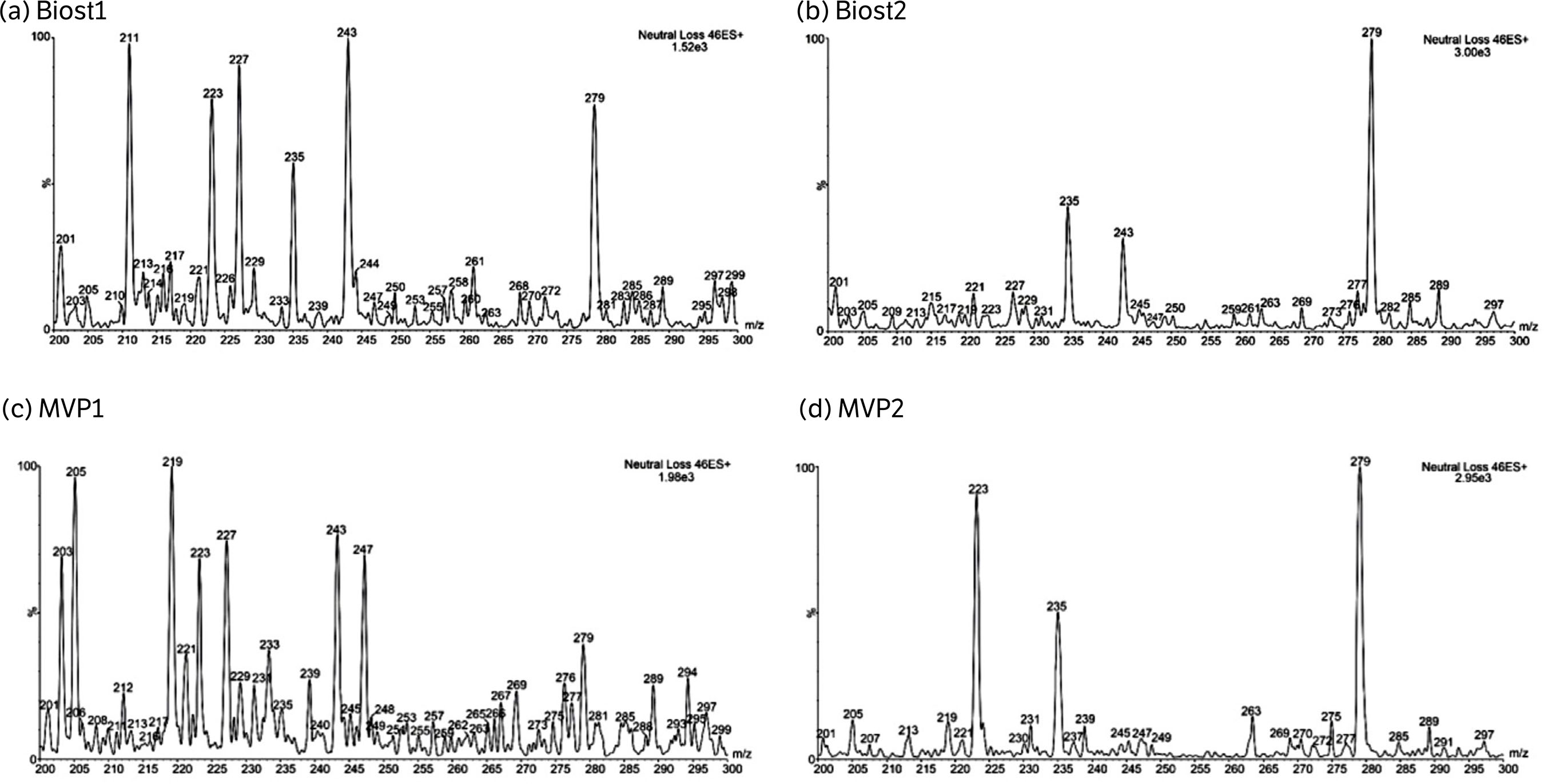
Figure 1 shows the results of the NL46 experiment for commercial biostimulant samples (Biost1 and Biost2) and both MVP samples. The identified PDC were ions of m/z 205, m/z 219, m/z 223, m/z 227, m/z 235, and m/z 247 (6 ions) from the Biost1 protein hydrolysate (Fig. 1a). The identified PDC were ions of m/z 205, m/z 219, m/z 223, m/z 227, m/z 235, m/z 243, m/z 247, m/z 263, and m/z 276 (9 ions) (Fig. 1b) for the Biost2 protein hydrolysate. The identified PDC were ions of m/z 203, m/z 205, m/z 219, m/z 221, m/z 223, m/z 227, m/z 229, m/z 231, m/z 247, m/z 253, m/z 263, m/z 267, and m/z 269 (13 ions) (Fig. 1c) for MVP1 protein hydrolysate. The identified PDC were ions of m/z 203, m/z 219, m/z 221, m/z 223, m/z 231, m/z 235, m/z 249, m/z 263, m/z 269, and m/z 275 (10 ions) (Fig. 1d) for MVP2 protein hydrolysate. It should be noted that the same m/z value obtained by NL46 may have more than one peptide (isobaric peptides) or none; they are just candidates.
LC-NL(46)-MS/MS for (a) Biost1, (b) Biost2, (c) MVP1, and (d) MVP2 protein hydrolysates. All sample analyses were performed in triplicate. Spectra with greater number of ions are presented.
Dipeptide sequencing
The Biost1, Biost2, MVP1, and MVP2 dipeptidogram analyses resulted in 14, 21, 33, and 19 dipeptides (not considering the isobaric amino acids), respectively. Table 1 shows the identified peptides and their biological activities for Biost1, Table 2 for Biost2, Table 3 for MVP1, and Table 4 for MVP2.
Peptide amino acid sequences identified by liquid chromatography – tandem mass spectrometry in hydrolysates from Biost1, along with their known biological activities as found in the BIOPEP database.
Peptide amino acid sequences identified by liquid chromatography – tandem mass spectrometry in hydrolysates from Biost2, along with their known biological activities as found in the BIOPEP database.
Peptide amino acid sequences identified by liquid chromatography – tandem mass spectrometry in hydrolysates from MVP1, along with their known biological activities as found in the BIOPEP database.
Peptide amino acid sequences identified by liquid chromatography – tandem mass spectrometry in hydrolysates from MVP2, along with their known biological activities as found in the BIOPEP database.
The likelihood of a peptide being bioactive was predicted in the PeptideRanker server. The analysis performed in the OSIRIS program indicated that all evaluated peptides are nontoxic regarding mutagenic, tumorigenic, irritant, and reproductive aspects.
Soybean test
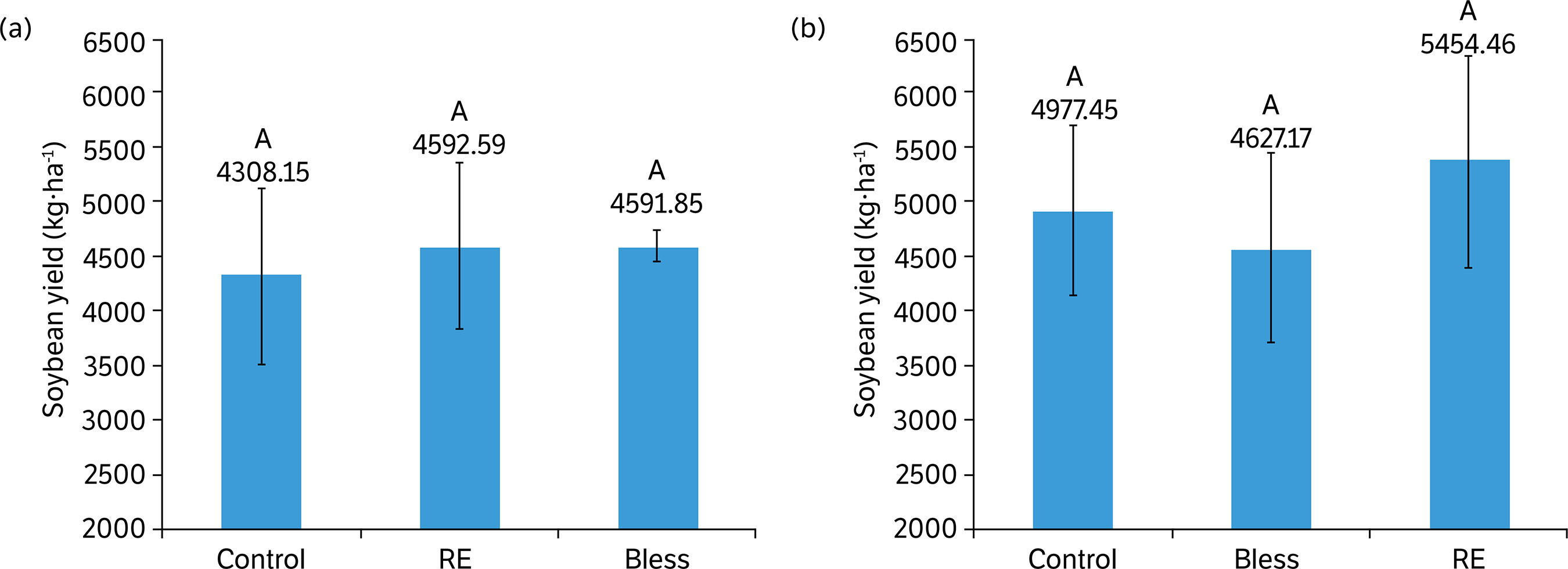
In the experiment conducted at the CTC station (Mandaguari), no statistically significant differences were observed among treatments for the soybean growth parameters evaluated. Nevertheless, grain yield was 6.2% higher in the RE and Bless treatments compared to the control (Fig. 2a). A similar trend was observed in the field trial carried out in a commercial area (Borrazópolis), where no significant differences were detected for the analyzed variables. However, in this case, the RE treatment resulted in an 8.7% higher soybean yield than the control and a 15% higher yield than the Bless treatment (Fig. 2b).
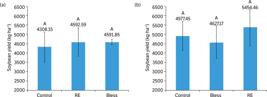
Productivity (kg·ha-1) in (a) the Technological Center experiment (Mandaguari, Paraná, Brazil) with standard deviation of 686.49 (Control), 662.65 (RE) and 118.23 (Bless); and (b) a commercial field (Borrazópolis, Paraná, Brazil) with standard deviation of 682.56 (Control), 598.12 (RE) and 748.36 (Bless).
DISCUSSION
Protein hydrolysates from commercial biostimulants and MVPs
LC-NL(46)-MS/MS analyses revealed that Biost1 exhibited a higher total ion count but less intense PDC signals than Biost2, whose summed intensities suggest a higher dipeptide concentration. This suggests that the elevated protein content in Biost1 (45%) may stem largely from free amino acids. Hydrolysis duration and reagent concentration likely dictate both peptide yield and quality. Among the tested samples, MVP1 displayed the highest number and intensity of PDCs (13), followed by MVP2 (10), Biost2 (9), and Biost1 (6), indicating a superior peptide content in MVP1. Subsequent CID experiments confirmed these dipeptide sequences, as detailed in the following section.
Overall, LC-NL(46)-MS/MS proved effective for the rapid evaluation of hydrolysates, facilitating the comparison of peptide concentration (intensity) and diversity (PDC count) during production. While Brazilian industries commonly rely on full-scan analyses (up to m/z 2,000) to monitor hydrolysis, these may provide a distorted view by capturing all ions present. Conversely, neutral loss experiments offer greater selectivity by specifically detecting molecules containing carboxylic groups—an approach that facilitates dipeptide identification, which is critical for decision-making in hydrolysis processes.
Dipeptide sequencing and biological activity
Sequencing was performed using LC-CID-MS/MS for Biost1, Biost2, MVP1, and MVP2, followed by bioactivity and toxicity prediction. All dipeptides identified in the hydrolysates were predicted as non-toxic, indicating safety for agricultural applications.
Peptides are well recognized bioactive molecules whose effects depend on their amino acid sequence, influencing digestive, endocrine, cardiovascular, immune, and nervous systems (Saubenova et al. 2024). Owing to these physiological and biochemical functions, peptides also attract interest from pharmaceutical and food industries. Based on the BIOPEP platform (Tables 1–4), the identified dipeptides were screened for reported bioactivities, including ACE and DPP-IV inhibition, antioxidant and stimulant properties, and α-glucosidase inhibition (Purohit et al., 2024).
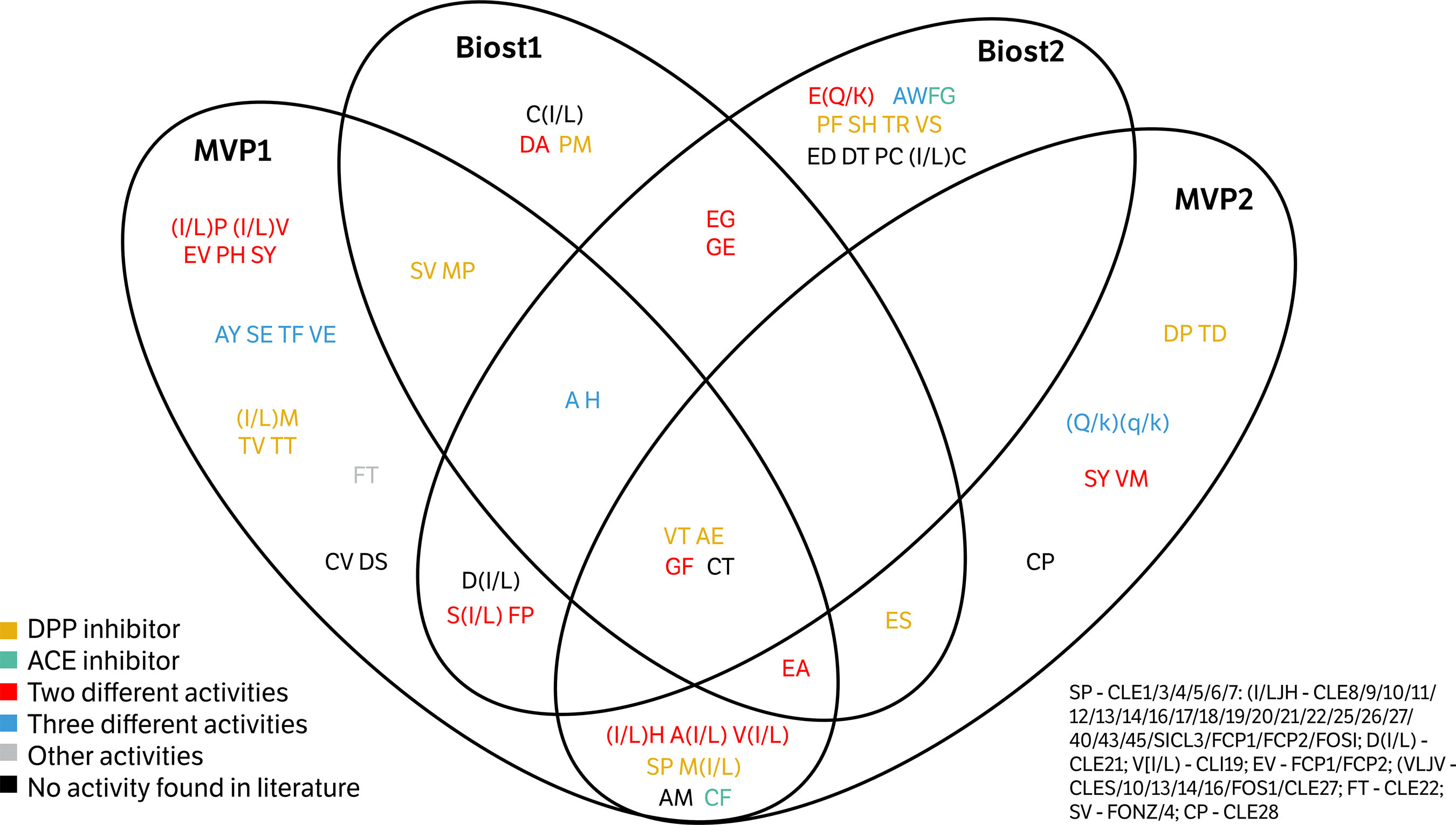
Figure 3 presents a Venn diagram comparing the four protein hydrolysates (Biost1, Biost2, MVP1, and MVP2), highlighting shared and unique dipeptides. Each biostimulant displayed specific dipeptide counts: Biost1 (3), Biost2 (11), MVP1 (15), and MVP2 (6). Biost1, Biost2, and MVP2 showed comparable numbers, consistent with their common origin from cattle skin collagen. In contrast, MVP1 exhibited higher peptide diversity, likely due to its composition from multiple chicken tissues.
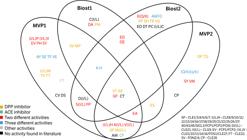
Venn diagram showing the group map of dipeptides in (a) Biost1, (b) Biost2, (c) MVP1, and (d) MVP2 and their corresponding bioactivities.
Biost2 shared the fewest dipeptides with other samples (10), followed by Biost1 (11), MVP2 (12), and MVP1 (17). MVP1 and MVP2 had six identical dipeptides, likely resulting from their shared enzymatic hydrolysis process. The dipeptides AE, VT, GF, and CT identified in all biostimulants are associated with ACE, DPP-IV, and DPP-III inhibitory activities (though no data exist for DPP-III). According to the BIOPEP database (Tables 1–4), the detected dipeptides also exhibit various biological activities, including ACE and DPP-IV inhibition, stimulation, and antioxidant effects.
Although dipeptide sequences differed among biostimulants, most shared similar biological functions. These results suggest that peptides bioactive in animals may also influence plants, such as in glucose and stress regulation, antioxidant activity, and enhanced growth hormone release. Unfortunately, the BIOPEP database lacks plant bioactivity records, underscoring the need for studies on plant biostimulants and database enrichment.
However current databases like BIOPEP do not report plant-related bioactivities, recent studies demonstrated that dipeptides act as regulatory molecules in plants. Examples include YD, which enhances stress tolerance and delays senescence; γ-EC (γ-Glu–Cys), involved in redox balance; and cyclic DKPs such as cHP (cyclo[His–Pro]), cLP (cyclo[Leu–Pro]), and cPV (cyclo[Pro–Val]), which mimic hormone signaling and promote growth or defense. These findings, highlighted by Minen et al. (2023) and Agarwal et al. (2025), revealed that dipeptides play key roles in plant metabolism, development, and stress resilience, beyond their animal bioactivity.
CLE peptides exert diverse physiological effects on plants, including promoting lateral root emergence, shoot and root growth, pollen tube development, and maintenance of root phloem, embryo, endosperm, protoxylem vessels, vascular stem cells, bundles, floral meristem, shoot apical meristem (SAM), and root apical meristem (RAM) all potentially impacting productivity (Wang et al. 2025). With sequences up to 14 amino acids, these peptides suggest that dipeptides may represent CLE fragments with related biological activities. Manufacturers of Biost1 and Biost2 attribute the claimed productivity increase to root growth.
Figure 3 illustrates the group map for the analyzed samples and their common dipeptides. The right side of the Venn diagram includes a list of CLE dipeptide fragments corresponding to CLE peptides. Table 5 presents protein hydrolysate dipeptides that match fragments of cellular signaling peptides such as clavata3 (CLV3)/embryo surrounding region related (CLE) peptides (Breiden and Simon 2016, Yamaguchi et al. 2016, Wang et al. 2025).
A list of dipeptides found in protein hydrolysates that match the CLE structures, showing the known CLE-receptor combinations and their functions in response to developmental and abiotic cues.
The dipeptide SP (MVP1 and MVP2) corresponds to CLE1/3/4 fragments associated with lateral root emergence, shoot growth (CLE7, CLE5/6), and vascular bundle maintenance (CLE43) (Breiden and Simon 2016, Yamaguchi et al. 2016, Wang et al. 2025). The (I/L)H (MVP1 and MVP2) is part of multiple signaling peptides (CLV3, CLE8–CLE22, CLE25–CLE27, CLE40, CLE43, CLE45, SlCLV3, FCP1, FCP2) implicated in diverse plant developmental processes. The V(I/L) (MVP1 and MVP2) derives from CLE19. MVP1 also contains EV (FCP1, FCP2), (I/L)V (CLE9–CLE16, CLE27, FOS1), and FT (CLE22). SV (Biost1 and MVP1) originates from FON2 and FON4, while CP (MVP2) relates to CLE27.
Table 5 summarizes the dipeptides identified in the hydrolysates that align with CLE structures, along with their known receptor combinations and biological functions under developmental and abiotic stress cues. Seven dipeptides [SP, (I/L)H, V(I/L), EV, (I/L)V, FT, and SV] found in MVP1 are part of vegetal signaling peptides. MVP2 has four dipeptides [SP, (I/L)H, V(I/L), and CP] with high potential for signaling and effects on plants. Biost1 (SV) also shows potential activity, whereas Biost2 did not match any CLE signaling peptides.
Potentially, MVP1 contains the highest number of peptides that may result in plant biostimulation. Amino acids themselves can perform biostimulant activity in plants (Purohit et al. 2024). For example, glycine, phenylalanine, cysteine, and glutamate increase nitrate, amino acid, and total nitrogen contents in soybean leaves, suggesting a signaling role that improves crop productivity. The GG dipeptide regulates tobacco plant growth and is part of CLE1/3/4, CLE2, CLE5/6, and CLE7 signaling peptides; exogenous application of G, GG, and GN at low concentrations enhances tobacco root hair development by differentially regulating gene expression, indicating an epigenetic mechanism for short peptides (Fedoreyeva et al. 2022).
This hypothesis of dipeptides acting as biostimulants opens opportunities to measure their effects as signaling molecules in plants at different developmental stages. Furthermore, evaluating biostimulant effects through dipeptide identification and bioactivity can lead to more effective hydrolysate testing in plants, since reagent concentration and reaction time affect peptide composition.
Amino acid seed treatments induce changes in root morphology, reducing water and soil nutrient consumption while boosting productivity (Teixeira et al. 2018). Similarly, protein hydrolysates may enhance plant signaling and development due to their peptide content. Santi et al. (2017) compared biostimulatory effects of free amino acids and short peptides on maize seedlings, finding that hydrolysate peptides more effectively stimulated root growth and micronutrient accumulation than equivalent amino acid mixtures, suggesting a specific role for small peptides in root control (Colla et al. 2015, Fedoreyeva et al. 2022, Minen et al. 2023).
Despite these findings, the specific peptides responsible remain unidentified. Molecular mass fractionation and metabolomics explained biostimulating activity in vegetable hydrolysates on tomatoes, with optimal root growth in fractions below 0.5–1 kDa corresponding to very low mass peptides like those in our method (Lucini et al. 2020).
These peptide analysis results suggest that amino acid or peptide effects stem from bioactive signaling, as shown in experimental data (Purohit et al. 2024, Saubenova et al. 2024). The data indicate that very low mass peptides contribute to plant biostimulation. We hypothesize that they act as signaling peptides, like CLE peptides cleaved into dipeptides that influence plant development. Further studies on dipeptides may enhance understanding of protein hydrolysates as biostimulants, ultimately improving productivity.
The biostimulant protocol appears promising based on literature. To evaluate performance, the commercial Biost1 (14 dipeptides, 1 CLE fragment) and prototype MVP1 (33 dipeptides, 5 CLE fragments) were compared in soybean seed treatments to assess productivity enhancement. MVP1 was selected for field testing because LC–MS/MS profiling revealed a higher peptide count and a broader representation of short peptides and CLE-related fragments. MVP2 was retained as a comparator for evaluation in subsequent field trials.
Soybean productivity
In experiments conducted at both the CTC (Mandaguari) and a commercial site (Borrazópolis), no statistically significant differences were observed in soybean crop characteristics across treatments. Nevertheless, productivity was 6.2% higher in MVP1 and Biost1 compared to the control at the CTC site (Fig. 2a). Furthermore, MVP1 achieved a yield 8.7% higher than the control and 15% higher than Biost1 in the commercial area (Fig. 2b). Although literature evaluations of protein hydrolysates in soybean fields are scarce potentially due to non-significant results or high field variance, the mean comparison remains a standard commercial practice in Brazil. This provides a positive indication for MVP1 use relative to Biost1 and the negative control, likely stemming from the superior number of biostimulating peptides in MVP1.
Although field experiments revealed no significant increases in plant development parameters or soybean productivity, our results remain promising, especially for MVP1, which demonstrated qualitative productivity gains in both trials. This outcome is encouraging, as these were the initial field tests for the product in a single crop.
The absence of significant differences may stem from isolated seed application of the product. As noted by Colla et al. (2015), protein hydrolysate effects can vary by species, cultivar, developmental stage, dose, and application method. Numerous studies report enhanced outcomes when amino acids are combined with other formulations rather than applied alone. For instance, Castro et al. (2004) observed increases in height, pod number, grain count, and bean grain mass through Florogran application in greenhouse settings. Similarly, Schiavon et al. (2008) documented improved corn productivity with alfalfa protein hydrolysate.
Consentino et al. (2020) reported that protein hydrolysates primarily enhance root vigor, improving water and nutrient uptake and increasing productivity. In celery, they found significant improvements in yield and nutritional quality, highlighting the economic relevance of these biostimulants. These findings are consistent with Colla et al. (2017), who noted greater root dry mass, and Rouphael and Colla (2018), who observed better fruit quality in tomatoes.
This collective evidence supports using protein hydrolysates as a sustainable tool in agriculture. Building on these insights, our next step involves synthesizing selected peptides from MVP1, particularly CLE fragments and other sequences previously identified in hydrolysates. By prioritizing simpler structures, we aim to advance the targeted evaluation of their biostimulant potential.
CONCLUSION
The LC-NL(46)-MS/MS is a selective and efficient methodological advance for profiling bioactive dipeptides in protein hydrolysates, overcoming the limitations of conventional analyses. Our findings identify sequences with diverse biological activities, including CLE-related fragments essential for plant signaling. Field trials confirmed the safety of these formulations for soybean, with the MVP1 prototype exhibiting a positive productivity trend, likely due to its superior peptide diversity. These results highlight the dual role of hydrolysates as both nutrient carriers and signaling mediators. Future research should prioritize synthesizing these identified peptides to further elucidate their specific roles in enhancing crop resilience and sustainable productivity.
ACKNOWLEDGMENTS
The authors would like to acknowledge the support of Waters Technologies for providing the Premier XE equipment at the Fenn Lab and for their assistance in conducting the experiments at Universidade Federal do Paraná (UFPR), in Jandaia do Sul. The authors also express their gratitude to UFPR, and Universidade Estadual de Maringá for their support.
-
How to cite:
Rosa, F. A. D., Rappe, D. M., Tonin, A. P., Ribeiro, M. A. S., Sartori, F. F., Poliseli, C., Ribeiro, V. M. S., Philippsen, G. S., Meurer, E. C. and Guedes Filho, O. (2026). Protein hydrolysates for agricultural formulations: LC-MS/MS identification of dipeptides and field evaluation in soybean. Bragantia, 85, e20250225. https://doi.org/10.1590/1678-4499.20250225
-
FUNDING
Coordenação de Aperfeiçoamento de Pessoal de Nível SuperiorFinance Code 001Conselho Nacional de Desenvolvimento Científico e TecnológicoGrant no.: 301793/2025-5
-
DECLARATION OF USE OF ARTIFICIAL INTELLIGENCE TOOLS
The authors declare that no artificial intelligence tools were used in the preparation, writing, data analysis, or review of this manuscript.
DATA AVAILABILITY STATEMENT
The datasets are available from the corresponding author upon reasonable request.
REFERENCES
-
Abubakar, A., Saito, T., Kitazawa, H., Kawai, Y. and Itoh, T. (1998). Structural analysis of new antihypertensive peptides derived from cheese whey protein by proteinase K digestion. Journal Dairy Science, 81, 3131-3138. https://doi.org/10.3168/jds.S0022-0302(98)75878-3
» https://doi.org/10.3168/jds.S0022-0302(98)75878-3 -
Agarwal, P., Fischer, H.D., Camalle, M.D. and Skirycz, A. (2025). Not to be overlooked: dipeptides and their role in plant stress resilience. Journal of Experimental Botany, 76, 5738-5747. https://doi.org/10.1093/jxb/eraf311
» https://doi.org/10.1093/jxb/eraf311 -
Alfonso, E., Andlauer, W., Brück, W. M. and Rienth, M. (2025). Whey protein hydrolysates enhance grapevine resilience to abiotic and biotic stresses. Frontiers Plant Science, 16, 1521275. https://doi.org/10.3389/fpls.2025.1521275
» https://doi.org/10.3389/fpls.2025.1521275 -
Bechaux, J., Gatellier, P., Le Page, J. F., Drillet, Y. and Sante-Lhoutellier, V. (2019). A comprehensive review of bioactive peptides obtained from animal byproducts and their applications. Food Function, 10, 6244-6266. https://doi.org/10.1039/C9FO01546A
» https://doi.org/10.1039/C9FO01546A -
Breiden, M. and Simon, R. Q. A. (2016). How does peptide signaling direct plant development? BMC Biolology, 14, 58. https://doi.org/10.1186/s12915-016-0280-3
» https://doi.org/10.1186/s12915-016-0280-3 -
Castro, P. R. C., Silva, G. P., Cato, S. C. and Tavares, S. (2004). Ação de bioestimulantes em feijoeiro (Phaseolus vulgaris CV. IAC - Carioca Tybatã). Revista de Agricultura, 79, 215. https://doi.org/10.37856/bja.v79i2.2833
» https://doi.org/10.37856/bja.v79i2.2833 -
Chen, H. M., Muramoto, K. and Yamauchi, F. (1995). Structural analysis of antioxidative peptides from soybean b-conglycynin. Journal of Agricultural Food and Chemistry, 43, 574-578. https://doi.org/10.1021/jf00051a004
» https://doi.org/10.1021/jf00051a004 -
Cheung, H. S., Wang, F. L., Ondetti, M. A., Sabo, E. F. and Cushman, D. W. (1980). Binding of peptide substrates and inhibitors of angiotensin-converting enzyme. Journal of Biological Chemistry, 255, 401-407. https://doi.org/10.1016/s0021-9258(19)86187-2
» https://doi.org/10.1016/s0021-9258(19)86187-2 -
Colla, G., Hoagland, L., Ruzzi, M., Cardarelli, M., Bonini, P., Canaguier, R. and Rouphael, Y. (2017). Biostimulant action of protein hydrolysates: unraveling their effects on plant physiology and microbiome. Frontiers Plant Science, 8, 2202. https://doi.org/10.3389/fpls.2017.02202
» https://doi.org/10.3389/fpls.2017.02202 -
Colla, G., Nardi, S., Cartarelli, M., Estani, A., Lucini, L., Canaguier, R. and Rouphael, Y. (2015). Protein hydrolysates as biostimulants in horticulture. Scientia Horticulturae, 196, 28-38. https://doi.org/10.1016/j.scienta.2015.08.037
» https://doi.org/10.1016/j.scienta.2015.08.037 -
Consentino, B. B., Virga, G., La Placa, G. G., Sabatino, L., Rouphael, Y., Ntatsi, G., Iapichino, G., La Bella, S., Mauro, R. P., D’Anna, F., Tuttolomondo, T. and De Pasquale, C. (2020). Celery (Apium graveolens L.) Performances as Subjected to Different Sources of Protein Hydrolysates. Plants, 9, 1633. https://doi.org/10.3390/plants9121633
» https://doi.org/10.3390/plants9121633 - Cushman, D. W., Cheung, H. S., Sabo, E. F. and Ondetti, M. A. (1981). Angiotensin converting enzyme inhibitors: Evolution of a new class of antihypertensive drugs. In Z. P. Horovitz (Ed.), Mechanisms of action and clinical implications (p. 19). Baltimore: Urban & Schwarzenberg.
-
Dhanda, S., Singh, H. and Singh, J. (2008). Hydrolysis of various bioactive peptides by goat brain dipeptidylpeptidase-III. Cell Biochemistry of Function, 26, 339-345. https://doi.org/10.1002/cbf.1448
» https://doi.org/10.1002/cbf.1448 -
Ertani, A., Cavani, L., Pizzeghello, D., Brandellero, E., Altissimo, A., Ciavatta, C. and Nardi, S. (2009). Biostimulant activities of two protein hydrolysates on the growth and nitrogen metabolism in maize seedlings. Journal of Plant. Nutrition and Soil Science, 172, 237-244. https://doi.org/10.1002/jpln.200800174
» https://doi.org/10.1002/jpln.200800174 -
Ertani, A., Schiavon, M., Muscolo, A. and Nardi, S. (2013). Alfalfa plant-derived biostimulant stimulate short-term growth of salt stressed Zea mays L. plants. Plant and Soil, 364, 145-158. https://doi.org/10.1007/s11104-012-1335-z
» https://doi.org/10.1007/s11104-012-1335-z -
Fan, X., Gordon-Weeks, R., Shen, Q. R. and Miller, A. J. (2006). Glutamine transport and feedback regulation of nitrate reductase activity in barley roots leads to changes in cytosolic nitrate pools. Journal of Experimental Botany, 57, 1333-1340. https://doi.org/10.1093/jxb/erj110
» https://doi.org/10.1093/jxb/erj110 -
Fedoreyeva, L. I., Chaban, I. A. and Kononenko, N. V. (2022). Short peptides induce development of root hair nicotiana tabacum. Plants, 11, 852. https://doi.org/10.3390/plants11070852
» https://doi.org/10.3390/plants11070852 -
Garcia, A. L., Madrid, R., Gimeno, V., Rodriguez-Ortega, W. M., Nicolas, N. and Garcia-Sanchez, F. (2011). The effects of amino acids fertilization incorporated to the nutrient solution on mineral composition and growth in tomato seedlings. Spanish Journal of Agricultural Research, 9, 852-861. https://doi.org/10.5424/sjar/20110903-399-10
» https://doi.org/10.5424/sjar/20110903-399-10 -
Hamadou, M. (2025). Bioactive peptides and metabolic health: a mechanistic review of the impact on insulin sensitivity, lipid profiles, and inflammation. Applied Food Research, 5, 101056. https://doi.org/10.1016/j.afres.2025.101056
» https://doi.org/10.1016/j.afres.2025.101056 -
Hatanaka, T., Inoue, Y., Arima, J., Kumagai, Y., Usuki, H., Kawakami, K., Kimura, M. and Mukaihara, T. (2012). Production of dipeptidyl peptidase IV inhibitory peptides from defatted rice bran. Food Chemistry, 134, 797-802. https://doi.org/10.1016/j.foodchem.2012.02.183
» https://doi.org/10.1016/j.foodchem.2012.02.183 -
He, R., Malomo, S. A., Alashi, A., Girgih, A. T., Ju, X. and Aluko, R. E. (2013). Purification and hypotensive activity of rapeseed protein derived renin and angiotensin converting enzyme inhibitory peptides. Journal of Functional Foods, 5, 781-789. https://doi.org/10.1016/j.jff.2013.01.024
» https://doi.org/10.1016/j.jff.2013.01.024 -
Jones, D. L., Kemmitt, S. J., Wright, D., Cuttle, S. P., Bol, R. and Edwards, A. C. (2005). Rapid intrinsic rates of amino acid biodegradation in soils are unaffected by agricultural management strategy. Soil Biology and Biochemistry, 37, 1267-1275. https://doi.org/10.1016/j.soilbio.2004.11.023
» https://doi.org/10.1016/j.soilbio.2004.11.023 -
Jones, D. L., Kielland, K., Sinclair, F. L., Dahlgren, R. A., Newsham, K. K., Farrar, J. F. and Murphy, D. V. (2009). Soil organic nitrogen mineralization across a global latitudinal gradient. Global Biogeochemical Cycles, 23, GB1016. https://doi.org/10.1029/2008GB003250
» https://doi.org/10.1029/2008GB003250 -
Kergaravat, B., Plener, L., Castan, M., Grizard, D., Chabrière, E. and Daudé, D. (2025). Enzymes, proteins, and peptides as promising biosolutions for crop production. Journal of Agricultural and Food Chemistry, 73, 11546-11555. https://doi.org/10.1021/acs.jafc.5c01107
» https://doi.org/10.1021/acs.jafc.5c01107 -
Lan, V. T. T., Ito, K., Ohno, M., Motoyama, T., Ito, S. and Kawarasaki, Y. (2015). Analyzing a dipeptide library to identify human dipeptidyl peptidase IV inhibitor. Food Chemistry, 175, 66-73. https://doi.org/10.1016/j.foodchem.2014.11.131
» https://doi.org/10.1016/j.foodchem.2014.11.131 -
Lee, C. M. and Snyder, S. H. (1982). Dipeptidyl-aminopeptidase-III of rat brain selective affinity for enkephalin and angiotensin. Journal of Biological Chemistry, 257, 12043-12050. https://doi.org/10.1016/S0021-9258(18)33674-3
» https://doi.org/10.1016/S0021-9258(18)33674-3 -
Li, B., Chen, F., Wang, X., Ji, B. and Wu, Y. (2007). Isolation and identification of antioxidative peptides from porcine collagen hydrolysate by consecutive chromatography and electrospray ionization–mass spectrometry. Food Chemistry, 102, 1135-1143. https://doi.org/10.1016/j.foodchem.2006.07.002
» https://doi.org/10.1016/j.foodchem.2006.07.002 -
Liu, R., Zheng, W., Li, J., Wang, L., Wu, H., Wang, X. and Shi, L. (2015). Rapid identification of bioactive peptides with antioxidant activity from the enzymatic hydrolysate of Mactra veneriformis by UHPLC–Q-TOF mass spectrometry. Food Chemistry, 167, 484-489. https://doi.org/10.1016/j.foodchem.2014.06.113
» https://doi.org/10.1016/j.foodchem.2014.06.113 -
Loponen, J. (2004). Angiotensin converting enzyme inhibitory peptides in Finnish cereals: a database survey. Agricultural Food Science, 13, 39-45. https://doi.org/10.2137/1239099041837932
» https://doi.org/10.2137/1239099041837932 -
Lucini, L., Miras-Moreno, B., Rouphael, Y., Cardarelli, M. and Colla, G. (2020). Combining Molecular Weight Fractionation and Metabolomics to Elucidate the Bioactivity of Vegetal Protein Hydrolysates in Tomato Plants. Frontiers Plant Science, 11, 976. https://doi.org/10.3389/fpls.2020.00976
» https://doi.org/10.3389/fpls.2020.00976 -
Luzarowski, M., Vicente, R., Kiselev, A., Wagner, M., Schlossarek, D., Erban, A., Perez de Souza, L., Childs, D., Wojciechowska, I., Luzarowska, U., Górka, M., Sokołowska, E. M., Kosmacz, M., Moreno, J. C., Brzezińska, A., Vegesna, B., Kopka, J., Fernie, A. R., Willmitzer, L., Ewald, J. C. and Skirycz, A. (2021). Global mapping of protein–metabolite interactions in Saccharomyces cerevisiae reveals that Ser-Leu dipeptide regulates phosphoglycerate kinase activity. Communications Biology, 4, 181. https://doi.org/10.1038/s42003-021-01684-3
» https://doi.org/10.1038/s42003-021-01684-3 -
Madende, M. and Hayes, M. (2020). Fish by-product use as biostimulants: an overview of the current state of the art, including relevant legislation and regulations within the EU and USA. Molecules, 25, 1122. https://doi.org/10.3390/molecules25051122
» https://doi.org/10.3390/molecules25051122 - Meisel, H., Walsh, D. J., Murray, B. and FitzGerald, R. J. (2006). ACE inhibitory peptides. In Y. Mine and F. Shahidi (Eds.), Nutraceutical proteins and peptides in health and disease (p. 269-315). Boca Raton: CRC Taylor & Francis Group.
-
Miller, A. J., Fan, X., Shen, Q. and Smith, S. J. (2007). Amino acids and nitrate as signals for the regulation of nitrogen acquisition. Journal of Experimental Botany, 59, 111-119. https://doi.org/10.1093/jxb/erm208
» https://doi.org/10.1093/jxb/erm208 -
Minen, R. I., Thirumalaikumar, V. P. and Skirycz, A. (2023). Proteinogenic dipeptides, an emerging class of small-molecule regulators. Current Opinion in Plant Biology, 75, 102395. https://doi.org/10.1016/j.pbi.2023.102395
» https://doi.org/10.1016/j.pbi.2023.102395 -
Minkiewicz, P., Iwaniak, A. and Darewicz, M. (2019). BIOPEP-UWM database of bioactive peptides: current opportunities. International Journal of Molecular Sciences, 20, 5978. https://doi.org/10.3390/ijms20235978
» https://doi.org/10.3390/ijms20235978 -
Monteiro, M., Pintado, M., Rodrigues-dos-Santos, L., Filipa-Silva, A., Marques, D. A., Pintado, M., Almeida, A. and Valente, L. M. P. (2025). Circular animal protein hydrolysates: a comparative approach of functional properties. Antioxidants, 14, 782. https://doi.org/10.3390/antiox14070782
» https://doi.org/10.3390/antiox14070782 -
Mooney, C., Haslam, N. J., Pollastri, G. and Shields, D. C. (2012). Towards the improved discovery and design of functional peptides: common features of diverse classes permit generalized prediction of bioactivity. Plos One, 7, e45012. https://doi.org/10.1371/journal.pone.0045012
» https://doi.org/10.1371/journal.pone.0045012 -
Mora, L., González-Rogel, D., Heres, A. and Toldrá, F. (2020). Iberian dry-cured ham as a potential source of α-glucosidase-inhibitory peptides. Journal of Functional Foods, 67, 103840. https://doi.org/10.1016/j.jff.2020.103840
» https://doi.org/10.1016/j.jff.2020.103840 -
Moreno-Mariscal, C., Carrera-Alvarado, G., Mora, L. and Toldrá, F. (2025). Neprilysin (NEP) and angiotensin converting enzyme-I (ACE-I) inhibitory dipeptides from chicken carcass hydrolysates. LWT - Food Science and Technology, 221, 117591. https://doi.org/10.1016/j.lwt.2025.117591
» https://doi.org/10.1016/j.lwt.2025.117591 -
Morifuji, M., Koga, J., Kawanaka, K. and Higuchi, M. (2009). Branched-chain amino acid-containing dipeptides, identified from whey protein hydrolysates, stimulate glucose uptake in L6 myotubes and isolated skeletal muscles. Journal of Nutritional Science and Vitaminology, 55, 81-86. https://doi.org/10.3177/jnsv.55.81
» https://doi.org/10.3177/jnsv.55.81 -
Nakahara, T., Sano, A., Yamaguchi, H., Sugimoto, K., Chikata, H., Kinoshita, E. and Uchida, R. (2010). Antihypertensive effect of peptide-enriched soy sauce-like seasoning and identification of its angiotensin I-converting enzyme inhibitory substances. Journal of Agricultural and Food Chemistry, 58, 821-827. https://doi.org/10.1021/jf903261h
» https://doi.org/10.1021/jf903261h -
Nogata, Y., Nagamine, T., Yanaka, M. and Ohta, H. (2009). Angiotensin I converting enzyme inhibitory peptides produced by autolysis reactions from wheat bran. Journal of Agricultural and Food Chemistry, 57, 6618-6622. https://doi.org/10.1021/jf900857w
» https://doi.org/10.1021/jf900857w -
Nongonierma, A. B., Mooney, C., Shields, D. C. and FitzGerald, R. J. (2013). Inhibition of dipeptidyl peptidase IV and xanthine oxidase by amino acids and dipeptides. Food Chemistry, 141, 644-653. https://doi.org/10.1016/j.foodchem.2013.02.115
» https://doi.org/10.1016/j.foodchem.2013.02.115 -
Nongonierma, A. B., Mooney, C., Shields, D. C. and FitzGerald, R. J. (2014). In silico approaches to predict the potential of milk protein-derived peptides as dipeptidyl peptidase IV (DPP-IV) inhibitors. Peptides, 57, 43-51. https://doi.org/10.1016/j.peptides.2014.04.018
» https://doi.org/10.1016/j.peptides.2014.04.018 -
Ozawa, H., Hirayama, A., Ishikawa, T., Kudo, R., Maruyama, M., Shoji, F., Doke, T., Ishimoto, T., Maruyama, S., Soga, T. and Tomita, M. (2020). Comprehensive dipeptide profiling and quantitation by capillary electrophoresis and liquid chromatography coupled with tandem mass spectrometry. Analytical Chemistry, 92, 9799-9806. https://doi.org/10.1021/acs.analchem.0c01258
» https://doi.org/10.1021/acs.analchem.0c01258 -
Pastor-Fernández, J., Sánchez-Bel, P., Flors, V., Cerezo, M. and Pastor, V. (2023). Small signals lead to big changes: the potential of peptide-induced resistance in plants. Journal Fungi, 9, 265. https://doi.org/10.3390/jof9020265
» https://doi.org/10.3390/jof9020265 -
Payton, M. E., Miller, A. E. and Raun, W. R. (2000). Testing statistical hypotesis using standard error bars and confidence intervals. Communications Soil Science and Plant Analysis, 31, 547-551. https://doi.org/10.1080/00103620009370458
» https://doi.org/10.1080/00103620009370458 -
Peng, Z., Mao, X., Zhang, J., Du, G. and Chen, J. (2019). Effective biodegradation of chicken feather waste by co-cultivation of keratinase producing strains. Microbial Cell Factories, 18, 84. https://doi.org/10.1186/s12934-019-1134-9
» https://doi.org/10.1186/s12934-019-1134-9 -
Poliseli, C. B., Tonin, A. P. P., Martinez, F. C., Nascimento, N. C., Braz Jr., V., Maluf, J., Ribeiro, V. M. S., Della Rosa, F. A., Souza, G. H. M. F. and Meurer, E. C. (2021). Tri- and dipeptides identification in whey protein and porcine liver protein hydrolysates by fast LC-MS/MS neutral loss screening and de novo sequencing. Journal Mass Spectrometry, 56, e4701. https://doi.org/10.1002/jms.4701
» https://doi.org/10.1002/jms.4701 -
Purohit, K., Reddy, N. and Sunna, A. (2024). Exploring the potential of bioactive peptides: from natural sources to therapeutics. International Journal of Molecular Sciences, 25, 1391. https://doi.org/10.3390/ijms25031391
» https://doi.org/10.3390/ijms25031391 -
Quartieri, M., Cavani, L., Lucchi, A., Marangoni, B. and Tagliavini, M. (2002). Effects of therate of protein hydrolysis spray concentration on growth of potted kiwifruit (Actinidia deliciosa) plants. Acta Horticulturae, 594, 341-347. https://doi.org/10.17660/ActaHortic.2002.594.42
» https://doi.org/10.17660/ActaHortic.2002.594.42 -
Rouphael, Y. and Colla, G. (2018). Synergistic biostimulatory action: designing the next generation of plant biostimulants for sustainable agriculture. Frontiers in Plant Science, 9, 1655. https://doi.org/10.3389/fpls.2018.01655
» https://doi.org/10.3389/fpls.2018.01655 -
Sander, T., Freyss, J., von Korff, M., Reich, J. R. and Rufener, C. (2009). OSIRIS, an entirely in-house developed drug discovery informatics system. Journal of Chemical Information and Modeling, 49, 232-246. https://doi.org/10.1021/ci800305f
» https://doi.org/10.1021/ci800305f -
Santi, C., Zamboni, A., Varanini, Z. and Pandolfini, T. (2017). Growth stimulatory effects and genome-wide transcriptional changes produced by protein hydrolysates in maize seedlings. Frontiers in Plant Science, 8, 433. https://doi.org/10.3389/fpls.2017.00433
» https://doi.org/10.3389/fpls.2017.00433 -
Saubenova, M., Oleinikova, Y., Rapoport, A., Maksimovich, S., Yermekbay, Z., and Khamedov, E. (2024). Bioactive peptides derived from whey proteins for health and functional beverages. Fermentation, 10, 359. https://doi.org/10.3390/fermentation10070359
» https://doi.org/10.3390/fermentation10070359 -
Schiavon, M., Ertani, A. and Nardi, S. (2008). Effects of an alfafa protein hydrolysate on the gene expression and activity of enzymes of TCA cycle and N metabolism in Zea mays L. Journal of Agricultural and Food Chemistry, 56, 11800-11808. https://doi.org/10.1021/jf802362g
» https://doi.org/10.1021/jf802362g -
Shokri, S. and Jarpa-Parra, M. (2025). Advancements in protein modification for enhanced digestibility. Frontiers in Nutrition, 12, 1603394. https://doi.org/10.3389/fnut.2025.1603394
» https://doi.org/10.3389/fnut.2025.1603394 -
Sleigh, S. H., Tame, J. R. H., Dodson, E. J. and Wilkinson, A. J. (1997). Peptide binding in OppA, the crystal structure of the periplasmic oligopeptide binding protein in the unliganded form and in complex with lisyllysine. Biochemistry, 36, 9747-9758. https://doi.org/10.1021/bi970457u
» https://doi.org/10.1021/bi970457u -
Suetsuna, K. (1998). Isolation and characterization of angiotensin I-converting enzyme inhibitor dipeptides derived from Allium sativum L. (garlic). Journal of Nutritional Biochemistry, 9, 415-419. https://doi.org/10.1016/S0955-2863(98)00036-9
» https://doi.org/10.1016/S0955-2863(98)00036-9 -
Teixeira, W. F., Fagan, E. B., Soares, L. H., Soares, J. N., Reichardt, K. and Neto, D. D. (2018). Seed and foliar application of amino acids improve variables of nitrogen metabolism and productivity in soybean crop. Frontiers in Plant Science, 9, 396. https://doi.org/10.3389/fpls.2018.00396
» https://doi.org/10.3389/fpls.2018.00396 -
Udenigwe, C. C., Li, H. and Aluko R. E. (2012). Quantitative structure-activity relationship modeling of renin-inhibiting dipeptides. Amino Acids, 42, 1379-1386. https://doi.org/10.1007/s00726-011-0833-2
» https://doi.org/10.1007/s00726-011-0833-2 -
Van Platerink, C. J., Janssen, H. G. M. and Haverkamp, J. (2008). Application of at-line two-dimensional liquid chromatography-mass spectrometry for identification of small hydrophilic angiotensin I-inhibiting peptides in milk hydrolysates. Analytical and Bioanalytical Chemistry, 391, 299-307. https://doi.org/10.1007/s00216-008-1990-3
» https://doi.org/10.1007/s00216-008-1990-3 -
Wang, R., Zhao, Y., Xue, W., Xia, Y. and Liang G. (2024). Novel antioxidant peptides from soybean protein by employ computational and experimental methods and their mechanisms of oxidative stress resistance. Journal of Molecular Structure, 1318, 139284. https://doi.org/10.1016/j.molstruc.2024.139284
» https://doi.org/10.1016/j.molstruc.2024.139284 -
Wang, S., Liang, Y. and Jiang, Y. (2025). Plant CLE peptides: functions, challenges, and future prospects. Plant Hormones, 1, e006. https://doi.org/10.48130/ph-0025-0006
» https://doi.org/10.48130/ph-0025-0006 -
Wei, D., Fan, W. and Xu, Y. (2021). Identification of water-soluble peptides in distilled spent grain and its angiotensin converting enzyme (ACE) inhibitory activity based on UPLC-Q-TOF-MS and proteomics analysis. Food Chemistry, 353, 129521. https://doi.org/10.1016/j.foodchem.2021.129521
» https://doi.org/10.1016/j.foodchem.2021.129521 -
Wu, H., He, H. L., Chen, X. L., Sun, C. Y., Zhang, Y. Z. and Zhou, B. C. (2008). Purification and identification of novel angiotensin I-converting enzyme inhibitory peptides from shark meat hydrolysate. Process Biochemistry, 43, 457-461. https://doi.org/10.1016/j.procbio.2008.01.018
» https://doi.org/10.1016/j.procbio.2008.01.018 -
Yamada, A., Sakurai, T., Ochi, D., Mitsuyama, E., Yamauchi, K. and Abe, F. (2013). Novel angiotensin I-converting enzyme inhibitory peptide derived from bovine casein. Food Chemistry, 141, 3781-3789. https://doi.org/10.1016/j.foodchem.2013.06.089
» https://doi.org/10.1016/j.foodchem.2013.06.089 -
Yamaguchi, Y. L., Ishida, T. and Sawa, S. (2016). CLE peptides and their signaling pathways in plant development. Journal of Experimental Botany, 67, 4813-4826. https://doi.org/10.1093/jxb/erw208
» https://doi.org/10.1093/jxb/erw208 -
Yano, S., Suzuki, K. and Funatsu, G. (1996). Isolation from alpha-zein of thermolysin peptides with angiotensin I-converting enzyme inhibitory activity. Bioscience, Biotechnology, and Biochemistry, 60, 661-663. https://doi.org/10.1271/bbb.60.661
» https://doi.org/10.1271/bbb.60.661 -
Yokomizo, A., Takenaka, Y. and Takenaka, T. (2002). Antioxidative activity of peptides prepared from Okara protein. Food Science and Technology Research, 8, 357-359. https://doi.org/10.3136/fstr.8.357
» https://doi.org/10.3136/fstr.8.357
Edited by
-
Section Editor:
Gabriel Constantino Blain https://orcid.org/0000-0001-8832-7734