 Prospecting variability in full-sib families of Psidium guajava L. through phenotypic information and SNP markers
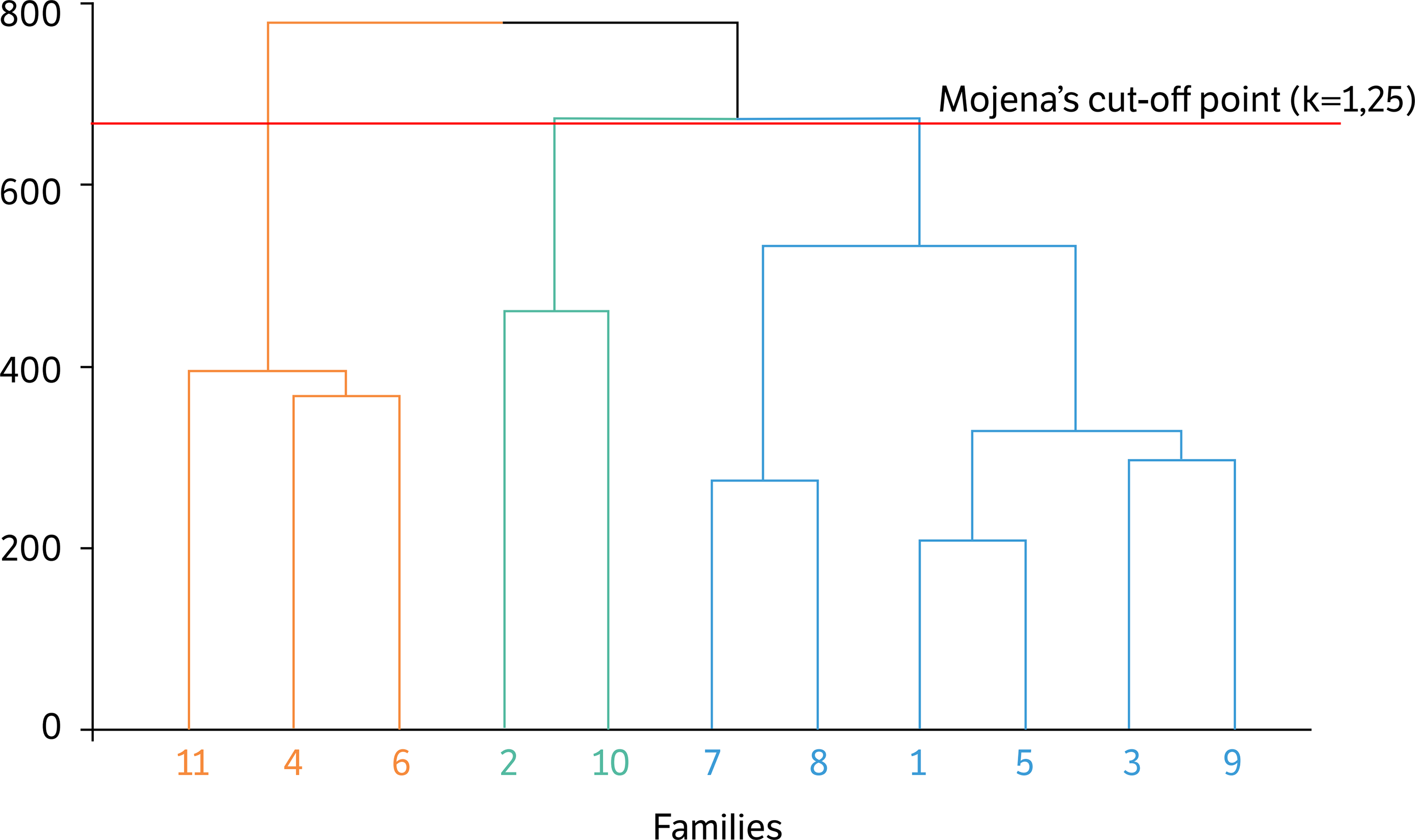
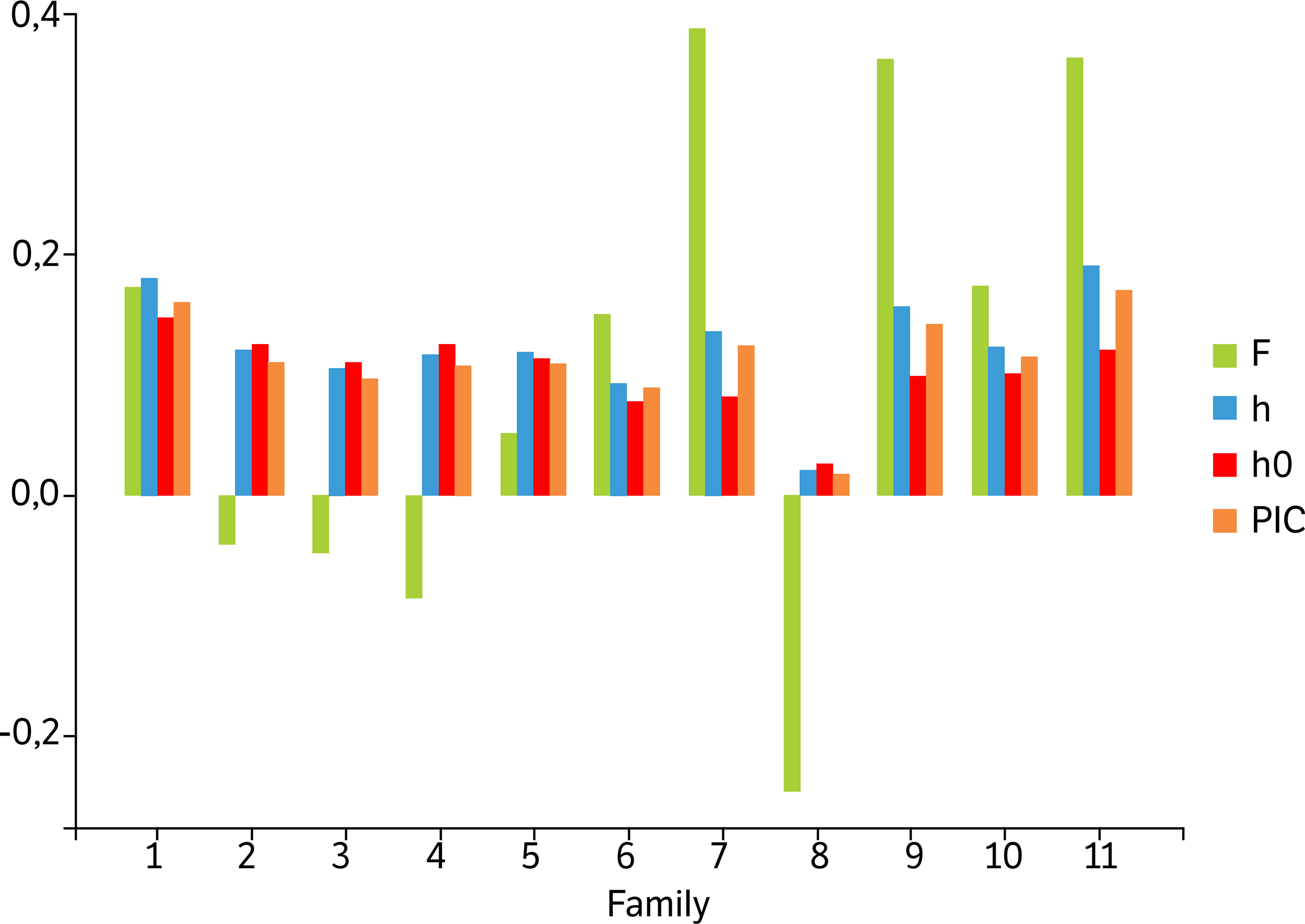
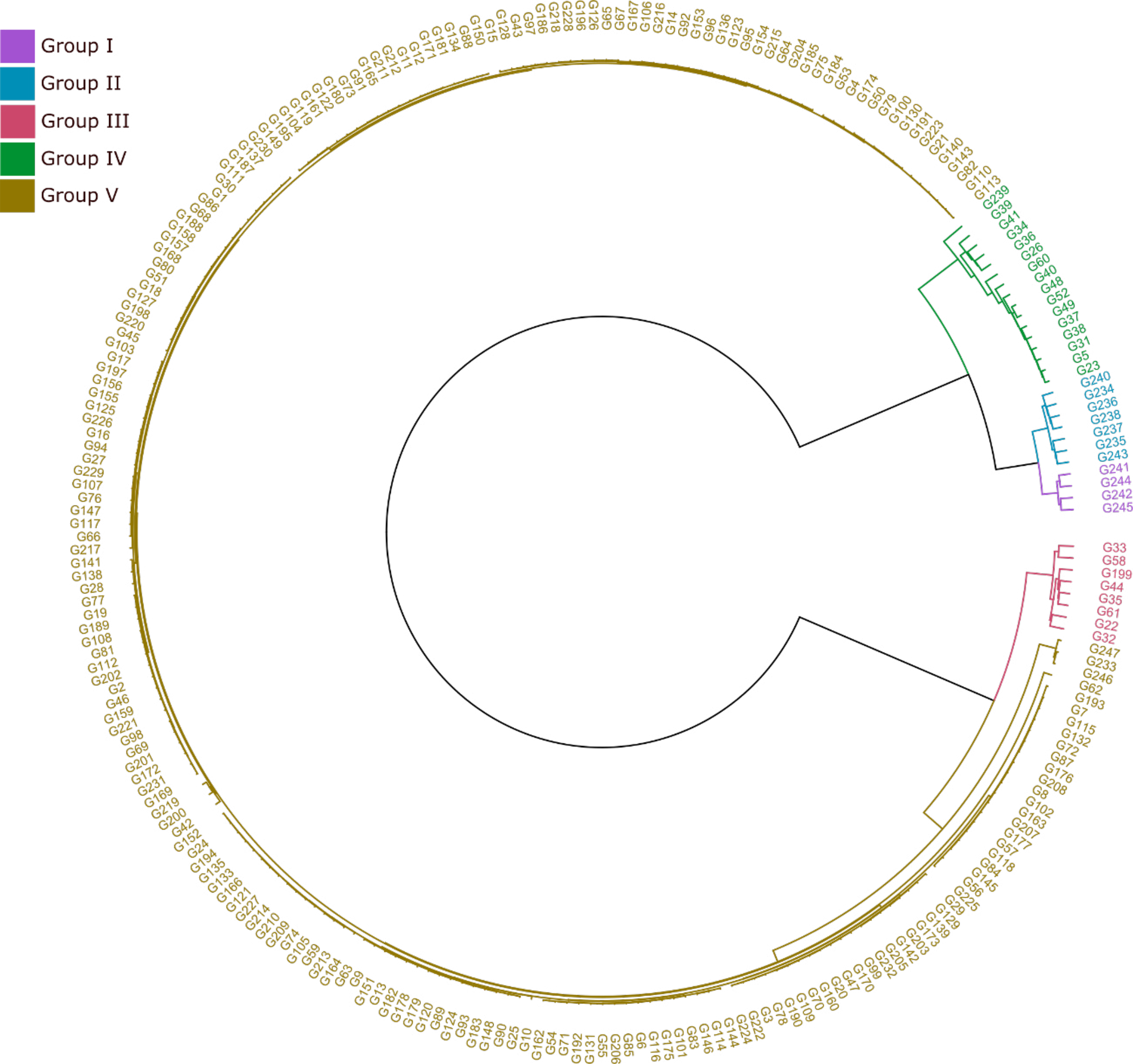
The species Psidium guajava L., commonly known as guava, is distinguished in the genus Psidium for its economic importance and medicinal properties. This study aimed to assess the population structures in 247 guava genotypes, which were organized into 11 full-sib families (FSF), and to explore the differentiation of these FSF based on phenotypic traits and single nucleotide polymorphism molecular markers. The study utilized a randomized block design to evaluate 10 phenotypic variables and 7,784 polymorphic markers, derived from leaf samples through genetic sequencing using DArTseq technology. The diversity among individuals was quantified using the Mahalanobis’ generalized distance. The UPGMA clustering method identified three homogenous clusters in the families. Excoffier’s analysis of molecular variance (AMOVA) demonstrated significant variability both between and in these clusters, with inter-group variability accounting for about 20% of the total variation. The genetic distance between individuals, calculated using molecular markers, was determined by the arithmetic complement of the unweighted similarity index. Ward’s method delineated five subpopulations. AMOVA further verified significant variability both between and in these subpopulations, attributing 89% of the total variation to differences between the groups formed. Eleven FSF could not be differentiated based on the analyzed data. Nevertheless, the analyses confirmed substantial genetic diversity, endorsing the continuity of the breeding program through selection and future crosses.
Key words
genetic diversity; genetic distance; full-sib families
 Thumbnail
 Thumbnail
 Thumbnail
 Thumbnail
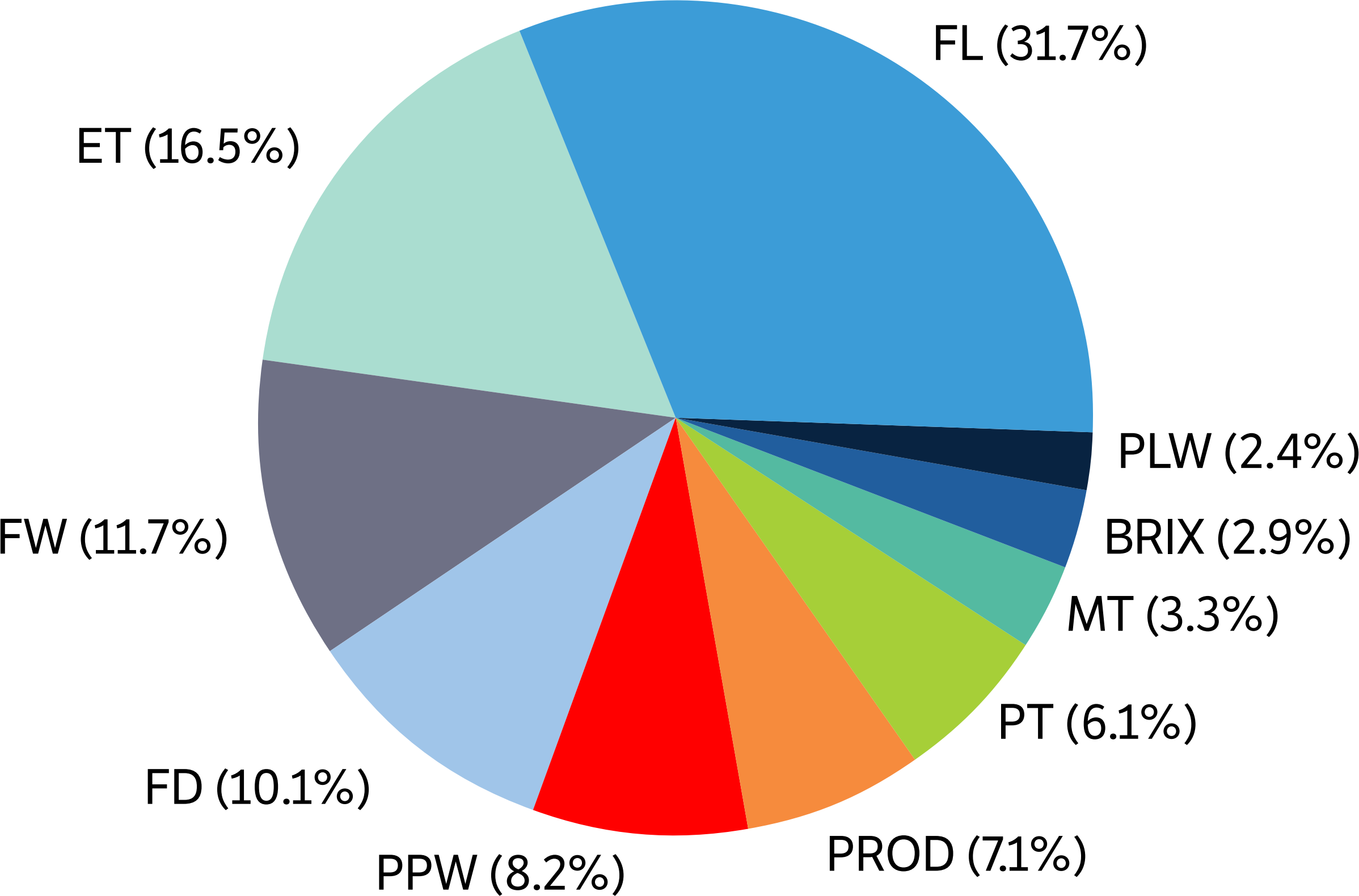 FL: fruit length; PLW: placenta weight; BRIX: soluble solids content; MT: mesocarp thickness; PT: peel thickness; PROD: total production; PPW: pulp weight; FD: fruit diameter; FW: individual fruit weight; ET: endocarp thickness.