 Quality, bioactive profile, and consumer acceptance of ‘BRS Magna’ grape juice as affected by rootstocks
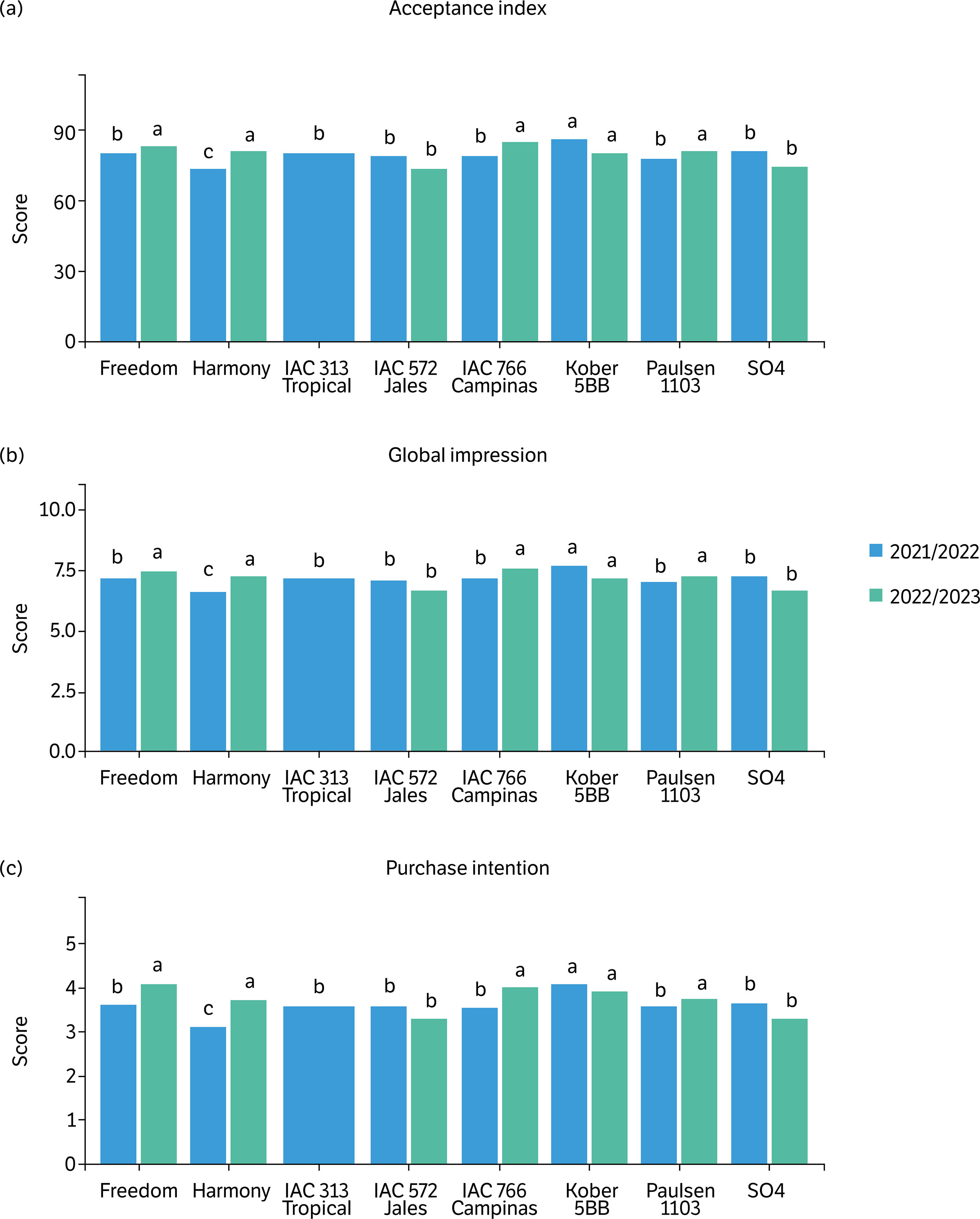
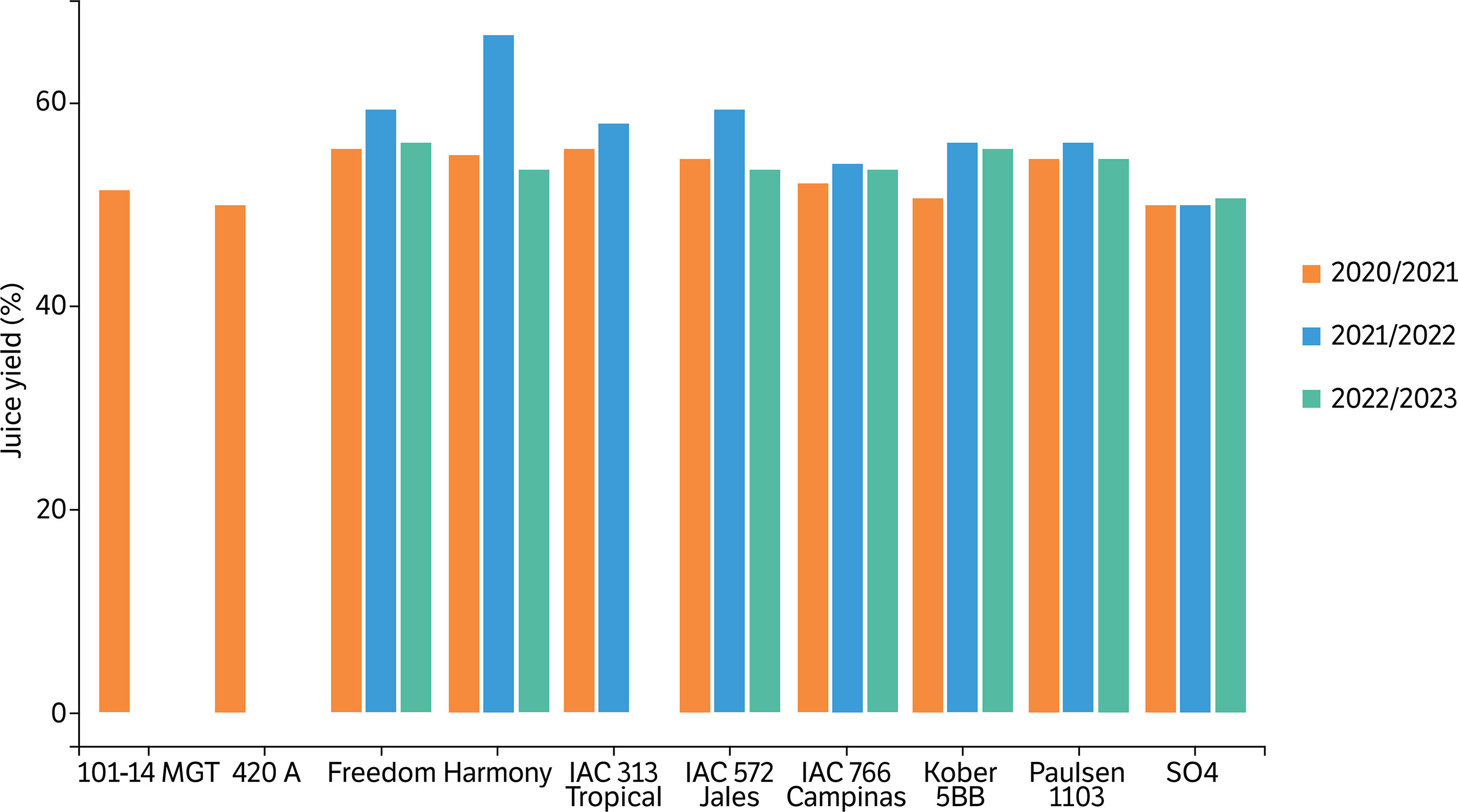
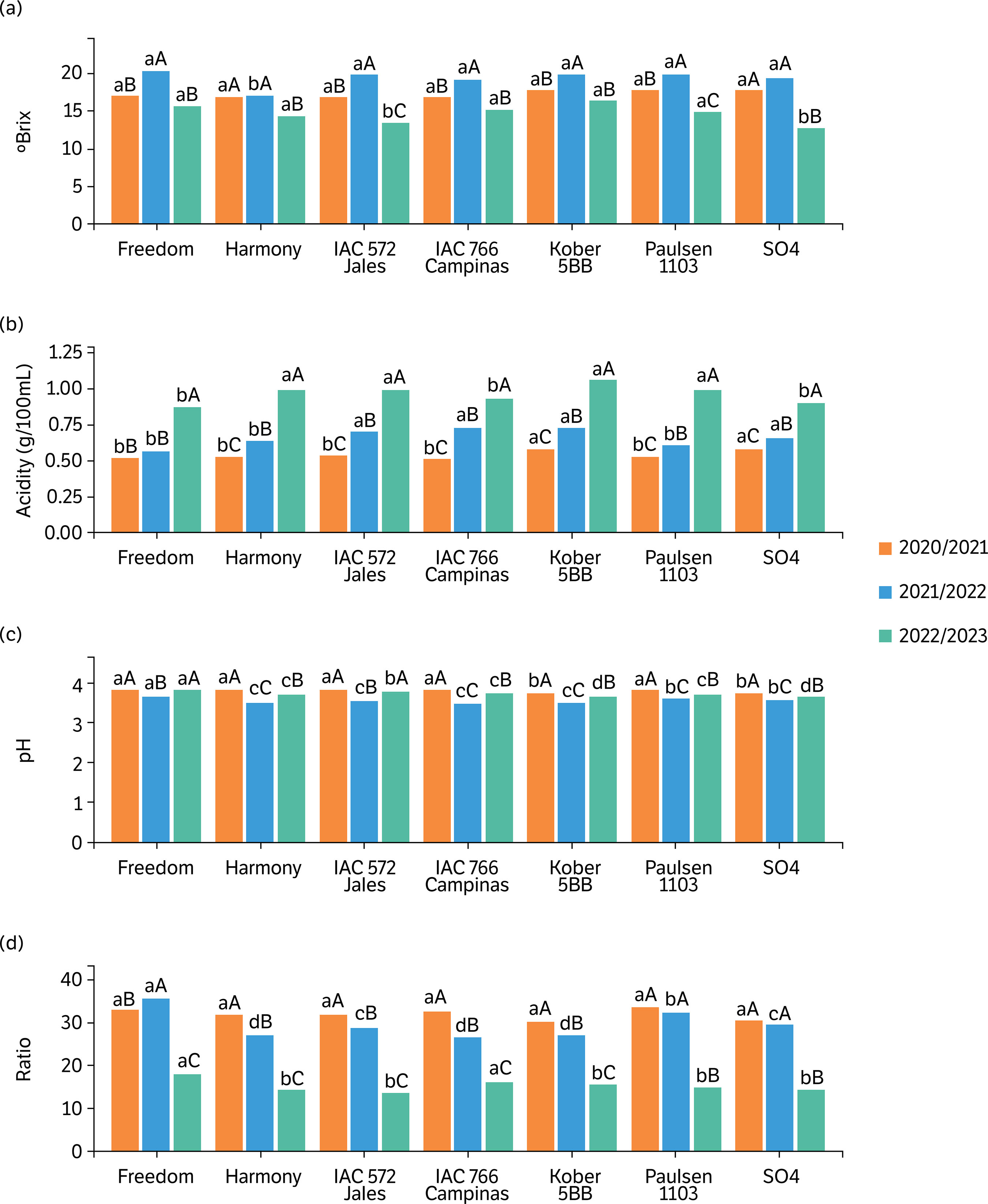
The production and consumption of grape juice have increased due to its recognized health benefits and functional properties. Rootstocks influence vine physiology and fruit composition, directly affecting the physicochemical, functional, and sensory attributes of the resulting juice. This study evaluated juices from the ‘BRS Magna’ cultivar grafted onto 10 rootstocks under a humid subtropical climate (Cfa) over three production cycles. Soluble solids, pH, titratable acidity, soluble solids/titratable acidity ratio, total phenolic content, and antioxidant capacity (ferric reducing antioxidant power and ABTS) were determined, and sensory acceptance was assessed by 100 untrained consumers. Significant differences were observed among rootstocks and seasons, with seasonal variability exerting a marked influence on acidity, pH, and the sweetness–acidity balance. The juices showed expressive phenolic content and antioxidant potential, reinforcing their functional appeal. Among the evaluated rootstocks, ‘Kober 5BB’ stood out for higher sensory acceptance and purchase intention, whereas ‘IAC 572 Jales’ and ‘SO4’ showed comparatively lower preference scores. Overall, rootstock selection proved to be a strategic factor for modulating technological quality and consumer acceptance, highlighting the importance of aligning rootstock choice with environmental conditions to optimize grape juice production and market competitiveness.
Key words
phenolic compounds; steam distillation; antioxidant capacity; whole grape juice;
Vitis
 Thumbnail
 Thumbnail
 Thumbnail
 Thumbnail
 Thumbnail
 Thumbnail
 ns: non-significant difference.

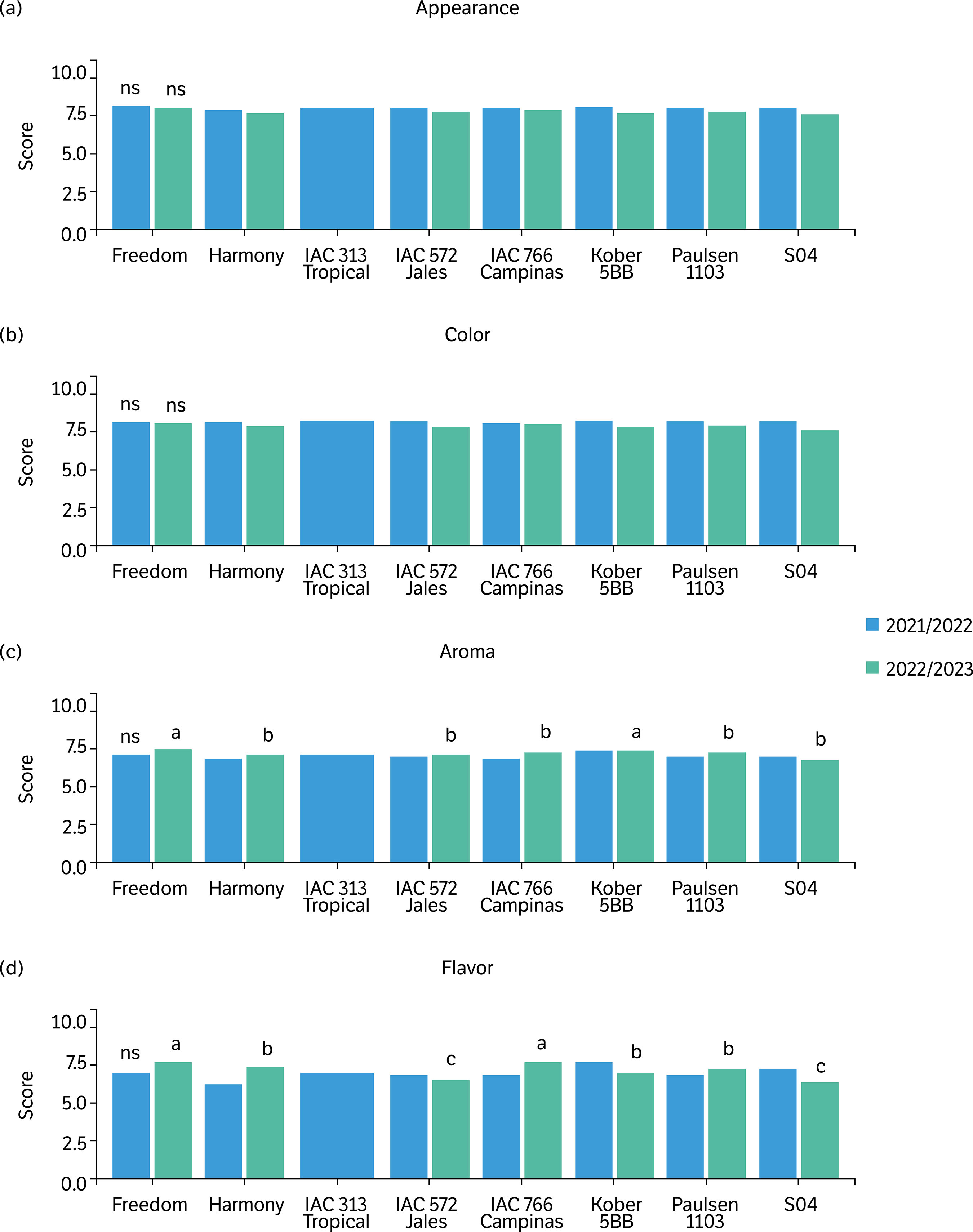 ns: non-significant difference.