 Selection of sources of aluminum tolerance in wheat germplasm using minimum solution
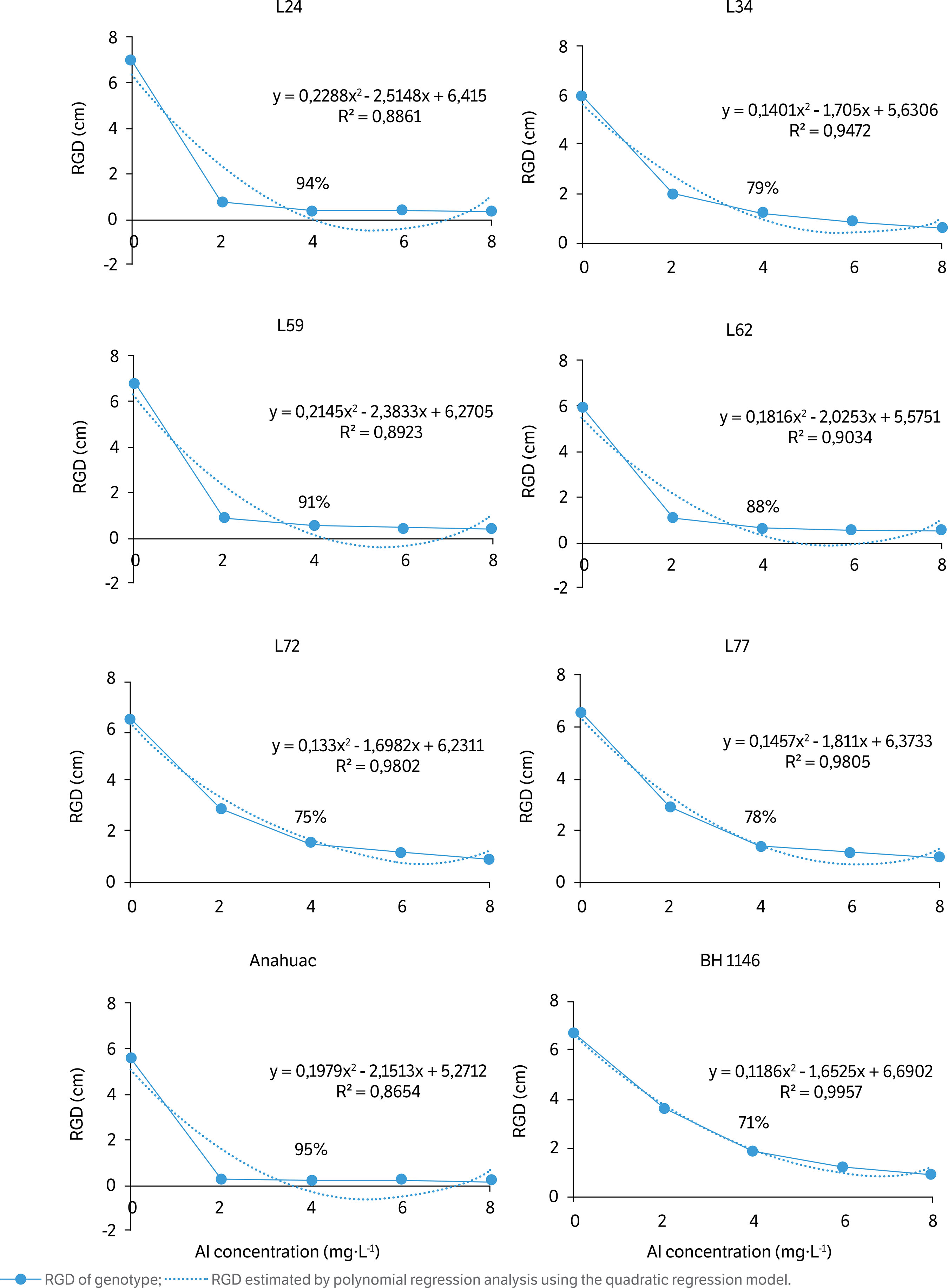
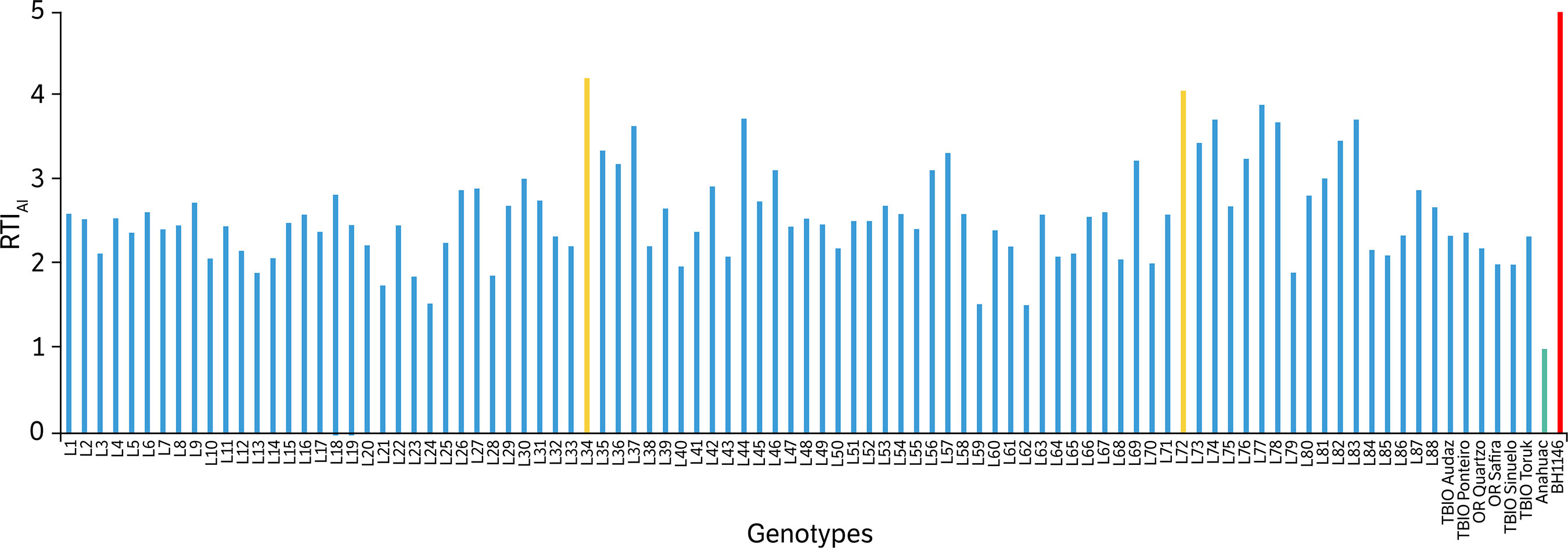
Wheat (Triticum aestivum L.) is highly sensitive to aluminum (Al), an abiotic factor that limits productivity in acidic soils. In this way, the use of Al-tolerant cultivars associated with liming could increase the productive potential in these unfavorable growing environments. The objectives of this study were to determine the effective concentration of Al in a minimum solution and to identify sources of Al tolerance. Initially, an experiment was conducted in a randomized block design with three replicates, evaluating five concentrations of Al in minimum solution (calcium + Al) on eight wheat genotypes. The experiment had a split-plot design, analyzing the effect of Al concentrations in plots and the effect of genotypes in subplots. To select sources of tolerance, a second experiment was conducted in a randomized block design with three replicates, evaluating 88 inbred lines, six commercial cultivars, and the Anahuac and BH 1146 controls (sensitive and tolerant, respectively). Al tolerance was assessed through the root growth difference of the main root. Results showed that a concentration of 4 mg.L-1 of Al was effective for discriminating between sensitive and tolerant genotypes. The wheat germplasm demonstrated wide genetic variability for tolerance to Al, with the L34 and L72 inbred lines standing out as excellent sources of tolerance. These lines could be used in future crosses in breeding programs to obtain progeny with greater tolerance to Al, improving wheat productivity under acid soil conditions.
Key words
Triticum aestivum L.; aluminum toxicity; root growth difference; relative tolerance index
 Thumbnail
 Thumbnail