
 Impact of Ultisol variability on the phenolic composition and antioxidant properties of wines in a semiarid environment
ABSTRACT
Soil composition plays a critical role in viticulture, influencing grapevine physiology and modulating wine characteristics through edaphic-climatic interactions. In the semiarid São Francisco Valley of Brazil, where viticulture is expanding under tropical conditions, the effects of soil variability on wine quality remain underexplored. This study assessed the impact of five distinct Ultisol types, differing in texture, drainage capacity, and mineralogy, on the phenolic profile and antioxidant capacity of Syrah and Tempranillo red wines. Grapes were cultivated under uniform vineyard management practices, and microvinification followed standardized protocols. Wine samples were analyzed for physicochemical attributes, total phenolics, flavonoid subclasses, and antioxidant activity. Ultisols with higher clay content and better water retention promoted the accumulation of anthocyanins and stilbenes, enhancing antioxidant potential. Syrah was more responsive to edaphic variability than Tempranillo, particularly under soils with higher water-holding capacity. Despite these soil-driven effects, interannual variation in wine composition was predominantly governed by climatic factors, notably temperature and precipitation. Principal component analysis revealed that both soil type and vintage shaped distinct enological profiles, highlighting the synergistic influence of pedological and climatic elements on grape and wine chemistry. These findings emphasize the need for soil-informed vineyard management strategies to optimize phenolic expression and antioxidant capacity in tropical terroirs. This study contributes to a deeper understanding of soil-plant-wine interactions in semiarid viticulture and reinforces the role of soil variability as a determinant of enological potential in emerging wine regions.
Key words
Vitis vinifera
; polyphenols; soil texture; grape metabolites; enology; São Francisco Valley
INTRODUCTION
The physical and chemical properties of soil play a crucial role in determining grape and wine composition. Soil serves as a fundamental reservoir of water and nutrients for grapevines, influencing key parameters such as sugar accumulation and tannin levels (Verdenal et al. 2021). Elements like potassium and calcium are particularly relevant in viticulture, as their concentrations impact grape metabolism and wine characteristics. While an excess of these elements can increase wine alkalinity, balanced calcium levels contribute to soil structure enhancement, facilitating water retention, root penetration, and buffering pH fluctuations (Nistor et al. 2022). Such interactions underscore the intricate relationship between soil composition and wine quality.
Beyond soil properties, climatic conditions, including solar radiation, temperature, and precipitation, exert a profound influence on grapevine physiology and, consequently, the sensory and chemical attributes of wine. These environmental variables regulate both vegetative and reproductive vine growth, shaping yield and grape composition (Mansour et al. 2022). Additionally, vineyard management practices, such as planting density, training systems, rootstock selection, and winemaking protocols, further modulate the final product’s organoleptic properties (Visconti et al. 2024). Collectively, these elements define the concept of terroir, which imparts distinctive characteristics to wines produced in different regions worldwide.
Red wines are particularly rich in phenolic compounds, which are broadly classified into flavonoids and non-flavonoids. The flavonoid group includes catechin, epicatechin, epigallocatechin, and procyanidins, along with anthocyanins such as malvidin, peonidin, pelargonidin, cyanidin, and delphinidin (El Rayess et al. 2024). These compounds are associated with antioxidant, antimicrobial, and bactericidal properties. Non-flavonoid phenolics, including benzoic and cinnamic acids, as well as stilbenes, most notably resveratrol, also contribute to wine bioactivity, although typically present at lower concentrations. The phenolic profile of wine has garnered attention in epidemiological studies due to its potential protective effects against cardiovascular diseases, neurodegenerative conditions, and cancer (Buljeta et al. 2023). Thus, understanding the factors influencing phenolic accumulation is critical for both viticulture and enology.
Terroir-related factors, particularly soil type and microclimatic conditions, significantly influence wine composition, even when vine clones and winemaking techniques remain constant (Billet et al. 2023). In European viticulture, soil classification plays a pivotal role in defining wine typicity, as distinct soil types affect phenolic compound synthesis and accumulation in grapes (Gajek et al. 2021). Additionally, it has been seen soil water-holding capacity impacts grape metabolic pathways, thereby shaping the chemical and sensory attributes of the resulting wines (Ramos et al. 2020). These insights highlight the necessity of investigating soil properties in emerging wine regions to optimize grapes and wine quality.
The São Francisco Valley, located in northeastern Brazil, represents a key viticultural region, particularly for table and wine grape production. This region is responsible for the highest volume of grape exports in Brazil, with the states of Pernambuco and Bahia accounting for 60 and 37% of total national exports, respectively (Souza Leão and Carvalho 2024). While a portion of the harvest is allocated for fresh consumption, most grapes are destined for winemaking, whether through industrial or artisanal processes.
Among the grape cultivars grown in the Brazilian semiarid region, Syrah and Tempranillo stand out due to their adaptability to diverse climatic and edaphic conditions. These varieties have been successfully cultivated in different viticultural zones worldwide and are the principal cultivars for red wine production in this region. Thus, we hypothesized that different Ultisol types significantly influence the phenolic composition, antioxidant activity, and physicochemical properties of Syrah and Tempranillo red wines, with soils of higher clay content leading to enhanced phenolic accumulation and wine quality, despite climatic conditions exerting a dominant influence over inter-harvest variations.
Consequently, this study aimed to evaluate the impact of different Ultisol types on the physicochemical characteristics, phenolic composition, and antioxidant activity of Syrah and Tempranillo red wines produced in the São Francisco Valley. By elucidating these relationships, this research contributes to a deeper understanding of terroir effects in tropical viticulture, offering valuable insights for both local wine production and broader enological applications.
MATERIALS AND METHODS
Study area and sample strategy
The vineyards are in the Sub-middle São Francisco Valley (9°S, 40°W), at approximately 360 m altitude. The region has a hot semiarid climate (BSwh, Köppen-Geiger), with an average annual temperature of 27°C, relative humidity around 50–60%, and mean annual precipitation of 500 mm, concentrated between November and April. During the experimental period (2017–2018), air temperature in both Lagoa Grande and Casa Nova municipalities ranged from 19 to 36°C. Rainfall in 2017 remained below the long-term regional average, occurring mainly in February–March, whereas the first semester of 2018 experienced higher and more regularly distributed precipitation. Solar radiation averages 2,800 h.year-1, enabling grapevines to complete more than one production cycle annually; harvest scheduling follows viticultural management criteria and market demand (Oliveira et al. 2019).
All vineyards were drip-irrigated using localized emitters, and irrigation volumes were adjusted to meet the crop’s phenological water demand, increasing with canopy expansion, reaching maximum supply near mid-cycle, and decreasing toward the end of the vegetative phase. Irrigation procedures were uniformly applied across plots of the same variety to ensure a comparable moisture supply.
Two wine-grape growing areas with distinct soil types were selected and classified according to the Food and Agriculture Organization of the United Nations (2015). In the first area (Lagoa Grande, PE), Tempranillo was grafted onto rootstock IAC 572, grown in:
-
PVA: Red-Yellow Argisol with clayey texture;
-
PA1: Yellow Argisol with medium to clayey texture in a concave pedoform and imperfect drainage;
-
PA2: Yellow Argisol with medium gravelly to gravelly-clayey texture, stony phase, containing only 30% fine earth (< 2 mm) (Fig. 1).
The Tempranillo vineyard was 8 years old and trained on an upward-vertical trellis system, spaced at 3 × 1 m, with harvests occurring in May 2017, November 2017, and May 2018.
In the second area (Casa Nova, BA), Syrah was grafted onto rootstock IAC 766, cultivated in:
-
PA3: Yellow Argisol with medium gravelly texture, stony phase, containing ~50% ferruginous concretions up to 0.25 m;
-
PA4: Yellow Argisol with sandy to medium texture and good drainage (Fig. 1).
The Syrah vineyard was 7 years old, also trained on an upward-vertical trellis system and spaced at 2.2 × 1 m, with harvests conducted in July 2017, January 2018, and July 2018. The physical and chemical properties of these soils are presented in Table 1.
Although soil variability is common in these landscapes, each soil type used as a treatment (PVA, PA1, PA2, PA3, PA4) corresponded to a discrete and previously mapped soil unit, not a within-plot gradient. Before establishing the experimental plots, detailed soil surveys verified internal uniformity regarding diagnostic horizons, texture, stoniness, and drainage conditions. Repeated auger inspections confirmed morphological homogeneity within each unit, ensuring that soil types represent distinct treatments.
The plots for each variety were located within a 500-m radius to maintain homogeneous climatic exposure. Cultural practices, canopy management, soil management, and irrigation scheduling were standardized within each grape variety across all soil types. Each plot covered ~90 m2 and contained 30 vines, from which approximately 45 kg of grapes were hand-harvested per treatment. Grapes were transported to the Embrapa Enology Laboratory in 20-kg containers and stored at 10 ± 2°C to remove field heat.
Continuous monitoring of soil moisture was not performed during the experimental period. However, vineyard phenology was actively regulated through pruning schedules aligned with regional climatic conditions, and drip irrigation was applied to complement rainfall according to the estimated field capacity of each soil type. Under this management approach, no visible symptoms of severe water deficit were observed on the foliage during the growth cycles. Therefore, any differences in vine water status among treatments are interpreted as relative and soil texture–mediated, rather than as imposed or acute water stress.
Enological analysis of grapes and winemaking
Production per plant, per hectare, and the number of bunches per plant were determined for each treatment. Subsequently, 300 berries were randomly collected from each soil type, with 10 berries per plant from different parts of the bunches, for a total of 100 berries per replicate. In the laboratory, the mass of the berries was measured. The must obtained by crushing the grape berries was then analyzed to determine the volume, hydrogen potential (pH), total titratable acidity (TTA), and total soluble solids (TSS) (Brix), following the methodologies proposed by the International Organization of Vine and Wine (OIV 2016). The microvinification procedures were conducted using Saccharomyces cerevisiae var. bayanus (commercial product Mycoferm Crio SP) as the fermentation starter, with Zimovit used as a biological activator.
The grapes were manually de-stemmed, weighed, lightly crushed, and placed into 20-L glass containers, with 15 kg of grapes in each vat, fitted with Müller valves. Traditional red wines were produced following standard protocols, with temperature control during fermentation and the use of antioxidants (potassium metabisulfite). Alcoholic fermentation was conducted at 25 ± 2°C for five days, with daily pumping over. After this period, pressing was performed, and the wines were transferred to 10-L containers to continue alcoholic fermentation. Malolactic fermentation was then initiated at 18 ± 2°C. Upon completion of this stage, the wine was racked, corrected for sulfur dioxide, bottled, and stored at 16 ± 2°C for 30 days in a horizontal position for stabilization.
Physicochemical analysis of wines
The pH, TTA, volatile acidity (VA), relative density, alcohol content, total dry extract, and free and total sulfur dioxide were analyzed using the methods outlined by the OIV (2016). Total monomeric anthocyanins were determined using the pH-differential spectrophotometric method (Lee et al. 2005). Total phenolic content was assessed using the Folin-Ciocalteu spectrophotometric method. The total polyphenol index was obtained by measuring absorbance at 280 nm using a spectrophotometer (Quimis, Brazil).
The color was determined by measuring the absorbance of the wine at 420 nm (yellow), 520 nm (purple), and 620 nm (blue) in a spectrophotometer with quartz cuvettes. Antioxidant activity was evaluated using the free radical capture method ABTS (Re et al. 1999), and results were expressed as millimoles of Trolox equivalent per liter of wine (mM TEAC.L-1). Chromatographic analysis of individual phenolic compounds in the wines was carried out according to the methodology of Silva Padilha et al. (2017), using an Agilent 1260 Infinity LC HPLC (Santa Clara, United States of America) equipped with a diode-array detector (model G1315D). Data analysis and processing were performed using OpenLAB CDS ChemStation Edition software (Agilent Technologies, Santa Clara, United States of America).
Data analysis
The experimental design was a randomized block design consisting of three treatments and three replications for the Tempranillo variety, and two treatments and three replications for Syrah. Treatments corresponded to different soil types for each variety. Results were subjected to analysis of variance (ANOVA) and compared using the Tukey’s test (p < 0.05). Results are expressed as mean ± standard deviation (SD).
To assess the phenolic profile and antioxidant activity of wines according to the soil types in which the vines were grown, data were standardized (mean = 0, SD = 1) prior to principal component analysis (PCA). PCA was performed using Statistical Package for the Social Sciences (Chicago, IL, United States of America), and component loadings were interpreted to identify the compounds most strongly associated with each principal component, allowing evaluation of soil, variety, and rootstock effects.
RESULTS
During the experimental period, rainfall followed the typical seasonal pattern of the Sub-middle São Francisco Valley, with higher precipitation in the first semester and lower rainfall in the second one, under consistently high temperatures. Both vineyard areas experienced comparable regional climatic conditions. Although supplemental drip irrigation was applied, periods of relatively lower soil water availability were more likely during stages of high crop demand, particularly from post-flowering to berry ripening, especially in coarser-textured soils (PA2 and PA4). No visible symptoms of severe water deficit were observed on the foliage. Thus, the differences discussed herein are interpreted as subtle to moderate, soil texture–mediated water limitations rather than acute water stress.
Grape and vine properties
Grapes from Tempranillo grown in PA1 and PA2 soils produced significantly higher yields per plant and hectare, nearly double those from PVA. Syrah grapes grown in PA4 (sandy loam to sandy clay loam) showed superior performance in yield, berry weight, and must volume when compared to PA3 (Table 2).
Yield components and must characteristics of Tempranillo and Syrah Grapes in different soil types of the São Francisco Valley, Brazil<tfn href="tfn01">*</tfn>.
Wine analysis
Tempranillo wines from Red-Yellow Argisol (PVA) exhibited higher dry extract across all harvests (Table 3). In harvest 1, total acidity and density in PVA were significantly higher, while total polyphenol index exhibited higher values in PA2 during harvests 1, and in PVA during harvests 2 and 3. No significant differences in pH were observed across soils. Alcohol content differed among soils in harvests 2 and 3, with lower values in PA2 and PA1, respectively. Intensity also varied in harvests 2 and 3, being lower in PA2 in harvest 2 and in PA1 and PA2 in harvest 3. Tonality differed in harvests 1 and 3, with higher values in PA1 (harvest 1) and in PA1 and PA2 (harvest 3).
Classical analyses of Tempranillo red wine from different soil types in the São Francisco Valley, Brazil, across three harvests<tfn href="tfn02">*</tfn>.
Syrah wines from PA3 showed higher alcohol content, density, color intensity, and total polyphenol index in harvests 1 and 2, indicating superior wine quality. In harvest 3, PA3 wines had lower pH than PA4, while volatile acidity remained similar across soils. Tonality differed only in harvest 1 (Table 4).
Classical analyses of Syrah red wine from different soil types in the São Francisco Valley, Brazil, across three harvests<tfn href="tfn03">*</tfn>.
Phenolic composition of wines
The phenolic profile of Tempranillo wines showed clear harvest-dependent shifts (Suppl. Mat. 1). Flavanols (epicatechin, epigallocatechin, procyanidin B1) varied by soil × harvest: PA1 had the highest epigallocatechin in harvest 2, PA2 the highest procyanidin B1 in harvest 2, and PVA the highest flavanols in harvest 3. Flavonols, particularly quercetin-3-glucoside, were the highest in PA2 and PA1 in harvests 1–2, while hesperidin peaked in PA1 and PA2 in harvest 3.
Anthocyanins (mainly malvidin-3-glucoside) were similar across soils in harvest 1; in harvests 2–3, PVA and PA2 showed higher concentrations, with the highest total anthocyanins in PA1 (harvest 1) and PA2 (harvest 3). Phenolic acids peaked in different harvests, coumaric/caffeic (harvest 1), gallic/caffeic (harvest 2), and caftaric (harvest 3), with the highest PA1 in harvests 1–2 and the highest PA2 in harvest 3. Stilbenes (cis/trans-resveratrol) peaked in PA2 (harvest 1) and PVA (harvest 3).
Syrah wines also showed soil- and harvest-specific variation (Suppl. Mat. 2). In harvests 1–2, PA3 had the highest levels across all phenolic groups. In harvest 3, PA4 exhibited higher flavanols and anthocyanins, while PA3 maintained higher flavonols, phenolic acids, and stilbenes. Catechin and procyanidin B1 were similar in harvests 1 and 3, with PA4 lower in harvest 2. Quercetin-3-glucoside was the dominant flavonol in all harvests, consistently higher in PA3. Malvidin-3-glucoside was the highest in PA3 (harvests 1-2) and in PA4 (harvest 3). Low anthocyanins in PA4 (harvest 2) aligned with higher caftaric and chlorogenic acids. Trans-resveratrol remained consistently higher in PA3.
<b><i>In-vitro</i></b> antioxidant activity assessment
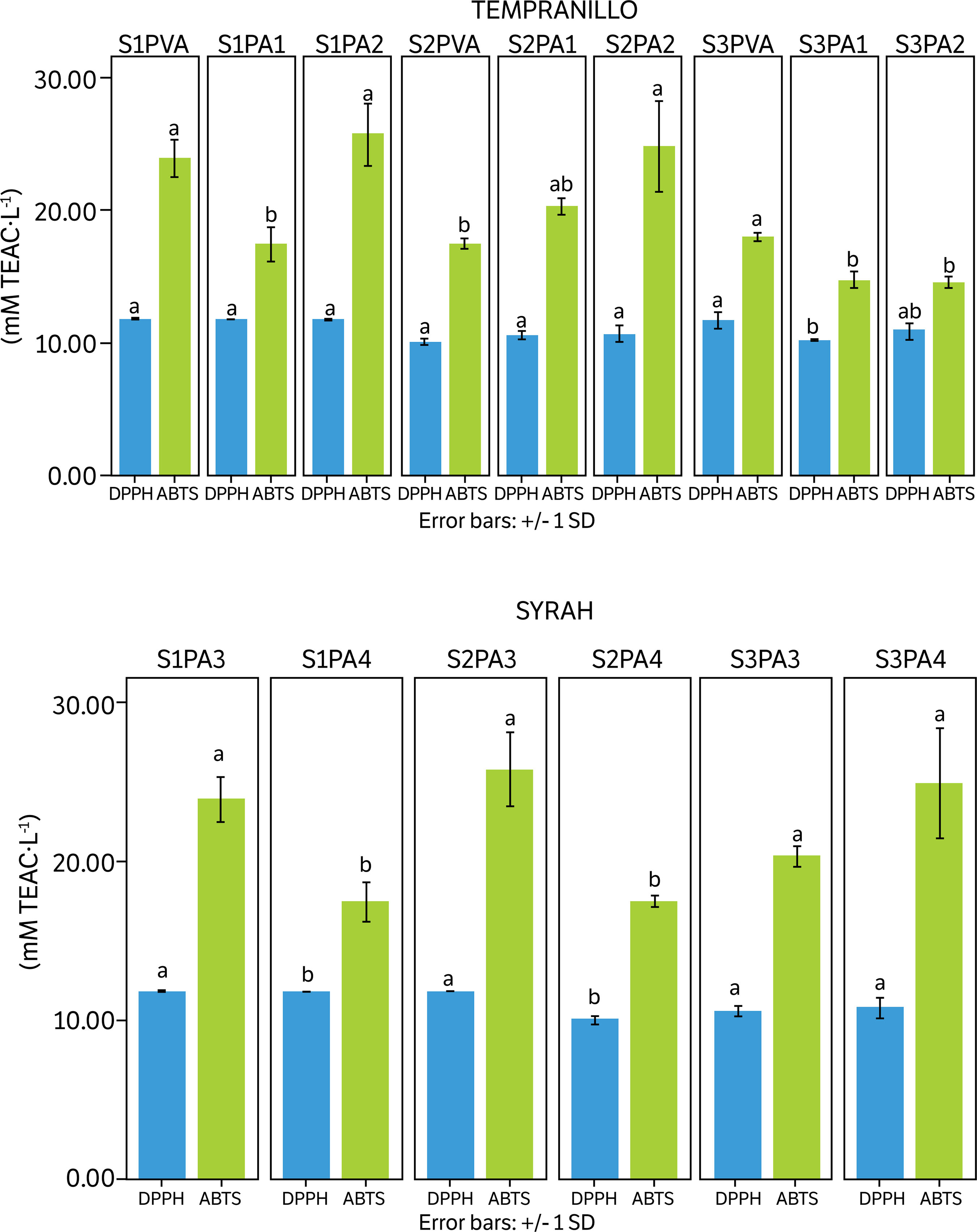
The antioxidant activity results for Tempranillo and Syrah wines, based on soil types, are presented in Fig. 2. For Tempranillo, DPPH values ranged from 10.1 to 11.8 mM TEAC.L-1 in PVA, 10.2 to 11.8 mM TEAC.L-1 in PA1, and 10.6 to 11.8 mM TEAC.L-1 in PA2. ABTS values were 17.4 to 23.8 mM TEAC.L-1 in PVA, 14.7 to 20.3 mM TEAC.L-1 in PA1, and 14.5 to 25.7 mM TEAC.L-1 in PA2, with PVA and PA2 wines showing higher activity. For Syrah, DPPH values ranged from 8.3 to 10.9 mM TEAC.L-1 in PA3 and 6.2 to 10.3 mM TEAC.L-1 in PA4, while ABTS values were 12 to 16.7 mM TEAC.L-1 in PA3 and 7.7 to 16.3 mM TEAC.L-1 in PA4.
<i>In-vitro</i> antioxidant activity of Tempranillo and Syrah wines in different types of soils in the São Francisco Valley, Brazil.
Principal component analysis
In the first Tempranillo red wine harvest, PC1 and PC2 explained 82% of the variance, capturing the effect of soil type on the wine’s enological profile. Wines from PA1 were positively associated with compounds TP, Nar, A2, tCaf, Chl, Del, and Pel, and negatively with ABTS, Gal, Sya, Hes, PB1, PB2, EpG, Rut, and Pet. Wines from PA2 were associated with IPT, cRe, tRe, Que, and Ka, while PVA wines were characterized by Cac, Cou, and Cya (Fig. 3). In the second harvest, multivariate analysis explained 86% of the total variance, with PC1 contributing 49% and PC2 37%. PC2 differentiated wines from PA1 and PA2 based on distinct compounds. In the third harvest, PC1 and PC2 explained 93% of the variance (PC1: 63%, PC2: 31%). PC1 grouped wines from PA1 and PA2 on the negative side of the x-axis, associated with tCaf and Chl, and separated these from PVA wines.

Principal component analysis of phenolic compounds and results of antioxidant activity of (a, b, and c) Tempranillo and (d, e, and f) Syrah red wines.
For Syrah wines, in the first harvest, PC1 and PC2 explained 98% of the variance, with PC1 distinguishing wines from PA3 and PA4. In the second harvest, PC1 and PC2 explained 99% of the variance, with PC1 separating PA3 and PA4 wines based on positive correlations with various compounds. In the third harvest, PC2 separated PA3 wines on the positive side, associated with Que, Del, tCaf, Ep, Rut, Sya, Ka, cRe, tRe, Hes, and TP, and PA4 wines on the negative side, linked to Gal, ABTS, and Peo. Across all three harvests, PC1 and PC2 discriminated wines from the Yellow Argisol (PA3).
DISCUSSION
Soil properties, such as texture, influence several physiological processes in grapevines, affecting grape composition and, consequently, wine quality. Sandy soils, such as PA4, are characterized by rapid water drainage due to their macroporosity, resulting in a reduced water retention capacity compared to clayey soils. In Syrah grafted onto IAC 766, a rootstock known for moderate vigor and relatively high hydraulic conductivity, these conditions may intensify relative and soil-mediated water-deficit responses, even under complementary irrigation management, potentially amplifying effects on berry metabolism. The decreased availability of water often leads to lower malic acid levels in the grapes, a key component in determining the overall acidity of the wine (Güler 2023). Consequently, grapevines grown in such soils may exhibit higher pH values and lower total acidity, which is consistent with the findings observed in the Syrah variety cultivated in PA4 soil.
These changes in acidity, along with the reduced malic acid content, can influence not only the taste profile of the wine but also its stability and aging potential. Similar effects have been reported in other grapevine studies, in which moderate water deficit conditions were shown to decrease malic acid concentration and increase pH, particularly in varieties sensitive to water stress (Bambina et al. 2024). Therefore, targeted soil management, including irrigation strategies, becomes a crucial aspect of controlling grapevine physiology and optimizing wine quality. It is also relevant that Tempranillo was grafted onto IAC 572, a rootstock with comparatively lower vigor and more conservative water use, which may partially buffer soil-driven variation observed across the harvests.
Anthocyanins, the key phenolic compounds responsible for the color of grapes and red wines, are primarily found in the skin of the berries and are closely linked to sugar accumulation. The concentration of sugars in the berries, a critical factor in anthocyanin synthesis, is influenced by a range of environmental conditions, including cultivar, soil, and climate (Parker et al. 2020). Water deficit has been shown to enhance the concentration of both sugars and anthocyanins in the berries, particularly under controlled irrigation or moderate water stress conditions, as it stimulates sugar accumulation and anthocyanin biosynthesis (Hewitt et al. 2023, Ramos et al. 2020). Given the contrasting hydraulic behavior of IAC 572 and IAC 766, some of the differences in anthocyanin accumulation between Tempranillo and Syrah may partially reflect their distinct rootstock-mediated adjustments to soil texture and relative water availability.
However, in the Sub-middle São Francisco region, the results obtained with the Tempranillo variety indicated that the sum of anthocyanins varied between the harvests, suggesting that interannual climatic variation exerted the primary influence. This climate-driven variability is consistent with the lower vigor and higher drought-tolerance stability of IAC 572, which tends to reduce interannual oscillations in berry composition. This result highlights the complex interplay between climate and soil factors in determining the final concentration of anthocyanins in grapes, further emphasizing the need for a comprehensive understanding of environmental influences on grapevine metabolism and wine quality.
In harvests 1 and 3, which coincide with the rainy season in the region, no significant differences were observed between the compounds in the wines produced from the different soil types. However, malvidin, a key anthocyanin, showed lower values in wines made from grapes grown in PVA during harvest 3 when compared to the other two soils. For the Syrah variety, the Yellow Argisol with medium gravel texture (PA3) exhibited better results in the sum of anthocyanins, particularly in harvests 1 and 2, in comparison to the Yellow Argisol with sandy texture (PA4). This can be attributed to the superior water retention capacity of PA3, which likely contributed to more favorable conditions for anthocyanin accumulation in the berries. In Syrah/IAC 766, which tends to express stronger responses to soil-induced relative water limitation, these textural contrasts appear to have been more evident than in Tempranillo/IAC 572.
Soil texture significantly influences grapevine water uptake and nutrient availability, which are crucial for phenolic compound synthesis (Visconti et al. 2024). Sandy soils, like PA4, tend to have lower water retention, which can induce periods of higher evaporative demand and relative water limitation during the growing season. This deficit often reduces berry size and anthocyanin concentration, as observed in Syrah grapes grown in PA4 during harvests 1 and 2. Conversely, soils with higher clay content or a gravellier texture, such as PA3, provide improved water retention and drainage, supporting more stable hydration during ripening and favoring anthocyanin accumulation and overall grape quality (Rouxinol et al. 2023). The stronger sensitivity of Syrah/IAC 766 relative to Tempranillo/IAC 572 further indicates that the scion-rootstock combination modulates the physiological expression of soil-texture effects.
This finding supports the concept that water stress, when moderate and properly managed, can enhance phenolic compound synthesis, including anthocyanins, key contributors to wine color and antioxidant capacity (Sanmartin et al. 2021). Moreover, inter-harvest variation underscores the joint modulation of soil texture and climate on grape metabolism. For example, rainfall differences across harvests in the Sub-middle São Francisco region likely influenced sugar accumulation and phenolic biosynthesis, reinforcing the need to integrate both soil and climatic drivers when aiming to optimize vineyard performance.
Stilbenes, phytoalexins located in grape skins, are synthesized in response to environmental stressors such as fungal pressure or ultraviolet exposure (Gao et al. 2024). Although the specific mechanistic link between soil attributes and stilbene induction remains unclear, several studies report higher stilbene concentrations in vineyards established on clay-rich soils. This pattern, also observed here in both Syrah and Tempranillo, is likely related to the greater water-holding capacity of clayey horizons, which may impose episodes of transient and non-severe physiological stress that stimulate stilbene biosynthesis (Jeandet et al. 2023). This interpretation clarifies the possible contribution of soil texture to stilbene induction, although the underlying physiological pathways remain insufficiently resolved.
Antioxidant activity in Tempranillo wines varied across harvests, with the DPPH assay showing significant changes only in harvest 3. Wines from grapes cultivated in Red–Yellow Argisol (PVA) exhibited higher antioxidant activity, indicating a potential positive influence of this soil type. Both PA3 and PVA, soils with comparatively higher clay content, appear to promote the accumulation of antioxidants, likely due to enhanced water availability supporting the synthesis of protective phenolic compounds. This aligns with prior evidence showing that soil-mediated water status can modulate antioxidant profiles (Cataldo et al. 2021). The more conservative water-use behavior of Tempranillo/IAC 572 may also contribute to the smaller amplitude of soil-induced differences observed for this cultivar.
Syrah (grafted on IAC 766) showed higher sensitivity to vineyard conditions in Casa Nova, BA, than Tempranillo (grafted on IAC 572) in Lagoa Grande, PE. Because soil type is confounded with location and genotype, the observed “soil effect” cannot be unambiguously attributed to edaphic factors alone. PCA revealed clearer harvest separation for Tempranillo, whereas Syrah showed differentiation only in the first two harvests, with convergence in the third. These patterns support that cultivar-rootstock-soil interactions regulate the perceptible expression of terroir, and therefore, causal attributions exclusively to soil properties should be interpreted cautiously.
Soil texture, particularly in clay-rich profiles that enhance water retention, plays a pivotal role in grapevine physiology in arid regions with high temperatures and elevated evapotranspiration. Nonetheless, no consistent soil-derived pattern emerged across harvests regarding phenolic expression, demonstrating that climate exerted the dominant control on wine composition. Variations in temperature and precipitation between harvests had stronger effects on phenolic profiles than soil type alone, consistent with studies highlighting the primacy of climatic factors over pedological characteristics in shaping wine quality (Mansour et al. 2022). While differences in the physiological behavior of IAC 572 and IAC 766 help explain cultivar-specific responses, these did not override the prevailing climatic signal.
Together, these findings illustrate the inherent complexity of terroir, where soil and climate jointly shape grape and wine composition. Future efforts should aim to quantitatively partition the contribution of soil attributes within this multivariate system and refine the understanding of how edaphic and climatic factors interact to determine the enological potential of tropical semiarid vineyards.
CONCLUSIONS
The composition of the wines exhibited significant variability across the harvests, underscoring the dominant influence of climatic conditions over soil properties. This study confirmed that climate factors such as temperature and precipitation had a stronger impact on the final wine characteristics than the soil type, aligning with previous research highlighting the preeminence of climate in determining wine quality.
The Syrah variety, grafted onto IAC 766 rootstock, demonstrated a higher sensitivity to variations in the soil’s physical and water attributes compared to the Tempranillo variety, grafted onto IAC 572. This sensitivity was reflected in the phenolic composition of the grapes, which varied more significantly in response to soil water availability, particularly in soils with higher clay content. These differences in composition underscore the role of soil in shaping grapevine phenolic profiles, albeit within the broader context of climatic influence.
Soils with higher clay content were found to be more conducive to the production of both Tempranillo and Syrah wines in the São Francisco Valley, fostering wines with distinct typicities and quality profiles. This finding suggested that soils with greater water retention capacity can provide an advantage in arid regions, enhancing the overall wine composition. However, as observed, the ultimate quality of the wine remains a complex interaction between soil characteristics and climate factors, and further research is necessary to disentangle the specific contributions of each to the terroir effect in this unique region.
ACKNOWLEDGMENTS
We would like to thank Fazenda Santa Maria (Vinibrasil Group) and Vinícola Ouro Verde (Miolo Wine Group) for their support in the development of this study.
-
How to cite:
Santana, M. B., Ribeiro Filho, M. R., Almeida, B. G., Fracetto, F. J. C., Silva, J. F. M., Lima, M. S., Pereira, G. E., Silva, W. R., Silva, C. C. G. and Fracetto, G. G. M. (2026). Impact of Ultisol variability on the phenolic composition and antioxidant properties of wines in a semiarid environment. Bragantia, 85, e20250206. https://doi.org/10.1590/1678-4499.20250206
-
FUNDING
Fundação de Amparo à Ciência e Tecnologia do Estado de PernambucoGrants No.: APQ-0686-5.01/15, BFP-0032-5.01/23, BFP-0415-5.01/24, BFP-0055-5.01/23Coordenação de Aperfeiçoamento de Pessoal de Nível SuperiorFinance code 001Conselho Nacional de Desenvolvimento Científico e TecnológicoGrant No.: 306292/2024-6
-
DECLARATION OF USE OF ARTIFICIAL INTELLIGENCE TOOLS
The authors declare that no artificial intelligence tools were used in the preparation, writing, data analysis, or review of this manuscript.
DATA AVAILABILITY STATEMENT
The data that support the findings of this study are available on request from the corresponding author.
REFERENCES
-
Bambina, P., Pollon, M., Vitaggio, C., Papa, G. L., Conte, P., Cinquanta, L. and Corona, O. (2024). Effect of soil type on some composition parameters of Vitis vinifera L. cv. Nero d’Avola grapes at different stages of ripening. International Journal of Food Science and Technology, 59, 2361-2374. https://doi.org/10.1111/ijfs.16964
» https://doi.org/10.1111/ijfs.16964 -
Billet, K., Salvador-Blanes, S., Dugé De Bernonville, T., Delanoue, G., Hinschberger, F., Oudin, A. and Lanoue, A. (2023). Terroir influence on polyphenol metabolism from grape canes: A spatial metabolomic study at parcel scale. Molecules, 28, 4555. https://doi.org/10.3390/molecules28114555
» https://doi.org/10.3390/molecules28114555 -
Buljeta, I., Pichler, A., Šimunović, J. and Kopjar, M. (2023). Beneficial effects of red wine polyphenols on human health: comprehensive review. Current Issues in Molecular Biology, 45, 782-798. https://doi.org/10.3390/cimb45020052
» https://doi.org/10.3390/cimb45020052 -
Cataldo, E., Fucile, M. and Mattii, G. B. (2021). A review: Soil management, sustainable strategies and approaches to improve the quality of modern viticulture. Agronomy, 11, 2359. https://doi.org/10.3390/agronomy11112359
» https://doi.org/10.3390/agronomy11112359 -
El Rayess, Y., Nehme, N., Azzi-Achkouty, S. and Julien, S. G. (2024). Wine phenolic compounds: Chemistry, functionality and health benefits. Antioxidants, 13, 1312. https://doi.org/10.3390/antiox13111312
» https://doi.org/10.3390/antiox13111312 - [FAO] Food and Agriculture Organization of the United Nations (2015). World reference base for soil resources 2014. International soil classification system for naming soils and creating legends for soil maps. Resources Report 106. Rome: FAO.
-
Gajek, M., Pawlaczyk, A. and Szynkowska-Jozwik, M. I. (2021). Multi-elemental analysis of wine samples in relation to their type, origin, and grape variety. Molecules, 26, 214. https://doi.org/10.3390/molecules26010214
» https://doi.org/10.3390/molecules26010214 -
Gao, Q., Zheng, R., Lu, J., Li, X., Wang, D., Cai, X. and Kong, Q. (2024). Trends in the potential of stilbenes to improve plant stress tolerance: insights of plant defense mechanisms in response to biotic and abiotic stressors. Journal of Agricultural and Food Chemistry, 72, 7655-7671. https://doi.org/10.1021/acs.jafc.4c00326
» https://doi.org/10.1021/acs.jafc.4c00326 -
Güler, E. (2023). Polyphenols, organic acids, and their relationships in red grapes of Vitis vinifera and Isabella (Vitis labrusca) under arid conditions. European Food Research and Technology, 249, 913-921. https://doi.org/10.1007/s00217-022-04183-9
» https://doi.org/10.1007/s00217-022-04183-9 -
Hewitt, S., Hernández-Montes, E., Dhingra, A. and Keller, M. (2023). Impact of heat stress, water stress, and their combined effects on the metabolism and transcriptome of grape berries. Scientific Reports, 13, 9907. https://doi.org/10.1038/s41598-023-36160-x
» https://doi.org/10.1038/s41598-023-36160-x -
Jeandet, P., Trotel-Aziz, P., Jacquard, C., Clément, C., Mohan, C., Morkunas, I. and Aziz, A. (2023). Use of elicitors and beneficial bacteria to induce and prime the stilbene phytoalexin response: Main experiments and applications to grapevine disease resistance. Agronomy, 13, 2225. https://doi.org/10.3390/agronomy13092225
» https://doi.org/10.3390/agronomy13092225 -
Lee, J., Durst, R. W. and Wrolstad, R. E. (2005). Determination of total monomeric anthocyanin pigment content of fruit juices, beverages, natural colorants, and wines by the pH differential method: collaborative study. Journal of AOAC International, 88, 1269-1278. https://doi.org/10.1093/jaoac/88.5.1269
» https://doi.org/10.1093/jaoac/88.5.1269 -
Mansour, G., Ghanem, C., Mercenaro, L., Nassif, N., Hassoun, G. and Del Caro, A. (2022). Effects of altitude on the chemical composition of grapes and wine: A review. Oeno One, 56, 227-239. https://doi.org/10.20870/oeno-one.2022.56.1.4895
» https://doi.org/10.20870/oeno-one.2022.56.1.4895 -
Nistor, E., Dobrei, A. G., Mattii, G. B. and Dobrei, A. (2022). Calcium and potassium accumulation during the growing season in cabernet sauvignon and merlot grape varieties. Plants, 11, 1536. https://doi.org/10.3390/plants11121536
» https://doi.org/10.3390/plants11121536 - [OIV] International Organization of Vine and Wine (2016). Compendium of International Methods of Analysis of Vines and Musts. Paris: OIV.
-
Oliveira, J. B., Egipto, R., Laureano, O., Castro, R., Pereira, G. E. and Ricardo da Silva, J. M. (2019). Chemical characteristics of grapes cv. Syrah (Vitis vinifera L.) grown in the tropical semiarid region of Brazil (Pernambuco state): influence of rootstock and harvest season. Journal of the Science of Food and Agriculture, 99, 5050-5063. https://doi.org/10.1002/jsfa.9748
» https://doi.org/10.1002/jsfa.9748 -
Parker, A. K., de Cortázar-Atauri, I. G., Gény, L., Spring, J. L., Destrac, A., Schultz, H. and Van Leeuwen, C. (2020). Temperature-based grapevine sugar ripeness modeling for a wide range of Vitis vinifera L. cultivars. Agricultural and Forest Meteorology, 285-286, 107902. https://doi.org/10.1016/j.agrformet.2020.107902
» https://doi.org/10.1016/j.agrformet.2020.107902 -
Ramos, M. C., Pérez-Álvarez, E. P., Peregrina, F. and de Toda, F. M. (2020). Relationships between grape composition of Tempranillo variety and available soil water and water stress under different weather conditions. Scientia Horticulturae, 262, 109063. https://doi.org/10.1016/j.scienta.2019.109063
» https://doi.org/10.1016/j.scienta.2019.109063 -
Re, R., Pellegrini, N., Proteggente, A., Pannala, A., Yang, M. and Rice-Evans, C. (1999). Antioxidant activity applying an improved ABTS radical cation decolorization assay. Free Radical Biology Medicine, 26, 1231-1237. https://doi.org/10.1016/S0891-5849(98)00315-3
» https://doi.org/10.1016/S0891-5849(98)00315-3 -
Rouxinol, M. I., Martins, M. R., Barroso, J. M. and Rato, A. E. (2023). Wine grapes ripening: A review on climate effect and analytical approach to increase wine quality. Applied Biosciences, 2, 347-372. https://doi.org/10.3390/applbiosci2030023
» https://doi.org/10.3390/applbiosci2030023 -
Sanmartin, C., Modesti, M., Venturi, F., Brizzolara, S., Mencarelli, F. and Bellincontro, A. (2021). Postharvest water loss of wine grape: When what and why. Metabolites, 11, 318. https://doi.org/10.3390/metabo11050318
» https://doi.org/10.3390/metabo11050318 -
Silva Padilha, C. V., Miskinis, G. A., Souza, M. E. A. O., Pereira, G. E., Oliveira, D., Bordignon-Luiz, M. T. and Lima, M. S. (2017). Rapid determination of flavonoids and phenolic acids in grape juices and wines by RP-HPLC/DAD: Method validation and characterization of commercial products of the new Brazilian varieties of grape. Food Chemistry, 228, 106-115. https://doi.org/10.1016/j.foodchem.2017.01.137
» https://doi.org/10.1016/j.foodchem.2017.01.137 -
Souza Leão, P. C. and Carvalho, J. N. (2024). Tropical viticulture in Brazil: São Francisco Valley as an important supplier of table grapes to the world market. In: G. Gutiérrez Gamboa, and M. Fourment (Eds.). Latin American viticulture adaptation to climate change: perspectives and challenges of viticulture facing up global warming (pp. 47-59). Cham: Springer. https://doi.org/10.1007/978-3-031-51325-1_4
» https://doi.org/10.1007/978-3-031-51325-1_4 -
Verdenal, T., Dienes-Nagy, Á., Spangenberg, J. E., Zufferey, V., Spring, J. L., Viret, O. and Van Leeuwen, C. (2021). Understanding and managing nitrogen nutrition in grapevine: A review. Oeno One, 55, 1-43. https://doi.org/10.20870/oeno-one.2021.55.1.3866
» https://doi.org/10.20870/oeno-one.2021.55.1.3866 -
Visconti, F., López, R. and Olego, M. A. (2024). The health of vineyard soils: Towards a sustainable viticulture. Horticulturae, 10, 154. https://doi.org/10.3390/horticulturae10020154
» https://doi.org/10.3390/horticulturae10020154
Edited by
-
Section Editor:
Hector Valenzuela https://orcid.org/0000-0002-8706-1636

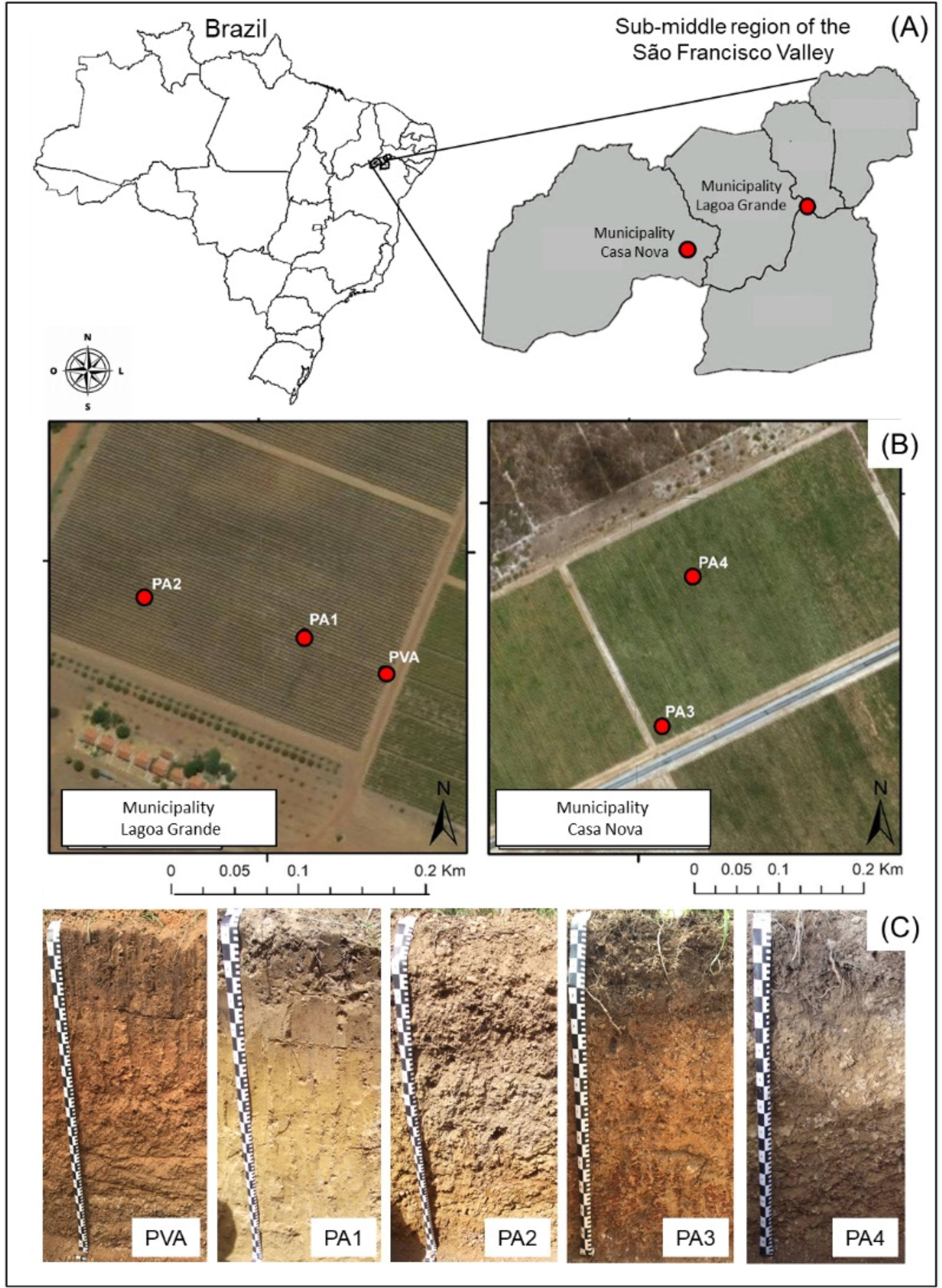
 PVA: Red-Yellow Argisol; PA1: Yellow Argisol, medium/clayey texture; PA2: Yellow Argisol, medium texture/gravelly clay; PA3: Yellow Argisol, medium gravelly texture; PA4: Yellow Argisol, sandy/medium texture.
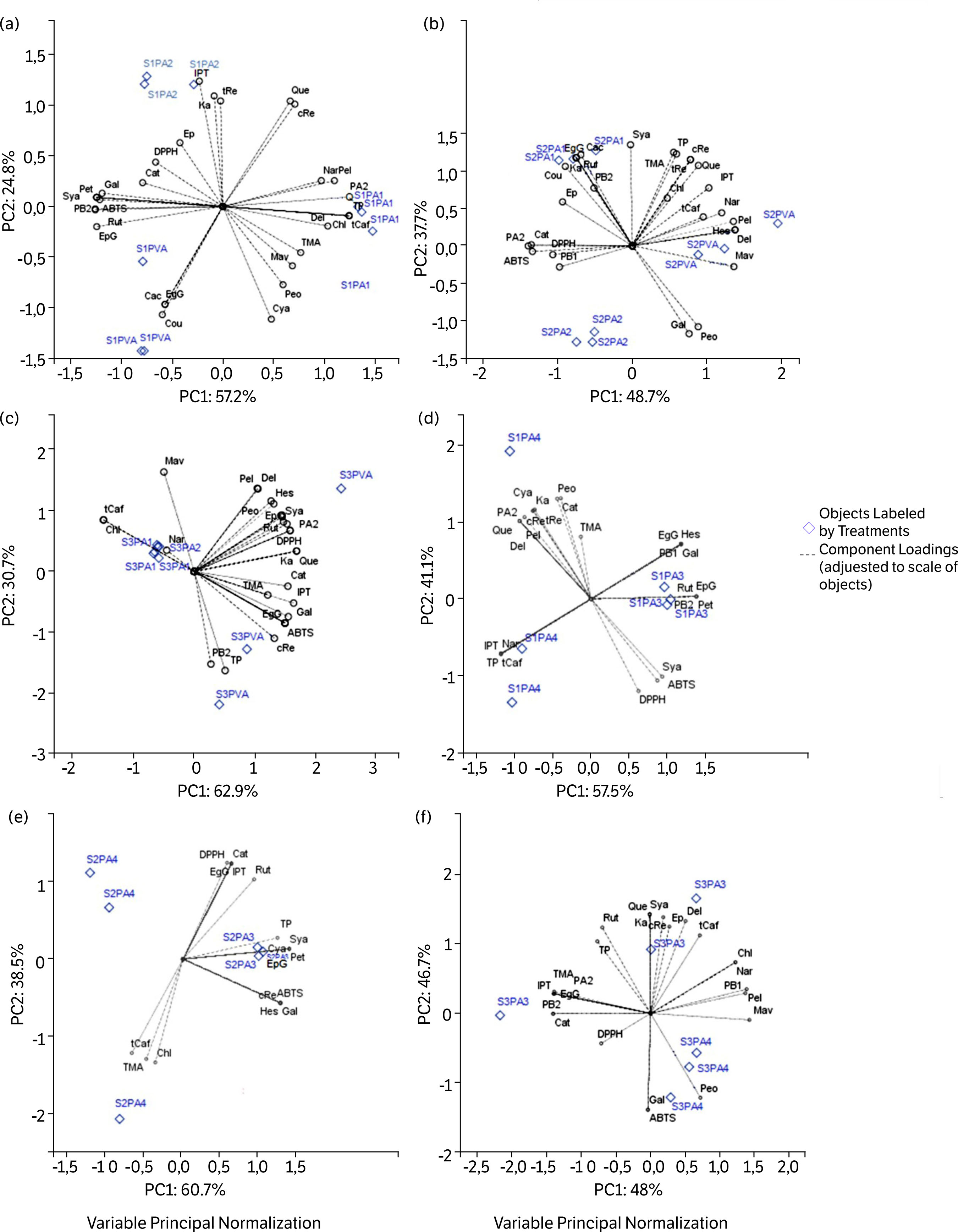 Cat: catechin; Ep: epicatechin; EgG: epigallocatechin; EpG: epicatechin gallate; PA2: procyanidin A2; PB1: procyanidin B1; PB2: procyanidin B2; Ka: kaempferol 3-glucoside; Que: quercetin 3-glucoside; Rut: rutin; Nar: naringenin; Hes: hesperidin; Cya: cyanidin 3-glucoside; Mal: malvidin 3-glycoside; Peon: peonidin 3-glycoside; Del: delphinidin 3-glycoside; Pel: pelargonidin 3-glucoside; Gal: gallic acid; Cac: caffeic acid; Chl: chlorogenic acid; Cou: coumaric acid; tCaf: caftaric acid; Sya: syringeal acid; cRe: cis-resveratrol; tRe: trans-resveratrol; TP: total phenolics; TMA: total monomeric anthocyanins; TPI: total polyphenol index.