
 When Democracy Divides the Electorate: Voting in the 2022 Brazilian Presidential Election
Abstract
This article examines the effect of democratic attitudes on voting in 2022. Our hypothesis is that the rising prominence of the topic of democracy in politics and in the public debate, starting in 2013 and becoming more pronounced after 2018, resulted in a division of the electorate into two camps based on their varying degrees of support for democratic principles — something not observed in earlier elections. To test this hypothesis, we utilized two surveys: the 2010 AmericasBarometer and the 2023 Clivagens Políticas no Brasil. The overall result shows that democratic attitudes — such as support for voting as a method for selecting who governs, the separation of powers, political participation, the rule of law, and minority rights — played a more significant role in explaining the vote for president in 2022 than they did in 2010. More than that, we identified a dominant pattern: except for political participation, there is a positive relationship between democratic attitudes and the vote for Lula.
Voting; democratic attitudes, public agenda; 2022 elections
According to leading specialized institutes, the world is currently undergoing a period of democratic backsliding. In the 2022 V-Dem report, for instance, the average level of democratic quality reverted to the level seen in 1986, and the percentage of the global population living under autocratic regimes rose from 46% in 2012 to 72% in 2022. This phenomenon is also corroborated by other institutions, including Freedom House and The Economist Intelligence Unit.
The argument that the democratic backsliding has been accompanied by a decline in democratic legitimacy (FOA and MOUNK, 2017, 2016) has reignited the debate on the social and cultural foundations of democracy and its future (INGLEHART, 2016; MOUNK, 2019; NORRIS and INGLEHART, 2019). This debate highlights that democracy has reemerged as the ‘topic of the day’ and, far from being a settled issue, it divides society.
We believe that the political transformations in Brazil over the last decade make it a good case study for examining the relationship between democratic attitudes and voting in contexts where democracy divides the electorate. This is due to the significant shifts in Brazil’s political landscape in recent years, marked by growing tensions surrounding democracy and its consolidation as one of the central issues on the national public agenda.
Starting in 2014, the rise in news coverage and conflicts related to democracy suggests that public attention on this issue in Brazil reached levels not seen since the democratic transition and the 1988 Constituent Assembly. In fact, between the 1989 and 2014 elections, democracy was rarely a focal point in electoral campaigns. From 1994 to 2013, Brazil experienced a period characterized by stability in the executive-legislative relationship and the party system (FIGUEIREDO and LIMONGI, 2007; KINGSTONE and POWER, 2008; MELO and CÂMARA, 2012). This stability was less apparent in society, which exhibited high levels of distrust in institutions (MOISÉS and MENEGUELLO, 2013)1. In any case, the perception that democracy was a ‘settled’ issue led to its absence from public debate.
The 2018 campaign, as evidenced by numerous speeches and statements from then-candidate Jair Messias Bolsonaro, already indicated the growing importance of the topic in the years to come, but the issue was still intertwined with various other topics, and for most major political actors, verbal attacks on democracy were not perceived as having significant political consequences2.
In 2022, the opposition to Bolsonaro was more successful in organizing electoral alternatives in what concerns the defense of democracy and its rules. President Bolsonaro’s four-year term made it evident to the political system and a substantial segment of the electorate that there was tension between the president and the democratic institutions and principles. This tension took on dramatic overtones starting in 2020, particularly in his confrontations with the Supreme Federal Court (STF) and, in 2022, with the Superior Electoral Court (TSE)3. After the election, this tension culminated in a wave of roadblocks, encampments outside military barracks demanding a ‘military intervention’, and the invasion of the buildings of the three state powers in Brasília by protesters.
The central argument of this study is that public opinion responds to the debate established within and between institutions, elites, and political activists. Following this line of reasoning, as democracy gains more public attention, support for or rejection of democratic principles has a greater impact on the vote in presidential elections. We expect that democratic attitudes have become more influential in voting decisions and have divided the electorate into two distinct camps with clear preferences for the candidates, Luiz Inácio Lula da Silva (Lula) and Jair Messias Bolsonaro.
To test this hypothesis, we utilized a set of databases— AmericasBarometer, the Estudo Eleitoral Brasileiro (Brazilian Electoral Study, or ESEB), and the Clivagens no Brasil (Cleavages in Brazil) survey. Which span both the period when, according to our argument, democracy was not yet a prominent issue on the public agenda (before 2014) and the period that followed, when it became more salient. The data reveal an unprecedented division among Brazilian voters based on their democratic attitudes, which emerged as an important predictor of the vote for Lula in 2022, but not in previous elections. More specifically, in 2022, voters who supported voting as a method for selecting who governs, the separation of powers, the rule of law, and minority rights were more likely to vote for Lula than for Bolsonaro. The only democratic attitude that deviates from this pattern is political participation: the stronger the support for this principle, the higher the likelihood of voting for Bolsonaro. The implications of these findings are further discussed.
The remainder of this article is divided into five sections. The first section outlines the theoretical foundations that support the argument that the public agenda affects public opinion and voting. Next, we present evidence showing that democracy has emerged and consolidated as a topic on the public agenda. The third section details the research data while the fourth section presents the results and discussion. The last section concludes.
Public agenda and democratic attitudes
One of the mechanisms through which the political context influences voter attitudes is agenda-setting. In his classic study of American democracy (1960), Schattschneider argued that control over the political agenda is the ‘supreme’ resource of power, as public issues create distinct cleavages within the electorate (COBB and ELDER, 1972; CARMINES and STIMSON, 1989). As a behavioral consequence, when a particular issue rises to the top of the agenda, voters’ choices tend to align, at least to some extent, with their attitudes toward that issue.
In the 1970s, the debate on agenda-setting shifted to the field of political communication, following the development of the thesis that the media, by setting the agenda, have a decisive impact on the issues that capture public attention (McCOMBS and SHAW, 1972). Even more bold, challenging the paradigm of ‘minimal effects’ of the media (LAZARSFELD et al., 1967), was the argument developed in the following decade that prominent issues on the agenda also influence how the public evaluates the government (IYENGAR et al., 1982).
A common feature between these two traditions is the vertical communication model between elites and voters (CAMPBELL et al., 1960; DRUCKMAN et al., 2013; IYENGAR et al., 2012; LAZARSFELD et al., 1967; LEVENDUSKY, 2010; ZALLER, 1992; ZINGHER and FLYNN, 2018). According to this model, voters’ attitudes and behavior are shaped by the flow of information generated by political parties and politically engaged actors.
We adopt an expanded version of this model, in which the agenda-setting process takes place within a broad ‘public arena system’ (HILGARTNER and BOSK, 1988). This system encompasses the various spaces and actors that contribute to the emergence of public issues and the disputes surrounding their definition (FUKS, 2000). Voters’ attitudes and opinions are shaped and aligned based on the dominant issues and framing within this set of arenas.
A key point for this article is that the clarity of political messages varies depending on the political context. There is a long tradition of research in this area, beginning with the classic work by Nie and Andersen (1974), which demonstrates that the heightened salience of political conflicts in the 1960s — with the civil rights movement, the Vietnam War, and the counterculture movement — prompted less sophisticated voters to articulate their political, ideological, and partisan preferences more clearly.
Recent studies argue that in more polarized contexts, voters perceive more clearly the positions of parties and political leaders, which enhances ideological consistency (ABRAMOWITZ, 2010; LEVENDUSKY, 2010) and increases the influence of ideology on voting. With increased distance between parties’ positions and less ambiguity from parties on issues (ABRAMOWITZ, 2010), elite polarization simplifies the understanding of political information, leading to greater consistency in voters’ attitudes.
According to Lachat (2008), as polarization intensifies, political parties present more coherent political positions relative to one another and more closely align with ideological orientations. As a result, the electorate finds it easier to describe themselves and identify the parties using these references, which in turn makes it simpler to align their ideological preferences with their vote (LEVENDUSKY, 2010). Similarly, Dalton et al. (2011) shows that this effect is significant even for less politically sophisticated and nonpartisan voters. Regional studies corroborate the presence of this phenomenon in Latin America (SINGER, 2016) and in Brazil specifically (FUKS and MARQUES, 2020).
Less understood, however, is how the political context affects the relationship between democratic attitudes and voting. While some studies have examined the effect of democratic attitudes, especially those of an illiberal and populist nature, on voting (GEURKINK et al., 2020; GRÜNDL and AICHHOLZER, 2020; LOEW and FAAS, 2019; NEUNER and WRATIL, 2022; SILVA et al., 2022; SPIERINGS and ZASLOVE, 2017), they offer little insight into the conditions that enhance the effectiveness of this relationship.
The same is true in Brazil. The literature on electoral behavior in Brazil is extensive (BONIFÁCIO et al., 2014) and considers various explanatory factors: evaluation of the economy (PEREIRA, 2014; CAMARGOS, 1999; CARREIRÃO, 1999); social policies (CORRÊA, 2015; HUNTER and POWER, 2007; LICIO et al., 2009; NICOLAU and PEIXOTO, 2007); ideology (CARREIRÃO, 2002; PEREIRA, 2020; SINGER, 1999); party identification (PAIVA and TAROUCO, 2011; REIS, 1988; SAMUELS and ZUCCO JR., 2014); emotions (PIMENTEL JR., 2010); religion (BOHN, 2004; RODRIGUES and FUKS, 2015; SMITH, 2019), and political sophistication (CASTRO, 1994; PEREIRA, 2013; PEREIRA et al., 2014; IZUMI, 2019).
Although some studies address the relationship between democratic attitudes and voting indirectly (BRAGA and CASALECCHI, 2016; RENNÓ, 2022), few give it central importance. One exception is the study by Avritzer and Rennó (2021). The authors show that the likelihood of an authoritarian voter supporting Bolsonaro in 2018 and 2020 is 2.4 and 3.2 times higher, respectively, than that of a non-authoritarian voter. Setzler (2020) takes a similar approach, presenting evidence that supporters of military coups were more likely to vote for Bolsonaro in 2018. Building on this relatively unexplored area of research, we investigate whether the increased prominence of democracy on the public agenda divided the electorate into two attitudinal camps, with each camp showing different levels of support for democratic principles in contrast to the other.
Our analysis aligns with the argument that the 2018 and 2022 elections consolidated an alignment (RENNÓ, 2022) or realignment among voters due to the decline and near-collapse of centrist parties, particularly the Brazilian Social Democratic Party (PSDB), which had traditionally garnered right-wing support, combined with the emergence of the first competitive far-right candidacy since Brazil’s re-democratization. If Bolsonaro’s more extremist voters were already less inclined to support democratic principles, this tendency was reinforced and spread to more moderate Bolsonaro supporters due to the crusade he launched against democratic principles starting with the 2018 campaign.
Based on previous research, we hypothesize that democratic attitudes will play a significant role in explaining the vote in 2022, with democratic voters more likely to support candidate Lula and less democratic voters more likely to support candidate Bolsonaro. We do not expect to find the same effect in previous elections, particularly before 2014 when democracy was not a central topic on the public agenda.
In the next section, we present evidence of the emergence and increasing centrality of democracy on the public agenda, along with how relevant political actors have expressed their positions on democratic principles. On the one hand, Bolsonaro’s rise as a political leader and his contentious attitudes and behavior toward democratic principles brought democracy to the center of the public agenda. On the other hand, in response to the threat to democracy, various groups, institutions, and political parties took a stand, ultimately leading to the formation of a ‘front’ in defense of democracy during the second round of the 2022 elections. The contrasting contexts of 2010 and 2022 support the hypothesis that, while democratic attitudes had little influence in 2010, they became strong predictors of the vote in 2022.
From the periphery to the center: democracy as a public issue
To illustrate the dynamics proposed in the previous section, Figure 01 shows the evolution of the number of mentions of various words associated with democracy in the newspaper Folha de São Paulo4 from 1994 to 2022. According to the Instituto Verificador de Comunicação (IVC)5, which audits media audience and circulation data, ‘Folha de São Paulo’ has been the newspaper with the largest circulation in Brazil since 19866.
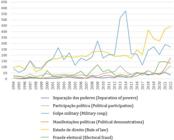
Figure 01 reveals that the number of mentions of democracy-related topics reported in ‘Folha de São Paulo’ increased starting in 2013. Notably, out of the five topics examined, four reached their peaks in news coverage between 2018 and 2022. The exception is the term ‘military coup’, which peaked between 2013 and 2015. However, if we ignore this period, this term would also have seen its highest number of news stories between 2018 and 2022. None of the topics reached a peak before 2013.
If we divide the analysis into two periods, from 1994 to 2012 and from 2013 to 2018, the difference becomes clear. For example, the topic of ‘separation of powers’ was covered in 10 articles per year during the first period, compared to 37 articles per year in the second period. The topic of ‘participation’ was reported 35 times per year in the first period, whereas from 2013 to 2022, it was reported 64 times per year. The topics ‘rule of law’, ‘military coup’, and ‘electoral fraud’ saw approximately twice as many articles per year in the second period compared to the first.
Public opinion’s interest in these topics can also be tracked through Google Trends7. When searching for the term ‘coup’ on Google Trends, a pattern similar to what was observed in newspapers emerges: there was little interest in the topic until 2013. In 2014, 2015, and especially in April 2016, the term ‘coup’ gained significant public attention. This period is marked by the ‘impeachment or coup’ conflict that dominated the entire process of Dilma Rousseff’s removal from office. Starting in 2020, interest in the topic increased, peaking at 100 points in November 2022, right after the elections, when defeated candidate Bolsonaro refused to recognize the results.

These data are preliminary evidence suggesting that democracy and its principles began to move to the center of the Brazilian public’s attention starting in 2013, with a significant increase following Bolsonaro’s election in 2019. This evidence is further reinforced when we conducted a more qualitative examination of the periods.
The literature is nearly unanimous in emphasizing that the period from 1994 to 2014 is marked by stability in the relations between the executive and legislative, as well as within the party system (FIGUEIREDO and LIMONGI, 2007; KINGSTONE and POWER, 2008; MELO and CÂMARA, 2012). After a political transition marked by distrust in the configuration of the new institutions and political system (LINZ and VALENZUELA, 1992), the consensus shifted in the opposite direction, indicating that there was no longer any “basis to treat the Brazilian political system as singular. Much less, to suggest that we were facing a democracy with serious problems” (LIMONGI, 2006, p. 25). There were six “free, regular, and competitive” presidential elections (DAHL, 1997). Moreover, “the competition for the Presidency of the Republic developed a stable pattern, clearly identifiable in the strategies outlined by the parties” (MELO and CÂMARA, 2012, p. 73 – free translation).
In that context, democracy did not emerge as a prominent public issue, nor did it provoke significant disputes among different political actors. This scenario began to change in 2013 with a series of widely reported events. It is worth briefly revisiting these events to show how political developments and their associated discursive expressions brought the topic of democracy to the public agenda.
The starting point for this change was the ‘Jornadas de Junho’ (June Journeys) of 2013 when a wave of protests spread across the country8. Although democracy was not the main focus of the protests, the events served as a catalyst for eroding the government’s authority and fueled widespread dissatisfaction with politics, particularly concerning the ruling party and its leaders in power. This contributed to the polarization of the 2014 elections (SINGER, 2013). The level of active political participation, with a very high number of people taking to the streets to march and protest, had not been seen since the protests known as ‘caras-pintadas’ (painted faces) in 1992.
These protests marked a turning point that consolidated between 2015 and 2018. Dilma Rousseff’s second term began in a tumultuous context, marked by the narrowest electoral victory in recent Brazilian democratic history up to that point9 and an unprecedented challenge to the electoral results by the defeated party10.
A topic that emerged on the political horizon was the potential removal from office of then-President Rousseff. Once again, broader societal participation in politics took center stage, with hundreds of thousands of protesters taking to the streets. This time, unlike in 2013, the groups that took to the streets were clearly defined and antagonistic, splitting into those dissatisfied with the government (supporters of impeaching Rousseff) and those defending her11.
While opponents of Rousseff defended her impeachment, her supporters contended that the process represented a coup. Thus, democracy emerges as a public issue, with the meaning of the ongoing political process being actively contested. The term ‘coup’ regains its prominence 50 years after the 1964 military coup. The extensive media coverage of the impeachment process is particularly noteworthy. According to the audience index from the GFK Institute, 35.1 million Brazilians watched on television when 367 federal deputies (72% of the total) voted in favor of Rousseff's impeachment. This audience was larger than the average viewership of the Olympics that year, which was 33.2 million per day12.
Notably, during the impeachment proceedings, 156 federal deputies (30.5% of the entire lower house) invoked terms like ‘democracy’, ‘rule of law’, and ‘Constitution’ to justify their votes. On the other hand, 67 deputies (13.1%) used terms such as ‘white coup’, ‘against the coup’, and ‘legitimacy of the ballots’ (PRANDI and CARNEIRO, 2018). It was on this occasion that Bolsonaro paid tribute to Colonel Carlos Alberto Brilhante Ustra, the former head of DOI-CODI of the Second Army13 and the first Brazilian military officer to be convicted for torture during the dictatorship. “In memory of Colonel Carlos Alberto Brilhante Ustra, the terror of Dilma Rousseff”, Bolsonaro (BBC NEWS BRASIL, 2016) declared in his vote.
The removal of Dilma from office and the progress of Operation Lava Jato destabilized the Brazilian party system (MELO, 2022) and significantly boosted Bolsonaro’s popularity. His campaign took on a populist tone (RICCI et al., 2021; TAMAKI and FUKS, 2020) and attacked liberal and democratic principles. The following speech, delivered a week before the 2018 elections on Avenida Paulista, vividly illustrates the rising tension: “These red criminals will be banned from our homeland. ‘Petralhada’14 [PT (Workers’ Party) supporters], you’re all going to the ‘ponta da praia’15. You will no longer have NGOs to satisfy your hunger for mortadella. It will be an unprecedented cleansing” (VEJA, 2023).
Between 2019 and 2023, democracy definitely entered the public agenda. Bolsonaro, along with his family and allies, frequently made statements that questioned the rules of the democratic game. For example, in 2019, Eduardo Bolsonaro stated in an interview on a YouTube channel that “if the left radicalizes to this extent, we will need to have a response. And the response could be through a new AI-5” (G1- GLOBO, 2019)16. In 2020, during a meeting that was leaked to the press, then-Education Minister Abraham Weintraub expressed frustration with “too many people with their own agendas” and declared that, if it were up to him, he would “put all these bums in jail, starting with the STF” [Supreme Federal Court] (CNN BRASIL, 2020).
High-ranking military officials who held key positions in the Bolsonaro government also echoed these threats to institutions. In May 2020, after STF Justice Celso de Mello requested the Attorney General’s Office (PGR) to seize President Bolsonaro’s cell phone, Minister of the Institutional Security Cabinet (GSI) and retired Army General Augusto Heleno stated on social media that “any eventual seizure of President Bolsonaro’s cell phone would be inconceivable and would have unpredictable consequences for national stability” (UOL, 2020).
As the threat to democracy intensified, a reaction began to take shape. In 2020, with the onset of the pandemic, the government encountered one of its first major challenges. The government’s initial disregard for the severity of COVID-19 and its refusal to acknowledge the importance of vaccines gradually led to the formation of a broader opposition that extended beyond the traditional left-wing bloc. The opposition was no longer limited to economic or moral conflicts but extended to more universal concerns, such as ‘life’ (‘out, genocide perpetrator’ ¾ ‘fora genocida’, a protest chant) and ‘democracy’ (‘out, fascist’ ¾ ‘fora fascista’, another slogan).
In the institutional sphere, the government initially clashed with the Chamber of Deputies, which was still under the leadership of Rodrigo Maia. However, after forming an alliance with the ‘Centrão’17, the tension shifted towards the judiciary. In 2021, during his live streams, Bolsonaro expressed frustration over what he called the ‘undue interference’ of the STF18, accusing the court of overstepping its functions and obstructing the government’s efforts. Bolsonaro’s words mobilized his base, which took to the streets to defend the president. In one of the most emblematic episodes, on May 1st, protesters took to the streets holding signs that read “I authorize” (GAZETA DO POVO, 2021), signaling their support for Bolsonaro in the event of a military intervention initiated by him and his government. They also expressed criticisms of the STF and state governments, while advocating for the adoption of printed ballots. In the most extreme cases, they explicitly called for military intervention.
It is important to point out how the theme of ‘democracy’ has progressively become more prominent in the public agenda, in this case through challenges to the separation of powers. Before 2018, most voters probably gave little thought to the STF or the possibility of military intervention. By 2021, these issues had become prominent and concrete, with engaged voters even taking to the streets to give their ‘authorization’ for expanding the president’s powers.
Also in 2021, the conflict with the judiciary intensified after Bolsonaro criticized electronic voting machines and suggested that the 2014 and 2018 elections had been fraudulent19. The Superior Electoral Court responded by approving a resolution to begin an administrative investigation against the president, and it also requested that he be included in the ongoing fake news investigation in Congress20. Chief STF Justice Alexandre de Moraes accepted the request, leading to Bolsonaro becoming the subject of an investigation.
One of the most emblematic cases involves the arrest and subsequent conviction of pro-Bolsonaro congressman Daniel Silveira. Active on social media, the federal deputy posted a video online in 2021 in which he insulted the STF justices and even cited AI-5 as a form of intimidation: “I’d like to know what you [Justice Fachin] are going to do with the generals? Remember the little men with golden buttons? Do you remember AI-5? Do you remember? Stop. I know you remember” (PODER 360, 2021).
Silveira was issued a prison order by Justice Alexandre de Moraes, and this decision was later affirmed by the full court. The following year, he was sentenced to eight years and nine months in a closed regime for ‘incitement to anti-democratic acts’, which also resulted in the loss of his office, suspension of political rights, and a fine. “Freedom of expression exists for the manifestation of opposing opinions, but not for criminal opinions and hate speech”, Moraes asserted in his ruling (PORTAL STF, 2022).
The day after Silveira’s conviction, President Jair Bolsonaro issued a decree granting a constitutional pardon to Daniel Silveira, absolving him of the crimes for which he had been convicted, thereby confronting the Supreme Court’s decision.
At stake was not just the separation of powers or the rule of law but election as a fundamental principle of representative democracy. Bolsonaro’s criticism of electronic voting machines and the electoral process was not a new development. An article from ‘Folha de São Paulo’ highlighted at least 30 instances where Bolsonaro publicly criticized the Brazilian electoral system (UOL, 2023).
In July 2022, Bolsonaro convened a meeting with several ambassadors, during which he criticized the country’s electoral system and cast doubt on the reliability of electronic voting machines. He claimed, among other things, that the voting machines automatically ‘completed’ votes for the Workers’ Party (PT) during the 2018 elections, that the machines’ systems cannot be audited, that it is impossible to monitor the vote counting, and that, the vote counting is conducted by an outsourced company (NOTÍCIAS R7, 2022). In response, the TSE fined the former president, citing him for engaging in premature campaigning. In July 2023, the court ruled by a 05 to 02 vote to sentence the former president to eight years of ineligibility.
The reaction to Bolsonaro’s statements came not only from the STF but also from civil society. In July 2022, a group of professors, students, legal experts, and businesspeople wrote a document titled ‘Letter to Brazilians in Defense of the Democratic Rule of Law’ (USP, 2022), in which they warned about a ‘moment of immense danger to democratic normalcy’ and urged the public to reject any threats to the state powers and attacks on the electoral process. The document gathered over one million signatures and was read in a coordinated effort across five states.
In the 2022 election, Lula formed a ticket with his former adversary, Geraldo Alckmin, signaling the creation of a broad coalition unified by the defense of democracy. “Some might find it strange. I ran against President Lula, but we never put the issue of democracy at risk. The debate was on a different level, democracy was never questioned”, explained Alckmin as he announced his candidacy for vice president. “Today, we find ourselves in the exceptional position of fighting for democracy. Those who threaten Parliament are threatening democracy; those who attack the Supreme Federal Court are attacking democracy, we must fight” (ESTADÃO, 2023), he concluded.
Several other politicians expressed their support for Lula in the name of democracy: “Our political and programmatic reencounter occurs in the face of a serious situation in our country’s politics, in the face of a threat, the threat of threats to our democracy” (Marina Silva, ISTO É DINHEIRO, 2022). “It is naive to believe that Bolsonaro does not represent a threat to democracy in a potential second term” (João Amoedo, CNN BRASIL, 2022). “In this second round, I vote for a history of fighting for democracy and social inclusion. I vote for Lula” (Fernando Henrique Cardoso, G1 GLOBO, 2022).
In 2022, Bolsonaro lost the election to Lula. His efforts to discredit the electoral system, coupled with his refusal to accept defeat, played a crucial role in motivating his electoral base to return to the streets, this time explicitly calling for military intervention. The most significant moment in this process occurred on January 08, 2023, when hundreds of supporters of the former president stormed and vandalized the buildings of the National Congress, the Palácio do Planalto (the president’s official workplace), and the Supreme Federal Court in Brasília.
The events and discussions outlined in this section highlight the growing democratic tension and the consolidation of democracy as a public issue from 2018 to 2023. In this context, ‘democracy’ started to divide the electorate into two opposing camps. We hypothesize that, in the 2022 presidential election, adherence to democratic principles became, for the first time, a significant predictor of the vote.
Data and method
To test the hypothesis presented in this article, we utilized data from 2007 to 2022. However, our primary focus is on two datasets: the 2010 AmericasBarometer21 (AB) and the 2023 Clivagens Políticas no Brasil (Political Cleavages in Brazil, or simply Clivagens)22. In these two datasets (and only in these), we identified the same set of questions.
The Clivagens dataset, along with ESEB 2022, is the most recent post-electoral survey conducted in Brazil. Conducted with 1,500 voters between January 17 and February 14, the survey features a representative sample of the Brazilian electorate, with a margin of error of 2.5% at a 95% confidence level. The questionnaire includes a series of questions focused on democratic legitimacy, designed to replicate the 2010 AmericasBarometer questionnaire, one of the most comprehensive ever applied on this topic.
The AmericasBarometer is a survey representative of the Brazilian electorate, consisting of 2,482 interviews conducted between March 19 and April 10, 2010, with a margin of error of 2.5% at a 95% confidence level. Since the Clivagens dataset includes nearly the same questions as the AB, it allowed for the first-time comparative analysis of individuals’ adherence to democratic principles. In this way, we overcame some of the limitations found in conventional measures of support for the democratic regime.
Recent research in the field has raised questions about the use of traditional variables to measure support for the democratic regime, such as the classic ‘Churchillian’ question23. The issue primarily stems from the social desirability that the term ‘democracy’ acquired throughout the 20th century (BOOTH and SELIGSON, 2009; INGLEHART, 2016) which tends to inhibit the expression of pro-authoritarian attitudes in survey research.
Another challenge is the polysemic nature of the term ‘democracy’, which permits a wide range of interpretations (MOISÉS, 2010). In Brazil, since 2018, the heated debates and clashes between political leaders, institutions, and highly engaged voters have been characterized by a constant invocation of defending democracy.
For these reasons, several studies have examined support for democracy as a multifaceted concept and measure, using questions that address its principles to minimize both desirability bias and the vague, polysemic nature of the term (BOOTH and SELIGSON, 2009; CARLIN, 2018; CARLIN and SINGER, 2011; SCHEDLER and SARSFIELD, 2007). Research using this approach in Brazil (FUKS et al., 2019; FUKS et al., 2016) indicates that support for democratic principles is lower than support for the regime, reinforcing the importance of using a multidimensional approach.
Evaluating the questions from the Clivagens and AB datasets, we identified four questions that encompass core principles of democracy: 01. voting as a method for selecting who governs, 02. separation of powers, 03. free participation in peaceful demonstrations, and 04. the rule of law. Additionally, the Clivagens survey includes a fifth principle: the rights of minorities.
Voting as a procedure is one of the pillars of modern representative democracy. Although there is considerable debate about the characteristics that make some democracies better than others (DIAMOND and MORLINO, 2005), there is no doubt that free, periodic, and competitive elections are the minimum requirements that distinguish democratic regimes from authoritarian ones (BOBBIO, 1994; SARTORI, 1999; SCHUMPETER, 1975).
Although voting is the minimum requirement, political participation is widely recognized as an integral part of democracy, encompassing not only the right to universal suffrage but also the right for citizens to have their preferences considered (DAHL, 1997), including participation in non-electoral arenas (VERBA and NIE, 1972; VERBA, SCHLOZMAN and BRADY, 1995).
Since Montesquieu’s classic work, another defining characteristic of representative government — and later of democracy — has been the independence of powers and the mechanisms of ‘checks and balances’. In a democratic regime, the executive, legislative, and judiciary have their functions and limits defined by the Constitution.
The fourth principle addressed in this article is the rule of law. In a democratic regime, collectively made decisions are transformed into binding legal norms, in other words, they must be respected by all citizens. These norms ensure that collective decisions are not overridden by individual wills and that the law prevails over ‘passions’ (O’DONNELL, 2004).
Finally, while democracy is, by definition, a system in which the majority governs, liberal democracies also require mechanisms to protect minority rights. When the “right of political minorities to try to become a majority” (GIBSON, 2011, p. 12) is suppressed, democracy takes the shape of a ‘tyranny of the majority’, as feared by Tocqueville (1987) and John Stuart Mill (1991).
The wording of the questions (see Table A1 in the Appendix) is practically identical in both surveys, with the most significant difference lying in the scale pattern of the responses. While in the AmericasBarometer three of the four questions have binary responses (except for the question on support for demonstrations, which uses a scale ranging from 01 to 10), in the Clivagens dataset, all questions have continuous responses, ranging from 0 (least support) to 10 (greatest support). Whenever necessary, the scales of the variables were inverted to ensure they varied in the same direction: from least democratic (0) to most democratic (10).
Table 01 presents the descriptive data for the variables. The 2010 data shows greater support for voting as a procedure (87% support), followed by the separation of powers (85%), and the rule of law (70%). Although political participation was measured on a scale from 01 to 10, it exhibits the same positive inclination, with an average score of 7.32 points.
In 2022, voting as a procedure remains the dimension with the highest support (average of 8.64 points), followed by the rule of law (8.18), separation of powers (7.53), and political participation (7.48). Support for minority rights deviates from the pattern, with a significantly lower average (3.73). An examination of the distribution of this variable reveals a polarized pattern, with concentrations at the extremes and a gap in the center. In other words, while the majority unequivocally supports the other principles, support for minority rights is contested by most of the Brazilian electorate.
Although the AB 2010 dataset provides several advantages, it is important to acknowledge its limitations within the context of our study’s objectives. The main limitation is that the AB is not a post-election survey. It was conducted between March 19 and April 10, 2010, before the elections that took place in October. This presents a challenge: while the Clivagens dataset includes questions about the vote in the 01st and 02nd rounds of the most recent elections (i.e., in 2022), the AB dataset only captures hypothetical voting intentions24.
In addition to comparing the AB and Clivagens datasets, we adopted a complementary strategy, incorporating analyses from additional databases, including previous editions of the AmericasBarometer and the Brazilian Electoral Study (ESEB). While this approach does not provide a definitive solution, it certainly contributes to enhancing the robustness of our findings.
Results and discussion
In a study on voting in the 2018 election, Silva, Fuks, and Tamaki (2022) provided evidence that Bolsonaro did not secure significant support from populist voters. Instead, the attitudes he activated during the campaign were predominantly antiliberal. In this article, we take a similar direction and investigate whether a set of antidemocratic attitudes could explain the vote for Bolsonaro in 2022.
Table 02 presents the regression models for the 2010 vote, while Table 03 presents the models for the 02nd round vote in 2022. If our hypothesis is correct, we should observe statistically significant effects of democratic attitudes in 2022 when the issue of democracy was central in the public agenda. Conversely, we do not expect to find significant effects in the 2010 model.
At this initial stage, we used models that analyze the democratic principles separately and retain their original scales. In 2010, this means we have three binary variables (voting, separation of powers, and rule of law) and one scale ranging from 01 to 10 (participation). In 2023, all scales range from 0 to 10. By maintaining the original scales, we can test whether democratic attitudes had a significant effect on the vote in each context.
The result supports our hypothesis: all attitudes supporting democratic principles are relevant to explain the vote in 2022. In 2010, only support for the rule of law was statistically significant.
A more skeptical reader might question whether the result is solely due to differences in response patterns among the variables, with some being binary and others measured on a scale. To address this concern, we constructed alternative models for the 2023 dataset using different binary cutoffs (see Tables A2 and A3 in the Appendix). All models reveal the same pattern as shown in Table 02. In other words support for democratic principles was a decisive factor in the 2022 vote choice, regardless of the variable cutoff, while in 2010, it had very little relevance.
To enhance the robustness of the results presented here, we replicated the regressions using the 2006, 2014, and 2019 datasets from the AmericasBarometer, as well as the 2018 and 2022 datasets from ESEB (see Tables A5, A6 and A7 in the Appendix). In 2006, as in 2010, we observed no effect of democratic attitudes on the vote. In 2014, only the principle of political participation had a positive and statistically significant effect on the intention to vote for Lula’s candidate/party, reinforcing previous research that identified support for participation as a distinctive trait of left-wing/PT voters (SAMUELS and ZUCCO JR., 2018; SINGER, 2012).
The regressions in Table A8 (in the Appendix), based on data from LAPOP 2019 and ESEB 2018, reinforce and expand the findings of Silva, Fuks, and Tamaki (2022), demonstrating the positive effect of illiberal attitudes on the vote for Bolsonaro in 2018, concerning both minority rights and the separation of powers. However, support for authoritarian leaders and the belief that democracy does not need political parties are not decisive factors in electoral decision25.
Finally, to validate the evidence presented here, we used data from ESEB 2022 (see Table A8 in the Appendix). The ESEB does not include the same set of questions as the AmericasBarometer; therefore, we cannot replicate the variables we tested. However, there are two questions, that relate to democratic principles: 01. whether the respondent is in favor or against a military coup in the event of significant political instability, and 02. whether democracy can exist without political parties. The results are consistent with those in Table 02: voters who reject a coup and understand that democracy needs political parties are more likely to vote for Lula.
It is important to note that ESEB was conducted between November 19 and December 04, 2022, before the invasion of the buildings of the three state powers on January 08. This eliminates the possibility that the observed effects are ‘contaminated’ by this specific event. And, therefore, ensures that they reflect the broader process of the emergence and consolidation of the topic of democracy on the public agenda.
This body of evidence demonstrates that the scenario we presented for 2010 largely applies to the entire period during which the topic of democracy was absent from the public agenda. As far as the data allow us to investigate, democratic attitudes became relevant in 2018 and only had a substantive and comprehensive effect in 2022. As demonstrated in the previous section, between 2018 and 2022, democracy took a central place in the Brazilian public debate, opposing state and societal actors who attacked it to those who defended its fundamental principles and institutions. Former president Bolsonaro and his allies repeatedly questioned the integrity of the electronic voting machines and the electoral process. During this same period, the constant friction between the executive and legislative branches, particularly between the executive and the judiciary, represented by the TSE and the STF, reached a dramatic level, posing significant risks to Brazilian democracy. It is therefore not surprising that the electorate divided into two major attitudinal camps, mirroring the division seen in the 2022 electoral contest. This division is evident in Table 02, which shows a consistent pattern: support for the separation of powers, the rule of law, voting as a procedure, and minority rights all increase the likelihood of voting for Lula.
What is surprising, however, is that support for participation contrasts with the other principles and actually reduces the likelihood of voting for Lula in the second round. In other words, in this case, the more democratic a voter is, the more likely they are to vote for Bolsonaro. What could explain the exceptionality of support for participation, which had previously been regarded as a distinctive trait of the Brazilian left (SAMUELS and ZUCCO JR., 2018; SINGER, 2012)?
Fortunately, the Clivagens survey includes additional questions about political participation that may help explain this phenomenon. One of these questions refers to the events of January 08, 2023: ‘In many countries, election results have been questioned by losing candidates. On January 08, in Brasília, a group of people invaded the buildings of the three state powers in protest against the election results and called for military intervention. Regarding demonstrations like this, do you: 01. support and would participate, 02. support but would not participate, or 03. do not support?’
It is important to emphasize that the question explicitly links the invasion of the buildings of the three state powers to the demand for military intervention, which directly contradicts even the most minimalist definition of democracy (BOBBIO, 1994; SARTORI, 1999). The regression model using this variable as the independent variable (see Table A4 in the Appendix) shows that, as in the case of political participation, support for the coup-driven protest on January 8 decreases the likelihood of voting for Lula.
There is another question that is useful for our analysis: ‘In your opinion, would a military coup be justified in cases such as the outcome of the 2022 presidential election?’. We then developed a model to test whether there was a relationship between support for political participation and support for a military coup (see Table A5 in the Appendix). The answer is affirmative: the greater the support for political participation, the higher the adherence to a military coup.
This evidence suggests that the peculiar pattern associated with support for political participation is, to some extent, linked to the specific meaning attributed to participation during this period. As discussed in Section 02 on the Brazilian political context, the right began to occupy the streets from 2015 onward, while left-wing participation sharply declined. After Bolsonaro’s defeat in 2022, protests became more radical, with extremist groups increasingly calling for military intervention and engaging in violent actions.
In this context, it is likely that some voters who supported Lula (the winning candidate) and expressed support for other democratic principles do not support political participation. As with tolerance (SNIDERMAN et al., 1989), the negative attitude toward participation may reflect a rejection of groups that act violently and/or illegally, rather than a rejection of the principle of participation itself. Following the same reasoning, many voters who voted for the defeated candidate may support political participation, even if they reject the other democratic principles.
We conclude our study by briefly addressing the following question: in 2022, do democratic attitudes explain the vote only when considered individually, or do they also have explanatory power when analyzed together? Consistent with our multidimensional approach, we assume that the same voter may support some democratic principles while rejecting others. The more principles a voter supports, the more cohesive their democratic ‘belief system’ (CONVERSE, 1964) becomes.
Based on this understanding ¾ and considering that all questions used in the study are measured on a scale from 0 to 10, where higher scores indicate greater support ¾ we established a score of 06 as the cutoff to classify a voter as ‘democratic’. To visualize the effect that the cohesion of democratic attitudes has on the vote, we present the predicted values from the regression models, which are the same as the previous ones, but with adherence to each democratic principle replaced by a variable indicating the number of principles supported.
The figure speaks for itself. It is unlikely that a consistently antidemocratic voter would have voted for Lula. In other words, their preference is for Bolsonaro. However, if we look at the opposite extreme — the cohesive democrat — the likelihood of voting for Lula significantly increases.
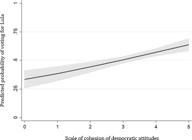
Predicted probability of voting for Lula in the second round of the 2022 election based on the scale of cohesion of democratic attitudes
Conclusion
The evidence presented in this article reveals a shift in the pattern of how democratic attitudes affect the vote, driven by political dynamics and, particularly, by public debate.
In attitudinal terms, while the vote in 2018 divided the electorate into ‘petistas’ and ‘antipetistas’ (SAMUELS and ZUCCO JR., 2018) or antipartisans (FUKS, RIBEIRO, and BORBA, 2020), a new division emerged in 2022: those who support democracy tending to vote for Lula, and those who reject these principles, leaning more toward voting for Bolsonaro.
This result reinforces the argument of previous studies, which demonstrate that context matters (FUKS and CASALECCHI, 2019; FUKS, CASALECCHI, and RIBEIRO, 2019; FUKS and MARQUES, 2020). Individual characteristics of voters do not operate in a social and political vacuum. On the contrary, they interact with the environment. This is precisely what occurred from 2010 to 2022 in what concerns democratic attitudes.
Another aspect highlighted here is the multidimensional perspective on support for democracy. The conventional measure of support for democracy has serious limitations (FUKS et al., 2016; FUKS, CASALECCHI, and RIBEIRO, 2019). Whether due to social desirability bias or the polysemic nature of the concept, most voters tend to identify as ‘democratic’. However, when shifting from abstract support to backing the specific principles underlying this political regime, the number of democrats decreases substantially.
This article shows that the multidimensional perspective still requires further refinement. As we observed, support for the principle of participation diverged from the general pattern, which is partly explained by the political context during the period when the survey was conducted. Our measurement, by allowing for multiple meanings, may be facing similar challenges to those encountered by the conventional measure of support for democracy.
This is a common limitation of abstractly formulated measures of democratic attitudes (GROSSMAN et al., 2022; LINDNER and NOSEK, 2009; MARQUART-PYATT and PAXTON, 2007; PEFFLEY and ROHRSCHNEIDER, 2003). As Gibson and Gouws (2003) point out, a possible solution would be to incorporate elements into survey questionnaires that reflect real political controversies.
Another important limitation is that we did not use a post-election survey for the 2010 election as well. The problem is that the Brazilian Electoral Study (ESEB), conducted after the elections, includes a rather limited number of questions about democratic principles. In this case, we decided to preserve the multidimensional model using the AmericasBarometer dataset, compensating for the hypothetical vote by replicating four of our five independent variables in 2023.
It is impossible to predict whether democracy will remain a salient topic on the public agenda to the extent that its support will once again be an important predictor of voting in 2026, or if other issues will take its place. To date, democracy-related issues remain alive in the public arena, fueled by ongoing debates around initiatives such as Bill 2660/2020, referred to as the ‘Fake News Bill’ by supporters of the Lula government, and the ‘Censorship Bill’ by the opposition. If this environment persists in the coming years, democratic attitudes may again become relevant to voting.
Appendix
References
- ABRAMOWITZ, Alan I. (2010), The disappearing center: engaged citizens, polarization, and American democracy. London: Yale University Press. 208 pp..
-
AMERICASBAROMETER (2014), Round 2014 survey data. Available at ? https://www.vanderbilt.edu/lapop/ ?. Accessed on March 05, 2024.
» https://www.vanderbilt.edu/lapop/ -
AMERICASBAROMETER (2010), Round 2010 survey data. Available at ? https://www.vanderbilt.edu/lapop/ ?. Accessed on March 05, 2024.
» https://www.vanderbilt.edu/lapop/ -
AMERICASBAROMETER (2006), Round 2006/07 survey data. Available at ? https://www.vanderbilt.edu/lapop/ ?. Accessed on March 05, 2024.
» https://www.vanderbilt.edu/lapop/ - AVRITZER, Leonardo and RENNÓ, Lucio R. (2021), The Pandemic and the crisis of democracy in Brazil. Journal of Politics in Latin America Vol. 13, Nº 03, pp. 442-457.
-
BBC NEWS BRASIL (2016), Discurso de Bolsonaro deixa ativistas 'estarrecidos' e leva OAB a pedir a sua cassação. April 19, 2016. Available at ? https://www.bbc.com/portuguese/noticias/2016/04/160415/Bolsonaro/ongs/oab/mdb? Accessed on May 12, 2024.
» https://www.bbc.com/portuguese/noticias/2016/04/160415/Bolsonaro/ongs/oab/mdb? - BOBBIO, Norberto (1994), Liberalismo e democracia São Paulo: Brasiliense. 100 pp..
- BOHN, Simone R. (2004), Evangélicos no Brasil: perfil socioeconômico, afinidades ideológicas e determinantes do comportamento eleitoral. Opinião Pública Vol. 10, Nº 02, pp. 288-338.
- BOOTH, John A. and SELIGSON, Mitchel A. (2009), The legitimacy puzzle in Latin America: political support and democracy in eight nations New York: Cambridge University Press. 376 pp..
- BRAGA, Maria do Socorro Souza and CASALECCHI, Gabriel Avila (2016), Vencedores e perdedores nas eleições presidenciais de 2014: o efeito da derrota nas urnas sobre a satisfação e o apoio em relação à democracia no Brasil. Opinião Pública Vol. 22, Nº 03, pp. 550-568.
- BONIFÁCIO, Robert; CASALECCHI, Gabriel, and DEUS, Cleber de (2014), O voto para presidente no Brasil: 1989 a 2010, condicionantes e fatores explicativos. Curitiba: Íthala. 327 pp..
- CAMARGOS, Malco Braga (1999), Do bolso às urnas: a influência da economia na escolha entre Fernando Henrique e Lula nas Eleições de 1998. Master's dissertation. Sociedade Brasileira de Instrução. Instituto Universitário de Pesquisas do Rio de Janeiro.
- CARLIN, Ryan E. (2018), Sorting out support for democracy: AQ-method study. Political Psychology Vol. 39, Nº 02, pp. 399-422.
- CARLIN, Ryan and SINGER, Mathew (2011), Support for Polyarchy in the Americas. Comparative Political Studies Vol. 44, Nº 11, pp. 1500-1526.
- CARREIRÃO, Yan de Souza (2002), A decisão do voto nas eleições presidenciais brasileiras Rio de Janeiro: Editora FGV. 242 pp..
- CARREIRÃO, Yan de Souza (1999), Avaliação do governo e 'voto econômico'. Lua Nova Vol. 48, pp. 213-232.
- CAMPBELL, Angus; CONVERSE, Philip E.; MILLER, Warren E., and STOKES, Donald E. (1960), The American voter New York: Wiley. 576 pp..
- CARMINES, Edward G. and STIMSON, James A. (1989), Issue evolution: race and the transformation of American politics. Princeton: Princeton University Press. 240 pp..
- CASTRO, Mônica Mata Machado de (1994), Determinantes do comportamento eleitoral: a centralidade da sofisticação política. Doctoral thesis Instituto Universitário de Pesquisas do Rio de Janeiro.
- CLIVAGENS DO BRASIL (2023), Round 2023 survey data. Not available.
-
CNN BRASIL (2022), Amoêdo declara voto em Lula e chama de 'ingênuo' quem não vê Bolsonaro como ameaça. Eleições October, 15, 2022. Available at ? https://www.cnnbrasil.com.br/politica/joao-amoedo-declara-voto-em-lula-no-segundo-turno-das-eleicoes/ ?. Accessed on July 28, 2023.
» https://www.cnnbrasil.com.br/politica/joao-amoedo-declara-voto-em-lula-no-segundo-turno-das-eleicoes/ -
CNN BRASIL (2020), Weintraub sugere mandar prender ministros do STF em vídeo de reunião ministerial. May 22, 2020. Available at ? https://www.cnnbrasil.com.br/politica/weintraub-sugere-mandar-prender-ministros-do-stf-em-video-de-reuniao-ministerial/ ?. Accessed on July 22, 2023.
» https://www.cnnbrasil.com.br/politica/weintraub-sugere-mandar-prender-ministros-do-stf-em-video-de-reuniao-ministerial/ - CONVERSE. Phillip E. (1964), The nature of belief systems in mass publics. In: Ideology and discontent Edited by APTER, David E.. New York: Free Press. pp. 206-261.
- COBB, Roger and ELDER, Charles (1972), Participation in American politics: the dynamics of agenda building. Boston: Allyn and Bancon. 182 pp..
- CORRÊA, Diego Sanches (2015), Os custos eleitorais do Bolsa Família: reavaliando seu impacto sobre a eleição presidencial de 2006. Opinião Pública Vol. 21, Nº 03, pp. 514-534.
-
CORREIO BRAZILIENSE (2021), Bolsonaro: interferências no Executivo foram ' as tristezas' de 2021. December 24, 2021. Available at ? https://www.correiobraziliense.com.br/politica/2021/12/4973258-bolsonaro-interferencias-no-executivo-foram-as-tristezas-de-2021.html ?. Accessed on January 22, 2024.
» https://www.correiobraziliense.com.br/politica/2021/12/4973258-bolsonaro-interferencias-no-executivo-foram-as-tristezas-de-2021.html - DALTON, Russell J.; FARRELL, David M., and McALLISTER, Ian (2011), Political parties and democratic linkage Oxford: Oxford University Press. 258 pp..
- DAHL, Robert A. (1997), Poliarquia: participação e oposição São Paulo: Editora USP. 240 pp..
- DIAMOND, Larry and MORLINO, Leonardo (2005), Assessing the quality of democracy Baltimore: Johns Hopkins University Press. 328 pp..
- DRUCKMAN, James N.; PETERSON, Erik, and SLOTHUUS, Rune (2013), How elite partisan polarization affects public opinion formation. American Political Science Review Vol. 107, Nº 01, pp. 57-79.
-
ESTUDO ELEITORAL BRASILEIRO, ESEB (2022), Round 2022. Available at <https://www.cesop.unicamp.br/por/eseb>. Accessed on March 05, 2024.
» https://www.cesop.unicamp.br/por/eseb -
ESTUDO ELEITORAL BRASILEIRO, ESEB (2018), Round 2018. Available at <https://www.cesop.unicamp.br/por/eseb>. Accessed on March 05, 2024.
» https://www.cesop.unicamp.br/por/eseb -
ESTADÃO (2023), Alckmin usa defesa da democracia para justificar aliança com Lula. Eleições March 23, 2022. Available at ? https://www.estadao.com.br/ politica/eleicoes/alckmin-assina-filiacao-ao-psb-e-abre-caminho-pra-ser-vice-na-chapa-de-lula /?. Accessed on July 28, 2023.
» https://www.estadao.com.br/ - FIGUEIREDO, Argelina Cheibub and LIMONGI, Fernando (2007), Instituições políticas e governabilidade: desempenho do governo e apoio legislativo na democracia brasileira. In: A democracia brasileira: balanço e perspectivas para o século 21 Edited by MELO, Carlos Ranulfo and SÁEZ, Manuel Alcántara. Belo Horizonte: Editora UFMG. pp. 147-178.
- FOA, Roberto Stefen and MOUNK, Yascha (2017), The signs of deconsolidation. Journal of Democracy Vol. 28, Nº 01, pp. 05-16.
- FOA, Roberto Stefen and MOUNK, Yascha (2016), The danger of desconsolidation: the democratic disconnect. Journal of Democracy Vol 27, Nº 03, pp. 05-17.
-
FOLHA DE SÃO PAULO (2024), Acervo da Folha. Available at ? https://acervo.folha.com.br/index.do ?. Accessed on January 12, 2024.
» https://acervo.folha.com.br/index.do - FUKS, Mario (2000), Definição de agenda, debate público e problemas sociais: uma perspectiva argumentativa da dinâmica do conflito social. Revista BIB Vol. 49, pp. 79-94.
- FUKS, Mario; CASALECCHI, Gabriel Avila (2019), Contexto político importa: o legado democrático como condicionante dos efeitos da educação sobre o compromisso democrático dos latinos-americanos. América Latina Hoy Vol. 83, Nº 01, pp. 117-131.
- FUKS, Mario; CASALECCHI, Gabriel Avila, and RIBEIRO, Ednaldo Aparecido (2019), Determinantes contextuais da coesão do sistema de crenças democrático: evidências a partir da América Latina. Revista Brasileira de Ciência Política Vol. 28, pp. 07-32..
- FUKS, Mario; CASALECCHI, Gabriel Avila; GONÇALVES, Guilherme Quaresma, and DAVID, Flávia Felizardo (2016), Qualificando a adesão à democracia: quão democráticos são os democratas brasileiros? Revista Brasileira de Ciência Política Vol. 19, pp. 199-219.
- FUKS, Mario and MARQUES, Pedro Henrique (2020), Contexto e voto: o impacto da reorganização da direita sobre a consistência ideológica do voto nas eleições de 2018. Opinião Pública Vol. 26, Nº 03, p. 401-430.
- FUKS, Mario; RIBEIRO, Ednaldo, and BORBA, Julian (2020), From antipetismo to generalized antipartisanship: the impact of rejection of political parties on the 2018 vote for Bolsonaro. Brasilian Political Science Review Vol. 15, Nº 01, pp. 01-18.
-
FUNDAÇÃO FHC (2018), Como morrem as democracias? Por Steven Levitsky. August 08, 2018. Available at ? https://fundacaofhc.org.br/debate/como-mrrem-as-democracias-por-steven-levitsky-4 /?. Accessed on March 06, 2024.
» https://fundacaofhc.org.br/debate/como-mrrem-as-democracias-por-steven-levitsky-4 -
G1 - GLOBO (2022), FHC anuncia apoio a Lula no Segundo turno. Política. Eleições. October 05, 2022. Available at ? https://g1.globo.com/politica/eleicoes/2022/noticia/2022/10/05/fhc-anuncia-apoio-a-lula-no-segundo-turno.ghtml?. Accessed July on 28, 2023.
» https://g1.globo.com/politica/eleicoes/2022/noticia/2022/10/05/fhc-anuncia-apoio-a-lula-no-segundo-turno.ghtml -
G1 - GLOBO (2019), Declaração de Eduardo Bolsonaro sobre o AI-5 repercute na imprensa internacional. Mundo. November 01, 2019. Available at ? https://g1.globo.com/mundo/noticia/2019/11/01/declaracao-de-eduardo-bolsonaro-sobre-o-ai-5-repercute-na-imprensa-internacional.ghtml ?. Accessed on July 22, 2023.
» https://g1.globo.com/mundo/noticia/2019/11/01/declaracao-de-eduardo-bolsonaro-sobre-o-ai-5-repercute-na-imprensa-internacional.ghtml -
GAZETA DO POVO (2021), Organizadores estimam que atos chegaram a 500 cidades e explicam significado do 'eu autorizo'. Vida e Cidadania May 03, 2021. Available at ? https://www.gazetadopovo.com.br/vida-e-cidadania/quais-foram-as-principais-pautas-das-manifestacoes-pro-bolsonaro-pelo-brasil/ ?. Accessed on July 25, 2023.
» https://www.gazetadopovo.com.br/vida-e-cidadania/quais-foram-as-principais-pautas-das-manifestacoes-pro-bolsonaro-pelo-brasil/ - GEURKINK Bram; JACOBS, Kristof; ZASLOVE Andrej, and SLUITER Roderick (2020), Populist attitudes, political trust, and external political efficacy: old wine in new bottles? Political Studies Vol. 68, Nº 01, pp. 247-267.
- GIBSON, James L. (2011), Political intolerance in the context of democratic theory. In: The Oxford Handbook of Political Science Edited by GOODIN, Robert E.. Oxford: Oxford University Press. pp. 409-427.
- GIBSON, James L. and GOUWS, Amanda (2003), Overcoming intolerance in South Africa: experiments in democratic persuasion. New York: Cambridge University Press. 280 pp..
-
GOOGLE TRENDS (2024), Available at ? https://trends.google.com.br/trends? Accessed on January 30, 2024.
» https://trends.google.com.br/trends? - GROSSMAN, Guy; KRONICK, Doroty; LEVENDUSKY, Matthew, and MEREDITH, Marc (2022), The majoritarian threat to liberal democracy. Journal of Experimental Political Science Vol. 09, Nº 01, pp. 36-45.
- GRÜNDL, Johann and AICHHOLZER, Julian (2020), Support for the populist radical right: between uncertainty avoidance and risky choice. Political Psychology Vol. 41, Nº 04, pp. 641-659.
- HILGARTNER, Stephen and BOSK, Charles L. (1988), The rise and fall of social problems: a public arenas model. American Journal of Sociology Vol. 94, Nº 01, pp. 53-78.
- HUNTER, Wendy and POWER, Timothy J. (2007), Rewarding Lula: executive power, social policy, and the Brazilian elections of 2006. Latin American Politics & Society Vol. 49, Nº 01, pp. 01-30.
-
ISTO É DINHEIRO (2022), Marina Silva anuncia apoio à candidatura de Lula citando riscos à democracia. Política September 12, 2022. Available at ? https://www.istoedinheiro.com.br/marina-silva-anuncia-apoio-a-candidatura-de-lula-citando-riscos-a-democracia /?. Accessed on July 28, 2023.
» https://www.istoedinheiro.com.br/marina-silva-anuncia-apoio-a-candidatura-de-lula-citando-riscos-a-democracia - IYENGAR, Shanto, PETERS, Mark D., and KINDER, Donald R. (1982), Experimental demonstration of the 'not-so-minimal' consequences of television news programs. American Political Science Review Vol. 76, Nº 04, pp. 848-858.
- IYENGAR, Shanto; LELKES, Yphtach, and SOOD, Gaurav (2012), Affect, not ideology: a social identity perspective on polarization. Public Opinion Quarterly Vol. 76, Nº 03, pp. 405-431.
- INGLEHART, Ronald (2016), The danger of desconsolidation: how much should we worry? Journal of Democracy Vol 27, Nº 03, pp. 18-23.
- IZUMI, Maurício (2019), Ideologia, sofisticação política e voto no Brasil. Opinião Pública Vol. 24, Nº 01, pp. 29-62.
- KINGSTONE, Peter and POWER, Timothy J. (2008), Democratic Brazil revisited Pittsburgh: University of Pittsburgh Press. 360 pp..
- LACHAT, Romain (2008), The impact of party polarization on ideological voting. Electoral Studies Vol. 27, Nº 04, pp. 687-698.
- LAZARSFELD, Paul F.; BERELSON, Bernard, and GAUDET, Hazel (1967), The people's choice: how the voters makes up his mind in a presidential campaign Nova York: Columbia University Press. 224 pp..
- LEVENDUSKY, Matthew S. (2010), Clearer cues, more consistent voters: a benefit of elite polarization. Political Behavior Vol. 32, Nº 01, pp. 111-131.
- LICIO, Elaine Cristina; RENNÓ, Lucio R., and CASTRO, Henrique Carlos de O. de (2009), Bolsa Família e voto nas eleições presidenciais de 2006: em busca do elo perdido. Opinião Pública Vol. 15, Nº 01, pp. 31-54.
- LINDNER, Nicole M. and NOSEK, Brian A. (2009), Alienable speech: ideological variations in the application of free-speech principles. Political Psychology Vol. 30, Nº 01, pp. 67-92.
- LINZ, Juan J. and VALENZUELA, Arturo (1992), The failure of presidential democracy: comparative perspectives Vol. 01. Baltimore: Johns Hopkins University Press. 192 pp..
- LIMONGI, Fernando (2006), A democracia no Brasil: presidencialismo, coalizão partidária e processo decisório. Novos Estudos Cebrap Nº 76, pp. 17-41.
- LOEW, Nicole and FAAS, Thorsten (2019), Between thin and host ideologies: how populist attitudes interact with policy preferences in shaping voting behaviour. Representation Vol. 55, Nº 01, pp. 493-511.
- LORENZ, Reilly; BECK, Jacob; HORNEBER, Sophie; KEUSCH, Florian, and ANTOUN, Christopher (2022), Google trends as a tool for public opinion research: an illustration of the perceived threats of immigration. In: Migration research in a digitized world. Edited by PÖTZSCHKE, Steffen and RINKEN, Sebastian. IMISCOE Research Series. New York: Springer. pp. 193-206.
- MARQUART-PYATT, Sandra and PAXTON, Pamela (2007), In principle and in practice: learning political tolerance in Eastern and Western Europe. Political Behavior Vol. 29, Nº 01, pp. 89-113.
- McCOMBS, Maxwell E. and SHAW, Donald L. (1972), The agenda-setting function of mass media. Public Opinion Quaterly Vol. 36, Nº 02, pp. 176-187.
- MELO, Carlos Ranulfo (2022), Nau sem rumo? O sistema partidário brasileiro pós-democratização. Revista USP Vol. 134, pp. 75-90.
- MELO, Carlos Ranulfo and CÂMARA, Rafael (2012), Estrutura da competição pela presidência e consolidação do sistema partidário no Brasil. Dados Vol. 55, Nº 01, pp. 71-117.
- MILL, John Stuart (1991), Sobre a liberdade Petrópolis: Editora Vozes. 187 pp..
- MOISÉS, José Álvaro (2010), Os significados da democracia segundo os brasileiros. Opinião Pública Vol. 16, Nº 02, pp. 269-309.
- MOISÉS, José Alvaro (2008), Cultura política, instituições e democracia: lições da experiência brasileira. Revista Brasileira de Ciências Sociais Vol. 23, Nº 66, pp. 11-43.
- MOISÉS, José Alvaro (1995), Os brasileiros e a democracia: as bases sócio-políticas da legitimidade democrática São Paulo: Editora Ática. 304 pp..
- MOISÉS, José Álvaro and MENEGUELLO, Rachel (2013), A desconfiança política e os seus impactos na qualidade da democracia São Paulo: Editora da Universidade de São Paulo. 392 pp..
- MOUNK, Yascha (2019), O povo contra a democracia: porque nossa liberdade corre perigo e como salvá-la. São Paulo: Companhia das Letras. 432 pp..
- NEUNER, Fabian G. and WRATIL, Christopher (2022), The populist marketplace: unpacking the role of 'thin'and 'thick' ideology. Political Behavior Vol. 44, Nº 02, pp. 551-574.
- NIE, Norman H. and ANDERSEN, Kristi (1974), Mass belief systems revisited: political change and attitude structure. The Journal of Politics Vol. 36, Nº 03, pp. 540-591.
- NICOLAU, Jairo and PEIXOTO, Vitor (2007), As bases municipais da votação de Lula em 2006. In: Quem elegeu Lula? Edited by VELLOSO, João Paulo dos Reis. Cadernos do Fórum Nacional Nº 06. pp. 19-25.
- NORRIS, Pippa and INGLEHART, Ronald (2019), Cultural Backlash: Trump, Brexit, and authoritarian populism. Cambridge: Cambridge University Press. 564 pp..
-
NOTÍCIAS R7 (2022), Bolsonaro diz ao STF que reunião com embaixadores serviu para fortalecer a democracia. Eleições. September 13, 2022. Available at ? https://noticias.r7.com/eleicoes-2022/bolsonaro-diz-ao-stf-que-reuniao-com-embaixadores-serviu-para-fortalecer-a-democracia-13092022? Accessed on July 28, 2023.
» https://noticias.r7.com/eleicoes-2022/bolsonaro-diz-ao-stf-que-reuniao-com-embaixadores-serviu-para-fortalecer-a-democracia-13092022? - O'DONNELL, Guillermo (2004), The quality of democracy: why the rule of law matters. Journal of Democracy Vol. 15, Nº 04, pp. 32-46.
- PAIVA, Denise and TAROUCO, Gabriela da Silva (2011), Voto e identificação partidária: os partidos brasileiros e a preferência dos eleitores. Opinião Pública Vol. 17, Nº 02, pp. 426-451.
- PEFFLEY, Mark and ROHRSCHNEIDER, Robert (2003), Democratization and political tolerance in seventeen countries: a multi-level model of democratic learning. Political Research Quarterly Vol. 56, Nº 03, pp. 243-257.
- PEREIRA, Frederico Batista (2020), Non causa pro causa: o voto de direita e esquerda no Brasil. Opinião Pública Vol. 26, Nº 02, pp. 154-179.
- PEREIRA, Frederico Batista (2014), O voto econômico no Brasil. In: O voto para presidente no Brasil (1989-2010): condicionantes e fatores explicativos. Edited by BONIFÁCIO, Robert; CASALECCHI, Gabriel Avila, and DEUS, Cleber de. Curitiba: Editora Ithala. pp. 127-156.
- PEREIRA, Frederico Batista (2013), Sofisticação política e opinião pública no Brasil: revisitando hipóteses clássicas. Opinião Pública Vol. 19, Nº 02, pp. 291-319.
- PEREIRA, Frederico Batista; FUKS, Mario; CASALECCHI, Gabriel (2014), Sofisticação política e voto para presidente no Brasil. In: O voto para presidente no Brasil: 1989 a 2010, condicionantes e fatores explicativos Edited by BONIFÁCIO, Robert; CASALECCHI, Gabriel, ande DEUS, Cleber de. Curitiba: Íthala. pp. 93-123.
- PIMENTEL JÚNIOR, Jairo Tadeu Pires (2010), Razão e emoção: o voto na eleição presidencial de 2006. Opinião Pública Vol. 16, Nº 02, pp. 516-541.
-
PODER 360 (2021), Leia a transcrição do que disse Daniel Silveira e o que levou o STF a prendê-lo. February 21, 2021. Available ? https://www.poder360.com.br/ congresso/leia-a-transcricao-do-que-disse-daniel-silveira-e-o-que-levou-o-stf-a-prende-lo/ ?. Accessed on July 25, 2023.
» https://www.poder360.com.br/ -
PORTAL do STF (2022), Ministro Alexandre de Moraes divulga voto em ação penal do deputado Daniel Silveira. Notícias. May 17, 2022. Available at ? https://portal.stf.jus.br/noticias/verNoticiaDetalhe.asp?idConteudo=487135&ori=1 ?. Accessed on July 21, 2023.
» https://portal.stf.jus.br/noticias/verNoticiaDetalhe.asp?idConteudo=487135&ori=1 - PRANDI, Reginaldo and CARNEIRO, João Luiz (2018), Em nome do Pai: justificativas do voto dos deputados federais evangélicos e não evangélicos na abertura do impeachment de Dilma Rousseff. Revista Brasileira de Ciências Sociais Vol. 33, Nº 96, pp. 01-22.
- REIS, Fábio Wanderley (1988), Identidade, política e teoria da escolha racional. Revista Brasileira de Ciências Sociais Vol. 03, Nº 06, pp. 26-38.
- RENNO, Lúcio R. (2022) Bolsonarismo e as eleições de 2022. Estudos Avançados Vol. 36, Nº 106, pp. 147-163.
-
REUTERS (2021), Brazil's Bolsonaro says he won't hand over presidency if there is vote fraud. July 01, 2021. Available at ? https://www.reuters.com/world/ americas/brazils-bolsonaro-says-he-wont-hand-over-presidency-if-there-is-vote-fraud-2021-07-01? Accessed on January 22, 2024.
» https://www.reuters.com/world/ americas/brazils-bolsonaro-says-he-wont-hand-over-presidency-if-there-is-vote-fraud-2021-07-01? - RICCI, Paolo; IZUMI, Mauricio and MOREIRA, Davi (2021), O populismo no Brasil (1985-2019): um velho conceito a partir de uma nova abordagem. Revista Brasileira de Ciências Sociais Vol. 36, Nº 107, pp. 01-22.
- RODRIGUES, Guilherme Alberto and FUKS, Mario (2015), Grupos sociais e preferência poli´tica: o voto evangélico no Brasil. Revista Brasileira de Ciências Sociais Vol. 30, N° 87, pp. 115-128.
- SAMUELS, David J. and ZUCCO JÚNIOR, César (2018), Partisans, antipartisans, and nonpartisans: voting behavior in Brazil. Cambridge: Cambridge University Press. 196 pp..
- SAMUELS, David J. and ZUCCO JÚNIOR, César (2014), The power of partisanship in Brazil: evidence from survey experiments. American Journal of Political Science Vol. 58, Nº 01, p. 212-225.
- SARTORI, Giovanni (1999), Elementos de teoria política São Paulo: Alianza. 368 pp..
- SCHATTSCHNEIDER, Elmer E. (1960), The semi-sovereign people: a realist's view of democracy in America New York: Winston. 180 pp..
- SCHEDLER, Andreas and SARSFIELD, Rodolfo (2007), Democrats with adjectives: linking direct and indirect measures of democratic support. European Journal of Political Research Vol. 46, Nº 05, pp. 637-659.
- SCHUMPETER, Joseph A. (1975), Capitalism, socialism and democracy New York: Harper Torchbooks. 431 pp..
- SETZLER, Mark (2020), Did Brazilians vote for Jair Bolsonaro because they share his most controversial views? Brazilian Political Science Review Vol. 15, N° 01, pp. 01-16.
- SILVA, Bruno Castanho; FUKS, Mario, and TAMAKI, Eduardo Ryô (2022), So thin it's almost invisible: populist attitudes and voting behavior in Brazil. Electoral Studies Vol. 75, pp. 01-11.
- SINGER, André (2013), Brasil, junho de 2013, classes e ideologias cruzadas. Novos Estudos Cebrap Nº 97, pp. 23-40.
- SINGER, André (2012), Os sentidos do lulismo: reforma gradual e pacto conservador. São Paulo: Companhia das Letras. 236 pp..
- SINGER, André (1999), Esquerda e direita no eleitorado brasileiro: a identificação ideológica nas disputas presidenciais de 1989 e 1994 São Paulo: Edusp. 208 pp..
- SINGER, Matthew M. (2016), Elite polarization and the electoral impact of left-right placements: evidence from Latin America, 1995-2009. Latin American Research Review Vol. 51, nº 02, pp. 174-194.
- SMITH, Amy Erica (2019), Religion and Brazilian democracy: mobilizing the people of God. Cambridge: Cambridge University Press. 222 pp..
- SPIERINGS, Niels and ZASLOVE, Andrej (2017), Gender, populist attitudes, and voting: explaining the gender gap in voting for populist radical right and populist radical left parties. West European Politics Vol. 40, Nº 04, pp. 821-847.
- SNIDERMAN, Paul M.; TETLOCK, Philip E.; GLASER, James M.; GREEN, Donald Philip, and HOUT, Michael (1989), Principled tolerance and American political values. British Journal of Political Science Vol. 19, Nº 01, pp. 25-45.
- TAMAKI, Eduardo Ryo and FUKS, Mario (2020), Populism in Brazil's 2018 general elections: an analysis of Bolsonaro's Campaign speeches. Lua Nova. Nº 109, pp. 103-127.
- TOCQUEVILLE, Alex de (1987), A democracia na América São Paulo: Editora Itatiaia. 451 pp..
-
UOL (2023), Relembre alguns ataques de Bolsonaro ao sistema eleitoral sem apresentar provas. Eleições. January 12, 2023. Available at ? https://www1.folha.uol.com.br/poder/2021/01/veja-o-que-bolsonaro-ja-disse-sobre-urnas-eletronicas-e-fraude-em-eleicao-sem-apresentar-provas.shtml ?. Accessed July 27, 2023
» https://www1.folha.uol.com.br/poder/2021/01/veja-o-que-bolsonaro-ja-disse-sobre-urnas-eletronicas-e-fraude-em-eleicao-sem-apresentar-provas.shtml -
UOL (2020), Heleno ataca pedido de apreensão de celular: "Consequências imprevisíveis". Política May 22, 2020. Available at ? https://noticias.uol.com.br/politica/ultimas-noticias/2020/05/22/heleno-ataca-pedido-de-apreensao-de-celular-consequencias-imprevisiveis.htm ?. Accessed July 25, 2023.
» https://noticias.uol.com.br/politica/ultimas-noticias/2020/05/22/heleno-ataca-pedido-de-apreensao-de-celular-consequencias-imprevisiveis.htm -
USP (2022), Carta às brasileiras e aos brasileiros em defesa do Estado Democrático de Direito! Faculdade de Direito. July 21, 2022. Available at ? https://direito.usp.br/noticia/3f8d6ff58f38-carta-as-brasileiras-e-aos-brasileiros-em-defesa-do-estado-democratico-de-direito ?. Accessed on July 28, 2023.
» https://direito.usp.br/noticia/3f8d6ff58f38-carta-as-brasileiras-e-aos-brasileiros-em-defesa-do-estado-democratico-de-direito -
VEJA (2023), 'Esses marginais vermelhos serão banidos de nossa pátria'. Brasil. Ocotober 21, 2018. Available at ? https://veja.abril.com.br/brasil/esses-marginais-vermelhos-serao-banidos-de-nossa-patria-diz-bolsonaro/ ?. Accessed on July 22, 2023.
» https://veja.abril.com.br/brasil/esses-marginais-vermelhos-serao-banidos-de-nossa-patria-diz-bolsonaro/ - VERBA, Sidney and NIE, Norman H. (1972), Participation in America: political democracy and social equality. New York: Harper & Row Publishers. 452 pp..
- VERBA, Sidney; SCHLOZMAN, Kay Lehman, and BRADY, Henry E. (1995), Voice and equality: civic voluntarism in American politics. Cambridge: Harvard University Press. 664 pp..
- ZALLER, John R. (1992), The nature and origins of mass opinion Cambridge: Cambridge University Press. 382 pp..
- ZINGHER, Joshua N. and FLYNN, Michael E. (2018), From on high: the effect of elite polarization on mass attitudes and behaviors, 1972-2012. British Journal of Political Science Vol. 48, N° 01, pp. 23-45.
-
1
Nonetheless, most Brazilians continued to express a preference for a democratic regime (MOISÉS, 2008, 1995; MOISÉS and MENEGUELLO, 2013).
-
2
However, Steven Levitsky (FUNDAÇÃO FHC, 2018), a scholar dedicated to studying democracies, had warned in interviews, newspaper articles, and a lecture at the Henrique Cardoso Foundation (on May 08, 2018) about the dangers of Bolsonaro becoming Brazil’s president. According to Levitsky, Bolsonaro exhibited at that time all the typical traits of leaders who lead democracy to its ‘death’.
-
3
In this process, Bolsonaro made peace with the ‘old politics’, and by doing so, he refrained from targeting political parties in his daily attacks on political institutions.
-
4
The search was conducted on the website ˂https://busca.folha.uol.com.br/˃. The exact Portuguese terms, written in quotes as they appear in Figure 01, were used in the search, covering the entire newspaper for the dates specified in the figure.
-
5
Available at ˂https://www1.folha.uol.com.br/poder/2021/03/folha-e-o-jornal-mais-nacional-e-o-de-maior-audiencia-e-circulacao.shtml ˃. Article published March 27, 2021, and accessed May 20, 2023.
-
6
‘Folha de São Paulo’ was chosen precisely because of its national relevance. According to an IVC report, in July 2023, ‘Folha de São Paulo’ had 796,000 paid daily copies. ‘O Globo’ ranked second with 381,700 copies, while ‘O Estado de São Paulo’, considered the third national newspaper, had a total circulation of 243,400 copies.
-
7
Google Trends is a tool that calculates the ‘Search Volume Index’ (SVI) to measure the volume of searches for a specific keyword within a defined period and region. The index is a relative measure, ranging from 0 (indicating minimal popularity) to 100 (indicating maximum popularity). In other words, it does not provide the absolute number of searches for a term but rather estimates how the popularity of a keyword changes over time (LORENZ et al., 2022).
-
8
The protests began in São Paulo over a local issue ¾ the increase in bus fare prices ¾ and were led by the Free Fare Movement (MPL, for Movimento Passe Livre) with a clear agenda of reducing fares. The protests rapidly spread to all Brazilian states, but they evolved into a less homogeneous movement with less defined agendas, reflecting a widespread dissatisfaction with corruption and the ‘political system’.
-
9
Dilma Rousseff (affiliated with the PT) was re-elected with 51.64% of the valid votes (54.5 million), just 3.1 percentage points ahead of her opponent, Aécio Neves (affiliated with the PSDB), who received 48.43% of the valid votes (51 million). In 2022, the vote difference between Lula and Bolsonaro was even smaller, making it the most tightly contested election in Brazilian history.
-
10
After the defeat, the PSDB filed a request with the Superior Electoral Court for an audit of the electronic voting machines. The audit found no evidence of errors in the vote count.
-
11
Throughout 2015, right-wing and left-wing movements organized to take to the streets. On March 15, April 12, and August 16, it was the right’s turn. The primary demand was the impeachment of President Rousseff. However, as Operation Lava Jato progressed, resulting in the arrest of several politicians linked to the PT leadership, the focus of the agenda became more generalized, shifting towards targeting the ‘PT’ and, more broadly, ‘corruption’. At the same time, the right-wing protests adopted nationalist overtones, with protesters wearing green and yellow and carrying the national flag. On March 18, April 15, and August 120, it was the left’s turn to take to the streets. Supported by organizations like the Unified Workers’ Central (CUT), the Nacional Union of Students (UNE), the Landless Workers’ Movement (MST), and the Homeless Worker’s Movements (MTST), the left-wing protests rallied around the call to end fiscal adjustments and defend President Rousseff against the ‘coup-driven attacks’ (ataques golpistas) from the opposition.
-
12
Available at ˂https://g1.globo.com/politica/processo-de-impeachment-de-dilma/noticia/2016/08/ sentenca-de-dilma-rousseff-no-julgamento-do-impeachment.html˃. Article published on August 31, 2016, and accessed on July 20, 2023.
-
13
DOI-CODI was one of the agencies involved in political repression during the military dictatorship in Brazil.
-
14
Journalist Reinaldo Azevedo popularized the term ‘petralhas’ during President Dilma Rousseff's impeachment process. According to Azevedo, the term was inspired by the Beagle Boys (‘Irmãos Metralha’ in Portuguese), a group of thief characters from the Uncle Scrooge comics. For more information, see ˂https://veja.abril.com.br/coluna/reinaldo/segundo-washington-post-petralha-e-uma-das-seis-palavras-para-entender-o-brasil-de-hoje ˃.
-
15
‘Ponta da Praia’ was a slang used by the military during the dictatorship, referring to a Navy base at Restinga de Marambaia in Rio de Janeiro. The site was used for executing political prisoners.
-
16
The AI-5 was an authoritarian decree issued in 1968 during the Brazilian military regime. It gave the President of the Republic sweeping powers, including the ability to shut down the National Congress, revoke political mandates, suspend rights, intervene in states and municipalities, impose prior censorship, and suspend the right to habeas corpus. More information about Eduardo Bolsonaro’s statement is available at ˂https://g1.globo.com/mundo/noticia/2019/11/01/declaracao-de-eduardo-bolsonaro-sobre-o-ai-5-repercute-na-imprensa-internacional.ghtml ˃.
-
17
In Brazilian politics, the ‘Centrão’ refers to a group of parties and politicians who typically do not follow a fixed ideology but aim to gain influence and power by backing whoever is in government, in exchange for benefits, political appointments, and resources.
-
18
“What is sad are the undue interferences. All the time, [there’s] undue interference in the executive branch, removing the president of Ibama, not allowing the appointment of certain people, having to do this, having to do that, those other people have no authority for this. We’d be doing better if it weren’t for some people getting in our way” (CORREIO BRAZILIENSE, 2021).
-
19
“I will hand over the presidential sash to whoever wins through voting, but it must be auditable and trustworthy. This way, we risk not having elections next year” (REUTERS, 2021), Bolsonaro declared.
-
20
Inquiry Nº 4.781/DF, commonly known as the Fake News Inquiry, was initiated by then-STF Chief Justice Dias Toffoli in 2019 to investigate threats against the court’s justices by supporters of the president.
-
21
The AmericasBarometer (AB) is a survey produced by the Latin American Public Opinion Project (LAPOP), based at Vanderbilt University. It is the most extensive public opinion survey in terms of coverage in the Americas, conducted periodically since 2004 (and since 2006 in Brazil).
-
22
The survey was conducted as part of the research project ‘Clivagens Políticas no Brasil’, coordinated by Professor Julian Borba from the Federal University of Santa Catarina (UFSC).
-
23
The ‘Churchillian’ question may have slight variations, but it is generally phrased as follows: ‘Democracy may have its problems, but it is the best form of government there is’. A variation commonly used in new democracies that have recently transitioned from authoritarian regimes often includes response categories that contrast the democratic option with an authoritarian one, as well as indifference regarding the two. It typically follows this phrasing: ‘For a person like you: democracy is always preferable; in some situations, an authoritarian regime is preferable; or either way is fine [tanto faz]’.
-
24
In the questionnaire, the question is: ‘If the next presidential election were held this week, who would you vote for?’. The response options were the candidate/party of the current president (at the time, Lula) or the opposition candidate or party.
-
25
Nevertheless, both coefficients are statistically significant in the one-tailed test (0.108 and 0.68, respectively).
-
26
LAPOP only conducted a survey on voting intentions for the 01st round of the election. We assigned a value of 0 for Bolsonaro and 01 for Haddad. Abstentions, blank votes, null votes, and votes for other candidates were excluded.
-
27
LAPOP only conducted a survey on voting intentions for the 1st round of the election. We assigned a value of 0 for Bolsonaro and 01 for Haddad. Abstentions, blank votes, null votes, and votes for other candidates were excluded.
- Data replication:
-
Funding:
National Council for Scientific and Technological Development (CNPq, acronyms in Portuguese).

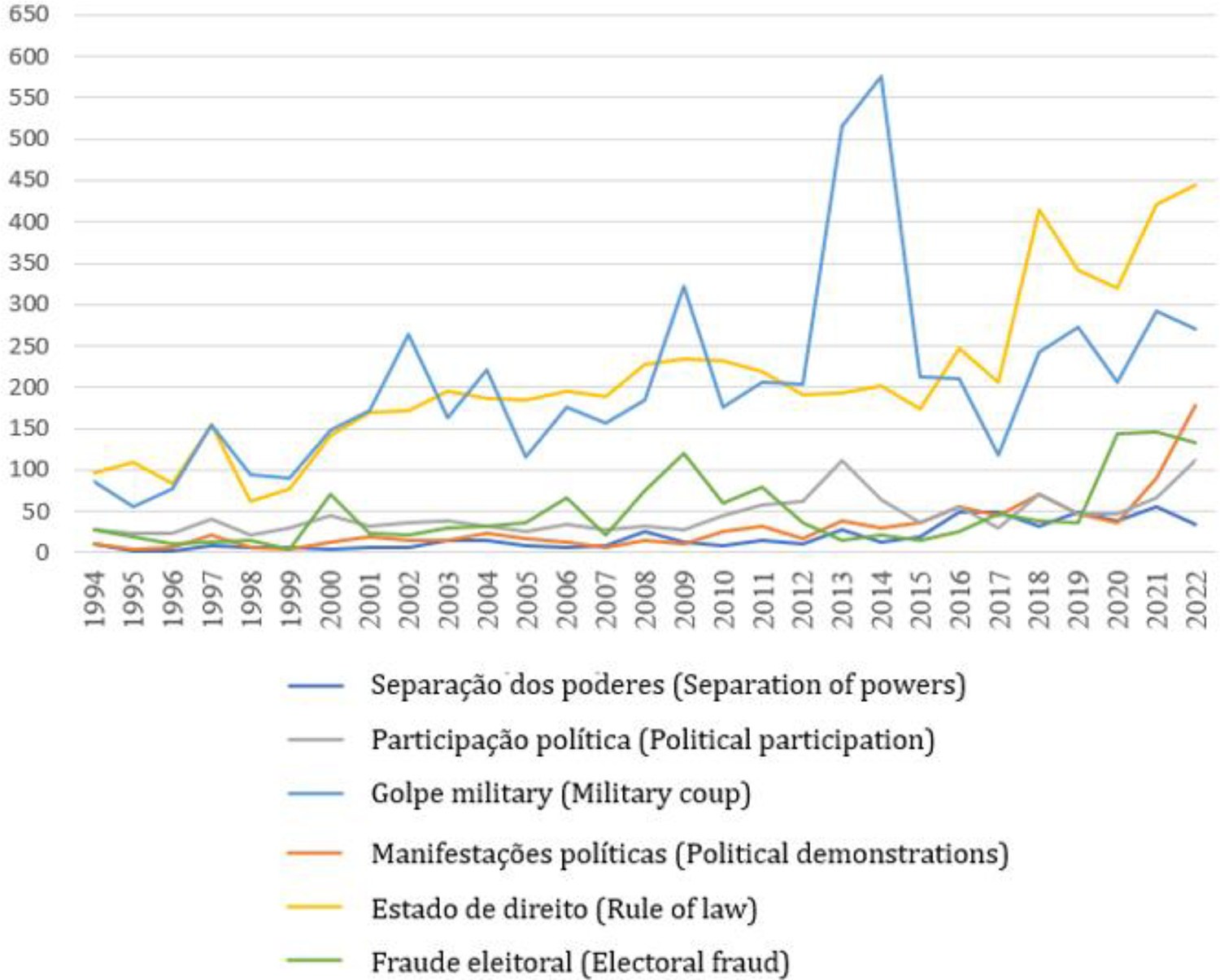 Source: Elaborated by the authors based on data from the ‘Folha de São Paulo’ website (2024).
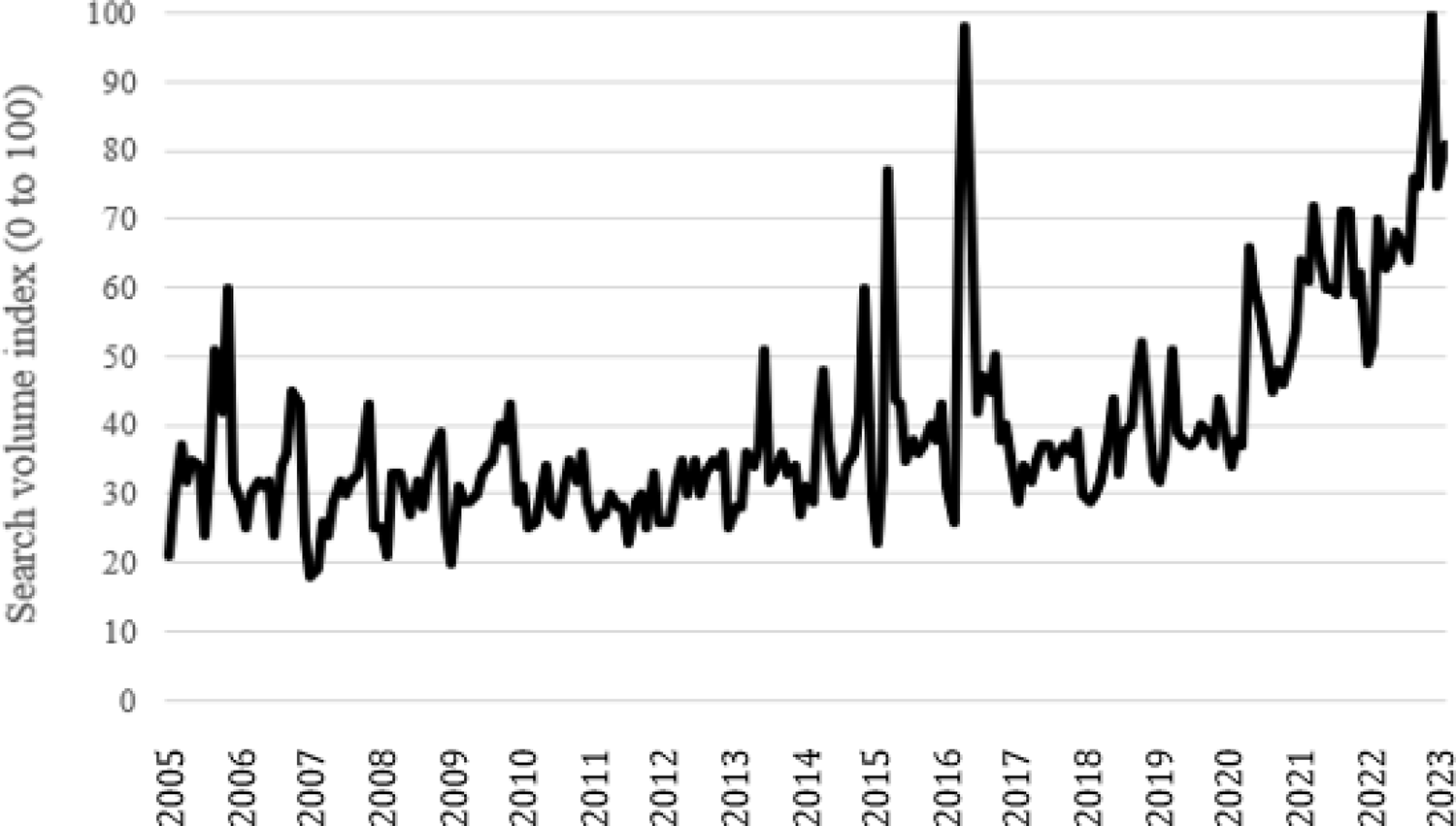 Source: Elaborated by the authors based on data from
 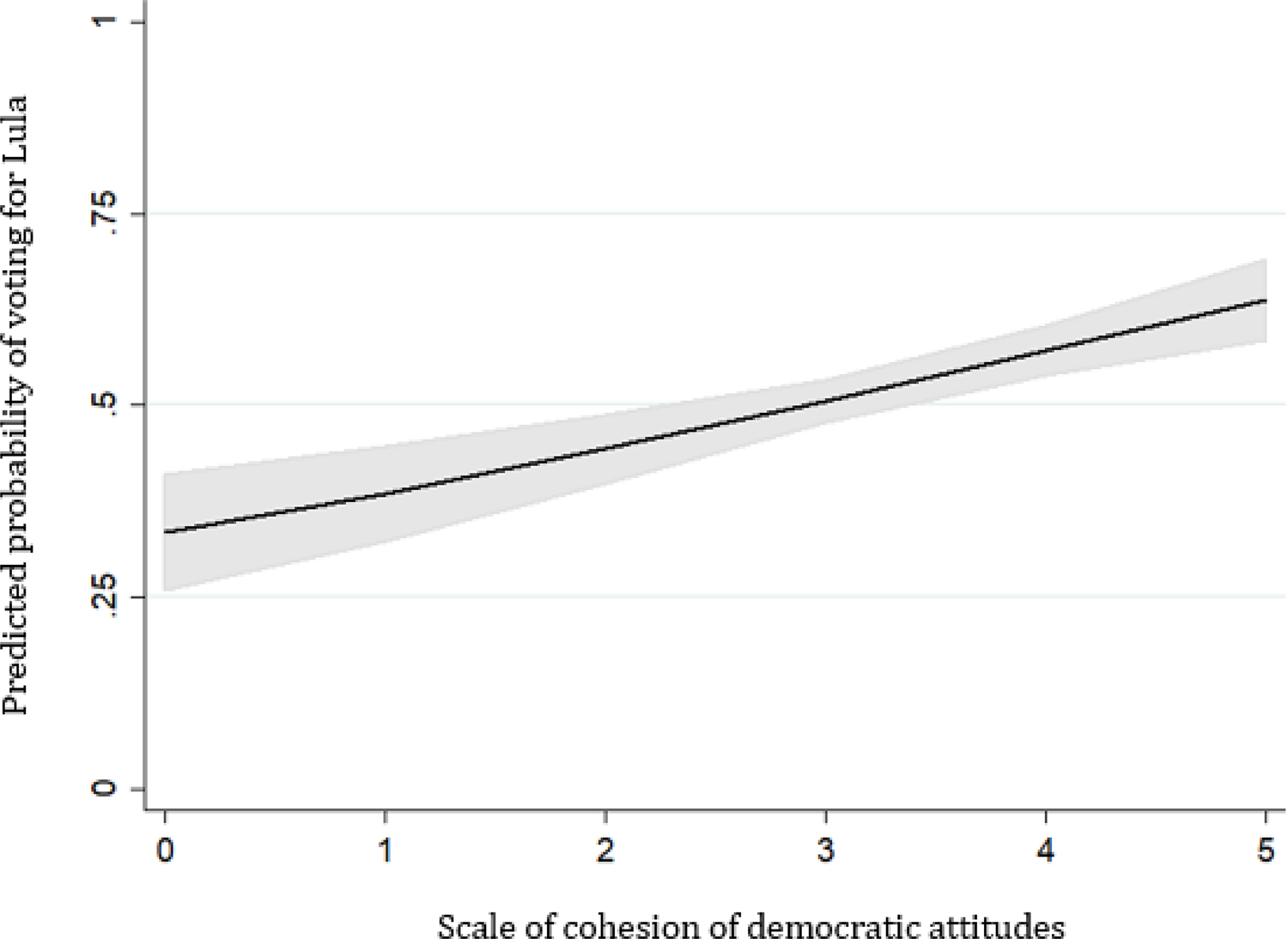 Source: Clivagens no Brasil, 2023.