 Oral manifestations of COVID-19 vaccinated individuals, post-infection, and different variants: a Brazilian population study
Abstract
This cross-sectional study aims to investigate the prevalence of oral manifestations in a sample of the Brazilian population with COVID-19. Adults diagnosed with COVID-19 through real-time PCR/serological tests were invited to participate. The online questionnaires were distributed at different times to analyze and compare SARS-CoV-2 variants considering the period of prevalence of these variants in Brazil. A total of 846 participants were included, of whom 539 were diagnosed before the Omicron variant. In total, 47.28% were vaccinated with at least two doses. The prevalence of oral manifestations was 52.6% (95%CI: 49.23–55.95), and the most common manifestations included taste disorder (38.06%; 95%CI: 34.85–41.38), xerostomia (17.61%; 95%CI: 15.19–20.32), and halitosis (11.58%; 95%CI: 9.59–13.92). The prevalence of persistent symptoms in post-COVID-19 was 12.1% (95%CI: 10.0–14.4) for taste disorder and 5.4% (95%CI: 4.1–7.1) for xerostomia. A significant association was found between females and persistent taste disorder (p = 0.0084) and oral manifestation and depression/anxiety (OR = 1.855, 95%CI: 1.267–2.717, p = 0.002), worse oral hygiene (OR = 1.729, 95%CI: 1.189–2.516, p = 0.004), and medication use (OR = 1.630, 95%CI: 1.123–2.367, p = 0.010) (p < 0.0001). In the Alpha, Beta, Gamma, and Delta variants, compared with the Omicron variant, taste disorder and xerostomia were less present when toothbrushing habits remained unchanged or improved (p < 0.0001). Oral manifestations in patients with COVID-19 were associated with depression/anxiety, worse oral hygiene, and medication, all of which reinforce its multifactorial etiopathogenesis.
COVID-19; Post-acute COVID-19 syndrome; Surveys and Questionnaires
Introduction
The respiratory disease caused by the severe acute respiratory syndrome coronavirus 2 (SARS-CoV-2), officially named Coronavirus Disease 2019 (COVID-19), first emerged in late 2019 in Wuhan, China. On March 11, 2020, COVID-19 was declared a pandemic by the World Health Organization (WHO). To date, the estimated number of confirmed cases has reached 775,335,916 worldwide, with 7,045,569 reported deaths (April 29, 2024, WHO data).1
The lungs serve as the primary sites of SARS-CoV-2 infection, and the most common symptoms are fever, dry cough, and dyspnea. Also, there have been reports of oral manifestations, including taste disorders and xerostomia.2-5 The oral cavity (mainly the nose and the eyes) constitutes a significant portal of entry for SARS-CoV-2.6 This can be attributed to the expression of angiotensin 2 converting enzyme (ACE2), TMPRSS2, and furin in salivary glands and oral mucosal epithelial cells, which act as receptors for viral cell entry.3,6 Studies have also detected the presence of the virus in the saliva of infected individuals.7 However, there remain gaps in our understanding of the immune response, and the precise role of the oral cavity in characterizing the disease is yet to be fully elucidated.
Regarding the oral manifestations associated with COVID-19, it remains uncertain whether they are a direct result of viral infection by SARS-CoV-2 or whether they are secondary manifestations and coinfections resulting from systemic consequences.8 In addition to viral invasion, other factors, such as suboptimal oral hygiene, stress, or dysbiosis due to therapeutic drugs, are speculated to contribute to these symptoms.9 Observations have included halitosis, ulcerations, sialadenitis, and a dry mouth sensation, possibly linked to reduced salivary flow.9-12 Taste disorders and xerostomia were reported to be concurrent with COVID-19 infection and are among the earliest symptoms in the progression of this disease.13 Thus, these disorders may be more prevalent in mild and moderate cases and can be readily identified, offering potential for intervention, particularly in areas with limited access to widespread testing.11
Numerous studies have investigated oral manifestations in COVID-19 patients. Nevertheless, there are still crucial unanswered questions: a) Does COVID-19 vaccination prevent the occurrence of oral lesions? b) Do symptoms such as xerostomia or taste changes persist for at least 15 days post-COVID-19 infection? c) Are there differences in oral manifestations between SARS-CoV-2 variants? d) Does the Omicron variant of SARS-CoV-2 exhibit variations in the occurrence and types of oral manifestations compared to earlier variants? Therefore, it is essential to comprehend and monitor the occurrence of oral manifestations concerning vaccination, viral variants, and the persistence of COVID-19-related symptoms. In this context, assessment of the oral cavity is extremely important, allowing the dental team to contribute substantially not only to the care of affected patients but also to the identification of the initial and/or prevalent manifestations. Additionally, this assessment provides a deeper understanding of the etiopathogenesis of these manifestations and fosters scientific advancements in the understanding of COVID-19 in the post-pandemic period.9
It is crucial to investigate how both the progression of the pandemic and vaccination status may influence the prevalence and persistence of oral symptoms. In this context, self-reported data from individuals across different periods of the pandemic can provide valuable insights into these manifestations. Therefore, this cross-sectional study aimed to investigate, through an online questionnaire, the prevalence and persistence of oral manifestations in individuals with COVID-19 during two distinct periods of the pandemic: before and after the emergence of the Omicron variant, with the primary focus on understanding the overall impact of COVID-19 and its variants on oral health. The secondary objective of this study was to compare the outcomes between vaccinated and non-vaccinated populations.
Methods
Study design and ethical considerations
This cross-sectional study was an online questionnaire-based survey conducted in two steps to evaluate the prevalence of oral manifestations in a Brazilian sample affected by COVID-19. The survey was distributed at two different time points: from October 2021 to December 2021 (before the Omicron variant emerged), and from June 2022 to July 2022 (during the Omicron outbreak in Brazil). The questionnaires were distributed at different times to analyze and compare the variants of COVID-19 (Alpha, Beta, Gamma, and Delta variants versus the Omicron variant), considering the initial detection dates of these variants.14 The criterion for participation in the second phase was having contracted COVID-19 exclusively in 2022. This project was approved by the local ethics committee of the Faculty of Health Sciences at the University of Brasília in accordance with the Declaration of Helsinki for Human Research (CAAE: 48224221.2.0000.0030). All participants received information about the study and provided online consent. Participation was voluntary, and participants could withdraw at any time while ensuring the confidentiality of their identity.
Sample and data collection
The target sample consisted of participants aged over 18 years who had been diagnosed with COVID-19 through either real-time PCR or serological tests and who consented to participate in the study. The questionnaire was accessible on various internet-connected devices, including cell phones, computers, and tablets. The questionnaire was distributed via email and promoted on social media platforms such as Instagram®, Facebook®, and WhatsApp®. The sample size was determined by estimating the number of the Brazilian population with a margin of error of 5% and a 95% confidence interval, using the OpenEpi online calculator. The parameters used to calculate the sample size were 50% prevalence of the outcome, 95% confidence interval, and 80% power. The study sample should include at least 384 participants. An additional 20% was included to account for potential losses and refusals, yielding a total of 460 participants.
Questionnaire
The online questionnaire was generated in the Google Forms application (Google Search, Melon Park, United States) and was based on questions formulated by the research team. In addition to these questions, externally validated questions on xerostomia were incorporated from the Summated Xerostomia Inventory-Dutch Version.15 For internal validity, the questionnaire was pre-assessed by a research group with expertise in oral manifestations of COVID-1916 before it was distributed. The questionnaire was made available in Brazilian Portuguese, and participants were required to consent before proceeding; otherwise, data collection was automatically stopped. The questions were split into six sections: (a) Demographic information of the participants, (b) Signs and symptoms of COVID-19, (d) Patient’s oral hygiene status, (d) Oral manifestations presented during COVID-19 infection, (e) Xerostomia, and (f) Persistence of symptoms within a period of 15 days after the infection had resolved (Table 1). A period of 15 days after infection recovery was considered because reports on “post-COVID-19 syndrome” vary from 15 days to 12 weeks with no standardized consensus.17 All responses were self-reported by the participants through the questionnaire. This includes self-reported classifications of smoking status (smokers vs. non-smokers), alcohol consumption (alcohol consumer vs. non-alcohol consumer), and oral hygiene status. Regarding oral hygiene, participants were asked to indicate whether the quality of their toothbrushing worsened, improved, or remained unchanged during the COVID-19 infection.
Statistical analyses
Data analysis was performed descriptively, involving the construction of prevalence tables and graphs, with means and 95% confidence intervals (95% CI). Descriptive statistics were calculated to summarize the characteristics of the study population. A binomial logistic regression analysis was conducted to calculate odds ratios (ORs) and 95%CI for the predictor variables to evaluate associations with oral manifestations, focusing on the presence and absence of these manifestations, as well as on the three most prevalent conditions: taste disorder, xerostomia, and halitosis. For the initial model assessing oral manifestations, the following variables were included: age, sex, chronic disease and/or use of controlled medication, depression/anxiety, hypertension, various signs and symptoms (fever, malaise, headache), severity/evolution (respirator use), use of medication during COVID-19 (analgesics, antibiotics, steroidal anti-inflammatory drugs), duration of signs/symptoms, brushing quality, and the Omicron variant. In the initial model for taste disorder, the variables included were age, sex, depression/anxiety, signs and symptoms (malaise, headache), severity/evolution, use of medication during COVID-19 (analgesics, antibiotics), duration of signs/symptoms, brushing quality, and the Omicron variant. For xerostomia, the initial variables considered were sex, chronic disease and/or use of controlled medication, depression/anxiety, smoking, smoking frequency, signs and symptoms (fever, malaise, headache), severity/evolution, respirator use, use of medication during COVID-19 (analgesics, steroidal anti-inflammatory drugs), and brushing quality. Lastly, the model for halitosis included age, sex, chronic disease and/or use of controlled medication, depression/anxiety, hypertension, smoking, smoking frequency, signs and symptoms (fever, malaise, headache), severity/evolution, respirator use, use of medication during COVID-19 (analgesics, antibiotics, steroidal anti-inflammatory drugs), vaccine doses, brushing quality, and the Omicron variant. The final models included only the statistically significant variables for each condition. Normality was assessed using the Shapiro-Wilk and Kolmogorov-Smirnov tests. For comparisons between groups, the chi-square test was employed to evaluate associations between categorical variables. All statistical analyses were performed using GraphPad Prism version 9.0.2 (GraphPad Software, La Jolla, USA) and Jamovi (Version 2.3). The significance level was set at p < 0.05.
Results
Participants and demographic data
A total of 1,016 participants consented to participate in the study. Out of these, 170 participants were excluded either because of the lack of COVID-19 diagnostic tests or their age being under 18 years. Thus, 846 participants were included, of whom 539 were assessed before the Omicron variant and 307 after its outbreak. The sample consisted of 620 (73.29%) females, 225 (26.6%) males, and one participant who did not declare their sex (0.12%). The mean (± SD) age was 39.01±13.82 years (range: 18–85 years). The median education level was 18 years (ranging from 3 to 55 years of study), with a mean of 17.76 years (± 6.32). Regarding family income, 71.16% of participants reported earning five or more Brazilian minimum wages (BMW), 23.76% earned between two to four minimum wages, 3.43% earned exactly one minimum wage, and 1.65% earned less than one minimum wage. The median income was 5 BMW, and the mean was 2.6 BMW (± 0.63). In terms of race/ethnicity, 66.9% of participants identified themselves as white, 24.11% as brown, 4.96% as black, 2.84% as yellow, and 1.18% did not declare their race/ethnicity. No participants identified themselves as indigenous. In the regional distribution, 57.57% were from the Midwest, 23.76% from the Southeast, 10.64% from the Northeast, 4.73% from the South and, 3.3% from the North. Almost 47.28% were vaccinated with at least two doses. Moreover, 50.95% were infected by COVID-19 prior to vaccination. As for smoking and alcohol consumption habits, 10.64% were smokers, 83.33% were non-smokers, and 6.03% were former smokers. In terms of alcohol consumption, 74.59% reported consuming alcohol, 25.06% were non-drinkers, and 0.35% were former alcohol consumers. These classifications were based on the participants’ responses to questions about their use of tobacco products and alcohol. Participants who responded negatively to the consumption question were instructed to select “never” for the frequency question. The complete demographic and general data are shown in Table 2.
COVID-19 signs and symptoms
The main signs and symptoms reported during COVID-19 infection were fever (64.42%; 95%CI: 61.14–67.57), malaise (63.24%; 95%CI: 59.94–66.42), headache (58.39%; 95%CI: 55.04–61.67), dry cough (58.16%; 95%CI: 54.8–61.40), coryza (53.78%; 95%CI: 50.41–57.12), smell disorder (50.71%; 95%CI: 47.34–54.07), sore throat (50.47%; 95%CI: 47.11–53.83), muscle pain (47.28%; 95%CI: 43.94–50.65), and taste disorder (38.02%; 95%CI: 34.85–41.38) (Table 2).
Prevalence of oral manifestations
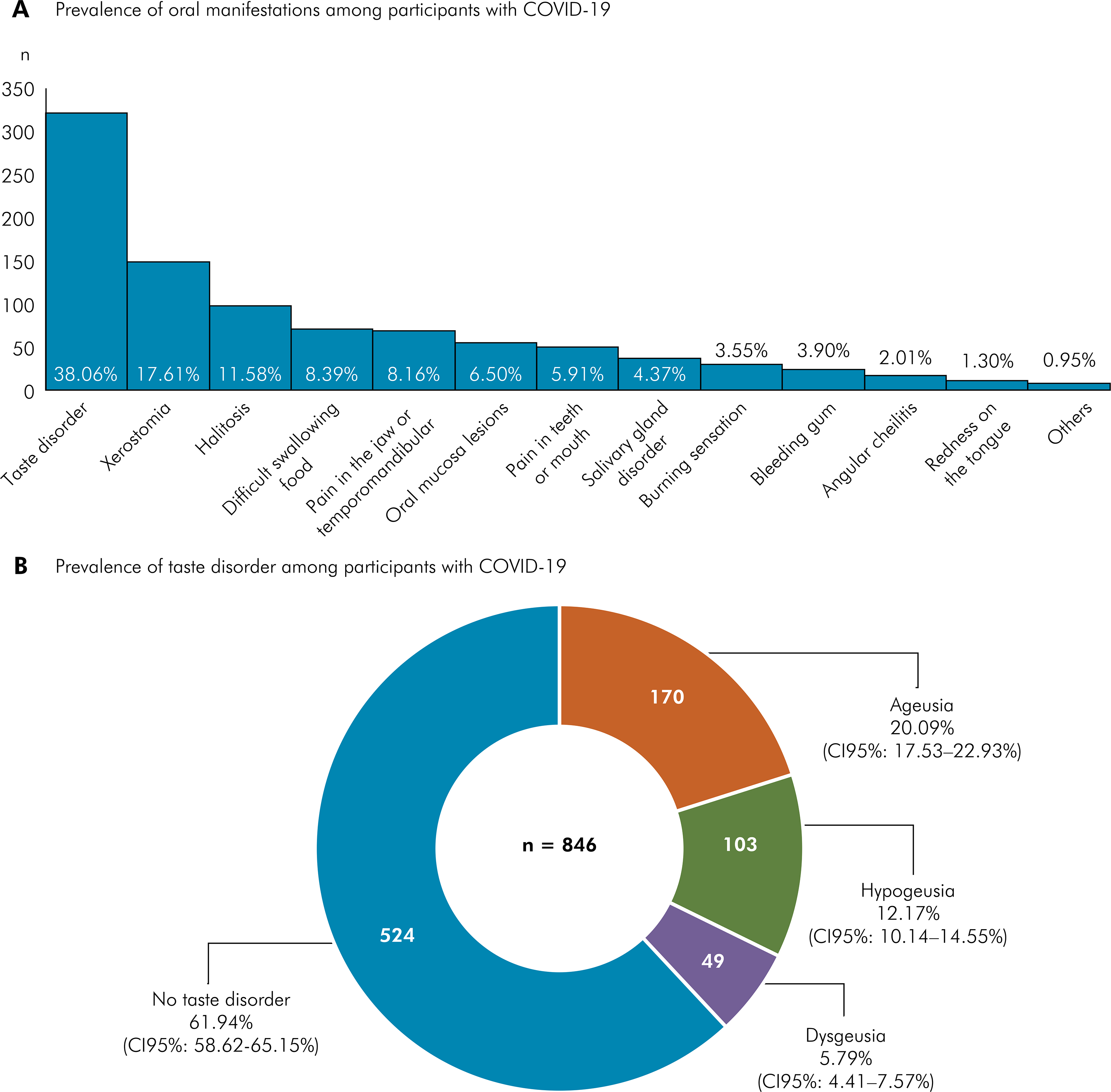
The prevalence of oral manifestations was 52.6% (95%CI: 49.23–55.95), of which taste disorder (38.06%; 95% CI: 34.85–41.38), xerostomia (17.61%; 95%CI: 15.19–20.32), and halitosis (11.58%; 95%CI: 9.59–13.92) were the most frequent ones (Figure 1a). As for those who reported taste disorder, ageusia was observed in 20.09% (95%CI: 17.53–22.93), hypogeusia in 12.17% (95%CI: 10.14–14.55), and dysgeusia in 5.79% (95%CI: 4.41–7.57) (Figure 1b) (Table 2).

(a) Prevalence of oral manifestations among participants diagnosed with COVID-19; (b) Prevalence of taste disorder among participants diagnosed with COVID-19.
Oral manifestations, chronic diseases, and medication use during COVID-19 infection
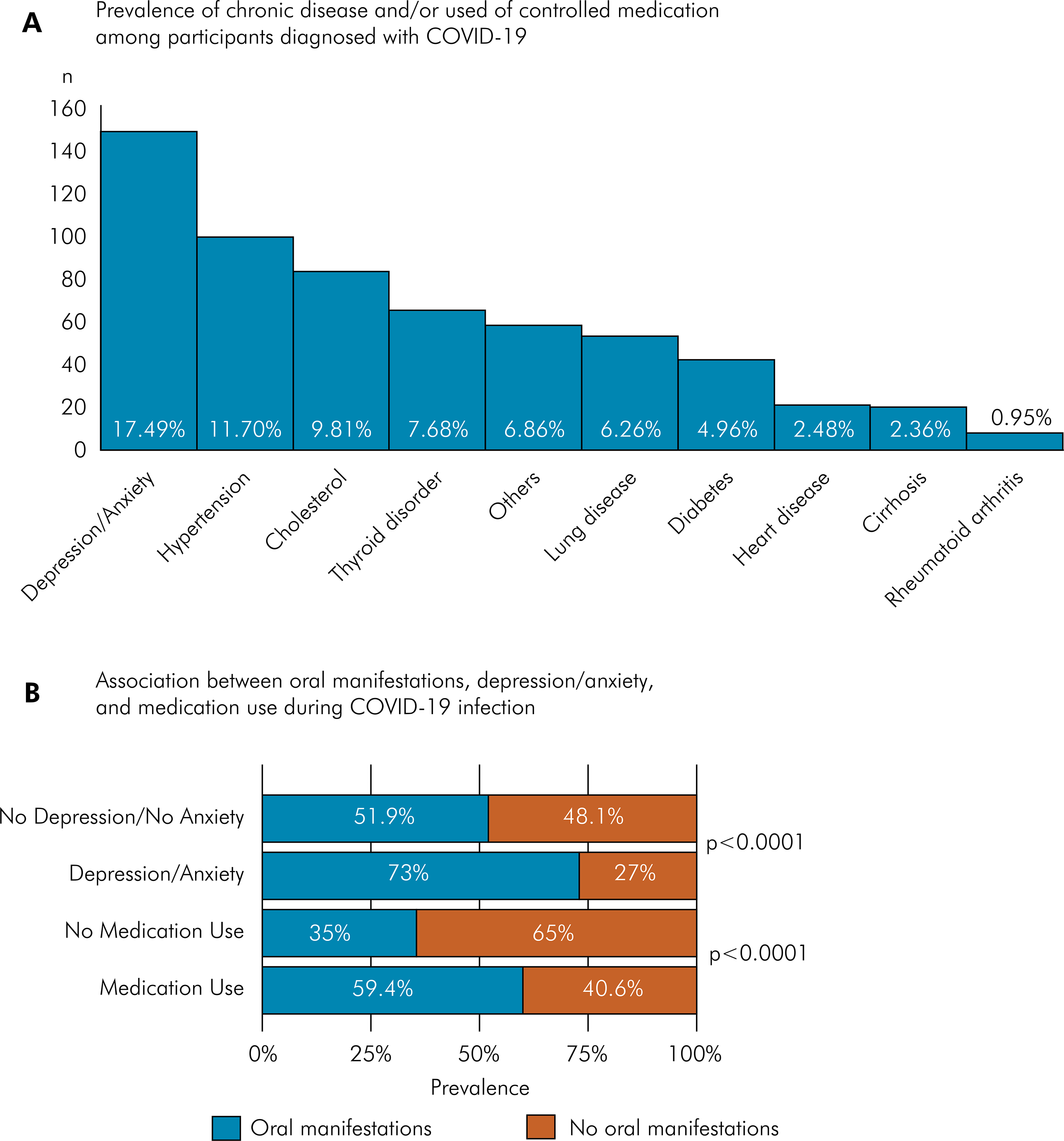
The most common chronic condition reported was depression and anxiety (17.49%; 95%CI: 15.08–20.20) (Figure 2a). An association was found between depression/anxiety and oral manifestations (p < 0.0001). Regarding medication use, 84.16% were on medication, of which analgesics (65.84%; 95%CI: 62.58–68.96), antibiotics (34.87%; 95%CI: 31.73–38.14), and steroidal anti-inflammatory drugs (33.1%; 95% CI: 30.01–36.34) were the most frequently reported. The use of chloroquine/hydroxychloroquine (8.87%; 95% CI: 7.13–10.97) and antiparasitic drugs, such as ivermectin (4.85%; 95%CI: 3.59–6.51) was also reported. In addition, there was a higher prevalence of oral manifestations among those who were taking any medication during COVID-19 infection (p < 0.0001) (Figure 2b) (Table 2).

(a) Prevalence of chronic disease and/or used controlled medication among participants diagnosed with COVID-19; (b) Association between oral manifestations, depression/anxiety (p < 0.0001), and medication use during COVID-19 infection (p < 0.0001).
Oral manifestations, sex, and quality of oral hygiene during COVID-19 infection
A significant association was observed between females and oral manifestations (p < 0.0001). During the COVID-19 pandemic, 90.31% of participants reported that their oral hygiene was better or showed no modifications, while 9.69% indicated a decline in their oral hygiene quality. Oral manifestations were more prevalent among those who had a worse oral hygiene (p < 0.0001), especially related to halitosis (p = 0.0395) and worse brushing quality (Figure 3a). Regarding oral hygiene status before COVID-19, the median daily brushing frequency was three times a day, with a mean of 2.82 (± 0.86). In terms of mouthwash use, 49.76% of participants reported using it occasionally, 9.10% used it often, and 41.13% never used it. Gingival bleeding occurred occasionally in 41.13% of participants, often in 2.84%, and never in 56.03%. Dental prophylaxis was performed occasionally by 64.42% of participants, often by 22.58%, and never by 13%. Flossing was done occasionally by 32.86%, often by 60.87%, and never by 6.26%. Tooth mobility was reported by 6.03% of participants, while 71.28% reported no mobility, and 22.70% had no related issues. No significant statistical differences were observed between the quality of oral hygiene and xerostomia (p = 0.637), taste disorder (p = 0.435), or oral mucosal lesions (p = 0.115) (Table 2).

(a) Prevalence of oral manifestations in comparison with the quality of oral hygiene during COVID-19 infection with statistical significance between oral manifestation and worse oral hygiene status (p < 0.0001); (b) Prevalence of persistent symptoms post-COVID-19 (15 days) and sex. Significant association between female participants and persistent smell disorder (pSD = 0.0178) and persistent taste disorder (pTD = 0.0084) for post-COVID-19 symptom persistence . No significant association between sex and persistent xerostomia (pxerostomia = 0.2382).
Oral manifestations, vaccination, and severity of COVID-19 infection
No statistically significant association was detected between oral manifestations and vaccination status (p = 0.790). Most participants experienced mild COVID-19 symptoms (95.74%; 95%CI: 94.17–96.91). COVID-19 severity was classified according to self-reported symptoms and medical interventions, following WHO guidelines.18 Mild cases included individuals with symptoms such as fever, cough, and malaise who did not require hospitalization. Moderate to severe cases were characterized by symptoms such as respiratory distress, need for supplemental oxygen, or hospitalization. However, no relationship was observed between the severity of infection and the presence of oral manifestations.
Persistence of post-COVID-19 syndrome
The persistence of smell disorder, taste disorder, and xerostomia was analyzed for 15 days after COVID-19 recovery. The reported frequencies were 20.09% (95%CI: 17.53–22.93) for smell disorder, 12.06% (95%CI: 10.03–14.42) for taste disorder, and 5.44% (95%CI: 4.101–7.17) for xerostomia. A significant association was found between females and persistent smell disorder (p = 0.017) and taste disorder (p = 0.008) (Figure 3b).
Oral manifestations and SARS-CoV-2 variants
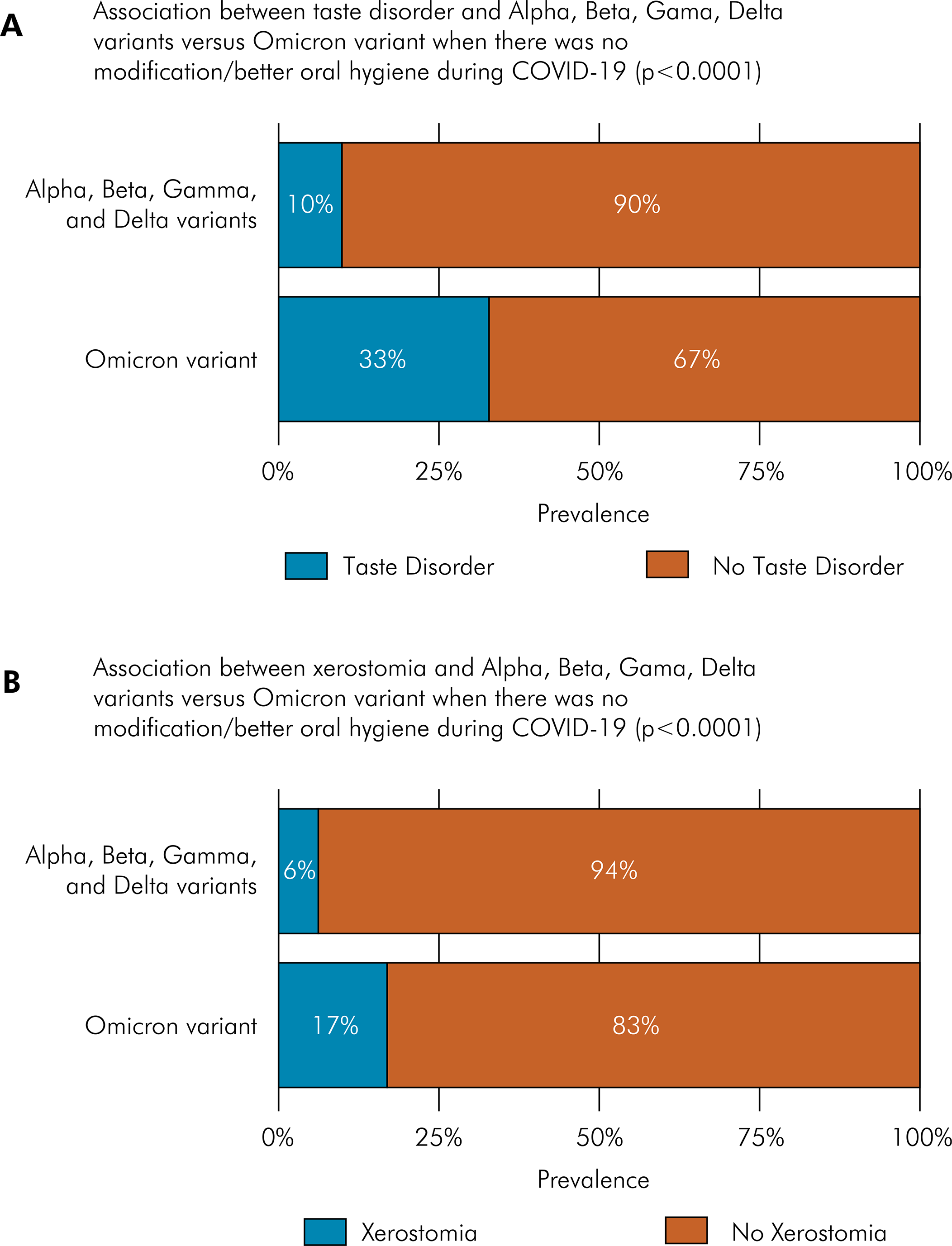
When comparing the SARS-CoV-2 variants period, oral manifestations were observed in 53.62% (95%CI: 49.40–57.79) of individuals infected before December 2021 and in 58.63% (95%CI: 49.40–57.79) during the Omicron outbreak (after December 2021). The most frequent oral manifestations encountered before the emergence of the Omicron variant were taste disorder (39.89%; 95%CI: 35.84–44.08), xerostomia (16.51%; 95%CI: 16.62–19.88), and halitosis (13.17%; 95%CI: 10.58–16.29). Among participants infected during the Omicron outbreak, the most frequent oral manifestations were taste disorder (34.85%; 95%CI: 29.74–40.34), xerostomia (19.54%; 95%CI: 15.50–24.34), and difficulty in swallowing food (9.12%; 95%CI: 6.38–12.87). Considering taste disorder in participants infected during the initial outbreak, 24.12% (95%CI: 20.7–27.91%) had ageusia, 10.95% (95%CI: 8.58-13.86) presented with hypogeusia, and 4.82% (95%CI: 3.31–6.97) had dysgeusia. In contrast, among those infected during the Omicron variant outbreak, hypogeusia was observed in 14.33% (95%CI: 10.85–18.69); 13.03% (95%CI: 9.71–17.26) presented ageusia; and 7.49% (95%CI: 5.04–10.99) had dysgeusia. No significant differences were found between the samples collected before December 2021 variants and the Omicron variant when comparing oral manifestations and oral hygiene status. However, taste disorder and xerostomia were less frequent when oral hygiene was improved or remained unchanged during both periods (p <0.0001) (Figures 4a and 4b).
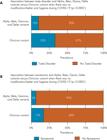
(a) Prevalence of taste disorder in comparison with the quality of oral hygiene during COVID-19 infection, considering the Alpha, Beta, Gamma, and Delta variants versus the Omicron variant. Taste disorders were less present when toothbrushing was improved or when there was no change in toothbrushing, regardless of the COVID-19 variant (p < 0.0001); (b) Prevalence of xerostomia in comparison with the quality of oral hygiene during COVID-19 infection, considering the Alpha, Beta, Gamma, and Delta variants versus the Omicron variant. Xerostomia was less present when toothbrushing was improved or when there was no change in toothbrushing, regardless of the COVID-19 variant (p < 0.0001).
Predictive variables for oral manifestations of COVID-19
The results of the logistic regression analysis indicated that several predictor variables were significantly associated with oral manifestations (pseudo R2 by Nagelkerke (R2n) = 0.159; p < 0.001), taste disorders (R2n = 0.147; p < 0.001), xerostomia (R2n = 0.120; p < 0.001), and halitosis (R2n = 0.204; p < 0.001). The presence of depression/anxiety significantly increased the probability of oral manifestations by about 1.86 times (OR = 1.855, 95%CI: 1.267–2.717, p = 0.002). Similarly, the presence of COVID-19 signs and symptoms was a strong predictor, increasing the probability of oral manifestations by more than 10 times (OR = 10.024, 95%CI: 1.321–76.083, p = 0.026). The presence of headaches also significantly increased the probability of oral manifestations by about 1.84 times (OR = 1.836, 95%CI: 1.349–2.497, p < 0.001). The use of medications during COVID-19 infection, especially antibiotics, increased the odds of oral manifestations by about 1.63 times (OR = 1.630, 95%CI: 1.123–2.367, p = 0.010). Poor oral hygiene quality increased the odds of oral manifestations by about 1.73 times (OR = 1.729, 95%CI: 1.189–2.516, p = 0.004). The Omicron variant increased the odds of oral manifestations by about 2.29 times (OR = 2.290, 95%CI: 1.145–4.579, p = 0.019). Lastly, being female increased the odds of oral manifestations by approximately 1.41 times compared to males, holding all other variables constant (OR = 1.4149, 95%CI: 1.00497–1.992, p = 0.047) (Table 3).
Coefficients of multiple logistic regression model with all possible independent variables related to oral manifestations.
Regarding taste disorders, being female was marginally significant, as women were about 1.5 times more likely to develop taste disorders compared to men (OR = 1.496, 95%CI: 1.035–2.161, p = 0.032). The presence of depression/anxiety nearly doubled the likelihood of developing taste disorders (OR = 1.887, 95%CI: 1.284–2.775, p = 0.001). The presence of headaches was a strong predictor, more than doubling the likelihood of taste disorders (OR = 2.587, 95%CI: 1.858–3.601, p < 0.001). Additionally, mild disease severity increased the likelihood by about 1.5 times (OR = 1.508, 95%CI: 1.005–2.262), and the use of antibiotics increased the likelihood by about 1.4 times (OR = 1.409, 95%CI: 1.023–1.941). Regarding SARS-CoV-2 variants, infection with the Omicron variant was associated with being nearly 1.8 times more likely to develop taste disorders (OR = 1.786, 95%CI: 1.307–2.441) (Table 4).
Coefficients of multiple logistic regression model with all possible independent variables related to taste disorder.
Being female increased the likelihood of xerostomia by about 1.66 times compared to males (OR = 1.6643, 95%CI: 1.0361–2.6734, p = 0.035). Fever was also a significant predictor, as individuals experiencing fever were about 1.79 times more likely to develop xerostomia (OR = 1.7918, 95%CI: 1.1996–2.6763, p = 0.004). Malaise increased the likelihood of xerostomia by about 1.65 times (OR = 1.6515, 95%CI: 1.0436–2.6136, p = 0.032). The use of analgesics substantially increased the likelihood of individuals developing xerostomia by about 2.11 times (OR = 2.1096, 95%CI: 1.2947–3.4372, p = 0.003). Lastly, poor oral hygiene quality significantly elevated the likelihood of xerostomia by about 2.14 times (OR = 2.1400, 95%CI: 1.2628–3.6264, p = 0.005) (Table 5).
Coefficients of multiple logistic regression model with all possible independent variables related to xerostomia.
Regarding halitosis, age was a significant factor, as each additional year reduced the likelihood of halitosis by about 4% (OR = 0.960, 95%CI: 0.941–0.979, p < 0.001). The presence of chronic disease and/or use of controlled medication increased the likelihood of halitosis by about 1.88 times (OR = 1.879, 95%CI: 1.170–3.016, p = 0.009). The presence of fever increased the likelihood of halitosis by about 1.75 times (OR = 1.752, 95%CI: 1.079–2.843, p = 0.023). The presence of malaise was a strong predictor, increasing the likelihood of halitosis by about 3.49 times (OR = 3.4883, 95%CI: 1.7655–6.892, p < 0.001). Mild disease severity increased the likelihood of halitosis by about 1.98 times (OR = 1.9779, 95%CI: 1.1619–3.367, p = 0.012). Worse oral hygiene also substantially increased the likelihood of halitosis by about 2.66 times (OR = 2.6632, 95%CI: 1.4649–4.842, p = 0.001). Lastly, infection with the Omicron variant significantly increased the likelihood of halitosis by about 1.88 times (OR = 1.8825, 95%CI: 1.1886–2.982, p = 0.007) (Table 6).
Coefficients of multiple logistic regression model with all possible independent variables related to halitosis.
Discussion
Various oral manifestations associated with COVID-19 have been reported since its outbreak. In this study, the most prevalent oral manifestations were taste disorder (38%), xerostomia (17.6%), and halitosis (11.6%). Hypotheses related to the etiopathogenesis of taste disorders suggest that they may originate from an inflammatory response, a neurological response, zinc imbalance, use of medications, or a secondary response to a smell disorder.6,19-21 Possible mechanisms that can account for xerostomia have been indicated by some authors, including nutritional deficiency, anxiety, tension, stress, nasal congestion, salivary gland infection, hyposalivation, among others.7,10,11,20-23 Furthermore, it has been speculated that the use of face masks during the pandemic could promote mouth breathing, thereby inducing xerostomia and halitosis.24 Regarding oral lesions, authors still question whether they are caused by SARS-CoV-2 or appear as secondary manifestations.8,25 The results found in this study suggest a multifactorial hypothesis, given the positive association between oral manifestations, depression/anxiety, oral hygiene, medication use, and female sex.
The most widely reported comorbidities associated with COVID-19 in the literature include hypertension, diabetes, bronchial asthma, and obesity.26 In our study, 45.7% of the participants reported having comorbidities, among which anxiety and depression were the most frequently mentioned. Possible explanations for the increase in psychological issues include the psychiatric consequences associated with the COVID-19 situation itself. Factors such as social isolation, psychological stressors related to the immune response triggered by the virus, concerns about personal infection or transmission to family members, and the fear related to a potentially fatal new disease might have had a significant impact.27 Notably, there was a statistically significant association between depression and anxiety, and oral manifestations (p < 0.0001). The substantial odds ratios associated with depression and anxiety indicate a potential psychosomatic component in the manifestation of oral symptoms, suggesting that mental health interventions could be critical for affected individuals. This underscores the need to consider the profound impact of COVID-19 on mental health and to comprehend how the immune-inflammatory response translates into psychiatric diseases and oral manifestations.
In our sample, 84.16% of patients with COVID-19 required drug treatment, and medication use was associated with oral manifestations (p < 0.001). In this context, medication use may influence the oral microbiota, potentially leading to dysbiosis and adverse effects.24 The alteration of the oral microbiota may create an environment conducive to the development of these manifestations. Additionally, the stress and systemic effects of COVID-19, combined with the side effects of medications, could further contribute to the deterioration of oral health. Furthermore, this study showed a significant association between female sex and oral manifestations (p < 0.0001). The results of this study indicate that being female is a significant predictor for several oral manifestations in COVID-19 patients. Specifically, women were found to have a 49.6% higher probability of developing taste disorders compared to men (OR = 1.496, 95%CI: 1.035–2.161, p = 0.032). Moreover, the likelihood of xerostomia was 66.43% higher in females than in males (OR = 1.6643, 95%CI: 1.0361–2.6734, p = 0.035). These findings suggest that sex-based differences may play a crucial role in the prevalence and severity of oral symptoms associated with COVID-19. The literature suggests a possible association with the inflammatory response, as hormonal modulation and the innate immune response to viral infections appear to be more pronounced in women28. Also, this study observed a higher incidence of oral manifestations among individuals with deteriorating oral hygiene status (p < 0.0001). It is well established that maintaining good oral hygiene is essential for maintaining and restoring oral symbiotic balance. In addition, the COVID-19 era appears to have negatively impacted the behavioral and psychological patterns of individuals, reducing oral hygiene care.24 AbuBakr et al.10 suggested that poor oral hygiene may contribute to increased ulcerations and oral discomfort. Thus, enhancing oral hygiene practices may mitigate the risk of oral complications associated with SARS-CoV-2 infection.29
In the post-COVID-19 period, considering a 15-day interval after resolution of the infection, we analyzed the persistence of symptoms, including smell disorder (20.09%), taste disorder (12.06%), and xerostomia (5.44%). Notably, female individuals exhibited a higher prevalence of persistent smell disorder (p = 0.017) and persistent taste disorder (p = 0.008). The specific immune response to SARS-CoV-2 is maintained in patients with long-term COVID-19, compared to patients with complete recovery. Therefore, the persistence of viral antigens is suggested as an etiology of long COVID30. In our study, most participants had mild disease (95.74%) with no association between oral manifestations and the severity of the infection. Long COVID affects survivors across the full spectrum of the disease, including mild and moderate cases without the need for respiratory support or even intensive care.31 Reports suggest that any COVID-19 patient can develop long COVID, regardless of severity and treatment received,32 but some studies have identified a significant association between severity and oral manifestations.633
The present study did not show statistically significant data to support that vaccination either reduces or increases the probability of oral manifestations. The anti-SARS-CoV-2 vaccine induces a low production of SIgA by the mucous membranes, probably not being able to prevent the development of oral lesions.34 Furthermore, the reported prevalence of oral manifestations following vaccination was low (less than 0.31%),35 and orofacial adverse reactions associated with COVID-19 vaccines are still rarely reported (1:1000).36 Hence, vaccination stands as a secure and effective approach to disease prevention and control.37 A systematic review found that the Pfizer-BioNTech vaccine was linked to the highest number of oral ulcer cases (9 out of 16). However, no connection was identified between the type of vaccine or the dose administered and the occurrence of these lesions. Although the lesions were diagnosed after SARS-CoV-2 vaccination, no direct causality was established.38 It is important to note, however, that in Brazil, different doses of vaccines were not always consistent, with individuals often receiving different vaccine types for their first and booster doses (e.g., CoronaVac followed by Pfizer or AstraZeneca). This variability in vaccination regimens could potentially influence immune responses, including oral manifestations, but further investigation is needed to clarify these interactions. Thus, in the context of COVID-19, vaccination should be encouraged and widely distributed.
In vaccinated populations, Omicron appears to cause less severe acute illness than previous variants.14 Some studies report oral manifestations in participants infected with the Omicron variant; however, there are few distinctions between the other variants. Before December 2021, smell and taste disorders were more frequent, whereas the prevalence of loss of smell decreased in cases of the Omicron variant.39,40 Concerning taste disorder and xerostomia, for variants before December 2021, there was a statistically significant difference between patients with COVID-19 and those who recovered.5,13 But, with Omicron, fever, dry cough, and sore throat are more frequently reported.41 In our study, oral manifestations were quite similar to those observed in previous variants (53.62%) and during the Omicron outbreak (58.63%). A slight variation was also seen for taste disorders (from 34.85% to 38.89%) and xerostomia (from 16.51% to 19.54%). The literature reports a reduced prevalence of chemosensory dysfunction by Omicron, which underscores the need to investigate the differences in prevalence and severity of chemosensory dysfunction, depending on the variant.39
This study has several limitations. First, while we achieved the optimal sample size, it was obtained for convenience through digital media and networks. Second, despite the pre-assessment with internal validity, the reliability of the questionnaire was not measured by Cronbach’s alpha, and an external validity cannot be determined. Third, questionnaire-based studies depend on the participants’ subjective interpretation , which can compromise the findings. Fourth, as this is a cross-sectional study, there is an inherent limitation of reverse causality. Fifth, this is a self-perception study, so there was no clinical examination of patients. Sixth, genomic sequencing to identify the virus variant was not conducted in this study. While there is a higher chance of exposure to a specific variant during its peak prevalence, it is acknowledged that this method is not the most accurate for determining the specific variant responsible for an individual’s infection. Seventh, the small number of non-vaccinated individuals (2.12% of the sample) limited our ability to draw robust comparisons between vaccinated and non-vaccinated populations. No significant differences were observed between these groups, and future research with larger and more balanced sample sizes is necessary to better understand any potential differences in oral manifestations. Finally, there is no consensus in the literature on which interval should be considered to characterize the “post-COVID-19 syndrome”, which can range from 15 days to more than 12 weeks.17 Despite these limitations, this research is innovative and unprecedented in exploring the different oral scenarios of COVID-19, including variants, time periods and vaccination. The questionnaires were especially developed and adapted for the Brazilian population, considering the lack of standard questionnaires for COVID-19. In addition, a sufficient sample size and power were obtained.
Conclusion
In this study, we observed a significant prevalence of oral manifestations among participants with COVID-19, particularly taste disorders, xerostomia, and halitosis. Our findings indicate that these manifestations were more prevalent among individuals experiencing symptoms of depression and anxiety, as well as among those with poorer oral hygiene. Notably, the emergence of the Omicron variant was associated with an increased likelihood of oral complications. Additionally, the use of medications, particularly antibiotics, may further impact oral health, leading to additional complications. While most participants reported mild symptoms of COVID-19, the persistence of oral symptoms such as taste and smell disorders post-recovery highlights the need for ongoing monitoring and care for affected individuals. Overall, this study underscores the importance of assessing oral health in COVID-19 and suggests that mental health, hygiene practices, and medication use may be critical in mitigating oral complications during and after infection.
Acknowledgements:
We thank all the participants in this study. The authors thank the DPI, University of Brasilia (UnB). The authors disclosed receipt of the following financial support for the research, authorship, and/or publication of this article: The authors were financially supported by the National Council for Scientific and Technological Development (CNPq, Ministry of Education, Brazil) and by the Coordination of Superior Level Staff Improvement (CAPES - Coordenação de Aperfeiçoamento de Pessoal de Nível Superior, Ministry of Education, Brazil). .
References
-
1 World Health Organization. Health emergency dashboard WHO (COVID-19). Geneva: World Health Organization; 2024 [cited 2024 Apr 29]. Available from: https://covid19.who.int/
» https://covid19.who.int/ -
2 Harrison AG, Lin T, Wang P. Mechanisms of SARS-CoV-2 Transmission and pathogenesis. Trends Immunol. 2020 Dec;41(12):1100-15. https://doi.org/10.1016/j.it.2020.10.004
» https://doi.org/10.1016/j.it.2020.10.004 -
3 Hu B, Guo H, Zhou P, Shi ZL. Characteristics of SARS-CoV-2 and COVID-19. Nat Rev Microbiol. 2021 Mar;19(3):141-54. https://doi.org/10.1038/s41579-020-00459-7
» https://doi.org/10.1038/s41579-020-00459-7 -
4 Guan WJ, Ni ZY, Hu Y, Liang WH, Ou CQ, He JX, et al.; China Medical Treatment Expert Group for Covid-19. Clinical Characteristics of Coronavirus Disease 2019 in China. N Engl J Med. 2020 Apr;382(18):1708-20. https://doi.org/10.1056/NEJMoa2002032
» https://doi.org/10.1056/NEJMoa2002032 -
5 Fantozzi PJ, Pampena E, Di Vanna D, Pellegrino E, Corbi D, Mammucari S, et al. Xerostomia, gustatory and olfactory dysfunctions in patients with COVID-19. Am J Otolaryngol. 2020;41(6):102721. https://doi.org/10.1016/j.amjoto.2020.102721
» https://doi.org/10.1016/j.amjoto.2020.102721 -
6 Okada Y, Yoshimura K, Toya S, Tsuchimochi M. Pathogenesis of taste impairment and salivary dysfunction in COVID-19 patients. Jpn Dent Sci Rev. 2021 Nov;57:111-22. https://doi.org/10.1016/j.jdsr.2021.07.001
» https://doi.org/10.1016/j.jdsr.2021.07.001 -
7 Huang N, Pérez P, Kato T, Mikami Y, Okuda K, Gilmore RC, et al.; HCA Oral and Craniofacial Biological Network. SARS-CoV-2 infection of the oral cavity and saliva. Nat Med. 2021 May;27(5):892-903. https://doi.org/10.1038/s41591-021-01296-8
» https://doi.org/10.1038/s41591-021-01296-8 -
8 Santos JA, Normando AG, Silva RLC, Paula RM, Cembranel AC, Santos-Silva AR, et al. Oral mucosal lesions in a COVID-19 patient: new signs or secondary manifestations? Int J Infect Dis. 2020 Aug;97:326-8. https://doi.org/10.1016/j.ijid.2020.06.012
» https://doi.org/10.1016/j.ijid.2020.06.012 -
9 Gherlone EF, Polizzi E, Tetè G, De Lorenzo R, Magnaghi C, Rovere Querini P, et al. Frequent and Persistent Salivary Gland Ectasia and Oral Disease After COVID-19. J Dent Res. 2021 May;100(5):464-71. https://doi.org/10.1177/0022034521997112
» https://doi.org/10.1177/0022034521997112 -
10 Abubakr N, Salem ZA, Kamel AH. Oral manifestations in mild-to-moderate cases of COVID-19 viral infection in the adult population. Dent Med Probl. 2021;58(1):7-15. https://doi.org/10.17219/dmp/130814
» https://doi.org/10.17219/dmp/130814 -
11 Biadsee A, Biadsee A, Kassem F, Dagan O, Masarwa S, Ormianer Z. Olfactory and oral manifestations of COVID-19: sex-related symptoms: a potential pathway to early diagnosis. Otolaryngol Head Neck Surg. 2020 Oct;163(4):722-8. https://doi.org/10.1177/0194599820934380
» https://doi.org/10.1177/0194599820934380 -
12 Brandão TB, Gueiros LA, Melo TS, Prado-Ribeiro AC, Nesrallah AC, Prado GV, et al. Oral lesions in patients with SARS-CoV-2 infection: could the oral cavity be a target organ? Oral Surg Oral Med Oral Pathol Oral Radiol. 2021 Feb;131(2):e45-51. https://doi.org/10.1016/j.oooo.2020.07.014
» https://doi.org/10.1016/j.oooo.2020.07.014 -
13 Freni F, Meduri A, Gazia F, Nicastro V, Galletti C, Aragona P, et al. Symptomatology in head and neck district in coronavirus disease (COVID-19): a possible neuroinvasive action of SARS-CoV-2. Am J Otolaryngol. 2020;41(5):102612. https://doi.org/10.1016/j.amjoto.2020.102612
» https://doi.org/10.1016/j.amjoto.2020.102612 -
14 Antonelli M, Pujol JC, Spector TD, Ourselin S, Steves CJ. Risk of long COVID associated with delta versus omicron variants of SARS-CoV-2. Lancet. 2022;399(10343):2263-4. https://doi.org/10.1016/S0140-6736 (22)00941-2
» https://doi.org/10.1016/S0140-6736 (22)00941-2 -
15 Thomson WM, Putten GJ, Baat C, Ikebe K, Matsuda K, Enoki K, et al. Shortening the xerostomia inventory. Oral Surg Oral Med Oral Pathol Oral Radiol Endod. 2011;112(3):322-7. https://doi.org/10.1016/j.tripleo.2011.03.024
» https://doi.org/10.1016/j.tripleo.2011.03.024 -
16 Santos JA, Normando AGC, Silva RCL, Acevedo AC, Canto GL, Sugaya N, et al. Oral manifestations in patients with COVID-19: a living systematic review. J Dent Res. 2021;100(2):141-54. https://doi.org/10.1177/0022034520957289
» https://doi.org/10.1177/0022034520957289 -
17 Akbarialiabad H, Taghrir MH, Abdollahi A, Ghahramani N, Kumar M, Paydar S, et al. Long COVID, a comprehensive systematic scoping review. Infection. 2021;49(6):1163-86. https://doi.org/10.1007/s15010-021-01666-x
» https://doi.org/10.1007/s15010-021-01666-x -
18 World Health Organization. Clinical management of COVID-19: living guideline. Geneva: World Health Organization; 2023 [cited 2023 Aug 18. Available from: https://app.magicapp.org/#/guideline/j1WBYn/section/LG66qv
» https://app.magicapp.org/#/guideline/j1WBYn/section/LG66qv -
19 Farid N, Rola N, Koch EAT, Nakhoul N. Active vitamin D supplementation and COVID-19 infections: review. Ir J Med Sci. 2021;190(4):1271-4. https://doi.org/10.1007/s11845-020-02452-8
» https://doi.org/10.1007/s11845-020-02452-8 -
20 Sinjari B, D'Ardes D, Santilli M, Rexhepi I, D'Addazio G, Di Carlo P, et al. SARS-CoV-2 and oral manifestation: an observational, human study. J Clin Med. 2020;9(10):3218. https://doi.org/10.3390/jcm9103218
» https://doi.org/10.3390/jcm9103218 -
21 Tsuchiya H. Oral symptoms associated with COVID-19 and their pathogenic mechanisms: a literature review. Dent J (Basel). 2021;9(3):32. https://doi.org/10.3390/dj9030032.
» https://doi.org/10.3390/dj9030032 -
22 Kanzow P, Dylla V, Mahler AM, Hrasky V, Rödig T, Barre F, et al. COVID-19 pandemic: effect of different face masks on self-perceived dry mouth and halitosis. Int J Environ Res Public Health. 2021;18(17):9180. https://doi.org/10.3390/ijerph18179180
» https://doi.org/10.3390/ijerph18179180 -
23 Omezli MM, Torul D. Evaluation of the xerostomia, taste and smell impairments after Covid-19. Med Oral Patol Oral Cir Bucal. 2021;26(5):e568-e75. https://doi.org/10.4317/medoral.24510
» https://doi.org/10.4317/medoral.24510 -
24 Riad A, Kassem I, Hockova B, Badrah M, Klugar M. Halitosis in COVID-19 patients. Spec Care Dentist. 2021;41(2):282-5. https://doi.org/10.1111/scd.12547
» https://doi.org/10.1111/scd.12547 -
25 Dziedzic A, Wojtyczka R. The impact of coronavirus infectious disease 19 (COVID-19) on oral health. Oral Dis. 2021;27 Suppl 3(Suppl 3):703-6. https://doi.org/10.1111/odi.13359
» https://doi.org/10.1111/odi.13359 -
26 Bemquerer LM, Arruda JAA, Soares MPD, Mesquita RA, Silva TA. The oral cavity cannot be forgotten in the COVID-19 era: Is there a connection between dermatologic and oral manifestations? J Am Acad Dermatol. 2021;84(3):e143-5. https://doi.org/10.1016/j.jaad.2020.11.034
» https://doi.org/10.1016/j.jaad.2020.11.034 -
27 Mazza MG, De Lorenzo R, Conte C, Poletti S, Vai B, Bollettini I, et al. Anxiety and depression in COVID-19 survivors: Role of inflammatory and clinical predictors. Brain Behav Immun. 2020;89:594-600. https://doi.org/10.1016/j.bbi.2020.07.037
» https://doi.org/10.1016/j.bbi.2020.07.037 -
28 Santos JA, Normando AGC, Silva RCL, Acevedo AC, Canto GL, Sugaya N, et al. Oral manifestations in patients with COVID-19: a 6-month update. J Dent Res. 2021;100(12):1321-1329. https://doi.org/10.1177/00220345211029637
» https://doi.org/10.1177/00220345211029637 -
29 Kamel AH, Basuoni A, Salem ZA, AbuBakr N. The impact of oral health status on COVID-19 severity, recovery period and C-reactive protein values. Br Dent J. 2021 Feb 24:1-7. https://doi.org/10.1038/s41415-021-2656-1
» https://doi.org/10.1038/s41415-021-2656-1 -
30 Files JK, Sarkar S, Fram TR, Boppana S, Sterrett S, Qin K. et al. Duration of post-COVID-19 symptoms is associated with sustained SARS-CoV-2-specific immune responses. JCI Insight. 2021; 6(15):e151544. https://doi.org/10.1172/jci.insight.151544
» https://doi.org/10.1172/jci.insight.151544 -
31 Yong SJ. Long COVID or post-COVID-19 syndrome: putative pathophysiology, risk factors, and treatments. Infect Dis (Lond). 2021 Oct;53(10):737-54. https://doi.org/10.1080/23744235.2021.1924397
» https://doi.org/10.1080/23744235.2021.1924397 -
32 Crook H, Raza S, Nowell J, Young M, Edison P. Long covid-mechanisms, risk factors, and management [published correction appears in BMJ. 2021 Aug 3;374:n1944]. BMJ. 2021;374:n1648. https://doi.org/10.1136/bmj.n1648
» https://doi.org/10.1136/bmj.n1648 -
33 Ganesan A, Kumar S, Kaur A, Chaudhry K, Kumar P, Dutt N, et al. Oral manifestations of COVID-19 infection: an analytical cross-sectional study. J Maxillofac Oral Surg. 2022; 21(4):1326-1335. https://doi.org/10.1007/s12663-021-01679-x
» https://doi.org/10.1007/s12663-021-01679-x -
34 Guerra ENS, Castro VT, Santos JA, Acevedo AC, Chardin H. Saliva is suitable for SARS-CoV-2 antibodies detection after vaccination: a rapid systematic review. Front Immunol. 2022;13:1006040. https://doi.org/10.3389/fimmu.2022.1006040
» https://doi.org/10.3389/fimmu.2022.1006040 -
35 Riad A, Schulz-Weidner N, Dziedzic A, Howaldt HP, Attia S. Oral side effects of COVID-19 vaccines in 32 European countries: analysis of EudraVigilance reports. J Med Virol. 2023; 95(5):e28771. https://doi.org/10.1002/jmv.28771
» https://doi.org/10.1002/jmv.28771 -
36 Cirillo N. Reported orofacial adverse effects of COVID-19 vaccines: the knowns and the unknowns. J Oral Pathol Med. 2021; 50(4):424-7. https://doi.org/10.1111/jop.13165
» https://doi.org/10.1111/jop.13165 -
37 World Health Organization. COVID-19 vaccines. Geneva: World Health Organization; 2024 [cited 2024 April 29]. Available from: https://www.who.int/emergencies/diseases/novel-coronavirus-2019/Covid-19-vaccines
» https://www.who.int/emergencies/diseases/novel-coronavirus-2019/Covid-19-vaccines -
38 Di Spirito F, Amato A, Di Palo MP, Contaldo M, D'Ambrosio F, Lo Giudice R, et al. Oral lesions following anti-SARS-CoV-2 vaccination: a systematic review. Int J Environ Res Public Health. 2022 Aug;19(16):10228. https://doi.org/10.3390/ijerph191610228
» https://doi.org/10.3390/ijerph191610228 -
39 Wang J, Chen Y, Huang J, Niu C, Zhang P, Yuan K, et al. Prevalence of taste and smell dysfunction in mild and asymptomatic COVID-19 patients during Omicron prevalent period in Shanghai, China: a cross-sectional survey study. BMJ Open. 2023;13(3):e067065. https://doi.org/10.1136/bmjopen-2022-067065
» https://doi.org/10.1136/bmjopen-2022-067065 -
40 Menni C, Valdes AM, Polidori L, Antonelli M, Penamakuri S, Nogal A, et al. Symptom prevalence, duration, and risk of hospital admission in individuals infected with SARS-CoV-2 during periods of omicron and delta variant dominance: a prospective observational study from the ZOE COVID Study. Lancet. 2022;399(10335):1618-1624. https://doi.org/10.1016/S0140-6736 (22)00327-0
» https://doi.org/10.1016/S0140-6736 (22)00327-0 -
41 Thurzo A, Urbanová W, Waczulíková I, Kurilová V, Mrináková B, Kosnácová H, et al. Dental care and education facing highly transmissible SARS-CoV-2 variants: prospective biosafety setting: prospective, single-arm, single-center. Study. Int J Environ Res Public Health. 2022 Jun;19(13):7693. https://doi.org/10.3390/ijerph19137693
» https://doi.org/10.3390/ijerph19137693
-
Data availability:
The authors declare that all data generated or analyzed during this study are included in this published article.
-
Financial support:
The authors were financially supported by the National Council for Scientific and Technological Development (CNPq, Ministry of Education, Brazil) and by the Coordination of Superior Level Staff Improvement (CAPES - Coordenação de Aperfeiçoamento de Pessoal de Nível Superior, Ministry of Education, Brazil).
Edited by
-
Editor-in-Chief:
Saul Paiva
-
Associate Editor:
Manoela Martins
The authors declare that all data generated or analyzed during this study are included in this published article.