
 Influence of Graphene Quantum Dots (GQDs) on the Sorption of 137Cs and 60Co in Soils from the Brazilian Semiarid Region
Abstract
Graphene Quantum Dots (GQDs) represent a new class of nanomaterials that, due to their optical, electronic, and chemical properties, have gained attention for various applications in industry, health, and the environment. However, the understanding of their dynamics and behavior in different environmental compartments is still in its early stages, requiring further research, although recent studies have already highlighted their potential for the remediation of polluted environments. While knowledge about the behavior of radionuclides in soils has advanced, research on semi-arid soils remains limited, both nationally and internationally. To address some of these gaps, this study determined the distribution coefficient (Kd) values for 137Cs and 60Co in some soils from the Brazilian semiarid region (Latossolo and Argissolo, respectively Ferralsol and Acrisol in the FAO classification), considering variations in pH and the presence or absence of GQDs. The obtained Kd values for 137Cs and 60Co showed different responses of the soils to the radionuclides, pH variations, and/or the presence of GQDs. The geometric mean of 137Cs Kd values to the studied soils were 510 mL g-1 in the Acrisol and 1730 mL g-1 in the Ferralsol, differing from the generic values found in the literature, which are often used as standard in radioecological models due to the lack of regional data. The geometric mean for 60Co Kd values were 791 mL g-1 in the Acrisol and 395 mL g-1 in the Ferralsol, also diverging from the generic literature values. These results highlight the responses of certain Brazilian soils to the introduction of exogenous materials and the need to obtain specific Kd values for semi-arid soils, aiming to improve environmental protection strategies.
Keywords:
nanoparticles; Acrisol; Ferralsol; radionuclides
Resumo
Os Pontos Quânticos de Grafeno (GQDs) representam uma nova classe de nanomateriais que, devido às suas propriedades ópticas, eletrônicas e químicas, têm se destacado em diversas aplicações nas indústrias, saúde e meio ambiente. Contudo, a compreensão de sua dinâmica e comportamento nos diferentes compartimentos ambientais ainda é incipiente, demandando mais pesquisas, embora estudos recentes já apontem seu potencial na remediação de ambientes poluídos. Embora o conhecimento sobre o comportamento de radionuclídeos em solos tenha avançado, a pesquisa sobre solos do semiárido ainda é limitada, tanto em nível nacional quanto internacional. Para superar algumas dessas lacunas, este estudo determinou os valores do coeficiente de distribuição (Kd) para 137Cs e 60Co em alguns solos do semiárido brasileiro (Latossolo e Argissolo, respectivamente Ferralsol e Acrisol na classificação da FAO), em função das variações de pH e na presença ou ausência de GQDs. Os valores de Kd obtidos para 137Cs e 60Co mostraram diferentes respostas dos solos aos radionuclídeos, às variações de pH e/ou à presença dos GQDs. Os valores médios de Kd para 137Cs nos solos estudados foram de 510 mL g-1 no Argissolo e 1730 mL g-1 no Latossolo, com diferenças em relação aos valores genéricos encontrados na literatura, frequentemente utilizados como padrão em modelos radioecológicos, devido à ausência de dados regionais. Os valores médios de Kd para 60Co foram de 791 mL g-1 no Argissolo e 395 mL g-1 no Latossolo, também divergindo dos valores genéricos da literatura. Esses resultados destacam as particularidades das respostas de alguns solos brasileiros à introdução de materiais exógenos e a necessidade de obter valores específicos de Kd para solos do semiárido, visando aprimorar as estratégias de proteção ambiental.
Palavras-chave:
nanopartículas; Argissolo; Latossolo; radionuclídeos
1. INTRODUCTION
The fate and transfer mechanisms governing radionuclides behavior can vary significantly depending on factors such as soil type, climate, and land use practices [1]. Graphene Quantum Dots (GQDs), a novel class of nanomaterials, have garnered significant attention due to their unique properties and potential applications such as optoelectronics, biomedical, sensors, energy, catalysis and environment, including agriculture. As carriers of nutrients, GQDs could enhance their bioavailability to plants, improving agricultural practices. Moreover, their potential for soil remediation has been reported by literature [2]. However, to ensure the safe and responsible use of GQDs in agricultural applications, a comprehensive understanding of their impact on soil ecosystems is crucial [3].
Radioecological studies have consistently highlighted the influence of soil components on radionuclide behavior in the environment [4, 5, 6, 7], for instance: soils with low soil organic content, organic amendment reduced soil to plant transfer factor values for 137Cs and 60Co in contaminated Brazilian Ferralsol and Nitisol by almost one order of magnitude [8]. Despite being effective for reducing bioavailability, the use of organic compost amendment is functional only as a medium-term countermeasure [8], since organic matter (OM) may undergo decomposition, releasing associated and adsorbed cations. Another important soil component for controlling radionuclide behavior in the environment is clay mineralogy [9]. Hird, Rimmer & Livens [10] pointed to the role of clay mineral type for irreversible fixation of 137Cs, reducing its mobility in upland soils from Britain, contaminated following the Chernobyl accident. This irreversible and progressive fixation of 137Cs into 2:1 clay mineral type can occur in most temperate soils, even if the process depends on K ions (or elements with similar ionic radii like Cs) to induce the collapse. However, the process cannot occur in soils where 2:1 clay minerals are absent, as in the case of some Ferralsols and Acrisols across the tropics. It can arise to a minor extent where these minerals occur only in trace quantities in subtropical soils, such as Nitisols, as observed by Wasserman et al. [7]. These authors point out that in well-weathered soils, radionuclide adsorption is reversible and dependent on pH since it is controlled mainly by iron and aluminum oxides, the main mineral compounds present in these soils.
The increasing aridity and desertification in many regions worldwide further complicate the assessment of radionuclide behavior and its potential impacts. Despite the advances achieved regarding knowledge of the behavior of 137Cs in the soil/plants system, research involving soils under semiarid climate is incipient both worldwide [11, 12] and nationally [13]. This knowledge is particularly critical for evaluating potential risks associated with nuclear waste disposal, mining activities, and other sources of radionuclide contamination.
Major threats to soils in semiarid regions include erosion, salinity, and degradation due to human activities [14]. The Brazilian semiarid, a region characterized by high temperatures, scarce rainfall, and low relative humidity, is particularly vulnerable to climate change [15, 16].
The Brazilian semiarid presents itself as a vast mosaic in terms of environmental conditions and landscapes. The northeast region of Brazil covers 156 million hectares, of which 98 million are in the semiarid environment. The semiarid is characterized mainly by the Caatinga, Cerrado and Atlantic Forest biomes. Given this diversity, the Northeast region was divided into four sub-regions [17]: i. Mid-North: whose climate varies from the Amazonian to the semiarid in part of Piauí State; ii. Sertão: total rainfall of around 400 mm to 600 mm per year and annual evapotranspiration of around 2000 mm per year; iii. Agreste: corresponds to the transition zone between the Zona da Mata and the Sertão. The average annual rainfall is predominantly around 600 mm to 800 mm; iv. Zona da Mata: also called the Zona Úmida Costeira, with average annual rainfall of 1200 mm to 2000 mm. The predominant biome in the Sertão sub-region is the Caatinga, which is characterized by xerophytic, woody, deciduous, and thorny vegetation, ranging from tree to shrub forms [18].
This large mosaic can also be observed in the local pedology. Due to the diversity of parent materials, relief, and climate intensity, the semiarid region has soils with distinct characteristics, ranging from shallow to deep, sandy to clayey, and from kaolinitic to smectite compositions. For example, Ferralsols, which derive from sedimentary material, are found mainly in the western plateau of the semiarid region, where the Cerrado biome is more relevant, and they occupy about 21% of the semiarid area. On the other hand, Acrisols, which occupy around 15% of the region, present a textural B horizon with clay accumulation in depth and often have low cation exchange capacity (CEC) and variable base saturation. Another dominant soil is the Luvisols, that are highly susceptible to erosion and degradation with significant areas having already been completely removed or altered to the point that they can no longer be taxonomically classified as Luvissolos. Therefore, these soils are somewhat related to Acrisols, showing a higher clay content in the subsurface horizons [19].
These soils of the semiarid region are even more affected by degradation processes, which can occur in three spheres: chemical, physical, and biological, due to soil erosion, climate changes and water scarcity [16]. Given the dominant agrosilvopastoral practices in the region, global warming can exacerbate desertification, further jeopardizing the sustainability of agricultural activities [16, 20]. In other words, the Agreste zone tends to grow as well as the Sertão.
Nuclear activities in the region, including uranium mining and the operation of nuclear installations, require careful planning and implementation of safety standards to mitigate potential radiological impacts. The Brazilian semiarid hosts some nuclear facilities, including the Caetité unit, which performs mining and uranium processing and the Santa Quitéria unit, which will exploit uranium phosphate deposits. To ensure effective decision-making and the protection of public health and the environment, understanding the behavior of radionuclides in these unique ecosystems, often scarce on water resources is essential [20].
The distribution coefficient (Kd) is a current parameter used to estimate the migration potential of contaminants in aqueous solutions in contact with soil [21]. It is a commonly applied approach to estimating the bioavailability of radionuclides in soils. Soil chemists and geochemists knowledgeable of sorption processes in natural environments have long known that generic or default Kd values can result in significant errors when used to predict the impacts of contaminant migration or site-remediation options. However, the Kd model remains an integral part of current methodologies for modelling contaminants and radionuclide transport and risk analysis [21, 22, 23] and for some contaminants, site-specific Kd values are essential.
To address these limitations, this study determined the Kd values of 137Cs and 60Co as a function of pH variations in Ferralsol and Acrisol from the Brazilian semiarid region, both under original conditions and in the presence of Graphene Quantum Dots (GQDs) nanoparticles.
2. MATERIALS AND METHODS
This study was performed using soils from the Brazilian semiarid region: samples of Ferralsol collected in Garanhuns (PE) and Acrisol collected in Jupi (PE). In the Brazilian semiarid region, Ferralsols account for approximately 21% of the area, while Acrisols around reach 15% [24, 25]. Garanhuns and Jupi are in the Agreste region and, therefore, are subject to significant weathering when compared to other soils present in the Sertão. The selection prioritized soils representative of the Southern Agreste region of Pernambuco (PE), in humid areas with agricultural relevance. The region is dominated by Fluvisols, Arenosols, Planosols, Acrisols and Ferralsols, the latter two being found in the dairy basin and in the viticulture tourist circuit.
The Red Yellow Acrisol, collected in Jupi, has an A-E-Bt sequence, with A and E horizons with more than 100 cm depth and sandy texture, while the Bt horizon is clayey and gravelly. The Dystrophic Yellow Ferralsol is clayey and deep, with an A-Bw sequence with moderate oxidation-reduction. The A horizon, with a thickness of 50 cm, has a granular structure on the surface and blocks in the Bw.
Samples of soils from the top of A horizon of soils (15-40 cm), collected following the soil sampling protocols [26], were properly packaged, and transported to the Institute of Radiation Protection and Dosimetry (IRD) in Rio de Janeiro. Soil aliquots were sent for pedological and physical analyses at the laboratory of EMBRAPA-Solos. Mineralogical analyses of the soils were performed by X-ray diffractometry (XRD) with 2θ CuKα radiation at the Soil Department of the Federal University of Agreste de Pernambuco (UFAPE).
The chemical and physical analyses of soils were performed according to the methods recommended by EMBRAPA [27, 28].
The partition coefficient (Kd), defined as the ratio of a radionuclide’s sorbed activity concentration (Bq kg-1) to the dissolved activity concentration (Bq. L-1) in the soil solution at equilibrium [29], was calculated as follows:
Kd (mL . g-1) = (Ci-Cf) R .Cf-1
Where:
Ci = Initial dissolved activity concentration (Bq. L-1)
Cf = Final dissolved activity concentration (Bq. L-1)
R = Soil solution ratio (mL .g-1)
The sorption study to determine Kd values was performed in batch mode, designed to assess the sorption of ¹³⁷Cs and 60Co at various pH levels, in the presence or absence of GQDs.
Thus, the experimental design used is summarized as follows:
Soil types: 2 (Ferralsol and Acrisol)
Treatments: 2 (original and with the addition of 0.15 g of GQDs /2.5 g of soil).
pH values: 6 (3.5, 4.5, 5.5, 6.5, 7.5 and 8.5).
Replications: 3 (three).
For this study, 2.5 g of soil was used for 50 mL of solution, following the 1:20 soil solution ratio established by the American Society of Testing and Materials [30]. The radioactive solution was provided by the National Laboratory for Ionizing Radiation Metrology (LMRI/IRD) and contained approximately 3 kBq of 60Co and 3 kBq of 137Cs in a nitric medium. Subsequently, 0.01 M NaOH was added for pH adjustment, and 0.01 M NaNO₃ to simulate the ionic strength typical of tropical soils [23, 31].
For the treatment with GQDs, the same operational conditions described previously were maintained, with the addition of 0.15 g of GQDs/2,5 g de soil [32]. The entire experiment was conducted at room temperature (25oC) at Tropical Radioecology Laboratory of the Environmental Radiological Protection Division (DIRAP/IRD/CNEN).
Samples were centrifuged at 3600 rpm for 5 minutes to separate the phases, and the supernatants were filtered using Whatman 44 paper and stored in pots of 80 mL [31]. The activity of ¹³⁷Cs and 60Co was measured by gamma spectrometry using a HPGe detector FWHM 30% resolution of 2.3 keV at 1332 keV energy. The system was calibrated for the universal collection container (80 mL) geometry, using a multi-element source provided by the Metrology Laboratory (IRD/CNEN). The measurement system is used in different intercomparison programs in which DIDOS (IRD/CNEN) participate, including PNI (National Intercomparison Program) and PROCORAD (Quality Control Program in Radiotoxicology).
The counting time applied was variable. Samples with higher activity were analyzed with shorter counting times, averaging around 10000 seconds, while samples with low activity or below the Minimum Detectable Activity (MDA) were counted for an average of 70000 seconds. The software used for spectrum acquisition, analysis, and calculation of activity, uncertainty and MDA was Genie 2000, version 3.2.
3. RESULTS AND DISCUSSION
The main physicochemical properties of the soils studied were summarized in Table 1. According to these results, both Ferralsol and Acrisol exhibited low nutrient content (P, K, Ca and Mg), high acidity and low Cation Exchange Capacity (CEC) content. These properties are expected for soils from the subhumid zones of the Agreste region, submitted to significant weathering, when compared to other soils present at the Caatinga.
Acrisol presented a higher concentration of exchangeable K, lower C and clay mineral content when compared to Ferralsol. These properties are relevant to explain 137Cs behavior in soils [9] but limits for C and clay mineral content to explain 137Cs behavior in soils is still not determined as it is, for K+ [ 4]. The mineralogical analyses showed that Ferralsol is an oxidic soil, while Acrisol is a kaolinitic soil, with traces of illite, a clay mineral rich in K.
The literature indicates that parameters such as, clay mineral content, pH, cation exchange capacity (CEC), C content, surface area, solid/liquid ratio and radionuclide concentration in solution, among others, influence the values of the distribution coefficient (Kd) [21].
Figure 1 shows the 137Cs Kd values obtained at different pH levels to evaluate the sorption of this radionuclide in the presence or absence of GQDs (hereinafter referred as original). Considering the operational conditions used in this work, it was possible to observe that in the original Ferralsol the 137Cs Kd values did not vary significantly with the pH changes, except at pH 8.5, where the 137Cs Kd was reduced by almost half. Considering that as the pH increases, oxidic soils tend to become more electronegative, favoring the sorption of cations, this reduction in the sorption of 137Cs suggests stronger competition with other cations. The influence of the presence of 60Co should be considered as a strong competitor for these sites since it is a divalent cation, added simultaneously with 137Cs. The presence of GQDs anticipated this mechanism from pH = 6.5.
Statistical data of 137Cs Kd values are presented in Table 2. For the original Acrisol, the 137Cs Kd values were lower than those found in the original Ferralsol (510 mL g-1 and 1730 mL g-1, respectively. Table 2). According to Tagami, Twining & Wasserman [9], Cs+ competes significantly with K+ only when the soil is deficient in K+ (< 0.05 (cmolc/dm3), as is the case of Ferralsol. In soils with K+ ≥ 0.05 cmolc/dm3, the mobility of 137Cs is no longer explained by this nutrient [9], which explains the higher 137Cs Kd values for Ferralsol, in relation to Acrisol for all pH values tested.

The sorption capacity of GQDs is linked to their high surface area, which provides significant adsorption sites, particularly due to the electrostatic interactions of the negatively charged (COO-) groups present in graphene [2]. So, the addition of GQDs appears to increase the sorption capacity of Acrisol, probably by increasing its specific surface, considering the very low contents of CEC, C and clay, since the 137Cs Kd values increased approximately one order of magnitude with the addition of the nanomaterial: from 510 to 5455 mL g-1 ( Table 2).
This impact was not observed in Ferralsol, since 137Cs Kd values were very similar: 1501 mL g-1 for Ferralsol with GQDs and 1730 mL g-1 for original Ferralsol (Table 2). Possibly, the dose of GQDs added was not enough to modify the properties of this soil, since the clay and C content were more expressive in Ferralsol than in Acrisol.
To compare the samples with each other, the nonparametric Kolmogorov test was applied. This analysis followed a lognormal distribution with a 95% confidence interval. The statistical test of geometric means indicates that the Acrisols, with or without addition of GQDs, differ from each other. However, Ferralsols showed similar trends and the addition of GQDs did not differentiate the sorption of 137Cs in these soils. These results corroborate previous discussions of the data presented in Figure 1.
Table 3 shows the statistical test of geometric means and deviations for the Kd values for 137Cs in the studied soils.
When comparing the 137Cs Kd values obtained in this study with those reported in the literature (Table 4), the studied Ferralsol, a loam sandy soil, exhibited Kd values consistent with literature since, was lower than that observed for loam soils (3500 mL g−1), but higher than the values typically associated with sand soils (530 mL g−1). Comparing the 137Cs Kd values obtained in this study for Acrisol (510 mL g−1), a sand soil, with those reported in the literature to sand soil (530 mL g−1), the values were similar (Table 4). Compared to the global reference value for 137Cs Kd reported by the IAEA TRS [21] (1200 mL g−1) the values obtained in Ferralsol were higher, but in Acrisol were lower. However, another sandy loam Brazilian Ferralsol but, an iron oxides rich soil [34], presented 137Cs Kd values significantly lower (91 mL g− 1) than 137Cs Kd values measured in this study, confirming the necessity to determine sit specific data, due to the diversity of parent materials, clay minerals, relief, and climate intensity.
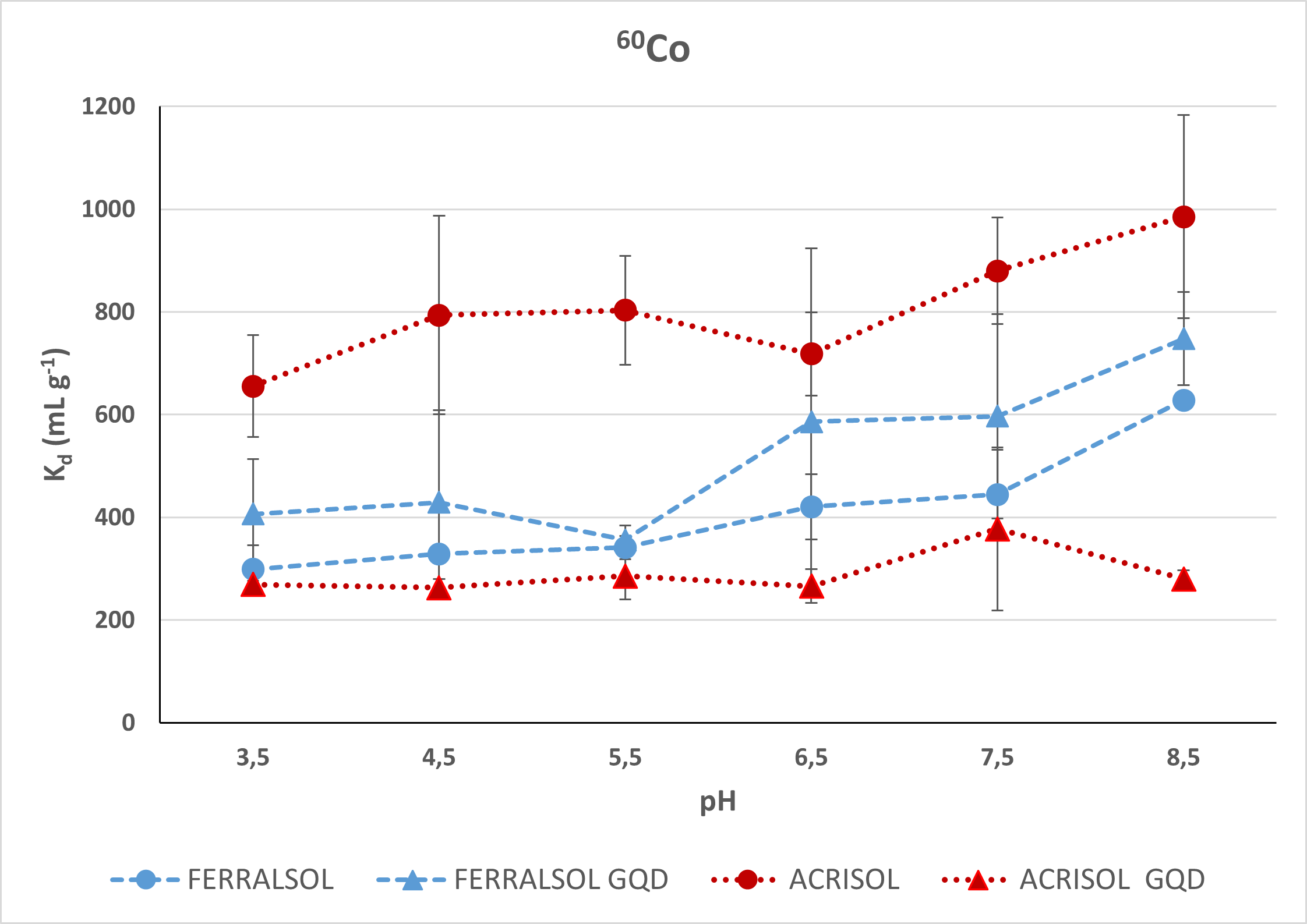
Figure 2 shows the 60Co Kd values obtained at different pH values to evaluate the sorption of this radionuclide in the presence or absence of GQDs.
According to Figure 2, the 60Co Kd values in Acrisols original showed large variability and no trend related to pH was observed. The highest sorption occurred at pH 8.5 and lowest sorption at pH 3.5. However, the presence of GQDs in Acrisol significantly diminished the 60Co sorption. The Acrisol with GQDs, as in its original condition, is not susceptible to pH changes. The behavior of 60Co in Acrisol with GQDs is the opposite of the 137Cs behavior, since the presence of GQDs increased the capacity of Acrisol to retain 137Cs but reduced the 60Co sorption in Acrisol. Considering the relevant affinity of 60Co with carboxyl groups in soil organic compounds (SOC) [35], and the low C content in the studied Acrisol, these results suggest that the addition of GQDs, at the dose used, could facilitate the formation of soluble GQDs-Co-SOC complexes, which would explain why the addition of GQDs reduced the sorption capacity of 60Co in Acrisols. These effects should be better understood in futures work, since it is a relevant process to be considered before suggesting the use of GQDs to soil remediation to 60Co contamination.

In the Ferralsol, the 60Co Kd values indicated that the sorption of was greater in soils that received the addition of GQDs compared to the original soils. Both treatments in this soil type showed an increased sorption capacity starting after pH 5.5. Like these findings, Garcia [35] observed greater sorption of 60Co in Ferralsols at pH values ranging from 5 to 10. Another factor that may influence the sorption of 60Co is the presence of carboxyl groups in organic compounds, which play a significant role in the fixation of 60Co in soils [35]. The response to 60Co sorption in the studied Ferralsol to changes in soil pH seems to be associated with the increasing of negative charges observed in soils with iron oxides in the clay fraction of soil, such as the Ferralsol used in this study.
The 60Co Kd values are summarized in Table 5. For the original Acrisol, the 60Co Kd values were higher than those found in the original Ferralsol (791 mL g-1 and 395 mL g-1, respectively; Table 5).
Addition of GQDs increased the sorption capacity of 60Co in Ferralsol, (60Co Kd=484 mL g-1), but decreased the sorption capacity of 60Co in Acrisol (60Co Kd=284 mL g-1), as discussed before.
The statistical analysis of the obtained for 60Co Kd values presented in Table 6 indicates that Ferralsols with the addition of GQDs are correlated with global soil values, while Acrisols, both with and without GQD addition, do not correlate with each other and show no similarity to the global values. The results of the statistical test for 60Co Kd values corroborate the previous discussion of results presented in Figure 2.
Comparing the 60Co Kd values obtained in this study with those reported in the literature (Table 7), Ferralsol, a loamy sand soil, exhibited Kd values consistent with loam soils [37], either in original or with a dose of GQDs. However, the same was not observed for Acrisols, a sand soil: geometric mean found to 60Co Kd in Acrisol (791 mL g-¹) was higher than 60Co Kd values reported for sand soils (260 mL g−1), despite be consistent with other results, exception to clay soils (Table 7). As discussed before, the dose added of GQDs seems to be enough to modify soil properties, mainly in dystrophic soils, providing significant adsorption sites negatively charged [36], or modifying solubility of soil compounds.
Considering that Kd values are used as a basis for environmental risk assessments, adopting specific data values that consider regional soil properties of the area of interest tends to minimize errors in risk estimates. Results obtained in this study indicate that the studied soils have properties that reinforce the need to acquire site specific data wherever possible, mainly facing new practices or contaminants.
4. CONCLUSIONS
This study contributed to the understanding of the behavior of 60Co and 137Cs in Acrisols and Ferralsols originating from semiarid regions, characteristics that differ from temperate soils, from which most of the available parameter data in the literature are derived.
Even the studied soils present some similarities on chemical properties, mineralogy and C content differences, were enough to individualize soils response to a given radionuclide face to pH changes and/or presence of GQDs.
The addition of GQDs to soils was effective in modifying the sorption of 137Cs and 60Co, but in different ways: the addition of GQDs could be recommended as a countermeasure practice to enhance the retention of 137Cs in Acrisol, but it was not efficient to oxidic soils, such as the studied Ferralsol. However, addition of GQDs mobilized 60Co in Acrisol, but increased 60Co sorption in Ferralsol.
Considering the influence of pH on sorption, it was noticed to Ferralsol, the only oxidic soil studied: by increasing negative charges with the increase of pH (considering the pH in the studied range from 3.5 to 8.5), sorption of Co++ increased but, competition with Cs+ for these new sites also increased, diminishing sorption of 137Cs at basic condition.
The results obtained in this study were achieved under specific operational conditions. To thoroughly evaluate the variability and the influence of GQDs addition, future experiments are recommended to include varying concentrations of GQDs, as well as 137Cs and 60Co. The influence of the soil organic compounds on the 60Co behavior in the presence of GQDs should be better investigated in futures work, since it is a relevant process to be considered before suggesting the use of GQDs as countermeasure to soil 60Co contamination.
The introduction of new practices and new materials into the soil system highlights the importance of acquiring site-specific knowledge and data, especially considering environmental scenarios resulting from climate change such as those occurring in the Brazilian semiarid region.
The results achieved in this research contain relevant data and information to support public policies associated with the use of new materials or environmental practices, improve environmental radiological protection in Brazil by replacing generic radioecological data, such as Kd, by regional data, and expand the understanding of environmental aspects capable of modifying the fate of radionuclides in soils.
The authors acknowledge the Brazilian Federal Agency for Support and Evaluation of Graduate Education, also known as CAPES Foundation for granting a doctoral scholarship to Tatiane Rocha Pereira (88887.604576/2021-00) and to the Postgraduate Program in Radiation Protection and Dosimetry at IRD (PPG-IRD) for supporting the development of this research.
We would like to thank Dr. Ralph Santos-Oliveira, from the Institute of Nuclear Engineering, for providing the nanomaterial that was essential for the development of this research.
REFERENCES
-
1 KONOPLEV, A. Fukushima and Chernobyl: similarities and differences of radiocesium behavior in the soil–water environment. Toxics, v. 10, n. 10, p. 578, 2022. https://doi.org/10.3390/toxics10100578
» https://doi.org/10.3390/toxics10100578 -
2 BHATTACHARYA, N., CAHILL, D.M., YANG, W., KOCHAR, M. Graphene as a nano-delivery vehicle in agriculture–current knowledge and future prospects. Critical Reviews in Biotechnology, v. 43, n. 6, p. 851-869, 2023. https://doi.org/10.1080/07388551.2022.2090315
» https://doi.org/10.1080/07388551.2022.2090315 -
3 DING, X., PU, Y., TANG, M., ZHANG, T. Environmental and health effects of graphene-family nanomaterials: potential release pathways, transformation, environmental fate and health risks. Nano Today, v. 42, p. 101379, 2022.
» https://doi.org/10.1016/j.nantod.2022.101379 -
4 FRISSEL, M.J., DEB, D.L., FATHONY, M., LIN, Y.M., MOLLAH, A.S., NGO, N.T., OTHMAN, I., ROBISON, W.L., SKARLOU-ALEXIOU, V., TOPCUOĞLU, S., TWINING, J.R., UCHIDA, S., WASSERMAN, M.A. Generic values for soil-to-plant transfer factors of radiocesium. Journal of Environmental Radioactivity, v. 58, n. 2-3, p. 113-128, 2002.
» https://doi.org/10.1016/S0265-931X(01)00061-3 -
5 WASSERMAN, M. A., PÉREZ, D. V., BOURG, A. C. M. Behavior of cesium-137 in some Brazilian oxisols. Communications in Soil Science and Plant Analysis, v. 33, n. 7-8, p. 1335-1349, 2002.
» https://doi.org/10.1081/CSS-120003891 - 6 WASSERMAN, M. A., VIANA, A. G., BARTOLY, F., PEREZ, D. V., CONTI, C. C., ROCHEDO, E. R., VIVONE, R. J. The assessment of radiovulnerability in agroecosystems. International Nuclear Atlantic Conference-INAC, 2005.
-
7 WASSERMAN, M. A., BARTOLY, F., VIANA, A. G., SILVA, M. M., ROCHEDO, E. R. R., PEREZ, D. V., CONTI, C. Soil to plant transfer of 137Cs and 60Co in Ferralsol, Nitisol and Acrisol. Journal of Environmental Radioactivity, v. 99, n. 3, p. 546-553, 2008.
» https://doi.org/10.1016/j.jenvrad.2007.08.010 -
8 WASSERMAN, M. A. et al. The effect of organic amendment on potential mobility and bioavailability of 137Cs and 60Co in tropical soils. Journal of Environmental Radioactivity, v. 99, n. 3, p. 554-562, 2008.
» https://doi.org/10.1016/j.jenvrad.2007.08.012 -
9 TAGAMI, K.; TWINING, J. R.; WASSERMAN, M. A. V. Terrestrial radioecology in tropical systems. In: Radioactivity in the Environment. Elsevier, p. 155-230, 2012.
» https://doi.org/10.1016/B978-0-008-045016-2.00005-9 -
10 HIRD, A. B.; RIMMER, D. L.; LIVENS, F. R. Factors affecting the sorption and fixation of caesium in acid organic soil. European Journal of Soil Science, v. 47, n. 1, p. 97-104, 1996.
» https://doi.org/10.1111/j.1365-2389.1996.tb01376.x -
11 ABA, A., AL-BOLOUSHI, O., ISMAEEL, A., AL-TAMIMI, S. ABA, ABDULAZIZ et al. Migration behavior of radiostrontium and radiocesium in arid-region soil. Chemosphere, v. 281, p. 130953, 2021. https://doi.org/10.1016/j.chemosphere.2021.13
» https://doi.org/10.1016/j.chemosphere.2021.130953 - 12 SEMIOSCHKINA, N.; VOIGT, G. Concentration Ratios for Plant Crops in Arid Environments. 2021. In: IAEA-TECDOC--1979. Available at: https://www.iaea.org/publications/14980/soil-plant-transfer-of-radionuclides-in-non-temperate-environments. Accessed on: 2 Dec. 2023
- 13 WASSERMAN, M. A. V et al. Safety and environmental issues for construction of a nuclear power plant at Brazilian northeast semi-arid. Instituto de Engenharia Nuclear: Progress Report, n. 1, p. 105-105, 2013.
- 14 FAO – Food Agriculture Organization of United Nations. The State of Food and Agriculture. Climate Change, Agriculture and Food Security. Rome. 2016
-
15 MARQUES, T. V., MENDES, K., MUTTI, P., MEDEIROS, S., SILVA, L., PEREZ-MARIN, A. M., BEZERRA, B. Environmental and biophysical controls of evapotranspiration from Seasonally Dry Tropical Forests (Caatinga) in the Brazilian Semiarid. Agricultural and Forest Meteorology, v. 287, p. 107957, 2020
» https://doi.org/10.1016/j.agrformet.2020.107957 -
16 CORRÊA, L. M., NASCIMENTO, F. R. The Expansion of the Semiarid in Areas Susceptible to Desertification (ASDS) in the Itaúnas River Basin – ES. International Journal Semiarid, v. 6, n. 6, 2023. https://doi.org/10.56346/ijsa.v6i6.155
» https://doi.org/10.56346/ijsa.v6i6.155 - 17 SA, I. B. Semiárido brasileiro: pesquisa, desenvolvimento e inovação. Petrolina: EMBRAPA Semiárido, 2010.
-
18 REBOUÇAS, A. DA C. Água na região Nordeste: desperdício e escassez. Estudos Avançados, v. 11, n. 29, p. 127–154, Jan. 1997.
» https://doi.org/10.1590/S0103-40141997000100007 - 19 GIONGO, V.; ANGELOTTI, F. (ed.). Agricultura de baixa emissão de carbono em regiões semiáridas: experiência brasileira. Brasília, DF: EMBRAPA, 2022.
-
20 MONTALVÁN-OLIVARES, D.M., SANTANA, C.S., VELASCO, F.G. et al. Multi-element contamination in soils from major mining areas in Northeastern of Brazil. Environmental Geochemistry and Health, v. 43, n. 11, p. 4553-4576, 2021. https://doi.org/10.1007/s10653-021-00934-x.
» https://doi.org/10.1007/s10653-021-00934-x - 21 IAEA - International Atomic Energy Agency. Handbook of parameter values for the prediction of radionuclide transfer in terrestrial and freshwater environments. Technical Reports Series no. 472. Vienna. International Atomic Energy Agency, 2010.
- 22 SOARES, M. R. Coeficiente de distribuição (Kd) de metais pesados em solos do estado de São Paulo. Tese de Doutorado. Universidade de São Paulo. 2004.
- 23 USEPA - United States Environmental Protection Agency. Partition Coefficient, Kd. Understanding variation in Partition Coefficient, Kd Values. EPA 402-R-04-002C. 2004. Available at: https://19january2021snapshot.epa.gov/sites/static/files/2015-05/documents/402-r-04-002c.pdf. Accessed on: 27 Dec. 2023.
- 24 CORREIA, R. C., KIILL, L. H. P., MOURA, M. S. B. de, CUNHA, T. J. F., JESUS JUNIOR, L. A., de ARAUJO, J. L. P. A região semiárida brasileira. In: VOLTOLINI, T. V. (Ed.). Produção de caprinos e ovinos no Semiárido. Petrolina: EMBRAPA Semiárido, cap. 1, p. 21-48, 2011.
- 25 JACOMINE, P. K. T., CAVALCANTI, A. C., BURGOS, N., PESSOA, S. C. P., SILVEIRA, C. O. da. Levantamento exploratório - reconhecimento de solos do Estado de Pernambuco. In: Divisão de Pesquisa Pedológica: Recife, SUDENE-DRN, 1972-1973.
- 26 SANTOS, R. D.; LEMOS, R. C.; SANTOS, H. G.; KER, J. C.; ANJOS, L. H. C.; SHIMIZU, S. H. Manual de Descrição e Coleta de Solo no Campo. 6a Edição. Viçosa: Sociedade Brasileira de Ciência do Solo, 102 p., 2015.
- 27 OLIVEIRA, L. B. de. Manual de métodos de análise de solo. EMBRAPA-CNPS. EMBRAPA, Rio de Janeiro, RJ, 1997.
- 28 SILVA, F. C. da. Manual de análises químicas de solos, plantas e fertilizantes. Brasília, DF: EMBRAPA Informação Tecnológica; Rio de Janeiro: Embrapa Solos, 2009.
-
29 WHICKER, F. W. et al. Quantities, units and terms in radioecology. Journal of the ICRU, v. 1, n. 2, p. 7-7, 2001.
» https://doi.org/10.1093/jicru_1.2.7 -
30 GRIFFIN, R., SACK, W., ROY, W., AINSWORTH, C. Batch Type 24-h Distribution Ratio for Contaminant Adsorption by Soil Materials. In: Hazardous and Industrial Solid Waste Testing and Disposal: Sixth Volume. ASTM International, 1986.
» https://doi.org/10.1520/STP23093S - 31 USEPA - United States Environmental Protection Agency. Partition Coefficient, Kd. Understanding variation in Partition Coefficient, Kd Values. EPA 4402-R-99-004-B: Washington, 1999 Available at: https://www.epa.gov/sites/default/files/2015-05/documents/402-r-99-004b.pdf. Accessed on: 27 Dec. 2023
-
32 VIJEATA, Anjali et al. Sustainable agronomic response of carbon quantum dots on Allium sativum: Translocation, physiological responses and alternations in chromosomal aberrations. Environmental Research, v. 212, p. 113559, 2022.
» https://doi.org/10.1016/j.envres.2022.113559 -
33 GIL-GARCÍA, C.; RIGOL, A.; VIDAL, M. New best estimates for radionuclide solid–liquid distribution coefficients in soils, Part 1: radiostrontium and radiocaesium. Journal of Environmental Radioactivity, v. 100, n. 9, p. 690-696, 2009.
» https://doi.org/10.1016/j.jenvrad.2008.10.003 -
34 CALÁBRIA, J. A. A.; LADEIRA, A. C. Q.; COTA, S. D. S.; RODRIGUES, P. C. H. Estudo da sorção de césio em solos: avaliação do desempenho em repositório de rejeitos radioativos. Revista Ibero-Americana de Ciências Ambientais, v.8, n.2, p.190-204, 2017. DOI: http://doi.org/10.6008/SPC2179-6858.2017.002.0016
» https://doi.org/10.6008/SPC2179-6858.2017.002.0016 - 35 GARCIA, R. J. de L. A influência da adubação orgânica nos mecanismos de sorção do Cobalto e do Césio em solos tropicais. 2008. 96 f. Dissertação (mestrado) - Instituto de Radioproteção e Dosimetria, Comissão Nacional de Energia Nuclear, Rio de Janeiro, 2008.
-
36 GHABBOUR, E. A.; SCHEINOST, A. C.; DAVIES, G. XAFS studies of cobalt (II) binding by solid peat and soil-derived humic acids and plant-derived humic acid-like substances. Chemosphere, v. 67, n. 2, p. 285-291, 2007.
» https://doi.org/10.1016/j.chemosphere.2006.09.094 -
37 CUI Y, LIU L, SHI M, WANG Y, MENG X, CHEN Y, HUANG Q, LIU C. Review of Advances in Graphene Quantum Dots: From Preparation and Modification Methods to Application. C, v. 10, n. 1, p. 7, 2024.
» https://doi.org/10.3390/c10010007 -
38 GIL-GARCÍA, C. et al. New best estimates for radionuclide solid–liquid distribution coefficients in soils. Part 3: miscellany of radionuclides (Cd, Co, Ni, Zn, I, Se, Sb, Pu, Am, and others). Journal of Environmental Radioactivity, v. 100, n. 9, p. 704-715, 2009.
» https://doi.org/10.1016/j.jenvrad.2008.12.001
Edited by
-
SCIENTIFIC EDITOR:
Prof. Dr. Bernardo Maranhão Dantas http://orcid.org/0000-0002-2388-6073
-
SCIENTIFIC EDITOR:
Prof. Dr. Alfredo Lopes Ferreira Filho http://orcid.org/0000-0002-0806-1284

 137Cs Kd values at different pH values
 60Co Kd values at different pH values