
 Radiology Technologists Certified as Radioprotection Supervisors in Nuclear Medicine: Current Scenario
Abstract
The presence of a radiological protection supervisor is mandatory in the staff of a nuclear medicine service according to the CNEN-NN-3.05 standard. To obtain the certification of qualification as a radiological protection supervisor, it is necessary, in addition to taking the general and specific tests, to graduate from a higher education course recognized by the Ministry of Education in the areas specified by legislation. This study analyzed the number of professionals trained in radiology technology certified as supervisors of radiological protection in nuclear medicine in Brazil. For this analysis, only the list available on the regulatory agency's website up to the date of preparation of this study was considered. Of the 326 professionals found, only 2.76% have academic training in radiology technology, while physicists and physicians together represent more than half of the radiological protection supervisors (65.65%). These results show that, although the field of radiological sciences and the Radiology Technology course, specifically the one offered by the Federal University of Minas Gerais, allow students to complete their undergraduate studies able to enter this job market and act as radiological protection supervisors, there is a lower number of these professionals' certificates in this field. The study provided a parameter on the state of the art of higher education in Radiologic Technology and the insertion and interest of these professionals in certification when compared to other fields of study.
Keywords:
nuclear medicine; radiology technology; radioprotection supervisors
Resumo
A presença de um supervisor de proteção radiológica é obrigatória no quadro de colaboradores de um serviço de medicina nuclear segundo a norma CNEN-NN-3.05. Para a obtenção da certificação da qualificação de supervisores em proteção radiológica é necessário, além da realização das provas geral e específica, a graduação em um curso superior reconhecido pelo Ministério da Educação nas áreas especificadas pela legislação. Esse estudo analisou a quantidade de profissionais formados em tecnologia em radiologia certificados como supervisores de proteção radiológica em medicina nuclear no Brasil. Para esta análise foi considerada a listagem disponibilizada no endereço eletrônico do órgão regulador até a data de elaboração deste trabalho. Dos 326 profissionais encontrados, apenas 2.76% apresentam formação acadêmica em Tecnologia em Radiologia, Física e Medicina que representam, juntos, mais da metade dos supervisores de radioproteção (65,65%). Os resultados evidenciam que, apesar da área de ciências radiológicas e o curso de Tecnologia em Radiologia, especificamente o ofertado pela Universidade Federal de Minas Gerais, permitir que os discentes concluam a graduação aptos para ingressar nesse mercado de trabalho e atuar como supervisor de proteção radiológica, há um número inferior deste profissional certificado nesse meio. O estudo forneceu um parâmetro sobre o estado da arte da formação superior em Tecnologia em Radiologia e a inserção e interesse desses profissionais na certificação quando comparado às outras formações.
Palavras-chave:
medicina nuclear; tecnologia em radiologia; supervisores de radioproteção
1. INTRODUCTION
The CNEN-NN-3.05 standard, entitled "Radiological Safety and Protection Requirements for Nuclear Medicine Services", establishes the safety and security requirements for in vivo Nuclear Medicine Services (NMS) [1]. According to this standard, specialized services in diagnostic imaging exams or therapy based on the use of radiopharmaceuticals must consist of at least:
“I. A holder, legally responsible for the Nuclear Medicine Service at CNEN; II. A nuclear physician, technically responsible for the Nuclear Medicine Service; III. A radiological protection supervisor, technically responsible for the radiological protection of the Nuclear Medicine Service, with specific qualifications for Nuclear Medicine and a current certificate granted by CNEN; and IV. Necessary higher and secondary level professionals, duly qualified to perform their functions, in accordance with CNEN Resolutions.”
The Radioprotection Supervisor or Radiological Protection Supervisor (RPS) is defined by the National Nuclear Energy Commission (CNEN) to be the qualified professional with certification issued by the competent regulatory body, designated formally by the holder of service, to assume the responsibilities provided in the CNEN standards [2].
Currently (July 3, 2024), Brazil has 454 nuclear medicine establishments authorized by CNEN which offer specialized services in this area and 326 certified professionals for medical applications in nuclear medicine. [3, 4]. The continuous progress in this diagnostic modality highlights the growing demand for professionals trained to meet the needs of these services, in accordance with the current regulatory requirements.
1.1. Certification of Qualification for Radiological Protection Supervisors
The certification for the qualification of Radiological Protection Supervisors is regulated by CNEN under the CNEN-NN-7.01 standard. According to Article 5, to obtain certification, the candidate must have an undergraduate degree in the fields of exact sciences, earth sciences, biological sciences, engineering, health sciences, agricultural sciences, or radiological sciences [5].
The wide range of knowledge areas allowed by the regulatory agency therefore includes undergraduate courses not specifically focused on radiology and radiological sciences. Thus, to obtain certification, many professionals from other fields would need to complete specializations after graduation.
Previous studies show that the curricula of the Radiology course at the Federal University of Minas Gerais (UFMG) are compatible with the topics required in the specific test for certification in nuclear medicine [6]. However, the number of technologists certified as RPS in nuclear medicine represents less than 3% of qualified professionals, as will be discussed later in this article.
2. MATERIALS AND METHODS
All data were extracted from the website of CNEN and analysis was based on a descriptive study was carry out. During the process an Excel spreadsheet was carry out based on the list of all certified professionals available by CNEN on July 3, 2024.
After that, research on the training of each professional was conducted using different digital platforms such as i) Lattes Curriculum; ii) LinkedIn, and iii) digital collection of São Paulo State University ( UNESP in portuguese). Professionals whose academic background was not found on any of these platforms were classified as "unknown."
Additionally, documentary research on the curricula of the Radiology Technologist and Physic courses offered by the Federal University of Minas Gerais was carried out for discussion purposes.
3. RESULTS AND DISCUSSION
The results reveal that there are 326 certified professionals by CNEN in the nuclear medicine area from different Brazilian states up to the date of this study. Of the total number of found professionals, 276 had their federation unit (UF) listed in the CNEN records (Figure 1) and 50 did not have this information available.
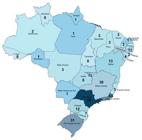
Figure 1: Distributionof SPR certified in the areaof Nuclear Medicine by the Brazilianstate.
According to the list of professionals certified for medical applications made available by CNEN, it was found that approximately 38% and 25% of the RPS in nuclear medicine have a degree in physics or medicine, respectively. To work as a medical physicist, it is necessary for the professional to have clinical training in service. In Brazilian bachelor's degree programs in physics, clinical practice is effectively carried out in residency programs conducted after graduation [7].
In addition to a higher education degree in physics, including bachelor's, licentiate, or medical physics, the Brazilian Association of Medical Physics (ABFM) requires the following minimum experience criteria in nuclear medicine: i) 2850 hours using a dose calibrator, two or more scintigraphy cameras, including at least one tomographic (SPECT) camera, with at least two different radioisotopes; ii) 1000 hours routinely using at least one inpatient room for therapeutic treatment with radioisotopes; and iii) 300 hours using at least one positron emission tomography (PET) camera [8].
Most physicians who have a valid RPS certification perform or have performed functions as nuclear physicians. To legally work in this area, the Brazilian Society of Nuclear Medicine (SBMN) requires training through a Medical Residency or an accredited Specialization Course of at least 3 years, on a full-time basis (60 hours per week) [9].
On the other hand, professionals from other undergraduate courses must only meet the requirements set forth by the CNEN-NN-7.01 standard, with the minimum required experience being 200 hours in nuclear medicine facilities. Figure 2 summarizes the distribution of all RPS certified in different Brazilian regions.

The large number of professionals in the Southeast, South and Northeast regions of the country can be explained by the percentage of the population residing in these areas and the greater offer of undergraduate courses by educational institutions. According to the Brazilian Institute of Geography and Statistics (IBGE), in 2022, the southeast, northeast, and south accounted for 41.78%, 26.91%, and 14.74% of Brazil's residents, respectively [10]. Another important fact that justifies and can influence concentration in the main capitals is the greater availability of authorized facilities and, consequently, a greater possibility of entering the job market in these regions.
Table 1 presents the training of all professionals found and their respective percentages in relation to the total number of certified professionals.
From the analysis of the table, it is possible to observe the low percentage of radiology technologist (gray hatching in the table) professionals certified as radiological protection supervisors in nuclear medicine. This fact contradicts the previous study which showed that the Radiology Technology course offered by UFMG has a curriculum compatible with the general and specific tests required by CNEN for certification in nuclear medicine [6, 11].
Table 1 shows that there is a small number of these professionals trained in Radiology Technology certified as RPSs in Nuclear Medicine. A possible explanation for this may be in the greater number of physicians, physicists, and medical physicists trained compared to Radiology Technologists. Additionally, it is important to consider that physicians specialized in Nuclear Medicine and professionals working as medical physicists, with their specific training in this area, have more hours of experience than required by the standard and, consequently, a significant advantage in the labor market [12].
The possibility for a Radioprotection Supervisor in Nuclear Medicine to work at up to four different services, respecting the workload established by CNEN-NN-3.05 standards, allows many professionals to accumulate functions. Thus, the entry of new professionals, regardless of their academic background, into this market is challenging, despite the growing number of NM services [1, 3].
3.1. Curriculum of the Physics and Radiology Technology courses offered by UFMG
The undergraduate degree in physics, being a basic science, is offered by numerous universities, colleges, and educational institutions, both in licentiate and bachelor's degree modalities. Most of these institutions design their curriculum with a focus on classical areas of physics such as mechanics, thermodynamics, and electromagnetism. Courses in modern physics are often included only in the final phase of the degree and are frequently offered as elective subjects [13].
Federal University of Minas Gerais enrolls approximately 120 new students annually in its bachelor's and licentiate courses in physics [14]. However, the curricular structure does not include a mandatory course in nuclear physics. Nevertheless, some students interested in nuclear and radiological physics turn to the Department of Nuclear Engineering (DEN) at UFMG, which serves as a pathway for future physicists wishing to explore this field [15].
An additional factor driving the search for radiological aspects of physics is the low employability outside of academia and teaching roles. Since the curriculum is focused on pure science, many graduates find themselves seeking employment in fields unrelated to their studies. Consequently, those wishing to continue in physics often find opportunities in radiological supervision and medical physics. Currently, the ABFM requires that, to work and be certified as a specialist, the professional must hold a degree in physics or medical physics [8].
Unlike the physics course offered by UFMG, the current curriculum of the Radiology Technology course, presented summarized in Table 2, provides students with a solid foundation to work in the nuclear field without needing to pursue additional specializations or residency programs.
Although the Radiologic Technology program provides students with a solid theoretical foundation for the certification exam, many graduates are unable to fulfill the 200 hours practical experience requirement in nuclear medicine mandated by CNEN for certification [5]. UFMG offers internships in the fields of nuclear medicine and positron emission tomography, each with a 240 hours workload; however, these services operate during daytime hours, making it difficult for students who work during the day to participate, as the internships provided do not offer financial incentives [16].
However, the situation of the Radiologic Technology program at UFMG does not represent all courses in the field. Consequently, many students may encounter difficulties in securing internships in nuclear medicine, not only due to the service hours but also due to restrictions for interns, given the high risk of contamination in this area, and the lack of cooperation between many services and educational institutions.
One alternative to encourage future radiologic technologists to obtain certification as a Radiation Protection Supervisor is the implementation of a nationwide multiprofessional residency program. In addition to providing practical experience hours in the field, the financial support offered can help students enter a new job market and invest in obtaining certification. Furthermore, information about this field of practice needs to be more widely disseminated among students and graduates to encourage an increase in the number of technologists certified as RPS by CNEN.
4. CONCLUSIONS
The performance of professionals trained in the Radiology Technology course is relatively recent in the job market compared to degrees in physics and medicine. Despite the low number of Radiology Technologists, as discussed in this article, they possess a theoretical and practical foundation through internships offered by universities, which is sufficient to work in various branches of radiology. It is expected that, in the future, both the job market and the professionals themselves will recognize Radiology Technology training as an asset for roles such as Radiological Protection Supervisor in Nuclear Medicine and other areas.
ACKNOWLEDGMENTS
We would like to express our gratitude to the Department of Anatomy and Imaging (IMA) of the Faculty of Medicine of the Federal University of Minas Gerais (UFMG), the Center for the Development of Nuclear Technology (CDTN) and the National Nuclear Energy Commission (CNEN).
DATA AVAILABILITY STATEMENT
The authors declare that the data supporting the results of this study are available in the article. Derived data supporting the conclusions of this study are available upon request from the corresponding author.
REFERENCES
-
1 [1] CNEN. Comissão Nacional de Energia Nuclear. Available at: https://www.gov.br/cnen/pt-br/acesso-rapido/normas/grupo-6/grupo6-nrm305.pdf Accessed on: 02 Jul. 2024
» https://www.gov.br/cnen/pt-br/acesso-rapido/normas/grupo-6/grupo6-nrm305.pdf -
2 [2] CNEN. Comissão Nacional de Energia Nuclear. Available at: https://www.gov.br/cnen/pt-br/acesso-rapido/normas/grupo3/NormaCNENNN3.01.pdf Accessed on: 02 Jul. 2024.
» https://www.gov.br/cnen/pt-br/acesso-rapido/normas/grupo3/NormaCNENNN3.01.pdf -
3 [3] CNEN. Comissão Nacional de Energia Nuclear. Available at: https://appasp2019.cnen.gov.br/seguranca/cons-ent-prof/lst-entidades-aut-cert.asp?p_ent=42&d=Medicina%20Nuclear Accessed on: 03 Jul. 2024.
» https://appasp2019.cnen.gov.br/seguranca/cons-ent-prof/lst-entidades-aut-cert.asp?p_ent=42&d=Medicina%20Nuclear -
4 [4] CNEN. Comissão Nacional de Energia Nuclear. Available at: https://appasp2019.cnen.gov.br/seguranca/cons-ent-prof/lst-prof-credenciados.asp?OP=FM Accessed on: 03 Jul. 2024.
» https://appasp2019.cnen.gov.br/seguranca/cons-ent-prof/lst-prof-credenciados.asp?OP=FM -
5 [5] CNEN. Comissão Nacional de Energia Nuclear. Available at: https://www.gov.br/cnen/pt-br/acesso-rapido/normas/grupo-7/grupo7-nrm701.pdf Accessed on: 03 Jul. 2024.
» https://www.gov.br/cnen/pt-br/acesso-rapido/normas/grupo-7/grupo7-nrm701.pdf - 6 [6] CORDEIRO, J. N. Estudo comparativo entre a prova específica para a certificação para a certificação da qualificação de Supervisores de Proteção Radiológica em medicina nuclear (CQRPS-MN) e a grade do curso Superior de Tecnologia em Radiologia da Universidade Federal de Minas Gerais. Trabalho de Conclusão de Curso, Belo Horizonte, p. 1-54, 2021.
- 7 [7] FREITAS, M. B. Proposta de residência em física médica conforme as diretrizes nacionais dos programas de residência multiprofissional e em área profissional da saúde dos Ministérios da Saúde e da Educação. Revista Brasileira de Física Médica, São Paulo, v. 6, n. 3, p. 113-118, 2012.
-
8 [8] ABFM. Associação Brasileira de Física Médica. Available at: https://www.abfm.org.br/media/arquivos/df09f77f64.pdf Accessed on: 24 Jul. 2024.
» https://www.abfm.org.br/media/arquivos/df09f77f64.pdf -
9 [9] SBMN. Sociedade Brasileira de Medicina Nuclear. Available at: https://sbmn.org.br/wp-content/uploads/2021/12/NOVO-PROGRAMA-B%C3%81SICO-DE-RESID%C3%8ANCIA-M%C3%89DICA-06.12.2017.pdf Accessed on: 24 Jul. 2024.
» https://sbmn.org.br/wp-content/uploads/2021/12/NOVO-PROGRAMA-B%C3%81SICO-DE-RESID%C3%8ANCIA-M%C3%89DICA-06.12.2017.pdf -
10 [10] IBGE. Instituto Brasileiro de Geografia e Estatística. Available at: https://www.ibge.gov.br/ Accessed on: 06 Ago. 2024.
» https://www.ibge.gov.br/ - 11 [11] CHAVES, M. L. Estudo comparativo entre a prova geral para a certificação da qualificação de Supervisor de Proteção Radiológica e a grade do curso Superior de Tecnologia em Radiologia da Universidade Federal de Minas Gerais. Trabalho de Conclusão de Curso, Belo Horizonte, p. 1-39, 2016.
- 12 [12] PAIVA, F. G. Levantamento do perfil dos profissionais Supervisores em Radioproteção em Medicina Nuclear. Trabalho de Conclusão de Curso, Belo Horizonte, p. 1-45, 2013.
-
13 [13] UFMG. Universidade Federal de Minas Gerais. Available at: https://www.fisica.ufmg.br/graduacao/estrutura-curricular/ Accessed on: 25 Jul. 2024.
» https://www.fisica.ufmg.br/graduacao/estrutura-curricular/ -
14 [14] UFMG. Universidade Federal de Minas Gerais. Available at: https://www.ufmg.br/sisu/edital/ Accessed on: 25 Jul. 2024.
» https://www.ufmg.br/sisu/edital/ -
15 [15] UFMG. Universidade Federal de Minas Gerais. Available at: https://www.medicina.ufmg.br/cegrad/radiologia/matriz-curricular/ Accessed on: 25 Jul. 2024.
» https://www.medicina.ufmg.br/cegrad/radiologia/matriz-curricular/ -
16 [16] UFMG. Universidade Federal de Minas Gerais. Available at: https://www.medicina.ufmg.br/cegrad/wp-content/uploads/sites/102/2024/08/VERSAO-N-20241-1.pdf Accessed on: 01 Sep. 2024.
» https://www.medicina.ufmg.br/cegrad/wp-content/uploads/sites/102/2024/08/VERSAO-N-20241-1.pdf
Edited by
-
SCIENTIFIC EDITOR:
Prof. Dr. Bernardo Maranhão Dantas http://orcid.org/0000-0002-2388-6073
-
SCIENTIFIC EDITOR:
Prof. Dr. Alfredo Lopes Ferreira Filho http://orcid.org/0000-0002-0806-1284

 Source: Authors, 2024.Figure 1
 Source: Authors, 2024.Figure 2