
 Radiotherapy in Prostate Cancer Management in Ceara, Brazil: A Descriptive Analysis of Utilization and Challenges
Abstract
Prostate cancer remains a major public health concern in Brazil due to its high incidence and persistent regional inequalities. Early diagnosis is crucial for effective curative treatments, including radiation therapy; however, socioeconomic and geographic disparities significantly influence access to timely diagnosis and appropriate care. This study presents a descriptive analysis of prostate cancer management in Ceará, Northeastern Brazil, focusing on radiotherapy modalities and associated challenges. A retrospective review of 1,031 medical records from patients treated at the Integrated Regional Oncology Center (CRIO), in Fortaleza, between 2014 and 2023 was conducted. Data on demographic characteristics, disease staging, and treatment protocols were systematically analyzed, with emphasis on radiotherapy. Statistical analyses included Chi-square tests, Kruskal-Wallis tests, and multinomial regression to assess associations between patient characteristics, staging, and treatment decisions. Ethical approval was obtained (Protocol 4310688, Plataforma Brasil), with waiver of informed consent due to the retrospective design and use of de-identified data. The mean patient age was 71.3 years. Most patients were diagnosed with localized (Stage IIB, 36.3%) or locally advanced disease (Stage III, 23.2%), although a considerable proportion presented with Stage IV disease (16.0%). External Beam Radiotherapy (EBRT) was the predominant initial treatment (320 patients), whereas brachytherapy was used in less than 1% of cases. Geographic disparities were evident: 52.5% of patients came from Greater Fortaleza, reflecting centralization of oncology services. Educational attainment was generally low, with 21.5% illiterate and 63.5% having only elementary education, which may contribute to delayed diagnosis. A significant inverse association between age and disease stage (p<0.001) indicated that older patients were more frequently diagnosed at earlier stages, while younger patients tended to present with more advanced disease. Overall, the findings reveal systemic barriers to early detection and equitable treatment. The heavy reliance on EBRT, limited availability of brachytherapy—partly due to lack of domestic source production—and centralized oncology infrastructure highlight the need for improved regional planning, expanded radiotherapy capacity, and targeted strategies to reduce disparities within the public health system.
Keywords:
Prostate Cancer; Radiotherapy; Brachytherapy; Health Disparities
Resumo
O câncer de próstata permanece como um importante problema de saúde pública no Brasil devido à sua alta incidência e às persistentes desigualdades regionais. O diagnóstico precoce é fundamental para tratamentos curativos eficazes, incluindo a radioterapia; entretanto, disparidades socioeconômicas e geográficas influenciam o acesso ao diagnóstico oportuno e ao cuidado adequado. Este estudo apresenta uma análise descritiva do manejo do câncer de próstata no Ceará, com foco nas modalidades de radioterapia e nos desafios associados. Foi realizada revisão retrospectiva de 1.031 prontuários de pacientes tratados no Centro Regional Integrado de Oncologia (CRIO), em Fortaleza, entre 2014 e 2023. Foram analisadas características demográficas, estadiamento e protocolos terapêuticos, com ênfase na radioterapia. As análises estatísticas incluíram testes do Qui-quadrado, Kruskal-Wallis e regressão multinomial para avaliar associações entre variáveis clínicas e decisões terapêuticas. O estudo obteve aprovação ética (Protocolo 4310688), com dispensa do consentimento informado devido ao uso de dados anonimizados. A idade média foi de 71,3 anos. A maioria dos pacientes foi diagnosticada com doença localizada (Estágio IIB, 36,3%) ou localmente avançada (Estágio III, 23,2%), embora 16,0% apresentassem doença em Estágio IV. A Radioterapia de Feixe Externo (EBRT) foi o tratamento inicial predominante (320 pacientes), enquanto a braquiterapia foi utilizada em menos de 1% dos casos. Observou-se centralização dos serviços, com 52,5% dos pacientes provenientes da Região Metropolitana de Fortaleza. O nível educacional foi predominantemente baixo: 21,5% eram analfabetos e 63,5% tinham apenas ensino fundamental, fator possivelmente relacionado ao diagnóstico tardio. Identificou-se associação inversa significativa entre idade e estadiamento (p<0,001), indicando que pacientes mais idosos foram diagnosticados com maior frequência em estágios iniciais, enquanto pacientes mais jovens tenderam a apresentar doença mais avançada. Os achados evidenciam barreiras ao diagnóstico precoce e ao acesso equitativo ao tratamento. A forte dependência da EBRT, a baixa disponibilidade de braquiterapia — em parte pela ausência de produção nacional de fontes radioativas — e a centralização da infraestrutura oncológica reforçam a necessidade de melhor planejamento regional, ampliação da oferta de modalidades radioterápicas e estratégias para reduzir desigualdades no sistema público de saúde.
Palavras-chave:
Câncer de Próstata; Radioterapia; Braquiterapia; Desigualdades em Saúde
1. INTRODUCTION
The primary goal of cancer prevention campaigns is early diagnosis. When the disease is detected in its initial stages, it allows for a wide range of treatments, faster recovery, and a better prognosis [ 1 , 2 , 3 ]. The patient can return to productivity, both for society and their personal life, more quickly and with less trauma. Adjusting campaigns to reach a greater number of individuals is crucial for their success. In Brazil, materials for these campaigns are prepared at the federal level and often do not consider the many regional peculiarities that play a fundamental role in their comprehension and effectiveness. Obtaining information on the profile of different cancer types and characterizing possible changes in the scenario over time are guiding elements for Cancer Surveillance Actions, a strategic component for the efficient and effective planning of cancer prevention and control programs in Brazil.
A prominent example of such a public health initiative is the "Novembro Azul" (Blue November) campaign. Established in 2003 and aligning with World Prostate Cancer Day on November 17th, this campaign serves as a crucial national movement aimed at raising awareness about prostate cancer and promoting early detection among men. Given that prostate cancer is the most common malignancy among Brazilian men (excluding non-melanoma skin cancers), with an estimated 66,000 new diagnoses and nearly 16,000 deaths annually, the "Novembro Azul" initiative plays a vital role. Its primary objective is to educate men about the importance of preventive healthcare practices, emphasize the significance of regular medical check-ups, promote early diagnosis, and work towards reducing the stigma often associated with prostate examinations. By fostering a culture of proactive health management and informing the public that early detection can lead to a cure rate of over 90%, "Novembro Azul" endeavors to decrease mortality rates and significantly improve the quality of life for men across Brazil. These efforts involve wide-ranging public awareness campaigns, community engagement activities, and corporate participation to disseminate knowledge about prostate cancer prevention and treatment options [ 4 , 5 ].
The incidence of cancer in Brazil in 2025 was estimated at 71,730 cases. Excluding non-melanoma skin tumors, prostate cancer presented the highest adjusted rates for all geographical regions of the country, with its magnitude being about two to three times higher than the second most frequent cancer type. Prostate cancer ranks first in the country across all Brazilian regions, with an estimated risk of 74.18/100,000 cases in the state of Ceara [ 6 ].
Located in the Northeast region, the state of Ceara has 184 municipalities and a territorial area of 148,894 km2, with a population of approximately 9,187,103 people, 48.74% of whom are men. The state ranks 17th nationally in the State Human Development Index with a value of 0.682. According to the State Department of Health of Ceara (Sesa), prostate cancer kills more than breast cancer. In 2018 alone, Ceara registered 2,730 new cases of prostate cancer, representing more than 60% of all cancer cases occurring in men in the state, according to the National Cancer Institute (INCA) [ 6 ].
Microscopically, cancer stages exhibit variable differentiation, and stratification through scoring correlates pathological stage and prognosis. Diagnosis is made through various examinations, such as digital rectal examination, biopsy, PSA, ultrasonography, and histopathological study. The histopathological study of tissue obtained by prostate biopsy is indicated when there are abnormalities in the digital rectal examination and/or PSA levels [ 7 ]. The scale classifies tissue based on glandular differentiation into 5 distinct grades. Thus, grade 1 is the most well-differentiated and least aggressive, with a better prognosis, and grade 5 is the least differentiated and most aggressive, with a worse prognosis. The score aims to identify the probable growth rate and tendency for disease dissemination. Currently, the recommendation is to use the prognostic classification system developed by the International Society of Urological Pathology (ISUP) [ 8 ].
Prostate cancer, in its initial phases, is a curable disease through surgical procedures, radiotherapy, and other methods [ 9 ]. Eventual late recurrences suggest under-staging or an early tendency to metastasize. Patient treatment decisions incorporate medical recommendations, estimated probability of cancer progression without early intervention, and convenience related to treatment, costs, potential for eradication, and adverse effects [ 10 ]. The therapeutic landscape for prostate cancer has been transformed in the last decade by new therapies, advanced functional imaging, next-generation sequencing, and improved use of existing therapies in early-stage disease [ 11 ].
Common treatments include watchful waiting (expectant management or active surveillance), surgery to remove the prostate (radical prostatectomy), external beam radiation therapy (EBRT), interstitial radiation therapy (brachytherapy), androgen deprivation, and chemotherapy [ 11 , 12 ]. Treatment must be individualized for each patient, taking into account age, tumor staging, histological grade, prostate size, comorbidities, life expectancy, patient desires, and available technical resources [ 13 , 14 ].
CRIO is one of the largest and best-equipped cancer treatment centers in the state of Ceara, accredited by the Ministry of Health as a High Complexity Oncology Unit (UNACON). It offers outpatient clinics for consultations and prevention, radiotherapy service, chemotherapy, hormone therapy, imaging, hospital beds, surgical interventions, and ICUs for private health plan patients and those from the public health system (SUS). The Radiotherapy service at CRIO has 4 linear accelerators, Brachytherapy, and Betatherapy equipment, in addition to 5 radiation oncologists. CRIO is a regional and national reference center for cancer treatment, attending monthly 20,000 patients from various municipalities in Ceara [ 15 ].
To analyze this scenario, a descriptive study is justified to provide a better understanding of how prostate cancer has become so prevalent and what can be done to change this outcome, especially concerning the utilization and impact of radiation therapy. Building upon this justification and recognizing the complex scenario of high incidence and regional disparities in Ceara, the primary objective of this study was to conduct a retrospective descriptive analysis of prostate cancer management at the Integrated Regional Oncology Center (CRIO) in Fortaleza. According to Spigel [ 16 ] and Gliklich et al.[ 17 ] patient registries (or descriptive studies), when properly designed and executed, can provide a real-world view of clinical practice, patient outcomes, safety, and comparative effectiveness. These are powerful tools for observing the course of the disease; understanding variations in treatment and outcomes; examining factors influencing prognosis and quality of life; describing patterns of care, including adequacy of care and disparities in care delivery; assessing efficacy; monitoring safety and harms; and measuring quality of care. Specifically, we aimed to characterize the demographic and clinical profile of patients, the distribution of disease stages at diagnosis, the radiotherapy modalities utilized (with a special focus on external beam radiotherapy and brachytherapy), and the associated challenges in their application, with the ultimate goal of providing understandings for the improvement of public health policies and oncology planning in the region.
2. MATERIALS AND METHODS
This retrospective descriptive study was conducted at the Integrated Regional Oncology Center (CRIO) in Fortaleza, Ceara. The study protocol received approval from the Research Ethics Committee under opinion number 4310688 (Plataforma Brasil, “Perfil Epidemiológico de pacientes acometidos com Câncer de Próstata em centro de referência no Estado do Ceara” approved on 09/30/2020). Due to the retrospective nature of the study, which involved the analysis of anonymized and de-identified electronic medical records, the requirement for individual informed consent was waived by the ethics committee, in accordance with national regulations for studies posing minimal risk.
2.1. Data Access and Medical Records
A total of 1031 medical records of prostate cancer (CaP) patients attended at CRIO between 2014 and 2023 were analyzed. Data were extracted from the hospital management software, Colmeia, which contains digital patient records. This reliance on digital records was necessitated by restrictions on access to physical medical records at CRIO during the COVID-19 pandemic, which could potentially introduce limitations regarding data completeness for certain variables.
The tags available in the medical record system include: age, marital status, municipality of residence, self-declared race/color, profession, education level, date of prostate cancer diagnosis, disease staging, type of health system used for treatment, and the treatment protocol employed, specifically noting the radiation therapy regimens.
To ensure the reliability and integrity of the results, a rigorous approach was adopted for managing missing and inconsistent data. Patients with missing or inconsistent information for essential variables critical to a specific analysis were systematically excluded from that particular analysis. For example, if a patient record lacked documented disease staging, that patient would be excluded from any analyses directly involving disease stage. Conversely, if data were missing for non-essential or descriptive variables, the patient's record was retained for other relevant analyses where sufficient data were present. This selective exclusion strategy was applied on an analysis-specific basis to maximize the utility of available data while maintaining the validity of each statistical assessment.
2.2. Statistical Analysis
The factors chosen for analysis were: region, age, education, race, marital status, disease staging, health system used for treatment, and type of treatment performed, including specific radiation modalities. Incomplete records were excluded only when quantifying and relating the variable not present in the record.
The obtained data were analyzed using IBM SPSS version 25 statistical software. Data derived from qualitative variables (nominal or ordinal) and quantitative variables (discrete and continuous) were handled accordingly.
Associations between categorical variables and disease staging were assessed using the Chi-square test. For quantitative variables, specifically age in relation to staging, a preliminary Shapiro-Wilk test (p < 0.05) indicated a non-normal distribution for some stages; consequently, comparisons across all four stages were performed using the non-parametric Kruskal-Wallis test. Statistically significant findings from the Kruskal-Wallis test were further explored using a Bonferroni post-hoc test for pairwise comparisons. Additionally, to verify the influence of a set of variables on ordinal staging, a multinomial regression model was employed, with Stage I serving as the reference category. Statistical significance was set at p < 0.05.
3. RESULTS AND DISCUSSIONS
3.1. Dataset
Between 2014 and 2023, 1031 men affected by prostate cancer were treated at CRIO. All medical records were analyzed. The average age of patients in this research sample was 71.3 years, with a minimum of 44 years and a maximum of 96 years. Regarding self-declared race, 95.6% were mixed-race, 3.3% white, 0.9% black, and 0.2% Asian. The month with the highest prevalence in seeking care for these patients was December, accounting for 10%.
The number of cases treated at CRIO increased over the study period. Its incidence increases due to an increase in life expectancy and the development of diagnostic techniques that allow for the detection of asymptomatic tumors. With the progressive aging of the population, this incidence is expected to continue to rise. This creates another problem: oncology patients will require care. Co-occurring cancer with other pathologies will also become more common. Table 1 provides an overview of the demographic and study-related characteristics of the prostate cancer patients treated at CRIO.
Overview of the demographic and study-related characteristics of the prostate cancer patients treated at CRIO.
The analysis of prostate cancer patients treated at CRIO reveals a significant geographical concentration of cases. Of the total patients, over half, specifically 54.1%, originated from Grande Fortaleza, highlighting the capital region as the primary source of individuals seeking specialized care. Following this metropolitan hub, other areas contributed substantial, albeit smaller, proportions: Sertão Central accounted for 7.5% of patients, Vale do Jaguaribe 7.0%, Sertão dos Crateús 6.9%, Maciço de Baturité 5.9%, and Litoral Oeste 5.3%. A range of other regions, including Sertão de Canindé (2.9%), Litoral Norte (2.7%), Sertão de Sobral (2.1%), Litoral Leste (2.0%), Centro Sul (1.8%), Serra da Ibiapaba (1.7%), and Sertão dos Inhamuns (1.6%), represented smaller segments of the patient population. Notably, Cariri (0.2%) and Macapá (0.2%) contributed minimal percentages. This distribution clearly illustrates a pronounced centralization of advanced cancer treatment services, with patients from distant interior and coastal regions being significantly less represented, underscoring the challenges of access across the state of Ceara. Table 2 presents the geographic origins of patients treated at CRIO.
3.2. Education Level
The educational background of prostate cancer patients across Ceara reveals a challenging landscape characterized by predominantly lower schooling levels ( Table 3 ). Overall, the analysis showed that 21.5% of patients were illiterate, and an additional 63.5% had only elementary education. Among the 1001 patients with recorded education information, a mere 3.4% possessed higher education. This trend mirrors findings from other regional studies, such as one conducted in Caruaru. These low educational attainments are particularly pronounced in many interior regions of Ceara, where nine out of fourteen regions reported illiteracy rates of 25% or higher outside the capital and metropolitan area. For example, specific regions like Centro Sul exhibited a 44% illiteracy rate, Sertão de Canindé 39%, and Litoral Oeste 38%. Even in Grande Fortaleza, while illiteracy was lower at 14%, a significant 64% of patients had only elementary schooling.
This demographic reality, where several regions reported 0% of patients with higher education, profoundly influences patients' ability to seek timely care, comprehend complex medical information, and adhere to intricate treatment protocols, including multi-fractionated radiation therapy, exacerbating existing prejudices against seeking urological attention. Such low education levels also contribute to the significant drop in urologist consultations seen in Brazil between 2019 and 2020 [ 18 ].
3.3. Prevalence of Cancer Stage
The analysis of prostate cancer staging across Ceara's regions reveals a concerning prevalence of advanced disease at diagnosis, particularly concentrated in specific areas. Overall, the most common stages observed are localized stages like IIB (36.3%), followed by locally advanced or metastatic stages such as III (23.2%) and IV (16.0%). Other stages including IIIA, IIIB, IIC, IIA, II, and I represent smaller proportions. While a significant portion of diagnoses occur at the localized Stage IIB, the substantial presence of Stages III and IV indicates that a considerable number of patients are being diagnosed when the cancer is already locally extensive or has metastasized. Notably, Grande Fortaleza accounts for the largest share of patients overall (52.5%) and also shows the highest percentages across several stages, including IIB (18.6%), III (12.0%), and IV (9.2%). Other regions like Sertão Central (7.5%), Vale do Jaguaribe (7.0%), and Sertão dos Crateús (6.9%) also show significant proportions across these stages. The pattern suggests that while Grande Fortaleza has the highest volume of cases, the challenge of late-stage diagnosis (Stages III and IV) is widespread, and the high incidence of locally advanced and metastatic stages, particularly in these regions, is a critical public health concern, implying potential delays in screening, diagnosis, or access to early intervention Table 4.
3.4. Treatment Modalities and Radiation Therapy Utilization
The main initial treatment modalities ( table 5 ) recorded were external beam radiotherapy (320 patients), chemotherapy (341 patients), and hormone therapy (367 patients). Brachytherapy and the Propel Protocol (chemotherapy and castration surgery, main types in table 6 ) were rarely applied, not even representing 1% of the number of patients treated. Some medical records indicated that the patient had not undergone radiotherapy or another type of treatment, but the medical notes indicated the procedure. Treatment information was often ambiguous due to a lack of standardization in filling out the hospital management software by physicians.
The low utilization of surgery recorded in digital medical records is noteworthy. Advances in surgical techniques and a better understanding of individual cancer dissemination patterns have allowed surgeons to successfully perform resections in a greater number of patients. It should be investigated whether there were errors in filling out the medical records or if the excessive use of radiotherapy and low use of surgery should be further examined. This raises concerns regarding adherence to the principle of justification in radiation protection. Every use of radiation must be justified; that is, the benefit generated by the use of radiation must be greater than the harm caused by its application [ 19 , 20 ]. This is particularly relevant when considering the choice between surgery and radiotherapy for early-stage disease, or the underuse of brachytherapy which could offer similar or superior outcomes with potentially fewer side effects for suitable patients.
3.5. Statistical Analysis
Based on statistical analysis focusing on staging, univariate analyses were performed (staging versus other variables). Subsequently, a multivariate analysis was conducted to verify the influence of the set of variables on staging. The statistical study steps included:
3.5.1. Measure of Association
An analysis examining the association between prostate cancer staging and several sociodemographic and temporal variables revealed distinct patterns, though not all showed statistical significance. The educational level of patients, categorized by illiteracy, elementary, secondary, and higher education, did not demonstrate a statistically significant association with the disease stage. Similarly, the patient's region of origin (Metropolitan Fortaleza versus outside) and self-declared race (White, Brown, Black, Yellow) were also found not to have a statistically significant relationship with the cancer's stage at diagnosis. Marital status, including single, married, divorced, or widowed, also did not show a significant association with disease staging.
However, a notable and statistically significant association was identified between the quarter of diagnosis and the prostate cancer stage. Specifically, patients diagnosed with Stage I cancer were predominantly concentrated in the first quarter of the year, showing a decreasing proportion in subsequent quarters. Conversely, individuals diagnosed with more advanced stages of the disease tended to be less concentrated in the first quarter and more frequently observed in the second, third, and particularly the fourth quarters of the year. This suggests a seasonal or temporal trend in the detection of early-stage versus advanced-stage prostate cancer cases.
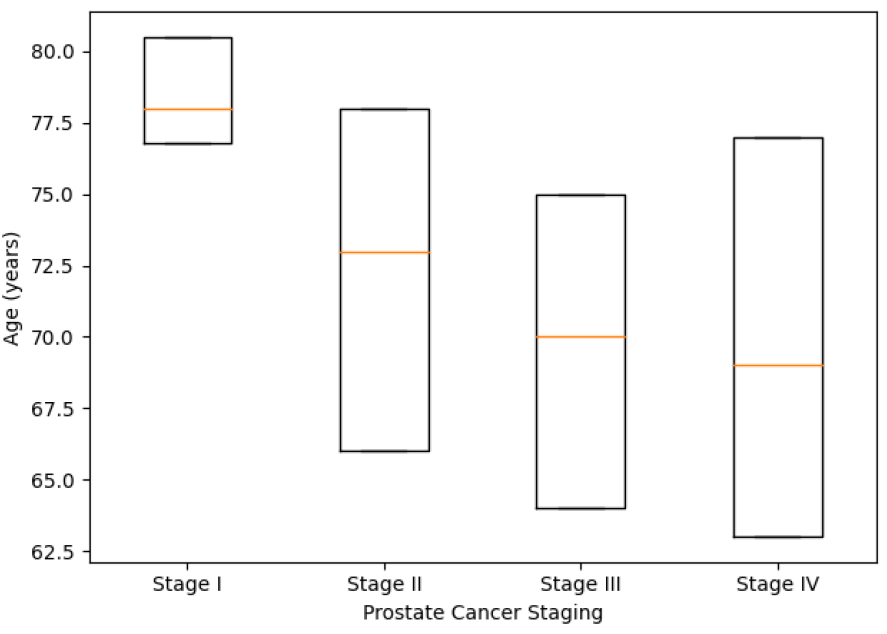
The analysis of age in relation to prostate cancer staging, treated as a quantitative variable, required a specific statistical approach due to the non-normal distribution observed in Stage II (as evidenced by a Shapiro Wilk test, p < 0.05). Consequently, comparisons across all four stages were conducted using the non-parametric Kruskal Wallis test, supplemented by a Bonferroni post-hoc test. The findings revealed a compelling inverse relationship between age and the stage of prostate cancer at diagnosis. Patients in Stage I were, on average, the oldest, presenting with a median age of 78 years (interquartile range of 76.8-80.5 years). Following them were individuals diagnosed with Stage II cancer, with a median age of 73 years (interquartile range of 66-78 years). Conversely, the youngest patients were found in Stages III and IV, with median ages of 70 and 69 years respectively (interquartile ranges of 64-75 for Stage III and 63-77 for Stage IV), and these two advanced stages were statistically similar in terms of patient age.
This observed trend suggests that as patients age, they are more likely to be diagnosed with earlier-stage prostate cancer, while younger individuals, when diagnosed, tend to present with more advanced stages. This pattern strongly indicates a need to re-evaluate the recommended age for initiating prostate cancer screening. The implication is profound: younger patients, often due to delayed diagnosis, may require more aggressive and intensive treatment strategies, potentially involving advanced radiation therapy techniques or multimodal approaches, to address their higher-stage disease effectively. Tables 7 and 8 summarize the associations between prostate cancer staging and selected qualitative and quantitative variables. Associations with qualitative variables were assessed using the Chi-square test ( Table 7 ), whereas differences in median age (IQR) across stages were analyzed using the Kruskal–Wallis test ( Table 8 ). Figure 1 illustrates the relationship between patient age and prostate cancer staging at diagnosis.
Association between Staging and Qualitative Variables (Chi-Square Test). Sample size varied per analysis due to missing data for specific variables.
While a statistically significant association was observed between age and disease staging, it is noteworthy that other sociodemographic factors such as educational level, region of origin (Metropolitan Fortaleza versus outside), race, and marital status did not demonstrate a significant relationship with cancer stage at diagnosis in our dataset ( Table 7 ). This finding, particularly for education and region, warrants further discussion given their known influence on healthcare access and health literacy. One possible explanation for this apparent lack of direct association with staging at diagnosis within our cohort could be related to selection bias. Patients who manage to reach CRIO, a specialized referral center, might already represent a subset that has overcome initial barriers to accessing specialized care, regardless of their educational background or geographic remoteness. This selection process might inadvertently homogenize the population arriving for treatment at later stages, masking the broader impact of socioeconomic disparities on early detection in the general population of Ceara. Therefore, while these factors may not directly influence the stage at which cancer is diagnosed at a tertiary center, they undoubtedly play a critical role in determining who accesses this specialized care and when they are able to do so, ultimately contributing to the overall pattern of delayed diagnosis observed regionally.
Figure 1 was constructed to visually assess the association between patient age and prostate cancer staging at diagnosis. The figure displays the median age and interquartile range (IQR) for each staging group, allowing comparison of age distributions across stages. A clear inverse relationship is observed, with higher median ages in earlier stages and progressively lower median ages in more advanced stages. These findings are consistent with the results of the Kruskal–Wallis test (p < 0.001), indicating a statistically significant difference in age distribution according to disease stage.
3.5.1. Multinomial Regression Model
When the response variable of a regression is ordinal, as is the case with staging, multinomial regression is used, taking one of the stages as a reference (I) and comparing the others to it. Six variables were used: education, region, race, marital status, quarter of hospital admission, and age. Variables whose results were not significant were removed from the model. Ultimately, the option including age proved significant.
The results show ( Table 9 ) that an increase in age reduces the chance of stage II by 8%. They also show that this increase in age reduces the chance of stage III by 12%. Finally, it indicates that an increase in age reduces the chance of stage IV by 12%. Ludwig 17 demonstrated statistical significance for the age factor in relation to positive cancer cases (p=0.005). Ribeiro [ 21 ] also observed a correlation between prostate cancer stage scores and age group (p<0.0001).
In general, it was identified that age has a significant influence on disease staging, and as age increases, the chances of more advanced stages decrease. This inverse relationship between age and the degree of staging suggests that this occurs due to more effective screening as patients age, and prostate cancer is eventually diagnosed in the initial stage of the disease. Younger patients, probably, do not seek early screening, and as the disease progresses, diagnosis occurs late with a more advanced stage [ 2 , 3 ]. These findings suggest that further investigation into screening practices among younger men may be warranted, particularly to prevent delayed presentation that might preclude less aggressive radiation-based treatments or necessitate more complex, higher-dose radiation plans. Table 9 summarizes the multinomial regression results for prostate cancer staging with age as the explanatory variable.
3.6. Analysis of Age-Staging Discrepancies and Clinical Implications
Our statistical analysis revealed a compelling inverse relationship between patient age and prostate cancer staging at diagnosis: older patients were, on average, diagnosed at earlier stages, while younger patients presented with more advanced disease ( Tables 8 and 9 , Figure 1 ). Specifically, patients with Stage I cancer had a median age of 78 years, which progressively decreased to 69 years for those diagnosed with Stage IV. This finding, while statistically significant (p < 0.001), warrants an in-depth discussion as it appears to contradict some existing literature that often suggests either a direct association between age and advanced disease or no strong inverse correlation.
Several factors could contribute to this observed discrepancy and regional particularity. One explanation lies in screening biases and practices within Ceara and Brazil. Older individuals, particularly those within the age ranges typically targeted by public health campaigns or recommended for prostate-specific antigen (PSA) screening, may benefit from more consistent or proactive diagnostic follow-ups. These established screening protocols, possibly more effectively reaching older demographics, could lead to the detection of cancer at an earlier, localized stage. Conversely, younger patients might not be routinely included in these screening guidelines, or they may possess a lower perception of risk, leading to delayed medical consultation even in the presence of symptoms. This delay could allow the disease to progress to more advanced stages before diagnosis [ 22 ].
Furthermore, regional specificities in healthcare access and awareness play a critical role. While campaigns like "Novembro Azul" aim to promote early detection [ 4 ], their effectiveness can vary significantly across different socioeconomic and geographic strata within Ceara, especially outside metropolitan areas [ 23 ]. Younger men, particularly in underserved regions, might face greater barriers to timely access to primary care or specialist consultations, or they may be less exposed to or receptive to health messaging regarding prostate health. Cultural perceptions surrounding masculinity and health-seeking behaviors could also influence younger men's propensity to undergo screening or address early symptoms [ 24 ].
This observed trend has profound clinical implications. The diagnosis of advanced prostate cancer in younger patients suggests a missed opportunity for earlier intervention, potentially necessitating more aggressive and intensive treatment strategies, which could involve complex radiation therapy techniques, multimodal approaches, or systemic therapies. Such treatments often carry higher morbidity, costs, and a greater impact on quality of life compared to managing early-stage disease [ 25 ]. Our findings underscore the urgent need to re-evaluate and possibly lower the recommended age for initiating prostate cancer screening or, at minimum, to intensify targeted awareness campaigns for younger at-risk populations. This would aim to prevent delayed presentations and expand the window for less aggressive, highly curative radiation-based treatments or other interventions for earlier-stage disease. This observation aligns with the need to critically review existing screening paradigms, as briefly touched upon in the original manuscript, and further supported by studies emphasizing age as a significant factor in cancer presentation [ 16 ].
3.7. Lack of Resources and Impact on Radiation Oncology
Resources for patient care must be guaranteed on a tripartite basis – Federal Government, State, and Municipality. The accreditation of new units to offer oncology treatment is done by the Ministry of Health but depends on signaling from local secretaries. According to the General Coordinator of Health Audit, Rodrigo Eloy, cancer treatment is the responsibility of the Municipal Health Secretariat [ 26 ], which does not exempt the State from establishing a state network. Sizing the total number of hospitals that provide care is the responsibility of the Ceara State Government.
This pronounced geographical concentration of cases, with over half of the patients originating from Grande Fortaleza, directly reflects the highly centralized oncology and radiotherapy infrastructure within Ceara. Historically, the development of specialized high-complexity medical services, including cancer treatment centers like CRIO, has been concentrated in the state capital. This centralization stems from a confluence of historical, geographical, and political factors. Economic considerations, such as the substantial investment required for specialized equipment (linear accelerators, brachytherapy units) and the recruitment of highly qualified personnel (radiation oncologists, medical physicists, dosimetrists), often steer initial infrastructure development towards densely populated urban centers with established medical ecosystems. Furthermore, political decisions regarding resource allocation and the accreditation of new high-complexity units have favored the capital over the extensive interior regions (Sertão Central, Vale do Jaguaribe, etc.), which are characterized by lower population densities and more dispersed communities. Consequently, while the state boasts significant advancements in oncological care, its benefits are disproportionately accessible to residents of Grande Fortaleza, leaving patients from other regions facing considerable barriers related to travel, accommodation, and the socioeconomic burden of seeking continuous, multi-fractionated treatments far from home [ 27 , 28 , 29 , 30 , 31 , 32 ].
The logistical challenges of multi-fractionated radiation therapy for patients from remote areas directly compromise treatment efficacy and adherence, highlighting a major public health system flaw. The geographical centralization of radiotherapy services, with most treatment units located in Fortaleza, forces a substantial patient flow from across the state. This travel burden significantly complicates the continuity of care inherent to cancer treatment. For radiotherapy, where treatments can span up to 35 fractions, this logistical challenge is particularly acute. The success of multi-fractionated radiotherapy relies not only on patient adherence but also on the continuous functioning and expert operation of specialized equipment, which is managed by medical physics teams. These teams are indispensable for treatment planning, ensuring the accurate delivery of radiation, and maintaining rigorous quality control of linear accelerators. The logistical difficulties patients from remote areas face in completing these protracted treatment courses, coupled with potential resource limitations in terms of medical physics personnel and equipment maintenance in regional centers, directly compromise treatment efficacy and adherence, highlighting a significant flaw in the public health system's ability to provide equitable and high-quality radiation oncology care [ 33 ].
The low use of brachytherapy is also concerning. While highly effective for early-stage prostate câncer [ 34 , 35 , 36 ], its availability in Brazil is largely confined to private hospitals due to significant costs. This disparity is deeply rooted in the lack of a robust national medical physics infrastructure for brachytherapy source production and management. The absence of domestic manufacturing of radioactive sources, a complex endeavor involving nuclear engineering and specialized physics expertise, means this crucial treatment is often inaccessible within the public health system (SUS). Beyond source availability, effective brachytherapy requires specialized equipment for accurate implantation, meticulous treatment planning performed by qualified medical physicists, and stringent quality assurance protocols. The absence of this comprehensive medical physics infrastructure restricts access to advanced radiation therapy techniques, forcing many patients who could benefit from brachytherapy to rely on EBRT or other less optimal treatments due to these profound resource limitations.
A notable finding from the study is the remarkably low utilization of surgery as a primary treatment modality, as indicated by the digital medical records. This observation raises a critical question: could the apparent underuse of surgical intervention lead to an excessive reliance on radiotherapy, and if so, is this always clinically justified? This scenario directly implicates a fundamental principle of radiation protection: the justification of radiation use. Any application of radiation must be justified by demonstrating that the anticipated benefits significantly outweigh the potential damages or risks to the patient. The potential for an imbalanced approach, where surgery is overlooked, necessitates a thorough investigation. It is crucial to ascertain whether this low surgical rate is due to inaccurate data recording or if there's a genuine pattern of disproportionately favoring radiotherapy. Ensuring that the benefits of radiation—such as tumor control—consistently outweigh the potential adverse effects is paramount, especially when considering alternative, potentially more appropriate, treatment pathways like surgery for specific patient profiles.
Beyond traditional radiation modalities, the landscape of prostate cancer treatment continues to evolve with significant advances in therapeutic radioligands, such as PSMA-Lu177 and Radium-223 dichloride [ 37 , 38 ]. These modern therapies represent a paradigm shift in the management of advanced prostate cancer, offering targeted systemic radiation to metastatic disease while sparing healthy tissues, thereby improving outcomes and quality of life for select patient populations. While our study focused on EBRT and brachytherapy, which were the predominant modalities available and utilized at CRIO during the analyzed period, it is crucial to acknowledge the increasing relevance of these radioligands in contemporary radiological oncology. Their absence or limited availability within the public health system in regions like Ceara signifies a critical gap in access to cutting-edge treatments. For patients presenting with advanced stages, as was prevalent in our cohort, the lack of access to such therapies might limit optimal treatment pathways, potentially impacting survival and disease control. Discussing the potential for integrating these therapies into the regional healthcare system, alongside the necessary infrastructure development and funding, is essential for future improvements in prostate cancer management.
Beyond the direct clinical implications, the observed patterns of delayed diagnosis and suboptimal treatment accessibility carry significant economic burdens for both the public health system (SUS) and affected families. Diagnosing prostate cancer at advanced stages often necessitates more intensive, prolonged, and costly treatment regimens, including advanced surgical procedures, complex radiotherapy plans, or expensive systemic therapies such as the aforementioned radioligands [ 39 ]. These advanced interventions not only strain limited healthcare resources but also lead to increased out-of-pocket expenses for patients and their families, including costs associated with transportation, accommodation, and lost productivity due to prolonged illness and treatment-related side effects. Investing in targeted early detection programs and expanding access to diverse, high-quality, and decentralized treatment modalities could yield substantial long-term savings by reducing the incidence of advanced disease and improving treatment efficacy, ultimately contributing to a more sustainable and equitable healthcare system.
3.8. Strengths and Limitations
This study offers several strengths, including the analysis of a substantial cohort of 1,031 prostate cancer patients over a nine-year period (2014-2023) at a regional reference center (CRIO). The comprehensive dataset allowed for detailed descriptive analysis of demographic characteristics, disease staging, and treatment modalities, providing valuable insights into prostate cancer management in Ceara. The use of robust statistical methods, such as Chi-square, Kruskal-Wallis, and multinomial regression, strengthens the reliability of our findings regarding associations between variables.
However, it is essential to acknowledge the limitations inherent to this retrospective, single-center study. Firstly, reliance on existing electronic medical records means data completeness and accuracy were dependent on physician documentation practices, which, as noted, sometimes lacked standardization (e.g., regarding surgical interventions). This could potentially introduce information bias. Secondly, as a single-center study focusing on CRIO, a high-complexity oncology unit, our findings may not be fully generalizable to all prostate cancer patients across Ceara, particularly those treated in primary care settings or other less specialized facilities. Patients reaching CRIO might represent a select group who have already overcome initial barriers to accessing specialized care, potentially influencing the observed demographic and disease stage distributions. Lastly, the retrospective design inherently limits the ability to infer causality and to comprehensively assess factors such as treatment adherence and long-term outcomes, which would require prospective follow-up studies.
4. CONCLUSIONS
This descriptive analysis of prostate cancer management in Ceara reveals critical information into diagnostic delays, treatment accessibility, and radiation therapy utilization challenges. A significant finding is the substantial prevalence of localized (Stage IIB) alongside locally advanced (Stage III) and advanced (Stage IV) disease at diagnosis, highlighting the persistent challenge of late-stage presentation in a considerable patient cohort. Crucially, we observed an inverse relationship between patient age and disease staging, where older patients were diagnosed at earlier stages, while younger individuals often presented with more advanced disease. This finding underscores systemic barriers and potential screening biases that necessitate a critical re-evaluation of current screening guidelines and a intensified focus on targeted early detection campaigns.
The stark geographical disparities are pronounced, with oncology and radiotherapy services heavily centralized in Grande Fortaleza. This centralization, compounded by a constrained medical physics infrastructure, severely impacts patient access and adherence to multi-fractionated radiation therapy protocols for individuals from interior regions. While External Beam Radiation Therapy (EBRT) is the predominant treatment modality, brachytherapy is markedly underutilized, partly due to the absence of domestic radioactive source production and the specialized medical physics expertise required for its implementation. Furthermore, the limited availability of cutting-edge therapeutic radioligands, such as PSMA-Lu177 and Radium-223 dichloride, represents a critical gap in access to optimal treatment pathways for patients with advanced disease. The low documented use of surgical intervention also warrants further investigation to ensure that radiation use is always clinically justified and that a balanced approach to treatment is maintained. To address these multifaceted challenges, we urgently recommend intensified, regionally tailored public health interventions. To address these multifaceted challenges, we urgently recommend intensified, regionally tailored public health interventions. Campaigns like "Novembro Azul" must be critically re-evaluated and redesigned to specifically target high-prevalence areas, younger populations, and communities with low educational attainment, such as the farming population, to overcome cultural barriers and improve health literacy. This redesign should involve leveraging simplified language, incorporating visually engaging educational materials, and utilizing community leaders and trusted local figures to disseminate health messages effectively. Engaging through various communication channels beyond traditional media, including community outreach programs and digital platforms, could further enhance reach and impact. Such tailored strategies are crucial to foster a culture of proactive health management and to reduce the stigma often associated with prostate examinations, thereby promoting earlier diagnosis among all at-risk groups. Enhanced regional planning is vital to expand access to diverse and advanced radiotherapy modalities, including strengthening the medical physics infrastructure for brachytherapy and exploring pathways for integrating novel radioligand therapies. Finally, integrating Basic Health Units (BHUs) for early diagnosis, coupled with comprehensive patient education on treatment options and adherence, are essential steps to reduce disparities and optimize prostate cancer care across Ceara.
Future research should aim to build upon these descriptive findings by conducting comparative studies with national prostate cancer management data or with other Brazilian states to contextualize Ceara's specific challenges within a broader framework. Furthermore, prospective studies are warranted to evaluate the long-term efficacy, patient adherence, and quality of life outcomes associated with different treatment modalities available in the region. Incorporating qualitative research methodologies to capture patient and healthcare provider perspectives on barriers to early diagnosis and treatment access would provide invaluable insights, complementing the quantitative data presented here. Such multifaceted investigations are crucial for developing truly effective, patient-centered strategies to improve prostate cancer outcomes across Ceara and similar regions.
ACKNOWLEDGMENT
The authors wish to thank the staff and colleagues at CRIO for facilitating access to the essential data for this study.
DATA AVAILABILITY STATEMENT
The authors declare that the data supporting the results of this study are available in the article. Derived data supporting the conclusions of this study are available upon request from the corresponding author.
REFERENCES
-
1 [1] F. S. Peleias Jr., C. A. Zeituni, E. C. M. Rostelato, C. D. Souza, F. R. Mattos, M. a. G. Benega,"Comparison between the Use of Loose and Stranded Seeds in Prostate Brachytherapy in Brazil" Open Journal of Urology, 2, pp.206-209 (2012). https://doi.org/10.4236/oju.2012.223036
» https://doi.org/10.4236/oju.2012.223036 -
2 [2] P. F. Pinsky, H. Parnes,"Screening for Prostate Cancer" New England Journal of Medicine, 388, pp.1405-1414 (2023). https://doi.org/10.1056/NEJMcp2209151
» https://doi.org/10.1056/NEJMcp2209151 -
3 [3] J. T. Wei, D. Barocas, S. Carlsson, F. Coakley, S. Eggener, R. Etzioni, S. W. Fine, M. Han, S. K. Kim, E. Kirkby, B. R. Konety, M. Miner, K. Moses, M. G. Nissenberg, P. A. Pinto, S. S. Salami, L. Souter, I. M. Thompson, D. W. Lin,"Early Detection of Prostate Cancer: AUA/SUO Guideline Part I: Prostate Cancer Screening" Journal of Urology, 210, pp.46-53 (2023). https://doi.org/10.1097/JU.0000000000003491
» https://doi.org/10.1097/JU.0000000000003491 -
4 [4] E. Barbosa Do Nascimento, K. De Araújo Loiola, A. Medeiros Pereira De Araújo, J. Pimentel De Vasconcelos, L. Clifford Noronha De Araújo, J. Lucena Veiga Da Silva,"Novembro azul: por que rastrear o câncer de próstata?" Anais da Faculdade de Medicina de Olinda, 1, pp.42-45 (2022). https://doi.org/10.56102/afmo.2021.137
» https://doi.org/10.56102/afmo.2021.137 -
5 [5] S. Glina, J. Pasternak,"Prostate cancer: what is the right message?" Einstein (São Paulo), 13 (2015). https://doi.org/10.1590/S1679-45082015ED3595
» https://doi.org/10.1590/S1679-45082015ED3595 -
6 [6] "Estimativa 2023: incidência de câncer no Brasil" https://www.gov.br/inca/pt-br/assuntos/cancer/numeros/estimativa (2024).
» https://www.gov.br/inca/pt-br/assuntos/cancer/numeros/estimativa -
7 [7] L. Egevad, C. Micoli, B. Delahunt, H. Samaratunga, H. Garmo, P. Stattin, M. Eklund,"Gleason scores provide more accurate prognostic information than grade groups" Pathology, 57, pp.293-296 (2025). https://doi.org/10.1016/j.pathol.2024.12.633
» https://doi.org/10.1016/j.pathol.2024.12.633 -
8 [8] G. Van Leenders, T. H. Van Der Kwast, D. J. Grignon, A. J. Evans, G. Kristiansen, C. F. Kweldam, G. Litjens, J. K. Mckenney, J. Melamed, N. Mottet, G. P. Paner, H. Samaratunga, I. G. Schoots, J. P. Simko, T. Tsuzuki, M. Varma, A. Y. Warren, T. M. Wheeler, S. R. Williamson, K. A. Iczkowski,"The 2019 International Society of Urological Pathology (ISUP) Consensus Conference on Grading of Prostatic Carcinoma" American Journal of Surgical Pathology, 44, pp.e87-e99 (2020). https://doi.org/10.1097/PAS.0000000000001497
» https://doi.org/10.1097/PAS.0000000000001497 -
9 [9] T. J. Wilt, R. Macdonald, I. Rutks, T. A. Shamliyan, B. C. Taylor, R. L. Kane,"Systematic review: comparative effectiveness and harms of treatments for clinically localized prostate cancer" Annals of Internal Medicine, 148, pp.435-48 (2008). https://doi.org/10.7326/0003-4819-148-6-200803180-00209
» https://doi.org/10.7326/0003-4819-148-6-200803180-00209 -
10 [10] S. B. Zeliadt, S. D. Ramsey, D. F. Penson, I. J. Hall, D. U. Ekwueme, L. Stroud, J. W. Lee,"Why do men choose one treatment over another?: a review of patient decision making for localized prostate cancer" Cancer, 106, pp.1865-74 (2006). https://doi.org/10.1002/cncr.21822
» https://doi.org/10.1002/cncr.21822 -
11 [11] M. Y. Teo, D. E. Rathkopf, P. Kantoff,"Treatment of Advanced Prostate Cancer" Annual Review of Medicine, 70, pp.479-499 (2019). https://doi.org/10.1146/annurev-med-051517-011947
» https://doi.org/10.1146/annurev-med-051517-011947 -
12 [12] C. D. Souza, M. E. C. M. Rostelato, C. A. Zeituni, J. A. Moura, F. R. Mattos, F. D. S. Peleias Junior, E. S. Moura, A. Feher, O. L. Costa,"Comparison of different methods of iodine-125 fixation on silver substrate for a brachytherapy seed," in Porceedings of 2013 AAPM annual meeting Comparison of different methods of iodine-125 fixation on silver substrate for a brachytherapy seed (Year). https://doi.org/10.1118/1.4814705
» https://doi.org/10.1118/1.4814705 -
13 [13] C. A. Zeituni, C. D. Souza, E. S. Moura, R. K. Sakuraba, M. E. C. M. Rostelato, A. M. Feher, J. A., S. L. Somessari, O. L. Costa, Theoretical, Manufacturing and Clinical Application Aspects of a Prostate Brachytherapy I-125 Source in Brazil., in Brachytherapy, InTech, Rijeka, Croácia (2012). https://doi.org/10.5772/35576
» https://doi.org/10.5772/35576 - 14 [14] D. C. B. Souza, M. E. C. M. Rostelato, R. Vicente, C. A. Zeituni, R. Tiezzi, O. L. Costa, C. D. Souza, F. D. S. Peleias Junior, B. T. Rodrigues, A. S. Souza, D. J. Karan, T. Q. Batista, E. R. Melo, A. R. Camargo,"Assessment of the risks associated with iodine-125 handling production sources for brachytherapy.," in Porceedings of International Nuclear Atlantic Conference Assessment of the risks associated with iodine-125 handling production sources for brachytherapy. (2015).
-
15 [15] "Conheça o CRIO" http://crio.com.br/site/conheca-o-crio/
» http://crio.com.br/site/conheca-o-crio/ - 16 [16] D. R. Spigel,"The value of observational cohort studies for cancer drugs" Biotechnol Healthc, 7, pp.18-24 (2010).
- 17 [17] R. E. Gliklich, N. A. Dreyer, M. B. Leavy, AHRQ Methods for Effective Health Care, in Registries for Evaluating Patient Outcomes: A User's Guide, Agency for Healthcare Research and Quality (US), Rockville (MD) (2014).
-
18 [18] J. A. Prezotti, J. V. T. Henriques, L. A. Favorito, A. F. Canalini, M. G. Machado, T. B. V. Brandão, A. M. V. Barbosa, J. K. M. Moromizato, K. M. J. Anzolch, R. C. Fernandes, F. R. A. Rodrigues, C. H. S. Bellucci, C. S. Silva, A. C. L. Pompeo, J. De Bessa, Jr., C. M. Gomes,"Impact of COVID-19 on education, health and lifestyle behaviour of Brazilian urology residents" Int Braz J Urol, 47, pp.753-776 (2021). https://doi.org/10.1590/s1677-5538.ibju.2021.99.09
» https://doi.org/10.1590/s1677-5538.ibju.2021.99.09 -
19 [19] I. C. O. R. Protection,ICRP 60: Occupational radiological protection in interventional procedures, International Commission on Radiological Protection. ICRP Publication 21, (1991). https://doi.org/10.1016/0146-6453(91)90066-P
» https://doi.org/10.1016/0146-6453(91)90066-P - 20 [20] International Commission on Radiological Protection,ICRP 2017 Annual Report, (2017).
-
21 [21] P. Ribeiro, R. Silva, K. Santos, F. Loureiro, P. Costa, L. Uruçu, A. Carlos, T. Machado, E. Valdez, V. Amaral,"Análise Clínica e Epidemiológica de 348 Casos de Adenocarcinoma Prostático Atendidos em um Centro Oncológico de Referência no Maranhão, Brasil" Revista Brasileira de Cancerologia, 59, pp.513-521 (2013). https://doi.org/10.32635/2176-9745.RBC.2004v59n1.968
» https://doi.org/10.32635/2176-9745.RBC.2004v59n1.968 -
22 [22] G. Spitale, F. Germani, N. Biller-Andorno,"Perceptions and misconceptions of PSA screening in Switzerland: A preference epidemiology study" Social Science and Medicine, 389, pp.118806 (2026). https://doi.org/10.1016/j.socscimed.2025.118806
» https://doi.org/10.1016/j.socscimed.2025.118806 -
23 [23] W. Q. Muniz, E. D. L. C. Júnior, N. F. Da Costa Junior,"PERFIL DOS PACIENTES SUBMETIDOS AO RASTREIO DE CÂNCER DE PRÓSTATA EM CAMPANHA DE NOVEMBRO AZUL EM UMA CLÍNICA DE UROLOGIA NO INTERIOR DA AMAZÔNIA" Revista Contemporânea, 4, pp.e3655-e3655 (2024). https://doi.org/10.56083/RCV4N3-133
» https://doi.org/10.56083/RCV4N3-133 -
24 [24] E. R. C. Martins, K. L. D. Oliveira, A. D. S. Medeiros, G. M. D. Costa, L. G. Fassarella, N. F. D. S. F. Rosa, S. D. A. Ferreira, J. a. D. Souza, E. D. C. S. Barros, H. F. D. Sena, F. C. S. D. Rocha,"Promotion of men's health and the media as a tool from the perspective of self-care" Research, Society and Development, 10, pp.e0410615421 (2021). https://doi.org/10.33448/rsd-v10i6.15421
» https://doi.org/10.33448/rsd-v10i6.15421 -
25 [25] J. Cuzick, M. A. Thorat, G. Andriole, O. W. Brawley, P. H. Brown, Z. Culig, R. A. Eeles, L. G. Ford, F. C. Hamdy, L. Holmberg, D. Ilic, T. J. Key, C. L. Vecchia, H. Lilja, M. Marberger, F. L. Meyskens, L. M. Minasian, C. Parker, H. L. Parnes, S. Perner, H. Rittenhouse, J. Schalken, H.-P. Schmid, B. J. Schmitz-Dräger, F. H. Schröder, A. Stenzl, B. Tombal, T. J. Wilt, A. Wolk,"Prevention and early detection of prostate cancer" The Lancet Oncology, 15, pp.e484-e492 (2014). https://doi.org/10.1016/S1470-2045(14)70211-6
» https://doi.org/10.1016/S1470-2045(14)70211-6 -
26 [26] "Ceará tem 9 hospitais de câncer a menos que o ideal para a população" https://diariodonordeste.verdesmares.com.br/metro/ceara-tem-9-hospitais-de-cancer-a-menos-que-o-ideal-para-a-populacao-1.2033937 (2025).
» https://diariodonordeste.verdesmares.com.br/metro/ceara-tem-9-hospitais-de-cancer-a-menos-que-o-ideal-para-a-populacao-1.2033937 -
27 [27] S. P. Machado, H. a. D. C. Sampaio, J. W. D. O. Lima,"Caracterização antropométrica de portadores de câncer de próstata do Ceará, Brasil" Revista de Nutrição, 22, pp.367-376 (2009). https://doi.org/10.1590/S1415-52732009000300007
» https://doi.org/10.1590/S1415-52732009000300007 -
28 [28] F. R. Medeiros, M. M. F. L. Barbosa, D. M. Carneiro, I. G. D. Sousa, F. D. G. Araújo, F. F. De Oliveira, M. I. F. L. Barbosa,"Perfil epidemiológico das internações por neoplasias malignas da próstata no Ceará em 2017" ID on line. Revista de psicologia, 12, pp.18-18 (2018). https://doi.org/10.14295/idonline.v12i40.1071
» https://doi.org/10.14295/idonline.v12i40.1071 - 29 [29] J. B. De Oliveira¹, A. C. De Araújo Júnior, M. L. Da Silva, T. Ribeiro, I. C. M. Francalino,"ANÁLISE EPIDEMIOLÓGICA DA MORTALIDADE POR CÂNCER DE PRÓSTATA NO CEARÁ NO PERÍODO DE 2011 A 2015" Mostra Interdisciplinar do curso de Enfermagem, (2019).
-
30 [30] M. M. U. Arregi,"Registro hospitalar de câncer: cinco anos de experiência no Instituto do Câncer do Ceará, Brasil" Revista Brasileira de Cancerologia, 46, pp.377-87 (2000). https://doi.org/10.32635/2176-9745.RBC.2000v46n4.2422
» https://doi.org/10.32635/2176-9745.RBC.2000v46n4.2422 -
31 [31] P. Santibáñez, M. Gaudet, J. French, E. Liu, S. Tyldesley,"Optimal Location of Radiation Therapy Centers With Respect to Geographic Access" International Journal of Radiation Oncology*Biology*Physics, 89, pp.745-755 (2014). https://doi.org/10.1016/j.ijrobp.2014.04.011
» https://doi.org/10.1016/j.ijrobp.2014.04.011 -
32 [32] A. G. Gouveia, G. A. Viani, V. F. Bratti, G. N. Marta, S. A. Hanna, A. A. Jacinto, M. S. Silva, A. C. Hamamura, A. A. Rosa, M. S. Castilho, L. Carson, W. M. Hopman, R. Sullivan, C. M. Booth, A. Aggarwal, T. P. Hanna, F. Y. Moraes,"Challenges in building radiotherapy capacity: A longitudinal study evaluating eight years of the Brazilian radiotherapy expansion plan" J Cancer Policy, 39, pp.100459 (2024). https://doi.org/10.1016/j.jcpo.2023.100459
» https://doi.org/10.1016/j.jcpo.2023.100459 -
33 [33] J. D. Macedo Tricarico, G. Rico Freitas, B. N. Sanchez Munoz, G. Oberto Rodrigues, J. Simões Dos Santos, C. Daruich De Souza,"Educational Booklet for Patients and Health Care Professionals in the Field With Focus on Ensuring the Completeness of Radiation Therapy Treatment" Journal of Radiology Nursing, 42, pp.346-352 (2023). https://doi.org/10.1016/j.jradnu.2023.04.001
» https://doi.org/10.1016/j.jradnu.2023.04.001 - 34 [34] J. Russel,"A century of brachytherapy" Nucl News, v. 47, pp.p. 44-46 (2004).
-
35 [35] D. S. Park,"Current Status of Brachytherapy for Prostate Cancer" Korean Urological Association, 53, pp.743-749 (2012). https://doi.org/10.4111/kju.2012.53.11.743
» https://doi.org/10.4111/kju.2012.53.11.743 - 36 [36] C. Daruich De Souza,Parameters for the production of iodine-125 sources used in Brachytherapy. (2016).
-
37 [37] S. G. Zhao, G. Blitzer, J. Sperger, M. Yu, J. Floberg, M. Sharifi, J. Lang,"YIA24-004: Liquid Biomarkers of Response to Radium-223 in Metastatic Prostate Cancer" Journal of the National Comprehensive Cancer Network, 22, (2024). https://doi.org/10.6004/jnccn.2023.7330
» https://doi.org/10.6004/jnccn.2023.7330 -
38 [38] C. De Nunzio, A. J. Amstrong, I. Van Oort, T. Dorff,"Editor'summary: A paradigm shift in castration-resistant prostate cancer management" Prostate Cancer and Prostatic Diseases, 25, pp.601-603 (2022). https://doi.org/10.1038/s41391-022-00574-x
» https://doi.org/10.1038/s41391-022-00574-x -
39 [39] E. Kania, M. Janica, M. Nesterowicz, W. Modzelewski, M. Cybulski, J. Janica,"Advances and Challenges in Prostate Cancer Diagnosis: A Comprehensive Review" Cancers, 17, pp.2137 (2025). https://doi.org/10.3390/cancers17132137
» https://doi.org/10.3390/cancers17132137
Edited by
-
SCIENTIFIC EDITOR:
Bernardo Maranhão Dantas http://orcid.org/0000-0002-2388-6073
-
SCIENTIFIC EDITOR:
Alfredo Lopes Ferreira Filho http://orcid.org/0000-0002-0806-1284
-
SCIENTIFIC EDITOR:
Ana Cristina Murta Dovales http://orcid.org/0000-0002-8858-6872

 Boxplot of patient age by prostate cancer staging at diagnosis.