 FRAMING OF BRAZIL’S 2022 PRESIDENTIAL ELECTIONS IN U.S. NEWSPAPERS COVERAGE
ABSTRACT
This paper presents the results of a quantitative framing analysis and a concise concept via ATLAS.ti, a qualitative data analysis tool, of news stories about Brazil’s 2022 presidential election published by The New York Times, The Washington Post, Los Angeles Times, USA Today, and The Wall Street Journal. The goal was to determine how major U.S. newspapers framed a foreign election that was significant for two reasons. First, it involved an incumbent dubbed the “Tropical Trump”, referencing U.S. President Donald Trump. Second, its outcome was of international significance due to the potential for the continued destruction of the Amazon rainforest. The results showed that the political “game” metaframe dominated 60% of the coverage. Conflict, political strategy, and “horserace” were the most common election-specific frames. The results suggested that competition between political figures continues to generate more election stories than important but abstract topics, even in a context distant from most U.S. news consumers.
Key words
Frames; Metaframes; Political news; International news; Content analysis
RESUMO
Este artigo apresenta os resultados de uma análise quantitativa de enquadramento e uma análise concisa de conceitos realizada com o auxílio do ATLAS.ti, uma ferramenta de análise qualitativa de dados, sobre reportagens a respeito das eleições presidenciais brasileiras de 2022 publicadas pelo The New York Times, The Washington Post, Los Angeles Times, USA Today e The Wall Street Journal. O objetivo foi determinar como os principais jornais dos Estados Unidos enquadraram uma eleição estrangeira que foi significativa por dois motivos. Primeiro, envolvia um presidente em exercício apelidado de “Trump Tropical”, em referência ao ex-presidente dos EUA, Donald Trump. Segundo, o resultado teria relevância internacional devido ao potencial de continuidade da destruição da Floresta Amazônica. Os resultados mostraram que o metaquadro (metaframe) de “jogo” (game) dominou 60% da cobertura. Ao nível de enquadramentos específicos, os mais prevalentes foram conflito, estratégia política e corrida eleitoral (horserace). Os resultados sugerem que o foco na competição entre figuras políticas, mesmo em um contexto distante para a maioria dos consumidores de notícias nos EUA, continua gerando um número maior de reportagens eleitorais do que temas importantes, porém abstratos.
Palavras-chave
Quadros; Metaquadros; Notícias políticas; Notícias internacionais; Análise quantitativa
RESUMEN
Este artículo presenta los resultados de un análisis cuantitativo de encuadres y un análisis conciso de conceptos realizado con ATLAS.ti, una herramienta de análisis cualitativo de datos, sobre noticias relacionadas con las elecciones presidenciales de Brasil en 2022, publicadas por The New York Times, The Washington Post, Los Angeles Times, USA Today y The Wall Street Journal. El objetivo fue determinar cómo los principales periódicos estadounidenses encuadraron una elección extranjera que fue significativa por dos razones. En primer lugar, involucraba a un presidente en funciones apodado el “Trump Tropical”, en referencia al expresidente estadounidense Donald Trump. En segundo lugar, su resultado tendría una importancia internacional debido al potencial de continuidad en la destrucción de la selva amazónica. Los resultados mostraron que el metaencuadre (metaframe) del “juego” político dominó el 60 % de la cobertura. A nivel de encuadres específicos, los más prevalentes fueron el conflicto, la estrategia política y la carrera electoral (horserace). Los resultados sugieren que el enfoque en la competencia entre figuras políticas, incluso en un contexto lejano para la mayoría de los consumidores de noticias en EE.UU., sigue generando un mayor número de noticias electorales que los temas importantes pero abstractos.
Palabras clave
Encuadres; Meta-encuadres; Noticias políticas; Noticias internacionales; Análisis cuantitativo
1 Introduction
Brazil’s runoff election on October 30, 2022, has been described by observers as “one of the most important votes in environmental history” (North, 2022, para. 1) and one that was of crucial significance to “Brazil’s democracy and of the United States’ relations with Brazil will be decided in the upcoming election”, (Sanches, 2022, para. 2). The election came on the heels of one of the most contentious presidential terms Brazil had ever seen, as the rightwing incumbent Jair Bolsonaro, nicknamed “Tropical Trump” (Phillips, 2018), ran for reelection against the leftist former president Luiz Inacio Lula da Silva, who had a large early lead in the polls (Datafolha, 2022). The results of the first round indicated the polls had been inaccurate: Lula reached 48.4% support, while Bolsonaro surprised with 43.2%. Lula eventually won the runoff election with 50.9% of the vote and was inaugurated on January 1, 2023.
Bolsonaro’s political tactics have been perceived as mirroring those of his U.S. counterpart, former president Donald Trump (Serhan, 2021). Par for the course, a week after Lula’s inauguration and two years after the January 2021 insurrection at the U.S. Capitol, Bolsonaro’s supporters stormed government buildings in Brasilia. Considering the parallels drawn between the 2020 election in the U.S. and the 2022 election in Brazil, our goal in this study is to determine the most frequently employed frames in U.S. news coverage during the year preceding the Lula-Bolsonaro runoff.
The current literature has extensively investigated the U.S. news media’s framing of domestic presidential elections (e.g., Dunaway & Lawrence, 2015; Harmer et al., 2021; Kerbel et al., 2000; Kim & Wanta, 2018; Lawrence, 2000; Nitz & West, 2004; Patterson, 1993). By comparison, only a handful of studies exist on how U.S. media have covered elections in other countries (Gorman & Seguin, 2015; Johnson et al., 2009; Reta, 2000; Werder & Golan, 2002). This study expands the existing scholarship on U.S. news media’s framing of foreign elections by focusing on a unique election in which one of the contestants was consistently compared to a U.S. presidential candidate. The lack of precedent for this scenario highlights the need for a framing analysis of the news coverage.
2 Theoretical framework: framing
Frames are culturally specific ways of presenting reality in news stories, reflecting journalists’ decisions about what to include and omit (Entman, 1993). In practice, frames are often centered around “problem definitions, causal interpretations, moral evaluations, and treatment recommendations” (Weaver, 2007, p. 143). Given the polysemic and contextually bound nature of language, most paragraphs and sentences in news stories hold the potential to contain multiple frames. Brazilian research has expanded the framing discussion by exploring the cultural dimensions of framing. For instance, frames in social movements convey meanings and legitimization strategies that mobilize public support (Sádaba, 2021).
2.1 Conceptualization in sociopolitical contexts
News frames, often employed to grab the attention of audiences and/or to simplify exceedingly complex issues, have the power to shape audiences’ perceptions (Tewksbury & Scheufele, 2019). News frames also tend to reflect culturally specific primary frameworks, which are “schemata of interpretation... seen by those who apply it as not depending on or harking back to some prior or ‘original’ interpretation” (Goffman, 1974, p. 21). In the context of the present study, which focuses on framing choices made by U.S. newspapers, it is important to note that these frames occur in the context of U.S.-specific primary frameworks because “knowing a group’s primary frameworks... helps in understanding the ongoing interpretative processes of political contention” (Johnston & Alimi, 2012, p. 604). News frames tend to align with a society’s primary frameworks and thus “do not appear to either journalists or audiences as social constructions but as primary attributes of events that reporters are merely reflecting” (Gamson, 1985, p. 618).
In the U.S. context, the primary framework for the interpretation of elections is the so-called “folk theory of democracy”, which is the “policy-centric ... idea that elections give ordinary citizens the power to control their government” (Bartels, 2016, p. 38). This U.S.-specific primary framework for understanding elections has evolved in recent decades to encompass the expectation that elections are usually won by small margins (for example, only 537 votes determined the 2000 Bush-Gore election outcome) and, therefore, “small shifts in election outcomes produce wide swings in policy from Left to Right and back again” (Bartels, 2016, p. 40). U.S. news coverage of elections (including elections in other countries) thus tends to emphasize the closeness and competitiveness of political races, a pattern dubbed “horserace coverage” (Iyengar et al., 2004).
2.2 Episodic and thematic framing in political news
Because framing is inherently selective, involving the emphasis on some aspects of an issue while downplaying or entirely omitting others, it can profoundly influence how political issues and events (including but not limited to elections) are perceived and understood by audiences (Gitlin, 1987). For example, Iyengar’s (1991) investigation of the news framing of poverty on television distinguished between episodic frames (presenting the plight of one person dealing with poverty) and thematic frames (covering poverty as a societal problem). Episodic frames commonly used in U.S. news led participants to feel judgmental toward the specific poor people featured in the stories; by contrast, the thematic frames encouraged big-picture evaluations, usually aligned with participants’ political ideologies, regarding social and institutional responsibility for poverty (Iyengar, 1991).
Later research on episodic framing has mostly confirmed Iyengar’s (1991) findings. Occurring when a message is “removed from the context of a particular event” (Strömbäck & Dimitrova, 2006, p. 138), episodic framing relies on specific examples. It draws audiences in through emotion, generating greater attention despite having a limited persuasive capacity (Gross, 2008). Episodic framing has also been shown to heighten audience members’ emotional states (Aarøe, 2011), strengthen their existing beliefs (Boukes, 2021), and make individual responsibility more salient than government responsibility (Springer & Harwood, 2014). Thematic frames, which reference an issue “in a broader context that deals with its meaning or implications for society” (Strömbäck & Dimitrova, 2006, p. 138), represent messaging that is abstract and impersonal, consisting of information that references general trends at the macro level (Iyengar, 1990). Thematic framing has been shown to hold a significant potential to share audience members’ long-term views about social policy (Aarøe, 2011; Gross, 2008) and encourage them to attribute responsibility to and seek accountability from politicians and government institutions (Boukes, 2021; lyengar, 1990).
3 International flows in news coverage of elections
International political coverage also influences public perceptions and political discourse across countries. One such influence is related to the “media logic” concept, which describes the adjustments political parties make in their election campaigns to obtain the most favorable news coverage (Strömbäck & Van Aelst, 2013). Considering the current levels of media globalization and ease of automated translation, U.S. newspaper coverage of Brazilian elections is relevant to this “media logic” because it can impact the views of (a) some voters within the country, either directly or through intermedia agenda-setting effects on the Brazilian press (e.g., Rosenthal, 2015) and (b) expatriates, either directly or indirectly through U.S. news influences on the diasporic press (Johnson et al., 2009; Fernandes, 2021). Moreover, election journalism is adaptable across contexts, suggesting that journalistic practices influence how elections are reported in different political environments (Falasca, 2014). This adaptability is particularly important when considering the significance of U.S. news flows to Brazilian news media. This influence is illustrated by a study showing the Brazilian press framed the 2000 U.S. presidential election similarly to how it was covered domestically, with an extensive focus on the “horserace frame” (Porto, 2001).
In Brazil, cultural hybridity with the U.S. has also become evident on several more recent occasions. When a man was brutally killed in a grocery store, Brazilian Twitter reacted by allowing wide-ranging perspectives to emerge, with organizations like The Black Lives Matter (BLM) movement amplifying racial discussions by using hashtags. This instance illustrates U.S. and Brazilian agenda-setting and framing influences in new media content (de-Lima Santos & Ceron, 2022). In the realm of politics, Brazilian newspaper editorials have been shown to incorporate some of the concepts of populism also seen in international newspapers but diverge from them in normalizing the electoral process, particularly Bolsonaro’s candidacy (Araujo & Prior, 2021). Similarly, both parallels and divergences have been found between Brazilian newspapers and the international press regarding the impeachment of former president Dilma Rousseff (Guazina et al., 2019).
4 Patterns in election framing
Long-standing social, cultural, and political contexts often influence political news-framing practices. For example, in an analysis that compared Spanish and Swedish election news coverage, Strömbäck and Luengo (2008) found that journalists in both countries tend to frame politics as a game. However, Spanish newspapers emphasized general or abstract contexts, while Swedish newspapers featured more “horserace” – framed political news stories and emphasized conflicts between politicians. The authors interpreted this finding in the context of the Mediterranean media model, encompassing countries where newspaper readership is more common among the countries’ elites, as opposed to the Democratic Corporatist media model in Northern Europe, where newspapers boast large circulations and wide readership (Hallin & Mancini, 2004). Two different yet closely related concepts – metaframes and election-specific frames – have been employed across the literature on the framing of elections. Both are central to the analysis presented in this study and will be conceptualized in the following subsections.
5 Metaframes
An important construct in political framing research is the notion of metaframes, higher-order conceptual structures that organize the various frames through which political issues are communicated and interpreted (Strömbäck & Dimitrova, 2006). In these studies, rather than treating frames merely as a set of isolated or independent elements, the metaframe is understood as an overarching narrative schema that shapes the journalistic construction of political reality by providing a stable interpretative context. For example, the role of metaframes was illustrated in a study by Strömbäck and Dimitrova (2006), who compared election news coverage in Sweden versus the United States of America. They coded each news story by metaframes and contextual frames before proceeding with the coding of the election-specific frames (Strömbäck & Dimitrova, 2006).
Two main metaframes have been noted in the literature on news framing of elections: game and issue metaframes. Identifying these metaframes occurs in the first stage of coding news articles by determining each story’s focus: does it describe the election mostly as a game of who is ahead, or does it refer to the proposals and other issues? The game metaframe describes a common approach to news coverage: “the framing of politics as a strategic game” (Aalberg et al., 2011, p. 168). In a callback to Iyengar’s distinction between episodic and thematic frames, Strömbäck and Dimitrova (2006) have studied the frequency of “issue” and “game” meta-frames in political news. The game meta-frame is prevalent in most political news coverage, which Iyengar et al. (2004) have linked to news audiences’ preference for “horserace” – and strategy – framed political news stories.
The game meta-frame presents “politics as a game, personality contest, and as strategies and tactics for winning”; by contrast, the issue meta-frame highlights “the substance of political problems, issues, or proposals” (Aalberg et al., 2011, p. 168). “Issue” or thematically framed stories about politicians’ proposed policies and long-term goals are rare, leading to an impoverished public discourse and lack of depth in political news. To make news stories about issues more appealing, Iyengar and colleagues (2004) recommended that journalists “piggyback” information about issues onto game-dominated election news stories.
An important methodological note is that metaframes are coded on a dominance basis and are mutually exclusive, meaning a story can be categorized either under the “game” or the “issue” metaframe but not both simultaneously. While many news articles may discuss both issues and politics as a strategic game, scholars have typically been able to determine which metaframe is more dominant (Strömbäck & Dimitrova, 2006). By contrast, election-specific frames, discussed in the following subsection, are not mutually exclusive and are coded on a presence-absence basis, meaning that a news story may contain multiple election-specific frames (Strömbäck & Dimitrova, 2006).
Some political communication scholars, particularly those focused on the effects of frames, have focused on thematic and episodic framing, an approach similar to analyzing metaframes. For example, Matthes (2009) examined how news frames influence responsibility attributions. To do so, he exposed one group of participants to thematically framed news stories about poverty and another to episodically framed stories about poverty (Matthes, 2009). Perception was then measured to determine the effects of each framing method.
6 Election-specific frames
Election-specific frames are the lower-level frames that can be conceptualized as elements of metaframes but can also exist independently (for example, a news article coded as having a dominant game metaframe could also contain a governing frame, which is election-specific). In one example of such an approach, Strömbäck and Aalberg (2008) compared news frames in election news in Sweden and Norway. The authors coded for the following frames to compare news framing in the two countries: (a) “horserace”, (b) political strategy, (c) news management, (d) politicians as individuals, (e) conflict frame, and (f) governing frame (Strömbäck & Aalberg, 2008). In an earlier study employing election-specific frames, Iyengar et al. (1991) showed that “horserace” and strategic framing were the most common in U.S. newspapers, which the authors attributed to the pressures of the marketplace, conflicts between journalists and campaign leaders, and the length of the campaigns to this change in coverage. Given that hard news is needed on civic grounds yet “horserace” framing sells more, Iyengar et al. (1991) suggested that serious journalists include issue-oriented news in other stories, therefore including important and contextual coverage in stories consumers prefer. Nevertheless, strategic and “horserace” frames remain central in contemporary political coverage.
Drawing on the literature reviewed above, we propose the following hypotheses for the framing patterns in U.S. newspaper coverage of the Brazilian election:
H1. The game metaframe will be the most frequently used metaframe in the coverage of the 2022 Brazilian election.
H2: Episodic frames will be more frequently employed than thematic frames.
H3: The “horserace” frame will be the most frequently used among the non-mutually exclusive frames.
Since previous studies have not investigated the distribution of election-specific frames across the two main metaframes, we also asked the following question:
RQ1. What differences, if any, exist in the prevalence of (a) sensationalism, (b) “horserace”, (c) politicians as individuals, (d) political strategy, (e) news management, and (f) conflict frames in relation to the game and issue metaframes?
Furthermore, we anticipated that differences in the targeted audiences of each of the five publications (with The New York Times, for example, appealing to center-left audiences and The Wall Street Journal to center-right audiences) could be reflected in the prevalence of specific frames due to the frequent parallels that have been drawn between the political landscapes of the U.S. and Brazil. To understand how the metaframes and election-specific frames were distributed among the analyzed sources, we asked the following question:
RQ2: To what extent, if any, does the prevalence of (a) metaframes and (b) frames vary among the five publications?
7 Method
7.1 Selection of content
This analysis is based on news coverage of the Brazilian election selected from the five U.S. newspapers with the largest circulation as of July 2022: The New York Times, The Washington Post, Los Angeles Times, USA Today, and The Wall Street Journal (Agility PR Solutions, 2022). The analyzed content was sourced from each newspaper’s website using the following keywords: Brazil, Brazilian, Luiz Inácio Lula da Silva, Lula, Bolsonaro, and elections. We included only news articles about the Brazilian election, the candidates, the party leaders, or the parties competing in the election within the first two paragraphs (Strömbäck & Luengo, 2008).
The selection included news articles published between November 1, 2021, and November 1, 2022, the day after the runoff election results were announced (Gan et al., 2005). During this period, The New York Times published 34 stories about the Brazilian elections, The Washington Post – 31, The Wall Street Journal – 20, the Los Angeles Times – seven, and USA Today – six. The total number of articles about the elections was 98.
7.2 Data organization
The unit of analysis was the news article (Strömbäck & Luengo, 2008). After the sample was collected, each news article was randomly assigned a number in ascending order to aid in organizing data before coding. The date and the source of each news article were also recorded.
7.3 Codebook and operationalization of categories
This study used the same rationale as studies by Strömbäck and Dimitrova (2006), Strömbäck and Luengo (2008), Strömbäck and Shehata (2007), and Strömbäck and Van Aelst (2010). The codebook used in this study (appendix A) was provided by Jesper Strömbäck, a professor at the University of Gothenburg in Sweden, and it allowed for the categorization of metaframes and frames.
7.3.1 Game and issue metaframes
The following two overarching categories were coded first: game metaframe, which focuses on “politics as a game, personality contest, and as strategies and tactics for winning”, and issue metaframe, which is present in “news stories focusing on the substance of political problems, issues, or proposals” (Aalberg et al., 2011, p. 168). Issue and game metaframes, which are mutually exclusive, were coded on a dominant basis, meaning that the coders evaluated which frame was more prevalent in each news article and coded it accordingly (Strömbäck & Dimitrova, 2006; Strömbäck & Luengo, 2008; Strömbäck & Shehata, 2007; Strömbäck & Van Aelst, 2010). A story in which the main element is an issue was categorized under the issue metaframe, while the game metaframe was applied to stories that presented elections as a game (Strömbäck & Dimitrova, 2006). In Strömbäck and Dimitrova’s (2006) study, coders were also given the option of “cannot be determined” (p. 138) if no clear option was present, and these articles were removed from the sample. In the present study, however, the coders encountered no articles for which it was impossible to determine the predominant metaframe.
7.3.2 Episodic and thematic frames
Next, we determined which stories were episodically or thematically framed (Strömbäck & Dimitrova, 2006). Thematic and episodic framing have historically been used in political communication research. Episodic framing takes “the form of a case study or event-oriented report and depicts public issues in terms of concrete instances” (Iyengar, 1991, p. 14), while thematic framing focuses on one problem or topic (e.g., poverty) and its outcomes and causes. Sometimes, a story begins with an episode and evolves into a thematic article. In such cases, the article is coded as “balanced episodic and thematic” (Strömbäck & Dimitrova, 2006).
The coders then categorized news stories as one of the following: (a) episodic framing, (b) balanced episodic and thematic framing, (c) thematic framing, or (d) cannot be determined.
7.4 Specific and non-mutually exclusive frames
Finally, following Strömbäck and Dimitrova’s (2006) coding scheme, stories were coded for the absence or presence of the following frames: (a) sensationalism (dramatized stories); (b) “horserace” (who is ahead); (c) political strategy (how the candidates approach the goal of winning); (d) news management (how candidates respond to negative news and portray a positive image); (e) politicians-as-individuals (considering the candidate’s personal history and character); and (f) conflict. These specific frames were not mutually exclusive, meaning that multiple frames could coexist within the same unit of analysis (Strömbäck & Dimitrova, 2006; Strömbäck & Luengo, 2008). For example, a “horserace” frame may exist alongside a political strategy frame. Therefore, a story may be categorized as simultaneously containing horse race and political strategy frames. The coding sheet is presented in table 1.
7.5 Coding process
Two trained coders (a faculty member and a graduate student) coded the stories for metaframes and frames. Two training sessions assessed points of contention and agreement between coders. After these sessions, intercoder reliability was calculated for 10% of the analyzed stories randomly selected via the Google Number Generator (table 2).
7.6 Concept coding in Atlas.ti
After coding, all stories were imported into ATLAS.ti to find the main concepts present in each publication’s stories. “Show Concepts” in ATLAS.ti is a feature that employs artificial intelligence to generate a chart with the most prominent concepts in the documents. ATLAS.ti explains the process as follows: first, the software detects “significant noun phrases”; second, it measures how often they occur across the entire dataset and filters them for relevance (ATLAS.ti, Search and Find Concepts, para 2, 2024).
A concept chart was generated for each publication. The word “Brazil” was hidden for clarity. Although the names of photographers or journalists remained in the data, they were ignored in the analysis. The names of the news outlets were left as concepts to aid visualization. The number of times needed for a concept to appear in the cloud varied with the number of articles. For instance, in The New York Times, “Bolsonaro”, the most repeated word, appeared 490 times, while the least repeated concepts represented 23 mentions (“speech”, “Brasilia”, “authority”). The name of the PT candidate appeared as “Lula”, “da Silva”, and “Luiz Inácio Lula da Silva” in all newspapers. In the case of USA Today, which published the fewest relevant articles, “Bolsonaro” had 79 mentions, while the word “prosecutor” had three.
8 Results
H1 proposed that the game metaframe will be more prevalent than the issue metaframe among the analyzed articles. The results indicated that the “game” metaframe was present in 73.6% (67) of the articles, while the issue metaframe was present in 26.4% (24) of the articles. These results supported H1.
H2 proposed that episodically framed stories will be more prevalent than thematically framed stories. Most stories, 60.4% (55), were coded as containing a balance of episodic and thematic, while 35.2% (32) had predominant episodic framing, and only 4.4% (4) of the analyzed articles had predominant thematic framing. Given the greater number of balanced (both episodic and thematic articles), H2 was partially supported.
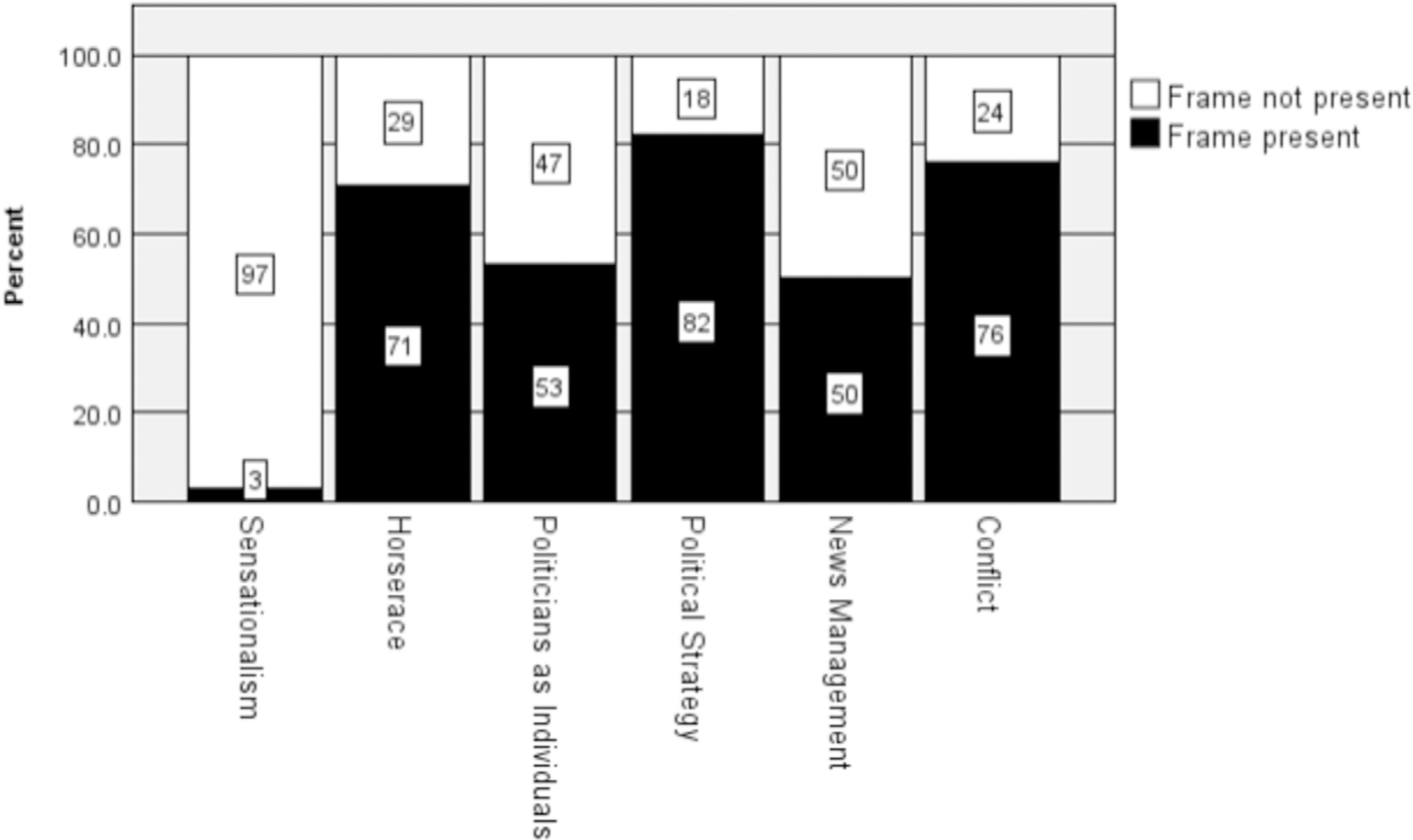
H3 proposed that the “horserace” frame will be the most prevalent among the non-mutually exclusive frames. It was identified in 70.3% (64) of the analyzed stories. The data were submitted to a Cochran’s Q test, which tests for equality of proportions when choices are not mutually exclusive. The test indicated the presence of significant differences in the prevalence of the frames, χ2(5) = 150.23, p < .001. However, the “horserace” frame was more frequent than only one other frame, sensationalism. The prevalence of the “horserace” frame was also marginally higher (p = .077, approaching statistical significance) than the news management frame. Therefore, H3 was not supported. The frames’ frequencies are presented in figure 1, and statistically significant differences based on pairwise comparisons are presented in table 3.

The first research question asked what differences (if any) exist in the prevalence of the six non-mutually exclusive frames (sensationalism, “horserace”, political strategy, politicians as individuals, news management, and conflict) across the game and issue metaframes. Chi-squared tests identified significant differences in the prevalence of these frames across the game-issue metaframe categories. Specifically, as shown in table 4, the “horserace” and politicians-as-individuals frames appeared more frequently in stories using the game metaframe.
The second research question asked what differences, if any, existed in the prevalence of metaframes and frames among the five publications. A chi-squared test indicated significant differences in the proportion of game vs. issue stories among the five newspapers, χ2 = 14.37, p < .01. The only difference that rose to the level of statistical significance indicated The Wall Street Journal had a significantly higher proportion of issue-framed articles (55.6%) than The Washington Post (10.3%). No significant differences among the newspapers emerged regarding the prevalence of episodic, balanced, and thematic frames, χ2 =9.57, p = .30.
Regarding the prevalence of non-mutually exclusive frames across the publications, there was only one noteworthy difference related to the “horserace” frame. A chi-squared test indicated the proportion of “horserace” stories was significantly higher in The Wall Street Journal (94.4%) than in The Washington Post (55.2%), χ2 = 11.51, p = .021. Sensationalism, as defined by Strömbäck and Dimitrova (2006), was present in only 2.2% (2) of the analyzed stories, no significant differences among the publications emerged, χ2 =3.59, p = .46. The politicians-as-individuals frame was present in about half (52.7%) of the analyzed stories, and no significant differences emerged among the publications, χ2 =1.71, p = .79. The political-strategy frame was identified in 81.3% (74) of the analyzed stories, but there were no significant differences among the analyzed publications, χ2 =2.52, p = .64. The news management frame was present in 49.5% (45) of the stories analyzed, with no significant differences among the analyzed publications, χ2 =2.58, p = .63. Finally, conflict was identified in 75.8% (69) of the analyzed stories, with no statistically significant differences among news organizations, χ2 =7.35, p = .12.
8.1 Results of concept coding in ATLAS.ti
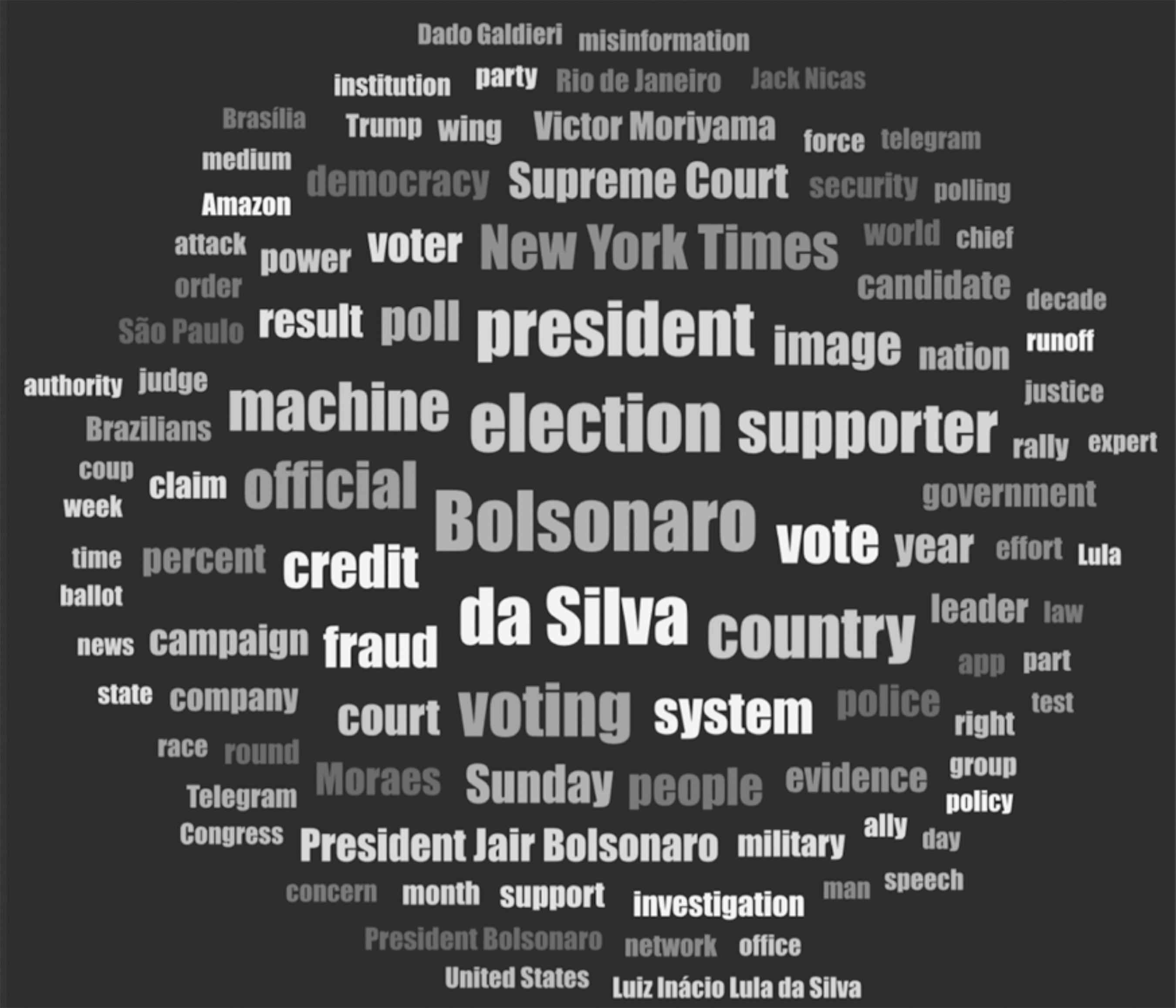
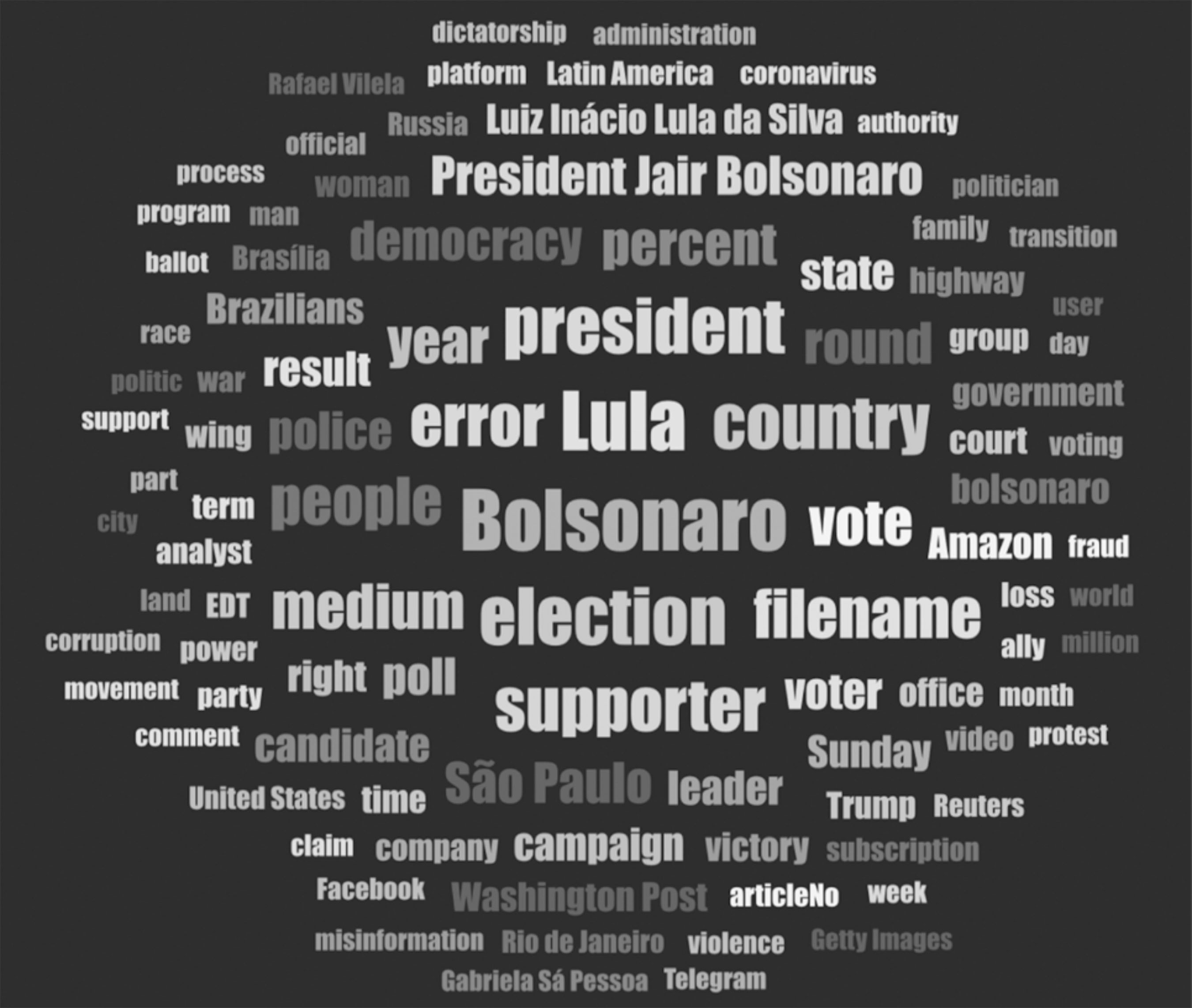
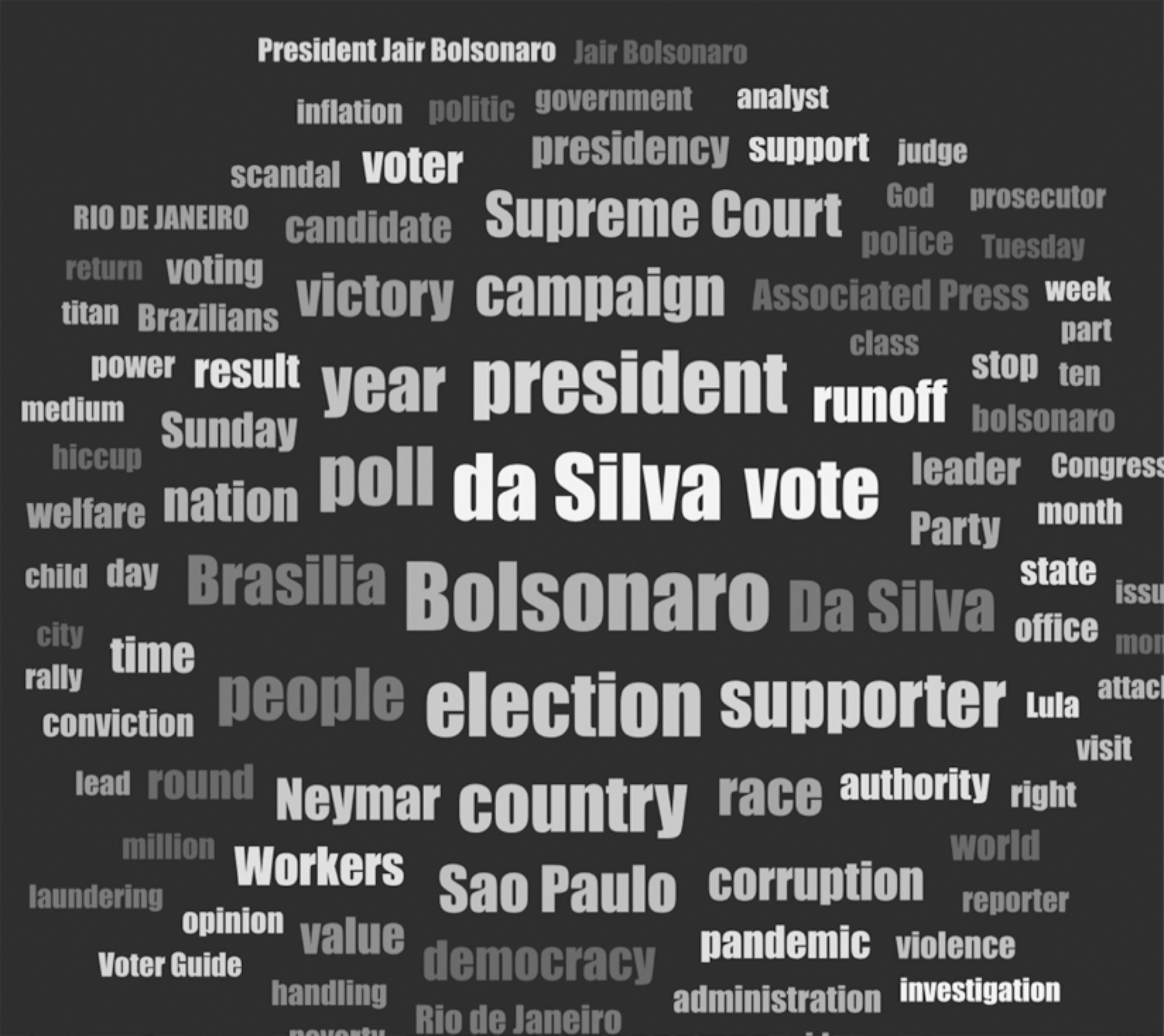
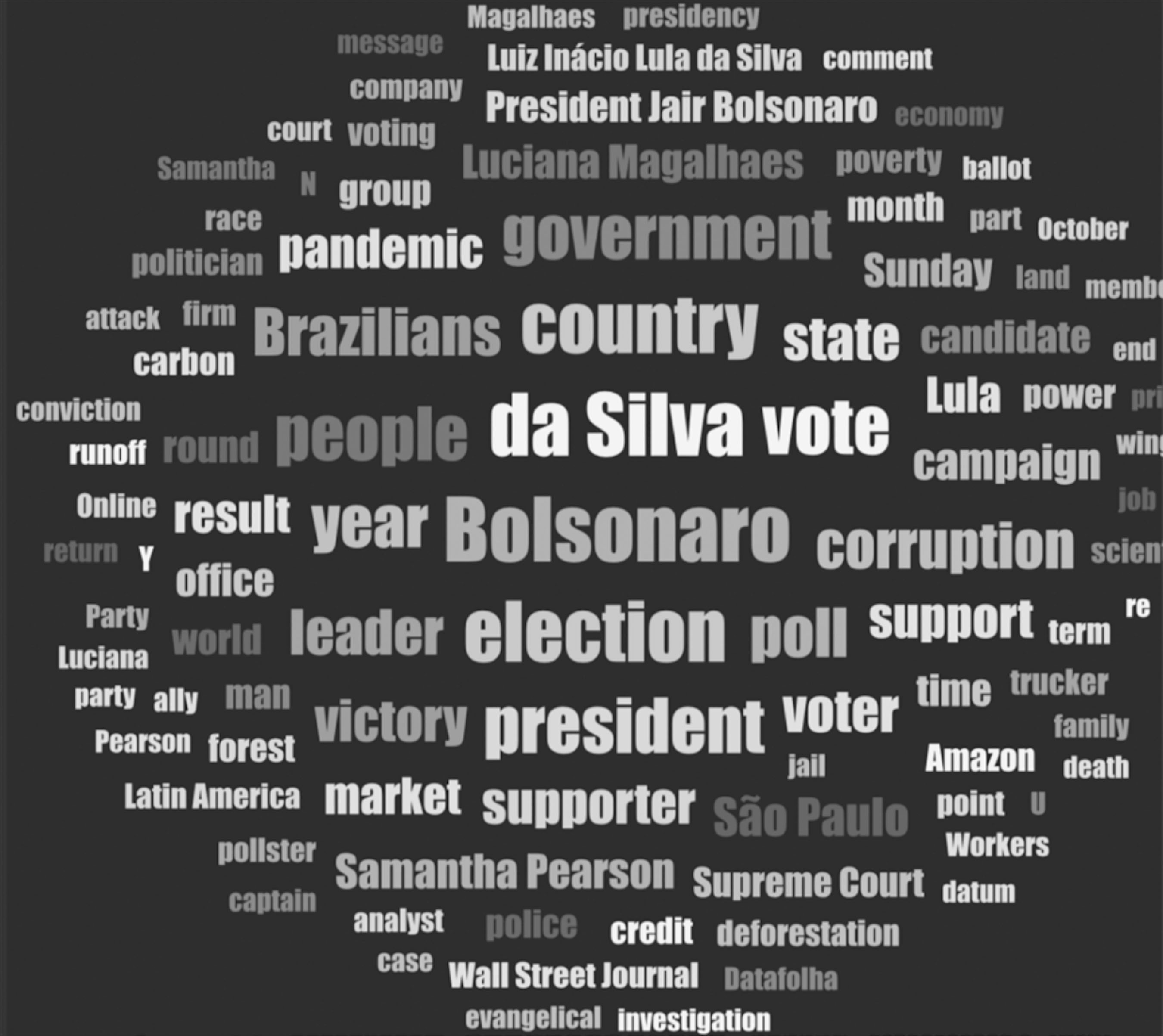
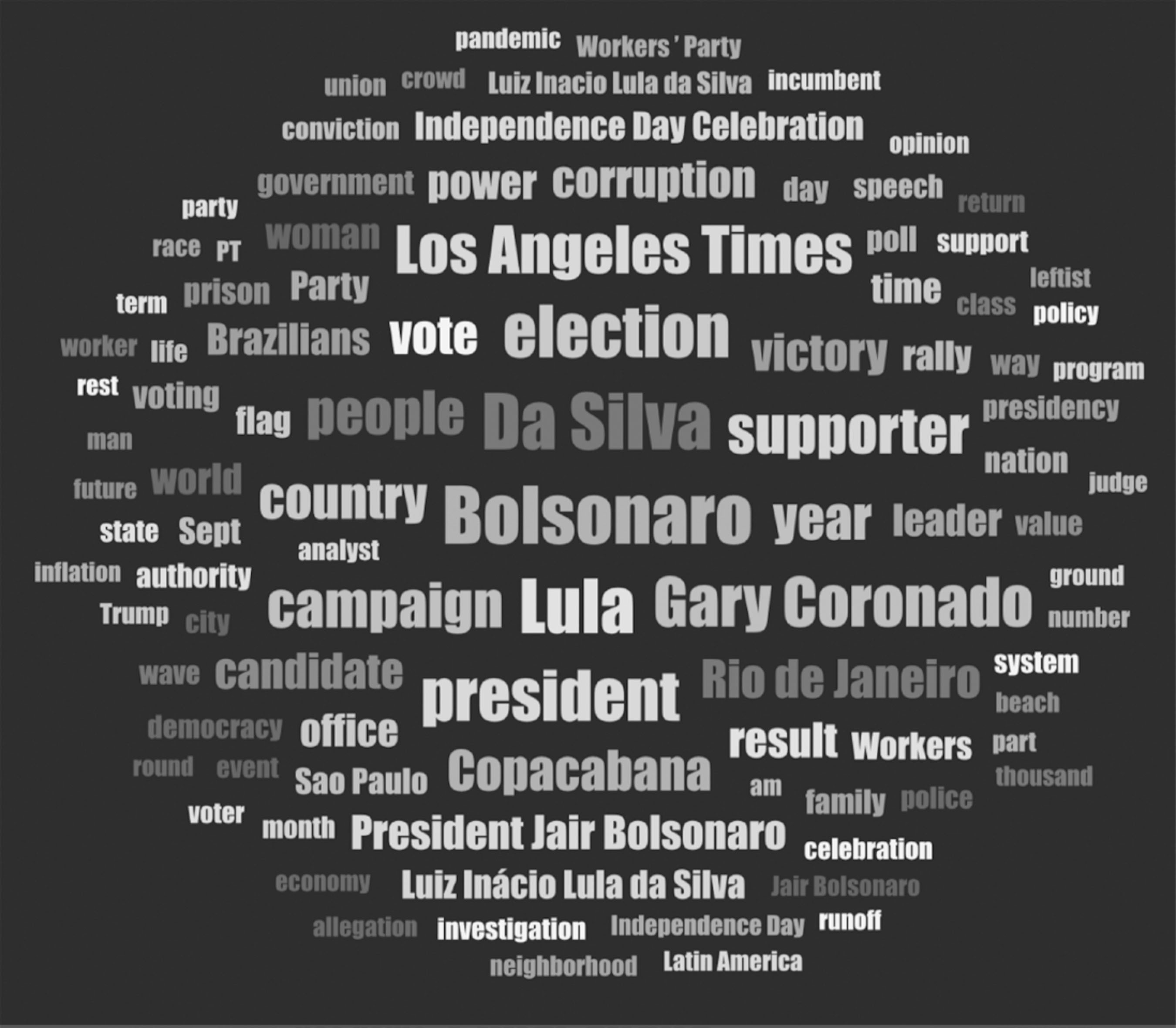
The results of the qualitative concept coding appear below as word cloud visualizations. This brief pilot analysis offers additional context for the quantitative framing analysis but lacks the nuance and insight one might find in a fully developed qualitative study.
The visualization points to expected repeated concepts, like “Bolsonaro”, “da Silva”, and variations. The concepts related to the process of elections (e.g., “poll”, “voting”, “voter”) were constant across all sources. Notions such as “supporter”, “people”, “country”, and “state” suggested a focus on public opinion and the broader political landscape. “Democracy” was a recurring theme, indicating discussions about the democratic process and its implications. Terms like “corruption”, “fraud”, “investigation”, and “misinformation” appear in multiple clouds, pointing to controversies surrounding the election. The concepts “Supreme Court” and “police” were also mentioned, suggesting legal and institutional involvement in the election.
8.2 Unique mentions by newspaper
This concept cloud included “voting system”, “machine”, and “fraud”, pointing to concerns about the integrity of the voting process; it also mentioned “military” and “coup”, indicating discussions about potential threats to democracy.
This concept cloud mentioned “misinformation” and “Facebook”, suggesting heightened attention to the role of social media in the election.
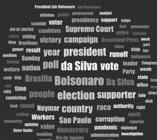
This concept cloud featured “welfare”, “inflation”, and “scandal”, suggesting a focus on socioeconomic issues and controversies. It also mentioned “Neymar”, indicating coverage of celebrity involvement or endorsements.
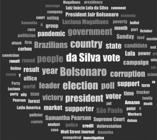
This concept cloud highlighted “government”, “economy”, and “pandemic”, indicating an emphasis on broader governance and economic issues. The coverage also mentioned “Amazon” and “deforestation”, reflecting environmental concerns. In alignment with Andrus and Waters’s (2024) study on framing the Amazon fires, The Wall Street Journal highlighted the global ecological implications of the fires, concentrating on broader environmental concerns and framing the government responses as inadequate.
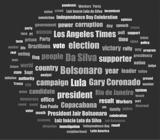
This concept cloud highlighted “Independence Day Celebration”, “Copacabana”, and “flag”, suggesting a focus on cultural and symbolic aspects of the election.
8.3 Notable contrasts
The Wall Street Journal mentioned “Amazon” and “deforestation”, but these concepts were less prominent or absent in other newspapers. The Washington Post and The New York Times emphasized “misinformation” and “fraud”, while USA Today and The Los Angeles Times focused on more cultural and socioeconomic issues. The Los Angeles Times uniquely highlighted celebratory and symbolic elements, such as “Independence Day Celebration” and “Copacabana”.
9 Discussion
The results indicate that the patterns Iyengar (1991) described are still present in coverage of foreign elections. Despite some differences, the 2022 Brazilian presidential election coverage in the five newspapers studied was relatively homogeneous, with few thematic frames and over half of the analyzed stories coded as “balanced” (containing both episodic and thematic frames). In part, the prevalence of this category was due to the length of most articles about the Brazilian election, which referenced specific events but also focused on overarching topics. It is also noteworthy, especially considering the limited representation of international stories in the U.S. news cycle, that the number of articles published by some of the analyzed newspapers was unusually high, perhaps because of the similarities of the Brazilian election process to what had occurred in the U.S. two years earlier. It is important to note that both newspapers maintain international correspondents in Brazil, as opposed to USA Today, which sourced all stories about the Brazilian elections from wire services.
As shown in previous research on election coverage, the game metaframe was still significantly more common than the issue metaframe. That was the case across all publications, except for The Wall Street Journal, in which the issue metaframe dominated, possibly due to the presence of several reporters working for the newspaper on the ground in Brazil, who routinely provided extensive context and quotes from ordinary Brazilians on a variety of topics (although, as mentioned earlier, other newspapers also have a presence in Brazil). The overall strong dominance of the game metaframe thus continued to contribute to fragmented views of the election process in Brazil among U.S. news audiences. The presence of a significant number of game-metaframe stories in elite newspapers may be explained by the U.S. market-driven media model (Hallin & Mancini, 2004), in which investigative journalism is rewarded, but competition forces elections to be covered as sports, with extensive focus on conflicts and individual stories. The issue metaframe, when present, was often in reference to the environment and the preservation of the Amazon rainforest, given the Bolsonaro administration’s neglect of environmental issues and active policy change; his minister of the environment, Ricardo Salles, was involved in an illegal logging scandal (Williams, 2021). The Bolsonaro administration filled institutions with allies of agribusiness and military officers (Maisonnave & Jeantet, 2023).
The distribution of frames in relation to the game/ issue metaframes was also not surprising: the “horserace” and the politicians-as-individuals frames were more frequently present in stories coded as representing the “game” metaframe than the issue metaframe. Both frames are highly relevant to the notion of a political “game”, with one focusing on the outcome of the competition and the other on the players themselves. It was surprising, however, that statistical significance was established only for these two frames rather than for all six, considering that sensationalism, political strategy, news management, and conflict can also be used to frame aspects of the political “game” – especially in a context in which one of the contenders has been nicknames “The Tropical Trump” due to a variety of rash and provocative statements and actions.
Another surprising finding was that the “horserace” frame was not the most prevalent among the six election-specific frames we coded for. Instead, its frequency was close to that of conflict and political strategy frames. Although this finding did not support H3, it aligns with the literature on framing elections as competitions because both conflict and strategy are essential aspects of competing.
9.1 Theoretical and practical implications
Brazil’s 2022 election process (and the events that followed on January 8, 2023) closely mirrored events that occurred in the U.S. only two years earlier, a parallelism that may, in part, explain the coverage of Brazil’s election through frames and metaframes that are routinely employed in coverage of domestic elections. Furthermore, one can interpret the U.S. newspapers’ framing tendencies through the lens of the market-driven media model (Hallin & Mancini, 2004), in which well-established formulas for news coverage are used repeatedly. While Brazilian papers O Globo, Estadão, and Folha helped normalize the electoral process in 2022, particularly Bolsonaro’s candidacy (Araujo & Prior, 2021), we cannot state whether issue and game metaframes were utilized as strategies.
One practical implication of this study for U.S. news organizations, which have in recent years faced a significant decline in trust (just like Brazilian news organizations during Bolsonaro’s administration), is that doing the same thing over and over – in this case, framing election coverage using decades-old angles and tropes – is unlikely to produce different results. The emphasis on the political “game” may help grab and keep audiences’ attention in the short run; in the long run, however, both trust in news media and audiences’ political knowledge are likely to continue to decline, as they have been for several decades.
9.2 Limitations and directions for future research
The results of this study must be tempered by several limitations, including the relatively small number of articles included in the analysis. Future studies should analyze more news stories about more than one controversial or contested international election. Furthermore, the challenges we faced in coding for sensationalism (resulting in very few stories coded as containing this frame) suggest that it is necessary to refine how sensationalism presents itself in the case of elite publications and the era of search engine optimization. Political communication scholars should also consider qualitative approaches, such as discourse or rhetorical analyses and in-depth interviews with reporters and editors who cover elections at major news publications. Such approaches would allow future researchers to conduct more in-depth examinations of election coverage and continue to adjust the codebook for optimal agreement on variable definitions.
DATA AVAILABILITY
The data supporting the findings of this study are available within the article and supplementary materials in https://bjr.sbpjor.org.br/bjr/article/view/1744.
REFERENCES
-
Aalberg, T., Strömbäck, J., & de Vreese, C. (2011). The Framing of Politics as Strategy and Game: A Review of Concepts, Operationalizations, and Key Findings. Journalism, 13(2), 162-178. DOI: 10.1177/1464884911427799
» https://doi.org/10.1177/1464884911427799 -
Aarøe, L. (2011). Investigating Frame Strength: The Case of Episodic and Thematic Frames. Political Communication, 28(2), 207–226. DOI: 10.1080/10584609.2011.568041
» https://doi.org/10.1080/10584609.2011.568041 -
Agility PR Solutions. (2022). Top 10 U.S. Newspapers by Circulation. Retrieved from www.agilitypr.com/ resources/top-media-outlets/top-10-daily-American-newspapers/
» www.agilitypr.com/ -
Andrus, L. P., & Waters, S. (2024). ENQUADRANDO AS CHAMAS: Analisando a cobertura jornalística dos incêndios na floresta Amazônica em 2019 por jornais Brasileiros e Americanos [unpublished manuscript]. University of Louisiana at Lafayette. DOI: 10.1590/SciELOPreprints.9414
» https://doi.org/10.1590/SciELOPreprints.9414 -
Araújo, B., & Prior, H. (2021). Framing Political Populism: The Role of Media in Framing the Election of Jair Bolsonaro. Journalism Practice, 15(2), 226–242. DOI: 10.1080/17512786.2019.1709881
» https://doi.org/10.1080/17512786.2019.1709881 -
ATLAS.ti. (2024). ATLAS.ti 22 Mac User Manual. Retrieved from https://doc.atlasti.com/ManualMac.v22/SearchAndCode/SearchAndCodeFindConcepts.html
» https://doc.atlasti.com/ManualMac.v22/SearchAndCode/SearchAndCodeFindConcepts.html -
Bartels, L. M. (2016). Elections in America. The Annals of the American Academy of Political and Social Science, 667(1), 36-49. Retrieved from www.jstor.org/stable/24756142
» www.jstor.org/stable/24756142 -
Boukes, M. (2021). Episodic and Thematic Framing Effects on the Attribution of Responsibility: The Effects of Personalized and Contextualized News on Perceptions of Individual and Political Responsibility for Causing the Economic Crisis. The International Journal of Press/Politics, 27(2), 374–395. DOI: 10.1177/1940161220985241
» https://doi.org/10.1177/1940161220985241 -
Datafolha. (2022, September 21). Lula oscila de 45% para 47%, e Bolsonaro mantém 33%. Retrieved from https://datafolha.folha.uol.com.br/eleicoes/2022/09/lula-oscila-de-45-para-47-e-bolsonaro-mantem-33.shtml
» https://datafolha.folha.uol.com.br/eleicoes/2022/09/lula-oscila-de-45-para-47-e-bolsonaro-mantem-33.shtml -
de-Lima-Santos, M., & Ceron, W. (2022). Racism, Death, and Protests in Brazil: Digital and Traditional News Coverage of Black Awareness Day after a Racism Crime on Twitter. Online Media and Global Communication, 1(4), 771-793. DOI: 10.1515/omgc-2022-0030
» https://doi.org/10.1515/omgc-2022-0030 -
Dunaway, J., & Lawrence, R. (2015). What Predicts the game Frame? Media Ownership, Electoral Context, and Campaign News. Political Communication, 32(1), 43–60. DOI: 10.1080/10584609.2014.880975
» https://doi.org/10.1080/10584609.2014.880975 -
Entman, R. M. (1993). Framing: Toward Clarification of a Fractured Paradigm. Journal of Communication, 43(4), 51-58. DOI: 10.1111/j.1460-2466.1993.tb01304.x
» https://doi.org/10.1111/j.1460-2466.1993.tb01304.x -
Falasca, K. (2014). Political News Journalism: Mediatization across Three News Reporting Contexts. European Journal of Communication, 29(5), 583–597. DOI: 10.1177/0267323114538853
» https://doi.org/10.1177/0267323114538853 - Fernandes, J. (2021). Brazilian Ethnic Media in the United States: An Analysis of their Social Control and Pluralistic Functions in an Electoral Context. In V. Bravo & M. De Moya (Eds.), Latin American Diasporas in Public Diplomacy (pp. 285-308). Palgrave-Macmillan.
-
Freelon, D. (2022). ReCal2: Reliability for 2 Coders Retrieved from http://dfreelon.org/utils/recalfront/recal2/
» http://dfreelon.org/utils/recalfront/recal2/ -
Gan, F., Teo, J. L., & Detenber, B. H. (2005). Framing the Battle for the White House. Gazette: The International Journal for Communication Studies, 67(5), 441–467. DOI: 10.1177/0016549205056052
» https://doi.org/10.1177/0016549205056052 -
Gamson, W. A. (1985). Goffman’s Legacy to Political Sociology. Theory and Society, 14, 605-622. DOI: 10.1007/BF00160018
» https://doi.org/10.1007/BF00160018 - Gitlin, T. (1987). The Sixties: Years of Hope, Days of Rage. Bantam Books.
- Goffman, E. (1974). Frame Analysis: An Essay on the Organization of Experience. Northeastern University Press.
-
Gorman, B., & Seguin, C. (2015). Reporting the International System: Attention to Foreign Leaders in the U.S. News Media, 1950–2008. Social Forces, 94(2), 775-799. DOI: 10.1093/sf/sov061
» https://doi.org/10.1093/sf/sov061 -
Gross, K. (2008). Framing Persuasive Appeals: Episodic and Thematic Framing, Emotional Response, and Policy Opinion. Political Psychology, 29(2), 169–192. DOI: 10.1111/j.1467-9221.2008.00622.x
» https://doi.org/10.1111/j.1467-9221.2008.00622.x -
Guazina, L., Prior, H., & Araújo, B. (2019). Framing of a Brazilian Crisis: Dilma Rousseff’s Impeachment in National and International Editorials. Journalism Practice, 13(5), 620-637. DOI: 10.1080/17512786.2018.1541422
» https://doi.org/10.1080/17512786.2018.1541422 - Hallin, D. C., & Mancini, P. (2004). Comparing Media Systems: Three Models of Media and Politics. Cambridge University Press.
-
Harmer, E., Savigny, H., & Siow, O. (2021). Trump, Clinton, and the Gendering of Newspaper Discourse about the 2016 U.S. Presidential Election Debates. Women’s Studies in Communication, 44(1), 81-101. DOI: 10.1080/07491409.2020.1752341
» https://doi.org/10.1080/07491409.2020.1752341 -
Iyengar, S. (1990). Framing Responsibility for Political Issues: The Case of Poverty. Political Behavior, 12(1), 19–40. DOI: 10.1007/BF00992330
» https://doi.org/10.1007/BF00992330 - Iyengar, S. (1991). Is Anyone Responsible?: How Television Frames Political Issues. University of Chicago Press.
-
Iyengar, S., Norpoth, H., & Hahn, K. S. (2004). Consumer Demand for Election News: The “Horserace” Sells. The Journal of Politics, 86(1), 157-175. DOI: 10.1046/j.1468-2508.2004.00146.x
» https://doi.org/10.1046/j.1468-2508.2004.00146.x -
Johnson, M. A., Davis, J. L., & Cronin, S. (2009). Mexican Expatriates Vote? Framing and Agenda Setting in U.S. News Coverage about Mexico. Mass Communication & Society, 12(1), 4–25. DOI: 10.1080/15205430801935990
» https://doi.org/10.1080/15205430801935990 -
Johnston, H., & Alimi, E. Y. (2012). Primary Frameworks, Keying and the Dynamics of Contentious Politics: The Islamization of the Chechen and Palestinian National Movements. Political Studies, 60(3), 603–620. DOI: 10.1111/j.1467-9248.2011.00927.x
» https://doi.org/10.1111/j.1467-9248.2011.00927.x -
Kerbel, M. R., Apee, S., & Ross, M. H. (2000). PBS ain’t so Different: Public Broadcasting, Election Frames, and Democratic Empowerment. Harvard International Journal of Press/Politics, 5(4), 8–32. DOI: 10.1177/1081180X00005004002
» https://doi.org/10.1177/1081180X00005004002 -
Kim, J., & Wanta, W. (2018). News Framing of the U.S. Immigration Debate during Election Years: Focus on Generic Frames. The Communication Review, 21(2), 89–115. DOI: 10.1080/10714421.2018.1479616
» https://doi.org/10.1080/10714421.2018.1479616 -
Lawrence, R. G. (2000). Game-framing the Issues: Tracking the Strategy Frame in Public Policy News. Political Communication, 17(2), 93–114. DOI: 10.1080/105846000198422
» https://doi.org/10.1080/105846000198422 -
Maisonnave, F., & Jeantet, D. (2023, January 22). Brazil’s New President Works to Reverse Amazon Deforestation. The Associated Press Retrieved from https://apnews.com/article/brazil-amazon-deforestation-indigenous-people-44ae576b9010a8f11795f8b1ad9e5b2d
» https://apnews.com/article/brazil-amazon-deforestation-indigenous-people-44ae576b9010a8f11795f8b1ad9e5b2d -
Matthes, J. (2009). Framing Responsibility for Political Issues: The Preference for Dispositional Attributions and the Effects of News Frames. Communication Research Reports, 26(1), 82–86. DOI: 10.1080/08824090802637114
» https://doi.org/10.1080/08824090802637114 -
Nitz, M., & West, H. (2004). Framing of Newspaper News Stories during a Presidential Campaign Cycle: The Case of Bush-Gore in Election 2000. The Environmental Communication Yearbook, 1(1), 219-240. DOI: 10.1207/s15567362ecy0101_11
» https://doi.org/10.1207/s15567362ecy0101_11 -
North, J. (2022, September 9). The Planetary Stakes of the Brazilian Election. The Nation. Retrieved from www.thenation.com/article/world/brazil-amazon-bolsonaro/
» www.thenation.com/article/world/brazil-amazon-bolsonaro/ - Patterson, T. E. (1993). Out of Order. Knopf.
-
Phillips, T. (2018, April 19). Trump of the Tropics: The ‘Dangerous’ Candidate Leading Brazil’s Presidential Race. The Guardian Retrieved from www.theguardian.com/world/2018/apr/19/jair- bolsonaro-brazil-presidential-candidate-trump-parallels
» www.theguardian.com/world/2018/apr/19/jair- bolsonaro-brazil-presidential-candidate-trump-parallels -
Porto, M. P. (2001, May 24–28). Framing the 2000 U.S. Presidential Election: The Coverage by the Brazilian Media. International Communication Association (ICA) annual conference, Washington D.C. Retrieved from chrome-extension://efaidnbmnnnibpcajpcglclefindmkaj/https://citeseerx.ist.psu.edu/document?repid=rep1&type=pdf&doi=23dc20067f56ce325a9cb95a04d87b881a74259d
» chrome-extension://efaidnbmnnnibpcajpcglclefindmkaj/https://citeseerx.ist.psu.edu/document?repid=rep1&type=pdf&doi=23dc20067f56ce325a9cb95a04d87b881a74259d -
Reta, M. C. (2000). U.S. Media Coverage of the 1994 Elections in South Africa. Gazette, 62(6), 523–536. DOI: 10.1177/0016549200062006005
» https://doi.org/10.1177/0016549200062006005 - Rosenthal, C. (2015). Reconsidering Agenda Setting and Intermedia Agenda Setting from a Global Perspective: A Cross-National Comparative Agenda Setting Test [unpublished dissertation]. London School of Economics.
-
Sádaba, T. (2021). Framing as Modus Operandi for Social Movements: The Case of Black Lives Matter. Review of Nationalities, 11(1), 1–13. DOI: 10.2478/pn-2021-0001
» https://doi.org/10.2478/pn-2021-0001 -
Sanches, M. (2022, September 21). Brazil Election: Why it Matters so much to the U.S BBC News. Retrieved from www.bbc.com/news/world-us-canada-62981625
» www.bbc.com/news/world-us-canada-62981625 -
Serhan, Y. (2021, November 11). The Real Reason behind Bolsonaro’s Climate Promises The Atlantic. Retrieved from www.theatlantic.com/international/archive/2021/11/the-real-reason-behind-bolsonaros-climate-promises/620666/
» www.theatlantic.com/international/archive/2021/11/the-real-reason-behind-bolsonaros-climate-promises/620666/ -
Springer, S. A., & Harwood, J. (2014). The Influence of Episodic and Thematic Frames on Policy and Group Attitudes: Mediational Analysis. Human Communication Research, 41(2), 226– 244. DOI: 10.1111/hcre.12045
» https://doi.org/10.1111/hcre.12045 -
Strömbäck, J., & Aalberg, T. (2008). Election News Coverage in Democratic Corporatist Countries: A Comparative Study of Sweden and Norway. Scandinavian Political Studies, 31(1), 91– 106. DOI: 10.1111/j.1467-9477.2008.00197.x
» https://doi.org/10.1111/j.1467-9477.2008.00197.x -
Strömbäck, J., & Dimitrova, D. V. (2006). Political and Media Systems Matter: A Comparison of Election News Coverage in Sweden and the United States. Harvard International Journal of Press/Politics, 11(4), 131-147. DOI: 10.1177/1081180X06293549
» https://doi.org/10.1177/1081180X06293549 -
Strömbäck, J., & Luengo, O. G. (2008). Polarized Pluralist and Democratic Corporatist Models: A Comparison of Election News Coverage in Spain and Sweden. International Communication Gazette, 70(6), 547-562. DOI: 10.1177/1748048508096398
» https://doi.org/10.1177/1748048508096398 -
Strömbäck, J., & Shehata, A. (2007). Structural Biases in British and Swedish Election News Coverage. Journalism Studies, 8(5), 798-812. DOI: 10.1080/14616700701504773
» https://doi.org/10.1080/14616700701504773 -
Strömbäck, J., & Van Aelst, P. (2010). Exploring some Antecedents of the Media’s Framing of Election News: A Comparison of Swedish and Belgian Election News. The International Journal of Press/Politics, 15(1), 41-59. DOI: 10.1177/1940161209351004
» https://doi.org/10.1177/1940161209351004 -
Strömbäck, J., & Van Aelst, P. (2013). Why Political Parties Adapt to the Media: Exploring the Fourth Dimension of Mediatization. International Communication Gazette, 75(4), 341-358. DOI: 10.1177/1748048513482266
» https://doi.org/10.1177/1748048513482266 - Tewksbury, D., & Scheufele, D. A. (2019). News Framing Theory and Research. In M. B. Oliver, A. A. Raney & J. Bryant (Eds.), Media effects (pp. 51-68). Routledge.
-
Weaver, D. H. (2007). Thoughts on Agenda Setting, Framing, and Priming. Journal of Communication, 57(1), 142–147. DOI: 10.1111/j.1460-2466.2006.00333.x
» https://doi.org/10.1111/j.1460-2466.2006.00333.x -
Werder, O., & Golan, G. (2002). Sharon Wins: News Coverage and Framing of the 2001 Israeli Prime Minister Election in Ten Western Print Media. Global Media Journal, 1(1), 5–14. Retrieved from https://citeseerx.ist.psu.edu/document?repid=rep1&type=pdf&doi=564dd1d45e476e756c21caed7fa413f8c03fe328
» https://citeseerx.ist.psu.edu/document?repid=rep1&type=pdf&doi=564dd1d45e476e756c21caed7fa413f8c03fe328 -
Williams, K. (2021, May 21). Brazil Police Launch Timber-Trafficking Investigation of Environment Minister Ricardo Salles Jurist News. Retrieved from www.jurist.org/news/2021/05/brazil-police-launch-timber-trafficking-investigation-of-environment-minister-ricardo-salles/
» www.jurist.org/news/2021/05/brazil-police-launch-timber-trafficking-investigation-of-environment-minister-ricardo-salles/
-
Desk Review Editor:
Fred Tavares