 Metformin hydrochloride laden nanostructured lipid carriers: A promising strategy for skin diseases
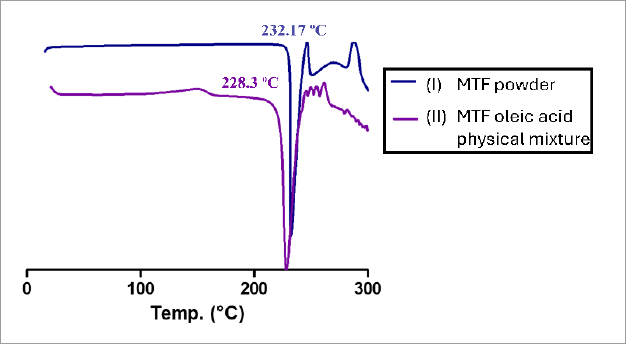
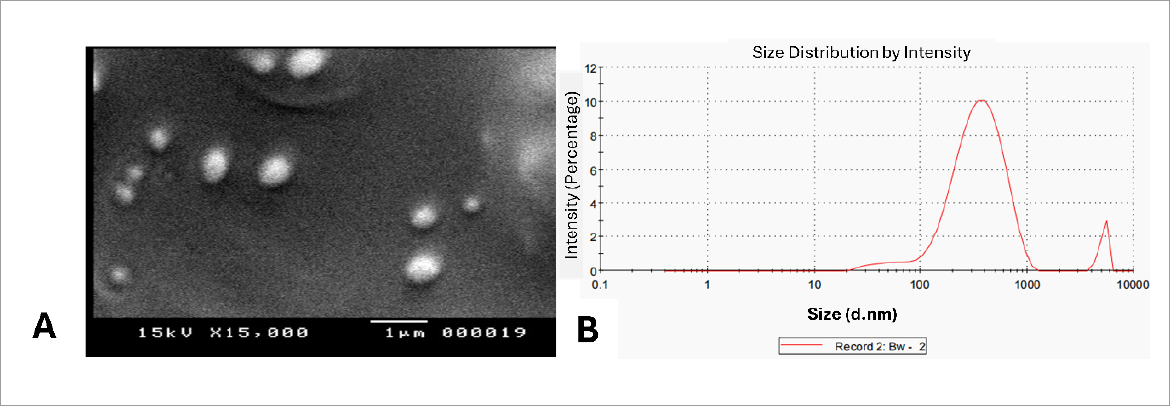
Metformin hydrochloride (MTF) has pharmacological properties for managing inflammatory skin conditions. MTF is a hydrophilic medication. Accordingly, embedding MTF into lipid carriers for enhancing skin penetration presents a challenge. The study aims to optimize the loading of MTF into nanostructured lipid carriers (NLCs) using a 22 full factorial design, employing the solvent injection technique. The NLCs were evaluated for encapsulation efficiency, hydrodynamic diameter, zeta potential, and polydispersity index. Alkalinization of the aqueous phase (pH = 12.5) resulted in maximizing the entrapment of MTF within NLCs. Furthermore, the tested solid lipids impacted the encapsulation of MTF based on their hydrophilic-lipophilic balance. The optimized formulation is composed of a lipid phase incorporating beeswax (75 mg), oleic acid (25 mg), and Span 60 (1% w/w), and an aqueous phase comprised of 1% w/w Tween 80, pH 12.5. The selected formula attained an entrapment efficiency of 53.68 ± 0.27%, a particle size of 333.0 ± 6.4 nm, and a negative surface charge, indicating adequate particles` stability. DSC and Molecular docking analyses confirmed the MTF incorporation within the lipid phase. The outcomes emphasize the importance of optimizing investigations in developing a viable delivery system for MTF to boost its permeation across the skin layers.
Keywords:
Lipid nanoparticles; Nanostructured lipid carriers (NLCs); Metformin Hydrochloride; Molecular docking; Factorial design

 Thumbnail
 Thumbnail
 Thumbnail
 Thumbnail
 Thumbnail
 Thumbnail
 Thumbnail
 Thumbnail