
 Biological potential and chemical profile of Carapanauba (Aspidosperma excelsum benth) extracts
Abstract
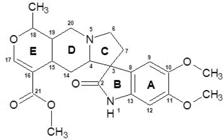
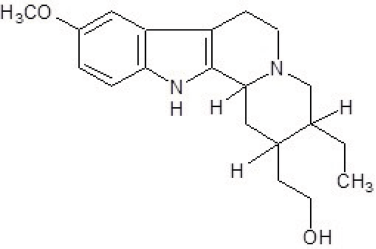
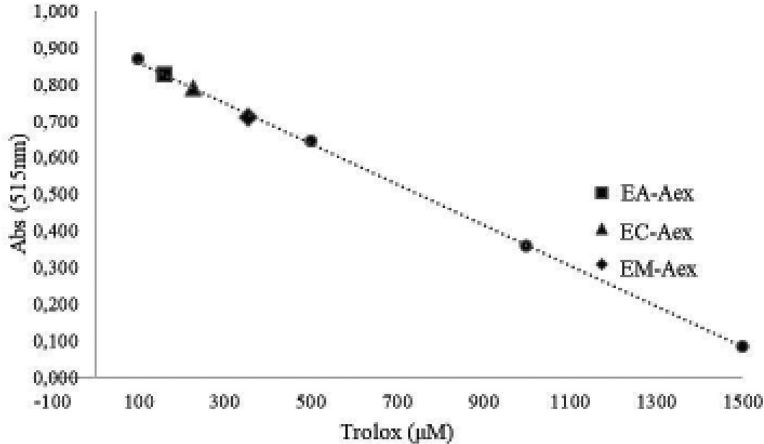
This study aimed to determine the chemical composition and biological activities of extracts from commercial samples of Aspidosperma excelsum stem bark. The extracts underwent preliminary phytochemical screening, chromatographic fractionation, and spectrometric and spectroscopic analyses, including mass spectrometry and nuclear magnetic resonance. Antioxidant and antimicrobial activities were also evaluated. Phytochemical screening revealed the presence of alkaloids, anthrones, triterpenes, and steroids. Fractionation led to the isolation and structural identification of the indole alkaloids carapanaubine and O-acetylyohimbine. APCI-MS/MS analysis of the crude extracts identified three additional indole alkaloids: spruceanumine B, 10-methoxydihydrocorinanteol, and 11-methoxy-yohimbine. In antimicrobial assays, the hexane extract exhibited moderate antifungal activity against Candida parapsilosis (MIC = 400 µg/mL), while the other extracts displayed weak activity (MIC = 1600 µg/mL). Against Candida albicans, all extracts demonstrated weak antifungal activity, and none showed antibacterial activity at the tested concentrations. Total phenolic content was low, ranging from 31.25 to 138.06 ± 0.9 mg GAE/g. The hexane extract lacked antioxidant activity, while the chloroform, ethyl acetate, and methanol extracts exhibited relatively high activity in the ABTS•+ assay (801.88 ± 42.22 to 936.33 ± 61.28 μM TE) compared to Trolox (500–1000 μM TE). However, all extracts displayed low activity in the DPPH• assay. These findings suggest that A. excelsum warrants further investigation to explore the antioxidant and antimicrobial properties of its identified constituents.
Keywords:
Apocynaceae; Indole alkaloids; Antioxidant; Antimicrobial
 Thumbnail
 Thumbnail
 Thumbnail
 Thumbnail
 Thumbnail
 Thumbnail
 Thumbnail
 Thumbnail
 Thumbnail
 Source: Authors (2024).
 Source: Authors (2024).
 Source: Authors (2024)
 Source: Authors (2024).
 Source: Authors (2024).
 Source: Authors (2024).
 Source: Authors (2024).
 Source: Authors (2024).
 Source: Authors (2024).