 Fractionation and separation of bioactive peptides using natural polymeric membrane
Abstract
The increasing interest in bioactive peptides (BPs) for their potential in disease control and health promotion has been accompanied by a lack of scalable processes for their purification, hindering their commercial production. Membrane filtration, especially using polymeric membranes (PMs), has emerged as a promising technique for BP separation due to its excellent separation performance, ease of fabrication, and flexibility. By utilizing natural sources, such as chitosan, cellulose, lignin, gelatin, alginate, keratin, and silk fibroin, in PM production, the environmental impact of membrane-based separation processes can be reduced while maintaining sustainable, eco-friendly approaches. Natural polymer membranes have exhibited excellent separation performance in terms of molecular weight cut-off and rejection of unwanted compounds, and their performance can be further improved by combining them with nanoparticles or other polymers. This review presents the recent updates on the use of PMs derived from natural sources for the separation of BPs, covering the production and functions of BPs, different membrane separation technologies, and challenges faced during downstream purification.
Keywords:
Bioactive peptides; Membrane filtration; Natural polymer
INTRODUCTION
Short chains of amino acids known as bioactive peptides (BPs) are formed either naturally or as a result of the enzyme hydrolysis of proteins (Shahidi, Zhong, 2008). These particular protein fragments have distinctive biological properties that may impact a range of health conditions (Kitts, Weiler, 2003). The production of various types of BPs with diverse actions, including antibacterial, anti-thrombotic, antihypertensive, opioid, immunomodulatory, mineral binding, and antioxidative effects, has recently garnered significant attention due to their health-promoting qualities. The amino acid sequence, length, and structural characteristics of the BPs derived from various sources determine their physiological or functional properties (Kim, Salazar, Nunes, 2016).
While BPs hold significant promise as a functional food and therapeutic product ingredients, they face various bioprocess challenges that hinder their practical application. The availability of BPs in marketable products is limited due to the lack of commercially viable technologies for large-scale manufacturing (Venugopal, 2022). There is also a shortage of fundamental research on purification techniques specifically developed for large-scale production of BPs. The primary goals of BP purification are to achieve high levels of purity and optimal recovery (Hayes et al., 2018). However, it’s also crucial to ensure that the purification procedure is economically viable. To address these challenges, it is necessary to develop cutting-edge, high-throughput, and cost-effective platforms for bioprocessing BPs.
To separate and purify BPs from complex mixtures of natural sources like plants, animals, and microorganisms, polymeric membranes (PMs) are essential. These membranes, which are composed of both synthetic and natural polymers, are intended to concentrate and segregate BPs according to their molecular weight, charge, and hydrophobicity. In a filtering system, PMs are employed, and the mixture containing BPs is passed through the membrane. On a single side of the membrane, the peptides are kept while the undesirable molecules are expelled. The membrane’s selectivity is influenced by many variables, including pore size, surface charge, and hydrophobicity, which can be changed to target particular peptides (Morales et al., 2023). Additionally, achieving high separation efficiency and yield depends on the permeability and stability of the membrane. In comparison to conventional separation methods like chromatography and electrophoresis, PMs are much more effective, economical, and ecologically benign (Kitts, Weiler, 2003). Numerous benefits arise from employing PMs for the separation of BPs across diverse industrial fields, including the food, pharmaceutical, and biotech industries. They may offer comparatively pure BPs that can be used to develop new drugs, nutritive foods, and functional foods (Alzaydi, et al., 2023).
In this regard, several reviews have highlighted the significant potential of PMs for the separation and purification of BPs. Kim et al. (2016) reviewed the manufacture of PMs for peptide separation and emphasized the importance of optimizing fabrication parameters and material choice. Agyei et al. (2016) explored bioprocess challenges in the isolation and purification of BPs and highlighted the need for innovative technologies. Korhonen and Pihlanto (2006) provided a comprehensive review of protein separation methods, with a focus on membrane-based separation. Alavi and Ciftci (2023) also reviewed membrane filtration in the purification and fractionation of BPs and discussed recent advances and future directions. In another review, Liang et al. (2023) provided an overview of membrane technology for separating BPs and highlighted the importance of membrane characteristics and recent developments in membrane modification techniques.
This review provides an overview of the recent updates on the significance and use of PMs derived from natural sources for the separation of BPs. It also covers the production and functions of BPs, as well as the different membrane separation technologies. Additionally, the review discusses the challenges faced during the downstream purification of these peptides.
BIOACTIVE PEPTIDES
Production of bioactive peptides
Bioprocessing methods such as enzymatic hydrolysis, microbial fermentation, and physical treatments can be used to produce BPs, which are frequently inactive in their parent protein molecules (Cruz-Casas et al., 2021). These methods aim to fragment proteins into smaller peptides with biological functions. One of the most popular methods for producing BPs is enzymatic hydrolysis, which involves using proteases from various sources to reduce proteins to smaller peptides, with the choice of enzyme depending on both protein availability and the desired peptide activity (Dhineshkumar, Ramasamy, 2017). In microbial fermentation processes, proteolytic bacteria are harnessed to produce BPs from low-cost protein sources like plant proteins, which may not be suitable for enzymatic breakdown (Romero-Luna, et al., 2022). Additionally, BPs can also be generated through physical methods such as high-pressure processing, ultrasound, and microwave irradiation. These methods induce protein denaturation and enhance susceptibility to enzymatic hydrolysis (Marciniak et al., 2018).
Bioactivity, functional properties, and applications
BPs have a wide range of potential uses in numerous important consumer industries, including functional food, nutraceuticals, pharmaceuticals, and cosmetics (Najafian, 2023).
BPs have gained popularity as functional ingredients in the food industry because of their capacity to offer health advantages above and beyond those of basic nutrition (Wang et al., 2020). Adding BPs to food products provides several advantages, including improving the product’s functionality, sensory qualities, and shelf life while also assisting in the creation of functional foods (Tomašević et al., 2021). Based on the BP’s composition and related health or functional claims, many food products are currently marketed. Moreover, BPs can be employed to fortify nutraceuticals and functional meals.
BPs offer therapeutic benefits due to their specificity, broad bioactivity, low toxicity, structural diversity, and low immunological response risk, providing antioxidant, immunomodulatory, anti-inflammatory, digestive, and neurological functions (Punia et al., 2020). Many studies have shown that BPs have antioxidant activity, both in vitro and in vivo, pointing to their potential therapeutic uses in the prevention and treatment of diseases linked to oxidative stress (Okagu et al., 2021 ). Different types of BP, including protein hydrolysates from fish, whey extracted from milk, soy, etc., are extracted by various membrane separation techniques, and they have been documented to have angiotensin-converting enzyme (ACE) inhibitory activity (Koirala, Prathumpai, Anal, 2021). BPs are also reported to have immunomodulatory activity by stimulating the production of different immune cells and cytokines, which is essential for improving immune function and preventing or treating infections, thus protecting the body against infections and diseases (Jiang et al., 2022).
Current research on BPs isolated via membrane separation techniques has demonstrated their in-vivo immunomodulatory action by boosting immune cell generation and proliferation, as well as the phagocytic activity of macrophages (Hernández et al., 2023). In addition to their antioxidant and immunomodulatory properties, BPs have been found to exhibit anti-inflammatory activity in various studies by mitogen-activated protein kinase (MAPK) and nuclear factor kappa B (NF-κB) pathways (Gao et al., 2021). It has been demonstrated that BPs from various sources can block the synthesis of pro-inflammatory cytokines or activate anti-inflammatory pathways, both of which are beneficial in the prevention or treatment of inflammatory diseases (Gao et al., 2021). Recent studies have isolated anti-inflammatory BPs from sources like Atlantic salmon, whey soybean, and egg yolk using techniques such as ultrafiltration (UF), nanofiltration (NF), and reversed-phase high-performance liquid chromatography (RP-HPLC) (Jenab, Roghanian, Emtiazi, 2020). Interleukin-6 (IL-6) and tumor necrosis factor-alpha (TNF-α) production by lipopolysaccharide-stimulated macrophages are suppressed by these BP (Reyes-Díaz, 2018).
BPs are believed to support digestive health by fostering the growth of beneficial gut bacteria, acting as prebiotics, and creating short-chain fatty acids (SCFAs) with anti-inflammatory properties (Li et al., 2023). They also have the potential to influence the composition and function of the gut microbiota, impacting factors like inflammation, infection, and immune function (Li et al., 2023).
Studies have demonstrated the neurological benefits of BP, which can help improve cognitive function and address neurological disorders. Certain BPs can cross the blood-brain barrier (BBB) and interact with neurotransmitter receptors or enzymes involved in neurotransmitter metabolism, thereby influencing neuronal function and neurotransmitter signaling (Bahlakeh et al., 2022). This potential mechanism can be useful in reducing the risk of neurological diseases and enhancing cognitive function (Bahlakeh et al., 2022). Recent research has identified neuroprotective peptides from various sources, including brain tissue, salmon muscle, and blue mussel protein, suggesting their potential for treating neurodegenerative diseases by mitigating toxin-induced damage (Ma et al., 2022). Due to their capacity to improve the health and appearance of the skin, BPs are also making their way into the dermatological and cosmetic industries (Aguilar-Toalá et al., 2019). Their inclusion in skincare products has been found to modulate inflammation of cells and tissues, stimulate collagen production, control the processes of angiogenesis and melanogenesis, regulate cell proliferation and migration, improve skin elasticity, and reduce fine lines and wrinkles (Avcil et al., 2020). Moreover, BPs are beneficial hair care ingredients due to their ability to strengthen hair, reduce hair breakage, and increase hair thickness (Tinoco et al., 2022).
Physicochemical properties of bioactive peptides
BPs exhibit a wide range of physicochemical properties that have an impact on their bioactivity and functionality in various applications. These characteristics include the molecular weight, hydrophobicity, solubility, stability, charge distribution, isoelectric point, ionization, and hydrophilicity or hydrophobicity of the substance (Ji et al., 2020). Despite an incomplete understanding of the connection between structure and function, numerous BPs share comparable features like peptide lengths of 2-20 amino acids and the inclusion of hydrophobic amino acids alongside proline, lysine, or arginine groups (Akbarian et al., 2022). The charge of BPs is determined by their amino acid composition, which also influences their solubility and interactions with other molecules (Wang, Xie, Li, 2019). While the core sequence influences the structure and biological function of BPs, the secondary structure, such as an alpha helix, beta sheet, or random coil, primarily governs their systemic binding properties (Akbarian et al., 2022). Some BPs undergo post-translational modifications, such as glycosylation or phosphorylation, which can affect their stability and bioactivity potential (Zheng et al., 2021).
Various techniques for the separation of bioactive peptides
The production of BPs has historically relied heavily on traditional techniques, which frequently come with many difficulties. There are now solutions to some of the problems with traditional methods as a result of bioinformatics approaches. Desired BPs can be acquired through membrane filtration (MF, UF, NF), chromatographic fractionation (HPLC, Sephadex gel, ion exchange, size exclusion, reverse HPLC), and electrophoretic (gel and capillary) techniques (Ge et al., 2020). Adjusting separation parameters like temperature, pH, and buffer composition is crucial for achieving pure BPs. By combining these methods, highly pure BPs can be produced for future research and possible applications. Membrane filtration, particularly UF and NF, is effective for purifying peptides based on molecular weight (Alavi, Ciftci, 2023). These methods have yield, purification, and product quality that are comparable to chromatography processes, but they are more affordable and productive. Enzymatic membrane reactors (EMRs) have also emerged as an effective technology for online enzyme recycling and peptide purification (Alavi, Ciftci, 2023). Electrodialysis with UF membrane (EDUF) has been identified as an ultra-selective process for peptide separation, benefiting from the size-based exclusion abilities of UF and the charge selectivity of electrodialysis. However, compared to the UF separation technique, its peptide migration rate and recovery yield are still inferior (Jayaprakash, Perera, 2020). Ongoing research aims to enhance UF process efficiency and address challenges related to electrodialysis in conjunction with UF.
Challenges associated with the separation of bioactive peptides
The production of BPs faces challenges due to biological material complexity and reaction mixture properties. Therefore, selecting the best purification pathway and using alternate techniques is crucial for effective purification. Separating and purifying BPs can be challenging due to their low levels in source materials and similarities in chemical and physical properties with other molecules (Agyei et al., 2016). BPs can also vary in size, charge, and hydrophobicity, which makes it difficult to develop a universal separation strategy (Hajfathalian et al., 2018). Components of the biological matrix, such as proteins that attach to the column and block peptide elution, can impede separation processes (Huang et al., 2023). Overpurifying BPs can be expensive, reduce yields, and remove potentially advantageous interactions with other peptides, which is a significant barrier to large-scale manufacture. Separating and purifying BPs is a time-consuming procedure that calls for specific knowledge (Wu et al., 2022).
Membrane filtration techniques, commonly used to separate BPs, are often plagued by pore blockage, which can impede effective separation and potentially contaminate or damage the membrane (Kucera, 2019). Improper membrane cleaning and storage can lead to sample contamination, while the diverse sources of BPs add complexity to the separation process, making it challenging to find a universally applicable separation method (Pimentel et al., 2019). Environmental conditions like temperature, pH, and proteolytic enzymes can affect the stability of peptides (BPs) during separation and purification processes, potentially leading to degradation or loss of activity (Ye et al., 2022). Furthermore, during sample preparation or separation, BPs are vulnerable to degradation by enzymes or other factors, which can lead to a loss of peptide activity or the generation of degradation products that could impair the separation (Cruz-Casas et al., 2021). To overcome these issues, scientists combine mass spectrometric, electrophoretic, and chromatographic methods to isolate and identify BPs, offering high sensitivity, selectivity, and accuracy while regulating the environment for future applications (Pei et al., 2022).
POLYMERIC MEMBRANES
Advantages of polymeric membranes
PMs have gained significant attention across diverse applications due to their exceptional separation capabilities, ease of production, and flexibility (Piovesana et al., 2018). Their high selectivity in separating molecules based on size, shape, and chemical properties is crucial for separation tasks. Moreover, PMs offer cost-effective advantages compared to ceramic or metallic membranes, with ongoing research focusing on methods like 3D printing and recycled materials to further enhance their cost-efficiency (Li et al., 2021). Recent studies are also exploring the development of responsive PMs that can adapt to pH changes, benefiting biomedical and environmental applications. Researchers are actively working to improve PM permeability by incorporating nanomaterials, enlarging pores, and using cross-linking agents to enhance both their permeability and durability (Guo, 2021). PMs hold substantial promise across a range of applications, and ongoing research efforts in this field could lead to significant advancements in membrane technology.
Different polymeric membrane-based separation techniques
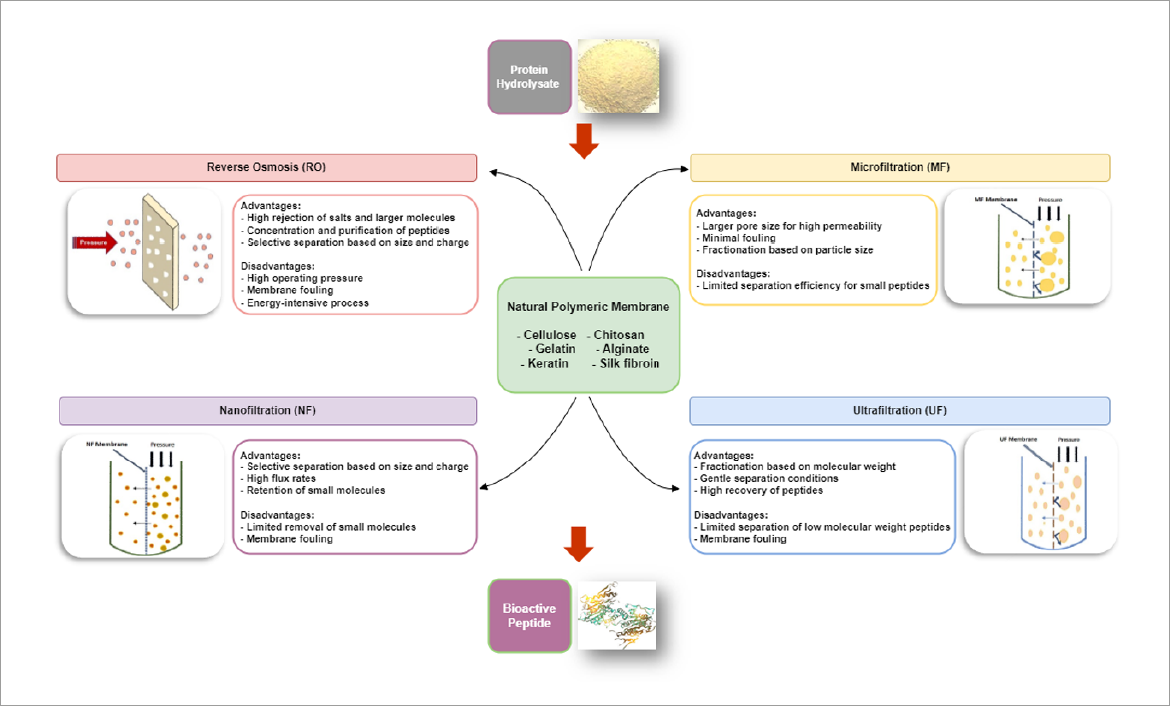
Protein hydrolysates have gained popularity in recent years due to their enhanced digestibility, which is achieved by increasing protein solubility, reducing antinutrients like protease inhibitors, oxalates, lectins, etc., and releasing BPs. BPs can be activated by separating them from their corresponding proteins (Cheng et al., 2021). Although extraction, precipitation, centrifugation, and chromatography are frequently used techniques for BPs separation, they have several drawbacks, including denaturation and proteolysis in extraction and precipitation, low resolution in centrifugation, and low yield in chromatography-based techniques (Korhonen, Pihlanto, 2006). In contrast, membrane-based separation techniques provide many advantages, including gentle filtration conditions, molecular separation, effective separation performance, a smaller space requirement, reduced chemical usage, and simple scalability (Plaxton, 2019). These characteristics make membrane-based separation techniques well-suited for different industries, including the production of BPs (Korhonen, Pihlanto, 2006). Membrane-based technology enables gentle filtration conditions, such as low temperature and pressure, without any phase change, which helps retain the bioactivity of separated BPs (Gede et al., 2020). Membrane-based separation techniques are preferred for separating BPs due to their use of transmembrane pressure (TMP) and the influence of isoelectric point and pH. Pressure-driven techniques like MF, UF, and NF are the most effective, as they increase membrane resistance as holes enlarge (Bazinet, Firdaous, 2013). (Figure 1).

Schematic diagram of process for fractionation and separation of bioactive peptides through a natural polymeric membrane.
Microfiltration
MF using PMs is commonly used for separating and purifying BPs due to its effectiveness and efficiency. PMs, which have a controlled pore size ranging from 0.1 to 10 microns, are utilized to selectively separate the target BPs from the reaction mixture (Lemes et al., 2021). The impurities that are retained on the membrane can be removed by washing with a suitable solvent or buffer solution and the permeate containing BPs can be further purified by using techniques like UF or chromatography (Mostashari et al., 2023). MF can be performed in three configurations: dead-end filtration, cross-flow filtration, and tangential flow filtration (Lemes et al., 2021). Dead-end filtration filters until the membrane clogs, cross-flow filtration minimizes clogging, and tangential flow filtration maintains a concentration gradient for higher throughput (Dosmar et al., 2019). The bioprocess industry considers MF techniques, particularly PMs, as a crucial and effective method for the separation and purification of BPs, including bacteria and suspended solid particles (Wenten et al., 2021). The technique boasts several advantages, including low energy consumption, high separation efficiency, ease of implementation and operation, high productivity, absence of phase transition, and non-use of additional solvents (Castro-Muñoz, Fíla, 2018). MF is a cost-effective, adaptable, and versatile method for solute recovery, separation, and bioprocessing applications due to its ability to scale up to industrial production levels (Anis, Hashaikeh, Hilal, 2019).
In one study by Vieira et al., (2020) an innovative beverage called GOB, made from goat whey and orange juice and processed using MF with a newly developed ceramic membrane, showed improved quality. This process, which used a ceramic membrane with a pore size of 0.2 μm, demonstrated scalability for industrial production and versatility for various bioprocessing applications (Rektor, Vatai, 2004). In another study, Sitanggang et al., (2021) utilized enzymatic membrane reactors to couple enzymatic hydrolysis with MF membranes, which retained the enzyme and protein substrate while allowing the separation of the produced peptides through the application of hydraulic pressure. During hydrolysis, there was a continuous conversion of proteins into BPs that were subsequently released and separated from the reactor, depending on the molecular weight cut-off size of the membrane employed (Sitanggang, Sumitra, Budijanto, 2021). The molecular weight of the final product can be regulated by utilizing a membrane with a suitable pore size that is recommended to be 3-6 times lower than the molecular mass of the enzyme to ensure its retention (Nazir et al., 2019).
Ultrafiltration
UF is a technique commonly utilized to separate and purify BPs using membranes with a narrower pore size range (1-100 nanometers) than MF (Miller et al., 2017). Therefore, it is critical to choose a membrane with the appropriate molecular weight cut-off for the UF of BPs. Typically, PMs with molecular weight cut-offs ranging from 1 to 1000 kDa are employed for UF of BPs (Lemes et al., 2021). In recent years, researchers have improved the resolution capabilities of traditional UF methods by incorporating combined driving forces like electrical and concentration gradients into commercial processes (Qiu et al., 2023). For instance, charged UF can be employed to separate proteins in the 0.1-5 μm range, while membrane chromatography can be applied to peptides around 1-10 μm (Yea, et al., 2022). To collect substances ranging in size from 0.1 to 5 nm, methods including ultrasound-enhanced ultrafiltration, high-performance tangential flow filtration, electro-ultrafiltration with membranes, electrodialysis using ultrafiltration membranes, and potential employment of electrodialysis with a bipolar membrane have been explored (Vieira et al., 2020). Reviews have been made on protein separation using filtration techniques, with a focus on UF. Some of these reviews cover a broad range of topics such as comprehensive membrane-based protein separation, UF applications in the food industry (Sitanggang, Sumitra, Budijanto, 2021) and other general applications, protein recovery from alfalfa leaves through filtration, Separation, and purification of whey protein using membrane processes (Aguero et al., 2017). Protein recovery from fish meal wastewater through UF recovery of antihypertensive peptides through membrane-based production, pore blocking in UF, fouling in MF and UF, the effect of ultrasonic waves on membrane filtration, electrodialysis-assisted UF, and dynamic filtration (Ratnaningsih et al., 2021).
The charged-membrane UF technique is utilized to overcome the limitations of size-based separation methods, which are hindered by electrostatic forces (Mohammad et al., 2012). Arunkumar, Molitor and Etzel (2016) evaluated the efficiency of two UF membranes: small-scale flat-sheet and larger-scale spiral-wound wide-pore membranes, which effectively concentrated whey proteins, retaining approximately 98% of the total proteins. Mehta, Zydney (2005) demonstrated the significant impact of membrane charge on UF membrane performance, particularly on the flux of permeate and protein transport behavior. The findings provide insights into the design and optimization of UF membranes for a variety of applications, such as protein purification and wastewater treatment (Chen et al., 2023). Liu et al. (2011) provided a novel method for protein separation based on their electrophoretic and electroosmotic mobilities on a supported lipid bilayer (SLB) surface. Mehta, Zydney (2005) demonstrated the effectiveness of their method by separating a mixture of proteins using an SLB surface consisting of a mixture of charged and uncharged lipids.
Concentration polarization in protein fractions is a common issue in separation processes, requiring complex control systems and often harder to scale up compared to other methods (Liu et al., 2011). Electro-ultrafiltration (EUF) is another approach that can be used to address concentration polarization and fouling in UF processes, particularly in protein separation applications. EUF combines the principles of electro-kinetic phenomena, such as electrophoresis, electro-osmosis, and electrolysis, with UF to create an electrochemical environment that can modify the properties of the solutes and the membrane surface, resulting in reduced fouling and concentration polarization (Jenab, Roghanian, Emtiazi, 2020). Song et al. (2010) described a rapid and efficient protein concentration technique using crossflow electro-ultrafiltration (EUF). In their study, they observed that under the influence of an electric field, the protein solution passed through a porous membrane, minimizing membrane fouling and increasing the concentration rate.
Wen-Qiong et al., (2017) suggested that UF combined with transglutaminase (TG) catalysis can be used to modify the properties of food proteins to improve protein solubility, emulsifying properties, and gel-forming ability. Recently, the UF membrane incorporated into electrodialysis cells (EDUF) has been used for BPs separation, which is based on their charge and molecular weight. An electric potential difference is the driving force of the process EDUF (Wen-Qiong et al., 2017). He et al., (2016) explored the EDUF separation technology as an enrichment tool to facilitate the isolation of rapeseed antihypertensive peptides.
Moreover, the effective separation of BPs from flaxseed protein hydrolysates involved a successful approach by combining high hydrostatic pressure (HHP) pre-treatment with EDUF membranes (Marie et al., 2019). This method enhanced BP concentration in the hydrolysates, leading to increased peptide yield during the subsequent electrodialysis process (Suwal et al., 2014). Additionally, the electrodialysis with UF membranes effectively separated and concentrated the peptide fractions from quinoa hydrolysates. The peptide fractions showed potential antihypertensive and antidiabetic activity, indicating that they could be used in the development of functional foods process (Suwal et al., 2014). Again, another study provided insights into the potential of using electrodialysis with UF membrane for the production of BPs from whey protein hydrolysate (Marie et al., 2019). The recovered BPs fraction was discovered to exhibit higher bioactivity compared to the initial hydrolysate, specifically in terms of its ability to inhibit dipeptidyl peptidase-IV (DPP-IV) and angiotensin-converting enzyme (ACE) (Fadimu et al., 2022).
For the isolation of the Neokyotorphin (α137-141) peptide from hemoglobin, standard enzymatic hydrolysis needed chemical denaturation of hemoglobin (Geoffroy et al., 2022). However, this led to higher chemical usage and subsequently elevated mineral salt levels in the resulting hydrolysates. The application of electrodialysis with a bipolar membrane (EDBM) is proposed as a different approach to conventional enzymatic hydrolysis for separating α137-141 peptides from hemoglobin (Adje et al., 2011). Additionally, for the separation of casein, using the EDBM module coupled with UF can effectively prevent the precipitation of casein within the EDBM stack, which is essential for enhancing the efficiency of the EDBM process (Adje et al., 2011). Furthermore, to produce α137-141 peptide from enzymatic hydrolysis of bovine hemoglobin with low mineral salt concentration, EDBM is an eco-efficient and innovative technology in which cationic membrane configuration (MCP) and anionic membrane configuration (AEM) are used (Mikhaylin et al., 2018). The use of EDBM-MCP resulted in the production of hydrolysates with a low mineral salt concentration but caused fouling on MCP. On the other hand, EDBM-AEM produced hydrolysates without fouling, although their salt concentration was similar to that of conventional hydrolysis (Abou-Diab et al., 2020).
Nanofiltration
NF is another membrane separation technique that has gained popularity for the separation of BPs in recent years. It involves the use of a semi-permeable membrane with nanopores ranging from 1 to 10 nm in size, which selectively separates molecules based on their size, shape, and charge (Khulbe, Matsuura, 2021). Different techniques are utilized in NF, including pressure-driven, concentration-driven, and electric field-driven methods (Wang et al., 2022). In pressure-driven NF, the pressure gradient is used to drive the transport of molecules through the membrane, making it ideal for industrial applications to recover valuable compounds and separate biomolecules (De Castro, Sato, 2015). Concentration-driven NF uses a concentration gradient to separate molecules, which is particularly useful for separating small molecules from larger ones (Krupková et al., 2023). Electric field-driven NF relies on an electric field to drive the transport of molecules through the membrane, making it useful for separating molecules based on their charge. By employing these different techniques, NF has proven to be an effective method for the separation and purification of BPs (Tavares et al., 2012).
One of the key advantages of NF in the separation of BPs is its ability to separate peptides based on their size and charge, which is particularly important for separating peptides with similar molecular weights. The use of NF can be a cost-effective and environmentally friendly alternative to traditional separation techniques. Butylina, Luque, Nyström (2006) employed a UF and NF hybrid approach to separate BPs from sweet whey, which was treated with NF at varying pH levels, 9.5 and 3.0, representing different peptide charge states and Langevin et al. (2012) compared EDUF and NF methods for separating BPs from soy protein hydrolysate (SPH). NF outperformed EDUF in producing a low molecular weight peptide fraction, while EDUF’s molecular weight profile was influenced by process pH. Furthermore, Mosser et al., (2015) conducted a study to fractionate yeast extract using the NF process to identify the key compounds that could improve CHO cell culture. In their study, they found that short peptides were separated together in the permeate fraction. Additionally, the separation of BPs from whey protein by using a combination of UF and NF, in which two polyethersulfone membranes with varying pore sizes were tested at three different pH values (2, 6, and 8), found that, among 42 peptides, 16.7% were biologically active (Yu et al., 2022). Recently, Yu et al. (2022) developed a positively charged nanochannel NF membrane using a one-step method from random amphiphilic copolymers (RACPs) synthesized through soap-free polymerization. The membrane exhibited a large pore structure and a strong surface positive charge across a wide pH range (2 to 10), enabling efficient separation of BPs through a combination of size sieving and the Donnan effect (Qasem, Mohammed, Lawal, 2021).
POLYMERIC MEMBRANE FROM NATURAL SOURCES
PMs made from natural sources have emerged as an attractive alternative to synthetic membranes for separating and purifying BPs. Using natural sources in PMs production for BPs separation can reduce the environmental impact of membrane-based separation processes and provide a sustainable, eco-friendly approach (Kirshanov et al., 2022). Natural materials like chitosan, cellulose, silk fibroin, and alginate have been used to produce PMs due to their biocompatibility, biodegradability, and availability (Bandehali et al., 2021). These membranes have demonstrated excellent separation performance in terms of molecular weight cutoff and rejection of unwanted compounds (Dara et al., 2020). For instance, chitosan membranes have been effective in separating BPs from shrimp waste hydrolysate, while cellulose membranes have been used for the purification of angiotensin-converting enzyme (ACE) inhibitory peptides from milk protein hydrolysates. Furthermore, silk fibroin membranes have been used for separating peptides with molecular weights ranging from 1 to 10 kDa (Jiang et al., 2020). By combining natural polymer membranes with other materials like nanoparticles or other polymers, researchers can further improve their BP separation performance. For example, chitosan membranes functionalized with silver nanoparticles have shown improved antibacterial properties, which are useful in food industry applications (Sayyed et al., 2021).
Lignin (Figure 2A), a green, renewable, and degradable biomacromolecule, is the second most abundant biomass in the botanic field, used as feedstock, raw material, and reactive additive in polymeric materials. It is abundant in phenyl and hydrophilic active groups like methoxy, hydroxy, and ether groups, making its cost low due to its high abundance (Kumar et al., 2020). Lignin, a naturally occurring polymeric material, has potential applications in membrane fabrication and membrane modification (Sun et al., 2023). Cellulose (Figure 2B) membranes, a biopolymer extracted from plant sources like wood and cotton, are widely used in ultrafiltration (UF) processes for biomolecule separation and purification due to their biocompatibility, non-toxicity, and mechanical strength (Poolachira, Velmurugan, 2023). Cellulose membranes come in various forms like MF, UF, and NF, and can be fabricated using techniques like phase inversion, electrospinning, and chemical modification. In the phase inversion method, a cellulose polymer solution is cast onto a flat surface and then immersed in a non-solvent bath, resulting in the formation of a porous membrane via phase separation (Jiménez-Gómez, Cecilia, 2020). The pore size and morphology of the membrane can be adjusted by varying the concentration of the polymer solution and the properties of the non-solvent bath. In the electrospinning method, a cellulose polymer solution is electrospun onto a collector to form a non-woven membrane with a controlled pore size and morphology (Jiménez-Gómez, Cecilia, 2020). The template-assisted synthesis method involves casting a cellulose polymer solution onto a pre-formed template, cross-linking, or curing it to form a stable membrane. This method offers low fouling, biocompatibility, cost-effectiveness, and high mechanical strength, making it ideal for biopharmaceutical applications (Raemdonck et al., 2014). Chitosan (Figure 2C) is another naturally occurring biopolymer that is obtained from chitin and is currently being employed in the separation of BPs. This structural polysaccharide is abundantly present in the exoskeletons of various crustaceans, including crabs, lobsters, and shrimp (Thimmiah et al., 2022). Due to its unique properties such as high surface area, high mechanical strength, and biocompatibility, chitosan has found diverse applications in the biomedical field and the production of membranes for filtration and separation processes (Thimmiah et al., 2022). Chitosan membranes are being explored for separating and purifying BPs, with properties tailored by controlling chitosan concentration, deacetylation, and cross-linking agents. Surface modification techniques enhance biocompatibility and hydrophilicity. Chitosan membranes have been demonstrated to have excellent separation properties for molecules with molecular weights ranging from 200 Da to 100 kDa (Román-Doval et al., 2023). In particular, chitosan membranes have been utilized for the separation and purification of peptides from both plant and animal sources, and have shown potential in the separation of antimicrobial peptides, which have significant applications in the food industry. Fibrin (Figure 2D) is a viscoelastic biological polymer formed by the coagulation cascade at the site of vascular damage. A locally active thrombin enzyme cleaves circulating fibrinogen to generate fibrin monomers. During the last two decades, autologous Platelet Rich Fibrin (PRF) opened new perspectives in regenerative medicine and the preparation of PRF membranes (Kawase et al., 2015). The Platelet Rich Fibrin membranes (PRF) play a key role in tissue and bone regeneration. Numerous articles have been published detailing the various properties of PRF membranes (Gassling et al., 2010). Gelatin (Figure 2E), a protein-based biopolymer obtained from animal skin, bones, and connective tissues, exhibits unique physicochemical properties that make it an excellent option for various separation processes. Gelatin membranes, in particular, are a safe and biocompatible choice for biomedical applications due to their non-toxicity and biodegradability. Recently, they have been studied as an alternative to synthetic PMs for UF and other separation processes (Radu, Voicu, Thakur, 2023). The properties of gelatin membranes can be fine-tuned by adjusting the gelatin concentration, crosslinking density, and processing parameters. These membranes have a high degree of porosity, good mechanical strength, and excellent biocompatibility and can be used for the separation and purification of biomolecules, including proteins, peptides, and enzymes, as well as for drug delivery applications and the removal of heavy metal ions from wastewater. Gelatin membranes possess a hydrophilic and porous structure, which enables effective separation of peptides ranging from 1-10 kDa (Zong et al., 2022). Several methods have been developed for the preparation of gelatin membranes, including solution casting, electrospinning, and phase separation. Alternatively, a gelatin solution can be frozen and the ice removed by sublimation under a vacuum to create a porous structure that can be used as a scaffold for tissue engineering or as a membrane for separation or filtration applications (Alipal et al., 2021). The surface properties of gelatin membranes can be modified through various techniques, such as plasma treatment, chemical treatment, or coating with other materials (Alipal et al., 2021). These modifications can enhance the wettability, biocompatibility, and functionalization of the membrane surface. Crosslinking agents like glutaraldehyde, formaldehyde, or genipin can be employed to enhance the mechanical strength and water resistance of the membranes (Yu et al., 2021). Gelatin can also be blended with other materials such as chitosan, polyvinyl alcohol, or cellulose to improve the properties of the membrane, including stability, mechanical strength, and biocompatibility (Xiao et al., 2023). Nonetheless, gelatin’s susceptibility to hydrolysis and degradation may limit membrane durability and stability over time, and the use of animal-derived sources raises ethical and safety concerns (Xiao et al., 2023). Therefore, researchers are exploring alternative sources of gelatin, such as fish or plant-based sources, to overcome these limitations (Xiao et al., 2023). Several other natural polymers, including alginate, keratin, and silk fibroin, are also utilized for the separation of BPs. Alginate (Figure 2F) is a linear polysaccharide extracted from brown seaweed and consists of repeating units of β-D-mannuronic acid (M) and α-L-guluronic acid (G) connected by 1-4 glycosidic bonds. Alginate, a biocompatible and degradable material, forms gels with calcium ions, enabling the immobilization of enzymes and biomolecules in separation applications, with adjustable pore size by changing the concentration of alginate and calcium ions (Teng et al., 2021). Keratin (Figure 2G), derived from animal sources like chicken feathers and sheep wool, can be processed into membranes using techniques like solvent casting, electrospinning, or phase separation (Yan et al., 2022). Silk fibroin (Figure 2H), a natural protein from spiders and silkworms, is being explored for its biocompatibility, high porosity, and mechanical strength, making it a potential material for separation membranes (Grabska-Zielińska et al., 2021).
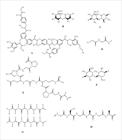
Basic chemical structure of natural polymeric membrane A: Lignin; B: Cellulose; C: Chitosan; D: Fibrin; E: Gelatin; F: Alginate; G: Keratin; and H: Silk fibroin.
CONCLUSION
PMs offer several advantages over other separation techniques and have emerged as a promising technology for the separation of BPs. They are cost-effective, efficient, and environmentally friendly, making them suitable for various industrial applications. Due to the increasing demand for high-purity BPs in the food, biotech, and pharmaceutical industries, advanced separation techniques are needed to meet the stringent requirements for purity and yield. PMs have the potential to address these challenges, as they can be designed and optimized to selectively separate and purify target peptides based on their molecular weight, charge, and hydrophobicity. In the future, the development of PMs is expected to focus on improving their selectivity, stability, and permeability and on novel materials that can meet the specific needs of different separation applications. With continued research and development, PMs are expected to lead to more advanced membrane materials, improved membrane processes, and successful commercialization in the fractionation and separation of BPs from natural sources.
ACKNOWLEDGMENTS:
We thank Assam down town University, Assam, India for providing the necessary facilities and technical support.
REFERENCES
-
Abou-Diab M, Thibodeau J, Deracinois B, Flahaut C, Fliss I, Dhulster P, et al. Bovine hemoglobin enzymatic hydrolysis by a new ecoefficient process-part I: Feasibility of electrodialysis with bipolar membrane and production of neokyotorphin (Α137-141). Membranes. 2020;10(10). https://doi.org/10.3390/membranes10100257
» https://doi.org/10.3390/membranes10100257 -
Adje EY, Balti R, Kouach M, Dhulster P, Guillochon D, Nedjar-Arroume N. Obtaining antimicrobial peptides by controlled peptic hydrolysis of bovine hemoglobin. Int J Biol Macromol. 2011;49(2):143-153. https://doi. org/10.1016/j.ijbiomac.2011.04.004
» https://doi. org/10.1016/j.ijbiomac.2011.04.004 -
Aguero R, Bringas E, San Roman M F, Ortiz I, Ibanez R. Membrane processes for whey proteins separation and purification. A review. Curr Org Chem. 2017;21(17):1740-52. https://doi.org/10.2174/1385272820666160927122523
» https://doi.org/10.2174/1385272820666160927122523 -
Aguilar-Toalá JE, Hernández-Mendoza A, González-Córdova AF, Vallejo-Cordoba B, Liceaga AM. Potential role of natural bioactive peptides for development of cosmeceutical skin products. Peptides. 2019;122:170170. https://doi.org/10.1016/j.peptides.2019.170170
» https://doi.org/10.1016/j.peptides.2019.170170 -
Agyei D, Ongkudon CM, Wei CY, Chan AS, Danquah MK. Bioprocess challenges to the isolation and purification of bioactive peptides. Food Bioprod Process. 2016;1(98):244-56. https://doi.org/10.1016/j.fbp.2016.02.003
» https://doi.org/10.1016/j.fbp.2016.02.003 -
Akbarian M, Khani A, Eghbalpour S, Uversky VN. Bioactive Peptides: Synthesis, sources, applications, and proposed mechanisms of action. Int J Mol Sci. 2022;23(3):1445. https://doi.org/10.3390/ijms23031445
» https://doi.org/10.3390/ijms23031445 -
Alavi F, Ciftci O. Purification and fractionation of bioactive peptides through membrane filtration: A critical and application review. Trends Food Sci Technol. 2023;131:118-28. https://doi.org/10.1016/j.tifs.2022.11.024
» https://doi.org/10.1016/j.tifs.2022.11.024 -
Alipal J, Mohd Pu’ad NAS, Lee TC, Nayan NHM, Sahari N, Basri H, et al. A Review of gelatin: Properties, sources, process, applications, and commercialisation. Mater Today: Proc. 2021;42:240-50. https://doi.org/10.1016/j.matpr.2020.12.922
» https://doi.org/10.1016/j.matpr.2020.12.922 -
Alzaydi A, Barbhuiya RI, Routray W, Elsayed A, Singh A. Bioactive peptides: Synthesis, applications, and associated challenges. Food Bioeng. 2023;2(3):273-90. https://doi.org/10.1002/fbe2.12057
» https://doi.org/10.1002/fbe2.12057 -
Anis SF, Hashaikeh R, Hilal N. Microfiltration membrane processes: A review of research trends over the past decade. J Water Process Eng. 2019;32:100941. https://doi.org/10.1016/j.jwpe.2019.100941
» https://doi.org/10.1016/j.jwpe.2019.100941 -
Arunkumar A, Molitor MS, Etzel MR. Comparison of flat-sheet and spiral-wound negatively-charged wide-pore ultrafiltration membranes for whey protein concentration. Int Dairy J. 2016;56:129-33. https://doi.org/10.1016/j.idairyj.2016.01.012
» https://doi.org/10.1016/j.idairyj.2016.01.012 -
Avcil M, Akman G, Klokkers J, Jeong D, Çelik A. Efficacy of bioactive peptides loaded on hyaluronic acid microneedle patches: A monocentric clinical study. J Cosmet Dermatol. 2020;19(2):328-37. https://doi.org/10.1111/jocd.13009
» https://doi.org/10.1111/jocd.13009 -
Bahlakeh G, Rahbarghazi R, Abedelahi A, Sadigh-Eteghad S, Karimipour M. Neurotrophic factor-secreting cells restored endogenous hippocampal neurogenesis through the Wnt/β-catenin signaling pathway in AD model mice. Stem Cell Res Ther. 2022;13(1):1-14. https://doi.org/10.1186/s13287-022-03024-6
» https://doi.org/10.1186/s13287-022-03024-6 -
Bandehali S, Sanaeepur H, Amooghin AE, Shirazian S, Ramakrishna S. Biodegradable polymers for membrane separation. Sep Purif Technol. 2021;269:118731. https://doi.org/10.1016/j.seppur.2021.118731
» https://doi.org/10.1016/j.seppur.2021.118731 -
Bazinet L, Firdaous L. Separation of bioactive peptides by membrane processes: technologies and devices. Recent Pat Biotechnol. 2013;7(1):9-27. https://doi.org/10.2174/1872208311307010003
» https://doi.org/10.2174/1872208311307010003 -
Butylina S, Luque S, Nyström M. Fractionation of whey-derived peptides using a combination of ultrafiltration and nanofiltration. J Membr Sci. 2006;280(1-2):418-26. https://doi.org/10.1016/j.memsci.2006.01.046
» https://doi.org/10.1016/j.memsci.2006.01.046 -
Castro-Muñoz R, Fíla V. Membrane-based technologies as an emerging tool for separating high-added-value compounds from natural products. Trends Food Sci Technol . 2018;82:8-20. https://doi.org/10.1016/j.tifs.2018.09.017
» https://doi.org/10.1016/j.tifs.2018.09.017 -
Chen GQ, Qu Y, Gras SL, Kentish SE. Separation technologies for whey protein fractionation. Food Eng Rev. 2023;15:438-65. https://doi.org/10.1007/s12393-022-09330-2
» https://doi.org/10.1007/s12393-022-09330-2 -
Cheng G, Li Z, Ren S, Han D, Xiao M, Wang S, et al. A robust composite proton exchange membrane of sulfonated poly (fluorenyl ether ketone) with an electrospun polyimide mat for direct methanol fuel cells application. Polymers. 2021;13(4):523. https://doi.org/10.3390/polym13040523
» https://doi.org/10.3390/polym13040523 -
Cruz-Casas DE, Aguilar CN, Ascacio-Valdés JA, Rodríguez-Herrera R, Chávez-González M L, Flores-Gallegos AC. Enzymatic Hydrolysis and Microbial Fermentation: The most favorable biotechnological methods for the release of bioactive peptides. Food Chem Mol Sci. 2021;3:100047. https://doi.org/10.1016/j.fochms.2021.100047
» https://doi.org/10.1016/j.fochms.2021.100047 -
Dara PK, Mahadevan R, Digita PA, Visnuvinayagam S, Kumar LRG, Mathew S, et al. Synthesis and biochemical characterization of silver nanoparticles grafted chitosan (Chi-Ag-NPs): In vitro studies on antioxidant and antibacterial applications. SN Appl Sci. 2020;2:665. https://doi.org/10.1007/s42452-020-2261-y
» https://doi.org/10.1007/s42452-020-2261-y -
De Castro RJS, Sato HH. Biologically active peptides: Processes for their generation, purification and identification and applications as natural additives in the food and pharmaceutical industries. Food Res Int. 2015;74:185-98. https://doi.org/10.1016/j.foodres.2015.05.013
» https://doi.org/10.1016/j.foodres.2015.05.013 -
Dhineshkumar V, Ramasamy D. Review on membrane technology applications in food and dairy processing. J Appl Biotechnol Bioeng. 2017;3(5):399-407. https://doi.org/10.3390/foods11131823
» https://doi.org/10.3390/foods11131823 - Dosmar M, Pinto S, Seymour KJ. Ultrafiltration and Crossflow Microfiltration Filtration. In Filtration and Purification in the Biopharmaceutical Industry, Third Edition 2019 Jun 26 (pp. 383-435). CRC Press.
- Fadimu GJ, Le TT, Gill H, Farahnaky A, Olatunde OO, Truong T. Enhancing the biological activities of food protein-derived peptides using non-thermal technologies: A review. Foods. 2022;11(13):1823.
-
Gao R, Shu W, Shen Y, Sun Q, Jin W, Li D, et al. Peptide fraction from sturgeon muscle by pepsin hydrolysis exerts anti-inflammatory effects in LPS-Stimulated RAW264.7 macrophages via MAPK and NF-ΚB pathways. Food Sci Hum Wellness. 2021;10(1):103-11. https://doi.org/10.1016/j.fshw.2020.04.014
» https://doi.org/10.1016/j.fshw.2020.04.014 -
Gassling V, Douglas T, Warnke PH, Açil Y, Wiltfang J, Becker ST. Platelet‐rich fibrin membranes as scaffolds for periosteal tissue engineering. Clin Oral Implants Res. 2010;21(5):543-9. https://doi.org/10.1111/j.1600-0501.2009.01900.x
» https://doi.org/10.1111/j.1600-0501.2009.01900.x -
Ge L, Sadeghirad B, Ball GDC, da Costa BR, Hitchcock CL, Svendrovski A, et al. Comparison of dietary macronutrient patterns of 14 popular named dietary programmes for weight and cardiovascular risk factor reduction in adults: Systematic review and network meta-analysis of randomised trials. BMJ. 2020;369:m696. https://doi.org/10.1136/bmj.m696
» https://doi.org/10.1136/bmj.m696 -
Gede Wenten I, Friatnasary DL, Khoiruddin K, Setiadi T, Boopathy R. Extractive Membrane Bioreactor (EMBR): Recent Advances and Applications. Bioresour Technol. 2020;297:122424. https://doi.org/10.1016/j.biortech.2019.122424
» https://doi.org/10.1016/j.biortech.2019.122424 -
Geoffroy TR, Thibodeau J, Faucher M, Langevin ME, Lutin F, Bazinet L. Relationship between feed concentration and bioactive cationic peptide recovery: Impact on ecoefficiency of EDUF at semi-industrial scale. Sep Purif Technol . 2022;286:120403. https://doi.org/10.1016/j.seppur.2021.120403
» https://doi.org/10.1016/j.seppur.2021.120403 -
Grabska-Zielińska S, Sionkowska A, Carvalho Â, Monteiro FJ. Biomaterials with potential use in bone tissue regeneration-collagen/chitosan/silk fibroin scaffolds cross-linked by EDC/NHS. Materials. 2021;14(5):1105. https://doi.org/10.3390/ma14051105
» https://doi.org/10.3390/ma14051105 -
Guo Q, Wu X, Ji Y, Hao Y, Liao S, Cui Z, et al. PH-Responsive Nanofiltration Membrane Containing Chitosan for Dye Separation. J Membr Sci . 2021;635:119445. https://doi.org/10.1016/j.memsci.2021.119445
» https://doi.org/10.1016/j.memsci.2021.119445 -
Hajfathalian M, Ghelichi S, García-Moreno PJ, Moltke Sørensen AD, Jacobsen C. Peptides: Production, bioactivity, functionality, and applications. Crit Rev Food Sci Nutr. 2018;58(18):3097-129. https://doi.org/10.1080/10408398.2017.1352564
» https://doi.org/10.1080/10408398.2017.1352564 -
Hayes M, Bastiaens L, Gouveia L, Gkelis S, Skomedal H, Skjanes K, et al. Microalgal bioactive compounds including protein, peptides, and pigments: applications, opportunities, and challenges during biorefinery processes. Novel Proteins Food Pharm Agric: Sources Applications Advances. 2018;3:239-55. https://doi.org/10.1002/9781119385332.ch12
» https://doi.org/10.1002/9781119385332.ch12 -
He R, Girgih AT, Rozoy E, Bazinet L, Ju XR, Aluko RE. Selective separation and concentration of antihypertensive peptides from rapeseed protein hydrolysate by electrodialysis with ultrafiltration membranes. Food Chem. 2016;197:1008-14. https://doi.org/10.1016/j.foodchem.2015.11.081
» https://doi.org/10.1016/j.foodchem.2015.11.081 -
Hernández Vargas JA, Trujillo-Cáceres SJ, Uriza-Pinzón JP, Franco OH. Maximizing the effects of physical activity on cardiovascular health: A matter of time. Eur J Prev Cardiol. 2023;30(3):230-31. https://doi.org/10.1093/eurjpc/zwac288
» https://doi.org/10.1093/eurjpc/zwac288 -
Huang H, Cen J, Yang D, Li L, Li C, Yang X, et al. Isolation and characterization of antioxidant peptides from oyster (Crassostrea rivularis) protein enzymatic hydrolysates. Food Sci Nutr. 2023;11(1):261. https://doi.org/10.1002/fsn3.3058
» https://doi.org/10.1002/fsn3.3058 -
Jayaprakash R, Perera CO. Partial purification and characterization of bioactive peptides from cooked New Zealand Green-Lipped Mussel (Perna Canaliculus) protein hydrolyzates. Foods. 2020;9(7):879. https://doi.org/10.3390/foods9070879
» https://doi.org/10.3390/foods9070879 -
Jenab A, Roghanian R, Emtiazi G. Bacterial natural compounds with anti-inflammatory and immunomodulatory properties (mini review). Drug Des Devel Ther. 2020;14:3787-801. https://doi.org/10.2147/ DDDT.S261283
» https://doi.org/10.2147/ DDDT.S261283 -
Ji D, Xu M, Udenigwe CC, Agyei D. Physicochemical characterisation, molecular docking, and drug-likeness evaluation of hypotensive peptides encrypted in flaxseed proteome. Curr Res Food Sci. 2020;3:41-50. https://doi.org/10.1016/j.crfs.2020.03.001
» https://doi.org/10.1016/j.crfs.2020.03.001 -
Jiang F, Liu K, Zhao M, Tao X, Hu X, Lu S. Tunable high-molecular-weight silk fibroin polypeptide materials: fabrication and self-assembly mechanism. ACS Appl Bio Mater. 2020;3(5):3248-59. https://doi.org/10.1021/acsabm.0c00231
» https://doi.org/10.1021/acsabm.0c00231 -
Jiang W, Ren K, Yang Z, Fang Z, Li Y, Xiang X, et al. Purification, identification and molecular docking of immunomodulatory peptides from the heads of Litopenaeus Vannamei. Foods. 2022;11(20):3309. https://doi.org/10.3390/foods11203309
» https://doi.org/10.3390/foods11203309 -
Jiménez-Gómez CP, Cecilia JA. Chitosan: A natural biopolymer with a wide and varied range of applications. Molecules. 2020;25(17):3981. https://doi.org/10.3390/molecules25173981
» https://doi.org/10.3390/molecules25173981 -
Kawase T. Platelet-rich plasma and its derivatives as promising bioactive materials for regenerative medicine: basic principles and concepts underlying recent advances. Odontology. 2015;103:126-35. https://doi.org/10.1007/s10266-015-0209-2
» https://doi.org/10.1007/s10266-015-0209-2 -
Khulbe KC, Matsuura T. Nanotechnology in Membrane Processes; Lecture Notes in Nanoscale Science and Technology. Springer International Publishing: Cham. 2021;29. https://doi.org/10.1007/978-3-030-64183-2
» https://doi.org/10.1007/978-3-030-64183-2 -
Kim D, Salazar OR, Nunes SP. Membrane manufacture for peptide separation. Green Chem. 2016;18(19):5151-9. https://doi.org/10.1039/C6GC01259K
» https://doi.org/10.1039/C6GC01259K -
Kirshanov K, Toms R, Aliev G, Naumova A, Melnikov P, Gervald A. Recent developments and perspectives of Recycled Poly(Ethylene Terephthalate)-Based membranes: A review. Membranes. 2022;12(11):1105. https://doi.org/10.3390/membranes12111105
» https://doi.org/10.3390/membranes12111105 -
Kitts DD, Weiler K. Bioactive proteins and peptides from food sources. Applications of bioprocesses used in isolation and recovery. Curr Pharm Des. 2003;9(16):1309-23. https://doi.org/10.2174/1381612033454883
» https://doi.org/10.2174/1381612033454883 -
Koirala S, Prathumpai W, Anal AK. Effect of ultrasonication pretreatment followed by enzymatic hydrolysis of caprine milk proteins and on antioxidant and angiotensin converting enzyme (ACE) inhibitory activity of peptides thus produced. Int Dairy J . 2021;118:105026. https://doi.org/10.1016/j.idairyj.2021.105026
» https://doi.org/10.1016/j.idairyj.2021.105026 -
Korhonen H, Pihlanto A. Bioactive peptides: Production and functionality. Int Dairy J . 2006;16(9):945-60. https://doi.org/10.1016/j.idairyj.2005.10.012
» https://doi.org/10.1016/j.idairyj.2005.10.012 -
Krupková A, Müllerová M, Petrickovic R, Strašák T. On the edge between organic solvent nanofiltration and ultrafiltration: Characterization of regenerated cellulose membrane with aspect on dendrimer purification and recycling. Sep Purif Technol . 2023;310:123141. https://doi.org/10.1016/j.seppur.2023.123141
» https://doi.org/10.1016/j.seppur.2023.123141 -
Kucera J. Biofouling of polyamide membranes: Fouling mechanisms, current mitigation and cleaning strategies, and future prospects. Membranes. 2019;9(9):111. https://doi.org/10.3390/membranes9090111
» https://doi.org/10.3390/membranes9090111 -
Kumar A, Kumar J, Bhaskar T. Utilization of lignin: A sustainable and eco-friendly approach. Journal of the Energy Institute. 2020;93(1):235-71. https://doi.org/10.1016/j.joei.2019.03.005
» https://doi.org/10.1016/j.joei.2019.03.005 -
Langevin ME, Roblet C, Moresoli C, Ramassamy C, Bazinet L. Comparative application of pressure-and electrically-driven membrane processes for isolation of bioactive peptides from soy protein hydrolysate. J Membr Sci . 2012;1(403):15-24. https://doi.org/10.1016/j.memsci.2012.02.005
» https://doi.org/10.1016/j.memsci.2012.02.005 - Lemes AC, Braga AR, Gautério GV, Fernandes KF, Egea MB. Application of membrane technology for production of bioactive peptides. In Bioactive Peptides. 2021 Jun 14 (pp. 253-279). CRC Press. eBook ISBN9781003052777.
-
Li S, Liu Y, Wong DA, Yang J. Recent advances in polymer-inorganic mixed matrix membranes for CO2 separation. Polymers. 2021;13(15):2539. https://doi.org/10.3390/polym13152539
» https://doi.org/10.3390/polym13152539 -
Li Z, Zhang B, Wang N, Zuo Z, Wei H, Zhao F. A novel peptide protects against diet-induced obesity by suppressing appetite and modulating the gut microbiota. Gut. 2023;72(4):686-98. https://doi.org/10.1136/gutjnl-2022-328035
» https://doi.org/10.1136/gutjnl-2022-328035 -
Liang T, Lu H, Ma J, Sun L, Wang J. Progress on membrane technology for separating bioactive peptides. J Food Eng. 2023;340:111321. https://doi.org/10.1016/j.jfoodeng.2022.111321
» https://doi.org/10.1016/j.jfoodeng.2022.111321 -
Liu C, Monson CF, Yang T, Pace H, Cremer PS. Protein separation by electrophoretic-electroosmotic focusing on supported lipid bilayers. Anal Chem. 2011;83(20):7876-80. https://doi.org/10.1021/ac201768k
» https://doi.org/10.1021/ac201768k -
Ma R, Chen Q, Dai Y, Huang Y, Hou Q, Huang Y, et al. Identification of novel antioxidant peptides from sea squirt (Halocynthia roretzi) and its neuroprotective effect in 6-OHDA-induced neurotoxicity. Food Funct. 2022;13(11):6008-21. https://doi.org/10.1039/ D2FO00729K
» https://doi.org/10.1039/ D2FO00729K -
Marciniak A, Suwal S, Naderi N, Pouliot Y, Doyen A. Enhancing enzymatic hydrolysis of food proteins and production of bioactive peptides using high hydrostatic pressure technology. Trends Food Sci Technol . 2018;80:187-98. https://doi.org/10.1016/j.tifs.2018.08.013
» https://doi.org/10.1016/j.tifs.2018.08.013 -
Marie G, Perreault V, Henaux L, Carnovale V, Aluko R, Marette A, et al. Impact of a high hydrostatic pressure pretreatment on the separation of bioactive peptides from flaxseed protein hydrolysates by electrodialysis with ultrafiltration membranes. Sep Purif Technol . 2019;211:242-51. https://doi.org/10.1016/j.seppur.2018.09.063
» https://doi.org/10.1016/j.seppur.2018.09.063 -
Mehta A, Zydney AL. Permeability and selectivity analysis for ultrafiltration membranes. J Membr Sci . 2005;249(1-2):245-9. https://doi.org/10.1016/j.memsci.2004.09.040
» https://doi.org/10.1016/j.memsci.2004.09.040 -
Mikhaylin S, Patouillard L, Margni M, Bazinet L. Milk Protein production by a more environmentally sustainable process: Bipolar membrane electrodialysis coupled with ultrafiltration. Green Chem . 2018;20(2):449-56. https://doi.org/10.1039/C7GC02154B
» https://doi.org/10.1039/C7GC02154B -
Miller DJ, Dreyer DR, Bielawski CW, Paul DR, Freeman BD. Surface modification of water purification membranes. Angew Chem, Int Ed. 2017;56(17):4662-711. https://doi. org/10.1002/anie.201601509
» https://doi. org/10.1002/anie.201601509 -
Mohammad A, Ng C, Ying Pei L, Ng G. Ultrafiltration in food processing industry: Review on application, membrane fouling, and fouling control. Food Bioproc Tech. 2012;5:1143-56. https://doi.org/10.1007/s11947-012-0806-9
» https://doi.org/10.1007/s11947-012-0806-9 -
Morales-Jiménez M, Palacio DA, Palencia M, Meléndrez MF, Rivas BL. Bio-based polymeric membranes: Development and environmental applications. Membranes. 2023;13(7):625. https://doi.org/10.3390/membranes13070625
» https://doi.org/10.3390/membranes13070625 -
Mosser M, Kapel R, Chevalot I, Olmos E, Marc I, Marc A, Oriol E. Fractionation of yeast extract by nanofiltration process to assess key compounds involved in CHO cell culture improvement. Biotechnol Prog. 2015;31(4):875-82. https://doi.org/10.1002/btpr.2110
» https://doi.org/10.1002/btpr.2110 -
Mostashari P, Marszałek K, Aliyeva A, Mousavi Khaneghah A. The impact of processing and extraction methods on the allergenicity of targeted protein quantification as well as bioactive peptides derived from egg. Molecules. 2023;28(6):2658. https://doi.org/10.3390/molecules28062658
» https://doi.org/10.3390/molecules28062658 -
Najafian L. A review of bioactive peptides as functional food ingredients: mechanisms of action and their applications in active packaging and food quality improvement. Food Funct . 2023;(13). https://doi.org/10.1039/D3FO00362K
» https://doi.org/10.1039/D3FO00362K -
Nazir A, Khan K, Maan A, Zia R, Giorno L, Schroën K. Membrane separation technology for the recovery of nutraceuticals from food industrial streams. Trends Food Sci Technol . 2019;86:426-38. https://doi.org/10.1016/j.tifs.2019.02.049
» https://doi.org/10.1016/j.tifs.2019.02.049 -
Okagu IU, Ndefo JC, Aham EC, Obeme-Nmom JI, Agboinghale PE, Aguchem RN, et al. Lupin-derived bioactive peptides: Intestinal transport, bioavailability and health benefits. Nutrients. 2021;13(9):3266. https://doi.org/10.3390/nu13093266
» https://doi.org/10.3390/nu13093266 -
Pei J, Gao X, Pan D, Hua Y, He J, Liu Z, et al. Advances in the stability challenges of bioactive peptides and improvement strategies. Curr Res Food Sci . 2022;5:2162-70. https://doi.org/10.1016/j.crfs.2022.10.031
» https://doi.org/10.1016/j.crfs.2022.10.031 -
Pimentel FB, Alves RC, Harnedy PA, FitzGerald RJ, Oliveira MBPP. Macroalgal-derived protein hydrolysates and bioactive peptides: enzymatic release and potential health enhancing properties. Trends Food Sci Technol . 2019;93:106-24. https://doi.org/10.1016/j.tifs.2019.09.006
» https://doi.org/10.1016/j.tifs.2019.09.006 -
Piovesana S, Capriotti A, Cavaliere C, la barbera G, Montone C, Zenezini Chiozzi R, et al. Recent trends and analytical challenges in plant bioactive peptide separation, identification and validation. Anal Bioanal Chem. 2018;410:3425-44. https://doi.org/10.1007/s00216-018-0852-x
» https://doi.org/10.1007/s00216-018-0852-x -
Plaxton WC. Avoiding proteolysis during the extraction and purification of active plant enzymes. Plant Cell Physiol. 2019;60(4):715-24. https://doi.org/10.1093/pcp/pcz028
» https://doi.org/10.1093/pcp/pcz028 -
Poolachira S, Velmurugan S. Effect of solvents in the formation of pes-based asymmetric flat sheet membranes in phase inversion method: Phase separation and rheological studies. Iran Polym J. 2023;32(3):365-76. https://doi.org/10.1007/s13726-022-01131-y
» https://doi.org/10.1007/s13726-022-01131-y -
Punia H, Tokas J, Malik A, Sangwan S, Baloda S, Singh N, et al. Identification and detection of bioactive peptides in milk and dairy products: Remarks about agro-foods. Molecules. 2020;25(15):3328. https://doi.org/10.3390/molecules25153328
» https://doi.org/10.3390/molecules25153328 -
Qasem N, Mohammed R, Lawal D. Removal of heavy metal ions from wastewater: A comprehensive and critical review. npj Clean Water. 2021;4(1):36. https://doi.org/10.1038/s41545-021-00127-0
» https://doi.org/10.1038/s41545-021-00127-0 -
Qiu Y, Depuydt S, Ren LF, Zhong C, Wu C, Shao J, et al. Progress of ultrafiltration-based technology in ion removal and recovery: enhanced membranes and integrated processes. ACS EST Water. 2023;3(7):1702-19. https://doi.org/10.1021/acsestwater.2c00625
» https://doi.org/10.1021/acsestwater.2c00625 -
Radu ER, Voicu SI, Thakur VK. Polymeric membranes for biomedical applications. Polymers. 2023;15(3):619. https://doi.org/10.3390/polym15030619
» https://doi.org/10.3390/polym15030619 -
Raemdonck K, Braeckmans K, Demeester J, De Smedt SC. Merging the best of both worlds: hybrid lipid-enveloped matrix nanocomposites in drug delivery. Chem Soc Rev. 2014;43(1):444-72. https://doi.org/10.1039/C3CS60299K
» https://doi.org/10.1039/C3CS60299K -
Román-Doval R, Torres-Arellanes SP, Tenorio-Barajas AY, Gómez-Sánchez A, Valencia-Lazcano AA. Chitosan: Properties and its application in agriculture in context of molecular weight. Polymers. 2023;15(13):2867. https://doi.org/10.3390/polym15132867
» https://doi.org/10.3390/polym15132867 -
Ratnaningsih E, Reynard R, Khoiruddin K, Wenten IG, Boopathy R. Recent advancements of UF-based separation for selective enrichment of proteins and bioactive peptides-a review. Appl Sci. 2021;11(3):1078. https://doi.org/10.3390/app11031078
» https://doi.org/10.3390/app11031078 -
Rektor A, Vatai G. Membrane filtration of mozzarella whey. Desalination. 2004;162:279-86. https://doi.org/10.1016/S0011-9164(04)00052-9
» https://doi.org/10.1016/S0011-9164(04)00052-9 -
Reyes-Díaz A, Mata-Haro V, Hernández J, González-Córdova AF, Hernández-Mendoza A, Reyes-Díaz R, et al. Milk fermented by specific lactobacillus strains regulates the serum levels of IL-6, TNF-α and IL-10 cytokines in a LPS-stimulated murine model. Nutrients. 2018;29;10(6):691. https://doi.org/10.3390/nu10060691
» https://doi.org/10.3390/nu10060691 -
Romero-Luna HE, Hernández-Mendoza A, González-Córdova AF, Peredo-Lovillo A. Bioactive peptides produced by engineered probiotics and other food-grade bacteria: A review. Food Chem: X. 2022;13:100196. https://doi.org/10.1016/j.fochx.2021.100196
» https://doi.org/10.1016/j.fochx.2021.100196 -
Sayyed AJ, Pinjari DV, Sonawane SH, Bhanvase BA, Sheikh J, Sillanpää M. Cellulose-based nanomaterials for water and wastewater treatments: A review. J Environ Chem Eng. 2021;9(6):106626. https://doi.org/10.1016/j.jece.2021.106626
» https://doi.org/10.1016/j.jece.2021.106626 -
Shahidi F, Zhong Y. Bioactive peptides. J AOAC Int. 2008;91(4):914-31. https://doi.org/10.1093/jaoac/91.4.914
» https://doi.org/10.1093/jaoac/91.4.914 -
Sitanggang AB, Sumitra J, Budijanto S. Continuous production of tempe-based bioactive peptides using an automated enzymatic membrane reactor. IFSET. 2021;68:102639. https://doi.org/10.1016/j.ifset.2021.102639
» https://doi.org/10.1016/j.ifset.2021.102639 -
Song W, Su Y, Chen X, Ding L, Wan Y. Rapid concentration of protein solution by a crossflow electro-ultrafiltration process. Sep Purif Technol . 2010;73(2):310-8. https://doi.org/10.1016/j.seppur.2010.04.018
» https://doi.org/10.1016/j.seppur.2010.04.018 -
Sun W, Zhang N, Li Q, Li X, Chen S Zong, et al. Bioinspired lignin-based loose nanofiltration membrane with excellent acid, fouling, and chlorine resistances toward dye/salt separation. J Membr Sci . 2023;15(670):121372. https://doi.org/10.1016/j.memsci.2023.121372
» https://doi.org/10.1016/j.memsci.2023.121372 -
Suwal S, Roblet C, Doyen A, Beaulieu L, Legault J, Bazinet L. Electrodialytic separation of peptides from snow crab by-product hydrolysate: Effect of cell configuration on peptide selectivity and local electric field. Sep Purif Technol . 2014;127:29-38. https://doi.org/10.1016/j.seppur.2014.02.018
» https://doi.org/10.1016/j.seppur.2014.02.018 -
Tavares L, Dimitrova E, Oxley D, Webster J, Poot R, Demmers J, et al. RYBP-PRC1 complexes mediate H2A ubiquitylation at polycomb target sites independently of PRC2 and H3K27me3. Cell. 2012;148(4):664-78. https://doi.org/10.1016/j.cell.2011.12.029
» https://doi.org/10.1016/j.cell.2011.12.029 -
Teng K,An Q, Chen Y, Zhang Y, Zhao Y. Recent development of alginate-based materials and their versatile functions in biomedicine, flexible electronics, and environmental uses. ACS Biomater Sci Eng. 2021;7(4):1302-37. https://doi.org/10.1021/acsbiomaterials.1c00116
» https://doi.org/10.1021/acsbiomaterials.1c00116 -
Thimmiah BR, Chien BTC, Fui KS, Yon LS, Nallathambi G, Jeevanandam J, et al. Nanoformulation of peptides for pharmaceutical applications: In vitro and in vivo perspectives. Appl Sci . 2022;12(24):12777. https://doi.org/10.3390/app122412777
» https://doi.org/10.3390/app122412777 -
Tinoco A, Martins M, Cavaco-Paulo A, Ribeiro A. Biotechnology of functional proteins and peptides for hair cosmetic formulations. Trends Biotechnol. 2022;40(5):591-605. https://doi.org/10.1016/j.tibtech.2021.09.010
» https://doi.org/10.1016/j.tibtech.2021.09.010 -
Tomašević I, Putnik P, Valjak F, Pavlić B, Šojić B, Bebek Markovinović A, et al. 3D Printing as novel tool for fruit-based functional food production. Curr Opin Food Sci. 2021;41:138-45. https://doi.org/10.1016/j.cofs.2021.03.015
» https://doi.org/10.1016/j.cofs.2021.03.015 -
Venugopal V. Green processing of seafood waste biomass towards blue economy. Curr Res Environ Sustainability. 2022;4:100164. https://doi.org/10.1016/j.crsust.2022.100164
» https://doi.org/10.1016/j.crsust.2022.100164 -
Vieira A, Fasura Balthazar C, Guimarães J, Rocha R, Pagani M, Esmerino E, et al. Advantages of microfiltration processing of goat whey orange juice beverage. Food Res Int . 2020;132:109060. https://doi.org/10.1016/j.foodres.2020.109060
» https://doi.org/10.1016/j.foodres.2020.109060 - Wang B, Xie N, Li B. Influence of peptide characteristics on their stability, intestinal transport, and in vitro bioavailability: A review. J Food Biochem. 2019;43(1):e12571.
-
Wang R, Zhang J, Tang CY, Lin S. Understanding selectivity in solute-solute separation: definitions, measurements, and comparability. Environ Sci Technol. 2022;56(4):2605-16. https://doi.org/10.1021/acs.est.1c06176
» https://doi.org/10.1021/acs.est.1c06176 -
Wang Z, Li S, Ge S, Lin S. Review of distribution, extraction methods, and health benefits of bound phenolics in food plants. J Agric Food Chem . 2020;68(11):3330-43. https://doi.org/10.1021/acs.jafc.9b06574
» https://doi.org/10.1021/acs.jafc.9b06574 -
Wen-Qiong W, Lan-Wei Z, Xue H, Yi L. Cheese whey protein recovery by ultrafiltration through transglutaminase (TG) catalysis whey protein cross-linking. Food chem. 2017;215:31-40. https://doi.org/10.1016/j.foodchem.2016.07.057
» https://doi.org/10.1016/j.foodchem.2016.07.057 -
Wenten IG, Khoiruddin K, Reynard R, Lugito G, Julian H. Advancement of forward osmosis (FO) membrane for fruit juice concentration. J Food Eng . 2021;290:110216. https://doi.org/10.1016/j.jfoodeng.2020.110216
» https://doi.org/10.1016/j.jfoodeng.2020.110216 -
Wu Q, Guo Z, Zhou Z, Jin M, Li Q, Zhou X. Recent advances in bioactive peptides from cereal-derived food stuffs. Int J Food Sci Nutr . 2022;73(7):875-88. https://doi.org/10.1080/09637486.2022.2104226
» https://doi.org/10.1080/09637486.2022.2104226 -
Xiao Z, Sun M, Li T, Zhao M, Yin H. Mannuronan C-5 Epimerases: Review of activity assays, enzyme characteristics, structure, and mechanism. Catalysts. 2023;13(1):28. https://doi.org/10.3390/catal13010028
» https://doi.org/10.3390/catal13010028 -
Yan RR, Gong JS, Su C, Liu YL, Qian JY, Xu ZH, et al. Preparation and applications of keratin biomaterials from natural keratin wastes. Appl Microbiol Biotechnol. 2022;106(7):2349-66. https://doi.org/10.1007/s00253-022-11882-6
» https://doi.org/10.1007/s00253-022-11882-6 - Yea CS, Ahmadi R, Zarei M, Muhialdin BJ. Fractionation and Purification of Bioactive Peptides. In Bioactive Peptides from Food. 2022:267-298. CRC Press. eBook ISBN 9781003106524.
- Ye H, Tao X, Zhang W, Chen Y, Yu Q, Xie J. Food-derived bioactive peptides: Production, biological activities, opportunities and challenges. J Future Foods. 2022;2(4):294-306.
-
Yu WH, Qiu ZL, Wang JR, Shen YJ, Han J, Fang LF, et al. Novel nanofiltration membrane prepared by amphiphilic random copolymer nanoparticles packing for high-efficiency biomolecules separation. Chem Eng J. 2022;430:132914. https://doi.org/10.1016/j.cej.2021.132914
» https://doi.org/10.1016/j.cej.2021.132914 -
Yu Y, Xu S, Li S, Pan H. Genipin-cross-linked hydrogels based on biomaterials for drug delivery: A review. Biomater Sci. 2021;9(5):1583-97. https://doi.org/10.1039/ D0BM01403F
» https://doi.org/10.1039/ D0BM01403F -
Zheng X, Zhu L, Li T, Xu W, Liu D, Sheng J, et al. Improve stability of bioactive peptides by enzymatic modular synthesis of peptides with O-linked sialyl lewis x. ACS Catalysis. 2021;11(13):8042-8. https://doi.org/10.1016/j.jfutfo.2022.08.002
» https://doi.org/10.1016/j.jfutfo.2022.08.002 -
Zong D, Zhang X, Yin X, Wang F, Yu J, Zhang S, et al. Electrospun fibrous sponges: Principle, fabrication, and applications. Adv Fiber Mater. 2022;4(6):1434-62. https:// doi.org/10.1007/s42765-022-00202-2
» https:// doi.org/10.1007/s42765-022-00202-2