 Revolutionizing hiv/aids treatment: advances in crispr/cas9
Abstract
Human immunodeficiency virus (HIV) is a significant health issue globally and affects millions of people worldwide each year. The infection is treated using antiretroviral therapy (ART) and considered as standard treatment for HIV. The therapy consists of a combination of medicines that slow down or suppress the replication of the virus. Although ART therapy has been successful in managing HIV infection it is not the cure and requires life-long adherence to remain effective. Hence scientists and health workers around the globe are looking for more effective therapy that eliminates the virus from the patient body. Genomic medicine is one of the most significant therapies among these novel treatment procedures. The current advances in genomic medicine and genetic engineering, especially the discovery of CRISPR/Cas9 offer new hope to fight against HIV. In this study, we investigate the current advances in CRIPSR/Cas9 base therapy against HIV. Further, the basics of CRISPR/Cas9 technology, its application in HIV research, challenges, and future perspectives were also investigated.
Keywords:
CRISPR/Cas9; Antiretroviral therapy (ART); HIV research; HIV treatments
INTRODUCTION
The Human Immunodeficiency Virus is an infection that attacks the body's immune system, leading to Acquired Immunodeficiency Syndrome in its advanced stage (Iqbal, Altaf, Ahmad, 2024) HIV targets white blood cells, weakening the immune system and making contracting diseases, infections, and certain cancers easier (Debie Anggraini, 2024). HIV is spread through body fluids, such as blood, breast milk, semen, and vaginal fluids, from an infected person. It is not spread through casual contact like kisses, hugs, or sharing food (Widiyawati et al., 2024; Rahayu et al., 2024; ObeaguEI, 2024). Antiretroviral therapy (ART) can treat and prevent HIV. If left untreated, HIV can progress to AIDS, often after several years (Rautenbach et al., 2024; Mami, Cuthrell, Manteghian, 2024; Mojahedi, 2024). The World Health Organization (WHO, 2024) defines Advanced HIV disease (AHD) as having a CD4 count below 200 cells/mm³ or being in the advanced stages (stage 3 or 4) of HIV (Haraka et al., 2024). All children under five with HIV are considered to have advanced HIV disease (Kyobe et al., 2024). Symptoms vary depending on the infection stage, but many people remain unaware of their status until the later stages (Poswa, Sibiya, 2024). Early symptoms may include fever, headache, rash, and sore throat, while advanced stages can cause swollen lymph nodes, weight loss, fever, diarrhea, and cough. Untreated HIV can lead to severe illnesses like tuberculosis, cryptococcal meningitis, and cancer (Alckmin-Carvalho, Pereira, Nichiata, 2024). The advanced symptoms of AIDS include opportunistic infection, different types of cancer, weight loss and chronic diarrhea, wasting syndrome, persistent fever and night sweats, and skin rashes and lesions (Nagtilak et al., 2024).
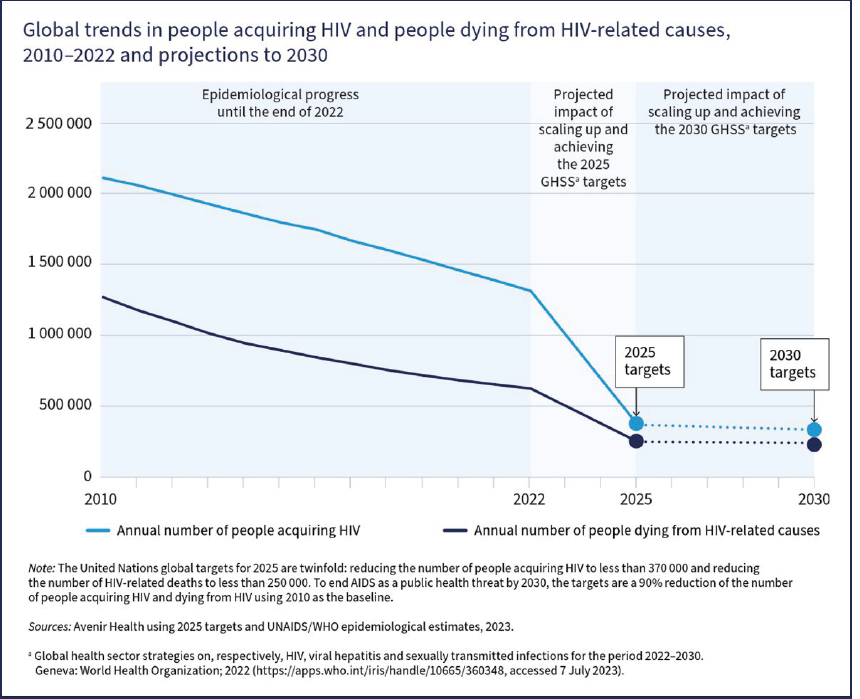
People with HIV who are on ART and have an undetectable viral load do not transmit HIV to their sexual partners. HIV remains a significant global health issue, having claimed 40.4 million lives and affecting 39.0 million people worldwide as of 2022 (Adeniji, Ogubuike, 2024; Bune, 2024). There is no cure for HIV, but with access to effective prevention, diagnosis, treatment, and care, HIV has become a manageable chronic condition, enabling people living with HIV to lead long and healthy lives (Mami, Cuthrell, Manteghian, 2024). Global strategies aim to end the HIV epidemic by 2030 (Figure 1) (Parker, 2024). As of 2022, global efforts have achieved 86% diagnosis, 76% treatment, and 71% viral suppression rates among people living with HIV, aiming to reach 95% targets by 2025 (Rautenbach et al., 2024).

Illustrates the global death ratio of HIV from 2010 to 2022, along with a projection to 2030. The WHO official webpage provided the image.
Historical perspective on HIV/AIDS treatment
AIDS (Acquired Immunodeficiency Syndrome) was first recognized in the early 1980s among young, previously healthy gay men in the United States, who were experiencing rare infections and cancers like Kaposi's sarcoma and pneumocystis pneumonia (Nyman, 2024). Initially referred to as GRID (Gay-Related Immune Deficiency), the association with the gay community was due to early epidemiological data and social factors influencing research and reporting (Lucas, 2024; Nyman, 2024; Haugeberg, 2024).
By 1982, the disease was officially named Acquired Immune Deficiency Syndrome (AIDS). Scientists identified the human immunodeficiency virus (HIV) in 1983 as the causative agent. HIV attacks T helper cells, crucial to the immune system, leading to severe immune deficiency (Nyman, 2024). As a retrovirus, HIV integrates into host cells and perpetuates lifelong infection (Figure 2). The first breakthrough treatment was zidovudine (AZT), initially a failed cancer drug, which was found to inhibit HIV replication. AZT, marketed as Retrovir, was approved by the FDA in 1987 but had limited effectiveness and severe side effects (Harfmann et al., 2024; Wong, Ng, Yeong, 2024).
Over the years, the FDA approved additional antiretroviral drugs, including nucleoside reverse transcriptase inhibitors (NRTIs), protease inhibitors, and non-nucleoside reverse transcriptase inhibitors (NNR-TIs) (Sever et al., 2024). This led to the development of highly active antiretroviral therapy (HAART) in 1996, which significantly extended the lifespan of individuals with AIDS but required complex, daily regimens (Sever et al., 2024). In 1997, Combivir—a combination pill of two anti-HIV drugs—simplified treatment. Prevention efforts advanced with the introduction of pre-exposure prophylaxis (PrEP). In 2010, studies demonstrated that antiretrovirals could prevent HIV infection in healthy individuals. The FDA approved Truvada for PrEP in 2012 and Apretude, an extended-release injectable form, in 2021. When adhered to properly, PrEP can reduce the risk of HIV infection to nearly zero (Huang et al., 2024). The U.S. Preventive Services Task Force now recommends PrEP for individuals at high risk of HIV (Markley, 2024).
In the field of HIV/AIDS research and treatment, two prominent strategies aim to either eradicate or control the virus within the body: “shock and kill” and “block and lock” (Khatun et al., 2024). Shock and Kill Strategy: This approach targets dormant HIV-infected cells that are not currently producing viruses and therefore are not affected by antiretroviral therapies. The first step in this strategy is to “shock" these latent cells, which means activating them so that they start producing the virus again (Matsuda, Maeda, 2024). Once these cells are activated, the virus inside them becomes vulnerable. At this point, the immune system and antiviral drugs can target and eliminate both the virus and the infected cells (Ezemba et al., 2024). This strategy aims to eradicate the virus by exposing and destroying the hidden reservoirs of infection.
Block and Lock Strategy: In contrast, the “block and lock” approach focuses on maintaining the virus in its dormant state for an extended period. This strategy seeks to “block” the virus's replication and activity, preventing it from causing further damage or spreading. To achieve this, vaccines or gene editing therapies are employed (Abadi et al., 2024). The “lock” component involves ensuring that the virus remains suppressed over the long term, potentially through genetic modifications that keep the virus inactive or control its replication effectively. This approach aims to manage the virus by keeping it dormant or minimizing its impact, with the hope of achieving a functional cure or long-term control. Both strategies are integral to ongoing HIV/AIDS research projects, which seek to develop effective therapies and achieve long-term goals for managing or potentially eradicating the virus.

Historical perspective on HIV, Treatment, and Diagnosis. The WHO official webpage provided the image.
Introduction to CRISPR/Cas9 technology
CRISPR/Cas9 is a novel genetic technique that enables researchers and health workers to change or edit part of the genome by removing, adding, or altering part of the DNA sequence (Jiang, Doudna, 2017; Khadempar et al., 2019). Currently, this technique is the simplest, most versatile, and most precise way to manipulate genetic information (Khoshandam et al., 2024). Basically, CRISPR/Cas9 consists of two molecules that introduce change in the DNA; these are an enzyme called Cas9 (molecular scissors that cut the DNA) and pre-designed guide RNA, which consists of about 20 nucleotides located within a longer RNA scaffold (Allemailem et al., 2024). The long RNA scaffold binds with DNA, and the pre-designed sequence guides Cas9 to cut the right part of the DNA. Hence the cell recognizes the change in the DNA and tries to repair it (Haag et al., 2024). Therefore, scientists used this technique to change one or more genes within the same genome or cell of interest (Zhang et al., 2021). In medical sciences, CRISPR/Cas9 has a lot of potential to treat various non-curable and complex diseases. Scientists are using CRISPR/Cas9 to edit somatic cells and germ lines (Khoshandam et al., 2024).
Human immunodeficiency virus infections and the resulting acquired immunodeficiency syndrome continue to pose a significant global health burden (Mami, Cuthrell, Manteghian, 2024). Despite the lack of an effective vaccine or cure, existing antiretroviral therapy can suppress viral replication, but only as long as treatment is ongoing (Li, Zhang, 2024). HIV infects host immune cells, establishing a long-lived viral reservoir that can be targeted and edited through gene therapy (Tassaneetrithep et al., 2024). CRISPR/Cas9 gene editing platforms have emerged as promising tools in developing gene therapies for HIV infections (Vasconcelos Komninakis et al., 2024). This review assesses the current landscape of CRISPR/Cas9-based therapies against HIV, focusing on the virus's infection biology and host restriction factors. We explore the potential of a combined CRISPR/Cas9 approach that targets both host and viral genes, activating antiviral host factors while inhibiting viral replication (Figure 3). Researchers evaluated the efficacy and safety of various CRISPR/Cas9 systems from different bacteria in treating HIV-infected CD4+ T cells (Gurrola et al., 2024). The results showed that saCas9 demonstrated outstanding antiviral performance, completely inactivating HIV with a single guide RNA (gRNA) and excising viral DNA with two gRNAs (Wang, Li, Huang, 2024). Vector size minimization enhanced delivery to HIV-infected cells, and researchers successfully targeted hidden HIV reservoir cells by focusing on specific surface proteins in CD4+ and CD32a+ cells (Khamaikawin et al., 2024). Although the CRISPR/Cas9 system is more significant in the early stages of HIV. In the advanced stage of HIV, when the virus infects CD4 cells and the cell count is less than 200 cells/mm3, at that stage CRISPR/Cas9 application is less commonly explored for curing AIDS-related illnesses (Olsson, 2024).

This schematic shows how the three different CRISPR-Cas proteins—Cas9, Cas12, and Cas13—target different molecules and use different ways to cut them. The protospacer adjacent motif (PAM), essential for Cas9 and Cas12 cleavage, is highlighted in pink, while some Cas13 orthologs require a protospacer flanking site (PFS), also shown in pink. In each CRISPR-Cas system, the guide RNAs (crRNAs) are depicted in red, guiding the respective Cas protein to its target sequence—DNA for Cas9 and Cas12, and RNA for Cas13. Cas9 and Cas12 create double-strand breaks (DSBs) in DNA, which trigger cellular repair mechanisms: non-homologous end joining (NHEJ), leading to error-prone insertions and deletions (INDELS, depicted in orange), or homology-directed repair (HDR) when a donor DNA template is available, facilitating precise gene editing.Cas13, on the other hand, recognizes and cleaves RNA transcripts, resulting in their degradation. This process may also result in collateral RNA cleavage, a process that does not specifically degrade nearby transcripts (Hussein et al., 2024).
Editing in HIV-infected cell genome
Gene or genome editing of HIV-infected cells using CRISPR/Cas9 technology involves several precise and intricate steps. According to Saifullah et al. (2024) and Klinnert et al. (2024), researchers first carefully design small RNA molecules, called guides that match certain sequences in the viral DNA. These guide RNA molecules direct the CRISPR enzyme to cut the viral DNA, first, the enzyme attaches to the viral DNA and cuts the double break to viral DNA (Saifullah et al., 2024). Due to this break, the host cell's natural repair mechanism is triggered, which leads to several significant outcomes. Sometimes these repairs mechanism causes a mutation in viral DNA which disables the virus. Otherwise, the researcher can supply a template of DNA that encodes the desired mutation, which is then used by the host cell repair system for repairing the broken viral DNA, and the desirable change is incorporated (Saifullah et al., 2024)
The gene edit by the CRISPR/Cas9 enzyme disrupts the virus's ability to replicate, potentially lead the elimination of the virus from the host cell. By harnessing the power of CRISPR/Cas9, scientists are making strides toward developing a cure for HIV (McLaurin et al., 2024). Another promising application of CRISPR/Cas9 research in host cell gene editing, enhance the immune cells to resist viral infection (Addissouky et al., 2024). The technology could provide enhancement in immunity, reducing the risk of transmission, and also serving as a preventive measure in individuals. The prime gene targeted for modification is the CCR5 gene, HIV uses receptors to enter the immune cell, which is encoded by this gene (Dudek et al., 2024). Interestingly individuals with a natural mutation in this gene (CCR5) also called delta32 mutation are resistant to HIV infection (Figure 4). Researchers hope that the causing mutation in this gene has the potential to revolutionize HIV treatment and prevention (Kitawi et al., 2024).

This illustration and explanation show how using CRISPR technology to target the CCR5 gene with SpCas9 could potentially benefit HIV patients by offering a novel therapeutic approach that reduces viral reservoirs and enhances immune response against HIV infection. The figure is created in https://www.BioRender.com
CRISPR/Cas9 trails and the future of HIV treatment
In HIV treatment one of the most significant obstacles is the presence of latent reservoirs that are infected cell which remain in a dormant state, escaping from immunity and antiretroviral therapy. (Khoshandam et al., 2024). These reservoirs can reactivate, leading to a resurgence of viral replication and disease progression (Zahedipour et al., 2024). Khoshandam et al. (2024) Demonstrated that CRIPSR/Cas9-based therapy have a great potential to find these reservoirs and eliminate them. The preclinical trials showed that using CRISPR/Cas9 methods to break the viral DNA within the infected cell and possibly prevent them from reactivating again (Khoshandam et al., 2024).
This is achieved by precisely editing the viral genome, rendering it unable to produce infectious particles. Furthermore, clinical trials of CRISPR/Cas9 and adenoviral vector system on human (HIV patients) have been conducted. The CCR5 genes was targeted, hence significant reduction of viral DNA and RNA were observed after trails (Vasconcelos Komninakis et al., 2024). More studies and trails are in progress, in future we expect more significant outcome of these approaches for HIV treatment and prevention. A functional cure would allow individuals to control the virus without antiretroviral therapy, improving their quality of life and reducing the risk of transmission (Vasconcelos Komninakis et al., 2024). Moreover, CRISPR/Cas9 technology has the potential to enhance our understanding of HIV infection and progression. It also improves the knowledge of scientists and health workers, enabling more effective and targeted therapy against HIV (Vasconcelos Komninakis et al., 2024). The ability to edit the viral genome and disrupt the CCR5 gene opens up new avenues for HIV therapy, including the potential for gene editing technologies to be used in combination with other therapies to achieve a cure. Overall, CRISPR/Cas9-based approaches offer a promising new frontier in the fight against HIV, and ongoing research holds great promise for improving treatment outcomes and ultimately defeating the virus (Vasconcelos Komninakis et al., 2024). Excision BioTherapeutics, based in San Francisco, recently shared encouraging interim clinical results for its CRISPR-based candidate, EBT-101, targeting HIV at the European Society for Gene & Cell Therapy annual meeting (Kitawi et al., 2024; Payra et al., 2024). EBT-101 is being developed as a potential functional cure for chronic HIV infection, focusing on latently integrated proviral RNA (Kitawi et al., 2024). The ongoing Phase 1/2 trial is assessing the safety and pharmacodynamics of EBT-101 in individuals infected with HIV-1, the predominant subtype worldwide (Kitawi et al., 2024).
Initial data from the first dosing group demonstrated positive safety and biodistribution results up to 48 weeks. No serious adverse events or dose-limiting toxicities were observed among the first three participants, and EBT-101 was detected in their blood (Kitawi et al., 2024). Following these findings, the company plans to advance to the next dose cohort in Q4 2023, with additional clinical data expected in 2024. EBT-101 employs CRISPR/Cas9 technology to excise HIV proviral DNA, delivered via an adeno-associated virus (AAV) as a single treatment (Izquierdo-Pujol et al., 2024). The dual guide RNAs target three specific sites within the HIV genome, reducing the likelihood of viral escape.
In 2021, the FDA approved EBT-101 for clinical trials in the US, and it received Fast Track Designation in July 2023. EBT-101 stands out as the first CRISPR-based therapy for HIV to gain IND clearance from the FDA (Izquierdo-Pujol et al., 2024). Preclinical research at Temple University and the University of Nebraska Medical Center indicated that EBT-101 could effectively eliminate HIV proviral DNA from various cell lines and animal models (Gurrola et al., 2024). This points toward the potential for a functional cure for HIV. EBT-101 is Excision's flagship program, leveraging proprietary viral excision technology developed in the laboratories of Kamel Khalili at Temple University and Jennifer Doudna at UC Berkeley (Gurrola et al., 2024).
The First-in-Human (FIH) trial will investigate the safety and efficacy of EBT-101 in about nine HI-V-1-infected adults on stable antiretroviral therapy (ART). Participants will receive a single intravenous dose of EBT-101 and will be evaluated for the possibility of pausing their ART at Week 12. All participants will be monitored for up to 48 weeks, with those who pause ART attending more frequent visits (Gurrola et al., 2024). Eligible participants may also join a separate long-term follow-up study (EBT-101-002) lasting up to 15 years to track safety (Figure 5).
The primary aim of employing CRISPR/Cas9 technology in HIV treatment is to achieve a functional cure, allowing patients to control or eliminate the virus without lifelong ART. This approach has the potential to address significant challenges in HIV management, including equitable healthcare access and treatment adherence (Gurrola et al., 2024).

Excision's CRISPR-based anti-viral approach utilizes dual guide RNAs (gRNAs) to target and excise large sections of viral DNA integrated into the host genome. By employing a Cas enzyme (such as Cas9) guided by dual gRNAs, precise double-strand breaks (DSBs) are induced at both ends of the viral DNA sequence. This triggers the cell's DNA repair machinery, which typically uses non-homologous end joining (NHEJ) to remove the excised viral DNA segment. The excision of the viral DNA prevents the virus from replicating and evading the immune system, thereby leading to a curative outcome. This approach is particularly effective in preventing viral escape mechanisms since large sections of the viral genome are removed, reducing the likelihood of resistance development. Excision's strategy highlights the potential of CRISPR-based therapies in combatting viral infections by directly targeting and eliminating viral DNA from infected cells, offering a promising avenue for treating persistent viral infections effectively. Source: Excision Bio Therapeutics. Link: http://www.excision.bio.
Challenges and Ethical Considerations of CRISPR/Cas9
Utilizing CRISPR/Cas9 to modify HIV-infected cells involves various challenges and ethical concerns. Efficiently delivering the CRISPR/Cas9 system to the target cells is vital to prevent off-target effects and ensure successful outcomes. Additionally, the long-term implications and potential unintended consequences of human genome editing require thorough investigation. Ethical considerations are paramount, including obtaining informed consent from patients, ensuring equitable access to treatment, and preventing misuse of this technology (Jain et al., 2024). It is crucial to prioritize responsible and ethical practices in HIV research to maximize benefits while minimizing risks (Kropf et al., 2024).
Moreover, significant challenges associated with CRISPR/Cas9 therapies for viral infections include the complexities of delivering the system to targeted cells and countering viral escape mechanisms (Zahedipour et al., 2024). The CRISPR/Cas9 system comprises the Cas enzyme and guide RNA, both of which must be delivered effectively to the target cell. Size and degradation pathways present obstacles (Adler et al., 2024), and cells have protective mechanisms against foreign particles, making efficient delivery a critical challenge (Vasconcelos Komninakis et al., 2024). Researchers are working on modifying viral and nonviral delivery systems to enhance their safety and efficacy (Zahedipour et al., 2024).
Viral escape remains a significant concern, as viruses can mutate rapidly, evading recognition and cleavage by the CRISPR/Cas9 system (Manchanda et al., 2024). Some viruses establish latent infections, while others may have a tropism for specific cell types that are less amenable to CRISPR/Cas9 targeting (Vasconcelos Komninakis et al., 2024). Furthermore, viruses can evade immune detection, indirectly compromising the effectiveness of CRISPR/Cas9 therapies (Zhang et al., 2024). Addressing these challenges necessitates a multidisciplinary approach, integrating genetics, virology, molecular biology, and nanotechnology. Continued research into delivery systems is essential for improving the specificity, efficiency, and safety of CRISPR/Cas9 applications in HIV treatment.
CONCLUSION
The revolutionary capacity of CRISPR/Cas9 technology to edit HIV-infected cells presents significant potential for treating and potentially curing HIV. By accurately targeting and disabling viral DNA within infected cells, CRISPR/Cas9 offers a highly specific method that differs fundamentally from traditional antiretroviral therapies, which merely suppress the virus. This gene-editing approach may enable the complete eradication of the virus from the body, providing a long-sought cure for millions living with HIV globally.
While the promise of CRISPR/Cas9 is compelling, further research and comprehensive clinical trials are essential to enhance the efficiency and safety of this treatment. Researchers must confirm that the technology effectively targets and eliminates infected cells without adversely affecting healthy ones. Ethical considerations are also critical; these include managing the risk of unintended off-target effects and ensuring thorough patient monitoring. As the field progresses, responsible deployment of CRISPR/Cas9 is vital for its successful incorporation into HIV treatment protocols. This involves ensuring equitable access to therapies, safeguarding patient privacy, and obtaining informed consent. With ongoing advancements and a commitment to responsible practices, CRISPR/Cas9 has the potential to transform HIV treatment, significantly improving the quality of life for millions impacted by this virus.
ACKNOWLEDGMENT
The authors are also very thankful to Ala-Too International University, Bishkek, Kyrgyzstan.
DATA AVAILABILITY STATEMENT
All data is available within the article.
REFERENCES
- Abadi T, Teklu T, Wondmagegn T, Alem M, Desalegn G. CD4+ T cell count and HIV-1 viral load dynamics positively impacted by H. pylori infection in HIV-positive patients regardless of ART status in a high-burden setting. Eur J Pharm Med Res. 2024;29(1):178.
- Adler BA, Trinidad MI, Bellieny-Rabelo D, Zhang E, Karp HM, Skopintsev P, et al. CasPEDIA Database: a functional classification system for class 2 CRISPR-Cas enzymes. Nucleic Acids Res. 2024;52(D1):D590-6.
- Addissouky TA, El Sayed IE, Ali MM, Alubiady MH, Wang Y. Bending the Curve Through Innovations to Overcome Persistent Obstacles in HIV Prevention and Treatment. J AIDS HIV Res. 2024;6(1):44-53.
- Adeniji FO, Ogubuike C. HIV Risk Perception and Assessment among Youths in Rivers State, Nigeria: A Comparative Cross-sectional Study. Int STD Res Rev. 2024;13(1):32-42.
- Allemailem KS, Almatroudi A, Rahmani AH, Alrumaihi F, Alradhi AE, Alsubaiyel AM, et al. Recent Updates of the CRISPR/Cas9 Genome Editing System: Novel Approaches to Regulate Its Spatiotemporal Control by Genetic and Physicochemical Strategies. Int J Nanomed. 2024;31:5335-63.
- Alckmin-Carvalho F, Pereira H, Nichiata L. “It’sa Lot of Closets to Come Out of in This Life”: Experiences of Brazilian Gay Men Living with Human Immunodeficiency Virus at the Time of Diagnosis and Its Biopsychosocial Impacts. Eur J Investig Health Psychol. 2024;14(4):1068-85.
- Bune GT. Low-level physical activity predictors among adults living with HIV in Ethiopia’s southern region, focusing on work, transportation, and recreation domains: an unmatched case-control study. BMC Sports Sci Med. 2024;16(1):1-4.
- Debie Anggraini DA. Immunopathogenesis of HIV Infection: The Complex Role of the Immune System in Disease Development and Control (doc). Nusantara Hasana Journal. 2024;3(7).
- Dudek AM, Feist WN, Sasu EJ, Luna SE, Ben-Efraim K, Bak RO, et al. A simultaneous knockout knockin genome editing strategy in HSPCs potently inhibits CCR5-and CXCR4-tropic HIV-1 infection. Cell Stem Cell. 2024;31(4):499-518.
- Ezemba CC, Osuala OJ, Etikudike VO, Ogunleye SC, Ezemba PI, Iyiola O, et al. Molecular viral infections and antiviral therapeutics. InBiochemical Mol Pharm Drug Discovery. 2024:515-540.
- Gurrola TE, Effah SN, Sariyer IK, Dampier W, Nonnemacher MR, Wigdahl B. Delivering CRISPR to the HIV-1 reservoirs. Front Microbiol. 2024;15:1393974.
- Haraka F, Moore A, Odinga G, Bailey R, Songoro J, Haule D, et al. Accuracy, use and acceptability of the VISITECT CD4 semi-quantitative test to advance HIV disease screening in routine programmatic settings in Tanzania. Clin Epidemiol Glob Health. 2024;27:101616.
- Harfmann M, Schröder T, G?ów D, Jung M, Uhde A, Kröger N, et al. CD45-Directed CAR-T Cells with CD45 Knockout Efficiently Kill Myeloid Leukemia and Lymphoma Cells In Vitro Even after Extended Culture. Cancers. 2024;16(2):334.
- Haugeberg KA. Filling the Unforgiving Minute with Sixty Seconds' Worth of Effort: Barbara Fassbinder, Nursing, and AIDS in the US, 1986–91. Middle West Rev. 2024;10(2):205-25.
- Haag SM, Xie S, Eidenschenk C, Fortin JP, Callow M, Costa M, et al. Systematic perturbation screens decode regulators of inflammatory macrophage states and identify a role for TNF mRNA m6A modification. bioRxiv. 2024;2024-04.
- Huang X, Wang G, Huang J, Liang W, Guan H, Liu H, et al. Bioequivalence and Pharmacokinetics Study of Two Zidovudine/Lamivudine Tablets in Chinese Healthy Volunteers. Clin Pharmacol Drug Dev. 2024;13(1):14-20.
- Hussein M, Molina MA, Berkhout B, Herrera-Carrillo E. A CRISPR-Cas Cure for HIV/AIDS. Int J Mol Sci. 2023; 24(2):1563.
- Iqbal T, Altaf S, Ahmad A. Overview of Acquired Immunodeficiency Syndrome (AIDS): A Chronic Condition Caused by Human Immunodeficiency Virus (HIV). 2024.
- Izquierdo-Pujol J, Puertas MC, Martinez-Picado J, Morón-López S. Targeting Viral. Transcription for HIV Cure Strategies. Microorganisms. 2024;12(4):752.
- Jain MS, Srikruthi KS, Goudanavar P, Naveen NR. Navigating the Frontier: Comprehensive insights into CRISPR technology advancements, delivery strategies, and ethical considerations in cancer research. Oral Oncol Rep. 2024:100224.
- Jiang F, Doudna JA. CRISPR–Cas9 structures and mechanisms. Annu Rev Biophys. 2017;46(1):505-29.
- Khamaikawin W, Saisawang C, Tassaneetrithep B, Bhukhai K, Phanthong P, Borwornpinyo S, et al. CRISPR/Cas9 genome editing of CCR5 combined with C46 HIV-1 fusion inhibitor for cellular resistant to R5 and X4 tropic HIV-1. Sci Rep. 2024;14(1):10852.
- Khadempar S, Familghadakchi S, Motlagh RA, Farahani N, Dashtiahangar M, Rezaei H, Gheibi Hayat SM. CRISPR–Cas9 in genome editing: Its function and medical applications. J Cell Physiol. 2019;234(5):5751-61.
- Khoshandam M, Soltaninejad H, Mousazadeh M, Hamidieh AA, Hosseinkhani S. Clinical applications of the CRISPR/Cas9 genome-editing system: delivery options and challenges in precision medicine. Genes Dis. 2024;11(1):268-82.
- Kitawi R, Ledger S, Kelleher AD, Ahlenstiel CL. Advances in HIV Gene Therapy. Int J Mol Sci. 2024;25(5):2771.
- Klinnert S, Schenkel CD, Freitag PC, Günthard HF, Plückthun A, Metzner KJ. Targeted shock-and-kill HIV-1 gene therapy approach combining CRISPR activation, suicide gene tBid, and retargeted adenovirus delivery. Gene Ther. 2024;31(3):74-84.
- Kropf M. The ethically significant difference between dual use and slippery slope arguments in relation to CRISPR-Cas9: philosophical considerations and ethical challenges. Res Ethics. 2024:17470161241240587.
- Kyobe S, Kisitu G, Mwesigwa S, Farirai J, Katagirya E, Retshabile G, et al. Long-term non-progression and risk factors for disease progression among children living with HIV in Botswana and Uganda: A retrospective cohort study. Int J Infect Dis. 2024;139:132-40.
- Khatun S, Amin SA, Choudhury D, Chowdhury B, Jha T, Gayen S. Advances in structure-activity relationships of HDAC inhibitors as HIV latency-reversing agents. Expert Opin Drug Discov. 2024;19(3):353-68.
- Li K, Zhang Q. Eliminating the HIV tissue reservoir: current strategies and challenges. Infect Dis. 2024;56(3):165-82.
- Lucas S. The changing face of HIV pathology: a personal perspective. Diagn Histopathol. 2024.
- Mami D, Cuthrell KM, Manteghian M. Burden of HIV on Society: Current Management Options and Future Prospective. Int STD Res Rev. 2024;13(1):43-62.
- Manchanda P, Kaur J, Kaur H, Kaur G. Development of virus-resistant horticultural crops through CRISPR/Cas mediated genome editing: applications and future prospects. The Nucleus. 2024;25:1-7.
- Markley JD. Pre-Exposure Prophylaxis for HIV: Bioethical, Clinical, and Epidemiological Considerations. Linacre Q. 2024:00243639241239068.
- McLaurin KA, Li H, Khalili K, Mactutus CF, Booze RM. HIV-1 mRNA knockdown with CRISPR/CAS9 enhances neurocognitive function. J NeuroVirol. 2024;14:1-5.
- Mojahedi A. Evaluating the use of antiviral drugs in HIV patients with cardiovascular diseases and how to reduce the incidence of cardiac events in these patients. Am J Cardiovasc Dis. 2024;14(2):70.
- Matsuda K, Maeda K. HIV Reservoirs and Treatment Strategies toward Curing HIV Infection. Int J Mol Sci. 2024;25(5):2621.
- Nagtilak V, Mulani S, Kumbhar R, Kumbhar P, Sable A, Chavan A, et al. Prevention, Treatment and Diagnosis of HIV and AIDS: A Review. Res J Sci Technol. 2024;16(1):68-74.
- Nyman F. Reshaping the narrative: Tracing the historical trajectory of HIV/AIDS, gay men, and public health in Sweden. PLOS One. 2024;19(2):e0298630.
- ObeaguEI OG. A Roadmap for Reducing HIV Transmission from Mother to Child: Strategies, Challenges, and Future Directions. Elite J HIV. 2024;2(4):91-109.
- Olsson O. Immune mediators in people with HIV and tuberculosis. 2024.
- Parker R. Epidemics of signification and global health policy: from the end of AIDS to the end of scale-up of the global AIDS response. Glob Public Health. 2024;19(1):2327523.
- Payra S, Manjhi PK, Singh S, Kumar R, Singh SK, Kumar A, et al. HIV cure: Are we going to make history? HIV Med. 2024;25(3):322-31.
- Poswa NL, Sibiya DM. Direct Characterization and the Depiction of HIV/AIDS Theme in the Zulu Novel, Ngidedele Ngife. Int J Soc Sci. 2024;7(6):1-3.
-
Rahayu EP, Rizki LK, Novianti H,Anggraini FD, Gusmao C, Fernandes I, et al. Comparative Study of Indonesia and Timor Leste on the Psychological Conditions, Social Support, and Immunity of People Living with HIV/AIDS (PLWHA). SEEJPH.2024;29:317–321. Available at: https://www.seejph.com/index.php/seejph/article/view/708
» https://www.seejph.com/index.php/seejph/article/view/708 - Rautenbach SP, Whittles LK, Meyer-Rath G, Jamieson L, Chidarikire T, Johnson LF, et al. Future HIV epidemic trajectories in South Africa and the projected long-term consequences of reductions in general population HIV testing: a mathematical modeling study. The Lancet Public Health. 2024;9(4):e218-30.
- Saifullah M, Laghzaoui O, Ozyahyalar H, Irfan A. The CRISPR-Cas9-induced CCR5 Δ32 mutation as a potent gene therapy methodology for resistance to HIV-1 variants: a review. Eur Rev Med Pharmacol Sci. 2024;28(6).
- Sever B, Otsuka M, Fujita M, Ciftci H. A Review of FDA-Approved Anti-HIV-1 Drugs, Anti-Gag Compounds, and Potential Strategies for HIV-1 Eradication. Int J Mol Sci. 2024 Mar 25;25(7):3659.
- Tassaneetrithep B, Phuphuakrat A, Pasomsub E, Bhukhai K, Wongkummool W, Priengprom T, et al. HIV-1 proviral DNA in purified peripheral blood CD34+ stem and progenitor cells in individuals with long-term HAART; paving the way to HIV gene therapy. Heliyon. 2024.
- Vasconcelos Komninakis S, Domingues W, Saeed Sanabani S, Angelo Folgosi V, Neves Barbosa I, Casseb J. CRISPR/CAS as a powerful tool for human immunodeficiency virus cure: a review. AIDS Res Hum Retrovir. 2024;40(6):363-75.
- Wang X, Li Y, Huang X. CRISPR/Cas-based diagnosis and treatment of infectious diseases. Mol Med Microbiology: Academic Press. 2024;2039-2057.
- Widiyawati W, Ratnasari D, Mulyani E, Kholifah AN, Indarto T. The Evaluation of the Achievements of the Universal Health Coverage Program in Health Facilities in Gresik District. Jurnal Nersdan Kebidanan. J Nurse Midwifery. 2024;11(1):130-8.
-
WHO. Why the HIV epidemic is not over [Internet]. 2024. Available at: https://www.who.int/news-room/spotlight/why-the-hiv-epidemic-is-not-over
» https://www.who.int/news-room/spotlight/why-the-hiv-epidemic-is-not-over - Wong XK, Ng CS, Yeong KY. Shaping the future of antiviral treatment: spotlight on nucleobase-containing drugs and their revolutionary impact. Bioorg Chem. 2024;27:107150.
- Zahedipour F, Zahedipour F, Zamani P, Jaafari MR, Sahebkar A. Harnessing CRISPR technology for viral therapeutics and vaccines: from preclinical studies to clinical applications. Virus Res. 2024;341:199314.
- Zhang L, Wang H, Zeng J, Cao X, Gao Z, Liu Z, et al. Cas1 mediates the interference stage in a phage-encoded CRISPR–Cas system. Nat Chem Biol. 2024;8:1-1.