 PD-1 involvement in CD8+ tumor-infiltrating lymphocytes in patients with colonic-derived peritoneal adenocarcinoma
Abstract
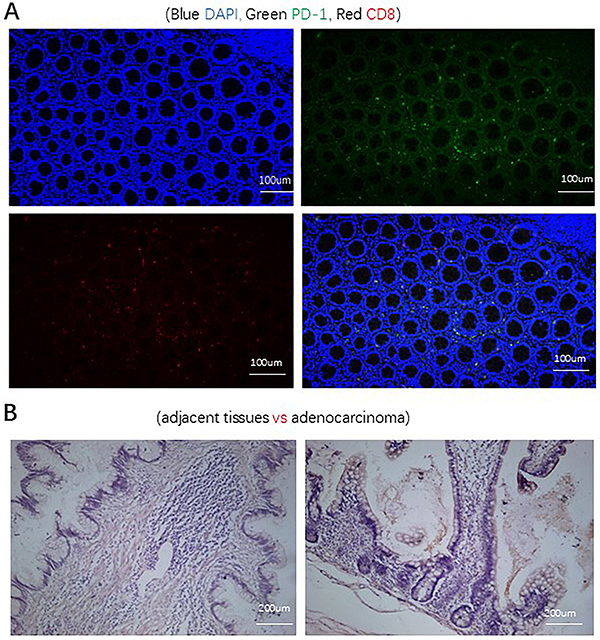
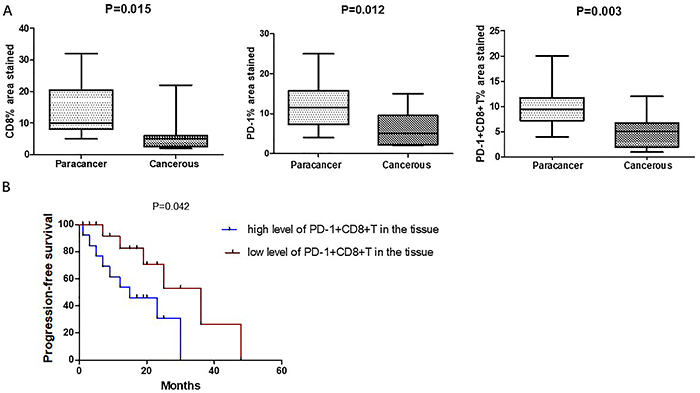
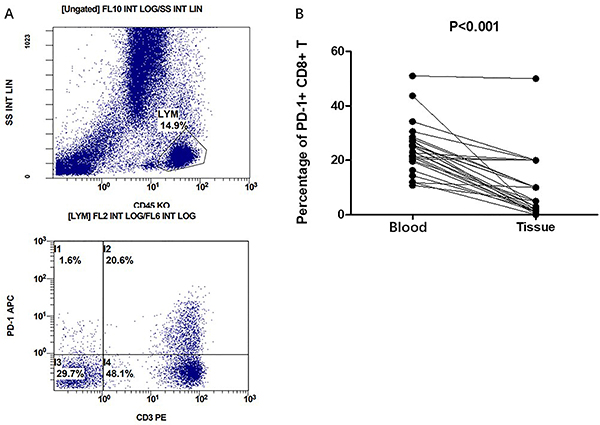
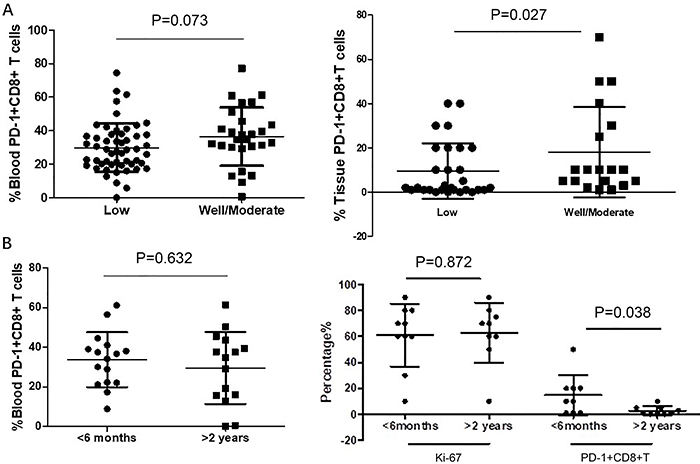
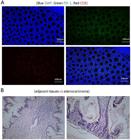
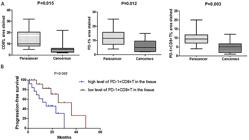
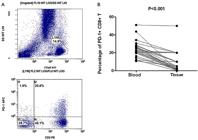
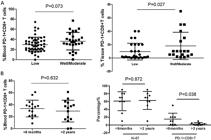
Immune checkpoint blockade with anti-programmed cell death protein 1 (PD-1) antibody has become a hot topic for the treatment of human malignancies. Here, we aimed to investigate whether the percentage of PD-1 in CD8+ tumor-infiltrating lymphocytes correlates with the progression of colonic-derived peritoneal adenocarcinoma (PA). Peripheral blood and tissue samples from 40 patients with colonic-derived PA were collected and subjected to multicolor flow cytometry analysis of the percentage of peripheral PD-1+CD8+ T cells. The multiple immunofluorescence method was used to detect the positive percentages of PD-1 and CD8 in the tissues. The enrolled patients were divided into groups by recurrence interval (less than 6 months, greater than two years) and differentiation grade (low, well/moderate). In the colonic-derived PA tissues, the percentages of cells positive for PD-1, CD8, and PD-1+CD8+ were higher in the paracancer tissues compared with cancerous tissues. PD-1+CD8+ T cells had an increased presence in peripheral blood than in tissues. Our data also indicated that colonic-derived PA patients with less than a six-month recurrence interval presented higher levels of PD-1 in CD8+ tumor-infiltrating lymphocytes in than the two-year recurrence group. The level of PD-1+CD8+T cells in the tissue correlated with the clinical outcome of colonic-derived PA. Higher percentages of PD-1+CD8+T cells correlated with a shorter progression-free survival (PFS). PD-1 in CD8+ tumor-infiltrating lymphocytes may have a good predictive value for immunotherapy of colonic-derived PA and act as the prognostic factor for PFS.
PD-1; CD8; Colonic-derived peritoneal adenocarcinoma; Recurrence; Flow cytometry; Multiple immunofluorescences
 Thumbnail
 Thumbnail
 Thumbnail
 Thumbnail