
 From alluvial fans to lacustrine systems: trace fossils applied to paleoenvironmental analysis in the Taubaté Basin (Brazil)
Abstract
Studies integrating ichnology and sedimentology in paleoenvironmental interpretations are rare in Brazilian rift successions. This study applies an integrated ichno-sedimentological analysis to a well core from the Resende and Tremembé Formations (Cenozoic Taubaté Basin) to reconstruct paleoenvironmental conditions. Three paleoenvironments were identified: alluvial fan, braided river, and lacustrine. The alluvial settings is characterized by coarse-grained deposits displaying bioturbation intensity and sporadic trace fossils, dominated by Palaeophycus and Skolithos, reflecting opportunistic colonization. Braided river deposits consist of stacked sandstones with trough cross-bedding and a trace-fossil assemblage with Palaeophycus, Skolithos, Macanopsis, and Taenidium. The lacustrine environment is characterized by dark shale interbedded with fine-grained sandstones, including ostracod-rich white beds. Sparse beds containing Planolites indicate a complex lacustrine system with potential variations in salinity and oxygenation. Comparison with previous studies suggests that ichnofossils and paleosols reflect water table fluctuations and humid conditions in the Resende Formation. For the Tremembé Formation, ichnofossil data, palynomorphs (Botryococcus and Pediastrum), and taphonomic signatures in fishes suggest a dynamic environment with fluctuating water levels, periodic salinity increases, and decreased oxygen levels.
KEYWORDS:
continental rift; ichnology; Skolithos ichnofabric; paleosols; lacustrine system
1. INTRODUCTION
The integration of trace fossil and sedimentological analyses has enabled the inference of paleoecological and paleoenvironmental parameters in a wide range of sedimentary environments (Pemberton & MacEachern, 1995). Biogenic structures reflect the behavior of their producers, which was influenced by paleoenvironmental conditions (e.g., Seilacher, 1964; Ekdale et al., 1984; Pemberton et al., 1992; Sedorko & Francischini, 2021). The application of ichnology for interpreting marine environments has been extensively studied (e.g., MacEachern et al., 1999, 2007; MacEachern & Bann, 2008, 2020; Carmona et al., 2009; Abdel-Fattah et al., 2016; Buatois et al., 2019; Sedorko et al., 2019, 2023) compared to continental environments (Buatois & Mángano, 1995b, 2002, 2004, 2007, 2009; Bohacs et al., 2000; Genise et al., 2000; Melchor, 2004; Hunt & Lucas, 2007). Compared with marine environments, the number of studies on continental ichnology have increased after 1980 (e.g., Klappa, 1980; Bown, 1982; Sarjeant, 1983; Bown & Kraus, 1983, 1987; Genise & Bown, 1994a, b; Hasiotis & Dubiel, 1993, 1994; Buatois & Mángano, 1995a; Genise et al., 2000; Hasiotis, 2002, 2004; Hasiotis et al., 2013; Mueller & McCann, 2014; Nascimento & Guimarães Netto, 2019; Rangel et al., 2022), especially in alluvial deposits. Compared to other Brazilian basins, the Cenozoic basins are relatively less studied in terms of ichnological content (e.g., Rossetti, 2000; Guimarães Netto & Rossetti, 2003; Gandini et al., 2017; Sedorko et al., 2024, 2025). While the fossil content in the Taubaté Basin is well-documented, with records of leaf and wood impressions in the mud facies of the Resende Formation (Riccomini et al., 1987), as well as sponges (Wickert, 1974), amphibians (Riff & Bergqvist, 1999; Santos, 2020), fishes (Woodward, 1898; Schaeffer, 1947; Malabarba, 1998), birds (Alvarenga, 1982, 1985; Olson & Alvarenga, 2002; Mayr et al., 2011), and mammals (Soria & Alvarenga, 1989; Bergqvist & Ribeiro, 1998; Alvarenga et al., 2005), the occurrence of trace fossils have been only mentioned in the Resende and Tremembé Formations (e.g., Bergqvist & Ribeiro, 1998; Torres-Ribeiro & Borghi, 2007; Voltani et al., 2023), without a detailed characterization. And therefore, there are no studies using an integrated ichno-sedimentologic approach in the Taubaté Basin. In this paper, we describe the trace fossil content and the sedimentary deposits that host them. This integrated approach opens new windows to the reconstruction of paleoenvironmental conditions in the rift basins during the Cenozoic for the Taubaté Basin.
A continuous well-log enabled the description of transitions between different paleoenvironments throughout the Paleogene in this basin. Distinct ichnological patterns in these lithostratigraphic units revealed colonization behaviors controlled by high energy, oxygen deficient, and fluctuating water table levels. The comparison between trace fossils and other proxies enhanced the interpretation of paleoenvironments in the Taubaté Basin, reinforcing that ichnological analysis serves as a valuable proxy for reconstruction of palaeoenvironments.
2. GEOLOGICAL SETTING
The Taubaté Basin, located in southeastern Brazil in São Paulo state, extends NNW-SSW for 170 km in length and 20 km in width, with depths reaching 1,200 m (Fernandes, 1993; Padilha et al., 1991) (Figure 1). Its basement comprises igneous and metamorphic rocks from the Paleoproterozoic to the Neoproterozoic Ribeira Fold Belt (Hasui & Ponçano, 1978). The basin is part of the Continental Rift of Southeastern Brazil (CRSB), associated with a Paleogene distensive tectonic phase (Fernandes, 1993; Zalán & Oliveira, 2005; Riccomini et al., 2004). The sedimentary fill can be divided into two phases. The first phase, syn-tectonic to the rift, includes alluvial fans, lacustrine, and fluvial deposits, corresponding to the Resende, Tremembé, and São Paulo Formations (Riccomini, 1990; Carvalho et al., 2011). The second phase, post-diastrophic tectonics, is characterized by the deposition of alluvial deposits of the Pindamonhangaba Formation and braided fluvial deposits of the Itaquaquecetuba Formation (Melo et al., 1987; Riccomini, 1990; Carvalho et al., 2011).

Schematic geological map of the studied area. (A) Location of the Taubaté Basin on the southeastern Brazil; (B) Location of the drilled core in the upper middle part of the Taubaté Basin. The distribution of the geological units after Campos et al. (2021); (C) Stratigraphic chart of the Taubaté Basin (modified from Riccomini et al., 2004).
This study focuses on the Resende and Tremembé Formations. The lowermost Resende Formation comprises clast- and matrix-supported conglomerates deposited in proximal areas and mudstones in medial and distal alluvial fan areas, grading into sandy facies of medial to braided fluvial deposits (Riccomini et al., 2004; Carvalho et al., 2011). The alluvial fan deposits of the Resende Formation transition laterally and vertically into the fine-grained sediments of the Tremembé Formation (Riccomini & Coimbra, 1992; Riccomini et al., 2004). The Tremembé Formation consists of fine-grained siliciclastic rocks, primarily mudstone and shale rich in organic matter, interbedded with sandstones, marls, and dolomites (Riccomini, 1990; Riccomini et al., 1996, 2004; Mendonça Filho et al., 2010). The paleoenvironment is interpreted as lacustrine, developed in the central portion of the Taubaté Basin (e.g., Riccomini, 1993; Riccomini et al., 2004; Torres-Ribeiro & Borghi, 2007; Bergamaschi et al., 2010; Setta et al., 2012; Bergue et al., 2015).
The main debate concerns the stratigraphy and limnology of the lake. Riccomini et al. (1996) characterized the lacustrine system as a playa lake, indicating ephemeral saline water conditions, drying up annually or every few years (Renaut & Gierlowski-Kordesch, 2010). Other authors have emphasized deep water and perennial conditions (Torres-Ribeiro & Borghi, 2007; Bergamaschi et al., 2010; Setta et al., 2020). Torres-Ribeiro (2004) argued that the lake was a closed, oligomictic, eutrophic system in a semiarid climate, and therefore, could not be classified as a playa lake due to the absence of evaporitic deposits.
3. MATERIAL AND METHODS
This study presents data from a well core drilled in Pindamonhangaba municipality (45°28’22.91”W; 22°51’37.21”S), designated as 2 PD-1SP-PINDA 2. This core, which samples the Resende and Tremembé Formations, was acquired from the upper middle part of the basin. It has a diameter of 40 mm, organized in 181 boxes, and spans 715.45 m of thickness, with 34 m corresponding to the top of the well core. Macroscopic core description was conducted at a 1:12 scale, subdivided into three stratigraphic intervals, involving the recognition of lithology, texture, sedimentary structures, and bed contacts.
Trace fossil analysis and ichnotaxonomy were performed alongside sedimentary deposit descriptions using the ichnofabric approach. The degree of bioturbation was quantified using the Reineck (1963) scale, which ranges from 0 (no bioturbation) to 6 (completely homogenized by biogenic activity). Ichnofabric characterization was based on the ichnotaxobases of Bromley (1990) Paleosols were identified according to their maturity index (Retallack & Reinhardt, 1988), and the nomenclature of paleosol orders follows modern soil orders (United States Department of Agriculture, 2014).
4. RESULTS
4.1 Sedimentary deposits
The core reveals four distinct deposits across two recognized stratigraphic intervals, attributed to the Resende and Tremembé Formations (Table 1). The lower interval consists of matrix-supported conglomerates with a quartz and feldspar sandy matrix, interbedded with paleosol, and features coarse-grained deposits with medium-to-coarse sandstone exhibiting trough cross-bedding and parallel lamination, characteristic of the Resende Formation. The upper interval is predominantly dark shale, intercalated with beds containing ostracods, fishes, and plant remains, interpreted as the Tremembé Formation.
4.1.1 Coarse-grained deposits
Coarse-grained deposits account for 17% of the core, totalizing 116 m in thickness. These deposits, concentrated mainly in the lower interval above basement rocks, are composed essentially of feldspar and quartz clasts derived from metamorphic rocks, ranging from 3 to 10 mm in diameter, totalizing 40% of fabric, being 25% composed by feldspar, classified as oligomictic conglomerate. Matrix-supported conglomerates with granule- to very coarse pebble-sized clasts in a sandstone-mudstone matrix. They are poorly sorted and display massive or crudely stratified textures (Figures 22B), occasionally with Palaeophycus and Skolithos.

Coarse-grained deposits. (A) Matrix-supported conglomerate with granule to coarse pebble-sized deposits and mud-sandy matrix (670.50 m); (B) Clast-supported conglomerate of very coarse pebble-sized clasts of quartz and feldspar, and scattered reddish-brown redoximorphic features.
4.1.2 Paleosols
The paleosols make up 8% of the core, totaling 56 m in thickness, and occur interbedded with conglomerates. The profiles consist of intervals of stacked compound paleosols, ranging from 90 cm to 2 m in thickness, classified as Entisols and Vertisols (Figure 3A). The Entisols display a horizon sequence of Cg and C, with boundaries ranging from sharp to gradual and wavy topography. Horizon textures are predominantly sandy, with colors including light gray (5GY 8/1), light pink (7.5YR 8/4), and red (2.5YR 5/8). Pedogenic structures are fine to medium, angular to subangular, and blocky, sometimes exhibiting redoximorphic features (Figure 3B). The Vertisols exhibit a horizon sequence of Bss and C, with gradual transition and wavy topography. Horizon textures are primarily loamy-sand, with colors ranging from light gray (5GY 8/1) to dusk red (7.5R 3/4) and red (7.5R 4/6). Pedogenic structures include fine angular blocky peds and fine to medium cuneiform structures with wedge-shaped peds, subdivided by slickenside surfaces (Figure 3C). The Bss and Cg horizons of both paleosol types contain an abundance of redoximorphic features, such as redox depletion and redox concentration (Figure 3B). Distinct clay and iron depletions along secondary pores and the matrix, ranging from fine to medium (0.1-8 cm in diameter), are distributed within these horizons and occupy 5 to 10% of the surface. Redox concentrations, such as Fe-nodules ranging from 2 to 5 mm, are particularly abundant in the Bss horizon. Another notable feature is pore linings found in root channels (rhizohaloes) and invertebrate trace fossils, showing colors varying from gray to red to yellow (Figure 3D). The trace fossils preserved in the described paleosols has low ichnodiversity, only with Planolites and rhizoliths, with a bioturbation index of 1 to 2 (4% to 8%).

Paleosols. (A) Succession of paleosols evidencing the occurrence of disseminated redoximorphic features marked by the alternation of red and grey colors in the well-core (618.50 m); (B) Subangular blocky structure and elongate, grey-rimmed depletion and reddish zones with concentration of iron (yellow arrow); (C) Pedogenetic structures marked by slickensides. Note the polished aspect of the paleosol matrix (yellow arrow); (D) Root cast filled with coarse-grained sand displaying an outer reddish-purple halo separated from the inner greyish core.
4.1.3 Sandstone deposits
These deposits represent 29% of the core, totalizing 205 m, and occur in the middle core interval (Figure 4). They consist of fine- to coarse-grained conglomeratic sandstone deposits, with feldspar clast ranging from 2 to 4 mm in diameter, with some gravel-sized clasts occurring locally, moderately sorted, with trough cross-bedding, and trace fossils identified as Macanopsis, Palaeophycus, Skolithos, and Taenidium. Plant remains are also present (Figures 55B). In subordinated interval, the sandstone is very fine- to fine-grained, well-sorted, and displays parallel lamination with 1 mm in thickness composed of sand (essentially by quartzs and feldspars) containing sparse Palaeophycus and plant remains (Figure 5C).

Sedimentological log showing the trace fossil distribution in the studied well-core 2PD-1SP-Pinda 2.

Sandstone deposits. (A, B) Conglomeratic sandstone with trough cross-bedding B. The red line highlights the trough cross strata (298.0 m); (C) Very fine- to fine-grained sandstone with parallel lamination.
4.1.4 Fine-grained deposits
These deposits constitute 38% of the core, totalizing 260 m in thickness, and predominate in the upper core interval. They are organized in millimeter-thick parallel lamination, black or dark gray in color, forming dark shale with trace fossils of Planolites as well as fish and plant remains. Locally, these deposits alternate between dark shales and fine-grained sandstones. In the uppermost intervals (from 95 to 34 m), fine-grained deposits include interbedded millimeter-thick white beds rich in ostracods and dark shale. The contacts between beds are clear and abrupt, marked by color changes. The ostracod-rich laminae range from 1 to 2 mm in thickness, with ostracod valves ranging from 0.7 to 1.01 mm in diameter, mostly disarticulated, slightly fragmented, and with rounded edges (Figures 6AC).

Fine-grained deposits. (A) Fine-grained deposits showing homogeneous aspect of the dark shale; (B) Detail of the dark shale displaying the millimeter-thick parallel lamination; (C) The uppermost interval of fine-grained deposits formed of alternations between lighter laminae rich in ostracods and darker organic laminae (38.0 m).
4.2 Trace fossils
The ichnofabric characterization allowed to identify the recurrent ichnogenera in the analyzed intervals. Five ichnogenera were identified: Skolithos, Palaeophycus, Macanopsis, Taenidium, and Planolites. These ichnogenera were described following the order of occurrence, from base to top (Figures 7 and 8).

Biogenic structures. (A) Skolithos in coarse-grained deposits, in cross section with redoximorphic features, enhanced the contrast with the matrix; (B, C) Skolithos in conglomerate sandstone deposits, with little contrast in relation to the matrix; note are slightly irregular; (D) Skolithos in fine-grained sandstone; note the contrast with the matrix, possibly due to the presence of mud; (E, F) Palaeophycus in matrix- supported conglomerate; note the red circles in figure showing the opening burrows with little contrast with the matrix. Note also the aspects with slight roughness; (G) Palaeophycus showing opening in sandstone deposits; note slight contrast between the burrow limit and the matrix; (H) Palaeophycus in conglomerate sandstone deposits note; the slight contrast with the host rock; (I) Palaeophycus in sandstone deposits with high contrast with the host rock caused by lens of the mud in matrix.

Biogenic structures. (A, B) Macanopsis in sandstone deposits; note the termination of burrow with chamber in final part of structure, J- shaped; (C, D) Taenidium in coarse-grained sandstone; notes the active fill meniscate with sinuous traced with full relief; (E, F) Planolites in dark shales showing horizontal burrow and slight wall with active filled; (G) Planolites in cross section in paleosol facies; (H) Root cast with color reddish- purple rims separated from the external inner greenish and internal inner grayish core; note the fill material (coarse-grained sand).
Skolithos is characterized by straight, cylindrical, unbranched, vertically oriented unlined burrows. The diameter ranges from 1 to 2 mm, and the length varies from 1 to 4 mm (Figures 7AD). It is found in association with Palaeophycus, which features cylindrical, straight to gently sinuous (when in visible bedding planes), unbranched, and horizontally oriented burrows. Palaeophycus is more common in fine-grained sandstone deposits, with diameters ranging from 2 mm to 10 mm. The appearance of Palaeophycus compacted limits is influenced by grain size, showing higher contrast with the matrix in fine-grained sandstones and lower contrast in coarse-grained sandstones (Figures 7EI). Macanopsis is characterized as cylindrical, unbranched and unlined J-shaped burrows that are passively filled and range from vertical to inclined. The 'J' ends in a basal chamber without scratch marks. The burrow diameter is 3 mm, expanding to 5 mm in the chamber, and the total length ranges from 1 to 2 cm (Figures 88B). These burrows are associated with Taenidium and Palaeophycus. Taenidium is characterized by cylindrical, meniscated, unwalled, moderately sinuous, unbranched, and vertically oriented burrows, with diameters ranging from 3 to 4 mm and lengths from 1 to 2 cm (Figures 88D). Planolites is described as cylindrical, horizontally oriented, straight to slightly sinuous, actively filled burrows. The diameter of the circular apertures ranges from 2 to 5 mm, with lengths reaching up to 10 mm when visible. Planolites is also commonly associated with Skolithos (Figures 8EG).
Rhizoliths are subclassified into rhizohalos and root casts. Rhizohalos are characterized by zones of Fe and Mn depletions, with grayish and greenish mottled areas and reddish-purple (10Y 8/1) rims surrounding an inner gray core. These structures are vertically oriented with lateral downward branches, varying in diameter from 2 to 4 cm and lengths from 10 to 15 cm. The matrix textures of rhizohalos match the hosting paleosol, ranging from medium- to coarse-grained sandstone, with occasional gravel-sized clasts. Root casts are described as vertically oriented cylinders, ranging in length from 9 to 11 cm, with lateral branches measuring 4 to 6 cm. They are filled with coarse-grained reddish-purple sandstone, with rims separated from the inner greenish and grayish (2.5YR8/4) core. The patterns exhibit a herringbone style with lower lateral branches present (Figure 8H).
5. DISCUSSION
5.1 Distribution of trace fossils in the Taubaté Basin
The core from well 2 PD-1SP-PINDA 2 is divided into three stratigraphic intervals. The lower interval consists of matrix-supported conglomerates interspersed with paleosols, interpreted as part of the Resende Formation. The intermediate interval is characterized by sandstone deposits, also attributed to the Resende Formation. The upper interval is composed primarily of fine-grained deposits, mainly by dark shale, corresponding to the Tremembé Formation (Figure 4).
Coarse-grained deposits, including matrix-supported and clast-supported conglomerates, are typical of alluvial fan systems and are influenced by climate and bedrock type (Blair & McPherson, 1992, 1994; Nichols & Fisher, 2007). In rift basins, these deposits result from sediment gravity flow processes (Blair & McPherson, 1994). Debris flows in alluvial fans are generated by steep slopes and converging drainage networks that concentrate sediment and overland flow (Reneau et al., 1984, 1990; Reneau & Dietrich, 1987). The deposits of the Resende Formation include ortho- and paraconglomerates in proximal areas, mudstones in medial and distal fan sections, and sandstones in braided river channels (Amador, 1975; Riccomini, 1990; Riccomini et al., 2004; Ramos et al., 2005, 2006). In the studied well-core, the matrix-supported conglomerates with sandstone and mudstone matrix occurs in the lower interval and are characterized by the wide-ranging distribution of oxi-redox features (Figure 2B). Redoximorphic features form from the reduction, translocation and oxidation of Fe and Mn (Vepraskas, 2015). Fe and Mn oxides are reduced in the soil under saturation with stagnant, oxygen depleted (anaerobic) water (Vepraskas,2015). The pattern of redox pedofeatures varies depending on the movement of water and air through the soil, the duration of water saturation and anaerobic conditions, and the occurrence of organic matter (Vepraskas, 2015). In this sense, the presence of water in the system—when saturation persists long enough to reduce Fe and Mn—leads to the depletion of iron oxides throughout the groundmass. This process results in the formation of hypocoatings composed of these oxides (Vepraskas, 2015). In contrast, short duration of water saturation or short periods fluctuation of water table levels results in intrapedal Fe/Mn oxide nodules and hypocoatings (Schwertmann & Fanning, 1976; Richardson & Hole, 1979; Arshad & St. Arnaud, 1980). Accordingly, based on our observations and the features observed in coarse-grained deposits (Figure 2B), the low degree of iron reduction suggests that water and air movement through the soil occurred in brief cycles. These short-duration fluctuations were insufficient to affect the entire soil matrix, as indicated by the lacustrine context.
The presence of Skolithos and Palaeophycus in continental setting is commonly associated with alluvial, fluvial meandering, and lacustrine deposits (Alpert, 1974; Mueller & McCann, 2014; Hasiotis, 2004; Buatois & Mángano, 2004; Buatois et al., 2007; Hasiotis et al., 2013) and reflects moist, subaerial to aquatic habitats, likely linked to shelter burrows and scavenging by arthropods, mostly insects (Stanley & Fagerstrom, 1974; Gierlowski-Kordesch, 1991; Knaust, 2017; Nascimento & Guimarães Netto, 2019). Palaeophycus, often found in fluvial and lacustrine deposits (Buatois & Mángano, 2004; Hasiotis, 2004; Krapovickas et al., 2010; Knaust, 2017), is interpreted as the work of semi-aquatic insects and annelids (Pemberton & Frey, 1982; Keighley & Pickerill, 1995; Krapovickas et al., 2010; Knaust, 2017). In debris flow deposits, Palaeophycus may indicate brief colonization by dwelling invertebrates during periods of low sedimentation rates (Neto de Carvalho & Baucon, 2016). Trace fossils in coarse-grained deposits, including Skolithos and Palaeophycus (Figure 4), are often interpreted as opportunistic life strategies (Levinton & Bambach, 1970; Vossler & Pemberton, 1988; McCall & Soster, 1990). High hydrodynamic energy and organic matter availability are key factors affecting colonization during deposition (DeCelles et al., 1991; Gierlowski-Kordesch, 1991). Periods of debris flow deposition may render environments unsuitable for colonizers due to coarse-grained substrates and high sedimentation rates, affecting the settlement and food availability (Dashtgard et al., 2008). Coarse-grained deposits are often overlain by mud that infills pore spaces between clasts, indicating reducing energy flows and allowing colonization (Dashtgard et al., 2008). Insects, for example, have diverse feeding strategies based on available organic matter in continental settings (Wootton, 1988), and would be able to colonize these deposits.
Paleosol development in alluvial fan systems are controlled mainly by sedimentation rates (Hartley et al., 2013). Entisols and Vertisols reflect different patterns of developments: rapid burial associated with frequent sedimentation contrasts with reduced sedimentation rates during conglomerate deposition, which indicate longer periods of exposure and, consequently, greater root colonization (Hartley et al., 2013; Golab et al., 2018).
The paleosols are composed by coarse-grained sandstone with root cast filled by same material. Furthermore, the clasts are less than 2 mm in size in the matrix (Figure 8H), however, paleosol is interbedded with coarse-grained deposits (Figure 4). In this sense, the difference in sediment composition between the paleosols and the underlying deposits suggests that their development occurred in the final stages, within braided channels located downstream of the fan system.
The presence of rhizoliths with redoximorphic features such as manganese and iron oxides reflect seasonal flooding (Stiles et al., 2001; Fiedler & Sommer, 2004; Birkeland, 1999; Hartley et al., 2013). Gray rhizohaloes with red or purple hypocoatings are characteristic of the moderately well-drained red paleosols (Kraus & Hasiotis, 2006). The colors associated with the traces are typical of redoximorphic features developed since changes in the redox conditions in response to fluctuations in degree of saturation, when the soil was saturated and relatively depleted of oxygen (O), Fe was reduced and subsequently removed from areas of the soil matrix (e.g., Duchaufour, 1982; Fanning & Fanning, 1989; Vepraskas et al., 1992; Vepraskas, 1994).
The presence of Fe concentrations in the matrix around gray depleted zones (rhizohaloes) is indicative of surface-water gleying caused by perched water tables (e.g., Fanning & Fanning, 1989; Vepraskas et al., 1992). In this case, the paleosol deposits were subject to brief flooding events, as evidenced by the small red rims and limited bleaching, which reflect a low intensity of gleying. Possibly, the paleosol deposits in alluvial final portion have started development with high humidity levels of the system and likely experienced a sudden and permanent rise in water table (Kraus & Hasiotis, 2006), associated with deposition of debris flow deposits drowning the vegetation. The sparse occurrence of Planolites in these deposits corroborates harsh conditions for colonization of the paleosoil.
The sandstone deposits are predominantly fine- to coarse-grained conglomeratic sandstones with poorly defined trough cross-bedding (Figure 5A). In rift basins, these deposits are part of a braided river system, indicating a gradual reduction in hydrodynamic energy (Sadler & Kelly, 1993; Riccomini et al., 2004; Nichols & Fisher, 2007). The transition from alluvial fan to braided river is marked by decrease in the clast size and increase in the proportion of overbank facies (Nichols and Fisher, 2007). In alluvial fans, conglomeratic sandstones in proximal zones show cross-bedding and indicate braided streams near the basin margin (Graham, 1983; MacCarthy, 1990; Sadler & Kelly, 1993). Proximal river channels are bedload-dominated, while further into the basin, braided rivers create sandy bars (Collinson, 1996).
This interpretation is supported by our description with stacks of sandstone with trough cross bedding and with structure marked by feldspar clasts (Figure 5B). Furthermore, in the Taubaté Basin, these deposits are interpreted as the Resende Formation representing axial braided river channels (Riccomini, 1990; Sant’Anna, 1999; Riccomini et al., 2004; Ramos et al., 2005, 2006). These river beds increase in frequency and thickness towards the interior of the basin, where traction flows become more dominant than gravitational flows (Ramos, 2003). Deposits commonly associated with these gravel sets are low-angle-bedded gravel or sand include planar cross bedded (Blair & McPherson, 1994) as observed in Figure 5C, furthermore, cross-bedding and the preservation of bar forms suggest deposition in braided rivers (Collinson, 1996).
The predominance of trough cross bedding with sandstone matrix and an ichnofabric composed essentially by Palaeophycus and Skolithos suggests opportunistic colonizers during relatively lower hydrodynamic activity, but still under high energetic conditions in braided settings (Sedorko et al., 2025). This scenario is briefly interrupted by development of a lake system, with sparse beds containing Planolites, plants and fishes (around 510 m in the well core; Figure 4). Besides Palaeophycus and Skolithos, the sandstone deposits are characterized by trace fossils such as Macanopsis, and Taenidium (Figure 4). Taenidium also indicate sediment moisture and cohesion during colonization (Buatois & Mángano, 2002, 2007; Mikuś & Uchman, 2013). Taenidium is associated with detritus-feeding, locomotion, and dwelling behaviors, with menisci indicating backfilling on softground (Neto de Carvalho & Baucon, 2016). Insects can create meniscated burrows to avoid desiccation during water table fluctuations (Hasiotis, 2000). The presence of Macanopsis suggests water table fluctuations commonly observed in fluvial to marginal fluvial settings (Bown & Kraus, 1983; Hasiotis, 2004; Buatois & Mángano, 2002, 2007; Fernandes & Carvalho, 2006; Nascimento et al., 2021). This affirmation is corroborated by redoximorphic features in paleosol deposits, indicating fluctuations of the water level in the system with moments of flooding and subaerial exposure. This dynamic reflected by paleosols is also suggested by the pattern of colonization of the substate. J-shaped burrows of Macanopsis have been linked to various trace makers. Casertano et al. (1998) identified Macanopsis-like burrows produced by scarab beetles. Bown & Kraus (1983) suggest spiders, wasps, or beetles as trace makers, while Hembree & Hasiotis (2007) attribute Macanopsis to dung beetles. Ground beetles and scarab beetles are commonly considered trace makers for continental Macanopsis, though spiders, millipedes, and frogs are also noted (Mikuś & Uchman, 2013; Nascimento et al., 2021, 2024)
According to Mikuś & Uchman (2013), beetle activity is controlled by groundwater levels, avoiding flood inundation. Meniscate ichnotaxa, however, are influenced by substrate moisture and cohesiveness, which change due to progressive drying after flooding (Neto de Carvalho & Baucon, 2016). Morrissey & Braddy (2004) suggested that a Beaconites-Taenidium ichnofabric reflects colonization of subaerially exposed sediment in response to seasonal desiccation, with animals excavating to aestivate or mold at water table levels. This impoverished assemblage of meniscate forms suggests temporary communities in ephemeral water bodies and longer dry periods (Minter et al., 2007; Neto de Carvalho & Baucon, 2016). On the other hand, Macanopsis represents a period when sandy bars were exposed and water tables were lower, allowing colonization probably by arthropods, considering the size of the structures (Nascimento et al., 2021). Thus, the ichnofabric is dominated by Palaeophycus and Skolithos in sandstones, and the sparse Macanopsis and Taenidium associated with trough-cross-stratified sandstones deposited corroborates a colonization mostly of tops of sand bars (Mueller & McCann, 2014). The rapid migration of sand bars precludes extensive colonization and the predominance (Wang et al., 2014).
Overall, the trace fossils from Resende Formation, featuring Skolithos, Palaeophycus, Macanopsis, and Taenidium, shows two intervals: the lower with coarse-grained alluvial deposits containing Skolithos and Palaeophycus and paleosoils, and the middle with sandstone deposits hosting Skolithos, Palaeophycus, Macanopsis, and Taenidium (Figure 9), locally with ephemeral lake. High-energy coarse-grained deposits have few vertical structures like Skolithos, with Palaeophycus predominating. Gravel deposits typically show minimal bioturbation by Skolithos (e.g., Dashtgard et al., 2008). The recurrence of meniscated burrows would aligns with Scoyenia ichnofacies, typical of fluvial and lacustrine systems undergoing progressive desiccation (Seilacher, 1967), but the dominance of simple vertical and horizontal structures, associated with low intensities and low ichnodiversity across intervals suggest opportunistic colonization in the context of ephemeral water bodies (Buatois & Mángano, 2002, 2009; Buatois et al., 2007; Mueller & McCann, 2014; Neto de Carvalho & Baucon, 2016). In this sense, we do not attribute these ichnofabrics to any ichnofacies.
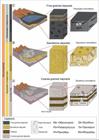
Paleoenvironmental evolution of the Taubaté Basin (modified of Riccomini et al., 1987). (A) Initial moment with development of alluvial fan filled the basement of the Taubaté Basin; (B) Intermediate moment with reworking of alluvial fan by braided rivers system compounding Resende Formation characterized as Skolithos ichnofabric; (C) Final moment with development of lacustrine system above Resende Formation, recover all deposits with lacustrine facies, recognize as Tremembé Formation dominated by Mermia ichnofabric.
The upper core interval features dark shale interbedded with fine-grained sandstone and ostracodite at the top (Figure 6). Thick, fine-grained deposits in the rift basin are formed mainly by lacustrine systems controlled by climate and tectonics, as seen in the Taubaté Basin (Bohacs et al., 2000; Torres-Ribeiro & Borghi, 2007). The dark shale layers reflect reduced sediment influx during periods of intermittent tectonic reactivation (Galloway & Hobday, 2012). Bohacs et al. (2000) propose that lake controls, such as accommodation changes and sediment-water supply balance, influence lake occurrence and character. Fine-grained deposits lacking evaporites, mud cracks, or tractive facies, and with sparse trace fossils, suggest low-energy, deep-water conditions with anoxic sedimentation (Talbot & Allen, 1996; Torres-Ribeiro & Borghi, 2007; Mendonça Filho et al., 2010; Voltani et al., 2023). These deposits, attributed to the Tremembé Formation, are microclastic units comprising siltstones, mudstones, shales, marl, limestone, and sandstone (Riccomini, 1990; Fernandes, 1993; Molinari, 2003; Torres-Ribeiro, 2004; Torres-Ribeiro & Borghi, 2007).
Oxygen deficiency in the lake, controlled by mixing frequency, primary production, and water chemistry (Bohacs et al., 2000), enhances organic preservation by limiting scavenger activity and bacterial respiration (Demaison & Moore, 1980). Allochthonous organic material from deltas and fluvial input increases food supply for infaunal deposit-feeding and grazing communities (Torres-Ribeiro & Borghi, 2007). Lakes typically support a diverse range of benthic organisms, such as annelids, semi-aquatic insects, crustaceans, and mollusks (Cohen, 2003; White & Miller, 2008). Biota in lacustrine systems is influenced by factors like oxygen, salinity, energy, nutrient supply, and substrate consistency (Buatois & Mángano, 2007, 2009). Balanced-fill lakes, depending on sediment and water supply, affect biogenic activity, with closed lakes becoming strongly stratified and oxygen-depleted, leading to high organic matter preservation and reduced biotic activity (Bohacs et al., 2000; Scott et al., 2012).
Planolites, preserved mainly in the upper interval (Figure 4), are produced by deposit-feeders actively processing sediment (Pemberton & Frey, 1982; Gierlowski-Kordesch, 1991; Keighley & Pickerill, 1995; Knaust, 2017). In lacustrine systems, Planolites indicates periods of organic material deposition (Scott et al., 2012). The high abundance of monospecific associations dominated by Planolites reflects oxygen depletion, allowing organic matter preservation (Talbot and Allen, 1996; Magyar et al., 2006; Uchman et al., 2007; Scott et al., 2012; Voltani et al. 2023). Buatois & Mángano (1995b) proposed the Mermia ichnofacies, characterized by horizontal grazing and feeding traces, subordinate locomotion traces, and moderate ichnodiversity in very soft submerged substrates. The absence of typical grazing traces precludes this attribution and, similar to the lower interval, we do not attribute this ichnofabric to one ichnofacies. The recurrence of Planolites ichnofabric increases upward due to reduced lake stress (Melchor, 2004; Torres-Ribeiro & Borghi, 2007; Scott et al., 2012; Voltani et al., 2023).
5.2 Controls of trace fossil distribution
Few studies mentioned the occurrence and distribution of trace fossils in the Resende Formation. The formation is characterized a conglomerate with a mud-sandy matrix deposited under a humid climate, as supported by Lima & Amador (1985), Blair & McPherson (1994), and Bergue et al. (2015). Trace fossils such as Skolithos and Palaeophycus in coarse-grained deposits indicate colonization by opportunistic fauna under relatively high-energy conditions in fluvial settings, but are post depositional in alluvial settings. The trace fossils of the Tremembé Formation have attracted more attention in the literature, but only with mention to its occurrences (e.g., Torres-Ribeiro & Borghi, 2007; Santana et al., 2023; Voltani et al., 2023). Regarding the depositional interpretations, Riccomini (1990) and Sant’Anna (1999) proposed the Tremembé Formation as a playa-lake system, an under-filled lake based on Bohacs et al. (2000). Such lakes are characterized by evaporitic facies and increased salinity (Bohacs et al., 2000). High salinity in profundal deposits typically limits biodiversity, leading to the absence of Mermia ichnofacies (Buatois & Mángano, 2007; Scott et al., 2012). Saline conditions also affect lacustrine faunas, potentially causing low oxygen levels (Scott et al., 2012). Deeper saline lakes are often stratified due to salinity or temperature differences (Renaut & Gierlowski-Kordesch, 2010), which would typically inhibit biotic development. Trace fossils characteristic of restricted environments, however, suggest that this lake had deep conditions and lower salinity levels, as supported by Torres-Ribeiro & Borghi (2007), Santana et al. (2023), and Voltani et al. (2023). Mendonça Filho et al. (2010) identified palynomorphs Botryococcus and Pediastrum in Tremembé Formation, indicating variations in the water column. Botryococcus, associated with high luminosity and salinity, reflects low water levels, while Pediastrum, indicative of fluvial input with high nutrients and low luminosity, suggests higher water levels. The alternation between these palynomorphs points to fluctuations in lake base levels driven by more humid climatic conditions (Mendonça Filho et al., 2010).
Voltani et al. (2023) supported the idea of a deep lake by noting biostratinomic characteristics of fish, such as partial flotation, which indicate water stratification and anoxic conditions at the bottom. Mass fish deaths could result from mixing of anoxic hypolimnion with the epilimnion, causing anoxic events. The presence of partially floating carcasses suggests a lake depth greater than 10 m (Voltani et al., 2023). Ostracodite in the uppermost intervals (Figure 9C) also reflects environmental stress. Bergue et al. (2015) described ostracod assemblages in the Tremembé Formation and found that high concentrations of Heterocypris correspond to shallowing phases, while Limnocythere-Cypretta assemblages indicate deep lake phases. This suggests variations in water levels and bottom oxygenation, as supported by sparse Planolites.
Overall, the Tremembé Formation aligns with Bohacs et al.’s (2000) model of a deep lake with low oxygen exchange rates, creating a stratified water column with low or absent oxygen at the lake bottom. This is corroborated by analyses of organic matter, taphonomy, palynomorphs, and ichnology (Torres-Ribeiro & Borghi, 2007; Mendonça Filho et al., 2010; Bergue et al., 2015; Setta et al., 2020; Voltani et al., 2023). When the lake was open, sediment and water input diluted the salinity, providing oxygen and allowing for colonization by opportunistic organisms, as evidenced by sparse Planolites. Conversely, when the lake was closed, increased salinity and anoxic conditions were indicated by Botryococcus, Heterocypris, and well-preserved organic matter (e.g., Voltani et al., 2023).
6. CONCLUSIONS
This study provides a comprehensive analysis of trace fossils and sedimentological characteristics in the Resende and Tremembé Formations within the Taubaté Basin, revealing distinct ichnological and sedimentological patterns. In the Resende Formation, trace fossils such as Skolithos and Palaeophycus described in coarse-grained deposits suggest colonization by opportunistic fauna under relatively high-energy conditions in fluvial settings, or to post-depositional colonization in alluvial settings, both corresponding to Skolithos and Palaeophycus. This result is in accordance with previous interpretations of the depositional setting for this unit, formed under a humid climate. The limited documentation of trace fossils in this formation (Palaeophycus, Skolithos, Macanopsis, and Taenidium) reflects its challenging depositional conditions for faunal activity.
Conversely, the Tremembé Formation evidences a complex paleoenvironmental history. Initial interpretations of the Tremembé Formation as a playa lake system, dominated by evaporitic facies and high salinity, were revisited. Evidence from trace fossils, supported by available data on palynomorphs, and taphonomic characteristics suggest that the lake exhibited restricted conditions with variable salinity. Palynomorphs such as Botryococcus and Pediastrum indicate fluctuating water levels and salinity, supporting the hypothesis of a dynamic lake environment influenced by climatic changes. The presence of trace fossils suggesting anoxic settings (Planolites), along with biostratinomic evidence of fish flotation and anoxic conditions, underscores the lake’s stratified nature and episodic oxygenation. During the phases of open lake conditions, it supported opportunistic colonization as indicated by sparse Planolites. In contrast, during closed periods characterized by elevated salinity, the lake experienced more severe anoxic conditions, as reflected for the high degree of organic matter preservation.
This study highlights the significant impact of climatic and environmental fluctuations on the ichnological and sedimentological records of the Taubaté Basin. The data supports a model of dynamic lake systems with alternating periods of high salinity, anoxia, and variable water levels, influencing faunal activity and preservation. These insights present implications for reconstructing past climatic and ecological conditions.
ACKNOWLEDGEMENTS
This study is a contribution to the project “Icnologia das bacias de Resende e Taubaté no contexto do Rift Continental do Sudeste do Brasil” (Jovem Cientista do Nosso Estado – FAPERJ 281340; 200.131/2023 - SEI-260003/000688/2023 - BBP). VC thanks CAPES for the master`s grant. DS thanks the National Council for Scientific and Technological Development (CNPq) for the research grant (CNPq 306493/2022-5), and the Alexander von Humboldt-Stiftung for the postdoc fellowship (CAPES/Humboldt Program nº 14/2022 - process nº 23038.004870/2021-69).
-
Manuscript ID: BJGEO-2024-0062.R2.
-
How to cite:
Cambria, V., Menezes, M. N., Dal’ Bó, P. F., Borghi, L., & Sedorko, D. From alluvial fans to lacustrine systems: trace fossils applied to paleoenvironmental analysis in the Taubaté Basin (Brazil). Braz. J. Geol. (2026), 56:e20240062. https://doi.org/10.1590/2317-4889e20240062
-
Financial support:
Icnologia das bacias de Resende e Taubaté no contexto do Rift Continental do Sudeste do Brasil” (Jovem Cientista do 519 Nosso Estado – FAPERJ 281340; 200.131/2023 - SEI-260003/000688/2023 - BBP). CAPES - Coordenação de Aperfeiçoamento de Pessoal de Nível Superior - 88887.834516/2023-00. National Council for Scientific and Technological Development (CNPq) for the research grant (CNPq 306493/2022-5).
-
Data availability statement:
All data supporting this study are included in the article.
REFERENCES
-
Abdel-Fattah, Z. A., Gingras, M. K., Caldwell, M. W., Pemberton, S. G., & MacEachern, J. A. (2016). The Glossifungites ichnofacies and sequence stratigraphic analysis: A case study from middle to upper Eocene successions in Fayum, Egypt. Ichnos, 23(3-4), 157-179. https://doi.org/10.1080/10420940.2016.1185010
» https://doi.org/10.1080/10420940.2016.1185010 - Alpert, S. P. (1974). Systematic review of the genus Skolithos. Journal of Paleontology, 48, 661-669.
- Alvarenga, H. M. F. (1982). Uma gigantesca ave fóssil do Cenozoico brasileiro: Physornis brasiliensis sp. n. Anais da Academia Brasileira de Ciências, 54, 7-14.
- Alvarenga, H. M. F. (1985). Notas sobre os Cathartidae (Aves) e descrição de um novo gênero do Cenozóico brasileiro. Anais da Academia Brasileira de Ciências, 57(3), 349-357.
- Alvarenga, H., Mendonça, R., Avilla, L. S., & Bergqvist, L. P. (2005). A Pyrotheria (Mammalia) from the Taubaté Basin, São Paulo State, Brazil. In Resumos do II Congresso Latino-Americano de Paleontologia de Vertebrados (pp. 19-20). Rio de Janeiro: Museu Nacional/UFRJ.
- Amador, E. D. S. (1975). Estratigrafia e sedimentação na Bacia de Resende-RJ. Anais da Academia Brasileira de Ciências, 47, 181-223.
-
Arshad, M. A., & St. Arnaud, R. J. (1980). Occurrence and characteristics of ferromanganiferous nodules in some Saskatchewan soils. Canadian Journal of Soil Science, 60, 685-695. https://doi.org/10.4141/cjss80-078
» https://doi.org/10.4141/cjss80-078 - Bergamaschi, S., Rodrigues, R., & Pereira, E. (2010). Avaliação geoquímica dos folhelhos betuminosos da Formação Tremembé, Bacia de Taubaté, Brasil. Memórias do Museu e Laboratório Mineralógico e Geológico da Universidade do Porto, 14, 263-272.
-
Bergue, C. T., Kotov, A. A., & Maranhão, M. S. A. S. (2015). Ephippia of Cladocera (Crustacea: Branchiopoda) from the Oligocene Tremembé palaeolake, Brazil. Journal of Natural History, 49(37-38), 2265-2273. https://doi.org/10.1080/00222933.2015.1022237
» https://doi.org/10.1080/00222933.2015.1022237 - Bergqvist, L. P., & Ribeiro, A. M. (1998). A paleomastofauna das bacias eoterciárias brasileiras e sua importância na datação das bacias de Itaboraí e Taubaté (Publicación Especial, No. 5, pp. 19-34). Buenos Aires: Asociación Paleontológica Argentina.
- Birkeland, G. H. (1999). Flood power, riparian vegetation, and channel change in canyons of the Escalante River Basin, Utah (Doctoral thesis). Arizona State University, Tempe.
-
Blair, T. C., & McPherson, J. G. (1992). The Trollheim alluvial fan and facies model revisited. Geological Society of America Bulletin, 104(6), 762-769. https://doi.org/10.1130/0016-7606(1992)104<0762:TTAFAF>2.3.CO;2
» https://doi.org/10.1130/0016-7606(1992)104<0762:TTAFAF>2.3.CO;2 - Blair, T. C., & McPherson, J. G. (1994). Alluvial fans and their natural distinction from rivers based on morphology, hydraulic processes, sedimentary processes, and facies assemblages. Journal of Sedimentary Research, 64(3A), 450-489.
- Bohacs, K. M., Carroll, A. R., Neal, J. E., & Mankiewicz, P. J. (2000). Lake-basin type, source potential, and hydrocarbon character: An integrated sequence-stratigraphic-geochemical framework. In E. H. Gierlowski-Kordesch & K. R. Kelts (Eds.), AAPG studies in geology lake basins through space and time. McLean, VA: American Association of Petroleum Geologists.
-
Bown, T. M. (1982). Ichnofossils and rhizoliths of the nearshore fluvial Jebel Qatrani Formation (Oligocene), Fayum Province, Egypt. Palaeogeography, Palaeoclimatology, Palaeoecology, 40(4), 255-309. https://doi.org/10.1016/0031-0182(82)90031-1
» https://doi.org/10.1016/0031-0182(82)90031-1 -
Bown, T. M., & Kraus, M. J. (1983). Ichnofossils of the alluvial Willwood Formation (Lower Eocene), Bighorn Basin, northwest Wyoming, USA. Palaeogeography, Palaeoclimatology, Palaeoecology, 43(1-2), 95-128. https://doi.org/10.1016/0031-0182(83)90050-0
» https://doi.org/10.1016/0031-0182(83)90050-0 - Bown, T. M., & Kraus, M. J. (1987). Integration of channel and floodplain suites: I. Developmental sequence and lateral relations of alluvial paleosols. Journal of Sedimentary Petrology, 57, 587-601.
- Bromley, R. G. (1990). Trace fossils: Biology and taphonomy (280 p.). London: Unwin Hyman Ltd.
-
Buatois, L. A., & Mángano, M. G. (1995a). The paleoenvironmental and paleoecological significance of the lacustrine Mermia ichnofacies: An archetypical subaqueous nonmarine trace fossil assemblage. Ichnos, 4(2), 151-161. https://doi.org/10.1080/10420949509380122
» https://doi.org/10.1080/10420949509380122 -
Buatois, L. A., & Mángano, M. G. (1995b). Sedimentary dynamics and evolutionary history of a Late Carboniferous Gondwanic lake in northwestern Argentina. Sedimentology, 42(3), 415-436. https://doi.org/10.1111/j.1365-3091.1995.tb00382.x
» https://doi.org/10.1111/j.1365-3091.1995.tb00382.x -
Buatois, L. A., & Mángano, M. G. (2002). Trace fossils from Carboniferous floodplain deposits in western Argentina: Implications for ichnofacies models of continental environments. Palaeogeography, Palaeoclimatology, Palaeoecology, 183(1-2), 71-86. https://doi.org/10.1016/S0031-0182(01)00459-X
» https://doi.org/10.1016/S0031-0182(01)00459-X -
Buatois, L. A., & Mángano, M. G. (2004). Animal-substrate interactions in freshwater environments: Applications of ichnology in facies and sequence stratigraphic analysis of fluvio-lacustrine successions. Special Publication - Geological Society of London, 228(1), 311-333. https://doi.org/10.1144/GSL.SP.2004.228.01.14
» https://doi.org/10.1144/GSL.SP.2004.228.01.14 -
Buatois, L. A., & Mángano, M. G. (2007). Invertebrate ichnology of continental freshwater environments. In W. Miller III (Ed.), Trace fossils: Concepts, problems, prospects (pp. 285-323). Amsterdam: Elsevier. https://doi.org/10.1016/B978-044452949-7/50143-1
» https://doi.org/10.1016/B978-044452949-7/50143-1 - Buatois, L. A., Uba, C. E., Mángano, M. G., Hulka, C., & Heubeck, C. (2007). Deep and intense bioturbation in continental environments: Evidence from Miocene fluvial deposits of Bolivia. Palaeogeography, Palaeoclimatology, Palaeoecology, 243, 1-17.
-
Buatois, L. A., & Mángano, M. G. (2009). Applications of ichnology in lacustrine sequence stratigraphy: Potential and limitations. Palaeogeography, Palaeoclimatology, Palaeoecology, 272(3-4), 127-142. https://doi.org/10.1016/j.palaeo.2008.10.012
» https://doi.org/10.1016/j.palaeo.2008.10.012 -
Buatois, L. A., Mángano, M. G., & Pattison, S. A. (2019). Ichnology of prodeltaic hyperpycnite-turbidite channel complexes and lobes from the Upper Cretaceous Prairie Canyon Member of the Mancos Shale, Book Cliffs, Utah, USA. Sedimentology, 66(5), 1825-1860. https://doi.org/10.1111/sed.12560
» https://doi.org/10.1111/sed.12560 - Campos, F. F. D., Andrade, J. J. C. D., Severino, R. R., & Guerra, G. I. T. (2021). Mapa geológico e de recursos minerais da Bacia de Taubaté. São Paulo: SGB-CPRM.
-
Carmona, N. B., Buatois, L. A., Ponce, J. J., & Mángano, M. G. (2009). Ichnology and sedimentology of a tide-influenced delta, Lower Miocene Chenque Formation, Patagonia, Argentina: Trace-fossil distribution and response to environmental stresses. Palaeogeography, Palaeoclimatology, Palaeoecology, 273(1-2), 75-86. https://doi.org/10.1016/j.palaeo.2008.12.003
» https://doi.org/10.1016/j.palaeo.2008.12.003 - Carvalho, A. M. A., Vidal, A. C., & Kiang, C. H. (2011). Delimitação do embasamento da Bacia de Taubaté. Geologia USP - Série Científica, 11(1), 19-32.
- Casertano, S. A., Zárate, M. A., & Monetti, L. N. (1998). Estructuras biogénicas de invertebrados en planicies aluviales actuales: Significado como indicador de impactos de inundaciones. In Resúmenes del Tercera Reunión Argentina de Icnología y Primera Reunión de Icnología del Mercosur, Mar del Plata, Argentina. Buenos Aires: Asociación Paleontológica Argentina.
-
Cohen, A. S. (2003). Paleolimnology: The history and evolution of lake systems Oxford: Oxford University Press. https://doi.org/10.1093/oso/9780195133530.001.0001
» https://doi.org/10.1093/oso/9780195133530.001.0001 - Collinson, J. D. (1996). Alluvial sediments. In H. G. Reading (Ed.), Sedimentary environments: Processes, facies, stratigraphy (3rd ed., pp. 37-82). Oxford: Blackwell Science.
-
Dashtgard, S. E., Gingras, M. K., & Pemberton, S. G. (2008). Grain-size controls on the occurrence of bioturbation. Palaeogeography, Palaeoclimatology, Palaeoecology, 257(1-2), 224-243. https://doi.org/10.1016/j.palaeo.2007.10.024
» https://doi.org/10.1016/j.palaeo.2007.10.024 -
DeCelles, P. G., Gray, M. B., Ridgway, K. D., Cole, R. B., Pivnik, D. A., Pequera, N., & Srivastava, P. (1991). Controls on synorogenic alluvial-fan architecture, Beartooth Conglomerate (Palaeocene), Wyoming and Montana. Sedimentology, 38(4), 567-590. https://doi.org/10.1111/j.1365-3091.1991.tb01009.x
» https://doi.org/10.1111/j.1365-3091.1991.tb01009.x - Demaison, G. J., & Moore, G. T. (1980). Anoxic environments and oil source bed genesis. AAPG Bulletin, 64, 1179-1209.
-
Duchaufour, P. (1982). Pedology (448 p.). London: George Allen & Unwin. https://doi.org/10.1007/978-94-011-6003-2
» https://doi.org/10.1007/978-94-011-6003-2 -
Ekdale, A. A., Bromley, R. G., & Pemberton, S. G. (1984). Ichnology: The use of trace fossils in sedimentology and stratigraphy Claremore: Society for Sedimentary Geology. https://doi.org/10.2110/scn.84.15
» https://doi.org/10.2110/scn.84.15 - Fanning, D. S., & Fanning, M. C. B. (1989). Soil: Morphology, genesis, and classification (395 p.). New York: Wiley.
- Fernandes, F. L. (1993). Arcabouço estrutural e evolução da Bacia de Taubaté - SP (Master’s thesis). Universidade Federal de Ouro Preto, Ouro Preto.
-
Fernandes, A. C. S., & Carvalho, C. (2006). Invertebrate ichnofossils from the Adamantina Formation, Bauru Basin, Late Cretaceous, Brazil. Revista Brasileira de Paleontologia, 9(2), 211-220. https://doi.org/10.4072/rbp.2006.2.05
» https://doi.org/10.4072/rbp.2006.2.05 -
Fiedler, S., & Sommer, M. (2004). Water and redox conditions in wetland soils: Their influence on pedogenic oxides and morphology. Soil Science Society of America Journal, 68(1), 326-335. https://doi.org/10.2136/sssaj2004.3260
» https://doi.org/10.2136/sssaj2004.3260 - Galloway, W. E., & Hobday, D. K. (2012). Terrigenous clastic depositional systems: Applications to fossil fuel and groundwater resources Berlin: Springer.
-
Gandini, R., Rossetti, D. F., Guimarães Netto, R., & Góes, A. M. (2017). A Miocene wave-dominated estuarine system in the Paraíba Basin, northeastern Brazil. Journal of South American Earth Sciences, 79, 264-280. https://doi.org/10.1016/j.jsames.2017.08.007
» https://doi.org/10.1016/j.jsames.2017.08.007 -
Genise, J. F., Mángano, M. G., Buatois, L. A., Laza, J. H., & Verde, M. (2000). Insect trace fossil associations in paleosols: The Coprinisphaera ichnofacies. Palaios, 15(1), 49-64. https://doi.org/10.1669/0883-1351(2000)015<0049:ITFAIP>2.0.CO;2
» https://doi.org/10.1669/0883-1351(2000)015<0049:ITFAIP>2.0.CO;2 -
Genise, J. F., & Bown, T. M. (1994a). New Miocene scarabeid and hymenopterous nests and early Miocene paleoenvironments, Patagonian Argentina. Ichnos, 3(2), 107-117. https://doi.org/10.1080/10420949409386378
» https://doi.org/10.1080/10420949409386378 -
Genise, J. F., & Bown, T. M. (1994b). New trace fossils of termites (Insecta: Isoptera) from the Late Eocene-Early Miocene of Egypt and the reconstruction of ancient isopteran social behavior. Ichnos, 3(3), 155-183. https://doi.org/10.1080/10420949409386386
» https://doi.org/10.1080/10420949409386386 -
Gierlowski-Kordesch, E. (1991). Ichnology of an ephemeral lacustrine/alluvial plain system: Jurassic East Berlin Formation, Hartford Basin, USA. Ichnos, 1(3), 221-232. https://doi.org/10.1080/10420949109386354
» https://doi.org/10.1080/10420949109386354 -
Golab, J. A., Smith, J. J., & Hasiotis, S. T. (2018). Paleoenvironmental and paleogeographic implications of paleosols and ichnofossils in the Upper Pennsylvanian Halgaito Formation, southeastern Utah. Palaios, 33(7), 296-311. https://doi.org/10.2110/palo.2017.074
» https://doi.org/10.2110/palo.2017.074 -
Graham, J. R. (1983). Analysis of the Upper Devonian Munster Basin: An example of a fluvial distributary system. In S. Collinson & J. Lewin (Eds.), Modern and ancient fluvial systems (Vol. 6, pp. 473-483). Gent: International Association of Sedimentologists. https://doi.org/10.1002/9781444303773.ch38
» https://doi.org/10.1002/9781444303773.ch38 - Guimarães Netto, R., & Rossetti, D. F. (2003). Ichnology and salinity fluctuations: A case study from the Early Miocene (Lower Barreiras Formation) of São Luís Basin, Maranhão, Brazil. Revista Brasileira de Paleontologia, 6, 5-18.
- Hartley, A. J., Weissmann, G. S., Bhattacharayya, P., Nichols, G. J., Scuderi, L. A., Davidson, S. K., & Mather, A. E. (2013). Soil development on modern distributive fluvial systems: Preliminary observations with implications for interpretation of paleosols in the rock record. Sedimentary Geology, 283, 1-16.
-
Hasiotis, S. T. (2000). The invertebrate invasion and evolution of Mesozoic soil ecosystems: The ichnofossil record of ecological innovations. The Paleontological Society Papers, 6, 141-170. https://doi.org/10.1017/S1089332600000747
» https://doi.org/10.1017/S1089332600000747 -
Hasiotis, S. T. (2002). Continental trace fossil atlas (SEPM Short Course Notes, No. 51, 132 p.). Claremore: Society for Sedimentary Geology. https://doi.org/10.2110/scn.06.51
» https://doi.org/10.2110/scn.06.51 -
Hasiotis, S. T. (2004). Reconnaissance of Upper Jurassic Morrison Formation ichnofossils, Rocky Mountain region, USA: Paleoenvironmental, stratigraphic, and paleoclimatic significance. Sedimentary Geology, 167(3-4), 177-268. https://doi.org/10.1016/j.sedgeo.2004.01.006
» https://doi.org/10.1016/j.sedgeo.2004.01.006 - Hasiotis, S. T., & Dubiel, R. F. (1993). Trace fossil assemblages in Chinle Formation alluvial deposits at the Tepees, Petrified Forest National Park, Arizona. New Mexico Museum of Natural History and Science Bulletin, 3, G42-G43.
- Hasiotis, S. T., & Dubiel, R. F. (1994). Ichnofossil tiering in Triassic alluvial paleosols: Implications for Pangean continental rocks and paleoclimate. In A. R. Milner & P. A. Gensler (Eds.), The Nonmarine Triassic (pp. 217-221). Santa Fe: New Mexico Museum.
-
Hasiotis, S. T., McPherson, J. G., & Reilly, M. R. W. (2013). Using ichnofossils to reconstruct the depositional history of sedimentary successions in alluvial, coastal-plain, and deltaic settings. In Proceedings of the International Petroleum Technology Conference. Richardson, TX: OnePetro. https://doi.org/10.2523/17016-MS
» https://doi.org/10.2523/17016-MS - Hasui, Y., & Ponçano, W. L. (1978). Organização estrutural e evolução da Bacia de Taubaté. In Anais do 30º Congresso Brasileiro de Geologia (pp. 368-381). São Paulo: Sociedade Brasileira de Geologia.
-
Hembree, D. I., & Hasiotis, S. T. (2007). Paleosols and ichnofossils of the White River Formation of Colorado: Insight into soil ecosystems of the North American midcontinent during the Eocene-Oligocene transition. Palaios, 22(2), 123-142. https://doi.org/10.2110/palo.2005.p05-119r
» https://doi.org/10.2110/palo.2005.p05-119r -
Hunt, A. P., & Lucas, S. G. (2007). Tetrapod ichnofacies: A new paradigm. Ichnos, 14(1-2), 59-68. https://doi.org/10.1080/10420940601006826
» https://doi.org/10.1080/10420940601006826 - Keighley, D. G., & Pickerill, R. K. (1995). Commentary: The ichnotaxa Palaeophycus and Planolites: Historical perspectives and recommendations. Ichnos, 4, 15-41.
-
Klappa, C. F. (1980). Rhizoliths in terrestrial carbonates: Classification, recognition, genesis and significance. Sedimentology, 27(6), 613-630. https://doi.org/10.1111/j.1365-3091.1980.tb01651.x
» https://doi.org/10.1111/j.1365-3091.1980.tb01651.x -
Knaust, D. (2017). Atlas of trace fossils in well core: Appearance, taxonomy and interpretation Cham: Springer. https://doi.org/10.1007/978-3-319-49837-9
» https://doi.org/10.1007/978-3-319-49837-9 - Krapovickas, V., Mancuso, A. C., Arcucci, A., & Caselli, A. (2010). Fluvial and eolian ichnofaunas from the Lower Permian of South America (Patquía Formation, Paganzo Basin). Geologica Acta, 8(4), 449-462.
-
Kraus, M. J., & Hasiotis, S. T. (2006). Significance of different modes of rhizolith preservation to interpreting paleoenvironmental and paleohydrologic settings: Examples from Paleogene paleosols, Bighorn Basin, Wyoming, USA. Journal of Sedimentary Research, 76(4), 633-646. https://doi.org/10.2110/jsr.2006.052
» https://doi.org/10.2110/jsr.2006.052 - Lima, M. R. D., & Amador, E. D. S. (1985). Análise palinológica de sedimentos da Formação Resende, Terciário do estado do Rio de Janeiro. Coletânea de Trabalhos Paleontológicos, (27), 371-378.
-
Levinton, J. S., & Bambach, R. K. (1970). Some ecological aspects of bivalve mortality patterns. American Journal of Science, 268(2), 97-112. https://doi.org/10.2475/ajs.268.2.97
» https://doi.org/10.2475/ajs.268.2.97 -
MacCarthy, I. A. J. (1990). Alluvial sedimentation patterns in the Munster Basin, Ireland. Sedimentology, 37(4), 685-712. https://doi.org/10.1111/j.1365-3091.1990.tb00629.x
» https://doi.org/10.1111/j.1365-3091.1990.tb00629.x - MacEachern, J. A., & Bann, K. L. (2008). The role of ichnology in refining shallow marine facies models. In G. J. Hampson, R. J. Steel, P. M. Burgess & R. W. Dalrymple (Eds.), Recent advances in models of siliciclastic shallow-marine stratigraphy. McLean, VA: GeoScienceWorld.
-
MacEachern, J. A., & Bann, K. L. (2020). The Phycosiphon ichnofacies and the Rosselia ichnofacies: Two new ichnofacies for marine deltaic environments. Journal of Sedimentary Research, 90(8), 855-886. https://doi.org/10.2110/jsr.2020.41
» https://doi.org/10.2110/jsr.2020.41 - MacEachern, J. A., Stelck, C. R., & Pemberton, S. G. (1999). Marine and marginal marine mudstone deposition: Paleoenvironmental interpretations based on the integration of ichnology, palynology and foraminiferal paleoecology. Bulletin of Canadian Petroleum Geology, 47, 212-233.
- MacEachern, J. A., Pemberton, S. G., Bann, K. L., & Gingras, M. K. (2007). Departures from the archetypal ichnofacies: Effective recognition of physico-chemical stresses in the rock record. In J. A. MacEachern, K. L. Bann, M. K. Gingras & S. G. Pemberton (Eds.), Applied ichnology (pp. 1-26). Claremore: Society for Sedimentary Geology.
-
Magyar, I., Müller, P. M., Sztanó, O., Babinszki, E., & Lantos, M. (2006). Oxygen-related facies in Lake Pannon deposits (Upper Miocene) at Budapest Köbánya. Facies, 52(2), 209-220. https://doi.org/10.1007/s10347-005-0036-y
» https://doi.org/10.1007/s10347-005-0036-y - Malabarba, M. C. S. L. (1998). Phylogeny of fossil Characiformes and paleobiogeography of the Tremembé Formation, São Paulo, Brazil. In L. R. Malabarba (Ed.), Phylogeny and classification of neotropical fishes (pp. 69-84). New York: Springer.
-
Mayr, G., Alvarenga, H., & Mourer-Chauviré, C. (2011). Out of Africa: Fossils shed light on the origin of the hoatzin, an iconic Neotropic bird. Die Naturwissenschaften, 98(11), 961-966. https://doi.org/10.1007/s00114-011-0849-1 PMid:21964974.
» https://doi.org/10.1007/s00114-011-0849-1 -
McCall, P. L., & Soster, F. M. (1990). Benthos response to disturbance in western Lake Erie: Regional faunal surveys. Canadian Journal of Fisheries and Aquatic Sciences, 47(10), 1996-2009. https://doi.org/10.1139/f90-224
» https://doi.org/10.1139/f90-224 -
Melchor, R. N. (2004). Trace fossil distribution in lacustrine deltas: Examples from the Triassic rift lakes of the Ischigualasto-Villa Unión Basin, Argentina. Special Publication - Geological Society of London, 228(1), 335-354. https://doi.org/10.1144/GSL.SP.2004.228.01.15
» https://doi.org/10.1144/GSL.SP.2004.228.01.15 - Melo, M. S., Ponçano, W. L., Mook, W., & Azevedo, A. E. G. (1987). Datações C14 em sedimentos quaternários da Grande São Paulo. In Anais do Congresso da Associação Brasileira de Estudos do Quaternário (Vol. 1, pp. 427-436). São Paulo: ABEQUA.
-
Mendonça Filho, J. G., Chagas, R. B. A., Menezes, T. R., Mendonça, J. O., Silva, F. S., & Sabadini-Santos, E. (2010). Organic facies of the Oligocene lacustrine system in the Cenozoic Taubaté Basin, southern Brazil. International Journal of Coal Geology, 84(3-4), 166-178. https://doi.org/10.1016/j.coal.2010.07.004
» https://doi.org/10.1016/j.coal.2010.07.004 -
Mikuś, P., & Uchman, A. (2013). Beetle burrows with a terminal chamber: A contribution to the knowledge of the trace fossil Macanopsis in continental sediments. Palaios, 28(6), 403-413. https://doi.org/10.2110/palo.2012.p12-129r
» https://doi.org/10.2110/palo.2012.p12-129r -
Minter, N. J., Krainer, K., Lucas, S. G., Braddy, S. J., & Hunt, A. P. (2007). Palaeoecology of an Early Permian playa lake trace fossil assemblage from Castle Peak, Texas, USA. Palaeogeography, Palaeoclimatology, Palaeoecology, 246(2–4), 390-423. https://doi.org/10.1016/j.palaeo.2006.10.009
» https://doi.org/10.1016/j.palaeo.2006.10.009 - Molinari, L. (2003). Interpretação sismoestratigráfica da Bacia de Taubaté - SP (Master’s thesis). Instituto de Geociências, Universidade Federal do Rio de Janeiro, Rio de Janeiro.
-
Morrissey, L. B., & Braddy, S. J. (2004). Terrestrial trace fossils from the Lower Old Red Sandstone, southwest Wales. Geological Journal, 39(3-4), 315-336. https://doi.org/10.1002/gj.991
» https://doi.org/10.1002/gj.991 -
Mueller, P., & McCann, T. (2014). Ichnology of the Miocene Jaraba Formation, Almazán Basin, NE Spain: Morphological characteristics and paleoenvironmental implications of distinct continental trace fossils. Neues Jahrbuch für Geologie und Paläontologie. Abhandlungen, 274(1), 55-71. https://doi.org/10.1127/njgpa/2014/0439
» https://doi.org/10.1127/njgpa/2014/0439 -
Nascimento, D. L., & Guimarães Netto, R. (2019). Skolithos serratus in paleosols: Paleobiological, paleoecological, and paleobiogeographical insights. Palaeogeography, Palaeoclimatology, Palaeoecology, 530, 152-162. https://doi.org/10.1016/j.palaeo.2019.05.044
» https://doi.org/10.1016/j.palaeo.2019.05.044 -
Nascimento, D. L., Guimarães Netto, R., & Indicatti, R. P. (2021). Neoichnology of mygalomorph spiders: Improving the recognition of spider burrows in the geological record. Journal of South American Earth Sciences, 108, 103178. https://doi.org/10.1016/j.jsames.2021.103178
» https://doi.org/10.1016/j.jsames.2021.103178 -
Nascimento, D. L., Guimarães Netto, R., Cenci, R., & Villegas-Martín, J. (2024). Neoichnology of Rhinella dorbignyi (Bufonidae) burrows: Improving the recognition and interpretation of toad burrows. Ichnos, 31(4), 1-17. https://doi.org/10.1080/10420940.2024.2402006
» https://doi.org/10.1080/10420940.2024.2402006 - Neto de Carvalho, C., & Baucon, A. (2016). Ichnology of alluvial-fan related sequences: The example of Sarzedas Basin (Upper Miocene, UNESCO Naturtejo Geopark). Comunicações Geológicas, 103, 1-10.
-
Nichols, G. J., & Fisher, J. A. (2007). Processes, facies and architecture of fluvial distributary system deposits. Sedimentary Geology, 195(1-2), 75-90. https://doi.org/10.1016/j.sedgeo.2006.07.004
» https://doi.org/10.1016/j.sedgeo.2006.07.004 - Olson, S. L., & Alvarenga, H. (2002). A new genus of small teratorn from the Middle Tertiary of the Taubaté Basin, Brazil (Aves: Teratornithidae). Proceedings of the Biological Society of Washington, 115, 701-705.
-
Padilha, A. L., Trivedi, N. B., Vitorello, Í., & Costa, J. M. (1991). Geophysical constraints on tectonic models of Taubaté Basin, southeastern Brazil. Tectonophysics, 196(1-2), 157-172. https://doi.org/10.1016/0040-1951(91)90294-3
» https://doi.org/10.1016/0040-1951(91)90294-3 - Pemberton, S. G., & Frey, R. W. (1982). Trace fossil nomenclature and the Planolites–Palaeophycus dilemma. Journal of Paleontology, 56, 843-881.
- Pemberton, S. G., & MacEachern, J. A. (1995). The sequence stratigraphic significance of trace fossils: Examples from the Cretaceous foreland basin of Alberta, Canada. In J. C. Van Wagoner & G. T. Bertram (Eds.), Sequence stratigraphy of foreland basin deposits: Outcrop and subsurface examples from the Cretaceous of North America. McLean, VA: American Association of Petroleum Geologists.
-
Pemberton, S. G., MacEachern, J. A., & Ranger, M. J. (1992). Ichnology and event stratigraphy: The use of trace fossils in recognizing tempestites. In SEPM Core Workshop (Vol. 17, pp. 1-11). Claremore: Society for Sedimentary Geology. https://doi.org/10.2110/cor.92.01.0085
» https://doi.org/10.2110/cor.92.01.0085 - Ramos, R. R. C. (2003). Sistemas aluviais terciários da Bacia de Resende, Estado do Rio de Janeiro, Brasil: Análise de fácies e revisão estratigráfica (Master’s thesis). Universidade Federal do Rio de Janeiro, Rio de Janeiro.
- Ramos, R. R. C., Mello, C. L., & Sanson, M. S. R. (2005). Bacias sedimentares terciárias da Região Sudeste do Brasil. In Resumos do IV Simpósio de Geologia do Sudeste (pp. 1-8). Rio Claro: UNESP.
- Ramos, R. R. C., Mello, C. L., & Sanson, M. D. S. R. (2006). Revisão estratigráfica da Bacia de Resende, Rift Continental do Sudeste do Brasil, Estado do Rio de Janeiro. Geociências, 25(1), 59-69.
-
Rangel, C. C., Francischini, H., Rodrigues, S. C., Guimarães Netto, R., Buck, P. V., & Sedorko, D. (2022). A possible lungfish burrow in the Upper Cretaceous Adamantina Formation (Bauru Basin, Brazil) and its paleoecological and paleoenvironmental significance. Revista Brasileira de Paleontologia, 25(3), 167-179. https://doi.org/10.4072/rbp.2022.3.01
» https://doi.org/10.4072/rbp.2022.3.01 - Reineck, H. E. (1963). Sedimentgefüge im Bereich der südlichen Nordsee (Vol. 505). Frankfurt a.M.: Senckenbergische Naturforschende Gesellschaft.
-
Reneau, S. L., & Dietrich, W. E. (1987). The importance of hollows in debris flow studies: Examples from Marin County, California. Reviews in Engineering Geology, 7, 165-180. https://doi.org/10.1130/REG7-p165
» https://doi.org/10.1130/REG7-p165 - Renaut, R. W., & Gierlowski-Kordesch, E. H. (2010). Lakes. In P. Noel & R. Dalrymple (Eds.), Facies models 4 (pp. 521-587). St. John’s: Geological Association of Canada.
- Reneau, S. L., Dietrich, W. E., Wilson, C. J., & Rogers, J. D. (1984). Colluvial deposits and associated landslides in the northern San Francisco Bay area, California, USA. Geological Society of America Abstracts with Programs, 16, 567.
-
Reneau, S. L., Dietrich, W. E., Donahue, D. J., Jull, A. T., & Rubin, M. (1990). Late Quaternary history of colluvial deposition and erosion in hollows, central California Coast Ranges. Geological Society of America Bulletin, 102(7), 969-982. https://doi.org/10.1130/0016-7606(1990)102<0969:LQHOCD>2.3.CO;2
» https://doi.org/10.1130/0016-7606(1990)102<0969:LQHOCD>2.3.CO;2 - Retallack, G. J., & Reinhardt, J. (1988). Field recognition of paleosols. Geological Society of America. Special Paper, 216, 1-20.
-
Riccomini, C. (1990). O Rift continental do sudeste do Brasil (Doctoral thesis). Universidade de São Paulo, São Paulo. https://doi.org/10.11606/T.44.1990.tde-18032013-105507
» https://doi.org/10.11606/T.44.1990.tde-18032013-105507 - Riccomini, C. (1993). Origem, evolução e inversão da Bacia do Pico de Itapeva, Neoproterozoico-Cambriano, São Paulo, Brasil. In Resumenes Extensos do 1er Simposio Internacional. NeoProterozoico-Cámbrico de la Cuenca del Plata (pp. 45-47). La Paloma: Facultad de Agronomia.
- Riccomini, C., Appi, C. J., Freitas, E. L. D., & Arai, M. (1987). Tectônica e sedimentação no sistema de rifts continentais da Serra do Mar (Bacias de Volta Redonda, Resende, Taubaté e São Paulo). In Anais do I Simpósio de Geologia RJ-ES, Rio de Janeiro. São Paulo: Sociedade Brasileira de Geologia.
- Riccomini, C., & Coimbra, A. M. (1992). Geologia da bacia sedimentar. In A. Negro Junior, A. A. Ferreira, U. R. Alonso & P. A. C. Luz (Eds.), Solos da cidade de São Paulo (pp. 1-20). São Paulo: ABMS/ABEF.
-
Riccomini, C., Coimbra, A. M., Sant’Anna, L. G., Brandt Neto, M., & Valarelli, J. V. (1996). Argilominerais do paleolago Tremembé e sistemas deposicionais relacionados (Paleógeno, Rift Continental do Sudeste do Brasil). Revista Brasileira de Geociências, 26(3), 167-180. https://doi.org/10.25249/0375-7536.1996167180
» https://doi.org/10.25249/0375-7536.1996167180 - Riccomini, C., Sant’Anna, L. G., & Ferrari, A. L. (2004). Evolução geológica do rift continental do sudeste do Brasil. In V. Mantesso-Neto, A. Bartorelli, C. Dal Ré Carneiro & B. B. Brito-Neves (Eds.), Geologia do continente sul-americano (pp. 383-405). São Paulo: Beca.
-
Richardson, J. L., & Hole, F. D. (1979). Mottling and iron distribution in a Glossoboralf–Haplaquoll hydrosequence on a glacial moraine in northwestern Wisconsin. Soil Science Society of America Journal, 43(3), 552-558. https://doi.org/10.2136/sssaj1979.03615995004300030024x
» https://doi.org/10.2136/sssaj1979.03615995004300030024x - Riff, D., & Bergqvist, L. P. (1999). Primeira ocorrência de anura na Bacia de Taubaté, SP: Oligoceno Superior. In Resumos do Congresso Brasileiro de Paleontologia (pp. 90-91). São Paulo: Sociedade Brasileira de Geologia.
-
Rossetti, D. F. (2000). Influence of low-amplitude/high-frequency relative sea-level changes in a wave-dominated estuary (Miocene), São Luis Basin, northern Brazil. Sedimentary Geology, 133(3-4), 295-324. https://doi.org/10.1016/S0037-0738(00)00046-4
» https://doi.org/10.1016/S0037-0738(00)00046-4 -
Sadler, S. P., & Kelly, S. B. (1993). Fluvial processes and cyclicity in terminal fan deposits: An example from the Late Devonian of southwest Ireland. Sedimentary Geology, 85(1-4), 375-386. https://doi.org/10.1016/0037-0738(93)90093-K
» https://doi.org/10.1016/0037-0738(93)90093-K - Sant’Anna, L. G. (1999). Geologia, mineralogia e gênese das esmectitas dos depósitos paleogênicos do Rift Continental do Sudeste do Brasil (Doctoral thesis). Universidade de São Paulo, São Paulo.
-
Santana, J. F. O. M., Araújo-Júnior, H. I., Figueiredo, F. J., Polck, M. A. dos R., & Ade, M. V. B. (2023). Taphonomy of the fish fauna of the Tremembé Formation (Oligocene of the Taubaté Basin), southeastern Brazil. Journal of South American Earth Sciences, 122, 104599. https://doi.org/10.1016/j.jsames.2023.104599
» https://doi.org/10.1016/j.jsames.2023.104599 - Santos, R. O. D. (2020). Descrição morfológica e análise filogenética de uma cecília fóssil (Lissamphibia, Gymnophiona) da Bacia de Taubaté (Doctoral thesis). Universidade de São Paulo, São Paulo.
- Sarjeant, W. A. S. (Ed.). (1983). Terrestrial trace fossils (415 p.). New York: Hutchinson Ross Publishing.
- Schaeffer, B. (1947). Cretaceous and Tertiary actinopterygian fishes from Brazil. Bulletin of the American Museum of Natural History, 89(1), 1-90.
-
Schwertmann, U., & Fanning, D. S. (1976). Iron–manganese concretions in a hydrosequence of loess soils in Bavaria. Soil Science Society of America Journal, 40(5), 731-738. https://doi.org/10.2136/sssaj1976.03615995004000050034x
» https://doi.org/10.2136/sssaj1976.03615995004000050034x - Scott, J. J., Buatois, L. A., & Mángano, M. G. (2012). Lacustrine environments. In A. Miall & S. Knoll (Eds.), Developments in sedimentology (Vol. 64, pp. 379-417). Cham: Elsevier.
- Sedorko, D., & Francischini, H. (2021). Icnologia: Interações entre organismos e substratos Curitiba: Editora CRV.
-
Sedorko, D., Guimarães Netto, R., & Horodyski, R. S. (2019). Tracking Silurian-Devonian events and paleobathymetric curves by ichnologic and taphonomic analyses in southwestern Gondwana. Global and Planetary Change, 179, 43-56. https://doi.org/10.1016/j.gloplacha.2019.05.007
» https://doi.org/10.1016/j.gloplacha.2019.05.007 -
Sedorko, D., Barros, G. E. B., Guimarães Netto, R., Ghilardi, R. P., Agostinho, S., Ramos, K. S., Franco-Neto, E., Moreira-Junior, C. A., & Borghi, L. (2023). Multiple-Rusophycus assemblage from the Parnaíba Basin (NE Brazil) reflects trilobites as tracemakers and molting behavior. Frontiers in Ecology and Evolution, 11, 1-16. https://doi.org/10.3389/fevo.2023.1117947
» https://doi.org/10.3389/fevo.2023.1117947 -
Sedorko, D., Mello, C. L., Ramos, R. R. C., Batezelli, A., Cambria, V., Goulart, V. R. C., & Ramos, K. S. (2024). Ichnological analysis and paleoenvironmental inferences of Neogene meandering fluvial deposits in the Continental Rift of Southeastern Brazil. Brazilian Journal of Geology, 54(1), e20230043. https://doi.org/10.1590/2317-4889202420230043
» https://doi.org/10.1590/2317-4889202420230043 -
Sedorko, D., West, D. C., Nascimento, D. L., Mello, C. L., Ramos, R. R. C., Ramos, K. S., & Scheffler, S. M. (2025). Trace fossil analysis in a Paleogene braided river system from the Volta Redonda Basin, Continental Rift of Southeastern Brazil. Ichnos, 32(2), 1-12. https://doi.org/10.1080/10420940.2025.2484525
» https://doi.org/10.1080/10420940.2025.2484525 - Seilacher, A. (1964). Biogenic sedimentary structures. In J. Imbrie & N. D. Newell (Eds.), Approaches to paleoecology (pp. 296-316). New York: Wiley.
-
Seilacher, A. (1967). Bathymetry of trace fossils. Marine Geology, 5(5-6), 413-428. https://doi.org/10.1016/0025-3227(67)90051-5
» https://doi.org/10.1016/0025-3227(67)90051-5 - Setta, F., Bergamaschi, S., Rodrigues, R., Pereira, E., & Chaves, H. A. F. (2012). Avaliação de jazidas não convencionais: folhelhos betuminosos da Formação Tremembé, Bacia de Taubaté. In Rio Oil & Gas Conference (Technical Papers, pp. 1-10), Rio de Janeiro. Rio de Janeiro: Instituto Brasileiro de Petróleo, Gás e Biocombustíveis.
-
Setta, F., Bergamaschi, S., Rodrigues, R., Jones, C., Chaves, H., Brito, M., & Pereira, E. (2020). The volumetric potential assessment of the oil shales of Tremembé Formation, Taubaté Basin, Brazil. Journal of Petroleum Exploration and Production Technology, 10(5), 1835-1848. https://doi.org/10.1007/s13202-020-00846-z
» https://doi.org/10.1007/s13202-020-00846-z - Soria, M. F., & Alvarenga, H. M. F. (1989). Nuevos restos de mamíferos de la Cuenca de Taubaté, Estado de São Paulo, Brasil. Anais da Academia Brasileira de Ciências, 61(2), 157-175.
-
Stanley, K. O., & Fagerstrom, J. A. (1974). Miocene invertebrate trace fossils from a braided river environment, western Nebraska, USA. Palaeogeography, Palaeoclimatology, Palaeoecology, 15(1), 63-82. https://doi.org/10.1016/0031-0182(74)90037-6
» https://doi.org/10.1016/0031-0182(74)90037-6 -
Stiles, C. A., Mora, C. I., & Driese, S. G. (2001). Pedogenic iron–manganese nodules in Vertisols: A new proxy for paleoprecipitation? Geology, 29(10), 943-946. https://doi.org/10.1130/0091-7613(2001)029<0943:PIMNIV>2.0.CO;2
» https://doi.org/10.1130/0091-7613(2001)029<0943:PIMNIV>2.0.CO;2 - Talbot, M. R., & Allen, P. A. (1996). Lakes. In H. G. Reading (Ed.), Sedimentary environments: Processes, facies and stratigraphy (pp. 83-124). Oxford: Blackwell Science.
- Torres-Ribeiro, M. (2004). Fácies microclásticas de um sistema lacustre oligocênico do Sudeste do Brasil (Formação Tremembé, Bacia de Taubaté) (Master’s thesis). Universidade Federal do Rio de Janeiro, Rio de Janeiro.
- Torres-Ribeiro, M., & Borghi, L. (2007). O uso de microfácies sedimentares na caracterização de potenciais rochas selantes e geradoras de um sistema lacustre paleogênico na bacia de Taubaté. In Congresso Brasileiro de P&D em Petróleo e Gás (Vol. 1, pp. 1-6). Natal: ABPG.
- Uchman, A., Nemec, W., & Ilgar, A. (2007). Lacustrine trace fossils and environmental conditions in the Early Miocene Ermenek Basin, southern Turkey. Annales Societatis Geologorum Poloniae, 77(2), 123-139.
- United States Department of Agriculture – USDA. Soil Survey Staff. (2014). Keys to soil taxonomy (12th ed.). Washington, D.C.: USDA.
- Vepraskas, M. J. (1994). Redoximorphic features for identifying aquic conditions (Technical Bulletin, No. 301, 33 p.). Raleigh: North Carolina Agricultural Research Service.
- Vepraskas, M. J. (2015). Redoximorphic features for identifying aquic conditions (2nd ed.). Raleigh: North Carolina Agricultural Research Services, North Carolina State University.
- Vepraskas, M. J., Wilding, L. P., & Drees, L. R. (1992). Aquic conditions for soil taxonomy: Concepts, soil morphology and micromorphology. In A. J. Ringrose-Voase & G. S. Humphreys (Eds.), Soil micromorphology: Studies in management and genesis (pp. 117-131). Amsterdam: Elsevier.
-
Voltani, C. G., Menegazzo, M. C., Galeazzi, C. P., Montefeltro, F. C., de Almeida, R. P., & Anelli, L. E. (2023). Fish biostratinomy applied to lacustrine paleoenvironmental reconstructions: Oligocene deposits of Taubaté Basin, Brazil. Journal of South American Earth Sciences, 129, 104530. https://doi.org/10.1016/j.jsames.2023.104530
» https://doi.org/10.1016/j.jsames.2023.104530 -
Vossler, S. M., & Pemberton, S. G. (1988). Skolithos in the Upper Cretaceous Cardium Formation: An ichnofossil example of opportunistic ecology. Lethaia, 21(4), 351-362. https://doi.org/10.1111/j.1502-3931.1988.tb01763.x
» https://doi.org/10.1111/j.1502-3931.1988.tb01763.x -
Wang, M., Qi, Y., Li, D., Dai, M., & Chang, Y. (2014). Ichnofabrics and their environmental interpretation from the fluvial deposits of the Middle Triassic Youfangzhuang Formation in western Henan, Central China. Journal of Earth Science, 25(4), 648-661. https://doi.org/10.1007/s12583-014-0454-2
» https://doi.org/10.1007/s12583-014-0454-2 -
White, D. S., & Miller, M. F. (2008). Benthic invertebrate activity in lakes: linking present and historical bioturbation patterns. Aquatic Biology, 2(3), 269-277. https://doi.org/10.3354/ab00056
» https://doi.org/10.3354/ab00056 -
Wickert, W. Q. (1974). Contribuição ao estudo da paleontologia da Bacia de Taubaté, Estado de São Paulo. Anuário do Instituto de Geociências, 16, 24-25. https://doi.org/10.11137/1993_0_24-25
» https://doi.org/10.11137/1993_0_24-25 - Woodward, A. S. (1898). Considerações sobre alguns peixes terciários dos schistos de Taubaté, Estado de São Paulo, Brazil. Revista do Museu Paulista, 3, 114-122.
-
Wootton, R. J. (1988). The historical ecology of aquatic insects: An overview. Palaeogeography, Palaeoclimatology, Palaeoecology, 62(1-4), 477-492. https://doi.org/10.1016/0031-0182(88)90068-5
» https://doi.org/10.1016/0031-0182(88)90068-5 - Zalán, P. V., & Oliveira, J. A. (2005). Origem e evolução estrutural do sistema de riftes cenozóicos do Sudeste do Brasil. Boletim de Geociências da Petrobras, 13(2), 269-300.
Edited by
-
SCIENTIFIC EDITOR:
Carlos Henrique Grohmann https://orcid.org/0000-0001-5073-5572
-
ASSOCIATE EDITOR:
Lucas Warren https://orcid.org/0000-0002-2050-6514
All data supporting this study are included in the article.


