 Performance of packaging for fruits and vegetables: case study of strawberries
Abstract
This study aimed to assess the performance of several types of packaging used for strawberries along the distribution chain. Fruits and vegetables (FV) are among the most perishable foods. They are vulnerable to losses throughout the supply chain, particularly when adequate harvesting, packaging, transportation, and marketing practices are not adopted. Thus, packaging can make relevant contributions to reducing such losses. Three strawberry supply chains were analyzed, focusing on both retailers and producers. Our results show that the materials used in the analyzed chains are clamshells and PET trays, the latter with PVC film. The secondary packaging used is self-locking corrugated boxes, with little use of pallets. The Packaging Scorecard method showed that retailers and manufacturers are generally satisfied with the performance of the packaging, but there may be room for improvement in attributes such as “innovation” and “physical protection against impacts and vibrations” in primary packaging. The tool showed potential for developing joint solutions that serve the distribution chain as a whole.
Keywords:
Packaging adequacy; Loss in the food chain; Mechanical injury; Logistics efficiency; Distribution chain; Post-harvest
Highlights
Proper packaging helps reduce losses of sensitive fruit along the distribution chain
Requirements of producers and retailers differ as to packaging performance
Packaging cost constraints prevent the selection of more attractive, innovative options
1 Introduction
1.1 The market of fruits and vegetables (FV)
The segment of fruits and vegetables plays an important role in Brazilian agricultural production, significantly influencing both the domestic market and exports. Brazil ranks among the main producing countries of fresh fruits worldwide, with emphasis on crops such as grapes, mangoes, strawberries, melons, and tomatoes, according to information from the Ministry of Agriculture (Brasil, 2024).
The sector has shown a steady increase, with fruit production already accounting for 16.5% of the total national agricultural production. According to data released by the Brazilian Association of Producers and Exporters of Fruits and Derivatives (Abrafrutas), the marketing of fruits and vegetables in supply centers (Ceasas), responsible for distributing and intermediating wholesale fruit and vegetable products, hit the mark of R$ 60 billion in 2023. As to the international market, information from the National Supply Company (Conab) indicates that Brazil exported approximately 1.094 million tons of fruits in 2024, thus generating revenues of US$ 1.38 billion (Associação Brasileira dos Produtores Exportadores de Frutas, 2023; Brasil, 2024; Companhia Nacional de Abastecimento, 2025).
Despite the economic relevance of the sector, significant challenges associated with post-harvest losses persist. Estimates indicate that between 30% and 45% of fruit and vegetables are wasted between the time of harvest and final consumption. Such losses are largely related to deficiencies in packaging and handling practices, thus highlighting the strategic role of packaging to preserve quality and protect products throughout the distribution chain (Food and Agriculture Organization, 2014).
Moreover, the growing appreciation of fruits and vegetables in daily eating habits, driven by factors such as increased knowledge about nutrition and adherence to healthier meals, reinforces the urgency for logistical and technological innovations. These solutions are critical to ensure that products reach end consumers with their sensory and nutritional characteristics preserved, contributing to the sustainability of the food system and reducing waste.
1.2 Relevance of the packaging
Fruits and vegetables are among the most perishable foods and are vulnerable to losses throughout the supply chain, especially when proper harvesting, packaging, transportation, and marketing practices are not adopted. Several studies have indicated that these products represent the largest share of food losses worldwide, surpassing categories such as bakeries, dairy products, and meat (Food and Agriculture Organization, 2014). Preserving quality and freshness from harvest to final consumption is therefore one of the main challenges facing the packaging industry.
In Brazil, data from the Brazilian Association of Supermarkets (Associação Brasileira de Supermercados, 2021) show that the FV sector is the leader in the rate of losses in retail, accounting for approximately 5.25% of the segment’s gross revenue. Tomatoes have the greatest losses in volume and value, while strawberries take the third position in terms of financial losses.
Losses are often caused by a combination of physical, logistical, and technological factors. The main causative agents include mechanical injuries, such as cuts, abrasions, perforations, and compressions, which occur during harvesting, loading, and transport. Practices such as manual throwing of boxes, transportation in inappropriate vehicles, and the use of fragile or poorly sized packaging contribute significantly to these damages (Food and Agriculture Organization, 1989; Bill et al., 2014). In addition, incorrect stacking, excess humidity, and contact with hard or sharp surfaces inside packages also increase losses.
Packaging solutions play a strategic role in mitigating such losses. They should be planned considering the specific physiology of each product, such as rates of transpiration, respiration, and production of ethylene, as well as their physical characteristics and susceptibility to microbial deterioration. The key objectives include avoiding contamination, reducing physical damage, controlling moisture loss, allowing adequate ventilation, and delaying ripening (Ahmad & Siddiqui, 2015; Ahvenainen, 2003).
According to the Food and Agriculture Organization (2014), the obstacles to reducing losses can be classified as internal and external barriers to the production chain. The external barriers feature infrastructure limitations, market pressures, consumer behavior, regulations, and access to technology. In turn, internal barriers involve deficiencies in management, financing, technical knowledge, and business models. In either case, packaging can be both part of the problem and a possible solution. Developing packaging systems tailored to the needs of products at each link in the chain, from harvest to consumption, can significantly mitigate these losses.
From the logistical point of view, the Brazilian scenario is dual between domestic supply and exports. The domestic market is marked by less standardized chains, with predominance of road transport, deficiencies in road infrastructure, and absence of suitable thermal control during the different stages of distribution. In contrast, the export sector – notably represented by the São Francisco Valley pole – operates under stricter requirements. In these systems, there are more advanced practices of traceability, environmental control, and standardization, including in terms of packaging, which must be designed to resist stacking, vibration, thermal variations, and must also meet the sanitary and phytosanitary standards of international markets (Associação Brasileira dos Produtores Exportadores de Frutas, 2023). This disparity shows how much the quality and adequacy of packaging influence not only the preservation of the product, but also the competitiveness in foreign markets.
In addition to the technical requirements, the pressure for environmentally sustainable solutions is growing. The prevailing use of often non-recyclable plastic materials has been the target of criticism and regulations. The National Policy for Solid Waste (Brasil, 2010) introduced principles of shared responsibility and incentives to reverse logistics, pressuring the productive sectors to seek alternatives with less environmental impact. Reusable, compostable, or renewable-derived packaging has been gaining ground, but it still faces limitations in terms of cost, availability, and technical performance (D’Almeida & Albuquerque, 2024).
Therefore, investing in technically and functionally appropriate packaging solutions can be one of the most effective ways to address the logistical and operational challenges of the FV chain. Besides operating as physical barriers against damage, optimized packaging contributes to the organization of transport, facilitating safe stacking, enabling control of environmental variables, and extending product shelf life. Thus, these packaging solutions lead to both the reduction of waste and the competitiveness of Brazilian FV in increasingly demanding markets.
In view of this scenario, this study aimed to assess the performance of primary and transport packaging currently used in three strawberry distribution chains. To this end, we determined the specifications of the packaging used and applied the Packaging Scorecard method to analyze the performance along the supply chain of three retailers in the state of São Paulo.
2 Material and methods
2.1 Material
2.1.1 Strawberries
This study included strawberries of the Camarosa, San Andreas, and Albion types, which comprise some of the most widespread cultivars in Brazil. It is also worth highlighting the differences in strawberry varieties, even in different states of the country, that may have greater or lesser sensitivity to mechanical damage.
2.2 Packaging
The primary and transport packages used for strawberry packaging by points of sale and/or partner rural producers were donated for characterizing the materials, as described below:
2.2.1 Primary and transport packaging (boxes)
-
• Transparent PET clamshell with holes (P1) + Corrugated cardboard box (PO1).
-
• Green transparent plastic tray (P2) + Corrugated cardboard box (PO2).
-
• Green Transparent Plastic Tray (P3) + Corrugated cardboard box (PO3).
-
• White PS Tray (P4) + Corrugated cardboard box (PO4).
Table 1 shows the primary and transport packaging (boxes) obtained in this study.
The characterization of the packaging is described in item 2 of this article.
We can see that the strawberries placed in these chains come in two different configurations, as shown in Table 1 (PET tray or chamshell). A third configuration is also found with an expanded polystyrene tray (Styrofoam) and stretch film, not seen in retailers, but used by one of the producers.
3 Method
3.1 Application of the Packaging Scorecard (PSC) method
Three retail companies accepted the invitation and participated in the application of the PSC method. Visits were made to their points of sale and their strawberry producers, totaling six technical visits in the states of São Paulo and Minas Gerais throughout the period. During the visits, through the PSC method, packaging samples were collected, and interviews were conducted with the operation professionals to understand the handling, movement, and transport flows involving the packages, which can cause food losses. The Packaging Scorecard method (Olsmats & Dominic, 2003; Dominic, 2010; Sarıhan Mungan and Aydın, 2022) is based on the Balanced Scorecard method, which is adequate for studies involving limitations in traditional systems to assess performance. “Strengths and weaknesses of the packaging system are systematically identified with a holistic approach” (Olsmats & Dominic, 2003; Dominic, 2010; Sarıhan Mungan and Aydın, 2022). In a practical way, the Packaging Scorecard consists of a study of packaging performance based on the vision of the players involved in the distribution chain of a given product. It is worth noting that the attributes assessed differ according to the point along the chain due to the varied demands at each stage for each player in the chain.
According to Noletto et al. (2019), the method considers different attributes for primary, secondary, and tertiary packaging, which are analyzed as to their performance in three areas: a) marketing, concerning attributes related to apportionment, product information, and safety; b) environment, concerning attributes related to resource saving and recycling; c) logistics, concerning attributes related to quantity and size, complexity of operation, packaging design, and product protection. A scale was used to analyze the performance of the attribute from not satisfied (1) to very satisfied (5). The importance of the attribute was assessed by a scale ranging from not important (1) to very important (5). It is critical to point out that the form of data presentation differs from that described in Noletto et al. (2019) and follows the format described in Nieuwoudt (2015).
3.2 Characterization of primary packaging
3.2.1 Infrared spectroscopy
Infrared spectroscopy analysis was performed on a Perkin Elmer instrument with a Fourier transform, model Spectrum 100. The attenuated total reflectance (ATR) technique was used. The infrared spectra were obtained according to ASTM E1252-98 (American Society for Testing and Materials, 2021b) and ASTM E573-01 (American Society for Testing and Materials, 2021a) standards.
3.2.2 Distribution of minimum thickness
The minimum thickness of the packaging was determined by a non-destructive method based on the procedure described in Oliveira & Queiroz (2008), using a device with a Magna-Mike® Parametrics magnetic sensor with 0.001-mm resolution. The units of the empty sample were kept for a minimum of 24 hours at 23 °C ± 2 °C and assessed at this same temperature.
3.2.3 Mass
The mass of the empty packages was determined based on the procedure described in Oliveira & Queiroz (2008), using a semi-analytical Shimadzu balance with 0.01-g resolution. The samples were kept for a minimum of 24 hours at 23 °C ± 2 °C and assessed at the same temperature.
3.3 Characterization of transport packaging (boxes)
3.3.1 Internal dimensions
The internal dimensions (length, width, and height) were determined based on the ABNT NBR 14979 (Associação Brasileira de Normas Técnicas, 2009b) standard. To perform the test, the boxes were assembled, and calipers were used to determine their measurements.
3.3.2 Grammage
The total grammage was determined based on the ABNT NBR NM ISO 536 (Associação Brasileira de Normas Técnicas, 2000) standard by weighing an area of material of approximately 100 cm2, on a Sartorius analytical balance, model PRACTUM 224 10 BR, with 0.1 mg resolution. Ten specimens were assessed.
3.3.3 Thickness
The thickness was determined per ABNT NBR ISO 3034 (Associação Brasileira de Normas Técnicas, 2012) standard on Lorentzen & Wettre micrometer, model 2-10-2, with 0.001 mm resolution. Ten specimens were assessed.
3.3.4 Column compressive strength
The column compressive strength test was performed per ABNT NBR 6737 (Associação Brasileira de Normas Técnicas, 2009a) standard on a compression press, REGMED brand, model CT 2000, rigid plate type, with constant compression speed of 12.5 mm/min ± 2.5 mm/min. Ten specimens were assessed.
4 Results and discussion
The results of the application of the Packaging Scorecard method are presented in Figures 1 to 13, while the characterization of these packages is presented in Tables 2 to 5.


4.1 Results from the Packaging Scorecard method
The results of the application of PSC are shown below. Bar results express the scores given to importance. Results on the line express the scores given to performance.
4.1.1 Distribution Chain of Retailer 1
4.1.1.1 Assessment of Primary Packaging
Figure 1 shows that for the Point of Sale of supply chain 1, the performance of PET clamshell packaging scores 5 in almost all attributes, except for “graphics and packaging design” and “innovation” attributes, which reached a score of 4.
On the day of the visit to the producer of this chain, there were no strawberries packaged with the same primary packaging as assessed at the Point of Sale, as described in Figure 2.

Importance and performance: PET tray with PVC film (200g) – no code – producer from Point of Sale 1.
The performance of this primary packaging, formed by a PET tray with PVC film, reached a score of 5. The score was equal to or greater than the importance of the attribute for almost all attributes, except for “complexity of packaging operation”, “handling capacity”, “protection against dust”, and “physical protection against impacts and vibrations”.
4.1.1.2 Assessment of transport packaging (boxes)
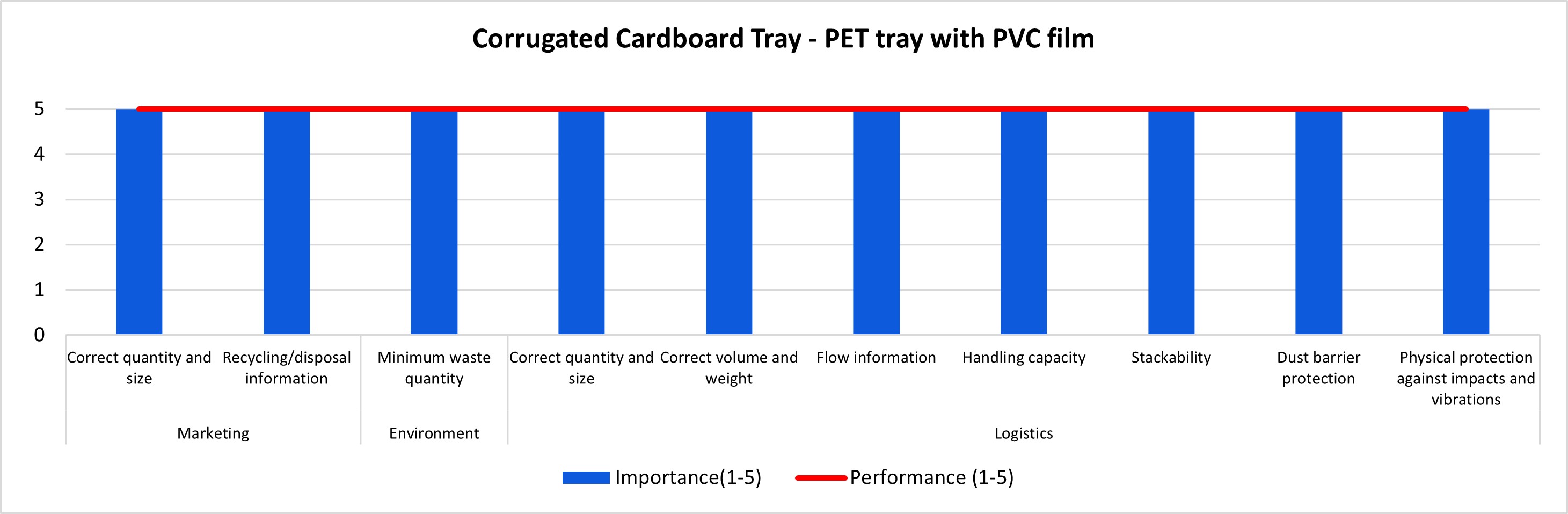
Regarding the transport box (code PO1), point of sale 1 considered that corrugated cardboard boxes could provide better protection against impacts and vibrations during transport, as shown in Figure 3. Table 5 shows that this corrugated cardboard box has the lowest column compressive strength (4.58 kgf/cm), a parameter that reflects the compressive strength of the box.

For the producer, the corrugated cardboard box (code PO1) reached four scores below 5, three of them for the attributes “minimum amount of waste”, “stackability”, and “physical protection against impacts and vibrations”, as presented in Figure 4. Note that the producer also considers that the transport packaging is weak. The lowest score (3) was related to the “flow information” attribute, since the producer considers that the packaging could have more information providing support about logistical information, such as the identification of the origin of the strawberries.

Importance and performance: corrugated cardboard box – (code PO1) – producer from point of sale 1.
Assessment of Unitization Systems
Figure 5 shows that the point of sale is completely satisfied with the stacking of corrugated cardboard boxes. For the producer (Figure 6), the “flow information” problem observed in corrugated boxes remains unsolved when stacking the load, which was very likely to occur since the problem can even worsen when all the boxes are together.

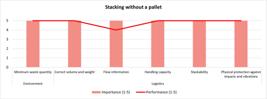
Importance and performance: simple stacking without pallet – producer from point of sale 1.
4.1.2 Distribution chain of retailer 2
4.1.2.1 Assessment of Primary Packaging
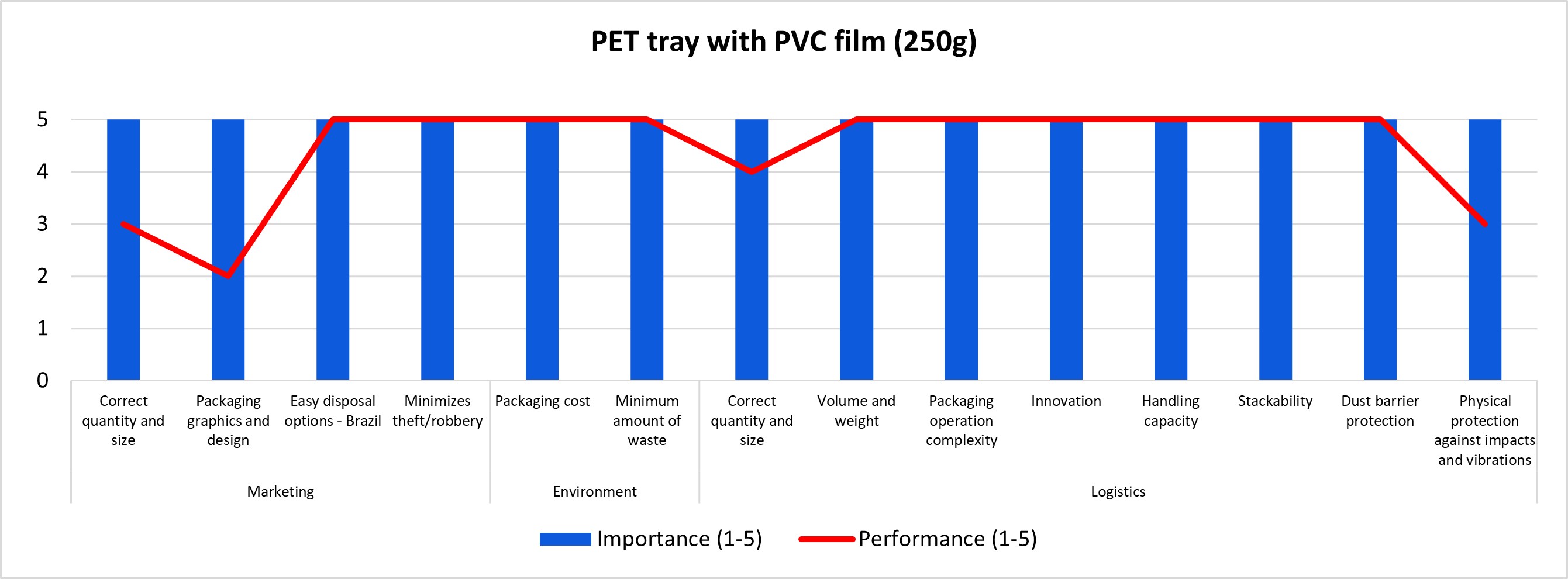
Figure 7 shows that point of sale 2 is almost fully satisfied with the packaging (code P2), except for the “graphics and packaging design” attribute. PV2 expected the packaging to have greater visual appeal, but understands that the costs of the product do not absorb possible innovations. The producer (Figure 8) has further criticism about this packaging for the attributes “correct quantity and size (marketing), “correct quantity and size” (logistics), and “physical protection against impacts and vibrations” (with scores between 3 and 4). The performance of the attribute “graphics and packaging design”, with a score of 2, also did not please the producer or the point of sale.

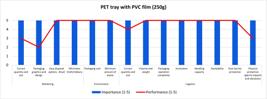
Importance and performance: PET tray with PVC film (250 g) – (code P2) – producer from point of sale 2.
The assessment of the primary packaging (code P4) shown in Figure 9 was a packaging option suggested by the rural producer of retailer 2, but it was not used by the retailer. Therefore, there are no results of the assessment of this packaging (code P4) by the retailer. This packaging option was considered better by the producer, since they consider PET packaging as an option that damages strawberries more, particularly because of the holes on the lid in the case of use of a clamshell.

Importance and performance: white polystyrene tray with PVC film (250 g) – (code P4) – producer from point of sale 2.
4.1.2.2 Assessment of transport packaging (boxes)
Figure 10 shows that the point of sale is fully satisfied with the performance of the packaging (code PO2), while the producer (Figure 11) provided two scores of 4 to the attributes “stackability” and “physical protection against impacts and vibrations”, demonstrating that the corrugated cardboard box could provide better mechanical resistance.

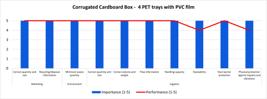
Importance and performance. Corrugated cardboard box – (code PO2) – producer from point of sale 2.
4.1.2.3 Assessment of unitization systems
Figure 12 shows that the point of sale is fully satisfied with the stacking of corrugated cardboard boxes. For the producer, the problem of “physical protection against impacts and vibrations” observed in corrugated cardboard boxes remains unsolved when stacking the load, as can be seen in Figure 13, which was very likely to occur, since the problem can even worsen when all the boxes are stacked. The attribute “minimum amount of waste” received a score of 3 since waste increases as more boxes are discarded when the boxes collapse, due to the absence of good mechanical resistance.

4.1.3 Distribution chain of retailer 3
4.1.3.1 Assessment of primary packaging
Figures 14and 15 show some dissatisfaction with the primary packaging (code P3). For the point of sale, the packaging has a score of 3 in the attributes “graphics and packaging design” and “innovation”, with a score of 1 for the attribute “physical protection against impacts and vibrations”. This was the worst score among all the analyzed chains.


Importance and performance: PET tray with PVC film (250 g) – (code P3) – producer from point of sale 3.
For the producer, this packaging could have a lower “cost of packaging” (score: 4). In addition, the product reached a score of 1 for the “innovation” attribute of the packaging.
4.1.3.2 Assessment of transport packaging (boxes)
Figures 16and 17 show that both the point of sale and the producer are satisfied with the transport packaging. Except for the attribute “physical protection against impacts and vibrations”, which, for the point of sale, fell short of expectations. As shown in Table 5, this box exhibits the highest resistance to column compression (5.85 kgf/cm).


Importance and performance. Corrugated cardboard box (code PO3). Producer from point of sale 3.
4.1.3.3 Assessment of unitization systems
Figures 18and 19 show that both the point of sale and the producer are fully satisfied with the stacking, which probably reflects the satisfaction regarding the performance of the corrugated cardboard boxes.


Importance and performance. Simple stacking with no pallet. Producer from point of sale 3.
4.2 Characterization of primary and transport packaging
Tables 2to 5 show the results of the characterization of the packaging samples donated by the rural producers/retailers who are partners in this study.
4.3 Characterization of transport packaging
5 Conclusions
This study allowed for the following conclusions:
-
For primary packaging of strawberries, the use of PET as a clamshell or tray (with PVC film) is predominant in this market in the states of São Paulo and Minas Gerais. Its performance reaches high scores, demonstrating that it meets the needs of producers and retailers, although more sustainable options can be found to replace plastic.
-
The results of column compressive strength of corrugated cardboard boxes (secondary packaging) were consistent with the PSC performance of the different packages along the distribution chain. Upon weaker corrugated cardboard boxes (low column compressive strength), producers clearly perceive the impact on their operations.
-
Producers are stricter when assessing the packaging as to points of sale, probably because producers are at the start of the distribution chain and need to ensure that the packaging will protect the product (strawberries) in appropriate condition up to the point of sale.
-
The Packaging Scorecard study revealed that there are no major disagreements between the perception of retailers and rural producers as to the analyzed strawberry packaging, but there may be improvements in attributes such as “innovation” and “physical protection against impacts and vibrations” in primary packaging.
-
The Packaging Scorecard results show that sustainability is perceived as equally important by producers and points of sale. However, there were differences in this perception for point of sale 1 and for the producer at point of sale 1. While the point of sale demonstrates high importance for all attributes related to sustainability, the respective producer places greater importance on attributes such as “stackability” and “physical protection against impacts and vibrations” when compared to attributes such as “packaging cost” and “minimum amount of waste”. It is worth emphasizing that more sustainable solutions will only be effectively adopted if they simultaneously incorporate material reduction and recyclability, without compromising the physical integrity of the product throughout the chain. The tool showed potential for developing joint solutions that assist the distribution chain as a whole.
Data Availability Statement
The data supporting this study are publicly available and may be requested from the corresponding author upon reasonable request.
-
Cite as:
Noletto, A. P. R., Teixeira, F. G., Ito, D., Pinto, J. A., & Lima Júnior, O. F. (2026). Performance of packaging for fruits and vegetables: case study of strawberries. Brazilian Journal of Food Technology, 29, e2025135. https://doi.org/10.1590/1981-6723.1352025
-
Funding:
Fundação de Amparo à Pesquisa do Estado de São Paulo (Project No. 2023/11410-7).
References
- Associação Brasileira de Normas Técnicas – ABNT. (2000). Papel e cartão: Determinação da gramatura (NBR NM ISO 536:2000 Versão Corrigida:2002). Rio de Janeiro: ABNT.
- Associação Brasileira de Normas Técnicas – ABNT. (2009a). Papelão ondulado: Determinação da resistência à compressão de coluna (NBR 6737:2024). Rio de Janeiro: ABNT.
- Associação Brasileira de Normas Técnicas – ABNT. (2009b). Embalagem de papelão ondulado: Determinação das dimensões internas da caixa (NBR 14979:2009). Rio de Janeiro: ABNT.
- Associação Brasileira de Normas Técnicas – ABNT. (2012). Papelão ondulado: Determinação da espessura de uma chapa (NBR ISO 3034:2012). Rio de Janeiro: ABNT.
-
Associação Brasileira dos Produtores Exportadores de Frutas – Abrafrutas. (2023). Dados estatísticos de exportação de frutas brasileiras por fruta e por ano Retrieved in 2025, November 18, from https://abrafrutas.org/dados-estatisticos/#abaixo
» https://abrafrutas.org/dados-estatisticos/#abaixo -
Associação Brasileira de Supermercados – ABRAS. (2021). Perdas no varejo brasileiro de alimentos - Relatório 2021 Retrieved in 2025, November 18, from https://static.abras.com.br/pdf/perdas2021.pdf
» https://static.abras.com.br/pdf/perdas2021.pdf -
Ahmad, M. S., & Siddiqui, M. W. (2015). Postharvest quality assurance of fruits Cham: Springer International Publishing. https://doi.org/10.1007/978-3-319-21197-8
» https://doi.org/10.1007/978-3-319-21197-8 - Ahvenainen, R. (2003). Novel food packaging techniques Boca Raton: CRC Press
-
American Society for Testing and Materials – ASTM. (2021a). Practices for internal reflection spectroscopy (E573-01). West Conshohocken: ASTM International. https://doi.org/10.1520/E0573-01R21
» https://doi.org/10.1520/E0573-01R21 -
American Society for Testing and Materials – ASTM. (2021b). Practice for general techniques for obtaining infrared spectra for qualitative analysis (E1252-98). West Conshohocken: ASTM International. https://doi.org/10.1520/E1252-98R21
» https://doi.org/10.1520/E1252-98R21 -
Bill, M., Sivakumar, D., Thompson, A. K., & Korsten, L. (2014). Avocado fruit quality management during the postharvest supply chain. Food Reviews International, 30(3), 169-202. https://doi.org/10.1080/87559129.2014.907304
» https://doi.org/10.1080/87559129.2014.907304 -
Brasil. (2010). Lei no 12.305, de 2 de agosto de 2010: Institui a Política Nacional de Resíduos Sólidos, altera a Lei no 9.605/1998 e dá outras providências. Diário Oficial [da] República Federativa do Brasil, Brasília. Retrieved in 2025, November 18, from https://www.planalto.gov.br/ccivil_03/_ato2007-2010/2010/lei/l12305.htm
» https://www.planalto.gov.br/ccivil_03/_ato2007-2010/2010/lei/l12305.htm -
Brasil. (2024). Setor de fruticultura se destaca nas exportações brasileiras Retrieved in 2025, November 18, from https://www.gov.br/agricultura/pt-br/assuntos/noticias/setor-de-fruticultura-se-destaca-nas-exportacoes-brasileiras
» https://www.gov.br/agricultura/pt-br/assuntos/noticias/setor-de-fruticultura-se-destaca-nas-exportacoes-brasileiras -
Companhia Nacional de Abastecimento – Conab. (2025). Boletim Hortigranjeiro Retrieved in 2025, November 18, from https://www.conab.gov.br
» https://www.conab.gov.br -
D’Almeida, A. P., & Albuquerque, T. L. (2024). Innovations in food packaging: From bio-based materials to smart packaging systems. Processes, 12(10), 2085. https://doi.org/10.3390/pr12102085
» https://doi.org/10.3390/pr12102085 - Dominic, C. (2010). Packaging logistics performance and how to evaluate the packaging performance by applying the tool packaperforma. In 17th IAPRI World Conference on Packaging 2010, 12-15 October 2010, Tianjin, China. Red Hook, NY: Curran Associates, Inc.
- Food and Agriculture Organization – FAO. (1989). Prevention of post-harvest food losses: Fruits, vegetables and root crops: a training manual Rome: FAO.
- Food and Agriculture Organization – FAO. (2014). Appropriate food packaging solutions for developing countries Rome: FAO.
- Nieuwoudt, T. (2015).Packaging of table grapes for exports from SA: A comparative study(Doctoral dissertation). Stellenbosch University, Stellenbosch.
-
Noletto, A. P. R., Loureiro, S. A., Ito, D., & Lima Júnior, O. F. (2019). Desempenho logístico de embalagens para molho de tomate: Um estudo de caso na cidade de São Paulo, Brasil. Brazilian Journal of Food Technology, 22, e2018121. https://doi.org/10.1590/1981-6723.12118
» https://doi.org/10.1590/1981-6723.12118 - Oliveira, L. M., & Queiroz, G. C. (2008). Embalagens plásticas rígidas - Principais polímeros e avaliação da qualidade CETEA/ITAL.
-
Olsmats, C., & Dominic, C. (2003). Packaging scorecard – A packaging performance evaluation method. Packaging Technology & Science, 16(1), 9-14. https://doi.org/10.1002/pts.604
» https://doi.org/10.1002/pts.604 -
Sarıhan Mungan, S., & Aydın, S. (2022). Analytical packaging process: A method for improving the transport packaging. Packaging Technology & Science, 35(11), 785-801. https://doi.org/10.1002/pts.2679
» https://doi.org/10.1002/pts.2679
Edited by
-
Associate Editor:
Cassandra Dalle Mulle Santos.