
 Diversity of floral visitor insects in different soybean planting systems: effects of agricultural production on community diversity
Abstract
Agricultural landscapes strongly influence pollinator and others floral visitor insect communities and the ecological functions they support. Although soybean (Glycine max) is predominantly self-pollinated, floral visitors may enhance productivity and contribute to broader ecosystem services. This study evaluated the diversity, abundance, and community composition of floral-visiting insects in soybean fields under three contrasting production systems: Polyculture, Intensive Monoculture, and Intensive Monoculture Adjacent to a Forest Fragment. Surveys were conducted over three agricultural seasons using standardized active sampling across replicated sites. Diversity was quantified using Shannon and Simpson indices, while community similarity was assessed with Jaccard and Sørensen metrics and non-metric multidimensional scaling (NMDS). Polyculture fields supported the highest abundance and species richness, reflecting the influence of landscape heterogeneity on floral visitor communities. Monoculture fields exhibited reduced abundance and greater community homogenization, whereas monoculture sites adjacent to forest fragments showed intermediate patterns, likely driven by species spillover from natural habitats. Honeybees (Apis mellifera Linnaeus, 1758) were the dominant floral visitors across all systems, but wild floral visitor insects and natural enemies also contributed substantially to community structure. Although species richness across systems was broadly comparable, differences in abundance, evenness, and functional composition revealed distinct ecological dynamics among production systems. These findings underscore the importance of diversified landscapes and adjacent natural habitats in sustaining floral visitor diversity and associated ecosystem services. Approaches that incorporate habitat conservation and landscape diversification may enhance pollination and biological control within soybean agroecosystems.
Keywords:
honeybee ecology; floral visitors; soybean agroecosystems; agricultural landscape heterogeneity; biodiversity indices; integrated pest and floral visitor insects management; Cerrado biome
Resumo
A estrutura da paisagem agrícola exerce forte influência sobre as comunidades de polinizadores e outros insetos visitantes florais e os serviços ecossistêmicos que eles desempenham. Embora a soja (Glycine max) seja predominantemente autógama, os insetos visitantes florais podem contribuir para o aumento da produtividade e para a manutenção de funções ecológicas importantes. Este estudo avaliou a diversidade, abundância e composição de insetos visitantes florais em áreas de cultivo de soja sob três sistemas contrastantes de produção: Policultivo, Monocultivo Intensivo e Monocultivo Intensivo Adjacente a Fragmento Florestal. As amostragens foram conduzidas ao longo de três safras agrícolas, utilizando coletas ativas padronizadas em áreas independentes e replicadas. A diversidade foi quantificada pelos índices de Shannon e Simpson, enquanto a similaridade entre sistemas foi avaliada pelos índices de Jaccard e Sørensen e por ordenação via escalonamento multidimensional não métrico (NMDS). As áreas de policultivo apresentaram a maior abundância e riqueza de visitantes florais, refletindo a influência positiva da heterogeneidade da paisagem. As áreas de monocultivo exibiram menor abundância e maior homogeneização das comunidades, enquanto os locais adjacentes ao fragmento florestal mostraram padrões intermediários, possivelmente associados ao fenômeno de spillover proveniente de habitats naturais. A abelha Apis mellifera Linnaeus, 1758 foi o visitante floral dominante em todos os sistemas, embora visitantes florais silvestres e inimigos naturais também tenham contribuído de forma expressiva para a estrutura das comunidades. Apesar de a riqueza total ser comparável entre os sistemas, diferenças na abundância, na uniformidade e na composição funcional revelaram dinâmicas ecológicas distintas. Esses resultados destacam a importância da diversificação da paisagem e da conservação de habitats naturais adjacentes para a manutenção da diversidade de visitantes florais e dos serviços ecossistêmicos associados. Estratégias que integrem elementos de habitat e práticas de manejo ecológico podem fortalecer os serviços de polinização e controle biológico em agroecossistemas de soja.
Palavras-chave:
ecologia de abelhas; visitantes florais; agroecossistemas de soja; heterogeneidade da paisagem agrícola; índices de biodiversidade; manejo integrado de pragas e polinizadores; bioma Cerrado
1. Introduction
Pollination is an essential ecosystem service, playing a pivotal role in global food production and biodiversity conservation (Gill et al., 2016). It facilitates the transfer of pollen grains from the anthers to the stigma of flowers within the same or different plants of the same species, ensuring reproductive success and the subsequent formation of fruits and seeds (Garibaldi et al., 2014; Giannini et al., 2015; Roubik, 2018). The efficiency of pollination directly influences agricultural productivity and ecosystem stability, making it a key factor in sustainable agriculture (Stein et al., 2017; Kalpana et al., 2024; Bishop et al., 2022).
The contribution of pollinators and others floral visitor insects to agricultural systems is largely determined by their diversity and abundance (Eeraerts et al., 2020). Previous studies in Brazilian agricultural systems have documented high richness of native pollinators, including bees exhibiting strong plant-pollinator interactions in tomato agroecosystems (Silva-Neto et al., 2017). Among pollinators, Apis mellifera Linnaeus, 1758 stands out as a globally significant species, providing critical environmental, social, and economic benefits (Barbosa et al., 2017; Roat et al., 2017; Jacob et al., 2019; Abati et al., 2021). This species enhances plant reproductive success, increases agricultural yields, and promotes genetic variability within crop species, thereby improving food security and ecological resilience (Giannini et al., 2015; Roubik, 2018; Reilly et al., 2020).
However, pollinators and floral visitor insects may be sensitive to landscape structure and agricultural practices, which can influence their abundance and effectiveness. When good agricultural practices are followed - particularly regarding agrochemical management - honeybees and other floral visitors can maintain healthy foraging activity. For example, several factors, including inadequate beekeeping practices, pathogen and parasite infestations, genetic bottlenecks, climate change, food scarcity, and pesticide exposure, can affect the diversity of pollinator and others floral visitor insects insects (Dainat et al., 2012; Fisher II et al., 2023; Hristov et al., 2020; VanEngelsdorp et al., 2009; Blacquière et al., 2012).
Studies on pesticide impacts have shown that when good agricultural practices are followed - including respecting pre-harvest intervals, avoiding spraying during peak foraging hours, and using selective compounds - honeybee foraging activity and colony health remain stable (Jacob et al., 2019; Fisher II et al., 2023; Costa, et al., 2025).
Beyond their ecological importance, floral visitor insects such as A. mellifera also have substantial economic value. Beekeeping products, including honey and others, generate significant financial returns (Pasupuleti et al., 2017). Furthermore, the pollination services provided by honeybees enhance crop yields, benefiting both apicultural and agricultural industries. Although soybean (Glycine max [L.] Merrill; Fabales: Fabaceae) is primarily a self-pollinated crop, previous studies suggest that insect pollinators can enhance yield, seed quality, and pod formation, demonstrating the potential benefits of integrating pollinators into soybean production systems (Evans et al., 2023; Milfont et al., 2013).
Soybean is a globally significant crop, occupying approximately 129 million hectares of farmland (Garibaldi et al., 2021). As a key commodity in international trade and a crucial component of the Brazilian economy (Santos and Silva, 2018), soybean production has intensified to meet the growing global demand. Pollination services contribute an estimated 30% of the total annual agricultural revenue, valued at approximately USD 45 billion, with soybean alone accounting for around USD 5.7 billion (Giannini et al., 2015). Despite the economic and ecological significance of pollinators, comprehensive surveys of floral visitor diversity in soybean crops remain scarce, with most studies focusing on native vegetation rather than agricultural landscapes (Quirino and Machado, 2014). Furthermore, no comparative analyses have been conducted to assess floral visitor diversity across different soybean production systems.
Given the ecological and economic importance of floral visitors, this study aims to investigate the diversity and abundance of insect visitors in soybean crops across three distinct production systems - polyculture, intensive monoculture, and intensive monoculture adjacent to a forest fragment - commonly found in the Cerrado biome. Specifically, we hypothesized that (i) polyculture systems would support greater floral visitor richness due to increased habitat heterogeneity; (ii) monoculture systems would have lower diversity and higher community homogenization; and (iii) monoculture areas adjacent to forest fragments would exhibit intermediate diversity due to species spillover from natural habitats.
2. Materials and Methods
2.1. Study area and production systems
The study was conducted in soybean (G. max) fields located in the Cerrado biome of Mato Grosso do Sul, Brazil. Three contrasting agricultural production systems were evaluated: (i) Polyculture, characterized by diversified cropping mosaics including soybean interspersed with sugarcane, cassava, and cotton (22º 14’ 20.51’’S, 54º 59’ 58,4’’ W and elevation 394 m); (ii) Intensive Monoculture, consisting of large-scale soybean fields surrounded by extensive agricultural matrices without adjacent natural vegetation (22º 13’ 5’’S, 54º 52’ 57’’ W and elevation 464 m); and (iii) Monoculture Adjacent to a Forest Fragment, represented by soybean fields located 5-10 m from remnants of semi-deciduous Atlantic Forest (22º 12’ 42’’S, 54º 52’ 18,4’’ O and elevation 583 m).
Within each production system, three independent study plots were selected, each containing multiple sampling areas to ensure spatial replication and reduce site-specific bias. All fields were cultivated with the same soybean cultivar and followed comparable agronomic practices (planting density, fertilization, and irrigation). To avoid direct interference with insect activity, agrochemical applications were suspended for at least seven days prior to each sampling event.
Field surveys were conducted during the flowering period over three agricultural seasons: 2017/2018 (December 27 to January 12), 2018/2019 (December 23 to January 9), and 2021/2022 (December 20 to January 15).
Each production system was sampled 13 times per season, totaling 39 sampling events per system across the study period.
2.2. Sampling design and insect collection
Floral visitor surveys were carried out using active sampling with entomological nets during the period of highest diurnal activity of floral-visiting insects. Each sampling event began at 07:00 h and lasted two hours, a time window chosen to coincide with the onset of soybean flower anthesis, moderate ambient temperatures, and the initial peak of foraging activity of bees and other diurnal floral visitors. Although some studies can report peak activity later in the morning, regional and crop-specific patterns vary - particularly in tropical/subtropical climates. The sampling period of this research has been widely adopted in studies of bee and floral visitor assemblages in soybean fields, as insect visitation rates tend to be highest during the early morning hours before midday thermal stress reduces activity (Sakagami et al., 1967; Giannini et al., 2015). During each event, two trained collectors systematically walked throughout each study plot, which measured between three and five hectares, using a standardized random-walk transect approach, ensuring comprehensive coverage of the flowering soybean canopy.
All insects that made direct contact with flowers or showed active foraging behavior were collected. Captured specimens were transferred to 90% ethanol, except Lepidoptera, which were stored in paper envelopes. Each specimen was labeled with date, site, collector, and production system.
Specimens were identified to the lowest possible taxonomic level using dichotomous keys and confirmed by specialists when necessary. Voucher specimens were deposited at the Insect Sampling and Monitoring Laboratory (LAMI/UFGD).
2.3. Functional classification of floral visitors
All recorded species were classified into three functional groups based on their predominant ecological roles within agroecosystems: (i) floral visitor insects, (ii) natural enemies, and (iii) pests. Floral visitor insects included all insect taxa with recorded interactions with soybean flowers, regardless of pollination effectiveness, since this study did not measure pollination outcomes directly; natural enemies comprised predators and parasitoids associated with the regulation of herbivorous populations; and pests included herbivorous species recognized as economically important soybean pests. This functional classification was based on established ecological and agroecological literature (Sakagami et al., 1967; Giannini et al., 2015; Garibaldi et al., 2021; Silva-Neto et al., 2017) and supported by expert knowledge of the regional entomofauna to ensure consistent interpretation of ecosystem functions across production systems.
2.4. Diversity indices and statistical analyses
2.4.1. Alpha diversity
Species richness and diversity were quantified using Shannon-Wiener (H′) and Simpson (D) indices, which reflect differences in both species richness and evenness. These analyses were applied to each production system independently.
The Simpson index (S1= 1-∑(ni/N)2) was used to measure the relative dominance of certain species for each area in relation to total diversity (D). It considers the number of species (s), the number of individuals of each species (ni), and the number of individuals (N) (Pinto-Coelho, 2009). To give greater weight to rare species that occur less frequently, and to make comparisons between them, the Shannon-Wiener index (S2 = - ∑pi.Lnpi) (Magurran, 2021) was used, which uses the natural logarithm to flatten the differences between the large collection values defined by the number of species present in the community. Where pi is the proportion of the species in relation to the total number of specimens found in the surveys carried out.
2.4.2. Beta diversity and similarity
Community similarity between production systems was assessed using the Jaccard and Sørensen indices. Species occurring as singletons or doubletons were excluded from Sørensen analyses to avoid inflation of similarity due to rare species.
To more deeply evaluate the similarity between the diversities of the analyzed systems, that is, the species collected in common, the Jaccard index (CJ= c/a+b-c) (Magurran, 2021) was used, in comparisons that multiply the species in common to give greater value between the species that appear in both systems. With Sorensen index (CS= 2c/a+b) (Sorensen, 1948), we chose not to consider singletons and doubletons species, as their presence in the sample does not characterize the community, but only an occasional occurrence. For indexes calculations, we consider a= number of species of community A, b= the number of species of community B, and c= represents the number of species common to both communities. Both vary from 0 to 1, with the value 1 representing the maximum similarity.
2.4.3. Community composition analyses
To evaluate differences in species assemblages among production systems, we performed Non-Metric Multidimensional Scaling (NMDS) based on species presence–absence matrices. This ordination technique allowed visualization of species turnover and identification of shared and unique insect groups among systems.
2.4.4. Sampling completeness and rarefaction
Coverage-based rarefaction and extrapolation analyses were performed following the framework of Chao et al. (2014) to assess sampling sufficiency and to compare diversity among production systems at equal sample coverage.
2.4.5. Environmental correlation
Pearson’s correlation coefficient (Kent State University Libraries, 2017) was used to examine relationships between the abundance of dominant species and meteorological variables (temperature and precipitation), obtained from the Agrometeorological Station of Embrapa Agropecuária Oeste.
2.4.6. Software
All statistical analyses were conducted in R software version 4.5.0 (R Core Team, 2025). Coverage-based rarefaction and extrapolation analyses were performed using the iNEXT framework, following the methodology proposed by Chao et al. (2014). Community composition analyses and non-metric multidimensional scaling (NMDS) were carried out using the vegan package (Oksanen et al., 2024).
3. Results
3.1. Analysis of insect populations in different production systems
A total of 5,526 insect individuals were collected across the three production systems, representing five orders, 26 families, and 51 species (Figure 1). The most diverse insect order was Hymenoptera (Table 1), with 14 species in polyculture, 15 in monoculture, and 13 in monoculture adjacent to the forest fragment. Coleoptera (Table 2) was the second most diverse order, with 13 species in polyculture and 11 species in both monoculture and adjacent-to-forest areas. Lepidoptera diversity varied among production systems, with polyculture areas harboring the highest number of individuals (565), followed by monoculture (268) and monoculture adjacent to a forest fragment (196) (Table 3). Diptera species were well represented across all environments, with 467 individuals recorded in polyculture, 224 in monoculture, and 393 in monoculture adjacent to the forest (Table 4). Hemiptera exhibited the highest abundance in polyculture areas, where 707 individuals were collected, whereas monoculture and adjacent-to-forest sites had substantially lower numbers (107 and 104 individuals, respectively) (Table 5).

Number of total individuals (bars) and species richness (line) across soybean production systems.
Quantity (total number) of Hymenoptera collected discerned and separated by areas, and the relationship of the Simpson and Shannon indices for each production system.
Quantity of Coleoptera order individuals collected, discerned and separated by areas, and the relationship of the Simpson and Shannon indices for each production system.
Quantity of Lepidoptera collected discerned and separated by areas, and the relationship of the Simpson and Shannon indices for each production system.
Quantity of Diptera collected discerned and separated by areas, and the relationship of the Simpson and Shannon indices for each production system.
Quantity of Hemiptera individuals collected, discerned and separated by areas, and the relationship of the Simpson and Shannon indices for each production system.
The distribution of insect populations varied significantly among the three agricultural environments. Polyculture areas supported the highest number of floral visitor individuals, accounting for 49.96% (2,761 individuals) of the total collected insects. In contrast, monoculture sites had 25.82% (1,427 individuals), while monoculture areas adjacent to a forest fragment had 24.21% (1,338 individuals) (Table 6).
Although total insect diversity appeared similar among the three environments, species composition and functional roles varied considerably. A. mellifera was the most abundant species, representing 14.8% of the total collected individuals, followed by Lagria villosa Fabricius, 1781, which accounted for 7.61% of the total.
Alpha diversity analysis revealed that polyculture areas supported the highest species richness, with 46 out of the 51 recorded species. However, the Simpson diversity index was lower in polyculture due to the dominance of a few abundant species, while monoculture and adjacent-to-forest sites exhibited greater species evenness. In contrast, the Shannon diversity index, which gives greater weight to rare species, did not reflect this pattern as strongly.
Beta diversity analyses indicated that monoculture and monoculture-adjacent areas shared a more similar community structure than the polyculture sites. In monoculture and adjacent-to-forest sites, 38 out of 41 and 40 recorded species overlapped, respectively, whereas the polyculture system exhibited a more distinct species composition (Table 6).
To evaluate the ecological roles of the collected insects, species were categorized as floral visitor insects, natural enemies, or pests. Polyculture systems harbored the highest number of floral visitor (807 individuals) and natural enemies (442 individuals). In contrast, monoculture-adjacent areas exhibited the highest proportion of beneficial insects relative to total insect abundance, with 526 floral visitor insects and 336 natural enemies (Table 7).
Conversely, the highest pest abundance was recorded in polyculture systems (1,193 individuals), whereas monoculture (379 individuals) and monoculture-adjacent sites (364 individuals) had lower pest densities. This pattern suggests that polyculture environments may provide a greater diversity of habitats, favoring both beneficial insects and pest populations, whereas monoculture-adjacent systems may benefit from ecological spillover effects from the nearby forest fragment.
3.2. Analysis of insect diversity in different production systems
To evaluate the robustness of our sampling efforts, we assessed sample completeness for each production system. The coverage-based rarefaction analysis indicated that sampling effort was sufficient across all study areas. For q = 0, confidence intervals for completeness ranged from 83.5% to 100% in monoculture, 86.7% to 100% in monoculture adjacent to a forest fragment, and 95.4% to 100% in polyculture, demonstrating that the collected assemblages provide a representative characterization of within the standardized morning sampling window (07:00-09:00 h) for each production system.
Non-metric multidimensional scaling (NMDS) revealed revealed clear differences in species composition among production systems. Polyculture areas exhibited a unique community composition, with species such as Bemisia tabaci (Genn,1889), Doxocopa agathina (Crammer, 1777), and Anticarsia gemmatalis Hubner, 1818 being more prevalent. In contrast, monoculture sites were characterized by the presence of species such as Pachodynerus guadalupensis (de Saussure, 1855) and Dryas iulia (Fabricius, 1775). The monoculture-adjacent system exhibited an intermediate composition, sharing species with both polyculture and monoculture environments. Among the species common to all three production systems, A. mellifera, Allograpta obliqua (Say, 1823), and L. villosa were the most representative (Figure 2).

Patterns of insect diversity based on abundance data across different soybean production systems using Hill numbers. Panels represent sequential analytical steps of the diversity assessment framework: (STEP 1) sample completeness profiles; (STEP 2) size-based rarefaction and extrapolation curves for Hill numbers q = 0 (species richness), q = 1 (Shannon diversity), and q = 2 (Simpson diversity); (STEP 3) asymptotic diversity profiles; and (STEP 4) evenness profiles. Colors indicate the different production systems: a1 = polyculture, a2 = intensive monoculture, and a3 = intensive monoculture adjacent to a forest fragment. Solid lines represent rarefaction, dashed lines represent extrapolation, and shaded areas indicate 95% confidence intervals.
A clear gradient of species substitution was observed from monoculture to polyculture, with the monoculture-adjacent areas acting as an intermediate transition zone. This pattern suggests that the presence of a forest fragment in monoculture-adjacent sites facilitates species spillover from natural habitats into agricultural fields, contributing to increased functional diversity in these areas.
Despite similar alpha diversity values across all production systems, species composition analyses indicated notable differences in community structure. Beta diversity measures confirmed that monoculture and monoculture-adjacent areas shared a greater number of species compared to polyculture sites (Figure 3). This was supported by the Jaccard and Sørensen similarity indices, which showed the highest values between monoculture and monoculture-adjacent systems (Table 8).
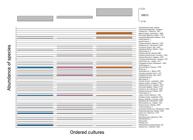
Distribution of floral-visiting insect species abundances across soybean production systems. Horizontal bars represent the abundance of each insect species recorded in the three production systems (polyculture, intensive monoculture, and intensive monoculture adjacent to a forest fragment), ordered by production system. Species names are listed on the right. This figure illustrates differences in species dominance patterns and relative abundance among production systems.
The rarefaction curves for the three production systems were highly overlapping, suggesting that, at a broad level, species richness was relatively similar among the study areas. However, when species identity and ecological roles were considered, clear differences in species composition and functional assemblages emerged.
4. Discussion
Agricultural landscape structure was a key determinant of floral visitor diversity and community composition in agroecosystems. Patterns of bee resource use and the influence of habitat context on pollinator behavior have been reported in mixed environments of plantation and native vegetation (Silveira et al., 2015). Although the three production systems presented similar overall richness, they differed markedly in abundance, functional composition, and species turnover. These results demonstrate that landscape heterogeneity and the presence of natural habitats exert strong influence on the assembly of floral visitor communities, corroborating patterns widely documented in agroecological and pollination ecology research (Garibaldi et al., 2014; Guzman et al., 2019; Giannini et al., 2020; Silva-Neto et al., 2017).
Polyculture fields supported the highest abundance and richness of floral visitors, reflecting the positive influence of diversified agricultural landscapes on floral visitor insects communities. Heterogeneous cropping environments often provide continuous floral resources, varied microhabitats, and alternative nesting substrates, all of which favor the recruitment and persistence of both honeybees and wild floral visitor insects (Fijen et al., 2025; Timberlake et al., 2024). The high abundance recorded in polyculture areas suggests that resource heterogeneity not only sustains larger populations but may also enhance the temporal stability of pollination services across the flowering period.
Honeybees (A. mellifera) were the dominant species across all systems, consistent with their generalist foraging behavior and wide distribution in agricultural environments (Giannini et al., 2015; Roubik, 2018; Reilly et al., 2020; Garibaldi et al., 2021). However, the presence of diverse wild floral visitor insects - such as syrphid flies, bumblebees, solitary bees, and lepidopterans - indicates that soybean fields can support a broader floral visitor community than previously assumed. Similar findings have been reported in other soybean-producing regions, where the complementarity between honeybees and wild visitors enhances fruit set, seed weight, and overall crop productivity (Milfont et al., 2013; Evans et al., 2023). Thus, although soybean is largely autogamous, floral visitors appear to play an important ecological role that merits further investigation, particularly under diversified agricultural practices.
Species composition analyses revealed a clear turnover gradient among production systems. Polyculture areas hosted a distinct assemblage, while monoculture and monoculture-adjacent systems shared more similar communities. This pattern reflects differences in landscape configuration. The monoculture-adjacent fields likely benefited from spillover processes from the forest fragment, which acted as a reservoir of species that expanded their foraging range into nearby crop fields (Roubik, 2018; Giannini et al., 2015). The higher proportion of beneficial insects (floral visitor and natural enemies) in the adjacent areas reinforces the ecological importance of maintaining natural habitats within agricultural landscapes (Antonini et al., 2006). The presence of adjacent natural remnants may influence floral visitor community composition, as observed in forest remnants where floral resources support diverse avian/floral visitor assemblages (Rodrigues and Araujo, 2011). These fragments may support overwintering, nesting, and refuge areas, thus strengthening essential ecosystem services.
Despite supporting high richness and abundance, polyculture areas also exhibited the highest number of pest species. This finding aligns with studies demonstrating that diversified systems often favor a broader array of herbivores due to increased resource availability (Garibaldi et al., 2021). However, the simultaneous increase in natural enemies suggests that polyculture landscapes may also enhance biological control potential, contributing to a more complex but potentially more resilient ecological network.
Diversity indices support the conclusion that the structure of floral visitor communities differs among production systems. Simpson’s index was lower in polyculture due to the higher dominance of a few abundant species, whereas Shannon’s index revealed greater contributions of rare species in monoculture and adjacent areas. Together, these metrics indicate that polyculture fields host larger populations but have a more uneven species distribution, while monoculture and monoculture-adjacent systems maintain more even assemblages, though with fewer total individuals. These quantitative differences highlight the need to consider both richness and evenness when evaluating biodiversity and ecological function in agroecosystems (Morris et al., 2014; Simpson, 1949; Shannon, 1949; Didita et al., 2025).
Finally, the high similarity values between monoculture and monoculture-adjacent systems demonstrate that the presence of a forest fragment does not fully compensate for the structural simplicity of intensive monocultures. Nonetheless, the intermediate patterns observed in adjacent fields confirm that even small natural remnants can partially mitigate biodiversity loss, supporting the implementation of ecological intensification strategies in large-scale agricultural landscapes (Garibaldi et al., 2014; Giannini et al., 2015; Guzman et al., 2019).
Together, these results emphasize that landscape diversification and the conservation of natural habitats enhance floral visitor diversity and functional composition in soybean systems. Integrating these ecological principles into agricultural planning can strengthen pollination and biological control services, contributing to more sustainable and resilient production systems in the Brazilian Cerrado.
5. Conclusions
In conclusion, our findings demonstrate that floral visitor insect assemblages differ significantly among soybean production systems. Polyculture systems hosted higher total abundances, whereas monocultures and monoculture-adjacent systems displayed greater evenness in species distribution. These results underscore the importance of considering both abundance and diversity metrics when evaluating floral visitor communities in agroecosystems. Our work highlights how agricultural management influences insect assemblages associated with soybean flowers, providing a baseline for future studies on floral visitor ecology.
Acknowledgements
We would like to express our sincere appreciation to all collaborators for their contributions to this research. We are also grateful to the Graduate Program in Entomology and Biodiversity Conservation (PPGECB) and the Faculty of Biological and Environmental Sciences (FCBA) at the Federal University of Grande Dourados (UFGD) for providing logistical support for fieldwork and data collection. Additionally, we thanks to Coordination for the Improvement of Higher Education Personnel (CAPES) and the National Council for Scientific and Technological Development (CNPq) for supporting this research.
Data Availability Statement
The datasets generated and analyzed during the current study are available from the corresponding author upon reasonable request.
References
-
ABATI, R., SAMPAIO, A.R., MACIEL, R.M.A., COLOMBO, F.C., LIBARDONI, G., BATTISTI, L., LOZANO, E.R., GHISI, N.C., COSTA-MAIA, F.M. and POTRICH, M., 2021. Bees and pesticides: the research impact and scientometrics relations. Environmental Science and Pollution Research International, vol. 28, pp. 32282-32298. https://doi.org/10.1007/s11356-021-14224-7 PMid:33961189.
» https://doi.org/10.1007/s11356-021-14224-7 -
ANTONINI, Y., COSTA, R.G. and MARTINS, R.P., 2006. Floral preferences of a neotropical stingless bee, Melipona quadrifasciata (Apidae) in an urban forest fragment. Brazilian Journal of Biology = Revista Brasileira de Biologia, vol. 66, no. 2A, pp. 463-471. https://doi.org/10.1590/S1519-69842006000300012 PMid:16862301.
» https://doi.org/10.1590/S1519-69842006000300012 -
BARBOSA, D., CRUPINSKI, E., SILVEIRA, R. and LIMBERGER, D., 2017. As abelhas e seu serviço ecossistêmico de polinização. Revista Eletrônica Científica da UERGS, vol. 3, no. 4, pp. 694-703. https://doi.org/10.21674/2448-0479.34.694-703
» https://doi.org/10.21674/2448-0479.34.694-703 -
BISHOP, J., GARRATT, M.P.D. and NAKAGAWA, S., 2022. Animal pollination increases stability of crop yield across spatial scales. Ecology Letters, vol. 25, no. 9, pp. 2034-2047. https://doi.org/10.1111/ele.14069 PMid:35843226.
» https://doi.org/10.1111/ele.14069 -
BLACQUIÈRE, T., SMAGGHE, G., VAN GESTEL, C.A. and MOMMAERTS, V., 2012. Neonicotinoids in bees: a review on concentrations, side-effects and risk assessment. Ecotoxicology (London, England), vol. 21, no. 4, pp. 973-992. https://doi.org/10.1007/s10646-012-0863-x PMid:22350105.
» https://doi.org/10.1007/s10646-012-0863-x -
CHAO, A., GOTELLI, N.J., HSIEH, T.C., SANDER, E.L., MA, K.H., COLWELL, R.K. and ELLISON, A.M., 2014. Rarefaction and extrapolation with Hill numbers: a framework for sampling and estimation in species diversity studies. Ecological Monographs, vol. 84, no. 1, pp. 45-67. https://doi.org/10.1890/13-0133.1
» https://doi.org/10.1890/13-0133.1 -
COSTA, A.N., MACEDO, R.M., VAZ-SILVA, J., ALVES, K.M., PACHECO, R., VIEIRA-NETO, E.H.M. and MUNDIM, F.M., 2025. Ant assemblages (Hymenoptera: Formicidae) and spatial patterns of diversity along Cerrado remnants in Central-West Brazil. Brazilian Journal of Biology = Revista Brasileira de Biologia, vol. 85, pp. e290806. https://doi.org/10.1590/1519-6984.290806 PMid:40008758.
» https://doi.org/10.1590/1519-6984.290806 -
DAINAT, B., EVANS, J.D., CHEN, Y.P., GAUTHIER, L. and NEUMANN, P., 2012. Predictive markers of honey bee colony collapse. PLoS One, vol. 7, no. 2, pp. e32151. https://doi.org/10.1371/journal.pone.0032151 PMid:22384162.
» https://doi.org/10.1371/journal.pone.0032151 -
DIDITA, M., NEMOMISSA, S., LEMESSA, D. and BEKELE, T., 2025. The diversity of pollinators within different land use types across agricultural landscapes is influenced by the proximity of surrounding forests. Global Ecology and Conservation, vol. 62, pp. e03776. https://doi.org/10.1016/j.gecco.2025.e03776
» https://doi.org/10.1016/j.gecco.2025.e03776 -
EERAERTS, M., SMAGGHE, G. and MEEUS, I., 2020. Bumble bee abundance and richness improves honey bee pollination behaviour in sweet cherry. Basic and Applied Ecology, vol. 43, pp. 27-33. https://doi.org/10.1016/j.baae.2019.11.004
» https://doi.org/10.1016/j.baae.2019.11.004 -
EVANS, K., EL-HIFNAWI, J., HOOKS, C. and ESPÍNDOLA, A., 2023. Benefits of cross-pollination in vegetable soybean edamame: cross-pollination in vegetable soybean edamame. Journal of Pollination Ecology, vol. 35, pp. 329-340. https://doi.org/10.26786/1920-7603(2023)728
» https://doi.org/10.26786/1920-7603(2023)728 -
FIJEN, T.P.M., EERAERTS, M., OSTERMAN, J., BEYER, N., HASS, A., LUNDIN, O. and WESTPHAL, C., 2025. Crop diversification for pollinator conservation. Landscape Ecology, vol. 40, no. 1, pp. 19. https://doi.org/10.1007/s10980-024-02027-3
» https://doi.org/10.1007/s10980-024-02027-3 -
FISHER, A., 2nd., TADEI, R., BERENBAUM, M., NIEH, J., SIVITER, H., CRALL, J., GLASS, J.R., MUTH, F., LIAO, L.H., TRAYNOR, K., DESJARDINS, N., NOCELLI, R., SIMON-DELSO, N. and HARRISON, J.F., 2023. Breaking the cycle: reforming pesticide regulation to protect pollinators. Bioscience, vol. 73, no. 11, pp. 808-813. https://doi.org/10.1093/biosci/biad088 PMid:38125825.
» https://doi.org/10.1093/biosci/biad088 -
GARIBALDI, L.A., CARVALHEIRO, L.G., LEONHARDT, S.D., AIZEN, M.A., BLAAUW, B.R., ISAACS, R., KUHLMANN, M., KLEIJN, D., KLEIN, A.M., KREMEN, C., MORANDIN, L., SCHEPER, J. and WINFREE, R., 2014. From research to action: enhancing crop yield through wild pollinators. Frontiers in Ecology and the Environment, vol. 12, no. 8, pp. 439-447. https://doi.org/10.1890/130330
» https://doi.org/10.1890/130330 -
GARIBALDI, L.A., SCHULTE, L.A., JODAR, D.N.N., CARELLA, D.S.G. and KREMEN, C., 2021. Time to integrate pollinator science into soybean production. Trends in Ecology & Evolution, vol. 36, no. 7, pp. 573-575. https://doi.org/10.1016/j.tree.2021.03.013 PMid:34034911.
» https://doi.org/10.1016/j.tree.2021.03.013 -
GIANNINI, T.C., ALVES, D.A., ALVES, R., CORDEIRO, G.D., CAMPBELL, A.J., AWADE, M., BENTO, J.M.S., SARAIVA, A.M. and IMPERATRIZ-FONSECA, V.L., 2020. Unveiling the contribution of bee pollinators to Brazilian crops with implications for bee management. Apidologie, vol. 51, no. 3, pp. 406-421. https://doi.org/10.1007/s13592-019-00727-3
» https://doi.org/10.1007/s13592-019-00727-3 -
GIANNINI, T.C., BOFF, S., CORDEIRO, G.D., CARTOLANO JUNIOR, E.A., VEIGA, A.K., IMPERATRIZ-FONSECA, V.L. and SARAIVA, A.M., 2015. Crop pollinators in Brazil: a review of reported interactions. Apidologie, vol. 46, no. 2, pp. 209-223. https://doi.org/10.1007/s13592-014-0316-z
» https://doi.org/10.1007/s13592-014-0316-z -
GILL, R.J., BALDOCK, K.C.R., BROWN, M.J.F., CRESSWELL, J.E., DICKS, L.V., FOUNTAIN, M.T., GARRATT, M.P.D., GOUGH, L., HEARD, M.S., HOLLAND, J.M., OLLERTON, J., STONE, G.N., TANG, C.Q., VANBERGEN, A.J., VOGLER, A.P., WOODWARD, G., ARCE, A.N., BOATMAN, N.D., BRAND-HARDY, R., BREEZE, T.D., GREEN, M., HARTFIELD, C.M., O’CONNOR, R.S., OSBORNE, J.L., PHILLIPS, J., SUTTON, P.B. and POTTS, S.G., 2016. Protecting an ecosystem service: approaches to understanding and mitigating threats to wild insect pollinators. Advances in Ecological Research, vol. 54, pp. 135-206. https://doi.org/10.1016/bs.aecr.2015.10.007
» https://doi.org/10.1016/bs.aecr.2015.10.007 -
GUZMAN, A., CHASE, M. and KREMEN, C., 2019. On-farm diversification in an agriculturally dominated landscape positively influences specialist pollinators. Frontiers in Sustainable Food Systems, vol. 3, pp. 87. https://doi.org/10.3389/fsufs.2019.00087
» https://doi.org/10.3389/fsufs.2019.00087 -
HRISTOV, P., SHUMKOVA, R., PALOVA, N. and NEOV, B., 2020. Factors associated with honey bee colony losses: a mini-review. Veterinary Sciences, vol. 7, no. 4, pp. 166. https://doi.org/10.3390/vetsci7040166 PMid:33143134.
» https://doi.org/10.3390/vetsci7040166 -
JACOB, C.R.O., MALAQUIAS, J.B., ZANARDI, O.Z., SILVA, C.A.S., JACOB, J.F.O. and YAMAMOTO, P.T., 2019. Oral acute toxicity and impact of neonicotinoids onApis melliferaL. andScaptotrigona posticaLatreille (Hymenoptera: apidae). Ecotoxicology (London, England), vol. 28, no. 7, pp. 744-753. https://doi.org/10.1007/s10646-019-02070-w PMid:31254187.
» https://doi.org/10.1007/s10646-019-02070-w -
KALPANA, K., REDDY, G.S.V., CHELLEM, S.R., RAJALAKSHMI, J.M., INDRANI, K., LAVANYA, P. and NAVYA, D.S., 2024. The role of pollinators in enhancing biodiversity and pollination mechanisms: a review. Uttar Pradesh Journal of Zoology, vol. 45, no. 13, pp. 226-241. https://doi.org/10.56557/upjoz/2024/v45i134150
» https://doi.org/10.56557/upjoz/2024/v45i134150 -
KENT STATE UNIVERSITY LIBRARIES, 2017 [viewed 23 May 2017]. SAS tutorials: subsetting and splitting datasets [online]. Available from: http://libguides.library.kent.edu/SAS/SubsetData
» http://libguides.library.kent.edu/SAS/SubsetData -
MAGURRAN, A.E., 2021. Measuring biological diversity. Current Biology : CB, vol. 31, no. 19, pp. PR1174-PR1177. https://doi.org/10.1016/j.cub.2021.07.049 PMid:34637726.
» https://doi.org/10.1016/j.cub.2021.07.049 -
MILFONT, M.O., ROCHA, E.E.M., LIMA, A.O.N. and FREITAS, B.M., 2013. Higher soybean production using honeybee and wild pollinators, a sustainable alternative to pesticides and autopollination. Environmental Chemistry Letters, vol. 11, pp. 335-341. https://doi.org/10.1007/s10311-013-0412-8
» https://doi.org/10.1007/s10311-013-0412-8 -
MORRIS, E.K., CARUSO, T., BUSCOT, F., FISCHER, M., HANCOCK, C., MAIER, T.S., OBERMAIER, E., PRATI, D., SOCHER, S.A., SONNEMANN, I., WÄSCHKE, N., WUBET, T., WURST, S. and RILLIG, M.C., 2014. Choosing and using diversity indices: insights for ecological applications from the German Biodiversity Exploratories. Ecology and Evolution, vol. 4, no. 18, pp. 3514-3524. https://doi.org/10.1002/ece3.1155 PMid:25478144.
» https://doi.org/10.1002/ece3.1155 -
OKSANEN, J., SIMPSON, G.L., BLANCHET, F.G., KINDT, R., LEGENDRE, P., MINCHIN, P.R., O'HARA, R.B., SOLYMOS, P., STEVENS, M.H.H., SZOECS, E., WAGNER, H., BARBOUR, M., BEDWARD, M., BOLKER, B., BORCARD, D., BORMAN, T., CARVALHO, G., CHIRICO, M., DE CACERES, M., DURAND, S., EVANGELISTA, H.B.A., FITZJOHN, R., FRIENDLY, M., FURNEAUX, B., HANNIGAN, G., HILL, M.O., LAHTI, L., MARTINO, C., MCGLINN, D., OUELLETTE, M.H., CUNHA, E.R., SMITH, T., STIER, A., TER BRAAK, C.J.F. and WEEDON J., 2024 [viewed 23 May 2017]. vegan: Community Ecology Package. R package version 2.6-6 [online]. Available from: https://CRAN.R-project.org/package=vegan
» https://CRAN.R-project.org/package=vegan -
PASUPULETI, V.R., SAMMUGAM, L., RAMESH, N. and GAN, S.H., 2017. Honey, propolis, and royal jelly: a comprehensive review of their biological actions and health benefits. Oxidative Medicine and Cellular Longevity, vol. 2017, no. 1, pp. 1259510. https://doi.org/10.1155/2017/1259510 PMid:28814983.
» https://doi.org/10.1155/2017/1259510 - PINTO-COELHO, R.M., 2009. Fundamentos em ecologia Porto Alegre: Artmed.
-
QUIRINO, Z. and MACHADO, I.C., 2014. Pollination syndromes in a Caatinga plant community in Northeastern Brazil. Brazilian Journal of Biology = Revista Brasileira de Biologia, vol. 74, no. 1, pp. 62-71. https://doi.org/10.1590/1519-6984.17212 PMid:25055087.
» https://doi.org/10.1590/1519-6984.17212 - R CORE TEAM, 2025. R: a language and environment for statistical computing R Foundation for Statistical Computing, Vienna.
-
REILLY, J.R., ARTZ, D.R., BIDDINGER, D., BOBIWASH, K., BOYLE, N.K., BRITTAIN, C., BROKAW, J., CAMPBELL, J.W., DANIELS, J., ELLE, E., ELLIS, J.D., FLEISCHER, S.J., GIBBS, J., GILLESPIE, R.L., GUNDERSEN, K.B., GUT, L., HOFFMAN, G., JOSHI, N., LUNDIN, O., MASON, K., MCGRADY, C.M., PETERSON, S.S., PITTS-SINGER, T.L., RAO, S., ROTHWELL, N., ROWE, L., WARD, K.L., WILLIAMS, N.M., WILSON, J.K., ISAACS, R. and WINFREE, R., 2020. Crop production in the USA is frequently limited by a lack of pollinators. Proceedings of the Royal Society B: Biological Sciences, vol. 287, no. 1931, pp. 20200922. https://doi.org/10.1098/rspb.2020.0922
» https://doi.org/10.1098/rspb.2020.0922 -
ROAT, T.C., CARVALHO, S.M., PALMA, M.S. and MALASPINA, O., 2017. Biochemical response of the Africanized honeybee exposed to fipronil. Environmental Toxicology and Chemistry, vol. 36, no. 6, pp. 1652-1660. https://doi.org/10.1002/etc.3699 PMid:27925273.
» https://doi.org/10.1002/etc.3699 -
RODRIGUES, L.C. and ARAUJO, A.C., 2011. The hummingbird community and their floral resources in an urban forest remnant in Brazil. Brazilian Journal of Biology = Revista Brasileira de Biologia, vol. 71, no. 3, pp. 611-622. https://doi.org/10.1590/S1519-69842011000400005 PMid:21881784.
» https://doi.org/10.1590/S1519-69842011000400005 - ROUBIK, D.W., 2018. The pollination of cultivated plants: a compendium for practitioners Rome: FAO.
- SAKAGAMI, S.F., LAROCA, S. and MOURE, J.S., 1967. Wild bee biocoenotics in São Jose dos Pinhais (PR), South Brazil: preliminary report with 3 text-figures and 7 tables. Journal of the Faculty of Science Hokkaido University SeriesVI. Zoology, vol. 16, no. 2, pp. 253-291.
- SANTOS, R.N. and SILVA, G.V., 2018. Monitoramento de insetos-pragas para a tomada de decisão de controle na cultura da soja. Terra e Cultura: Caderno de Ensino e Pesquisa, vol. 34, no. esp., pp. 294-309.
-
SHANNON, C.E., 1949 [viewed 23 May 2017]. A Mathematical Theory of Communication [online]. University of Illinois Press. Available from: https://www.lcs.poli.usp.br/~pjj/shannon.pdf
» https://www.lcs.poli.usp.br/~pjj/shannon.pdf -
SILVA-NETO, C.M., BERGAMINI, L.L., ELIAS, M.A.S., MOREIRA, G.L., MORAIS, J.M., BERGAMINI, B.A.R. and FRANCESCHINELLI, E.V., 2017. High species richness of native pollinators in Brazilian tomato crops. Brazilian Journal of Biology, vol. 77, no. 3, pp. 506-513. https://doi.org/10.1590/1519-6984.17515 PMid:27683812.
» https://doi.org/10.1590/1519-6984.17515 -
SILVEIRA, F.A., SAMPAIO, I.B.M. and BASTOS, E.M.A.F., 2015. Pollen analysis of honey and pollen collected by Apis mellifera in a mixed environment of Eucalyptus plantation and native cerrado in Southeastern Brazil. Brazilian Journal of Biology = Revista Brasileira de Biologia, vol. 75, no. 4, pp. 821-829. https://doi.org/10.1590/1519-6984.23513
» https://doi.org/10.1590/1519-6984.23513 -
SIMPSON, E.H., 1949. Measurement of diversity. Nature, vol. 163, pp. 688. https://doi.org/10.1038/163688a0
» https://doi.org/10.1038/163688a0 - SØRENSEN, T., 1948. A method of establishing groups of equal amplitude in plant sociology based on similarity of species content. Biologiske Skrifter, vol. 5, pp. 1-34.
-
STEIN, K., COULIBALY, D., STENCHLY, K., GOETZE, D., POREMBSKI, S., LINDNER, A., KONATÉ, S. and LINSENMAIR, E.K., 2017. Bee pollination increases yield quantity and quality of cash crops in Burkina Faso, West Africa. Scientific Reports, vol. 7, no. 1, pp. 17691. https://doi.org/10.1038/s41598-017-17970-2 PMid:29255154.
» https://doi.org/10.1038/s41598-017-17970-2 -
TIMBERLAKE, T.P., CIRTWILL, A.R., SAPKOTA, S., BHUSAL, D.R., DEVKOTA, K., KARKI, R., JOSHI, D., SAVILLE, N.M., KORTSCH, S., BARAL, S., ROSLIN, T. and MEMMOTT, J., 2024. Agricultural specialisation increases the vulnerability of pollination services for small. Journal of Applied Ecology, vol. 61, no. 9, pp. 2123-2134. https://doi.org/10.1111/1365-2664.14732
» https://doi.org/10.1111/1365-2664.14732 -
VANENGELSDORP, D., EVANS, J.D., SAEGERMAN, C., MULLIN, C., HAUBRUGE, E., NGUYEN, B.K., FRAZIER, M., FRAZIER, J., COX-FOSTER, D., CHEN, Y., UNDERWOOD, R., TARPY, D.R. and PETTIS, J.S., 2009. Colony collapse disorder: a descriptive study. PLoS One, vol. 4, no. 8, pp. e6481. https://doi.org/10.1371/journal.pone.0006481 PMid:19649264.
» https://doi.org/10.1371/journal.pone.0006481
Edited by
-
Editor:
Takako Matsumura Tundisi


