 Allergic airway inflammation of offspring mice is suppressed by breast milk from Schistosoma mansoni-infected mothers
Abstract
Maternal helminth infections could interfere with the establishment of postnatal immunity. Here, we evaluated the influence of maternal schistosomiasis during pregnancy or breastfeeding on the severity of allergic airway inflammation in adult offspring mice. Newborn mice were divided into four groups: animals Born from Infected Mothers (BIM) suckled by non-infected mothers; animals from non-infected mothers Suckled by Infected Mothers (SIM); and mice Born/Suckled by Infected Mothers (BSIM) or non-infected (Control). Six-week-old ovalbumin (OVA)-immunized mice on days 0 and 7 were exposed to aerosolized OVA at days 14 to 16. We analyzed the lung histology, leukocyte influx, and cytokine/eotaxin production in the bronchoalveolar lavage fluid (BALF) and spleen cell culture. Anti-OVA IgG1 and IgG2a isotype plasma levels were measured. In comparison to the Control group, there was a decreased influx of leukocytes, mainly eosinophils, in BALF, along with high IL-10 production and low IL-13 and eotaxin levels in animals SIM and BSIM). In SIM animals, a lower inflammatory response was also observed in the lung tissue, with macrophages present only in reactive areas. By contrast, in BIM animals, a rich infiltration of macrophages was observed in both lung histology and BALF, with lung production of IL-4 and splenic production of IL-13. No regulation in the antibody levels was observed. These findings suggest that previous contact with milk from S. mansoni-infected mothers may provide long-term protection against the development of allergic airway inflammation, while also highlighting the possible influence of early immunomodulation in individuals from endemic areas.
Keywords:
schistosomiasis; immunomodulation; allergic airway inflammation; breastfeeding; ovalbumin
Resumo
Infecções maternas por helmintos podem interferir no estabelecimento da imunidade pós-natal. Neste estudo, avaliamos a influência da esquistossomose materna, durante a gravidez ou amamentação, na gravidade da inflamação alérgica das vias aéreas em filhotes adultos de camundongos. Os camundongos recém-nascidos foram divididos em quatro grupos: animais nascidos de mães infectadas (BIM) e amamentados por mães não infectadas; animais nascidos de mães não infectadas e amamentados por mães infectadas (SIM); e camundongos nascidos e amamentados por mães infectadas (BSIM) ou não infectadas (Controle). Camundongos com seis semanas de idade foram imunizados com ovoalbumina (OVA) nos dias 0 e 7 e expostos a OVA aerossolizada nos dias 14 a 16. Analisamos a histologia pulmonar, o influxo de leucócitos e a produção de citocinas/eotaxina no fluido de lavagem broncoalveolar (BALF) e nas culturas de células do baço. Também foram medidos os níveis plasmáticos dos isótipos IgG1 e IgG2a anti-OVA. Em comparação com o grupo Controle, observou-se uma diminuição no influxo de leucócitos, principalmente eosinófilos, no BALF, alta produção de IL-10 e baixos níveis de IL-13 e eotaxina em animais amamentados por mães infectadas (SIM e BSIM). Nos animais SIM, foi notada uma menor resposta inflamatória no tecido pulmonar, com a presença de macrófagos apenas nas áreas de reatividade. Por outro lado, nos animais BIM, observou-se uma rica infiltração de macrófagos, tanto na histologia pulmonar quanto no BALF, além de produção pulmonar de IL-4 e produção esplênica de IL-13. Não foi observada regulação nos níveis de anticorpos. Portanto, nossos achados demonstram que o contato prévio com leite de mães infectadas por S. mansoni pode proporcionar proteção contra o desenvolvimento da inflamação alérgica das vias aéreas a longo prazo, além de destacar a possível influência da imunomodulação precoce em indivíduos de áreas endêmicas.
Palavras-chave:
esquistossomose; imunomodulação; inflamação alérgica das vias aéreas; amamentação; ovalbumina
1. Introduction
Over the past few decades, the frequency of allergic diseases has increased considerably in industrialized countries and in urbanized areas of developing countries (Krzych-Fałta et al., 2023). In tropical regions, including underdeveloped countries, rural areas, and developing countries with poor sanitation conditions, Schistosoma mansoni infections are prevalent, and a lower risk of developing allergic reactions is observed (Araújo et al., 2000; Robinson and Bradley, 2010; Cruz et al., 2017).
Schistosomiasis is a chronic helminthic disease associated with an egg-induced granulomatous inflammatory and fibrotic reaction, mainly in the liver and intestine, which may lead to hepatosplenic complications (Buonfrate et al., 2025). However, in endemic areas, most patients exhibit a chronic asymptomatic phase and only 4%–12% develop severe manifestations (Caldas et al., 2008). After an initial Th1 response (IFN-γ, IL-2 and IgG2a) against larvae antigens, an immunomodulation against antigens secreted by the egg stage of the parasite is responsible for alterations in antigen-presenting cells (APCs) (Straw et al., 2003; Amu et al., 2010) favoring Th2 (IL-4, IL-5 and IL-13), regulatory B and T cells (IL-10 and TGF-β) and IgE/IgG1 production (McKee and Pearce, 2004; Wilson et al., 2007; Amu et al., 2010), which protect the host from the severity of the disease. This immunomodulatory phenomenon may also affect the response to heterologous antigens, such as allergens.
Indeed, a decrease in the allergic response can be observed in patients infected with S. mansoni (Medeiros-Junior et al., 2003; Cardoso et al., 2012; Nóbrega et al., 2021), followed by lower levels of IL-5 and IL-4, and higher levels of IL-10 in response to Dermatophagoides pteronyssinus (Der p1) in asthmatic infected patients in comparison to asthmatic non-infected patients (Araújo et al., 2000). In vitro stimulation with both parasite and Der p1 antigens performed on peripheral blood mononuclear cells of asthmatic patients showed a reduction in the frequency of IL-13+CD4+ T cells and an increase in the number of CD4+CD25 high cells and IL-10 production (Almeida et al., 2017). In animals infected with S. mansoni or treated with eggs of this parasite, there was a higher resistance in the development of a lung inflammatory response to ovalbumin (OVA), lower levels of Th2 cytokines, eosinophils, anti-OVA IgE, and higher induction of CD4+CD25+ T cells (Smits et al., 2007; Pacífico et al., 2009; Layland et al., 2013). Mice sensitized and challenged with aerosolized OVA after S. mansoni tegument (Smteg) or antigen (Sm29 and Sm29TSP-2) inoculations presented eosinophil reduction in bronchoalveolar lavage fluid (BALF), low collagen deposition, IL-5, IL-13, and eotaxin levels in the lung tissue associated with an increase in IL-10 and a decrease in anti-OVA IgE production (Marinho et al., 2016; Oliveira et al., 2016). Nevertheless, little is known about the effect of maternal schistosomotic infection on their offspring's allergies over the long term.
Pregnant and child-bearing-aged women infected with Schistosoma are commonly found in endemic areas, approximately 10 and 40 million, respectively (Friedman et al., 2007; Okoroafor et al., 2024). Straubinger et al. (2014) evaluated the effect of pregnancy on schistosomotic mice, which were followed by breastfeeding, in three different phases of infection. In this context, during Th1 and T regulatory phases, but not during chronic Th2 phases, there was protection against allergy in the offspring. We have been using an experimental model of the initial Th2 phase to study this maternal-fetal relationship, during pregnancy and breastfeeding separately, in response to the heterologous OVA antigen in offspring (Santos et al., 2010, 2014, 2016; Fernandes et al., 2018). Our previous results demonstrated that breastfeeding by S. mansoni-infected mothers enhanced the OVA-specific humoral response and antigen presentation by B cells in the adult offspring, and suppressed the hepatic granulomatous response against parasite egg antigens. There was an increased frequency of basal CD4+Foxp3+ T cells in the spleen that dropped in response to antigenic or mitogenic stimulus. By contrast, gestation in these mothers impaired the OVA-specific humoral immune response, imprinted offspring with weak antigen presentation by APCs, and intensified hepatic fibrosis, leading to more severe granulomatous reactions (Santos et al., 2010, 2014, 2016; Fernandes et al., 2018).
We have not yet analyzed the bronchial asthma course in descendants who were breastfed during the Th2 maternal schistosomiasis phase compared to animals born to these schistosomotic mothers. To this end, the effect of pregnancy and breastfeeding by S. mansoni-infected mothers was evaluated either separately or combined (pregnancy followed by breastfeeding). After adoptive breastfeeding, mice were divided into the following groups: born (BIM), suckled (SIM), or born/suckled (BSIM) in schistosomotic mothers, as well as animals born/suckled by non-infected mothers (Control). When adults, they were sensitized and challenged with aerosolized OVA antigen. The allergic airway inflammation, lung tissue, cytokine levels, and antibody production were analyzed. Our findings suggest that previous contact with breast milk from S. mansoni-infected mothers during the Th2 stage of infection, rather than pregnancy, helps control allergic pulmonary inflammation in their offspring.
2. Materials and Methods
2.1. Animals and S. mansoni infection
Swiss webster four-week-old female mice were infected subcutaneously (s.c.) with 20 S. mansoni cercariae, São Lourenço da Mata strain. On the 45th day, the infection was confirmed using the Kato-Katz method. On the 60th day post-infection, estruses were synchronized by administering 5 IU (100 μl) of equine chorionic gonadotrophin hormone, followed by an injection of 5 IU (100 μl) of human chorionic gonadotrophin after 48 hours, as described by Wang et al. (2001). The females were caged with male mice at a 1:1 ratio, and the presence of a vaginal plug confirmed successful mating. The same procedure was performed in non-infected females. Six-week-old offspring males were taken for the experimental and control groups. The mice were housed in the animal care facility at the Aggeu Magalhães Institute, Oswaldo Cruz Foundation, Recife, Pernambuco, Brazil. The animal protocol was approved by the Ethical Commission on Animal Use of the Oswaldo Cruz Foundation.
2.2. Adoptive breastfeeding and study groups
Immediately after birth, the newborns from S. mansoni-infected or non-infected mothers were housed in cages with interchanged mothers according to Lima et al. (2005). Then, for adoptive breastfeeding, offspring mice Born from Infected Mothers (BIM) were suckled by non-infected mothers, and offspring mice from non-infected mothers were Suckled by Infected Mothers (SIM). Another group of animals was Born and Suckled by Infected Mothers (BSIM). Animals born from non-infected females were also suckled by their own mothers (Control). After 21 days, weaning was performed, and the animals were divided into four groups (n = 8): (i) mice BIM; (ii) mice SIM; (iii) mice BSIM; and (iv) mice Control. All experiments were performed at least twice for reproducibility.
2.3. Immunization, challenge protocol and BALF analysis
On the first day of the experiments (day 0) and on day 7, the four groups of male mice were immunized by intraperitoneal (i.p.) injection of 10 μg of OVA (grade V; Sigma-Aldrich), adsorbed to 1.6 mg of aluminum hydroxide [Al(OH)3]. From day 14 to day 16, mice were exposed to aerosolized OVA (grade V, 1%; Sigma-Aldrich) for 20 min in an adapted chamber. Part of the immunized Control group was challenged with phosphate-buffered saline (PBS). Twenty-four hours after the last challenge, mice were sacrificed by the injection of a lethal dose of sodium pentobarbital anesthesia, and the tracheas were cannulated. The airway lumina were washed with 4 × 0.5 ml of HBSS (Invitrogen Life Technologies) plus 10 mM EDTA. The resulting BALF was immediately centrifuged at 200 x g for 10 min at 4 °C. The supernatant was removed and kept at -80 °C for further cytokine assays. BALF cells were washed twice with HBSS containing 2% fetal bovine serum (FBS) (Sigma-Aldrich). Cell counts were performed using a hemocytometer, and cytocentrifuge slides were prepared, air-dried, fixed in methanol, and stained (Wright-Giemsa; Scientific Products). For differential cell counts, 300 leukocytes were enumerated and identified as mononuclear cells, neutrophils, or eosinophils, based on staining and morphological characteristics.
2.4. Histology of lung tissue
The lung of each animal was harvested and processed 24 h after the final challenge. Histological sections (4 μm) of the fixed lung were obtained on a horizontal microtome (Yamato Koki), and the slides were stained with hematoxylin and eosin. The histopathological analyses were performed on images randomly obtained in 10–20 fields/animal (100X and 500X) using the ZEN blue edition image capture system and an Axio Zeiss microscope. The histological study was performed in eight animals/group.
2.5. Spleen cell culture
The spleen of each animal was harvested, and cell suspensions were prepared in RPMI 1640 (Sigma-Aldrich) supplemented with HEPES (10 mM), 2-mercaptoethanol (0.05 mM), 216 mg of L-glutamine/l, gentamicin (50 mg/l), and 5% of FBS (Sigma-Aldrich). Cell suspensions were cultivated at a final concentration of 107 (24 h) or 6×10⁶ (72 h) cells/ml in 24-well tissue culture plates (Costar Culture Plates, USA) and subsequently stimulated with OVA (250 μg/ml) at 37 °C in 5% CO2. Supernatants were harvested after 24 or 72 h and assayed for cytokine content: IL-4 and IL-5 (24 h), IFN-γ, IL-10, IL-13, and eotaxin (72 h).
2.6. Cytokine and chemokine assay
All mediators were measured in supernatants of BALF and spleen cell culture using specific two-site sandwich ELISA using the following monoclonal antibodies: for IL-4, 11B11 and biotinylated BVD6-24G2; for IL-5, TRFK5 and biotinylated TRFK4; for IFN-γ, XMG 1.2 and biotinylated AN18; for IL-10, C252-2A5 and biotinylated SXC-1; for IL-13, AF-413-NA and biotinylated BAF413; and for eotaxin, AF-420-NA and biotinylated BAF420. Binding of biotinylated antibodies was detected using a streptavidin-peroxidase conjugate (Sigma-Aldrich) and a 2-2′-azinobis (3-ethylbenzene-thiazoline-6-sulphonic acid) (Sigma) solution in 0.1 M citrate buffer plus H2O2. The plates were read (405 nm) in an automated ELISA reader. Samples were quantified by comparison with standard curves of purified recombinant IL-4, IL-5, IFN-γ, IL-10, IL-13, and eotaxin. The detection limits were 7.8 pg/ml for IL-4 and IL-5, 50 pg/ml for IFN-γ and IL-10, 70 pg/ml for IL-13, and 4 pg/ml for eotaxin.
2.7. Detection of OVA-specific antibodies by ELISA
Blood samples were taken by cardiac puncture from each group under intramuscular anesthesia with xylazine HCl/ketamine HCl. Plasma samples were tested individually for IgG1 and IgG2a antibodies using OVA-coated (20 μg/ml) 96-well plates (Nunc MaxiSorp, Denmark), and biotinylated goat anti-mouse IgG1 or IgG2a (Southern Biotechnology Associates Inc, USA). The reactions were developed with a streptavidin-peroxidase conjugate (Sigma-Aldrich) and an OPD (O-phenylenediamine; Sigma) solution in 0.1 M citrate buffer plus H2O2. The plates were read (450 nm) in an automated ELISA reader. Titration curves were carried out for all samples. The results are expressed as the median of the sample optical density from each group in an appropriate dilution (within the linear part of the titration curve) for each isotype ± standard error (1:2.048 for IgG1 or 1:64 for IgG2a).
2.8. Statistical analysis
The comparison between the different study groups was performed using nonparametric tests. For BALF cell counts, cytokine analysis, and antibody production, the Kruskal-Wallis test was used to evaluate the differences among groups, followed by multiple comparisons using the Mann-Whitney test. For statistical analysis, we used GraphPad Prism v.5.0 (GraphPad Software, USA) and all findings were considered significant at p < 0.05.
3. Results
3.1. Breastfeeding in S. mansoni-infected mice protects against allergic airway inflammation
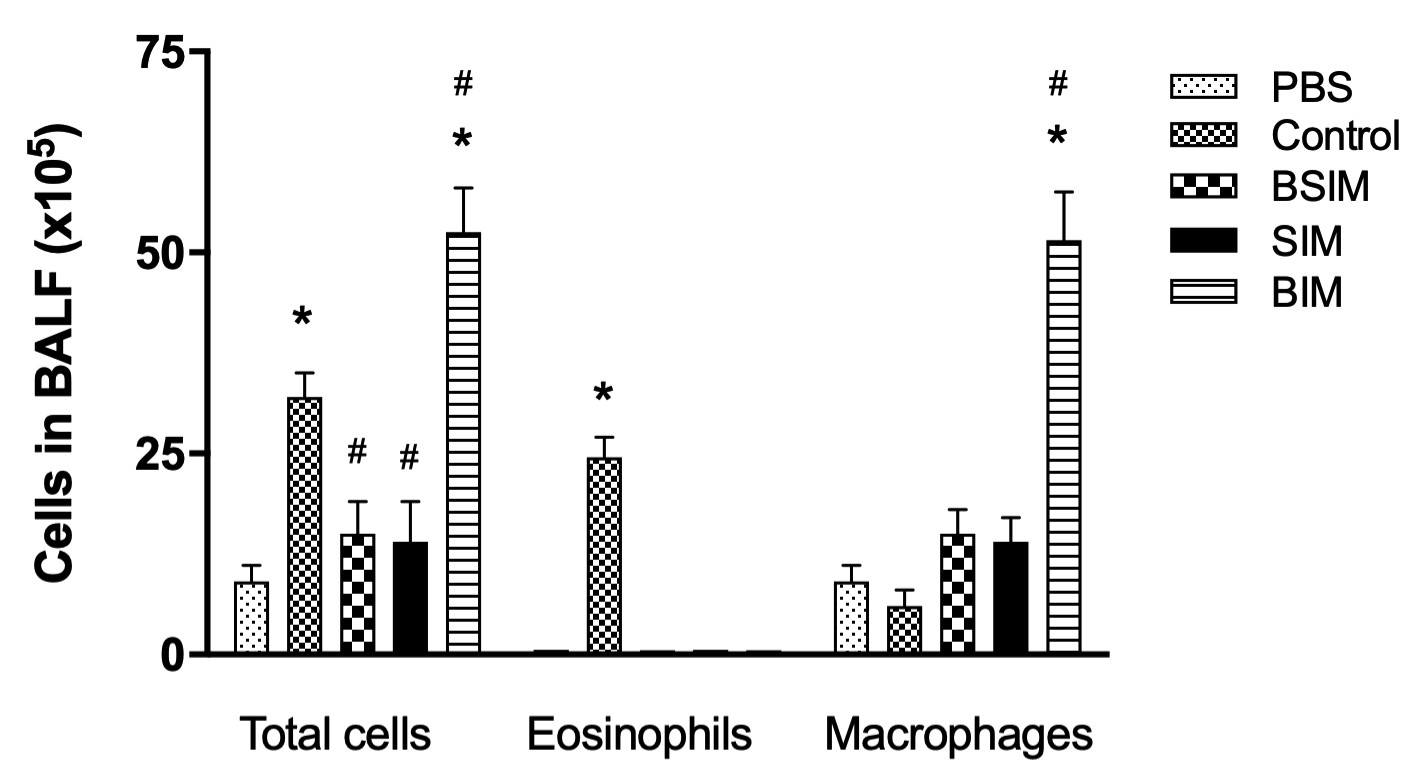
The experimental protocol for inducing allergic airway inflammation was applied to the various study groups. Bronchoalveolar lavage fluid (BALF) evaluation showed extensive alveolar leukocyte recruitment rich in eosinophils in OVA-challenged Control mice compared to PBS-challenged Control mice (Figure 1). However, lung leukocyte influx was significantly reduced after antigenic challenge in both SIM and BSIM mice suckled by infected mothers, characterized by the absence of eosinophils in BALF. In contrast, mice BIM suckled by non-infected mothers presented increased infiltration of macrophages in BALF (Figure 1).
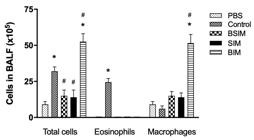
Regulation of allergic airway inflammation in adult offspring from Schistosoma mansoni-infected mothers. Six-week-old Swiss webster mice born (BIM), suckled (SIM) or born/suckled (BSIM) by S. mansoni-infected mothers or mice born/suckled by uninfected mothers (Control) were immunized on days 0 and 7 with 10 μg of OVA adsorbed to 1.6 mg of aluminum hydroxide and on days 14, 15 and 16, the mice were challenged with aerosolized OVA (1%) for 20 min. The airway lumina was washed to obtain bronchoalveolar lavage fluid (BALF) for cell counts, 24 h after the last challenge. Immunized mice challenged with PBS were considered as the negative control. Bars represent the mean ± SEM of eight animals per group. *ρ<0,05 compared with the PBS group, #ρ<0,05 compared with the Control group.
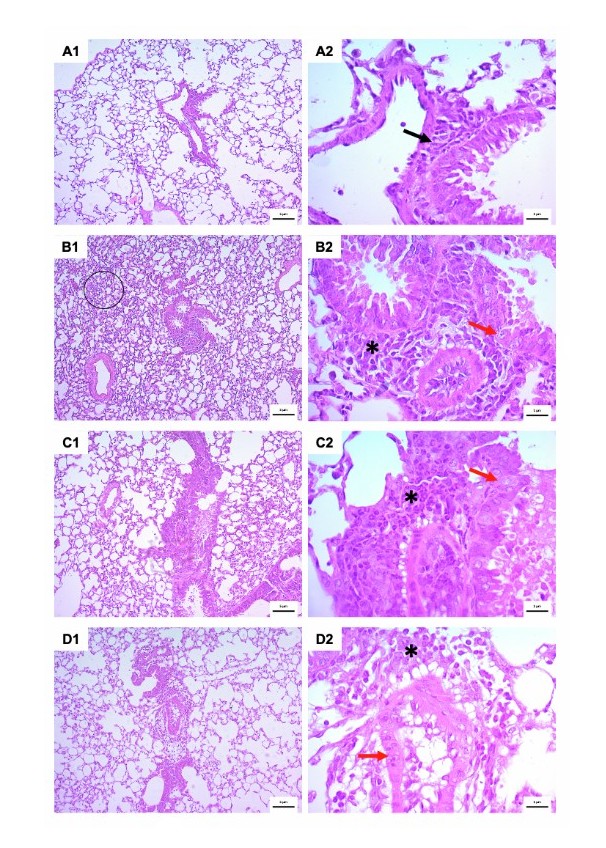
These results were supported by lung histology, where we observed a moderate inflammatory infiltrate throughout the lung tissue in BIM animals (represented by the area highlighted by the black circle in Figure 2B1), with the presence of several macrophages (black asterisk Figure 2B2). By contrast, in SIM and BSIM animals, a lower inflammatory response was observed (Figure 2C1; Figure 2D1), with some macrophages (black asterisk) present only in reactive areas (reactive epithelial cells – red arrow) (Figure 2C2; Figure 2D2). These results demonstrate the presence of immunosuppressive molecules in breast milk, regardless of whether the offspring was born to infected females. In the control group, we observed a discrete lymphocytic inflammatory infiltrate (black arrow) with rare macrophages (Figure 2A1; Figure 2A2).
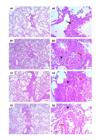
Histological study of lung tissue in offspring from Schistosoma mansoni-infected mothers. Six-week-old Swiss webster mice born-BIM (B), suckled-SIM (C) or born/suckled-BSIM (D) by S. mansoni-infected mothers or mice born/suckled by uninfected mothers (Control-A) were immunized (i.p.) with 10 μg of OVA adsorbed to 1.6 mg of aluminum hydroxide and were submitted to bronchial challenge. The lungs were processed 24 h after the last challenge. The slides were stained with Haematoxylin & Eosin (H&E) and the analyses were performed on images randomly obtained in 10-20 fields/animal (100X and 500X). The histological study was performed in eight animals/group. Black arrow represents a discrete lymphocytic inflammatory infiltrate; red arrows - reactive epithelial cells; black asterisks - inflammatory infiltrate of polymorphonuclear cells and several macrophages; and black circle - inflammatory infiltrate areas.
3.2. Breastfeeding in S. mansoni-infected mice generates systemic production of IL-10
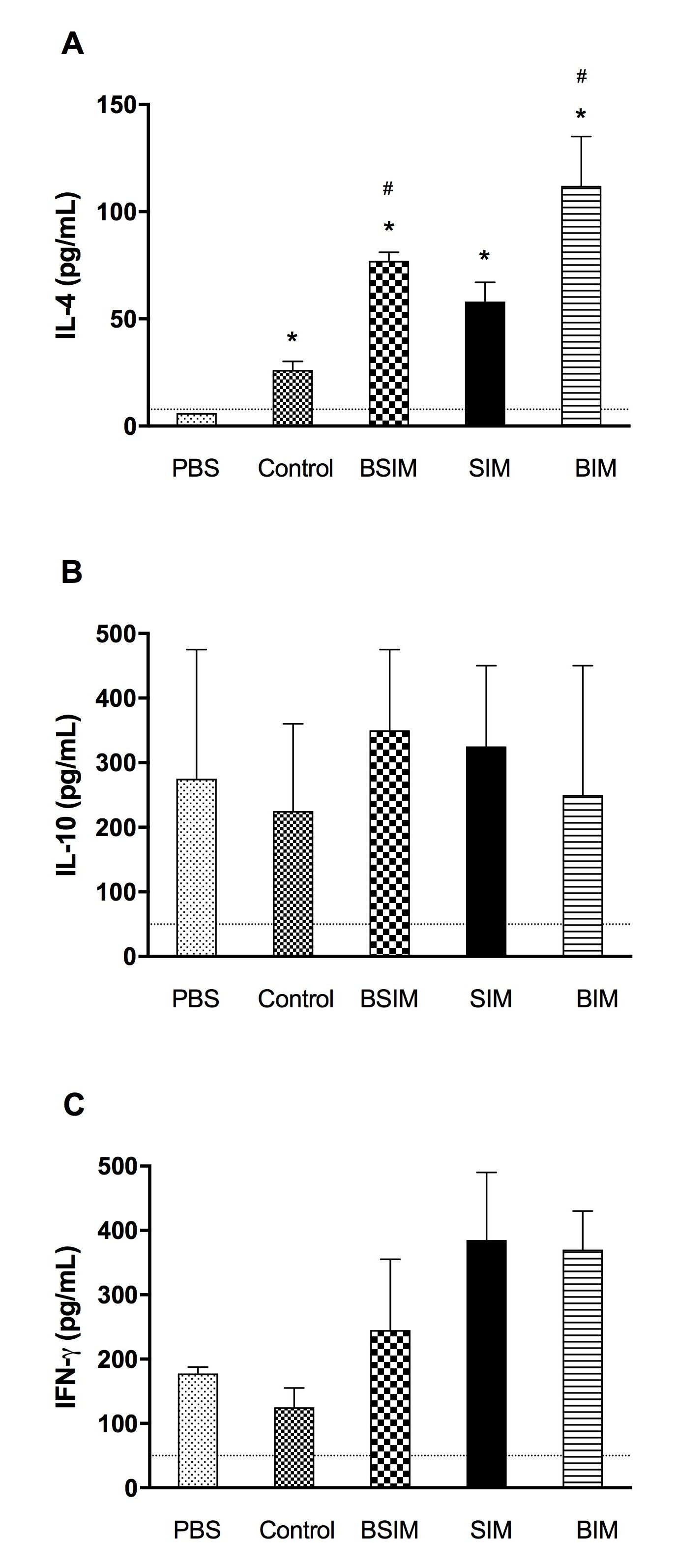
The evaluation of the cytokines demonstrated that mice born and suckled by non-infected mothers produced IL-4 in BALF after OVA challenge (Figure 3); however, the levels of IL-4 increased in mice that were born from infected mothers, especially those that did not receive milk from infected mothers (Figure 3a). The allergic challenge did not alter the levels of IL-10 or IFN-γ produced in BALF of BIM, SIM or BSIM mice when compared to Control mice (Figure 3b; Figure 3c). No IL-5, IL-13 or eotaxin were detected in BALF of any of the tested groups.

Pulmonary cytokine production in offspring from Schistosoma mansoni-infected mothers. Six-week-old Swiss webster mice born (BIM), suckled (SIM) or born/suckled (BSIM) by S. mansoni-infected mothers or mice born/suckled by uninfected mothers (Control) were immunized (i.p.) with 10 μg of OVA adsorbed to 1.6 mg of aluminum hydroxide and were submitted to bronchial challenge. The lungs were processed 24 h after the last challenge. Cytokines IL-4 (a), IL-10 (b) and IFN-γ (c) were quantified in supernatants of bronchoalveolar lavage fluid (BALF) by sandwich ELISA. Immunized mice challenged with PBS were considered as the negative control. Bars represent the mean ± SEM of eight animals per group. The dashed line represents the detection threshold for IL-4 (7.8 pg/ml), IL-10 and IFN-γ (50 pg/ml). IL-5, IL-13 and eotaxin were not detected in either group. *ρ<0,05 compared with the PBS group, #ρ<0,05 compared with the Control group.
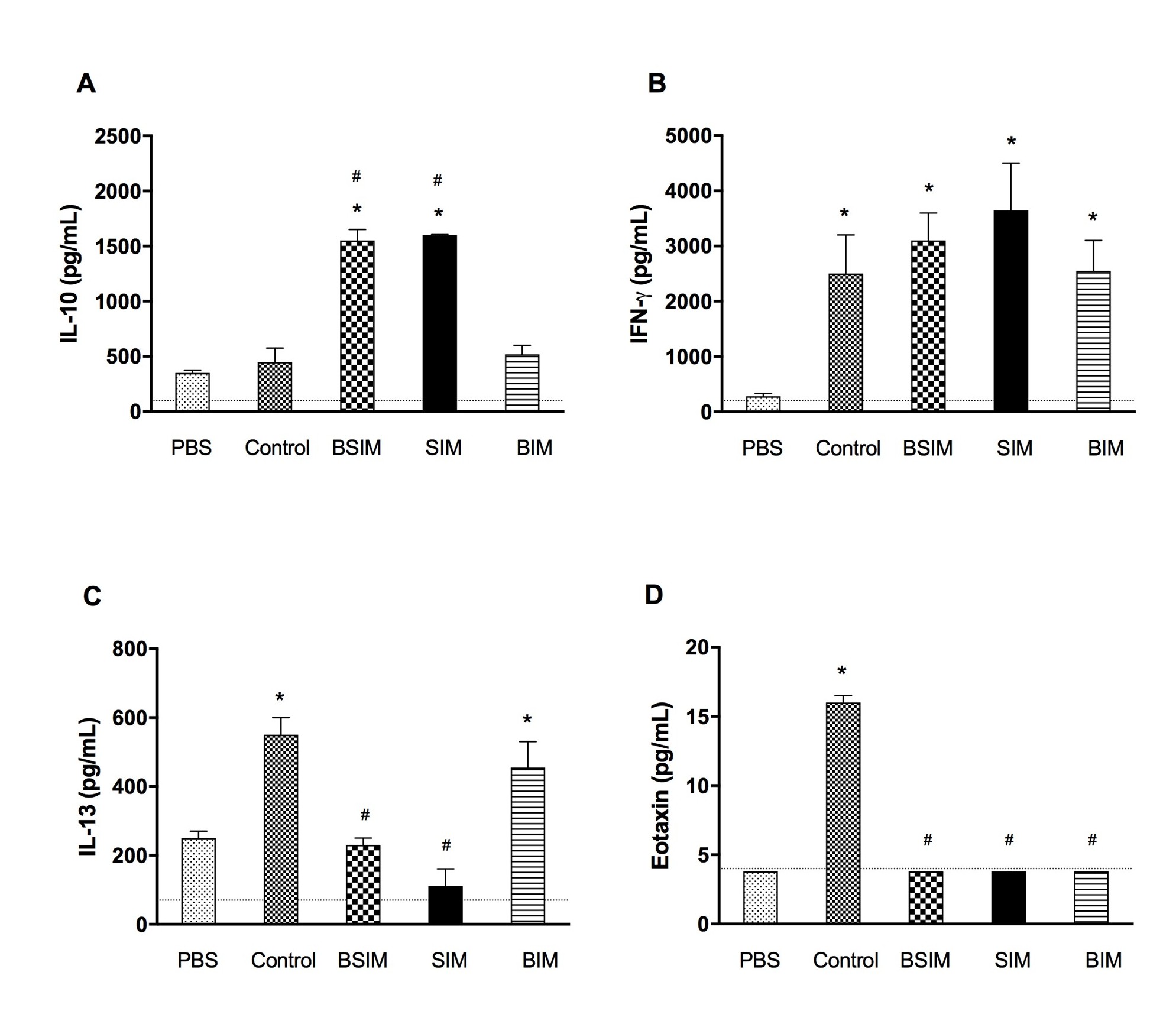
We further analyzed the cytokine production by spleen cells from all groups. Mice receiving milk from infected mothers (SIM and BSIM) produced higher levels of IL-10 (Figure 4a) but lower levels of IL-13 (Figure 4c) than the Control mice, whereas no difference was detected in the levels of these cytokines in the animals born from schistosomotic mothers (BIM). The eotaxin levels were lower in all groups of mice (BIM, SIM, and BSIM - Figure 4d) than in the Control mice. No modulation in the IFN-γ levels was observed in mice receiving milk from Control or infected mothers (Figure 4b). Under these culture conditions, IL-4 and IL-5 were not detected in the tested groups. These results suggest a systemic regulation of cytokines by the breast milk from infected mothers.

IL-10 (a), IFN-γ (b), IL-13 (c) and eotaxin (d) secreted by spleen cells in offspring from Schistosoma mansoni-infected mothers. Six-week-old Swiss webster mice born (BIM), suckled (SIM) or born/suckled (BSIM) by S. mansoni-infected mothers or mice born/suckled by uninfected mothers (Control) were immunized (i.p.) with 10 μg of OVA adsorbed to 1.6 mg of aluminum hydroxide and were submitted to bronchial challenge. Twenty-four hours after the last challenge, the spleen cells were cultivated in vitro with OVA (250 μg/ml) for up to 72 h. Cytokines and eotaxin were quantified in supernatants of spleen cell culture by sandwich ELISA. Immunized mice challenged with PBS were considered as the negative control. Bars represent the mean ± SEM of eight animals per group. The dashed line represents the detection threshold for IL-10 (100 pg/ml), IFN-γ (200 pg/ml), IL-13 (70 pg/ml) and eotaxin (4 pg/ml). IL-4 and IL-5 were not detected in either group. *ρ<0,05 compared with the PBS group, #ρ<0,05 compared with the Control group.
3.3. Breastfeeding in S. mansoni-infected mothers does not change the levels of IgG1 and IgG2a
All groups were bled, and an ELISA was used to measure serum antibody levels. Anti-OVA IgG1 levels were similar among all the groups compared to the Control mice (Figure 5a). Although anti-OVA IgG2a levels in the SIM and BIM groups were lower than those of other groups, no significant difference compared to the Control group was observed (Figure 5b).

OVA-specific IgG1 (a) and IgG2a (b) antibodies in offspring from Schistosoma mansoni-infected mothers. Six-week-old Swiss webster mice born (BIM), suckled (SIM) or born/suckled (BSIM) by S. mansoni-infected mothers or mice born/suckled by uninfected mothers (Control) were immunized (i.p.) with 10 μg of OVA adsorbed to 1.6 mg of aluminum hydroxide and were submitted to bronchial challenge. Isotype levels in the plasma were measured by indirect ELISA. Bars represent the mean of absorbance (O.D.) ± SEM of eight animals per group in an appropriated dilution (within the linear part of the titration curve) for each isotype (1:2.048 for IgG1 or 1:64 for IgG2a).
4. Discussion
Maternal helminthic infections might contribute to exposing their offspring to immunomodulatory factors at a young age, interfering with the establishment of postnatal immunity (Paz et al., 2017). In this experimental model, female mice are mated during the oviposition period (60th day post-infection), coinciding with the onset of Th2 and T regulatory profile stimulation and schistosomiasis immunomodulation (Pearce et al., 1991; McKee and Pearce, 2004). Using an established murine model of airway inflammation characterized by eosinophil influx, cytokine production (IL-4 and IL-13), and chemokine eotaxin (Lima et al., 2005), we evaluated the impact of pregnancy and breastfeeding by S. mansoni-infected mothers on the regulation of the allergic airway response. We demonstrated that both factors were regulated in two different ways: pregnancy in schistosomotic mothers led to macrophage-dependent airway inflammation. In contrast, previous contact with breast milk from infected mothers prevented the eosinophilic inflammatory reaction and prominent macrophage infiltration throughout the lung tissues in adult descendants.
It has been demonstrated that there is a lower hypersensitivity response to parasitic antigens in animals breastfed by infected mothers (SIM and BSIM), with smaller granuloma formation in postnatal infection (Attallah et al., 2006; Santos et al., 2016). In addition to nutritional functions, breast milk contains antimicrobial agents and immunomodulatory factors (cytokines, saccharides, protein antigens, and antibodies) that ensure both stimulatory and tolerogenic actions (Hosea-Blewett et al., 2008; Brenmoehl et al., 2018).
In offspring subjected to allergic airway inflammation, IL-10-dependent suppressive bias can overlap due to the specific features of breast milk from schistosomotic mothers. IL-10 and TGF-β in milk, along with the presence of chronic infections, are involved in immunosuppressive and tolerogenic functions (Hosea-Blewett et al., 2008). Studies highlight oligosaccharides on the surface of Schistosoma eggs, such as lacto-N-fucopentaose III, which is also a component of breast milk. This polysaccharide directly activates B cells, inducing their proliferation and synthesis of IL-10 and PGE2 (Thomas and Harn-Junior, 2004).
The evaluation of milk whey proteins from infected mice, by mass spectrometry, showed 15 upregulated and 14 downregulated proteins compared to non-infected mice (Holanda et al., 2020). The upregulated proteins were associated with the cellular mechanism involved in IL-10 synthesis, while the downregulated proteins were involved in TGF-β synthesis. Although parasite-specific antibodies in breast milk can be transferred to their descendants (Lenzi et al., 1987), specific immunoglobulin and complement factor B fractions were downregulated (Holanda et al., 2020). In agreement with IL-10's role in modulating asthma, our group demonstrated that breast milk from an infected mother leads to a high frequency of CD14+IL-10+ cells, but a low frequency of CD4+IL-4 and CD4+Foxp3+ cells in the spleen, under in vitro mitogenic stimulus (Holanda et al., 2019). It showed the expression of enzymes involved in chromatin remodeling, specifically histone deacetylases (HDACs), which are committed to the transcriptional activation of IL-10 gene expression (HDAC-6) but impair T regulatory cell activity (Cheng et al., 2014; Zoeten et al., 2011; Holanda et al., 2019).
By contrast, in mice born from S. mansoni-infected mothers, a lung microenvironment rich in macrophages and high levels of IL-4 were observed, along with remarkable systemic IL-13 production and the presence of IFN-γ. This local production of cytokines (lung), which occurs independently of the mixed Th2Th1 systemic response in the spleen, is characteristic of this type of hypersensitivity in animal models of OVA-induced allergic asthma, regardless of the presence or absence of adjuvants (Morokata et al., 2000; Shilovskiy et al., 2019). Despite the apparent absence of lymphocytes, the production of IL-4 suggests a type 2 response, predominantly driven by myeloid cells such as macrophages—similar to what is observed in other forms of hypersensitivity, including granuloma formation. It is plausible that this phenomenon mimics the immunological environment of the uterus, which promotes macrophage presence during pregnancy (Heikkinen et al., 2004; Yang et al., 2021). This environment may be further modulated by maternal schistosomiasis, a Th2-skewed condition, and sustained in the adult offspring by IL-4. Indeed, IL-4 and IL-13, via STAT6 phosphorylation, are widely accepted as the major drivers of M2 gene expression (Kratochvill et al., 2015). This cytokine profile indicates a switch to a reparative process with the promotion of cell proliferation and the attenuation of fibrosis. Alternatively activated macrophages (M2) have been demonstrated in the helminthic granulomatous reaction due to the high levels of in situ IL-10 and IL-13 production (Wilson et al., 2007). Large and increased numbers of fibrotic granulomas were demonstrated in animals born to infected mothers when submitted to postnatal infection (Santos et al., 2016).
Interestingly, in BSIM mice, both inflammatory processes mediated by eosinophils (Control mice) and macrophages (BIM mice) were suppressed. These findings highlight the role of breast milk from infected mothers as a potential protective factor, as there were high IL-10 and low IL-13 production in mice previously breastfed. In contrast, Straubinger et al. (2014) reported that offspring born and breastfed by mothers in the later Th2 phase of infection (11th week) were not protected from bronchial asthma. Mating time may explain this discrepancy, as in our experimental model, the female mice are mated during the oviposition period (8th week), which coincides with the initial stimulation of the Th2 profile (Pearce et al., 1991).
Regarding the production of anti-OVA-specific antibodies, in a subcutaneous immunization model using OVA plus adjuvant, there was an enhancement and suppression of antibodies in SIM and BIM animals, respectively (Santos et al., 2010). However, in chronic inflammatory disease, antibodies do not appear to be altered. Indeed, no differences were observed among the studied groups in the allergic airway inflammatory model, nor in a previous study of postnatal hepatic granulomatous inflammation (Santos et al., 2016).
In addition to highlighting the protective role of breastfeeding, our findings suggest that helminths may induce an immune regulation phenomenon that reduces allergies in early life. Understanding the mechanisms involved in this host/parasite/newborn relationship may assist in choosing the best timing for initiation of immunotherapy protocols for allergic diseases.
Acknowledgements
The authors would like to thank Dr. Monica Valdyrce dos Anjos Lopes Ferreira from the Laboratory of Applied Toxicology, Butantan Institute, São Paulo-SP/Brazil, for her helpful comments and suggestions. We also thank Giuliana Viegas Schirato for veterinary support, and Érica de Souza Fernandes and Iana Rafaela Fernandes Sales for experimental help. This work was conducted in compliance with Brazilian laws. This study was funded by the São Paulo Research Foundation – FAPESP. This work was conducted through a scholarship for the first author, supported by the Brazilian Agency CNPq (Brazilian National Research and Development Council), under process no. 140421/2019-0.
Data Availability Statement
The research data analyzed in this study are not publicly available by any means.
References
-
ALMEIDA, T.V.V.S., FERNANDES, J.S., LOPES, D.M., ANDRADE, L.S., OLIVEIRA, S.C., CARVALHO, E.M., ARAUJO, M.I., CRUZ, A.A. and CARDOSO, L.S., 2017. Schistosoma mansoni antigens alter activation markers and cytokine profile in lymphocytes of patients with asthma. Acta Tropica, vol. 166, pp. 268-279. https://doi.org/10.1016/j.actatropica.2016.12.002 PMid:27931742.
» https://doi.org/10.1016/j.actatropica.2016.12.002 -
AMU, S., SAUNDERS, S.P., KRONENBERG, M., MANGAN, N.E., ATZBERGER, A. and FALLON, P.G., 2010. Regulatory B cells prevent and reverse allergic airway inflammation via FoxP3-positive T regulatory cells in a murine model. The Journal of Allergy and Clinical Immunology, vol. 125, no. 5, pp. 1114-1124.e8. https://doi.org/10.1016/j.jaci.2010.01.018 PMid:20304473.
» https://doi.org/10.1016/j.jaci.2010.01.018 -
ARAÚJO, M.I., LOPES, A.A., MEDEIROS, M., CRUZ, A.A., SOUSA-ATTA, L., SOLÉ, D. and CARVALHO, E.M., 2000. Inverse association between skin response to aeroallergens and Schistosoma mansoni infection. International Archives of Allergy and Immunology, vol. 123, no. 2, pp. 145-148. https://doi.org/10.1159/000024433 PMid:11060486.
» https://doi.org/10.1159/000024433 -
ATTALLAH, A.M., ABBAS, A.T., DESSOUKY, M.I., EL-EMSHATY, H.M. and ELSHEIKHA, H.M., 2006. Susceptibility of neonate mice born to Schistosoma mansoni-infected and noninfected mothers to subsequent S. mansoni infection. Parasitology Research, vol. 99, no. 2, pp. 137-145. https://doi.org/10.1007/s00436-006-0127-x PMid:16521039.
» https://doi.org/10.1007/s00436-006-0127-x -
BRENMOEHL, J., OHDE, D., WIRTHGEN, E. and HOEFLICH, A., 2018. Cytokines in milk and the role of TGF-beta. Best Practice & Research. Clinical Endocrinology & Metabolism, vol. 32, no. 1, pp. 47-56. https://doi.org/10.1016/j.beem.2018.01.006 PMid:29549959.
» https://doi.org/10.1016/j.beem.2018.01.006 -
BUONFRATE, D., FERRARI, T.C.A., ADEGNIKA, A.A., STOTHARD, J.R. and GOBBI, F.G., 2025. Human schistosomiasis. Lancet, vol. 405, no. 10479, pp. 658-670. https://doi.org/10.1016/S0140-6736(24)02814-9 PMid:39986748.
» https://doi.org/10.1016/S0140-6736(24)02814-9 -
CALDAS, I.R., CAMPI-AZEVEDO, A.C., OLIVEIRA, L.F., SILVEIRA, A.M., OLIVEIRA, R.C. and GAZZINELLI, G., 2008. Human schistosomiasis mansoni: immune responses during acute and chronic phases of the infection. Acta Tropica, vol. 108, no. 2-3, pp. 109-117. https://doi.org/10.1016/j.actatropica.2008.05.027 PMid:18577364.
» https://doi.org/10.1016/j.actatropica.2008.05.027 -
CARDOSO, L.S., OLIVEIRA, S.C. and ARAUJO, M.I., 2012. Schistosoma mansoni antigens as modulators of the allergic inflammatory response in asthma. Endocrine, Metabolic & Immune Disorders Drug Targets, vol. 12, no. 1, pp. 24-32. https://doi.org/10.2174/187153012799278929 PMid:22214332.
» https://doi.org/10.2174/187153012799278929 -
CHENG, F., LIENLAF, M., PEREZ-VILLARROEL, P., WANG, H.W., LEE, C., WOAN, K., WOODS, D., KNOX, T., BERGMAN, J., PINILLA-IBARZ, J., KOZIKOWSKI, A., SETO, E., SOTOMAYOR, E.M. and VILLAGRA, A., 2014. Divergent roles of histone deacetylase 6 (HDAC6) and histone deacetylase 11 (HDAC11) on the transcriptional regulation of IL10 in antigen presenting cells. Molecular Immunology, vol. 60, no. 1, pp. 44-53. https://doi.org/10.1016/j.molimm.2014.02.019 PMid:24747960.
» https://doi.org/10.1016/j.molimm.2014.02.019 -
CRUZ, A.A., COOPER, P.J., FIGUEIREDO, C.A., ALCANTARA-NEVES, N.M., RODRIGUES, L.C. and BARRETO, M.L., 2017. Global issues in allergy and immunology: parasitic infections and allergy. The Journal of Allergy and Clinical Immunology, vol. 140, no. 5, pp. 1217-1228. https://doi.org/10.1016/j.jaci.2017.09.005 PMid:29108604.
» https://doi.org/10.1016/j.jaci.2017.09.005 -
FERNANDES, E.S., LORENA, V.M.B., SALES, I.R.F., ALBUQUERQUE, M.C.P.A., GOMES, Y.M., COSTA, V.M.A. and SOUZA, V.M.O., 2018. Maternal schistosomiasis: IL-2, IL-10 and regulatory T lymphocytes to unrelated antigen in adult offspring mice. Revista da Sociedade Brasileira de Medicina Tropical, vol. 51, no. 4, pp. 546-549. https://doi.org/10.1590/0037-8682-0338-2016 PMid:30133643.
» https://doi.org/10.1590/0037-8682-0338-2016 -
FRIEDMAN, J.F., MITAL, P., KANZARIA, H.K., OLDS, G.R. and KURTIS, J.D., 2007. Schistosomiasis and pregnancy. Trends in Parasitology, vol. 23, no. 4, pp. 159-164. https://doi.org/10.1016/j.pt.2007.02.006 PMid:17336160.
» https://doi.org/10.1016/j.pt.2007.02.006 -
HEIKKINEN, J., MÖTTÖNEN, M., ALANEN, A. and LASSILA, O., 2004. Phenotypic characterization of regulatory T cells in the human decidua. Clinical and Experimental Immunology, vol. 136, no. 2, pp. 373-378. https://doi.org/10.1111/j.1365-2249.2004.02441.x PMid:15086404.
» https://doi.org/10.1111/j.1365-2249.2004.02441.x -
HOLANDA, G.C.R., LIMA, I.L., SCAPIN, S.M.N., SILVA, M.D.C., SALES, I.R.F., GRANJEIRO, J.M., SILVA, R.A., SOUZA, V.M.O. and DE LIMA-FILHO, J.L., 2020. Whey milk proteomics from Schistosoma mansoni-infected mice reveals proteins involved in immunomodulation of the offspring. Parasitology Research, vol. 119, no. 5, pp. 1607-1617. https://doi.org/10.1007/s00436-020-06643-1 PMid:32133541.
» https://doi.org/10.1007/s00436-020-06643-1 -
HOLANDA, G.C.R., SOUTO, F.O., SILVA, M.C., LORENA, V.M.B., COSTA, V.M.A., ALBUQUERQUE, M.C.P.A., SOUZA, V.M.O. and DE LIMA-FILHO, J.L., 2019. Gestation and breastfeeding in schistosomotic mice differentially alters the expression of histone deacetylases (HDACs) in adult offspring. Memórias do Instituto Oswaldo Cruz, vol. 114, e190366. https://doi.org/10.1590/0074-02760190366 PMid:32022099.
» https://doi.org/10.1590/0074-02760190366 -
HOSEA-BLEWETT, H.J., CICALO, M.C., HOLLAND, C.D. and FIELD, C.J., 2008. The immunological components of human milk. Advances in Food and Nutrition Research, vol. 54, pp. 45-80. https://doi.org/10.1016/S1043-4526(07)00002-2 PMid:18291304.
» https://doi.org/10.1016/S1043-4526(07)00002-2 -
KRATOCHVILL, F., NEALE, G., HAVERKAMP, J.M., VAN-DE-VELDE, L.A., SMITH, A.M., KAWAUCHI, D., MCEVOY, J., ROUSSEL, M.F., DYER, M.A., QUALLS, J.E. and MURRAY, P.J., 2015. TNF counterbalances the emergence of M2 tumor macrophages. Cell Reports, vol. 12, no. 11, pp. 1902-1914. https://doi.org/10.1016/j.celrep.2015.08.033 PMid:26365184.
» https://doi.org/10.1016/j.celrep.2015.08.033 -
KRZYCH-FAŁTA, E., WOJAS, O., FURMAŃCZYK, K., DZIEWA-DAWIDCZYK, D., PIEKARSKA, B., SAMOLIŃSKI, B. and SYBILSKI, A., 2023. Evaluation of selected aspects of the hygiene hypothesis and their effect on the incidence of allergy. International Journal of Occupational Medicine and Environmental Health, vol. 36, no. 1, pp. 69-83. https://doi.org/10.13075/ijomeh.1896.01880 PMid:36756848.
» https://doi.org/10.13075/ijomeh.1896.01880 -
LAYLAND, L.E., STRAUBINGER, K., RITTER, M., LOFFREDO-VERDE, E., GARN, H., SPARWASSER, T. and DA COSTA, C.P., 2013. Schistosoma mansoni-mediated suppression of allergic airway inflammation requires patency and FoxP3+ Treg cells. PLoS Neglected Tropical Diseases, vol. 7, no. 8, pp. 1-10. https://doi.org/10.1371/journal.pntd.0002379 PMid:23967364.
» https://doi.org/10.1371/journal.pntd.0002379 -
LENZI, J.A., SOBRAL, A.C., ARARIPE, J.R., GRIMALDI-FILHO, G. and LENZI, H.L., 1987. Congenital and nursing effects on the evolution of Schistosoma mansoni infection in mice. Memórias do Instituto Oswaldo Cruz, vol. 82, no. 4, suppl. 4, pp. 257-267. https://doi.org/10.1590/S0074-02761987000800049 PMid:3151101.
» https://doi.org/10.1590/S0074-02761987000800049 -
LIMA, C., SOUZA, V.M., FAQUIM-MAURO, E.L., HOSHIDA, M.S., BEVILACQUA, E., MACEDO, M.S., TAVARES-DE-LIMA, W. and VARGAFTIG, B.B., 2005. Modulation of the induction of lung and airway allergy in the offspring of IFN-gamma-treated mother mice. The Journal of Immunology : Official Journal of the American Association of Immunologists, vol. 175, no. 6, pp. 3554-3559. https://doi.org/10.4049/jimmunol.175.6.3554 PMid:16148098.
» https://doi.org/10.4049/jimmunol.175.6.3554 -
MARINHO, F.V., ALVES, C.C., DE SOUZA, S.C., DA SILVA, C.M., CASSALI, G.D., OLIVEIRA, S.C., PACÍFICO, L.G. and FONSECA, C.T., 2016. Schistosoma mansoni tegument (Smteg) induces IL-10 and modulates experimental airway inflammation. PLoS One, vol. 11, no. 7, pp. 1-15. https://doi.org/10.1371/journal.pone.0160118 PMid:27454771.
» https://doi.org/10.1371/journal.pone.0160118 -
MCKEE, A.S. and PEARCE, E.J., 2004. CD25+CD4+ cells contribute to Th2 polarization during helminth infection by suppressing Th1 response development. The Journal of Immunology : Official Journal of the American Association of Immunologists, vol. 173, no. 2, pp. 1224-1231. https://doi.org/10.4049/jimmunol.173.2.1224 PMid:15240714.
» https://doi.org/10.4049/jimmunol.173.2.1224 -
MEDEIROS-JUNIOR, M., FIGUEIREDO, J.P., ALMEIDA, M.C., MATOS, M.A., ARAÚJO, M.I., CRUZ, A.A., ATTA, A.M., REGO, M.A., DE JESUS, A.R., TAKETOMI, E.A. and CARVALHO, E.M., 2003. Schistosoma mansoni infection is associated with a reduced course of asthma. The Journal of Allergy and Clinical Immunology, vol. 111, no. 5, pp. 947-951. https://doi.org/10.1067/mai.2003.1381 PMid:12743556.
» https://doi.org/10.1067/mai.2003.1381 -
MOROKATA, T., ISHIKAWA, J. and YAMADA, T., 2000. Antigen dose defines T helper 1 and T helper 2 responses in the lungs of C57BL/6 and BALB/c mice independently of splenic responses. Immunology Letters, vol. 72, no. 2, pp. 119-126. https://doi.org/10.1016/S0165-2478(00)00188-7 PMid:10841947.
» https://doi.org/10.1016/S0165-2478(00)00188-7 -
NÓBREGA, C.G.O., DO NASCIMENTO, W.R.C., SANTOS, P.D.A., DE LORENA, V.M.B., MEDEIROS, D., COSTA, V.M.A., BARBOSA, C.C.G.S., SOLÉ, D., SARINHO, E.S.C. and DE SOUZA, V.M.O., 2021. Schistosoma mansoni infection is associated with decreased risk of respiratory allergy symptoms and low production of CCL2. Tropical Medicine & International Health: TM & IH, vol. 26, no. 9, pp. 1098-1109. https://doi.org/10.1111/tmi.13639 PMid:34107115.
» https://doi.org/10.1111/tmi.13639 -
OKOROAFOR, C.F., UMEONONIHU, O.S., ANIKWE, C.C., ADEBAYO, A.J., EZEIGWE, C.O., OLALEYE, A.A., OKOROCHUKWU, B.C., OGELLE, O.M. and ELEJE, G.U., 2024. Impact of schistosomiasis infection on maternal and neonatal outcomes in pregnancy: a prospective cohort study in Nigeria. BMC Pregnancy Childbirth, vol. 2024, no. 864, pp. 1-10. https://doi.org/10.1186/s12884-024-07064-z
» https://doi.org/10.1186/s12884-024-07064-z -
OLIVEIRA, S.C., FIGUEIREDO, B.C., CARDOSO, L.S. and CARVALHO, E.M., 2016. A double edged sword: schistosoma mansoni Sm29 regulates both Th1 and Th2 responses in inflammatory mucosal diseases. Mucosal Immunology, vol. 9, no. 6, pp. 1366-1371. https://doi.org/10.1038/mi.2016.69 PMid:27554296.
» https://doi.org/10.1038/mi.2016.69 -
PACÍFICO, L.G., MARINHO, F.A., FONSECA, C.T., BARSANTE, M.M., PINHO, V., SALES-JUNIOR, P.A., CARDOSO, L.S., ARAÚJO, M.I., CARVALHO, E.M., CASSALI, G.D., TEIXEIRA, M.M. and OLIVEIRA, S.C., 2009. Schistosoma mansoni antigens modulate experimental allergic asthma in a murine model: a major role for CD4+ CD25+ Foxp3+ T cells independent of interleukin-10. Infection and Immunity, vol. 77, no. 1, pp. 98-107. https://doi.org/10.1128/IAI.00783-07 PMid:18824533.
» https://doi.org/10.1128/IAI.00783-07 -
PAZ, V.R.F., SEQUEIRA, D. and PYRRHO, A., 2017. Infection by Schistosoma mansoni during pregnancy: effects on offspring immunity. Life Sciences, vol. 185, no. 15, pp. 46-52. https://doi.org/10.1016/j.lfs.2017.07.021 PMid:28754617.
» https://doi.org/10.1016/j.lfs.2017.07.021 -
PEARCE, E.J., CASPAR, P., GRZYCH, J.M., LEWIS, F.A. and SHER, A., 1991. Downregulation of Th1 cytokine production accompanies induction of Th2 responses by a parasitic helminth, Schistosoma mansoni. The Journal of Experimental Medicine, vol. 173, no. 1, pp. 159-166. https://doi.org/10.1084/jem.173.1.159 PMid:1824635.
» https://doi.org/10.1084/jem.173.1.159 -
ROBINSON, K. and BRADLEY, J.E., 2010. The allergy epidemic: can helminths supply the antidote? Clinical and Experimental Allergy : Journal of the British Society for Allergy and Clinical Immunology, vol. 40, no. 11, pp. 1586-1589. https://doi.org/10.1111/j.1365-2222.2010.03613.x PMid:21039968.
» https://doi.org/10.1111/j.1365-2222.2010.03613.x -
SANTOS, P., LORENA, V.M., FERNANDES, E., SALES, I.R., ALBUQUERQUE, M.C., GOMES, Y., COSTA, V.M. and SOUZA, V.M., 2014. Maternal schistosomiasis alters costimulatory molecules expression in antigen-presenting cells from adult offspring mice. Experimental Parasitology, vol. 141, pp. 62-67. https://doi.org/10.1016/j.exppara.2014.03.017 PMid:24657585.
» https://doi.org/10.1016/j.exppara.2014.03.017 -
SANTOS, P., LORENA, V.M., FERNANDES, E.S., SALES, I.R., NASCIMENTO, W.R., GOMES, Y.M., ALBUQUERQUE, M.C., COSTA, V.M. and SOUZA, V.M., 2016. Gestation and breastfeeding in schistosomotic mothers differently modulate the immune response of adult offspring to postnatal Schistosoma mansoni infection. Memórias do Instituto Oswaldo Cruz, vol. 111, no. 2, pp. 83-92. https://doi.org/10.1590/0074-02760150293 PMid:26872339.
» https://doi.org/10.1590/0074-02760150293 -
SANTOS, P.D., SALES, I.R., SCHIRATO, G.V., COSTA, V.M., ALBUQUERQUE, M.C., SOUZA, V.M. and MALAGUEÑO, E., 2010. Influence of maternal schistosomiasis on the immunity of adult offspring mice. Parasitology Research, vol. 107, no. 1, pp. 95-102. https://doi.org/10.1007/s00436-010-1839-5 PMid:20372927.
» https://doi.org/10.1007/s00436-010-1839-5 -
SHILOVSKIY, I.P., SUNDUKOVA, M.S., BABAKHIN, A.A., GAISINA, A.R., MAERLE, A.V., SERGEEV, I.V., NIKOLSKIY, A.A., BARVINCKAYA, E.D., KOVCHINA, V.I., KUDLAY, D.A., NIKONOVA, A.A. and KHAITOV, M.R., 2019. Experimental protocol for development of adjuvant-free murine chronic model of allergic asthma. Journal of Immunological Methods, vol. 468, pp. 10-19. https://doi.org/10.1016/j.jim.2019.03.002 PMid:30880263.
» https://doi.org/10.1016/j.jim.2019.03.002 -
SMITS, H.H., HAMMAD, H., VAN NIMWEGEN, M., SOULLIE, T., WILLART, M.A., LIEVERS, E., KADOUCH, J., KOOL, M., KOS-VAN-OOSTERHOUD, J., DEELDER, A.M., LAMBRECHT, B.N. and YAZDANBAKHSH, M., 2007. Protective effect of Schistosoma mansoni infection on allergic airway inflammation depends on the intensity and chronicity of infection. The Journal of Allergy and Clinical Immunology, vol. 120, no. 4, pp. 932-940. https://doi.org/10.1016/j.jaci.2007.06.009 PMid:17689595.
» https://doi.org/10.1016/j.jaci.2007.06.009 -
STRAUBINGER, K., PAUL, S., PRAZERES-DA-COSTA, O., RITTER, M., BUCH, T., BUSCH, D.H., LAYLAND, L.E. and PRAZERES-DA-COSTA, C.U., 2014. Maternal immune response to helminth infection during pregnancy determines offspring susceptibility to allergic airway inflammation. The Journal of Allergy and Clinical Immunology, vol. 134, no. 6, pp. 1271-1279.e10. https://doi.org/10.1016/j.jaci.2014.05.034 PMid:25042744.
» https://doi.org/10.1016/j.jaci.2014.05.034 -
STRAW, A.D., MACDONALD, A.S., DENKERS, E.Y. and PEARCE, E.J., 2003. CD154 plays a central role in regulating dendritic cell activation during infections that induce Th1 or Th2 responses. The Journal of Immunology : Official Journal of the American Association of Immunologists, vol. 170, no. 2, pp. 727-734. https://doi.org/10.4049/jimmunol.170.2.727 PMid:12517934.
» https://doi.org/10.4049/jimmunol.170.2.727 -
THOMAS, P.G. and HARN-JUNIOR, D.A., 2004. Immune biasing by helminth glycans. Cellular Microbiology, vol. 6, no. 1, pp. 13-22. https://doi.org/10.1046/j.1462-5822.2003.00337.x PMid:14678327.
» https://doi.org/10.1046/j.1462-5822.2003.00337.x -
WANG, H., HERATH, C.B., XIA, G., WATANABE, G. and TAYA, K., 2001. Superovulation, fertilization and in vitro embryo development in mice after administration of an inhibin-neutralizing antiserum. Reproduction : The Official Journal of the Society for the Study of Fertility, vol. 122, no. 5, pp. 809-816. https://doi.org/10.1530/rep.0.1220809 PMid:11690542.
» https://doi.org/10.1530/rep.0.1220809 -
WILSON, M.S., MENTINK-KANE, M.M., PESCE, J.T., RAMALINGAM, T.R., THOMPSON, R. and WYNN, T.A., 2007. Immunopathology of schistosomiasis. Immunology and Cell Biology, vol. 85, no. 2, pp. 148-154. https://doi.org/10.1038/sj.icb.7100014 PMid:17160074.
» https://doi.org/10.1038/sj.icb.7100014 -
YANG, D., DAI, F., YUAN, M., ZHENG, Y., LIU, S., DENG, Z., TAN, W., CHEN, L., ZHANG, Q., ZHAO, X. and CHENG, Y., 2021. Role of transforming growth Factor-b1 in regulating fetal-maternal immune tolerance in normal and pathological pregnancy. Frontiers in Immunology, vol. 12, pp. 1-10. https://doi.org/10.3389/fimmu.2021.689181 PMid:34531852.
» https://doi.org/10.3389/fimmu.2021.689181 -
ZOETEN, E.F., WANG, L., BUTLER, K., BEIER, U.H., AKIMOVA, T., SAI, H., BRADNER, J.E., MAZITSCHEK, R., KOZIKOWSKI, A.P., MATTHIAS, P. and HANCOCK, W.W., 2011. Histone deacetylase 6 and heat shock protein 90 control the functions of FoxP3(+) T-regulatory cells. Molecular and Cellular Biology, vol. 31, no. 10, pp. 2066-2078. https://doi.org/10.1128/MCB.05155-11 PMid:21444725.
» https://doi.org/10.1128/MCB.05155-11
Edited by
-
Editor:
Marcelo A. M. Esquisatto